Feathers, Headwear, and Elie Saab: Behind Susie Coulthard’s Costumes for '100 Nights of Hero'
Fashion

Fashion
Susie Coulthard’s curation of costumes for “100 Nights of Hero” is nothing short of inspired. Here she talks through the sculptural headpieces, precise tailoring, and designer gowns that make up the wardrobe of the film.
"100 Nights of Hero”, Julia Jackman's adaptation of Isabel Greenberg’s graphic novel of the same name follows Cherry (Maika Monroe), a newlywed woman who finds herself in a maelstrom of emotions when her husband, Jerome (Amir El-Masry), leaves her alone for—you guessed it—100 nights with his mysterious, seductive friend Manfred (Nicholas Galitzine). Not trusting herself to be alone with him, Cherry enlists her devoted maid, Hero (Emma Corrin), to intervene by spinning nightly stories to distract Manfred—a ritual that both keeps Cherry’s virtue safe and brings the two women closer together.
Shot in the UK, opens in new tab, just an hour out of London, costume designer Susie Coulthard called on her close friends and longtime collaborators in the capital to build much of the wardrobe from scratch. These include the esteemed tailor Clinton Lotter—who also served as costume cutter on “Wake Up Dead Man: A Knives Out Mystery”—and hat makers Adèle Mildred and Gabrielle Djanogly of Hood London. “I didn’t even know if any of them were available,” Coulthard recalls. “But I just thought I needed them on board because they’re so creative. I can draw a scribble, and they can refine that scribble in a few days.”
Coulthard was given a four-and-a-half-week prep window to translate everything from moodboard to mannequin. “We had to be so swift,” she says. “We literally did whatever we could in the timescale that we had and worked right up until the deadline.” It helped that she had a distinct vision for the film in mind. “Sometimes you read something, and you’re confused about how it should look,” Coulthard says. “But with ‘100 Nights,’ I saw it so clearly.”
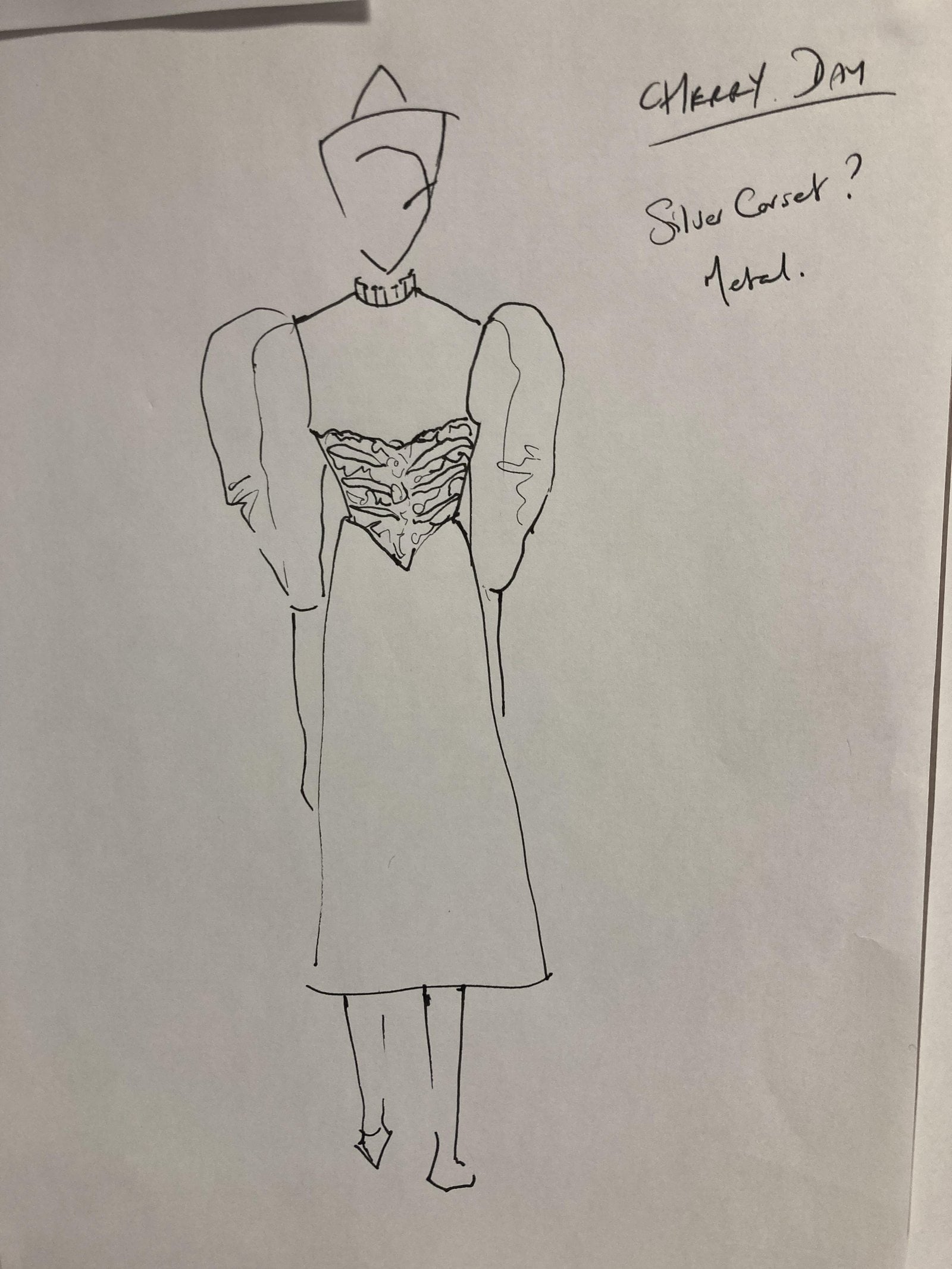

One of Susie Coulthard’s sketches for Cherry. Photo: Susie Coulthard
Susie Coulthard
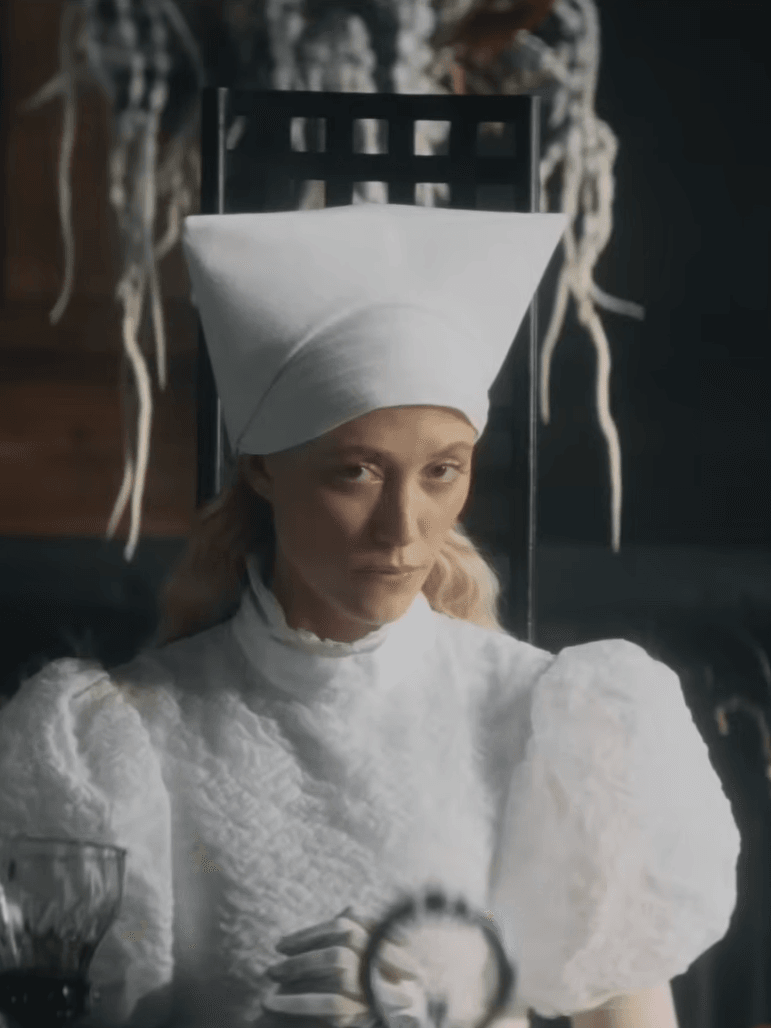

Maika Monroe in "100 Nights of Hero". Photo: IFC
IFC
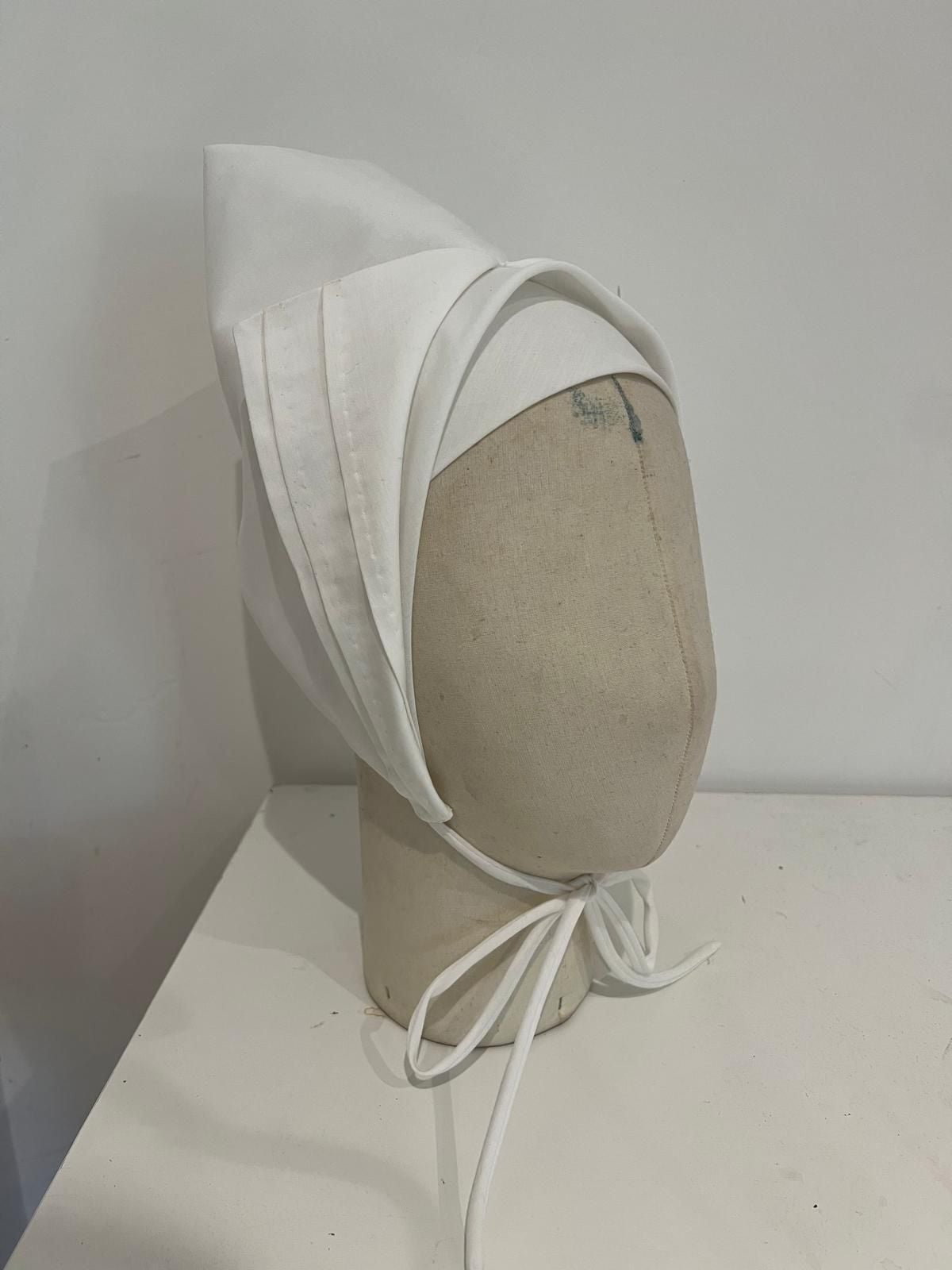

One of Cherry's sculptural head pieces designed with the help of Hood London. Photo: Susie Coulthard
Susie Coulthard
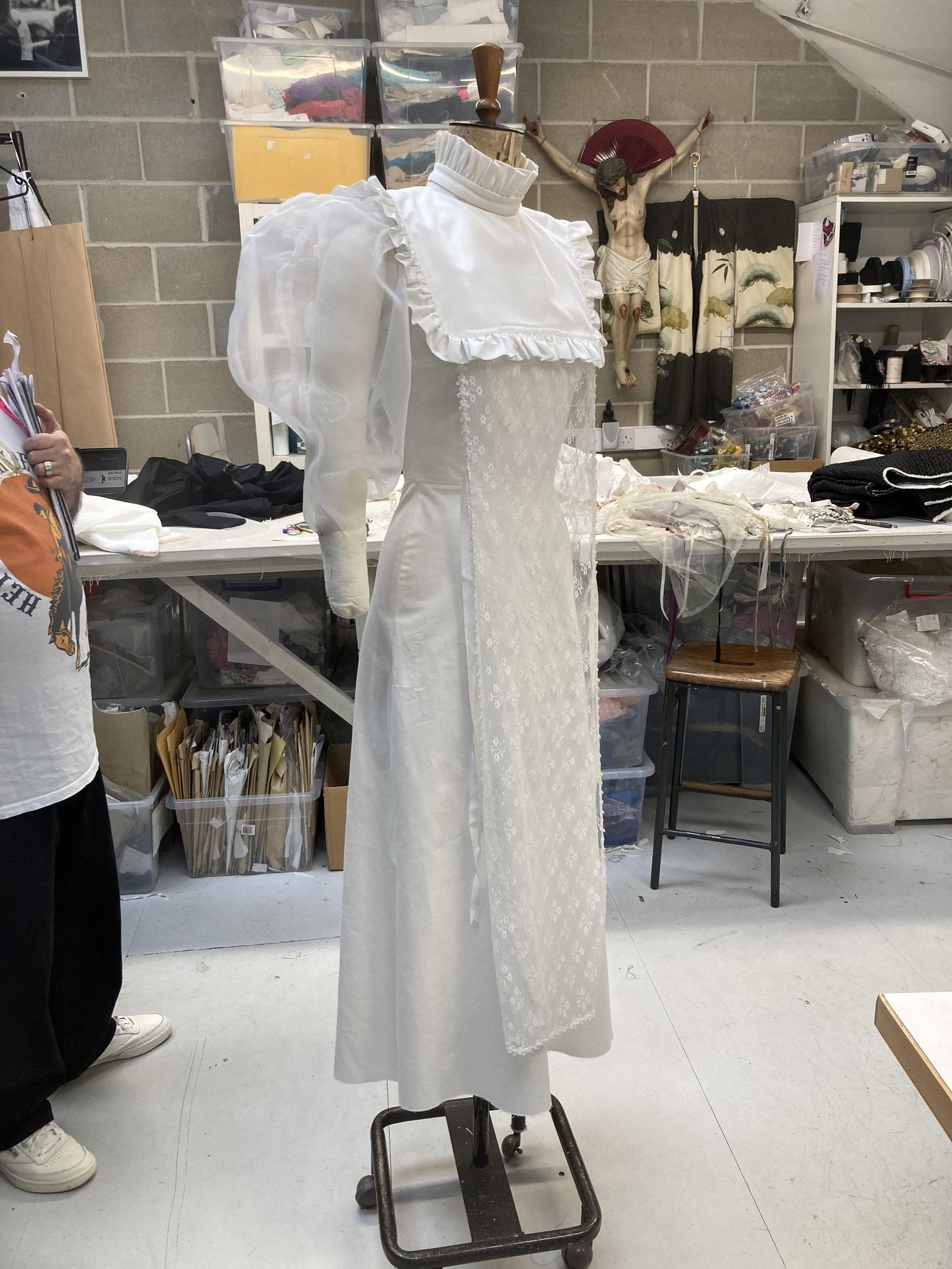

In '100 Nights of Hero,' Cherry's wardrobe is almost entirely white. Photo: Susie Coulthard
Susie Coulthard
That vision included an editorial from fashion photographer Steven Meisel, which appeared in a 2006 issue of Vogue Italia and featured models such as Gemma Ward and Coco Rocha looking like a cross between milkmaids and nuns in all-white ensembles, complete with sculptural head coverings. “It has always stuck in my head because it’s just so fantastic, and it's completely how I saw Cherry, and so we used that influence quite heavily once we got into the workroom.”
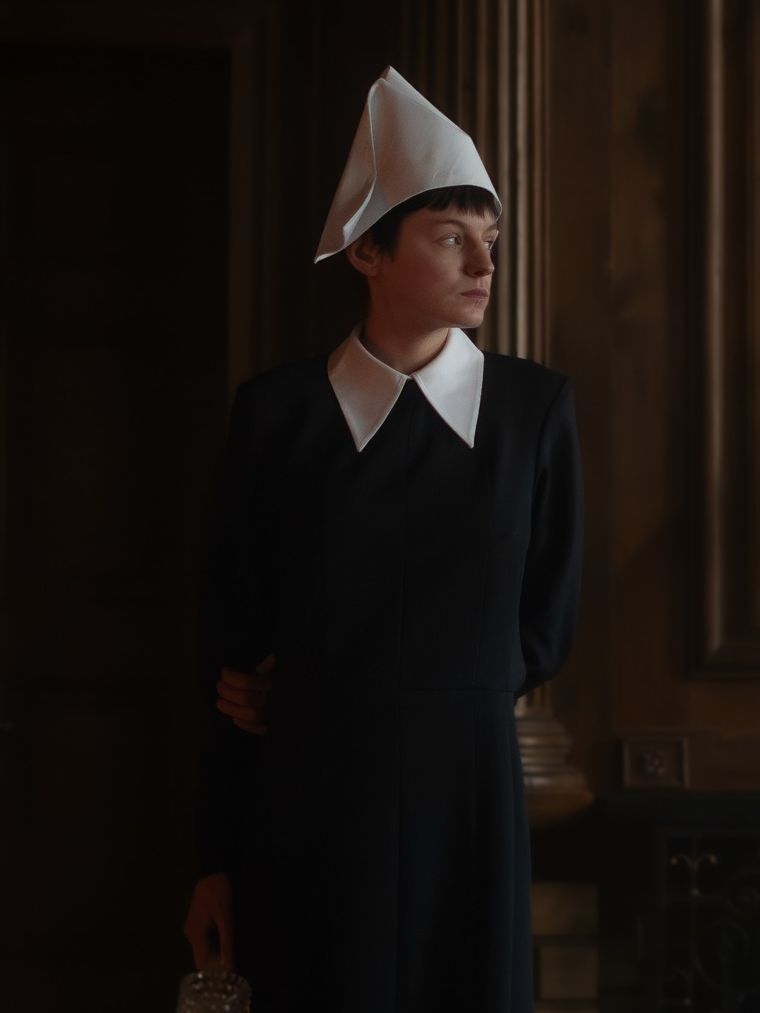

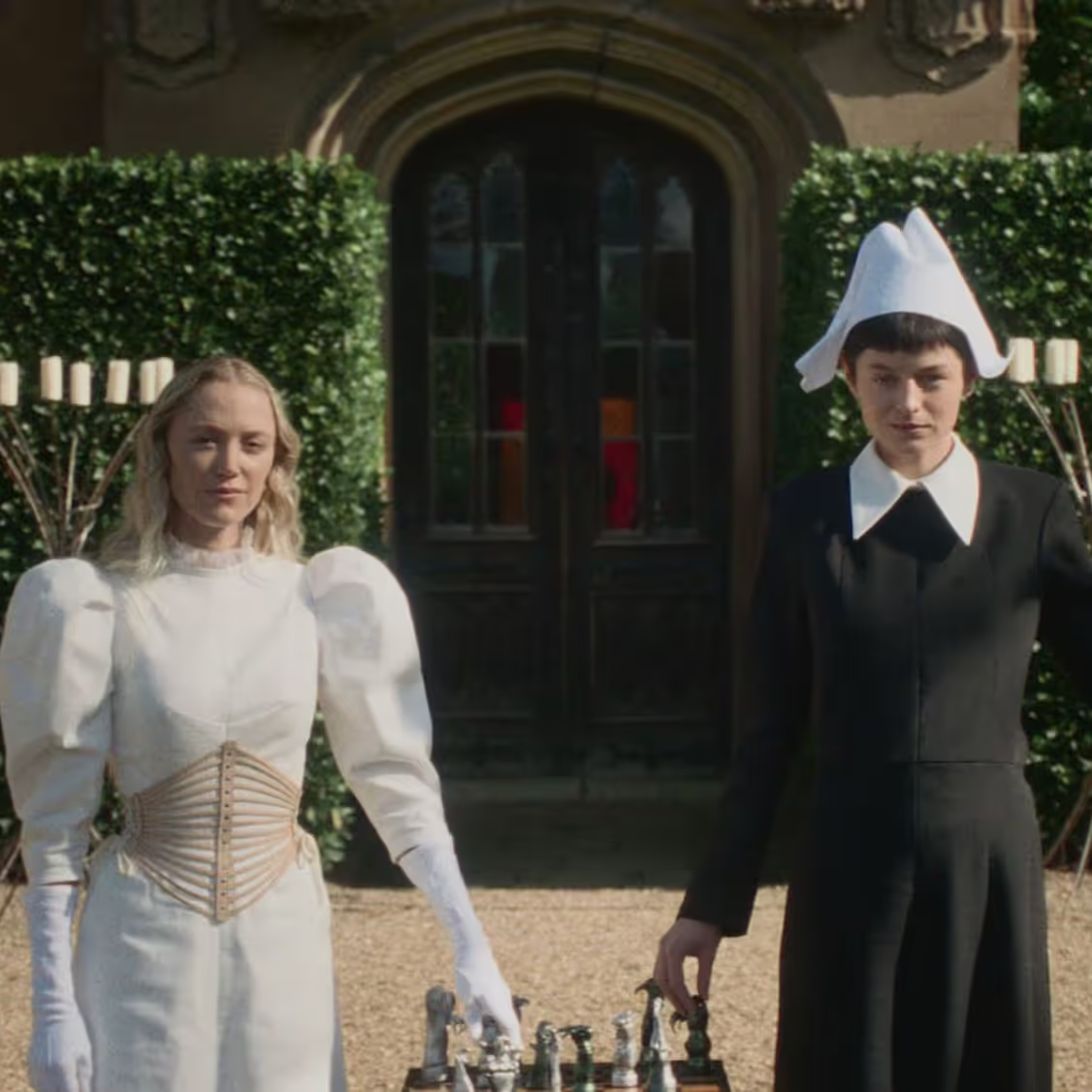
Emma Corrin in "100 Nights of Hero". Photo: IFC
IFC
When the audience first meets Cherry, she is sitting across from her husband as he lies about their attempts to create an heir. As she docilely takes the blame for their failure to conceive (her husband, we are told, “comes from good stock”) in a gown topped with an elaborate bird-feather ruff, we are reminded of Cherry’s place in society. In this fantasy-fable, a cruel and misogynistic god known as Birdman (played fleetingly by Richard E Grant) presides over all. This pointed gesture toward her subjugation was originally director Julia Jackman’s idea, and while the costume designer initially hesitated, she now sees it as one of the film’s defining images. Other costumes reflect Cherry's lack of agency too, such as the corsets she wears on top of her dresses. “She’s the caged woman, after all,” Coulthard says. “Whenever we could push that visually, we did — but only if it felt right.”
As for the rest of her look, the goal was to create “quite a distinctive shape that wasn’t period and also wasn’t from a particular period,” Coulthard explains. “We looked at the construction of an original leg of lamb sleeve and how you can make it slightly more contemporary so it feels like it's of its own world. Poor Clinton, we had about six iterations of that sleeve that was on that coat. It was getting the proportions right.”
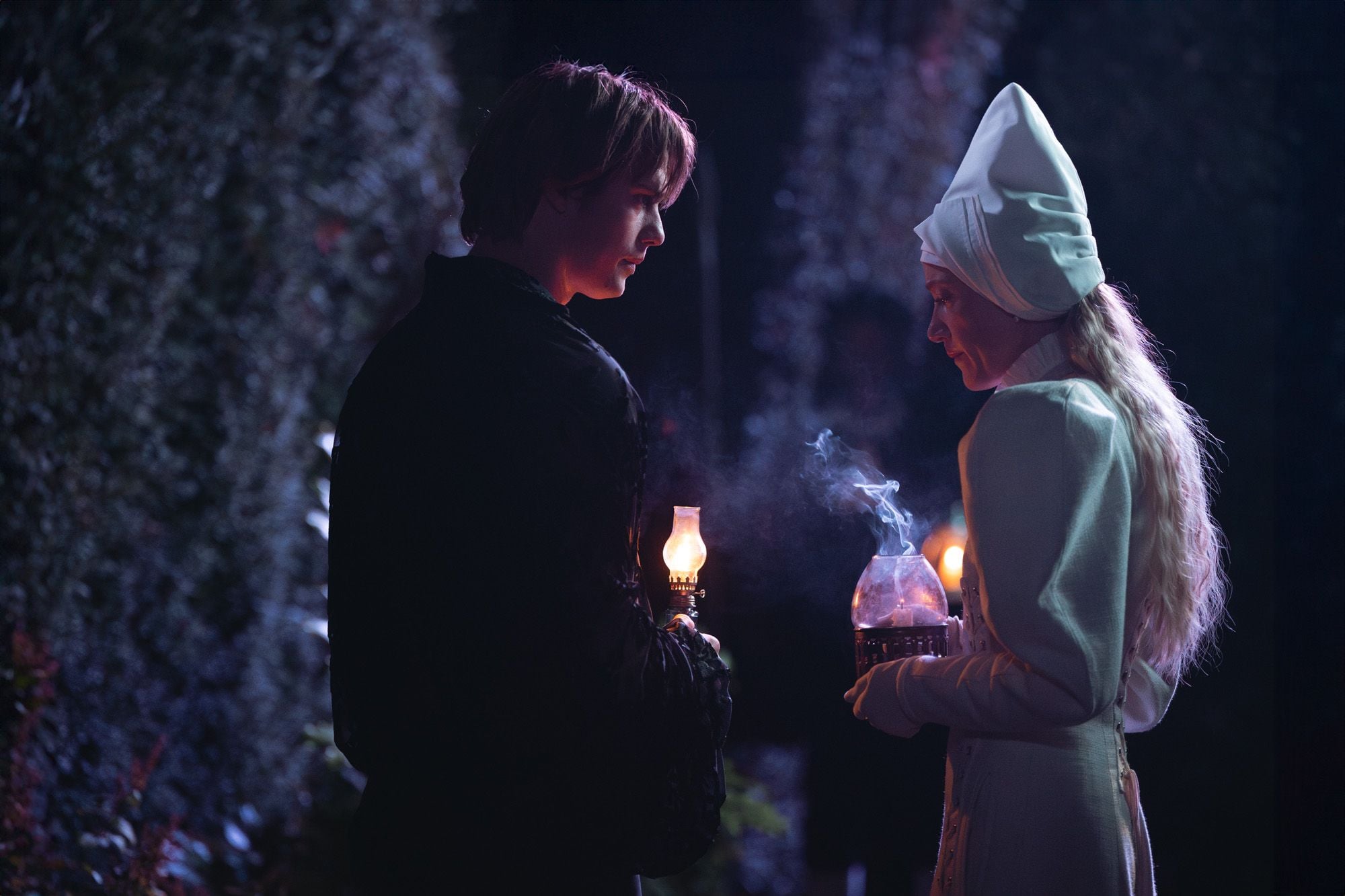
Another consideration for Cherry’s outfits was how they would work alongside those of Hero. The two women’s contrasting looks had to always “be in harmony” with one another, Coulthard says. Their looks were developed on mannequins placed side-by-side, to allow the costume team to keep them in constant conversation with one another. So, for instance, in this introductory scene, when Cherry is wearing a collar on her blouse that faces upwards, Hero's collar faces the opposite way, almost like pieces in a puzzle. “I just felt those two characters have to gel together and fit into this idea that they’re at home in this world together and quite closely bound together as a pair.”
As Cherry’s emotional world cracks open, her costume loosens too. By the film’s end, she’s in a barely-there gown with delicate shoulder straps that Coulthard likens to a duvet cover. It’s both flowing and revealing, “exposing her sexual freedom.” Cherry’s virginal whites and Hero’s utilitarian black also reflect their positions in the household and society. It’s not until the end of the film that we see this change as they don matching red gowns to face a reckoning for their perceived transgressions. That design decision came out of pure necessity, Coulthard admits, as they were filming on a hilltop in wintery conditions. The outfits they were supposed to wear were impractical, leading to a last-minute change of plan. “Maika would have frozen to death” in her original outfit (the aforementioned strappy nightgown), Coulthard says. A rummage through her studio the night before the scene was shot produced two matching red Valentino dresses that allowed the actors to wear hidden thermal layers underneath.”It worked from a story perspective, but it was absolute pure luck.”
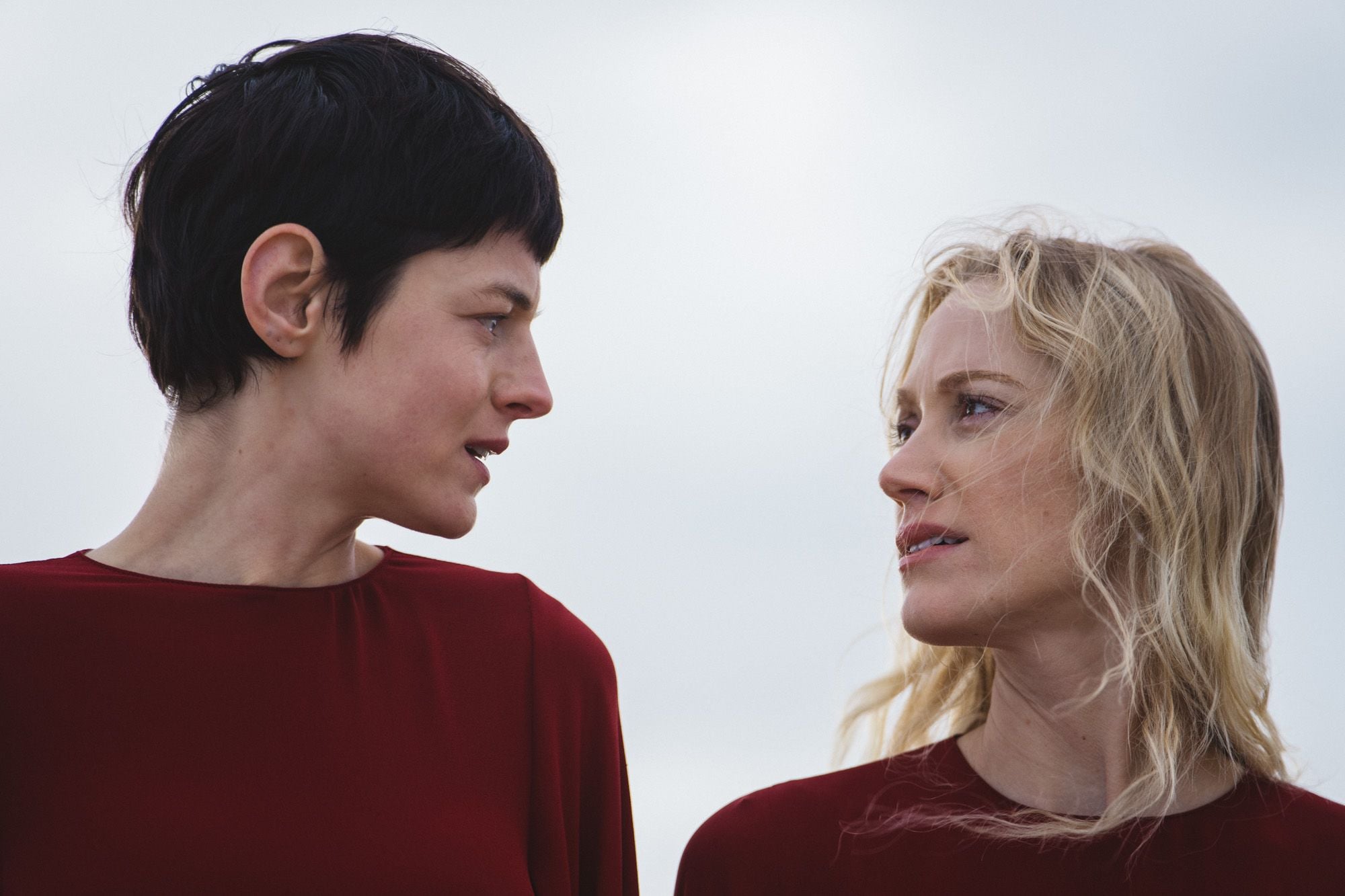

Emma Corrin and Maika Monroe in "100 Nights of Hero." Photo: Independent Film Company.
Independent Film Company

Nicholas Galitzine and Maika Monroe in "100 Nights of Hero." Photo: Independent Film Company.
Independent Film Company
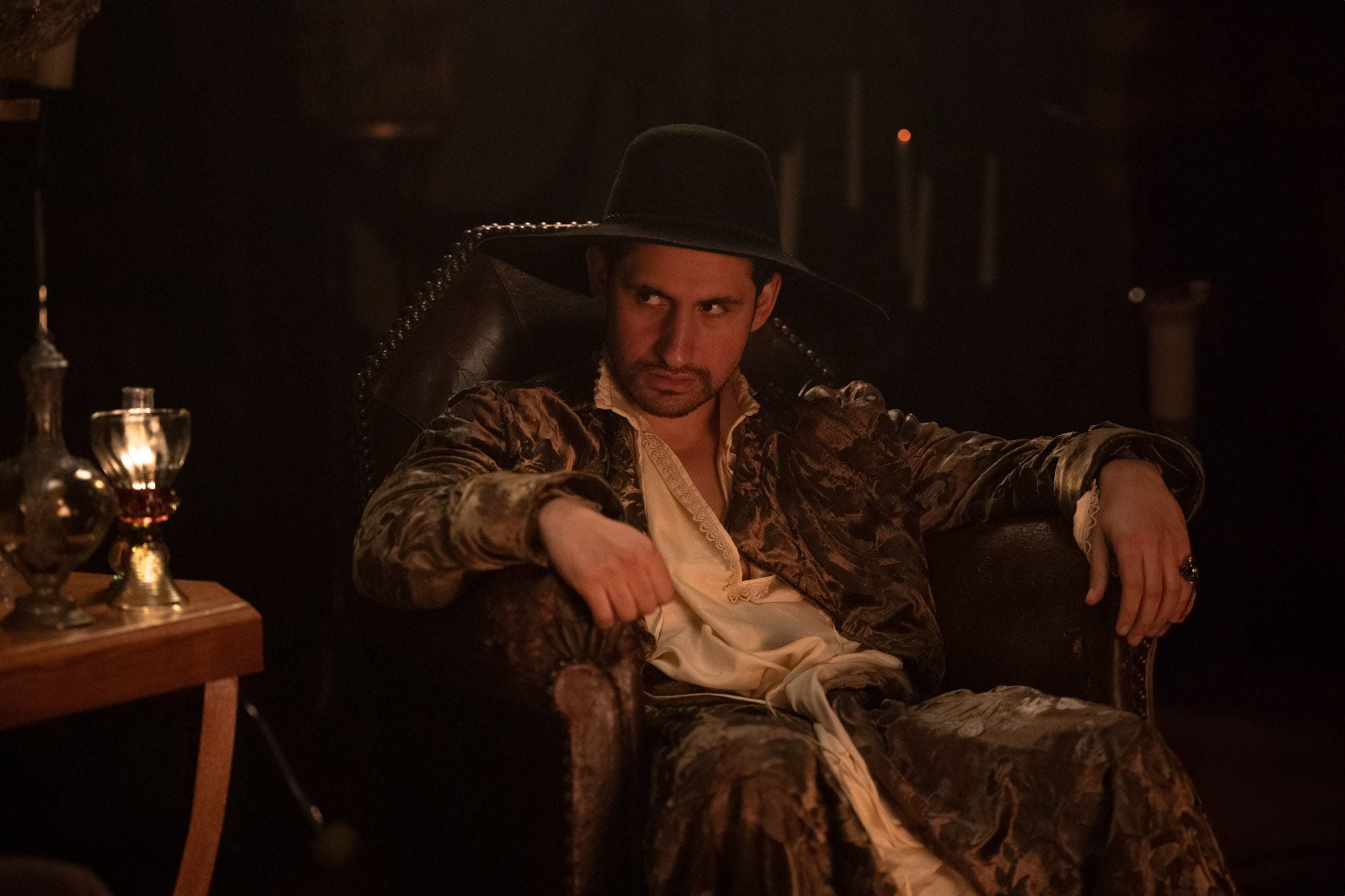

Amir El-Masry in "100 Nights of Hero." Photo: Independent Film Company.
Independent Film Company
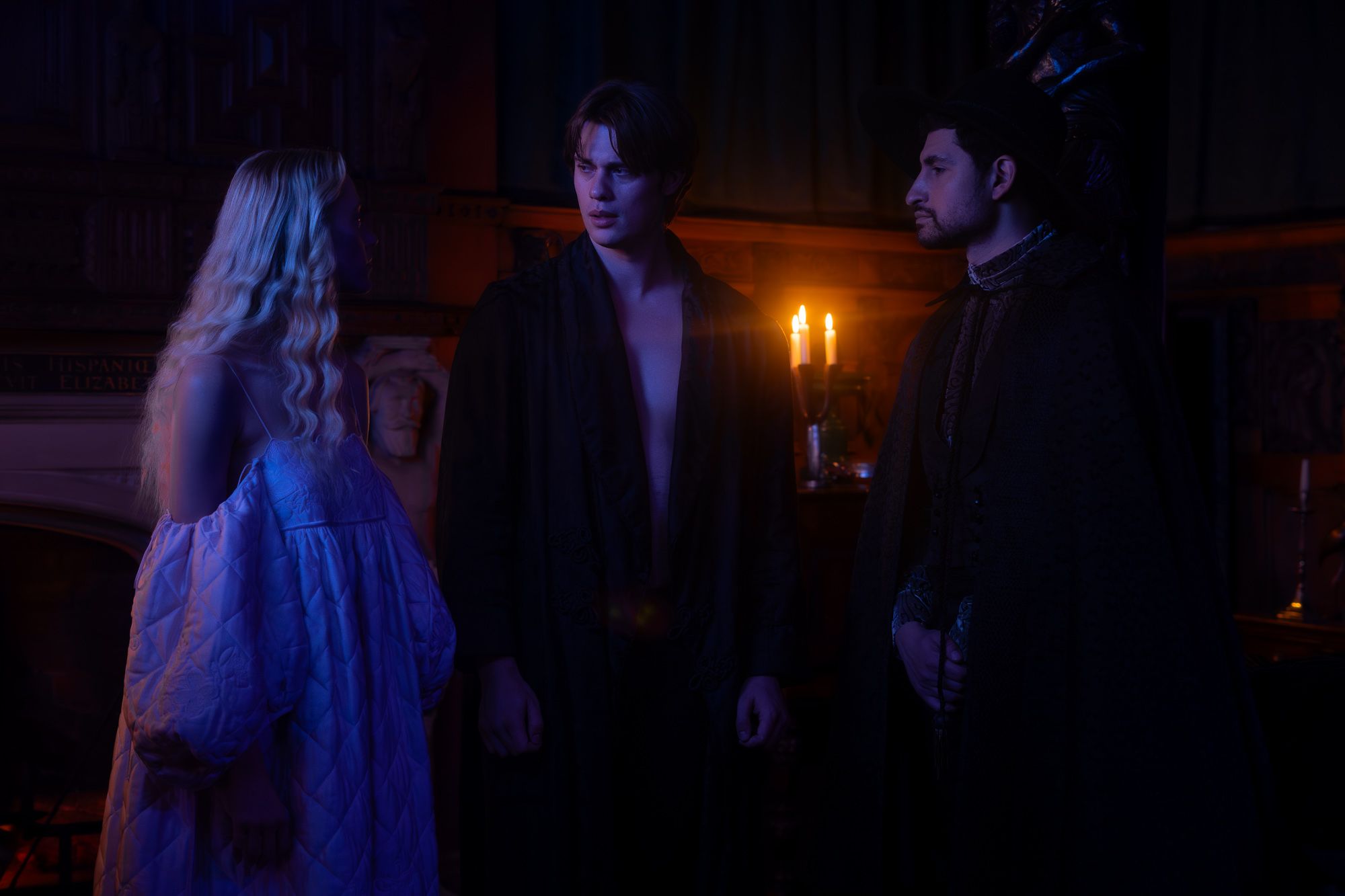

Maika Monroe, Nicholas Galitzine, and Amir El-Masry in "100 Nights of Hero." Photo: Independent Film Company.
Independent Film Company
It wasn’t the only look from a designer used in the film. Some of Cherry’s sculptural silhouettes are designs from Scandi fashion house Cecilie Bahnsen, and the wedding gown that Charli XCX’s character wears is a custom-made design from Elie Saab. While the brand is known for its contemporary bridal line, in keeping with the colorful tone of Rosa’s scenes, Coulthard opted for a striking red and gold design covered in glistening crystal beads. It worked perfectly for the moment and, as Coulthard explains, was a rather practical solution.“We couldn’t have made something that exotic with the time and resources we had,” she says.
The men in the film also get distinct fashion moments. Manfred’s shirts, she says, evolve from simple cotton to more luxurious fabrics as his desperation to seduce Cherry escalates. Meanwhile, Jerome’s looks are intentionally “quite camp” to betray his excuses for not entering Cherry’s bedchambers. “That’s how I read it when he decides to go off gallivanting with his male friends and leave his wife at home, unable to get her pregnant,” Coulthard laughs.
Headwear became another crucial storytelling device, developed through close collaboration with the milliners at Hood London. Almost every character wears a head or face covering at one point in the story. Hero has her pointy, white napkin-esque designs, Jerome dons a comically large felt bowler hat, and the palace guards hide their identities behind gold-plated masks throughout. Cherry’s signature sculptural headpieces, developed through close collaboration with the milliners at Hood London, “went through various iterations” as they worked to create something that felt both couture and wearable. “It’s amazing how much you can push something when you have so little time. We just kept going and going until we had it right.” Some of the bolder designs never made it to screen, including a dramatic crinkled black cloud-like headpiece, but, as Coulthard notes, discovering what doesn’t work is just as important as finding what does. “It was actually quite nice that we weren’t overloaded with a million costumes per character,” she says. “It meant that we could push for perfection as much as possible. It's quite rare that you get that opportunity.”