In ‘Love Story,’ JFK Jr.’s Tribeca Loft Is Both A Product Of Its Time And Way Ahead Of It
Interiors

Interiors
Production designer Alex DiGerlando explains how he conceptualized the minimalist space that serves as both a refuge and a prison for John F. Kennedy Jr. and Carolyn Bessette in the latter half of "Love Story."
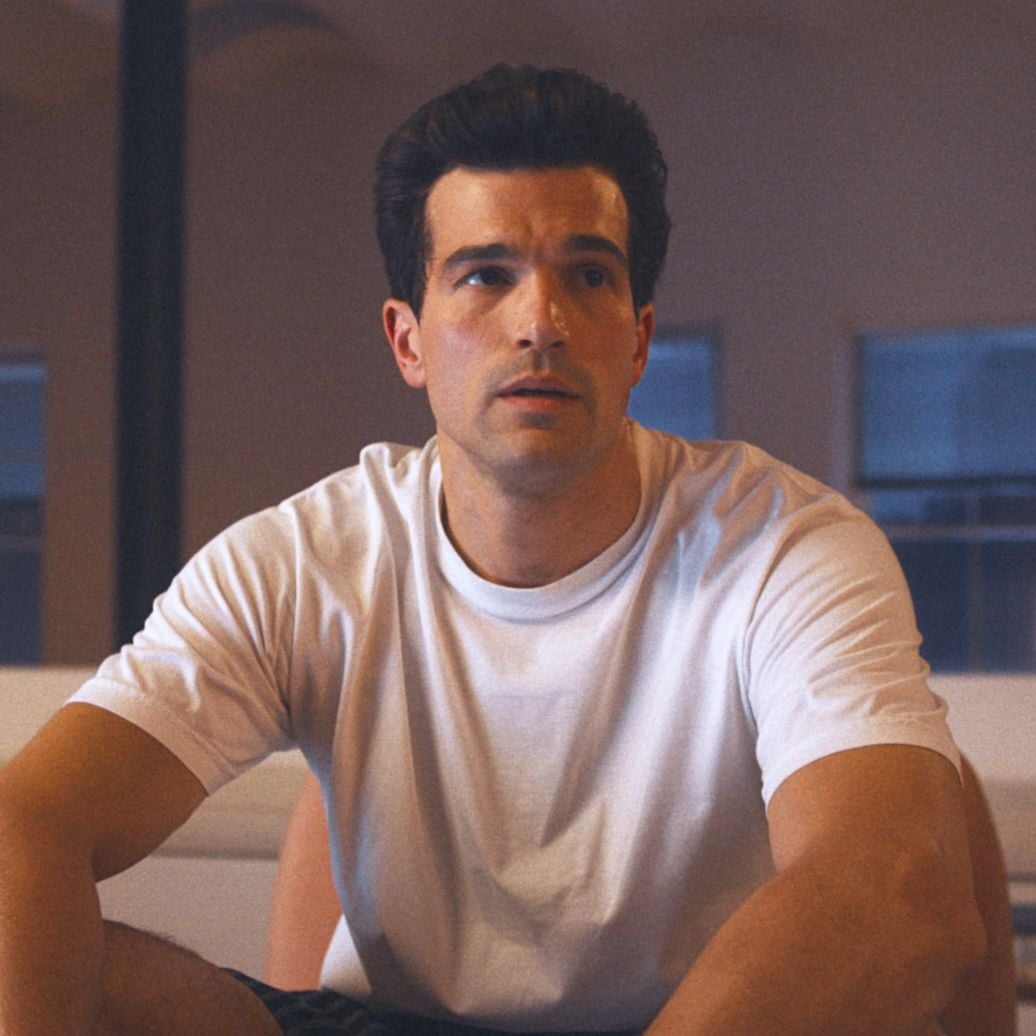
As Carolyn Bessette-Kennedy changed the face of fashion, John F. Kennedy Jr. was shaping downtown culture from his Tribeca loft at 20 North Moore Street, which has now been reimagined in all its glory in “Love Story,” FX’s hugely popular dramatization of the couple’s tragic fairy tale starring Sarah Pidgeon as Carolyn and Paul Anthony Kelly as John.
Executive producer Ryan Murphy envisioned a showcase of ’90s minimalism most closely associated with the clean aesthetic of Calvin Klein, where Bessette-Kennedy famously worked as a trend-whispering publicist. As production designer Alex DiGerlando tells The Set Set, minimalism “is a defining style icon for the era” and so “a lot of our look is filtered through the lens of Calvin Klein because he's a character in the show.”
Exterior street scenes — like the couple making up after their public fight in Battery Park — were shot outside the real North Moore Street loft. But recreating the spacious interior on a soundstage allowed DiGerlando some creative liberties to elevate Kennedy’s bachelor pad, of which very little documentation exists. “To buy that apartment in that neighborhood at that time was pretty chic in and of itself,” says DiGerlando. “[Kennedy] was really ahead of the curve.”
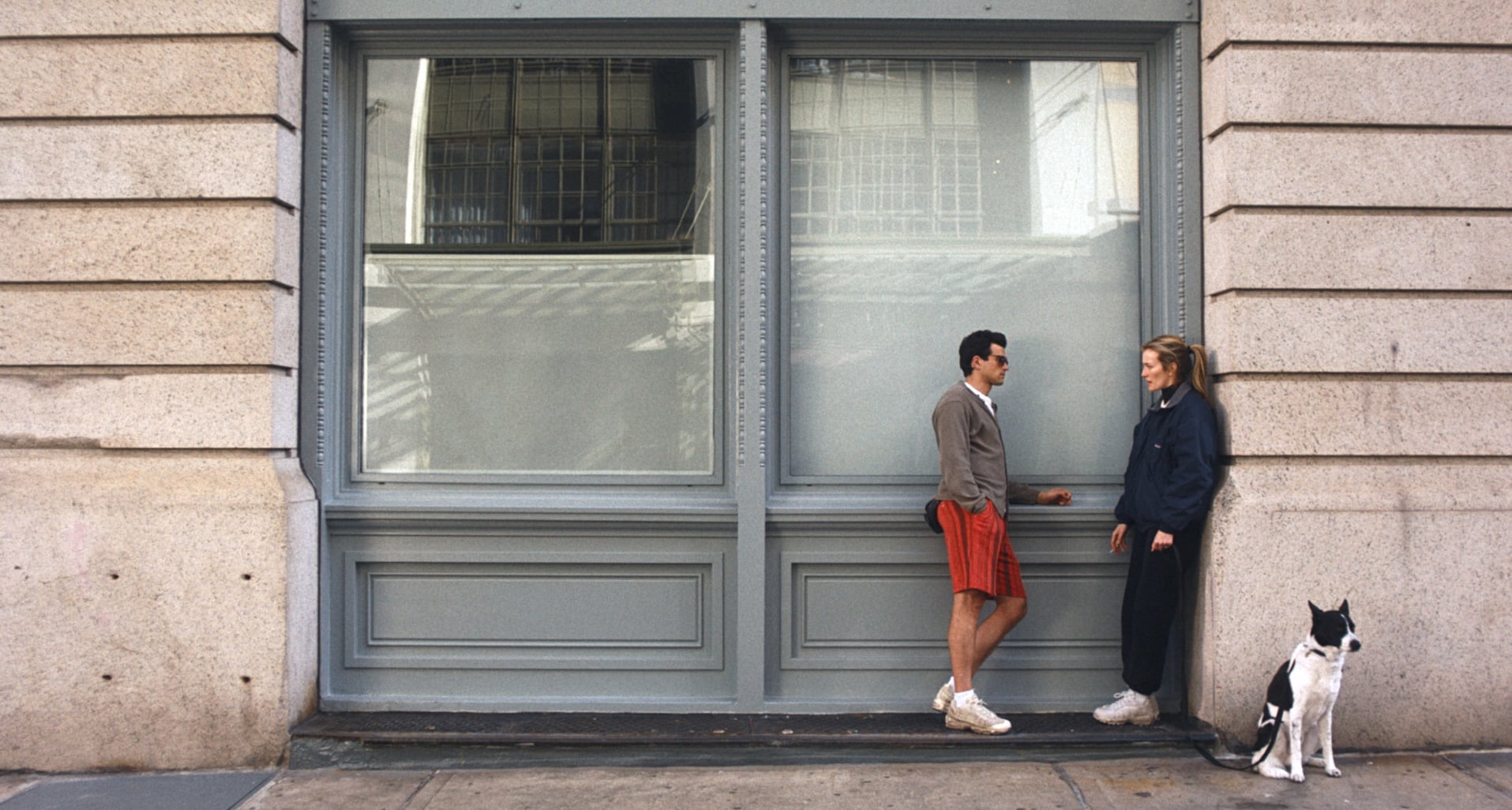

The couple's reconciliation after their public fight in Battery Park was shot on location in Tribeca outside the real loft.
FX
“We wanted it to be a little more stylish than what we were able to glean from the real space,” says the Emmy-nominated production designer, who studied floor plans of the original and neighboring apartments to determine the layout behind the apartment. With no photos or footage of how Kennedy and Bassette decorated or laid out the apartment to go off of, DiGerlando got creative. After learning that actor-director Edward Burns — who also favors a Kangol hat worn backwards — bought the loft in 2000 and shot his 2011 film “Newlyweds” inside it, DiGerlando watched the trailer for the film as part of his research. But to truly evoke the period portrayed in the limited series, he looked instead to sultry, stylized depictions of loft living in the 2000s: the big-screen adaptation of Bret Easton Ellis’ seminal “American Psycho,” the thrilling ’80s fare: “9 1⁄2 Weeks” and Michael Cimino’s “Year of the Dragon.”
“Even though [the story begins in] 1992, there really is a lot of ’80s holdover,” DiGerlando says. “And we looked at a lot of books of loft design because that was very en vogue at the time.” He also honored defining minimalist designers of the day: Joe D'Urso—the architect behind the Calvin Klein offices in the ’70s and early ’90s, as well as Klein’s apartment—and John Pawson, who designed the brand’s gleaming Madison Avenue flagship unveiled in 1995. DiGerlando looked to the work of pioneering high-tech architect of the ’80s Alan Buchsbaum and Mid-century modernist designer Ward Bennett, too.
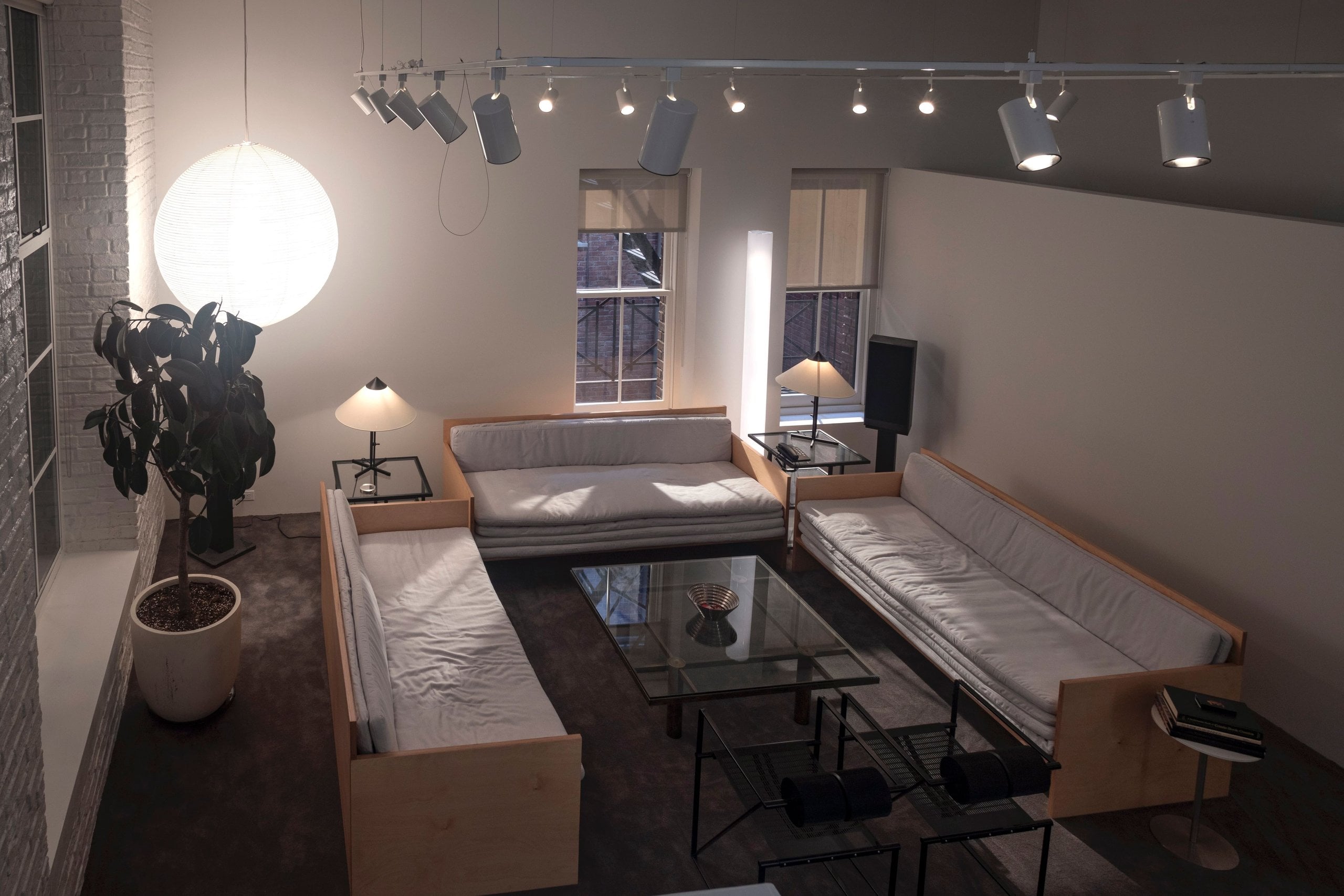

To design the living space production designer Alex DiGerlando looked to sultry, stylized depictions of loft living in the 2000s.
FX
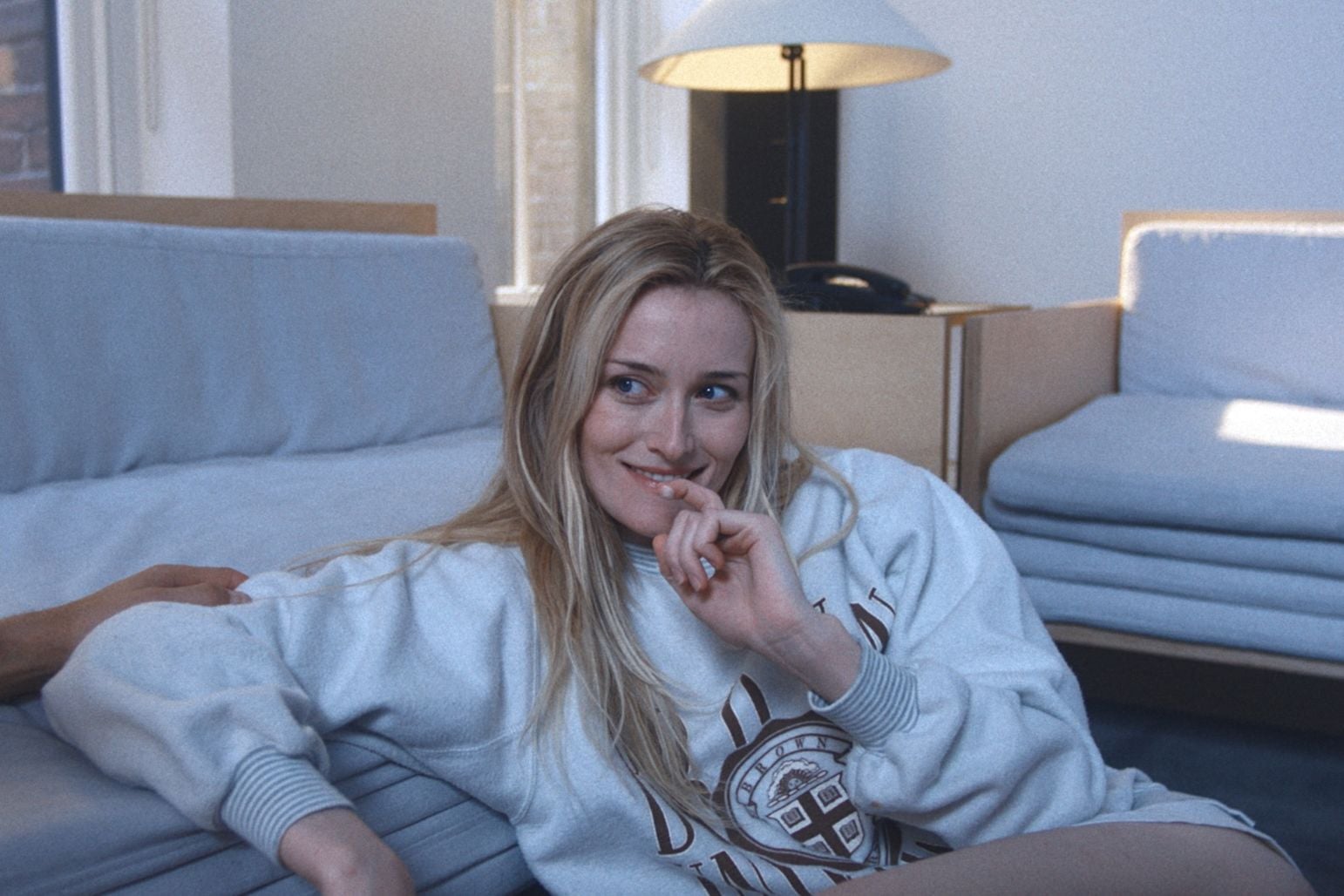

Sarah Pidgeon as Carolyn Bessette-Kennedy in "Love Story."
FX
To design the living space production designer Alex DiGerlando looked to sultry, stylized depictions of loft living in the 2000s.
FX
Sarah Pidgeon as Carolyn Bessette-Kennedy in "Love Story."
FX
In the much-anticipated wedding episode, a newly-aligned John and Carolyn brainstorm their dream nuptials, in between sharing a joint and dancing ecstatically to Blur’s “Common People” played on a CD player. At one point, Carolyn, wearing John’s worn-in Brown University sweatshirt and a pair of men’s gym socks, jumps up onto one of three avant-garde white couches with cushions resembling levels of stacked mats. “That was a little bit of an invention based on a number of different designers, including John Pawson. Ryan was really moved by his aesthetic,” says DiGerlando. “The stacked cushions were something he did on a yacht, and we thought that was a cool detail.”
But Kennedy heritage and John’s late mother Jackie's (Naomi Watts) influence subtly break through the stark ’90s decor. A dark carved-wood cabinet in the kitchen stores antique dishes, while a worn desk in his office hints at a family heirloom. The interiors also reflect every little nugget of research DiGerlando and his team uncovered—like a former George magazine intern’s story of parties at the boss’s loft, where guests would casually set their sweaty beer glasses next to pieces from President John F. Kennedy’s scrimshaw (carved whalebone) collection. “Anytime we found a cool detail about something that he might have had in real life, we tried to honor that,” says DiGerlando, who hand-carved the faux whalebone art placed throughout the loft.
![“Ryan [Murphy] was going for this very romantic—with a capital R—yet minimalist vibe harkening back to movies from the ’30s," says production designer Alex DiGerlando.](/_next/image?url=https%3A%2F%2Fvfnzdvyersqd2hfl.public.blob.vercel-storage.com%2Fmedia%2FWHITE%2520PLAINS%2520sets_00062-2560x1707-SiFIFGo63P7PmKLT9XcpGAOsOUxPiA.jpg&w=3840&q=85)

“Ryan [Murphy] was going for this very romantic—with a capital R—yet minimalist vibe harkening back to movies from the ’30s," says production designer Alex DiGerlando.
FX
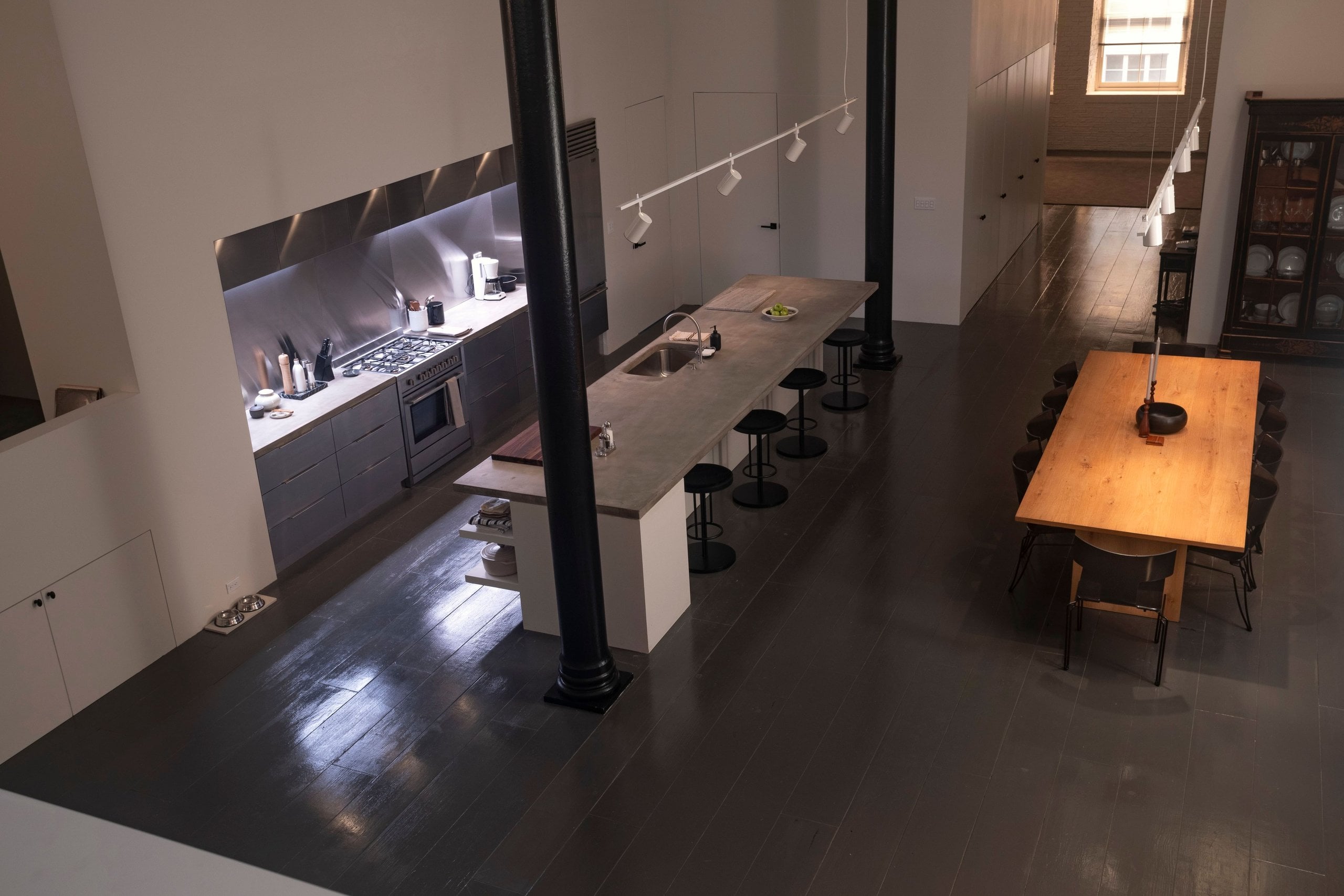

Jackie O's influence subtly break through the stark ’90s decor, as seen in the dark carved-wood cabinet in the corner of the kitchen.
FX
“Ryan [Murphy] was going for this very romantic—with a capital R—yet minimalist vibe harkening back to movies from the ’30s," says production designer Alex DiGerlando.
FX
Jackie O's influence subtly break through the stark ’90s decor, as seen in the dark carved-wood cabinet in the corner of the kitchen.
FX
Of course, the furniture and décor also subtly reflect Carolyn’s influence on John’s life and hint at the pressures of being a Kennedy wife following their intimate Cumberland Island wedding. For instance, at the kitchen table chic yet welcoming brown leather Mario Bellini chairs replace John’s spare, angular black Donghia Anziano ones seen in earlier episodes. “The longer she spends in his apartment, more blush starts invading,” says DiGerlando, connecting Carolyn’s new home to her previous messy East Village pad in a blush, white, and gray palette. He also illustrated Carolyn’s personal touch through an elegantly restrained Dieter Rams bookshelf unit for the living room.
Elizabeth Beller’s book, “Once Upon a Time: The Captivating Life of Carolyn Bessette Kennedy,” which inspired the series, describes how the style icon infused her taste—and added minimalist coziness — through throw soft pillows and a Mid-century Edward Wormley kitchen table. But, on-screen, the sleek, lacquered wood table in John and Carolyn’s kitchen is actually from Room & Board. “Ryan was going for this very romantic—with a capital R—yet minimalist vibe harkening back to movies from the ’30s, where the sets are more backdrops. So that the stars could really shine,” says DiGerlando. “He's like, ‘I don't want to gunk up our set with that Mid-century, because that will undercut the vibe.”
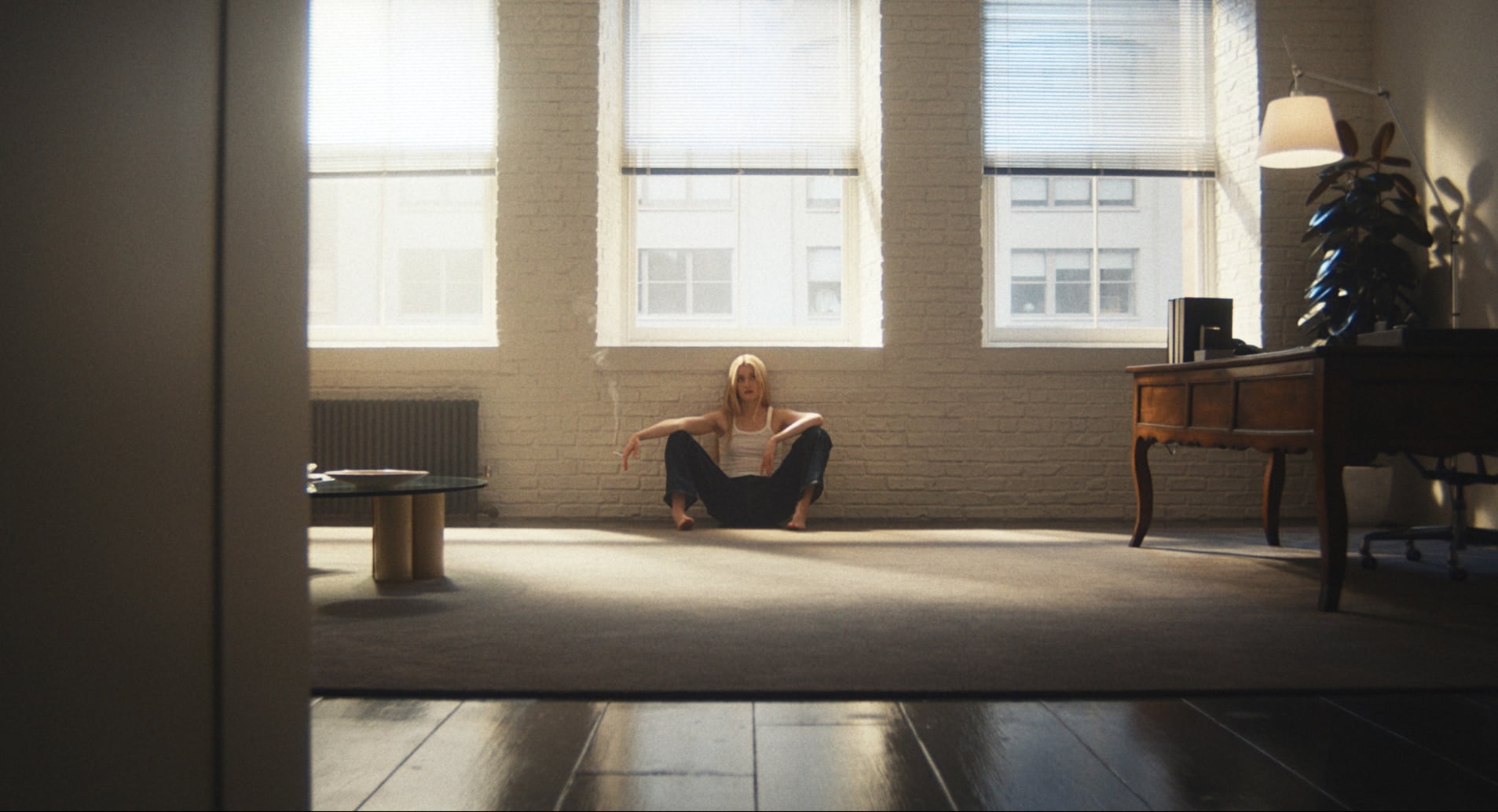

The cohesive minimalist design also served as a creatively adaptable canvas for directors to stage evocative, plot-driven compositions—such as when the loft becomes Carolyn’s prison.
FX
The cohesive minimalist design and layout also served as a creatively adaptable canvas for directors to stage evocative, plot-driven compositions, such as when the loft becomes Carolyn’s prison when she finds herself overwhelmed by the paparazzi. In a montage highlighting her growing confinement and fear of the outside world, Carolyn smokes listlessly on the shadowy ledge of a raised loft space, draped in her iconic black strapless Yohji Yamamoto dress and gleaming opera gloves. “So cool with the skylight right above her,” says DiGerlando of the unplanned shot that came together during filming. “My job is to give the space as much depth, character, and dimension as possible, so [the directors] have the freedom to explore and discover things.”
Later on, Carolyn finds herself looking up from underneath a vintage glass coffee table that is strewn with a W and other fashion magazines—it’s an arresting visual metaphor for how her relationship with print media is responsible for the life she has, and also ruining it at the same time, from her former job at Calvin Klein to the paparazzi who terrorize the newlyweds. DiGerlando also points out the loft’s analog-era artifacts: a back-projection TV that looks amusingly tiny atop expansive white shelving, a landline phone, alarm clocks, and the aforementioned Bang & Olufsen multi-CD player—a hot, high-tech commodity for the time.
“Part of what’s appealing and capturing people’s imagination about the show is that the ’90s were the last moment of the pre-Internet era,” explains DiGerlando. “Magazines were still driving the culture, not the Internet. Ultimately, the hunger for content to fill those magazines imprisons Carolyn. I wish I could take credit for that—when they shot those scenes, that was something they discovered in the sandbox I provided for them.”