
Inside the Beautiful, Beguiling World of ‘100 Nights of Hero'
Interiors
Julia Jackman's playful feminist fairytale is set in an anachronistic world built from different periods and references. Production designer Sofia Sacomani reveals how she crafted its distinctive look.
In “100 Nights of Hero,” director Julia Jackman conjures up a world that feels both fantastical and familiar. It is one of patriarchal oppression, ruled over by a dastardly deity known as Birdman, who dictates that women exist only to marry and bear children. Consequently, pursuits like reading and writing are forbidden to them. So when meek noblewoman Cherry (Maika Monroe) and her maid Hero (Emma Corrin) find themselves using storytelling as a way to push back against the men who try to control them, it becomes a small act of rebellion.
While Birdman may rule, the architect of this universe is Sofia Sacomani, an Argentinian, London-based production designer. She shaped the backdrop on which Cherry and Hero’s resistance unfolds.“What I tend to do is just focus only on the script before I even look at anything else,” she says. “My process is to read it all in one go and let whatever I’m imagining take over.” Although the graphic novel on which the film is based—itself a loose retelling of “1001 Arabian Nights”—is set in the medieval period, to Sacomani the script felt unmoored from any single era. When she sat down with Jackman for the first time, she discovered that her instincts aligned closely with the director’s. Both envisioned an anachronistic world built from a collage of different periods and references. “Julia wasn’t fixed to a specific time, which gave me full freedom,” Sacomani explains.
Early development was a swirl of fragmented ideas—bolstered by costume designer Susie Coulthard’s playful concepts, opens in new tab, and a location shortlist that included everything from crumbling castles to Victorian townhouses. It wasn’t until they settled on what would become the film’s primary location that the design language clicked.
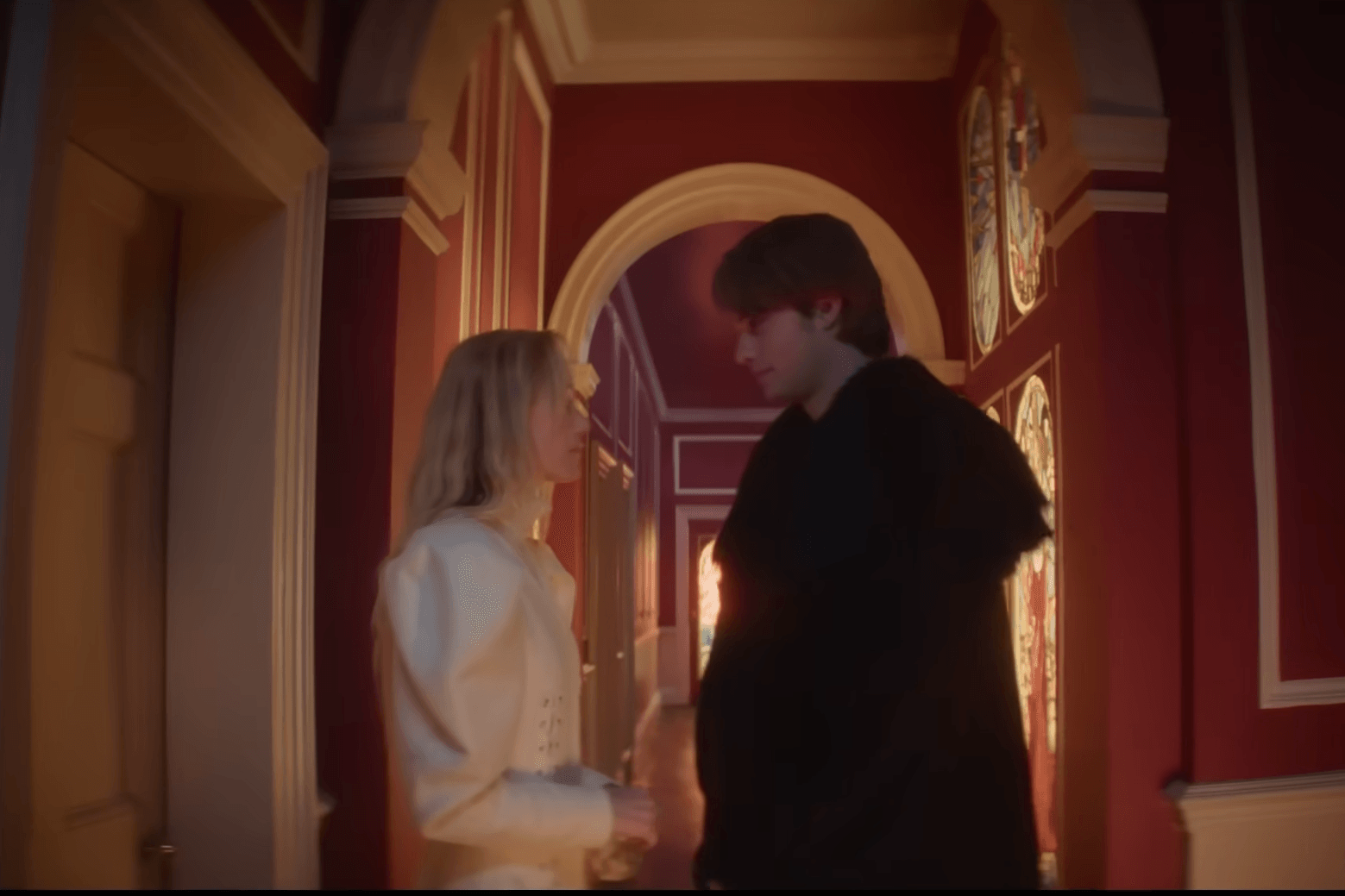

In "100 Nights of Hero," stained glass windows feature prominently. Photo: IFC
IFC
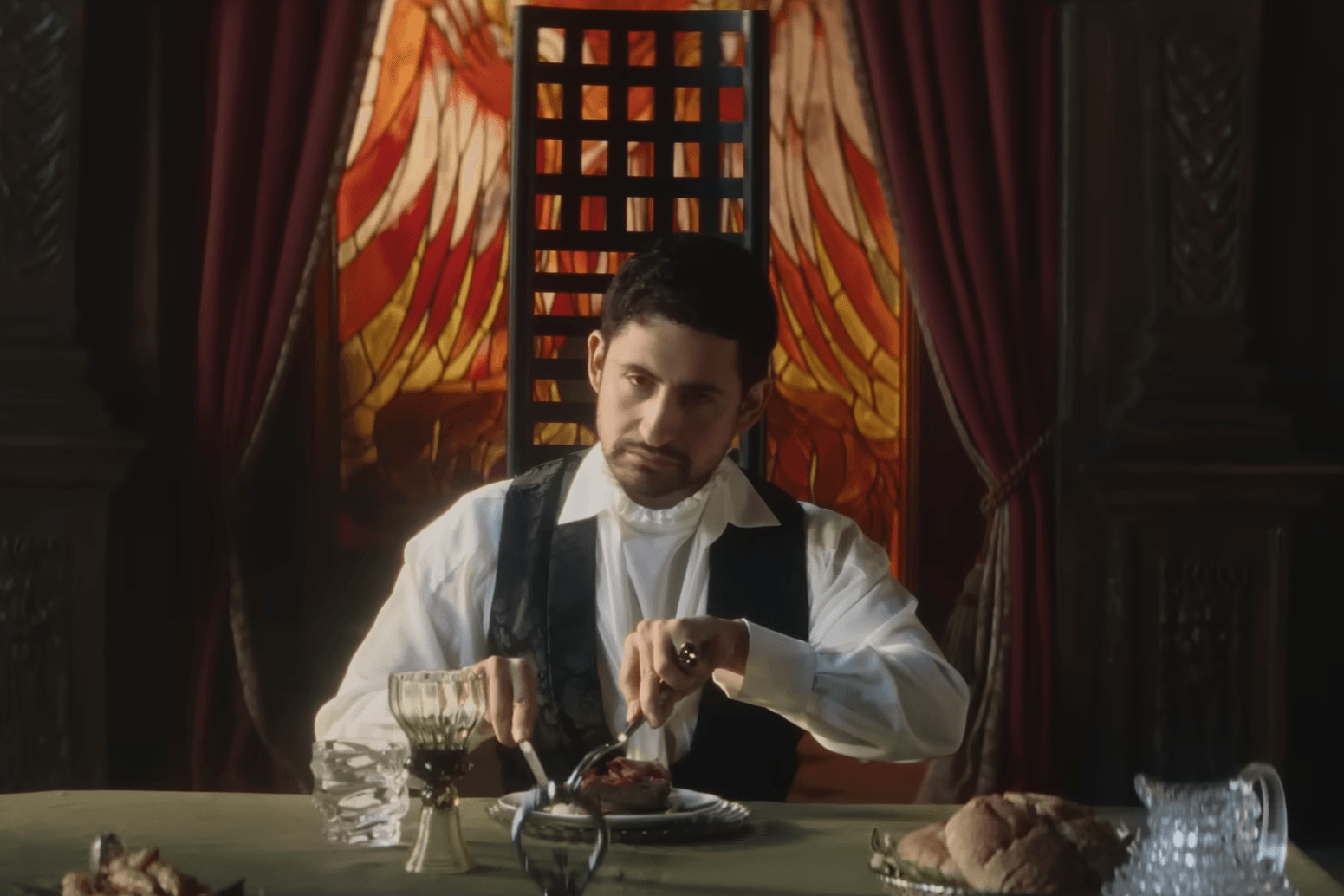

A Stained-glass display is also used in the dining room. Photo: IFC
IFC
In "100 Nights of Hero," stained glass windows feature prominently. Photo: IFC
IFC
A Stained-glass display is also used in the dining room. Photo: IFC
IFC
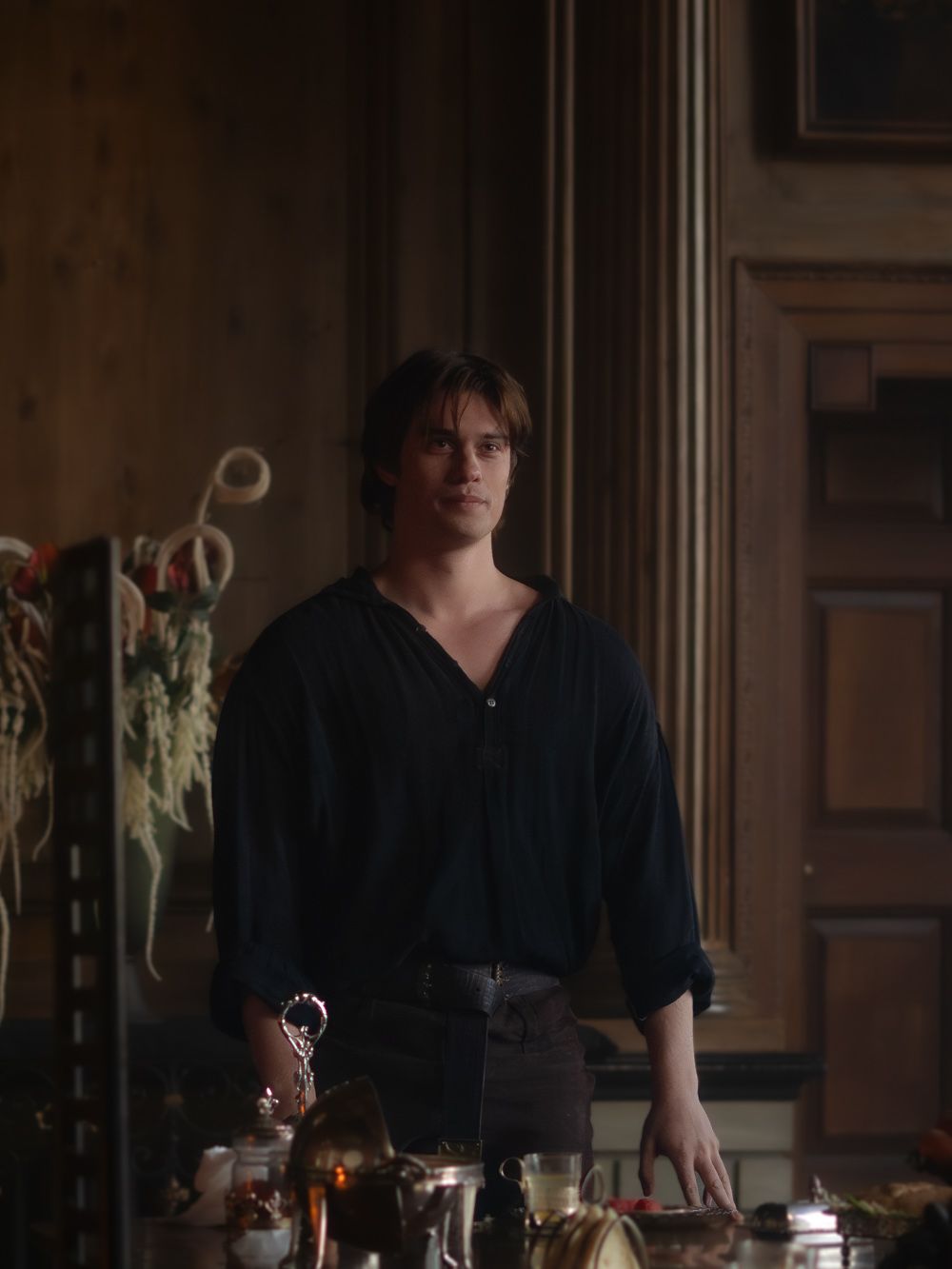
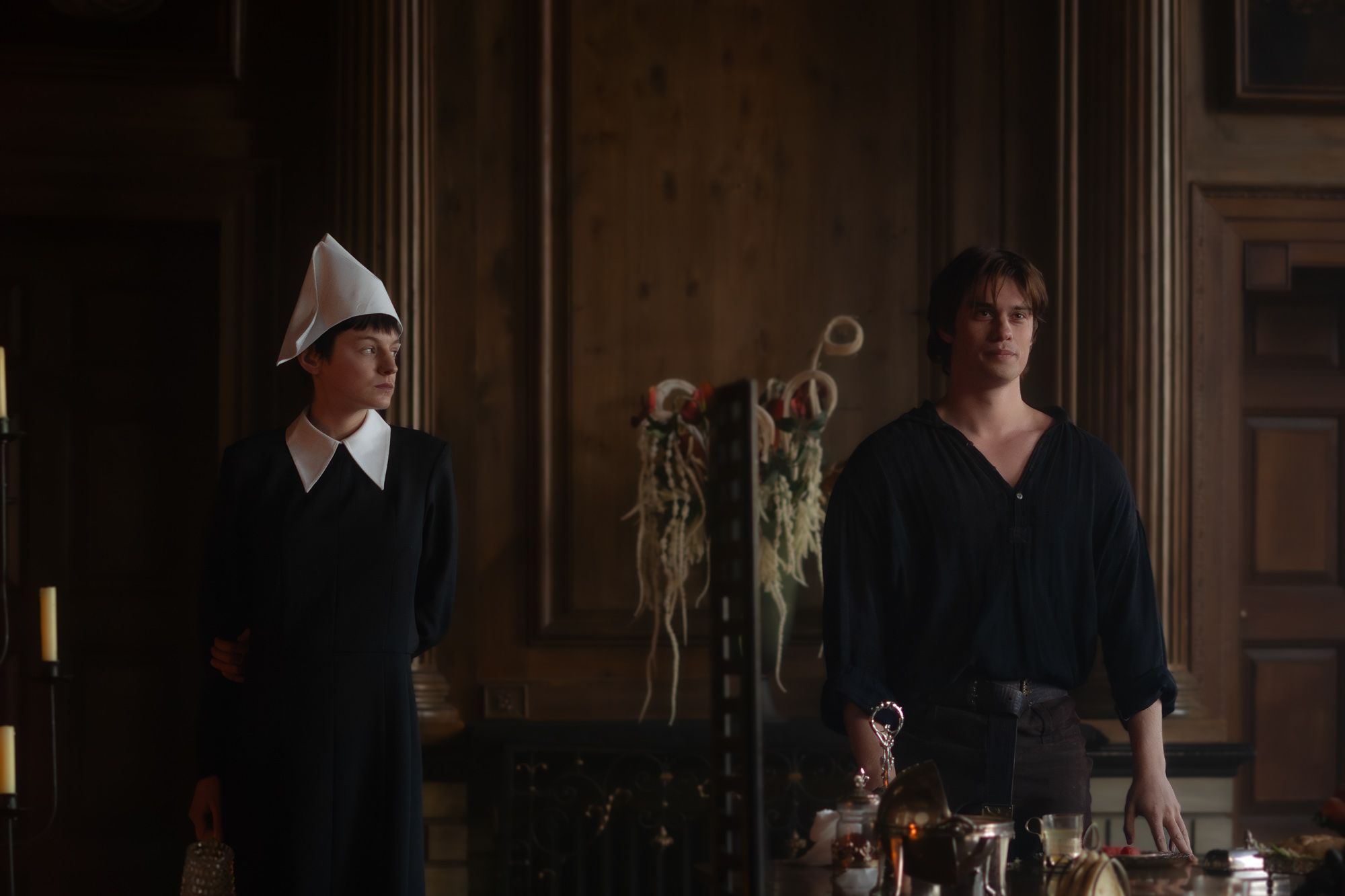
They chose Knebworth House, a 15th-century manor with a Gothic facade replete with turrets, domes, and gargoyles. The inside, meanwhile, features a romantic combination of Jacobean, Victorian, and Edwardian elements. “The mix of periods and styles within Knebworth was perfect for us,” Sacomani says of the historic home. “It told us, ‘Let’s not stick to a specific period. Let’s open ourselves to what the story is giving us and create our own world.’’ Playing with different periods, she acknowledges, “could have gone wrong,” but in “100 Nights of Hero,” this patchwork approach gave the film its unique visual identity.
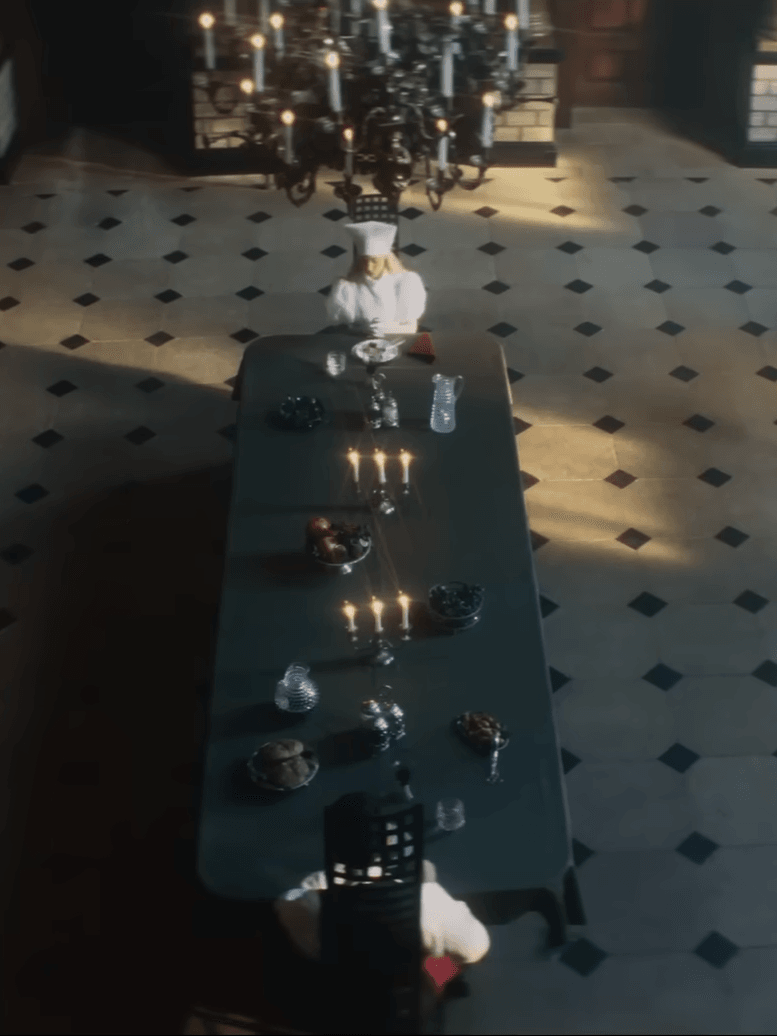

The dining room featured in "100 Nights of Hero". Photo: IFC
IFC
Take, for instance, the long hallway that Cherry and her husband Jerome (Amir El-Masry) routinely walk through before retiring to their separate bedrooms each night. Sacomani initially thought it would need to be built on a sound stage because of how much they would need to change the space to suit the story, “but we were shooting everything at the location, so we needed to make it work there.” With the green light from Knebworth, she and her team added ornamental Georgian mouldings and painted the entire corridor a deep red, in what she says was an homage to Dario Argento’s “Suspiria”. The arterial hue is also a manifestation of the charged, emotional state Cherry finds herself in when parting every night, first with Jerome, and then later with Manfred (who, in a telling assertion of dominance, takes Jerome’s bedroom rather than a guest room).
This corridor, which Sacomani calls the “heart of the house and the heart of the film,” not only connects spaces, it connects other stories too. On one wall, at the exact point where Cherry’s gaze lands when she is left alone and disappointed by Jerome’s decision to go to his bed alone, Sacomani installed a row of custom-made stained glass windows that reveal more to us about the patriarchal power structures at play in this world. The three panels subvert the traditional religious iconography, replacing saints with vilified women—Nadia the Lesbian, Sara the Unfaithful, and Janet the Barren—each of which serves as a cautionary tale for Cherry.
Sacomani wanted the house to feel governed by a religio-mythic presence, and so stained-glass art become a key motif throughout, culminating in the towering depiction of Birdman behind Jerome in the dining room. The inspiration for this piece, she says, was “Batman” (1989), which was also shot at Knebworth, youtube. After watching the Tim Burton film, Sacomani says she wanted to place Cherry and her husband at opposite ends of a dramatically long table—but to make the distance feel intimidating rather than comedic, as it’s played in “Batman”. “I wanted to make sure that figure was behind the man at the head of the table at all times,” she says. “It had to show power and who was the ruler of the household.”
Beyond the hallway, the bedrooms reveal even more about their occupants. Cherry’s room is as fragile as she is. With pale yellow walls and soft pastel furnishings, its color palette subtly evokes the mottled colours of a bruised apple. “It says a lot about Cherry, not only who she is but what her husband expects her to be,” Sacomani explains. By contrast, the room Manfred commandeers (formerly Jerome’s) is rendered in dark, oppressive greens and filled with more robust furnishings, including a metal birdcage tying this masculine domain back to the film’s recurring bird imagery.
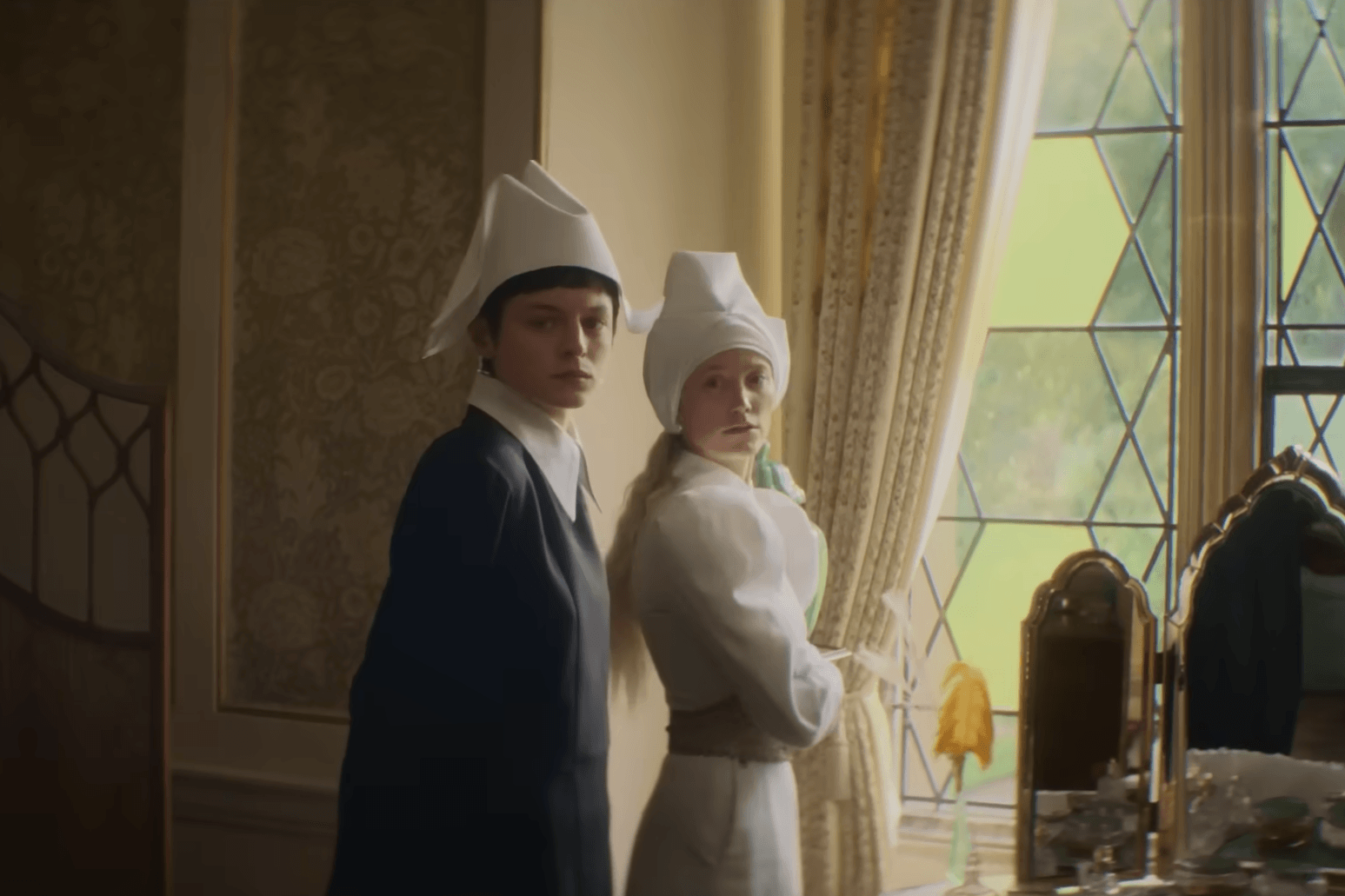

Emma Corrin and Maika Monroe in "100 Nights of Hero".
IFC
It is in the library, where Manfred and Jermone make the bet that sets the plot in motion, that Sacomani found herself faced with a challenge that made her pause: how do you design such a space in a world in which reading is outlawed for the female population? Her solution was to reach for a completely different era. She clad the bookshelves in angular, Art Deco–inspired panels, concealing their contents while introducing a sharp, unexpected geometry. In theory, such a style shouldn’t sit comfortably in a quasi-medieval world — but here, its strangeness is precisely what makes it work.
And just as the film’s characters reshape their fate through storytelling, Sacomani and her team were able to also completely transform a space in the house to tell a new story. For the story-within-a-story that Hero tells about Rosa (Charli XCX) and her sisters, who are punished for the sin of literacy, the production designer used the very same bedroom as Cherry’s, but re-wallpapered and redressed it entirely to make it anew. “Things can happen in the same space, and you can tell a different story just by using color and lighting.” It’s a fitting echo of the film’s central message that stories, how we tell them and how we frame them, can change everything.