
What The Fashion World’s Creative Directors Share With Film Design
Fashion
The most successful fashion shows aren’t just collections, they’re characters brought to life. In our latest analysis, we trace the line between costume design and creative direction.
This fashion week, Balenciaga made headlines with its “Euphoria” season three Fall/Winter collection. The brand’s freshly minted creative director, Pierpaolo Piccioli, teamed up with the HBO show’s creator Sam Levinson to embed still images from the show’s upcoming season into the collection. Balenciaga’s postmodern aesthetic may appear to have little in common with the glittery two-piece outfits of molly-idled high schoolers at a chili cook-off, but the collaboration spotlighted a broader trend within the industry: The world of high fashion is beginning to recognize (and capitalize on) film and television aesthetics as major drivers of fashion and beauty trends.
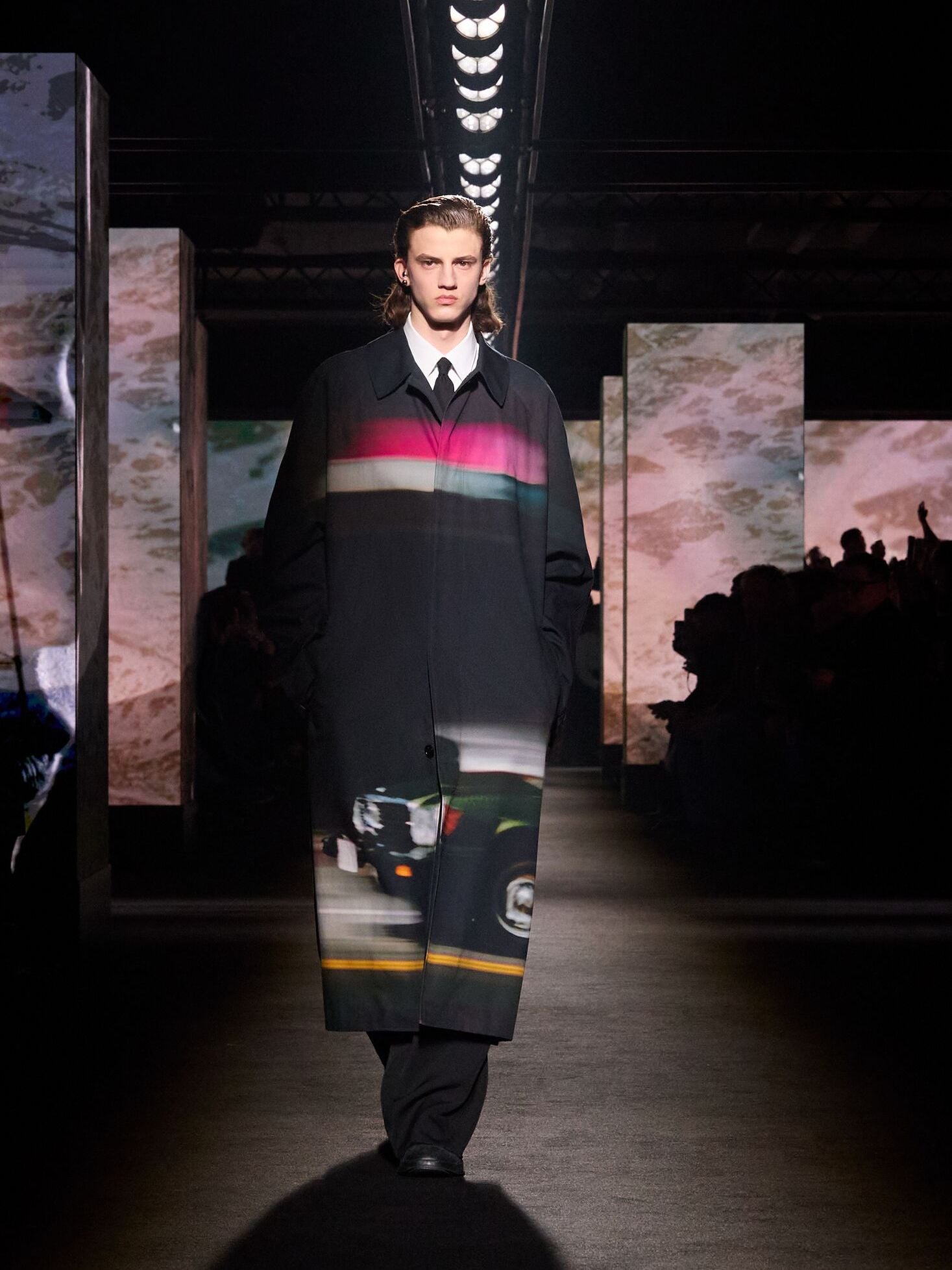

Balenciaga F/W 2026.
Balenciaga
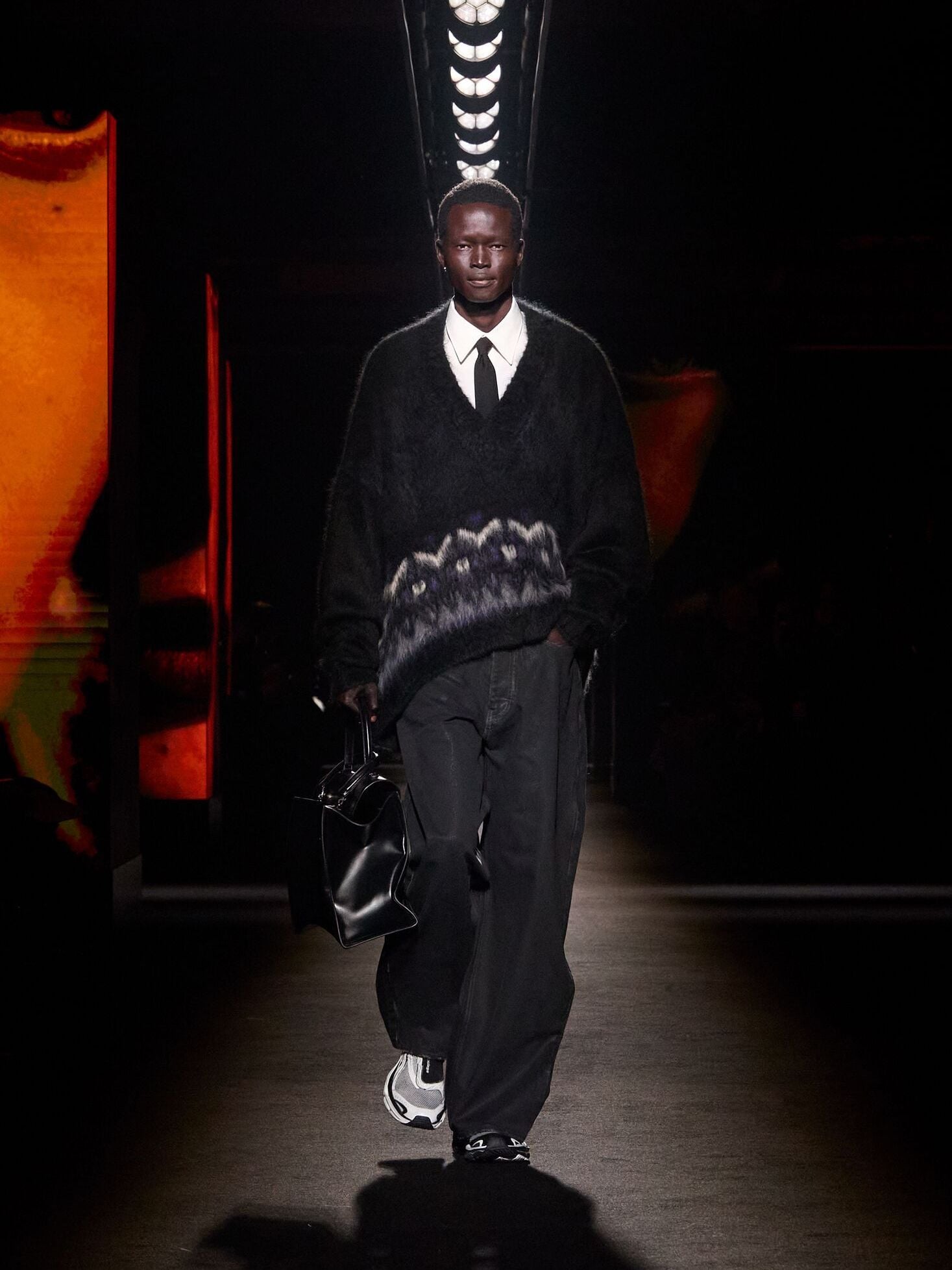

Balenciaga F/W 2026.
Balenciaga
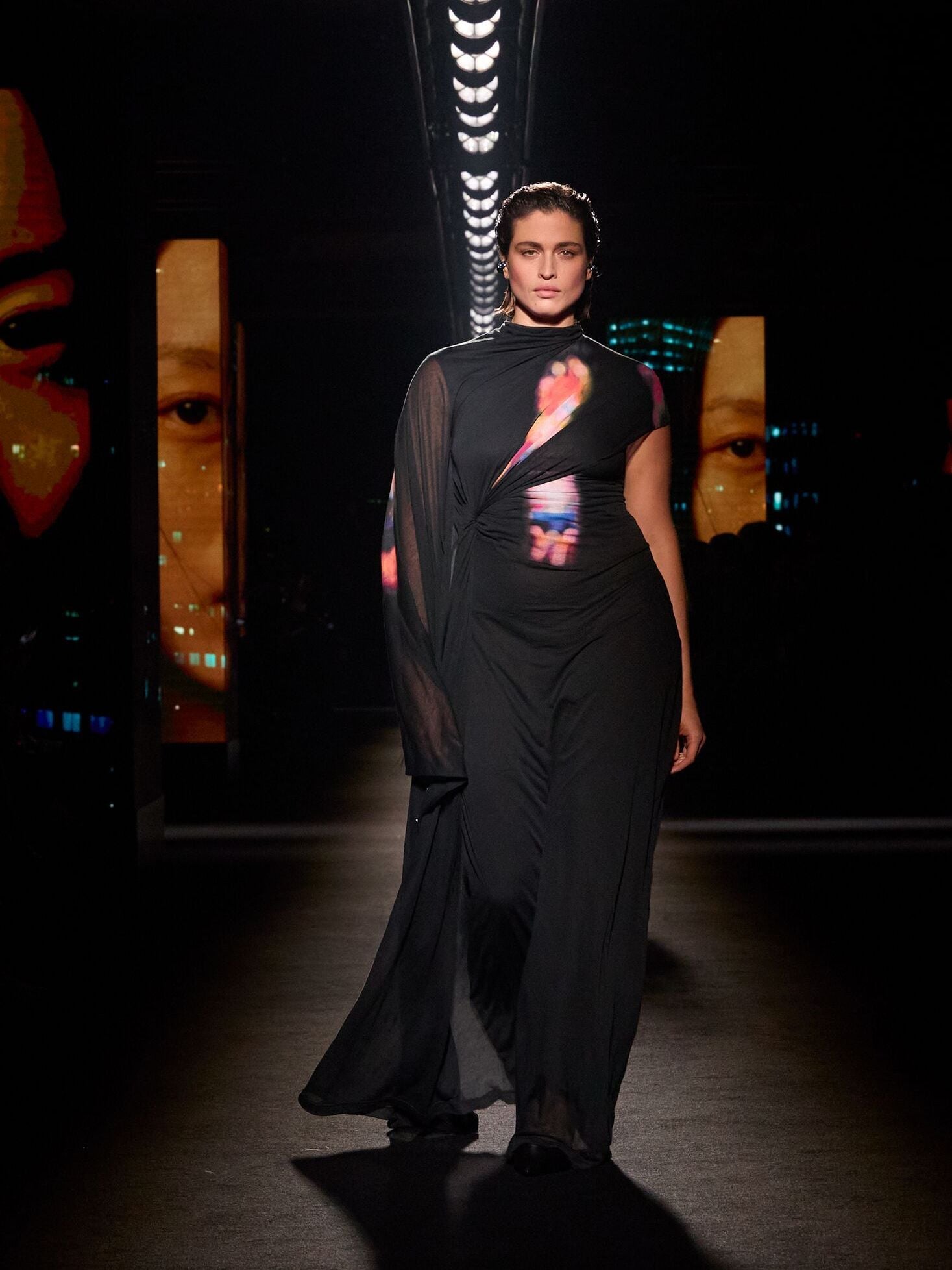

Balenciaga F/W 2026.
Balenciaga
Balenciaga F/W 2026.
Balenciaga
Balenciaga F/W 2026.
Balenciaga
Balenciaga F/W 2026.
Balenciaga
No event embodied the convergence of fashion and film better than the Vogue World 2025 show last October, which styled A-list models in iconic film costumes on the Paramount lot. Kendall Jenner opened in a “Moulin Rouge!” look designed by Catherine Martin and Angus Strathie, while internet-darling Alex Consani strode the runway in looks ripped straight from the set of “The Royal Tenenbaums” and “Orlando.” Notably, the event was not tethered to a single creative director, drawing instead on costume designers across decades of filmmaking. The internet lit up as contemporary faces breathed new life into beloved on-screen looks.
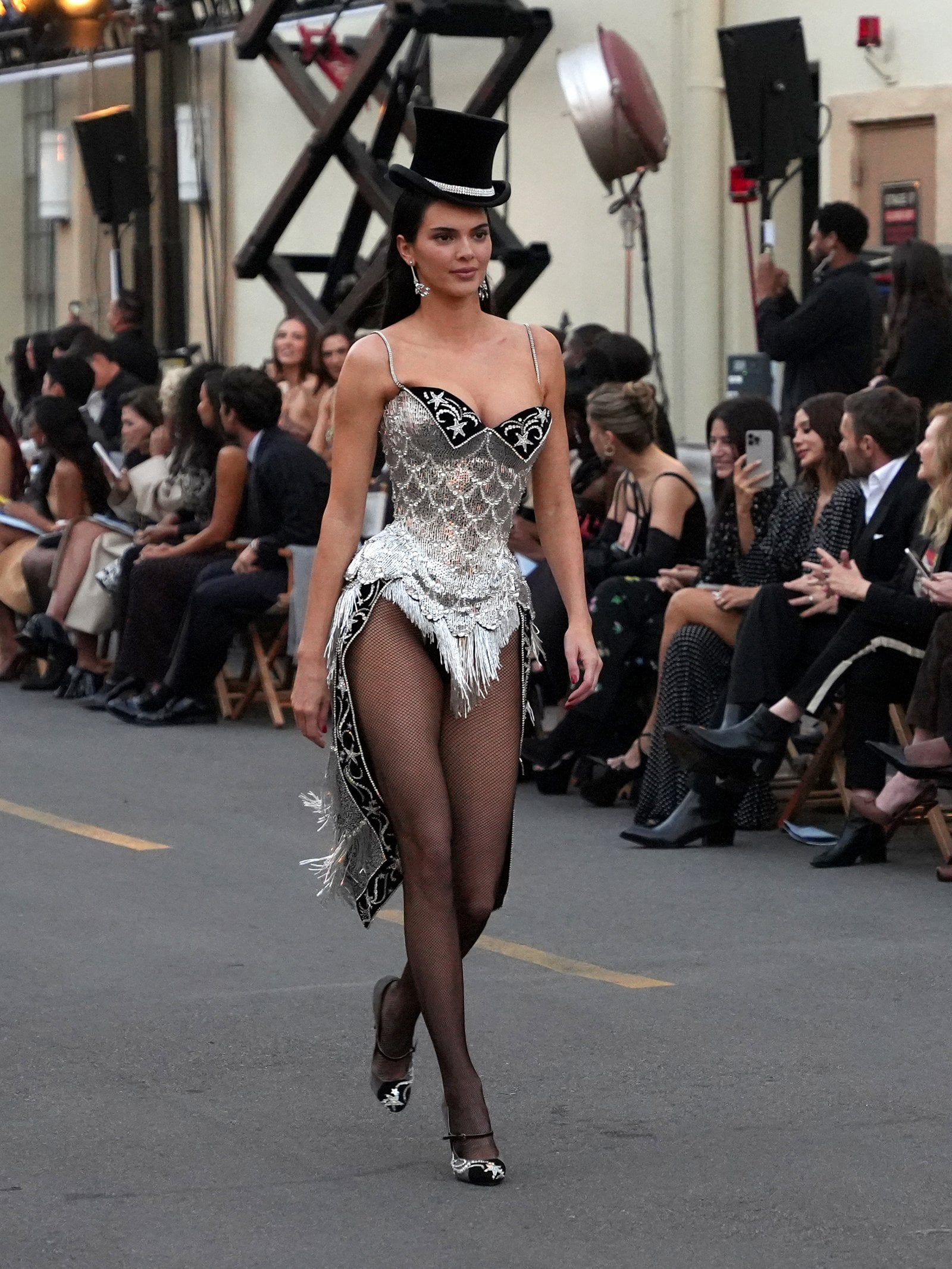

Kendall Jenner in a "Moulin Rouge!"-inspired runway look at Vogue World 2025.
Getty Images
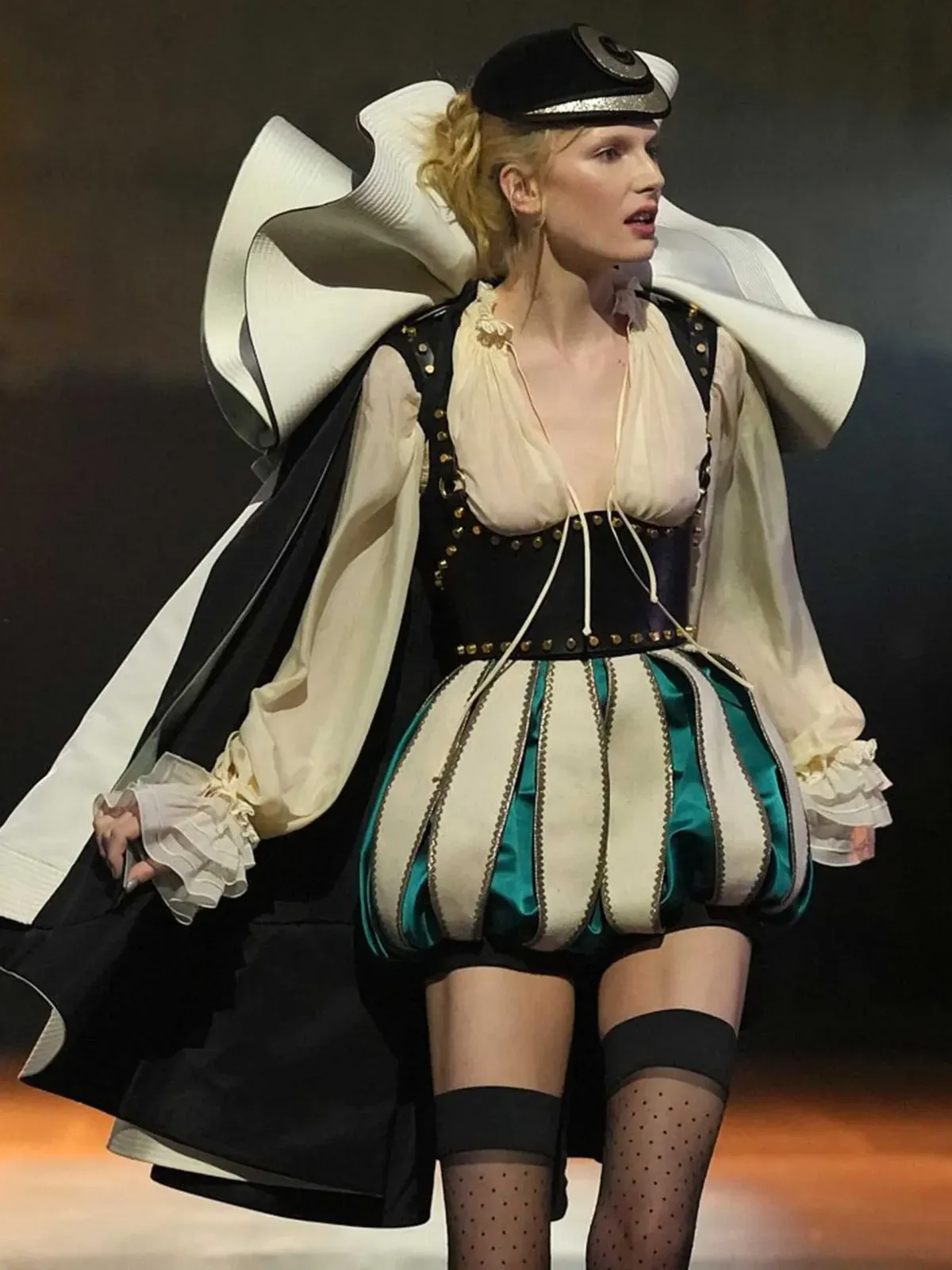

Alex Consani IN A "ORLANDO"-INSPIRED RUNWAY LOOK AT VOGUE WORLD 2025.
D.Oberrauch / Gorunway.com
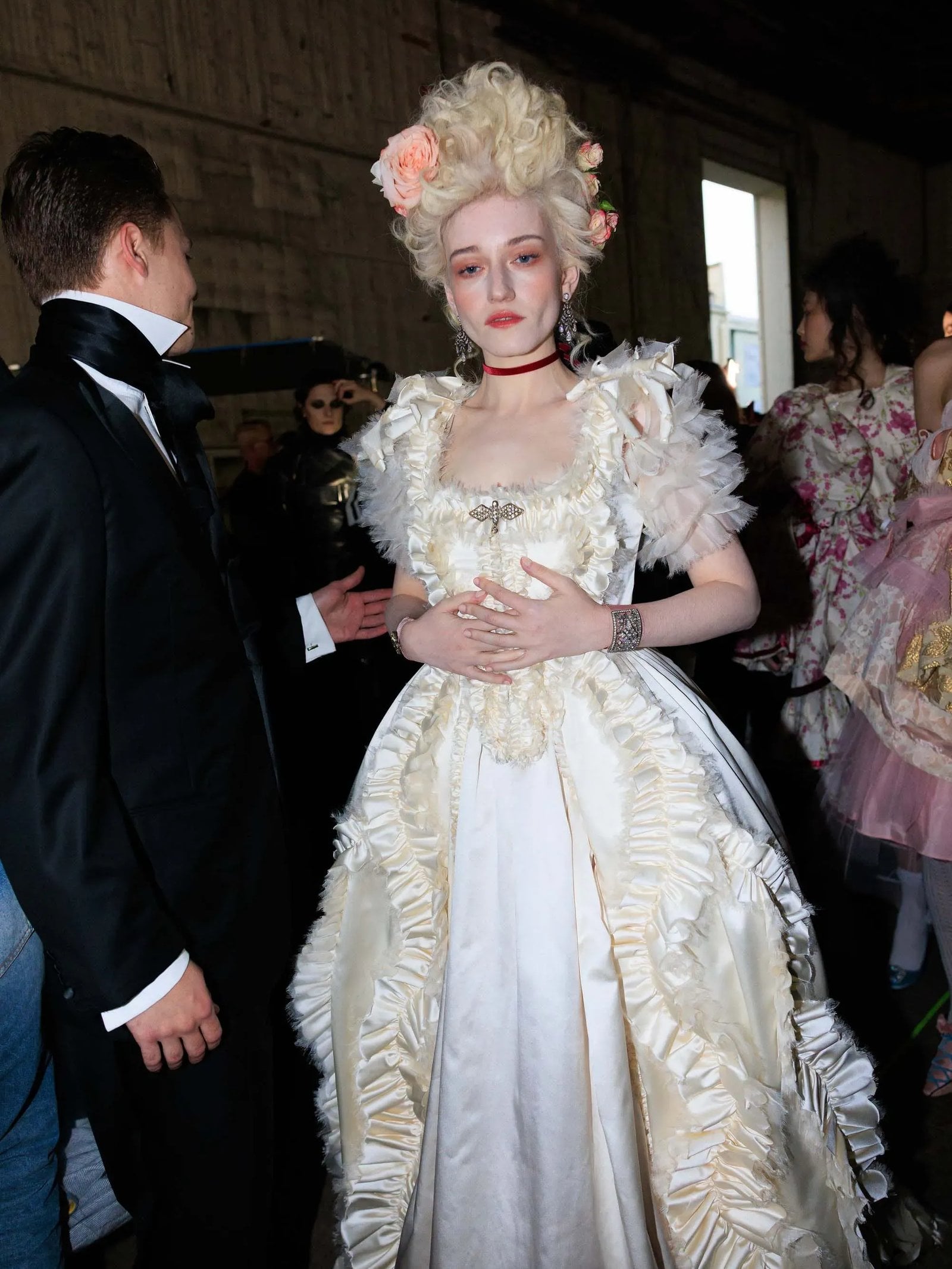

Julia Garner in a "Marie Antoinette"-inspired look for Vogue World 2025.
Acielle/Style Du Monde
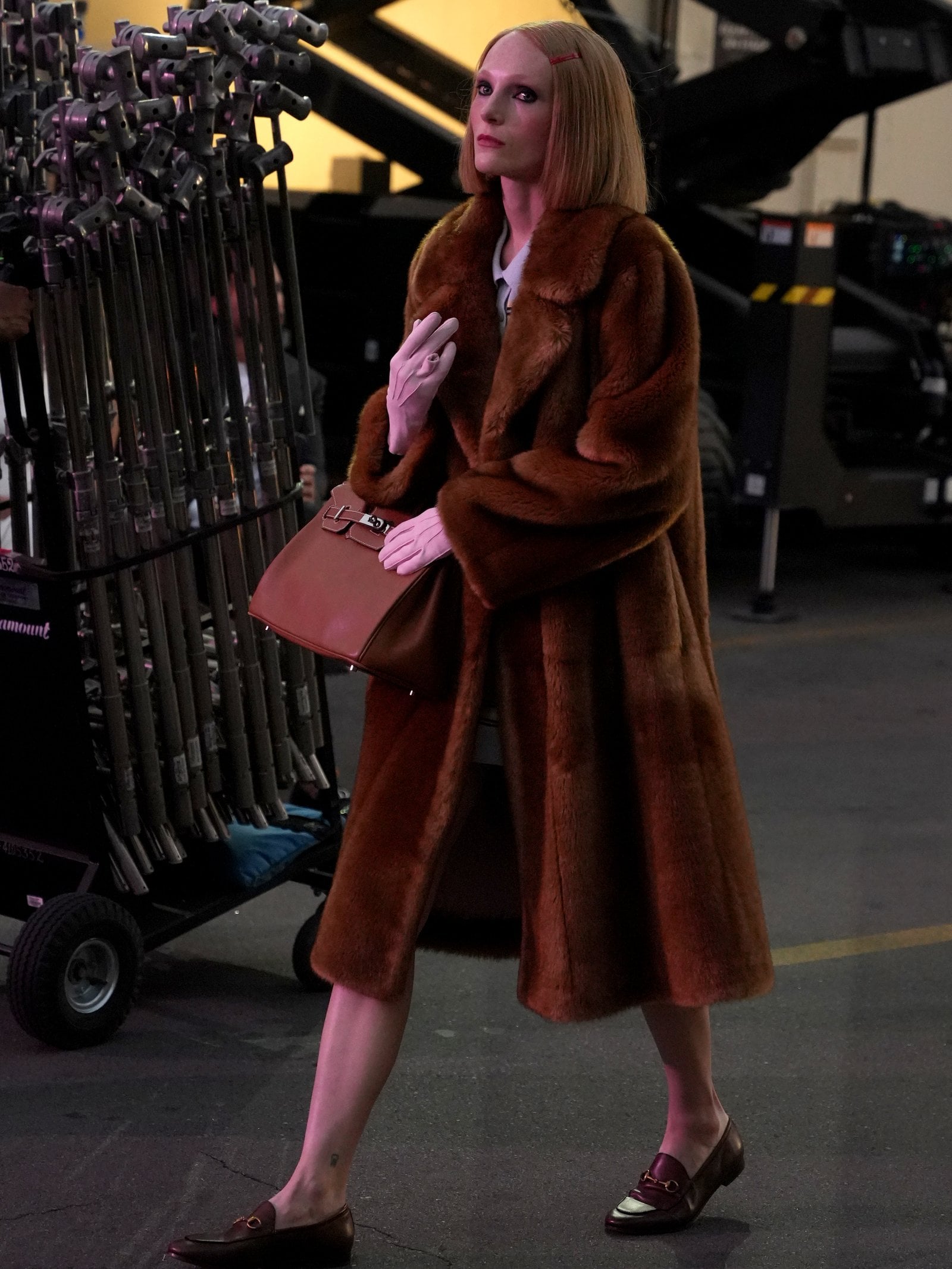

Alex Consani in a "Royal Tenenbaums"-inspired runway look at Vogue World 2025.
Getty Images
This FW26 fashion month saw a series of notable runway debuts, with Demna for Gucci and Maria Grazia Chiuri for Fendi. Much like in film, where the costume designer inherits an established script and directorial vision, fashion’s creative reshuffles come with constraints. With the same, small handful of creative directors circulating between fashion houses like a years-long game of musical chairs, a successful debut hinges on balancing brand identity with novelty. At Dior, the question becomes what a Jonathan Anderson vision might look like—and whether it can emerge without compromising the house’s ultra-feminine history. For Jacqueline Durran on the set of “Wuthering Heights,” it was a matter of adhering to the source material while embracing Emerald Fennell’s maximalist vision.
Matthieu Blazy has proved particularly adept at striking this balance, adhering to Chanel’s classic tweed sensibility while modernizing it for younger, less traditional audiences. In his latest collection, Blazy has embedded many references to Coco Chanel’s initial innovations. A sleek black dress references Chanel’s early camellia motif, while an iridescent mustard tweed set modernizes the designer’s classic skirt/jacket silhouette. Like any great costume designer, Blazy has honed in on the defining “character” of Chanel and implemented it across a multitude of different looks.
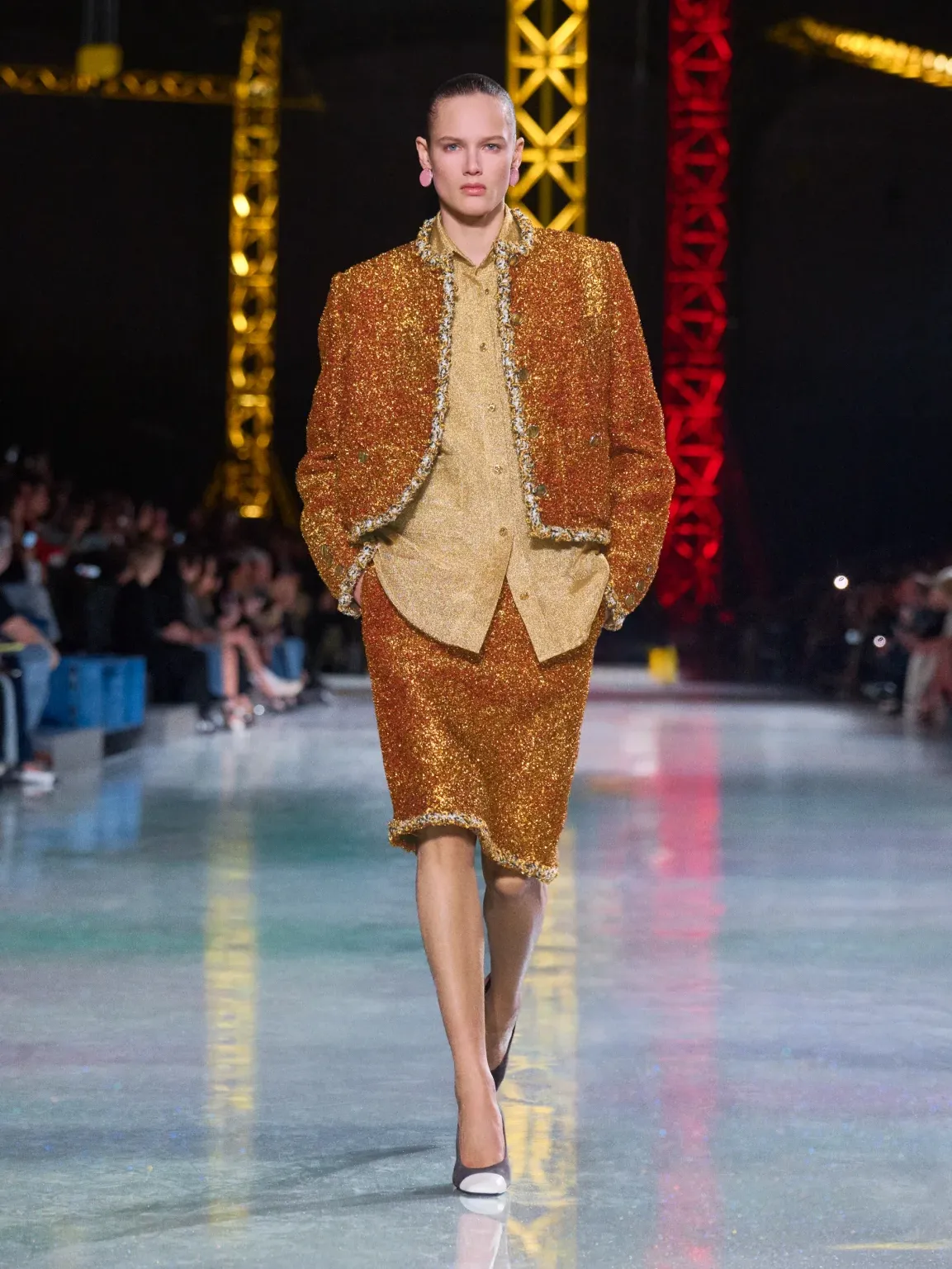

Chanel F/W 2026
Chanel
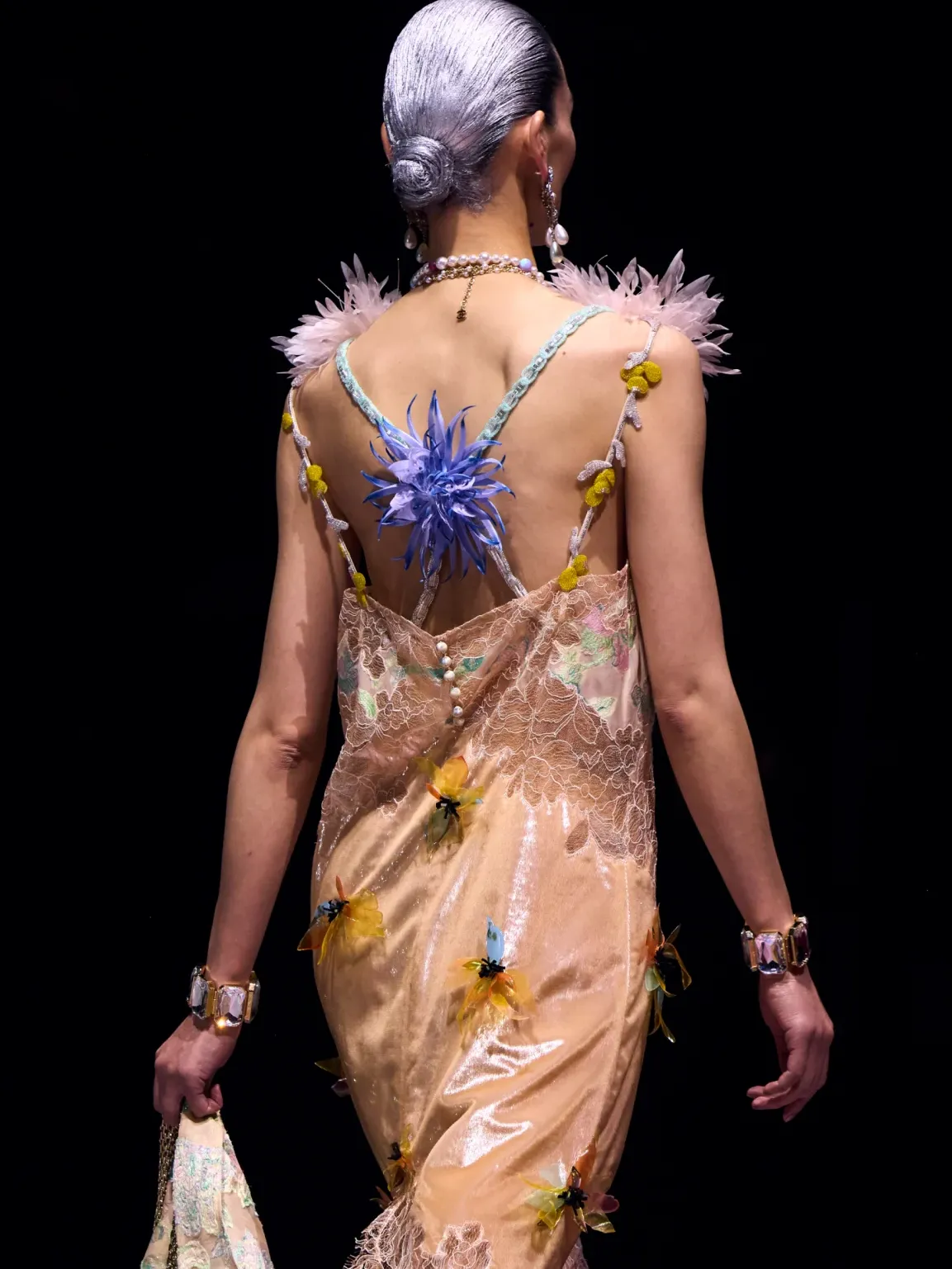

Chanel F/W 2026
Chanel
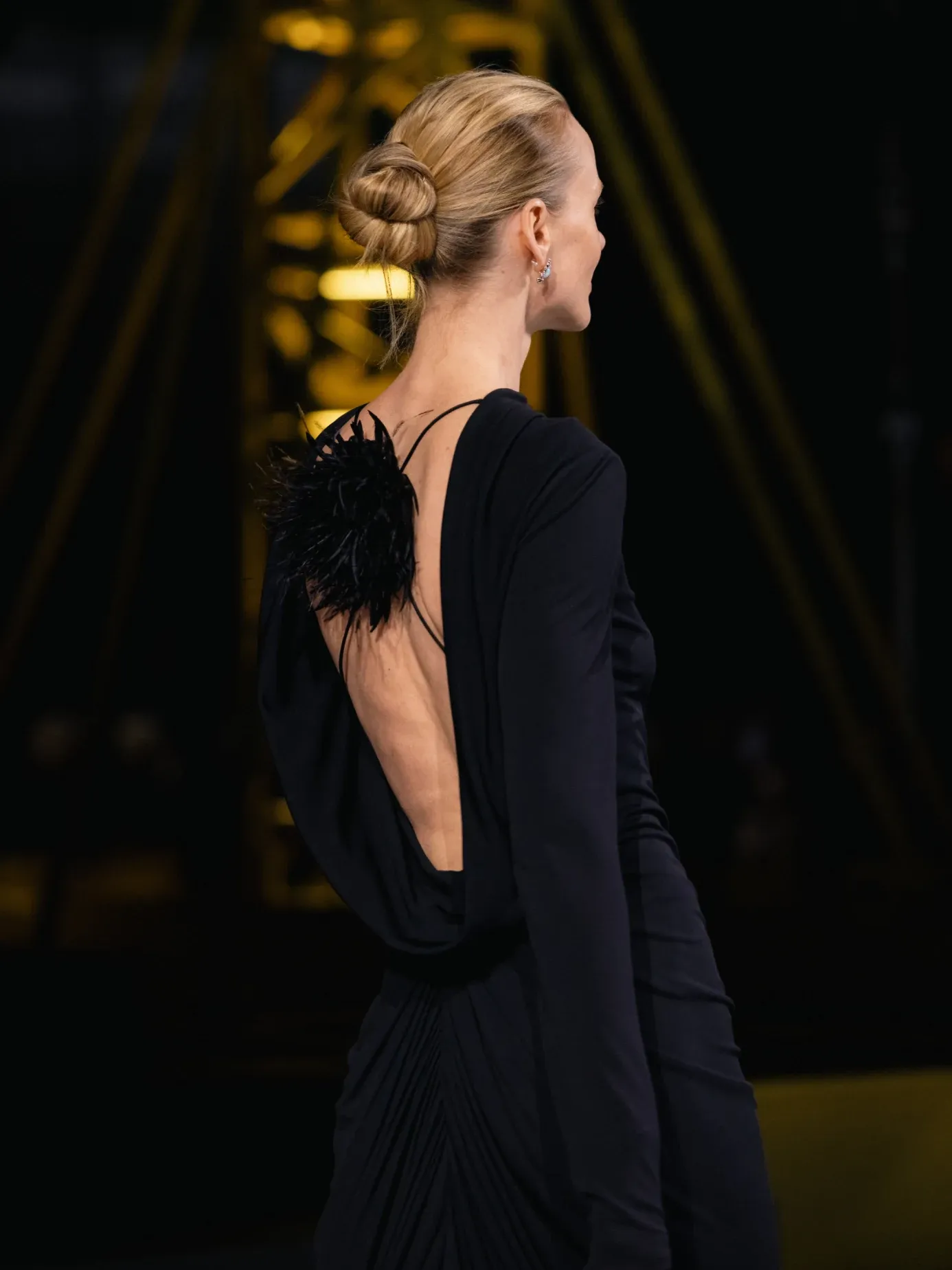

Chanel F/W 2026
Chanel
Chanel F/W 2026
Chanel
Chanel F/W 2026
Chanel
Chanel F/W 2026
Chanel
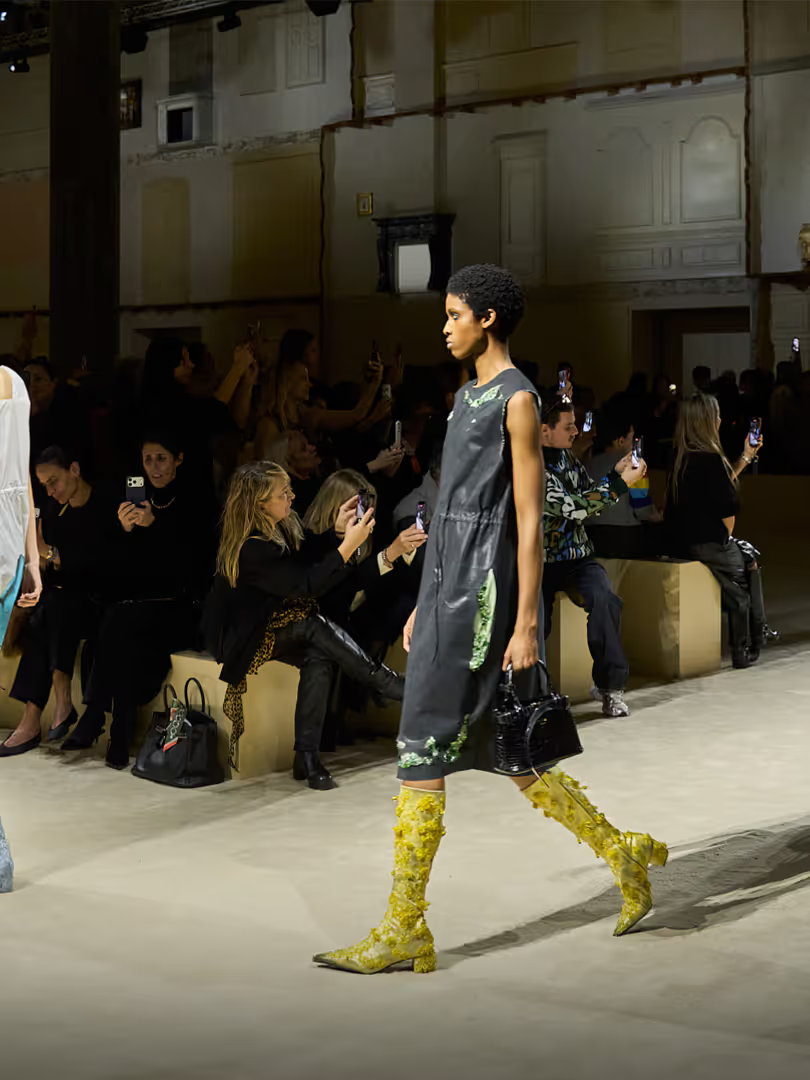
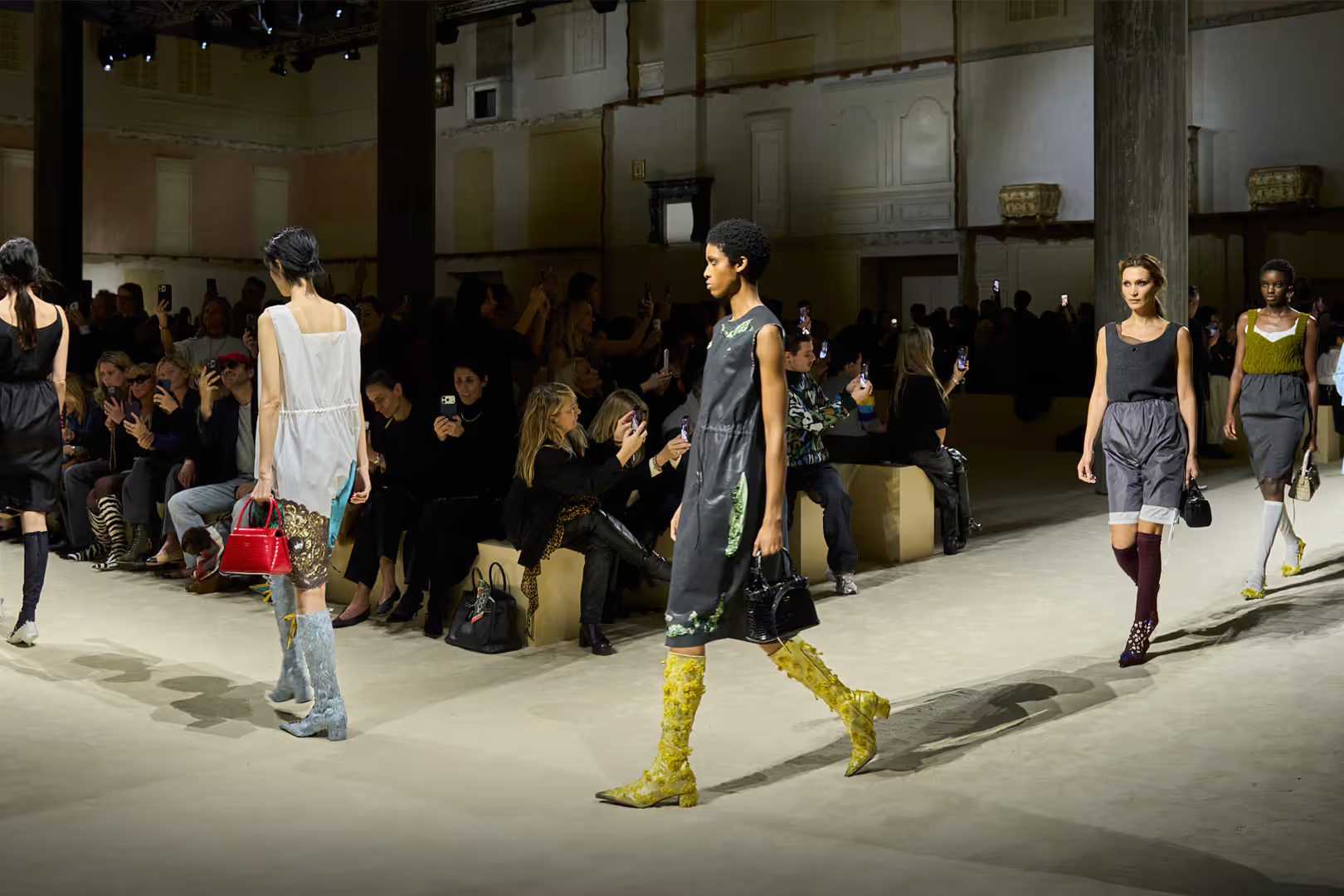
Another brand that succeeded in balancing brand reputation with innovation was Miuccia Prada and Raf Simons for Prada. The house leaned into character-driven dressing for its Fall/Winter show, as underscored by the decision to repurpose 15 models across 60 looks. The effect suggested a singular “Prada girl” moving through multiple permutations: devoted to layering, prone to juxtaposing textures, yet anchored in classic silhouettes—slim-fitting vests and wool sweaters that might just as easily have been unearthed from a grandmother’s closet as from the Prada warehouse. Think “manic pixie dream girl,” but a little more chic. In the front row sat Sarah Pidgeon of recent “Love Story” fame. Her presence recalled the original Prada girl of the ’90s, Carolyn Bessette Kennedy, and television’s chokehold on fashion.
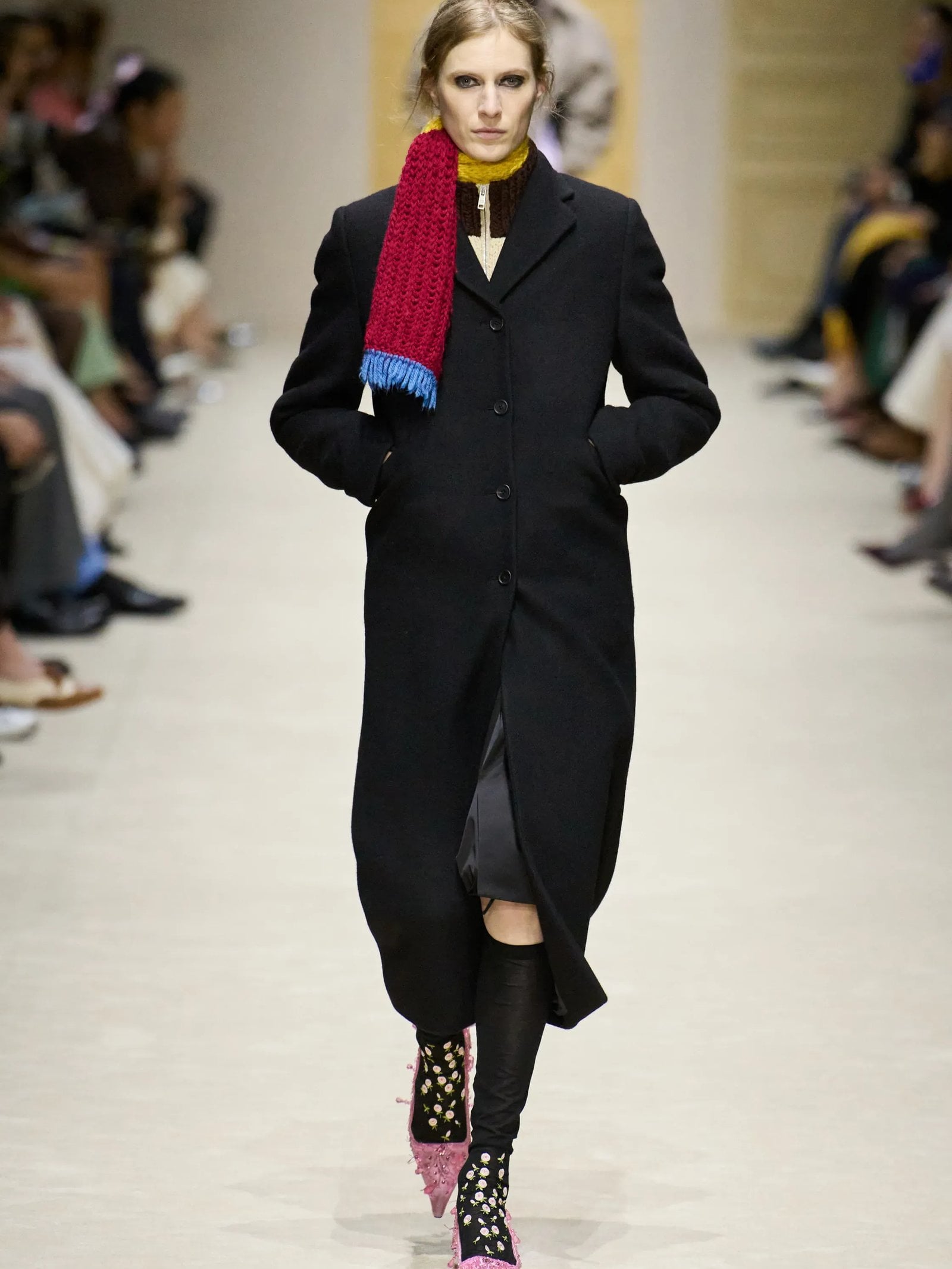

Prada F/W 2026.
Prada
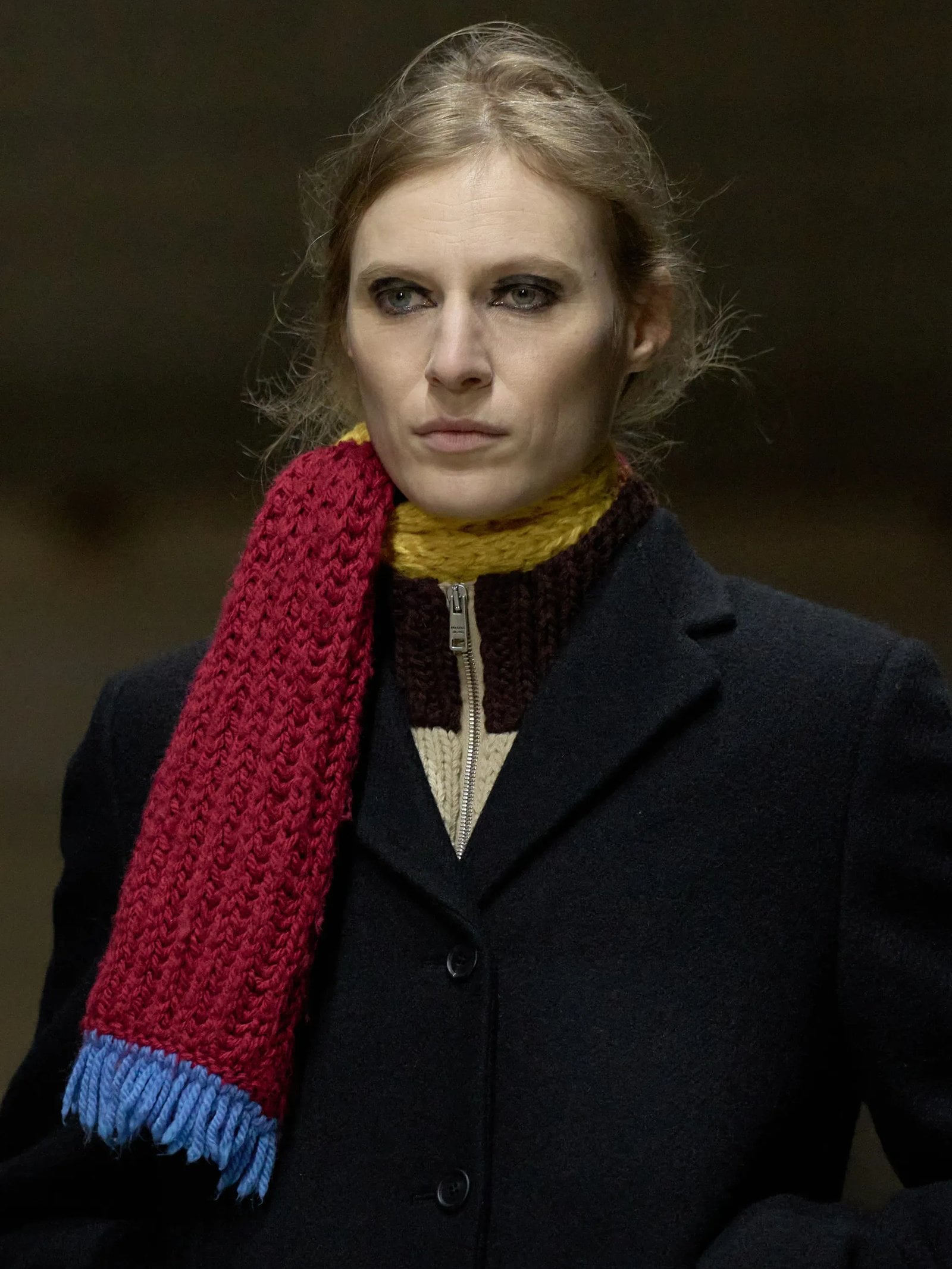

Prada F/W 2026.
Prada
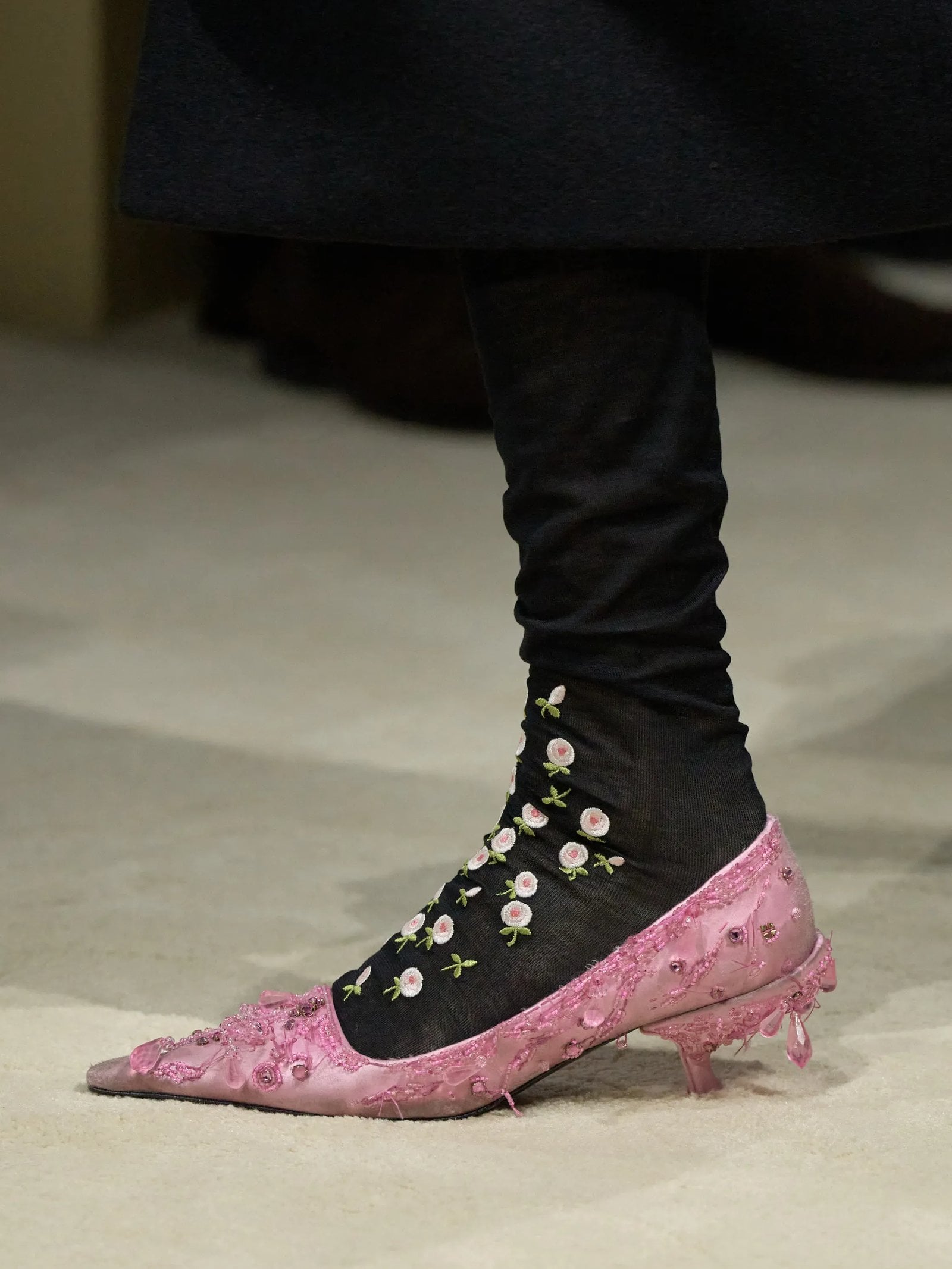

Prada F/W 2026.
Prada
Prada F/W 2026.
Prada
Prada F/W 2026.
Prada
Prada F/W 2026.
Prada
Demna’s runway debut for Gucci also revolved around a clear archetype of wearer: the messy, fabulous party girl. Models spanned from Kate Moss and Karlie Kloss to internet-era It-Girls Gabbriette and Sydney Carlson. The heels were high, and the makeup was smudged and smoky, evoking ‘90s Tom Ford. In a moment where the internet yearns for the chic, unbothered simplicity of ‘90s style—as exemplified by the internet's fixation on “Love Story”—Demna revisited Gucci’s original rebrand.
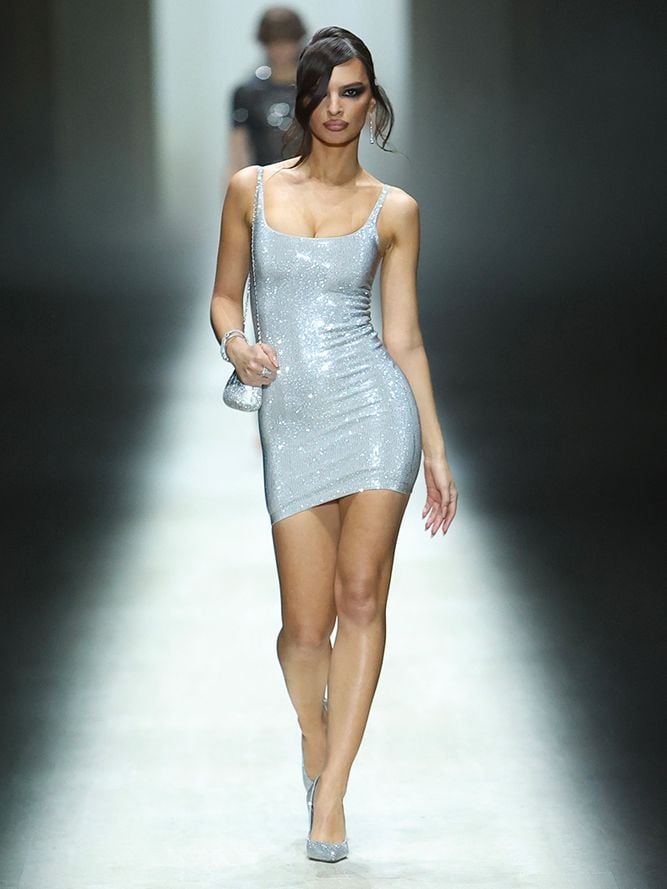

Gucci F/W 2026.
Gucci
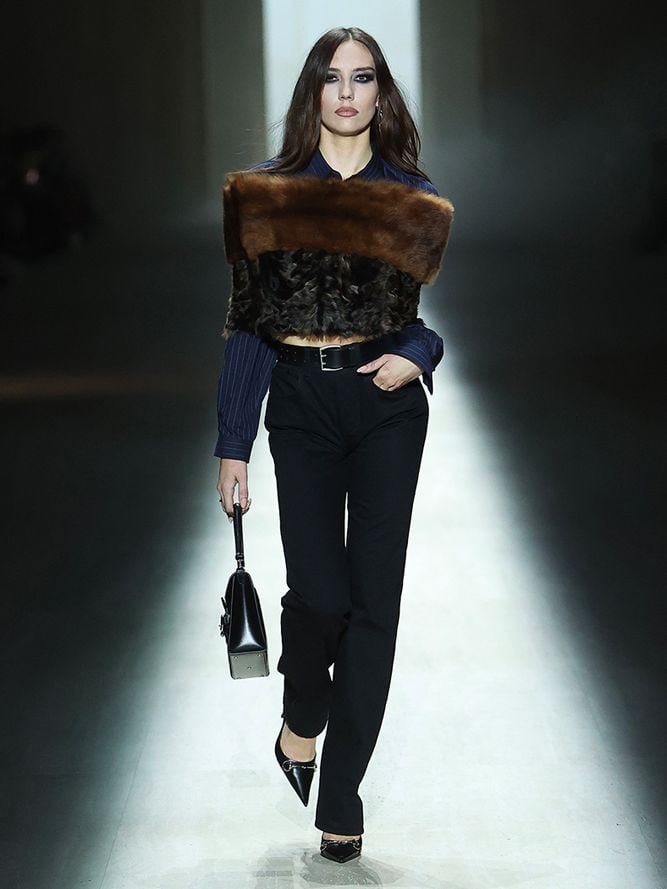

Gucci F/W 2026.
Gucci
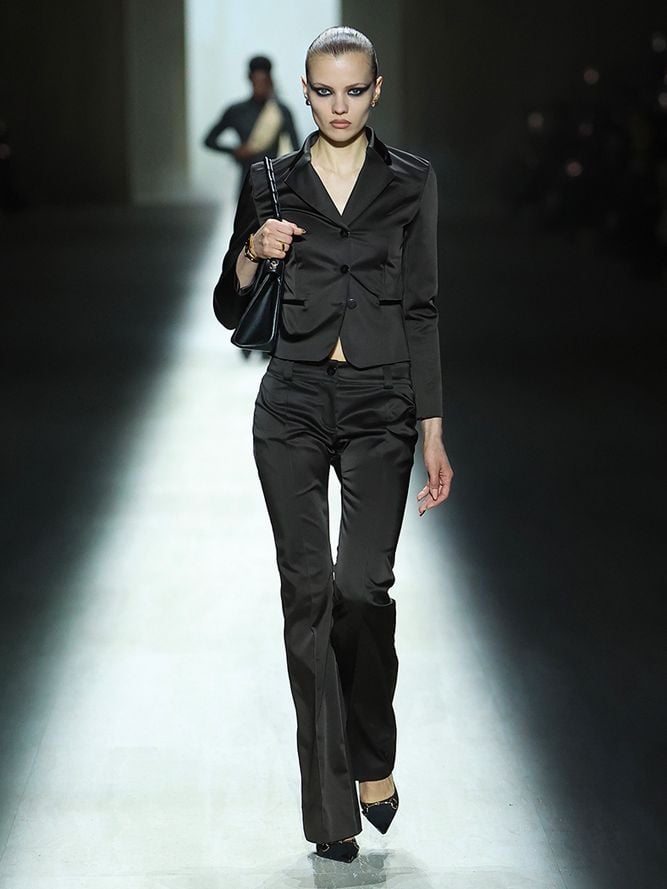

Gucci F/W 2026.
Gucci
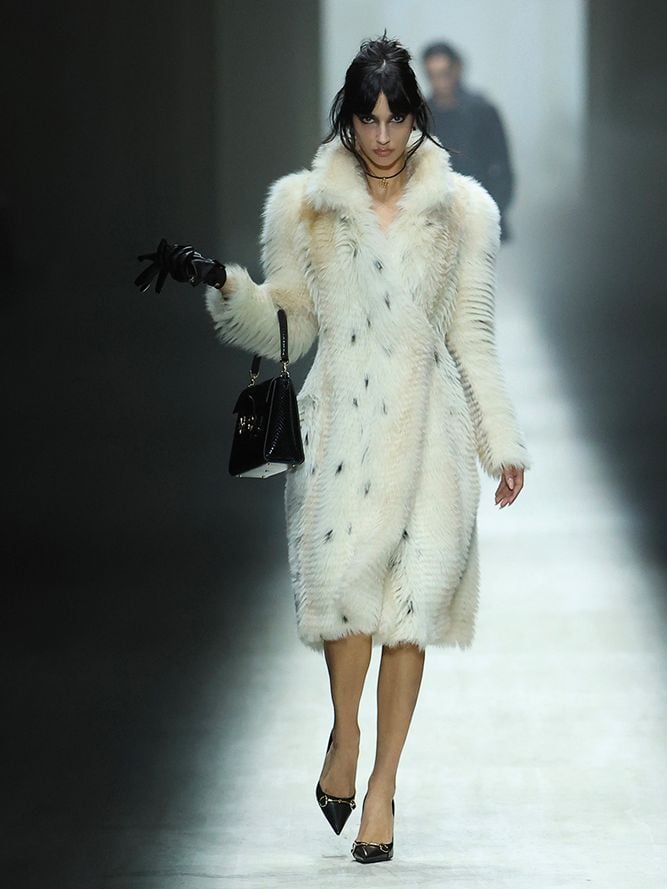

Gucci F/W 2026.
Gucci
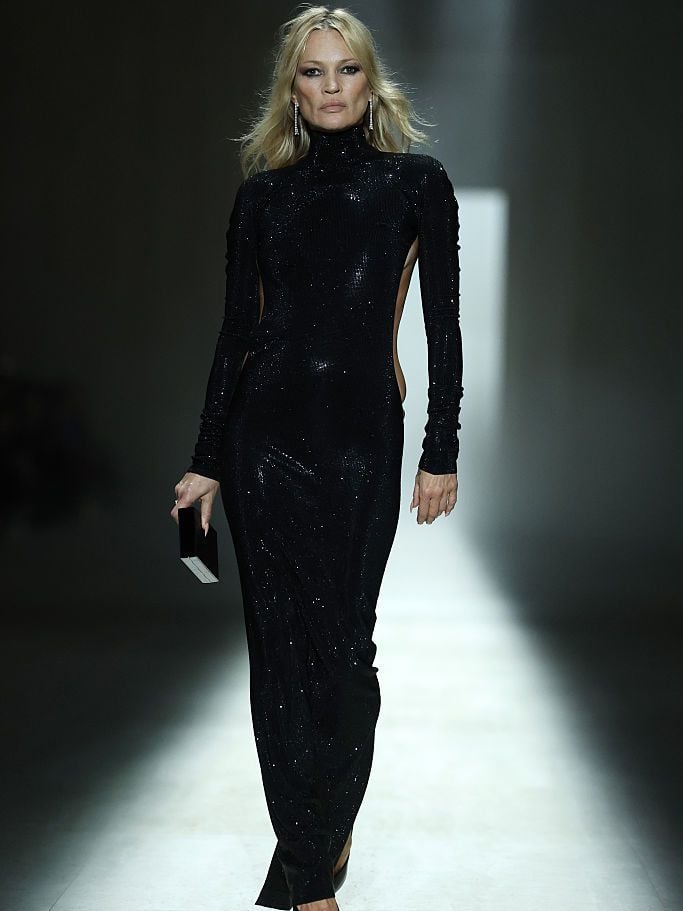

Gucci F/W 2026.
Gucci
Costume designers and creative directors share more in common than their obvious preoccupation with clothes: To stage a fashion show is an act of worldbuilding, much like the kind that takes place on a film set. Success in both disciplines relies on immersing the viewer in an aesthetically cohesive space, where the set, costumes, and casting make sense in conversation with one another. This kind of cohesion feels increasingly rare in today’s algorithm-dominated culture, where one thousand voices are shouting at you what to eat, drink, wear, buy. One week it’s CBK, the next it’s Y2K boho or mink fur maximalism; one Instagram Reel tells you to shop ten fast fashion links, the next inspires you to never purchase anything new again. But for the 20-minute duration of the fashion show, or two-hour duration of the film, the trends are contained to a single designer, a single type of girl, and, when done right, a single aesthetic. For the films and collections that do it right, there is something deeply satisfying about a world where everything is cohesive and beautiful, even if you can only access it as a spectator.