How Production Designer Suzie Davies Made Every Space in 'Wuthering Heights' Feel Like Both A Fairytale And A Prison
Interiors


Interiors
Davies delves into building a new vision for the beloved literary classic, including Catherine's unnerving skin room, the dollhouse-like Thrushcross Grange, and more.
Published almost 170 years ago, Emily Brontë’s masterpiece “Wuthering Heights”—already adapted for film and television more than 30 times—has undergone a makeover for a new generation in the form of director Emerald Fennell’s unapologetically stylish and stylized vision. When the trailer for the movie dropped last year, it stirred a collective intake of breath and anticipation centered on the film’s promised racy romance. But what has ultimately unfurled onscreen was not just sexy—it was wet, hairy, and fleshy. Production designer Suzie Davies, who had previously worked on “Conclave” and “Saltburn,” is the woman to thank for the truly sensorial world. Below, Davies delves into building a new vision for the beloved literary classic, including Catherine's unnerving skin room, the dollhouse-like Thrushcross Grange, and more.
Davies describes the prim and shining Thrushcross Grange manor of the Linton family—the wealthy neighbors that move next door to Cathy (Margot Robbie) and Heathcliff’s (Jacob Elordi) home of Wuthering Heights—as smelling of "grass and roses and palm violets.” The backyard of the home, she notes, was decked out in real florals that filled the sets with a perfume that matched the home’s saccharine, dessert-like décor.
In contrast, the charred, gnarled home of the Earnshaws, battered from the wind and the rain that ceaselessly pounds on this crumbling house, looks as though it smells like, as Davies so aptly describes, “piss, shit, and vinegar.” Compared to the sanctuary of the Linton’s home that feels fit for a fairytale princess, its intentionally designed to be more suitable to the villain of the story.
Atop the Yorkshire moors, the decrepit Earnshaw house appears torn open by the elements and neglect. The home, with its glossy black tiles, looks as if it’s always wet—almost as it’s constantly weeping. Davies and her team treated the walls with dripping textures so they always carried a slippery sheen. Working on a soundstage at Leavesden Studios in the UK enabled them to install both a drainage system and rigs so there would always be a stream of artificial rain or mist descending on the face of the house, “like it's sweating,” emphasizes Davies, “like it's pushing out of the house.”
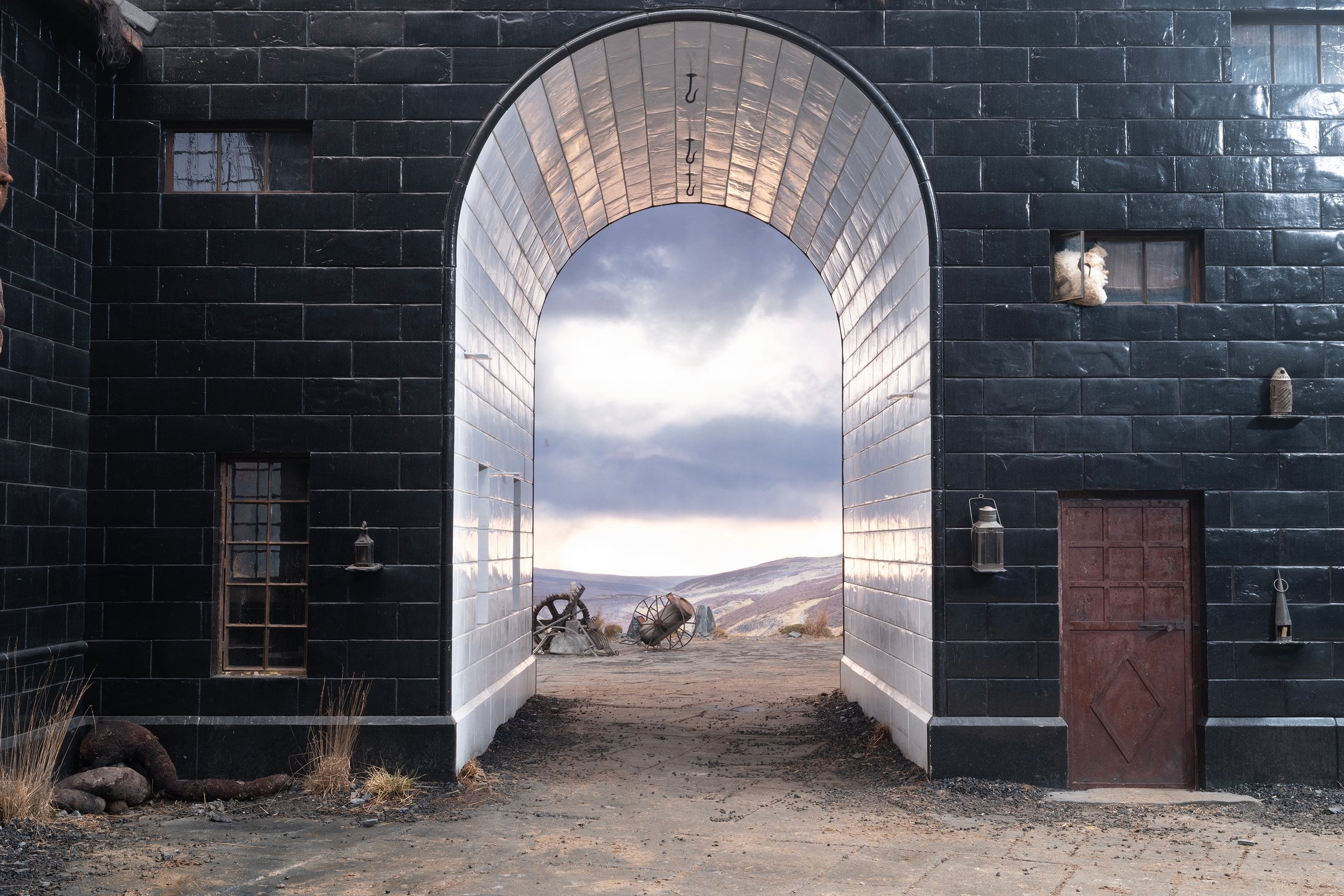

The entryway to the Earnshaw home—the titular Wuthering Heights.
Jaap Buitendijk / Warner Bros. Pictures
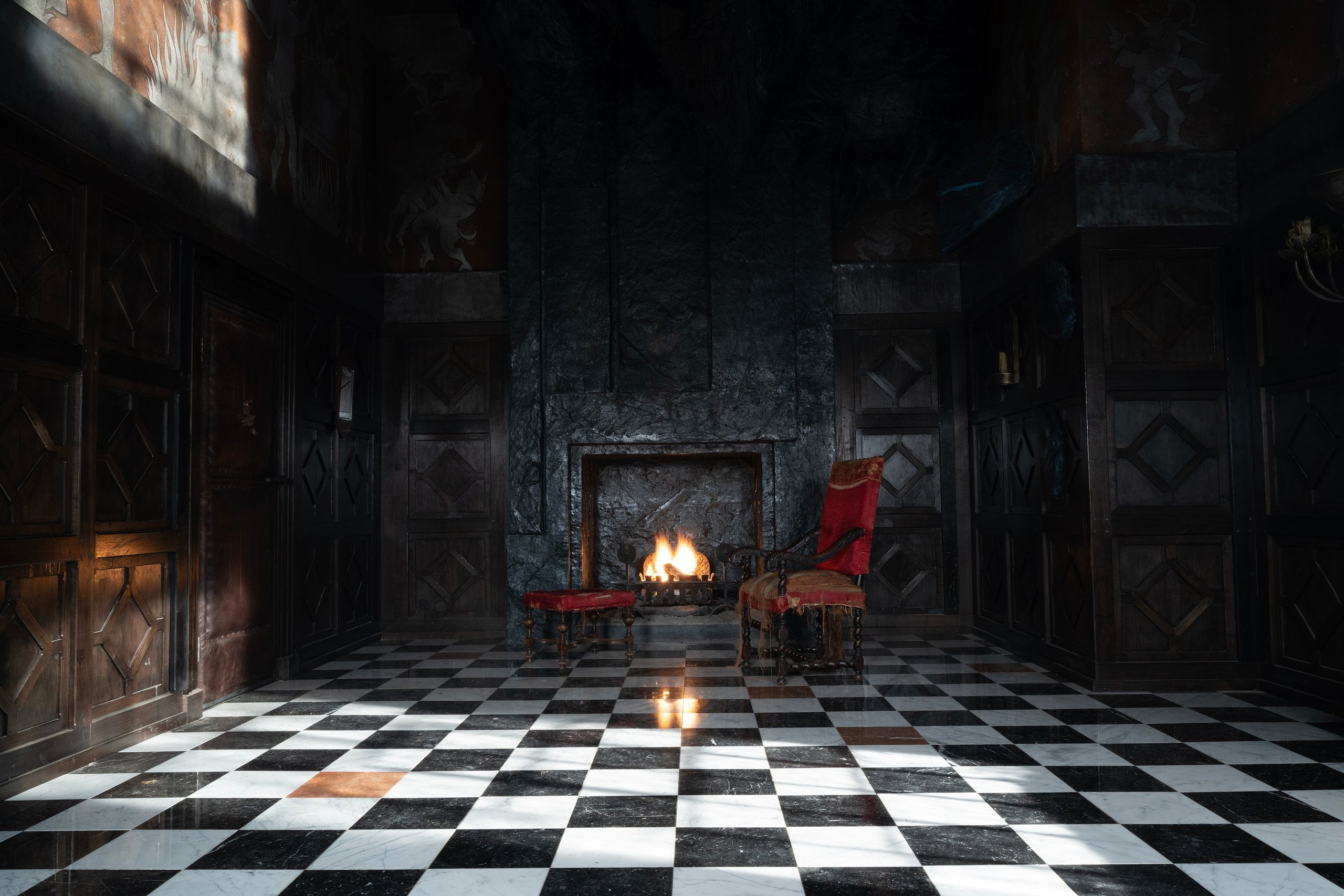

Inside the gloomy, shadowy home.
Jaap Buitendijk / Warner Bros. Pictures
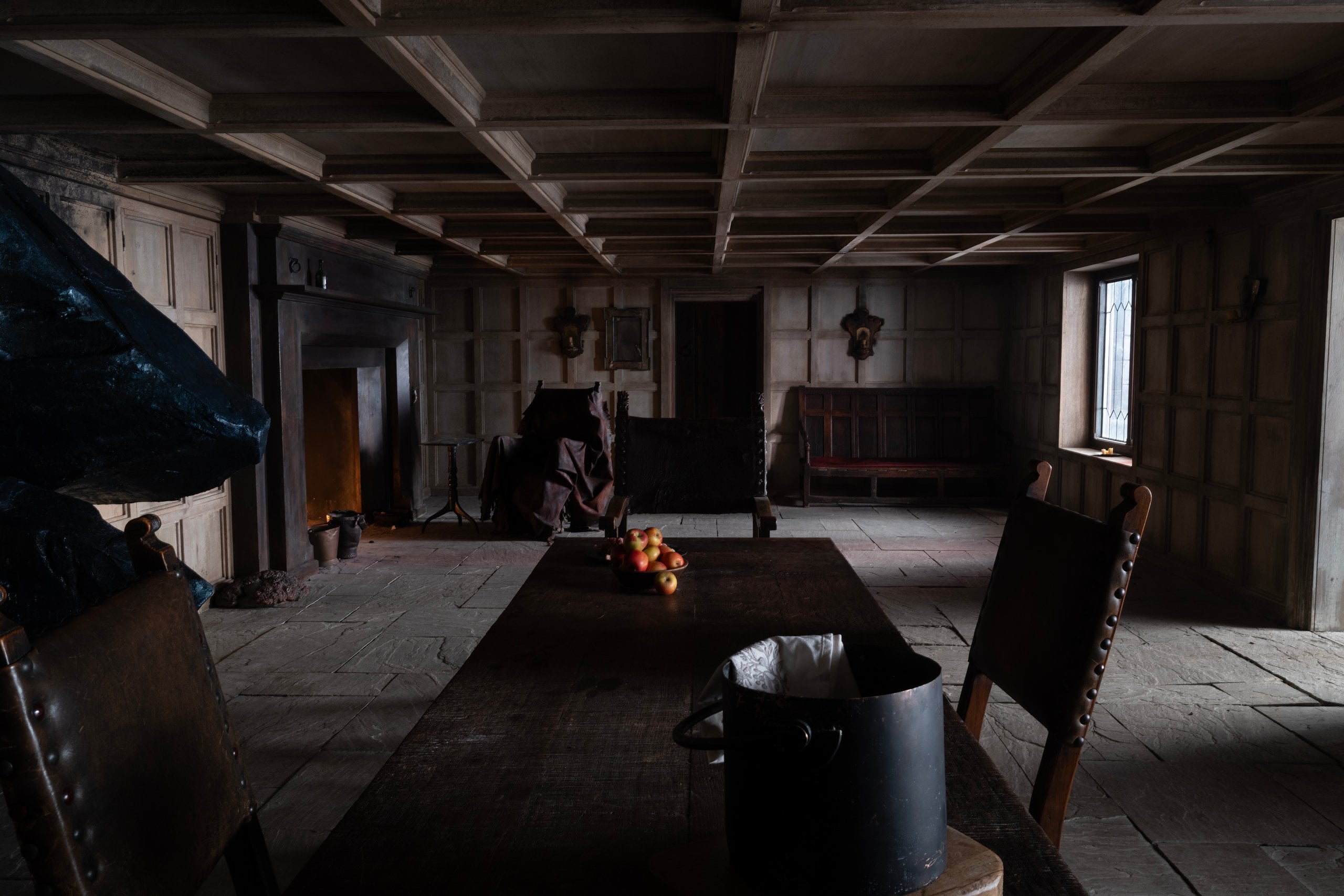

The ceilings of the kitchen of Wuthering Heights were built intentionally too low for Jacob Elordi's 6'4" frame.
Jaap Buitendijk / Warner Bros. Pictures
It’s within all these weather-worn nooks and crannies that the film’s lovelorn characters develop their bond as children, against the backdrop of Cathy’s father’s alcoholism and abuse. Yet when Heathcliff returns following a mysterious disappearance, he no longer feels at home. Davies decided to intentionally build the ceiling in the kitchen lower than Elordi’s towering 6’5” height, forcing him to crouch over to fit inside and signalling how the home was perhaps, “not meant for him.” As she says, “even when he buys it later, he still doesn't really inhabit it.”
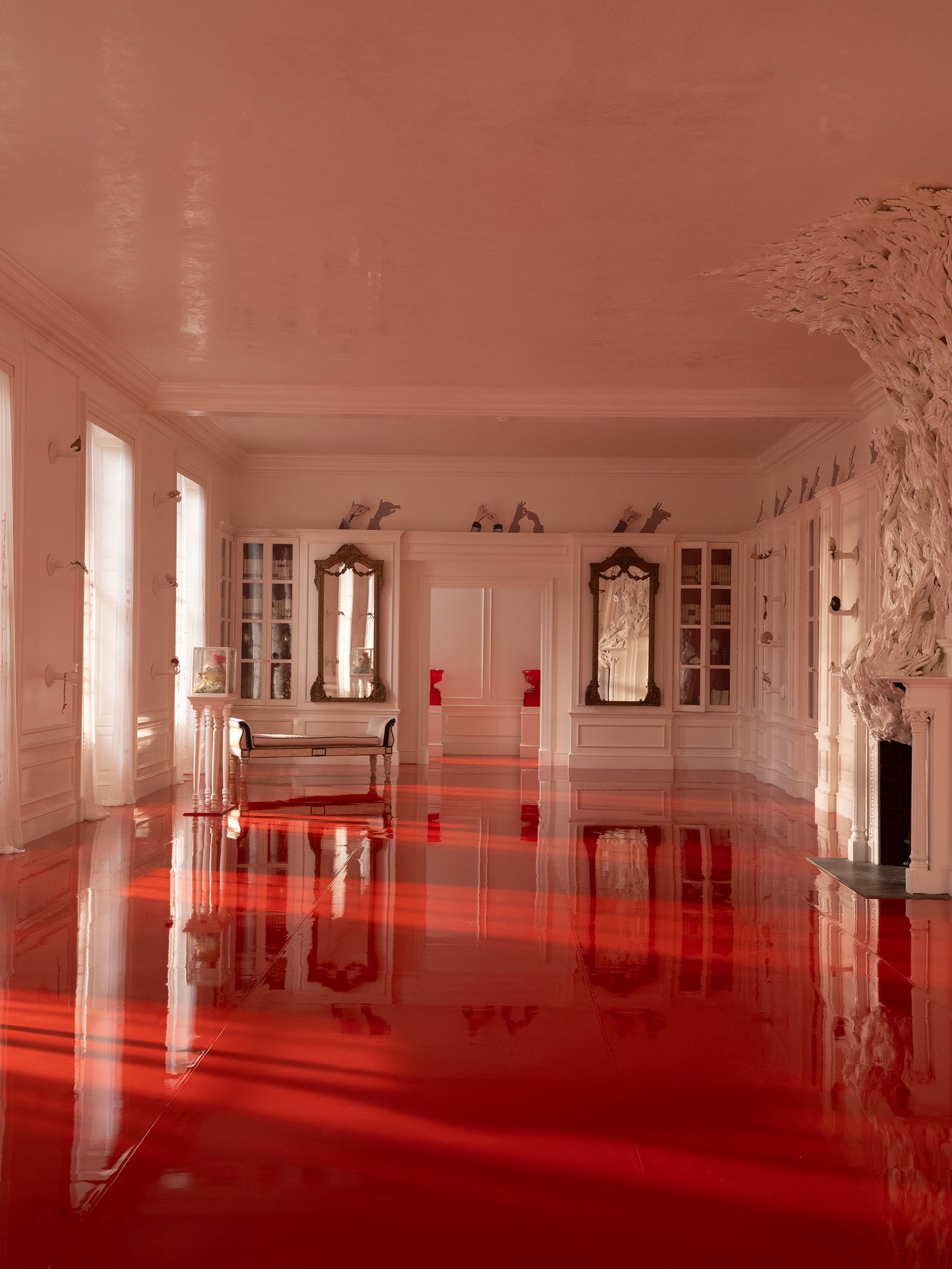
The foil to the dank and depressing Wuthering Heights is Thrushcross Grange, the home of the Lintons where Catherine later moves after marrying Edgar (Shazad Latif). In this opulent manor, each room is siloed into what Davies calls, “jewel boxes,” and Catherine, dripping in rhinestones and fluffy gowns, herself “is almost like a little jewel that keeps popping up in that life-sized doll's house.” Yet there is a certain sadness in this space. Each room is tucked away, locked behind a door. In this beautiful house everyone is together, yet palpably separated.


The look for the opulent Thrushcross Grange is meant to feel like a doll's house.
Jaap Buitendijk / Warner Bros. Pictures
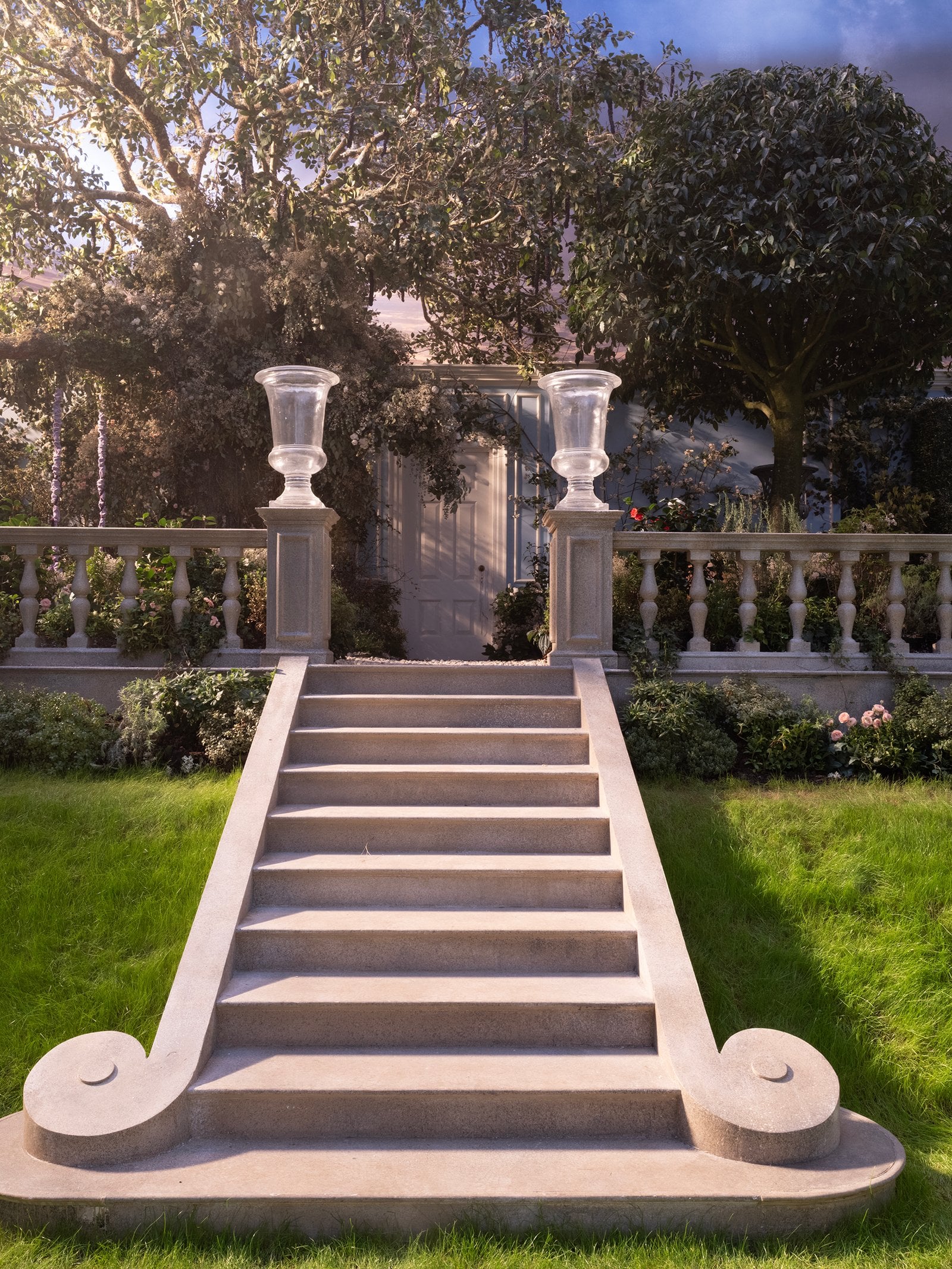

The gardens of Thrushcross Grange.
Jaap Buitendijk / Warner Bros. Pictures
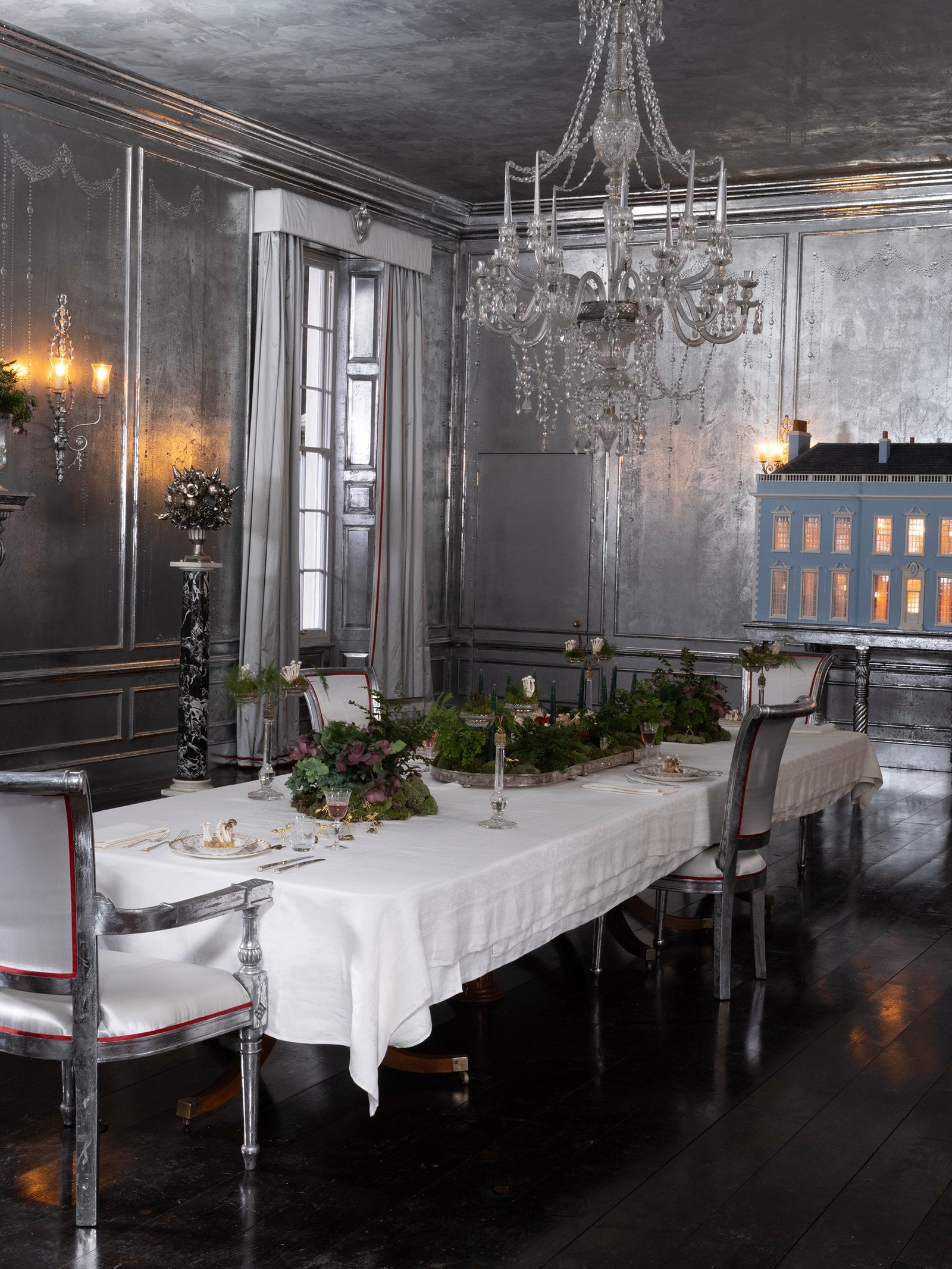

The dining room of Thrushcross Grange—featuring the replica doll's house.
Jaap Buitendijk / Warner Bros. Pictures

TK
Jaap Buitendijk / Warner Bros. Pictures


TK
Jaap Buitendijk / Warner Bros. Pictures
The design for the home started with script direction from Fennell that described Isabella’s (Alison Oliver) symmetrical blue doll house in the grand dining room. As Davies explains, “I basically designed the full-scale house according to that doll's house, which beautifully made everything slightly out of proportion. It makes our characters feel slightly too small for the property. It's a subconscious feeling that’s there just to make everyone feel a bit uneasy.”
Another unnerving element Davies brought into the design direction of Thrushcross Grange was the use of hair. At the beginning of the move, blonde hair curls onto the screen to spell out It looks like the golden strands were plucked right off the head of Robbie’s Catherine, foreshadowing how hair becomes a thread that runs through the whole movie. “There's hair underneath the staircase: red fun-fur hair.” Davies points out. “It’s completely incorrect for the period, but it's that juxtaposition of what's real and what's not,” she says, emphasizing that the film was more about the impression that the story left on director Fennell. Specifically, “that sort of fever dream feeling.” One she came away with after having read the book in her teens.
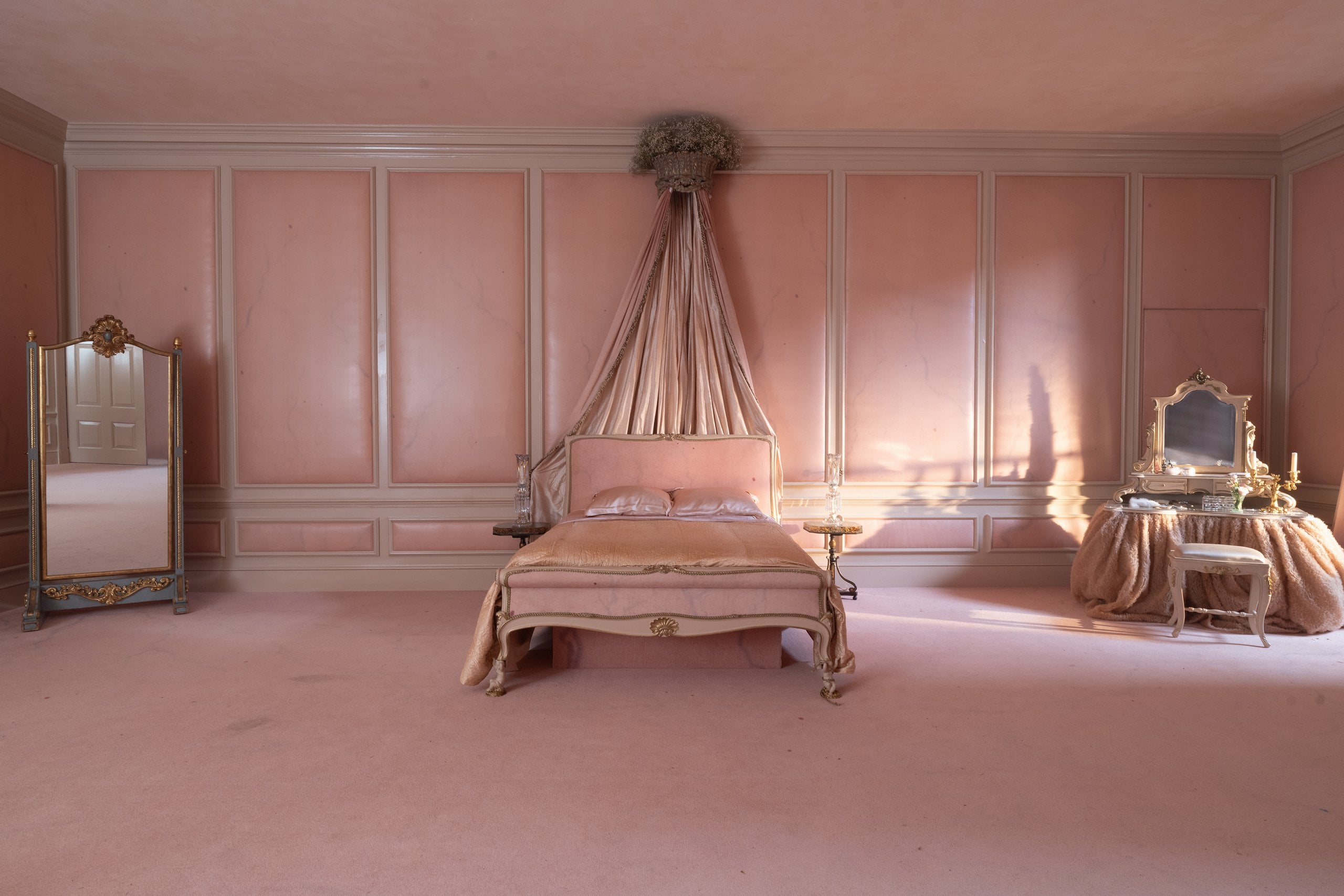

Catherine's 'skin tone' room at Thrushcross Grange.
Jaap Buitendijk / Warner Bros. Pictures
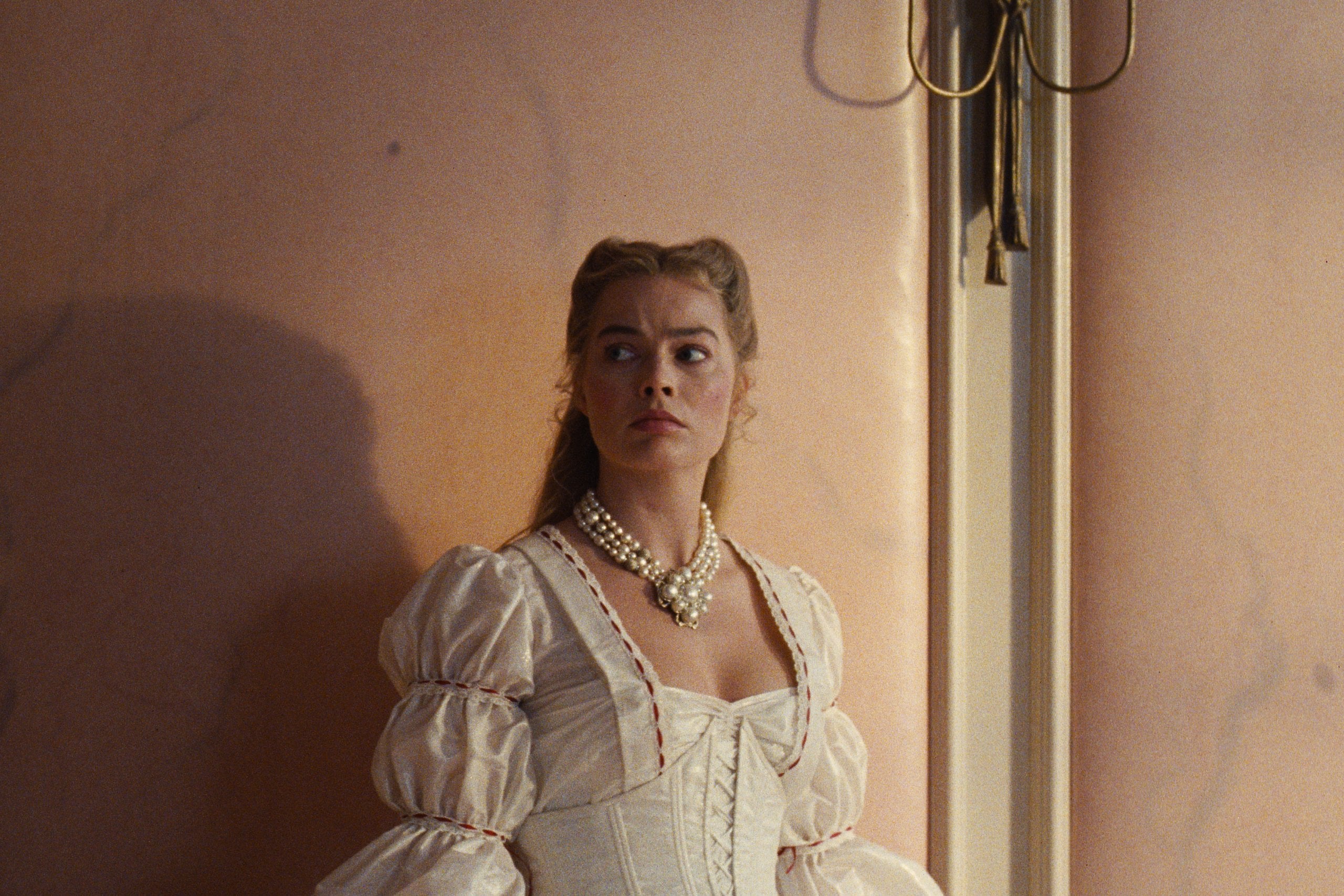

Margot Robbie in "Wuthering Heights." Photo: Warner Bros. Pictures.
Warner Bros. Pictures
Davies remarks that there’s even hair in Catherine’s room in Thrushcross Grange, the one with the walls upholstered in the blushing pink of her skin. There, the design team managed to even get, “plaited hair around the bed drapes rather than a gold trim.” Davies goes on to admire how the gold hair played so beautifully with the fleshy tones of the walls, which were designed to mimic Robbie’s own skin texture (achieved using skin-toned latex and printed images of Robbie’s forearms placed over padded panelled walls). In the effusive, and at times unnerving, space—where Catherine finds a life of luxury beyond her wildest dreams—longing takes on a twisted form. Almost as if her desires, like the projection of her freckles and veins that decorate the wall, have become stretched and outsized into a form that’s beyond recognition.
Through Fennell’s vision and Davies’ designs, the sets of “Wuthering Heights” take on an uncanny, corporeal life. They sweat, split, and grow swollen with decoration. Their structure mirrors the hungry, bodily craving Catherine and Heathcliff carry throughout the story. But the houses that reflect the lovers’ bodies ultimately become prisons for them—too ornate, too rigid, too small to hold what they feel.