If You Get Squeamish Watching 'The Pitt,' Then This Makeup Artist Knows She's Done Her Job Right
Beauty

Beauty
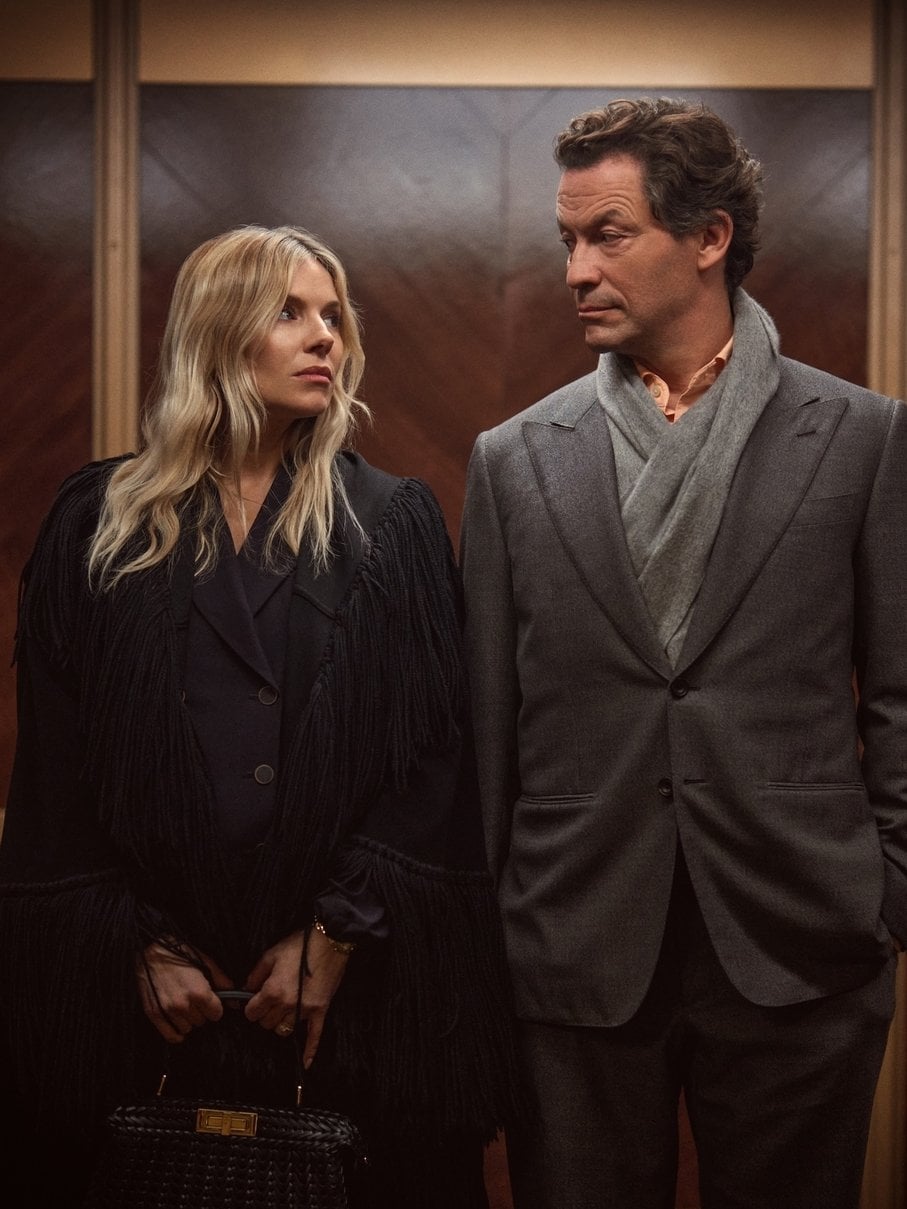
‘The Pitt’ uses straight-up grossness to keep you watching. That’s all thanks to the show’s head of makeup Myriam Arougheti, whose job it is to keep the show grotesque and gripping.
Those acquainted with medical dramas are no strangers to a bit of blood and protruding bone. But just when you think you’ve seen it all, in swoops “The Pitt” with its scarily accurate depictions of emergency-room incidents, all based on doctors’ real-life experiences.
Between scrubbed-up teams frantically stuffing ripped-open bodies with gauze as monitors beep ferociously in the background, fights breaking out in the waiting room, surgeons rooting around in brains, and abandoned babies in bathrooms, “The Pitt” is pure chaos from start to finish. Season one was a roaring success, and season two managed to keep up with its feverish momentum. Much of that is thanks to Myriam Arougheti, the show’s head of makeup, who made sure every cut, scrape, and burn looked realistic and grotesque. The goal? To gross us out and keep us watching.
“It’s very intense,” admits Arougheti during our interview. Usually, when creating a wound, makeup artists have a bit of autonomy and artistic license. Say you have a gunshot wound or a scrape, “there's a little bit of creative freedom where you can hide something if it’s not perfect with dried blood or extra bruising and discoloration.” When working on “The Pitt,” Arougheti couldn’t work in this way; she swapped her artistic instincts for cold, hard, medical accuracy. “It's a whole different ball game,” she explains, “because now you have these procedures and you have these very specific ways they need to look. You have to make it look real, and there's no hiding. There's no using little tricks.”
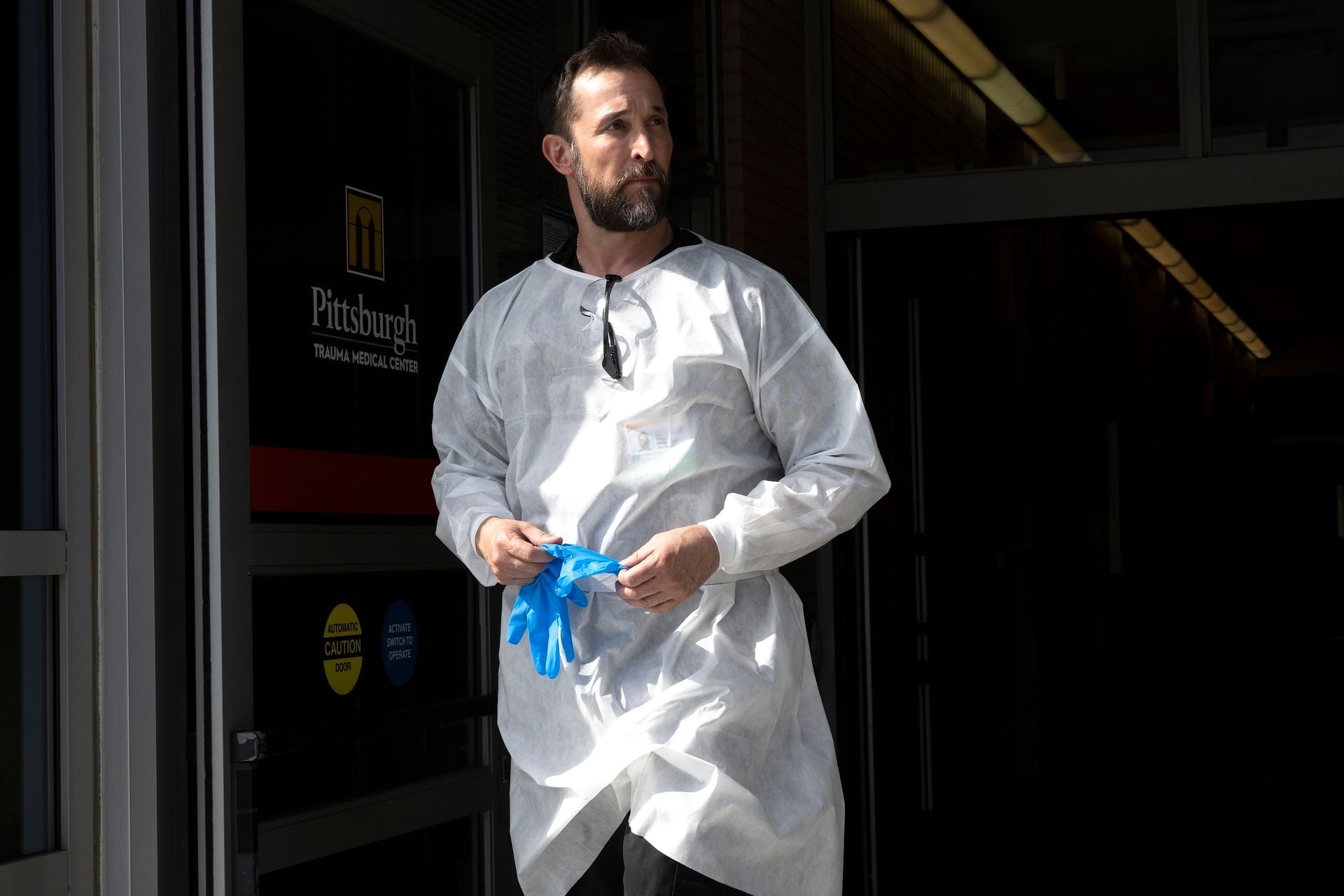

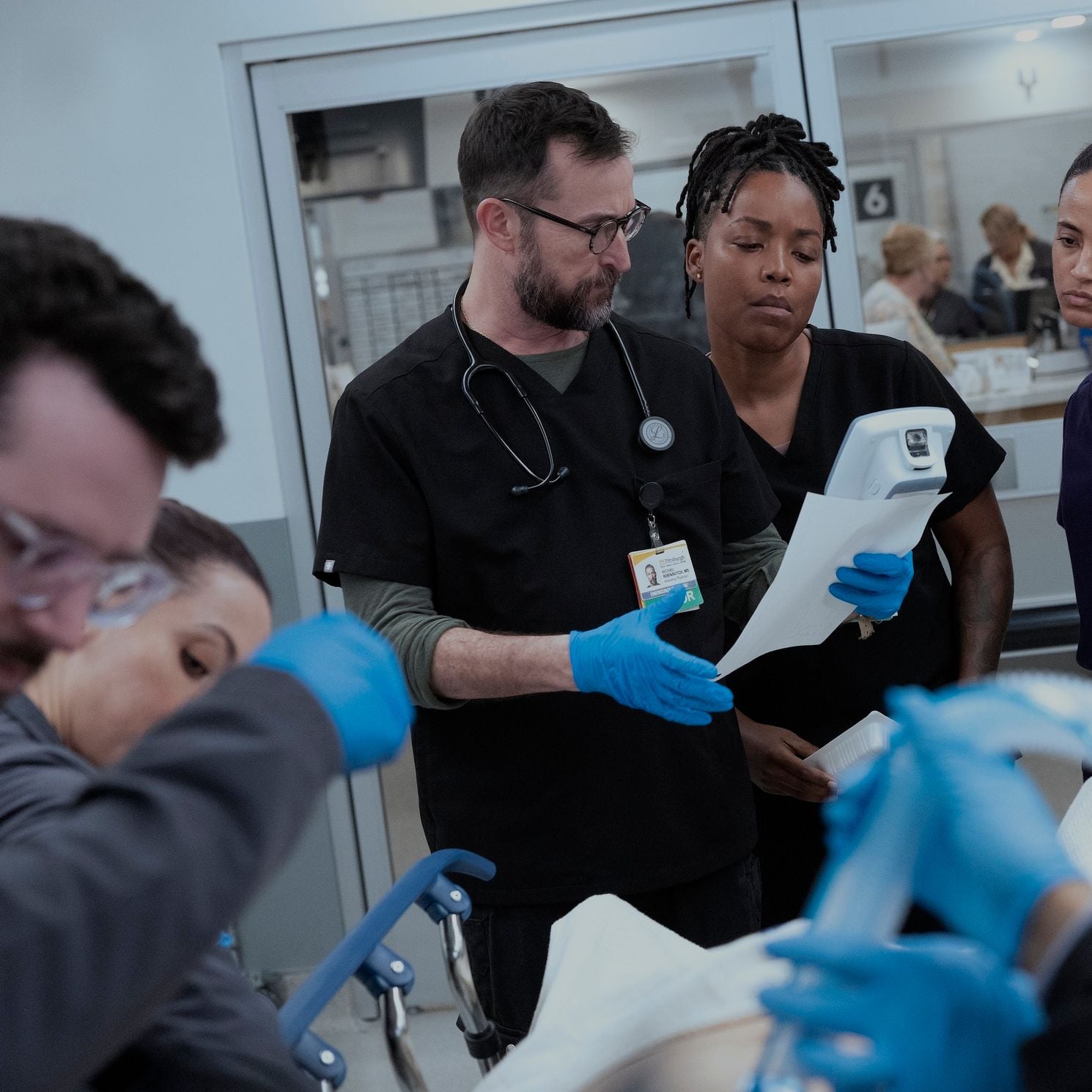
Noah Wyle in "The Pitt".
HBO
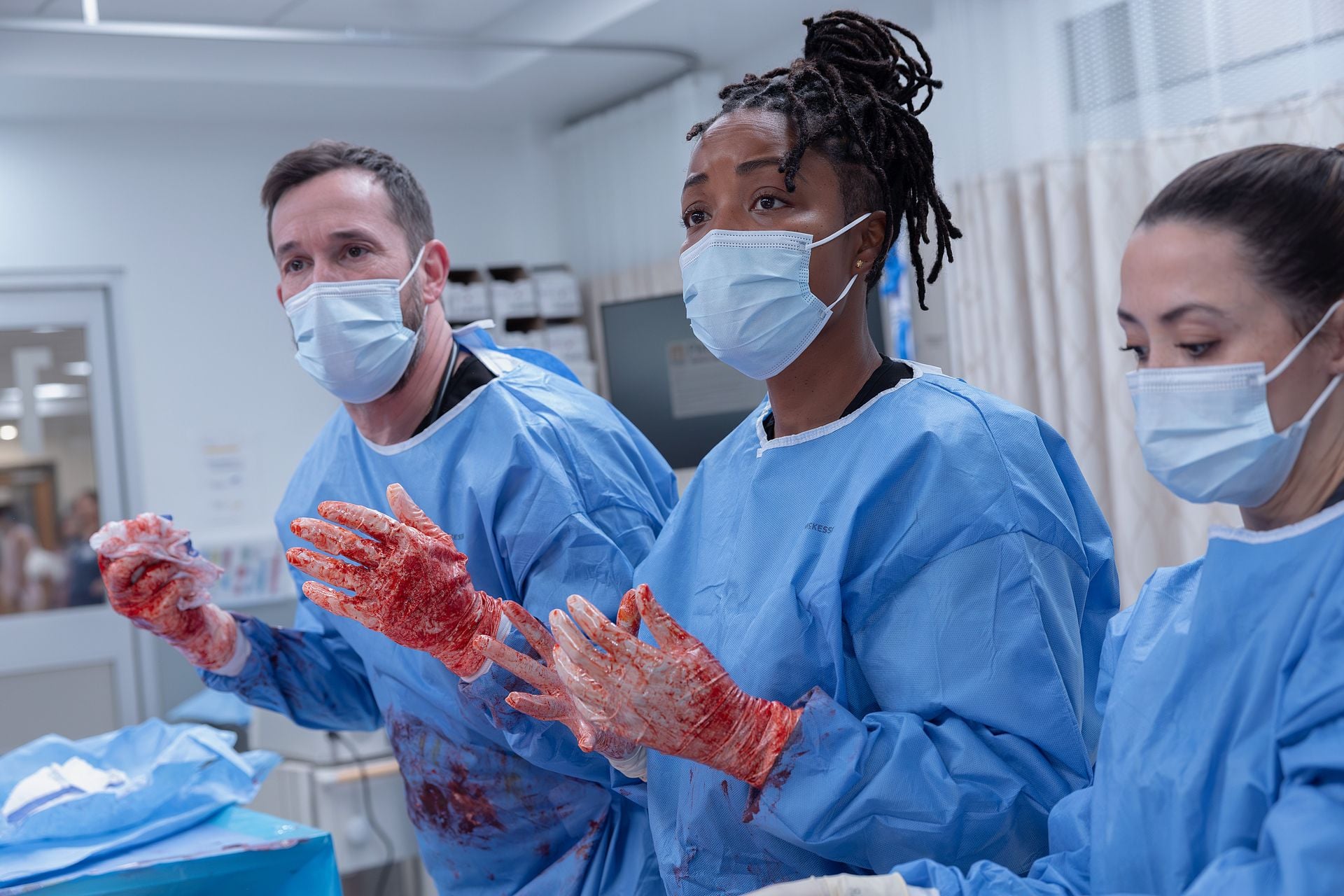

Noah Wyle, Ayesha Harris, and Amber Martinez in "The Pitt."
HBO
Though, of course, she did still have a few tricks up her sleeve. Most procedures took place on a “trick gurney”, for example, which was designed by Rob Nary, the special effects coordinator, to hide the actors’ real bodies underneath it, with makeup and prosthetics lying on the visible bed. In a birthing scene in the season two finale, Arougheti used two pieces of umbilical cord connected by magnets to ensure the actors would ‘cut’ the correct spot. When creating vomit, she enlisted the help of regular, lumpy oatmeal.
To keep things medically accurate, Arougheti and her talented team (“My key effects artist, Thom Floutz, is a master painter and just a genius all around.”) initially prepares for filming with nothing but the script and name of the proposed procedure. Sometimes, even the script isn’t fully formed yet. They start by consulting with Dr. Joe Sachs, an executive producer who is still a practicing emergency physician. Then they study using EM:RAP, an online library-like website full of procedure videos and information. This is gory stuff, but Arougheti remains mostly unperturbed. “I've always been into special effects. I've always been into makeup. I've been watching horror movies since I was five. Not appropriate. I hope my parents don't read this.”
Despite her early love for scream-worthy scenes, she admits that EM:RAP’s content can be startling: “I'm not sensitive to watching these procedures for the most part, but there are some that really freaked me out. But I watch these real procedures and then we go, okay, how can we make this look real on camera?”
For every scene, her ideal scenario is to create something so authentic—so disgusting and fluid and visceral—that the editors don’t have to consistently cut scenes or add computer-generated embellishments.
After revising and ideating, they bring in the big guns: external special effects houses like Fractured FX by Justin Raleigh. The chosen cast member then gets sent to one of these houses for a body scan, so that they can make realistic prosthetic pieces (usually body pieces and organs) for Arougheti to work with.
“Sometimes it's a full body scan, sometimes it's just the leg, sometimes it's the chest, sometimes it's the arm,” she tells us. It depends on where the wound and subsequent procedure is meant to be. “And then they start building. They send us updates, pictures, and videos, and when we finally get the piece, we do some tests in-house: we do a show-and-tell with the director, producers, everybody. If we have some notes or adjustments, we make them. And then we put it all together on film day.”
These prosthetics help to create the really big operation scenes: doctors slicing into chests to reveal beating hearts in pools of blood; bitten-off tongues that need stretching and sewing back together (requiring multiple prosthetic tongues on mouth retainers, swapped out for each stage of the operation); or ripe, peachy pregnant bellies, cut into as blood runs out like juice.
But there’s something quite impressive and tangible about a wound that requires no prosthetics at all: “One of my favorite scenes to work on was the margarita burns,” reveals Arougheti. In season two, episode eight, a patient comes into the ER with phytophotodermatitis, which is a rash caused by exposing certain plant chemicals to sunlight. “There's something really fun about it when it's just makeup application. And I think the margarita burns were so disgusting and so much fun to watch come together.”
Makeup-only applications are by no means quick and easy, though. These burns took four and a half hours to create—even with time-saving hacks like having blister-shaped, silicone temporary tattoo transfers to hand. “We laid out those blister sheets, and then it was a paint job,” explains Arougheti. For this, they used alcohol palettes, which are alcohol-activated makeup pans often used by professionals on film sets; they’re sweat-proof, durable, realistic pigments and can be applied in thin layers like watercolors.
For other burns throughout the season, Arougheti and Floutz used ground coffee granules to resemble gravel, Skin-Tite silicone adhesive to create wounds, gelatin bubbles as pustules, and colored methocel gels (food-grade thickeners) to texturize skin.
While she enjoyed creating burns, Arougheti’s favorite project of season two was the finale’s resuscitative hysterotomy scene. In plain terms, a resuscitative hysterotomy is an emergency cesarean carried out after the mother’s death. It’s truly harrowing stuff but while watching, the audience has no time to feel sad or shocked. Instead, there’s an impending feeling of suspense (tinged with doom or hope—you’re yet to figure out which), as you watch doctors waste no time, moving on from one task to the next, in a rush to save this little life.
“The birthing scene took ten weeks to build,” shares Arougheti. “There were lots of adjustments and re-watching videos. It's one baby who has different colors and all the amniotic fluid coming out of the sack. There were so many elements to having this come together. And that was an incredible challenge.”
The main challenge came from making the baby—which was a prosthetic—look realistically goopy without ruining the precious prosthetic itself, which needed to be in pristine condition and reset for multiple takes. “You can't use strong chemicals, you can't use anything that's going to ruin the silicone of the baby and the paint job and all that,” explains Arougheti. “Again, master Thom Floutz, he came up with some concoctions and he mixed some products. He's like this mad scientist in his lab.” The concoction they landed with contained KY jelly, cream cheese, and edible grape jelly. Delicious.
“That day, I think there were five of us jumping in every time we did a cut. One person was responsible for re-gooping up the baby, one person was responsible for refilling the uterus, putting the baby back in, and then sealing up the uterus. We all had specific jobs that day. Kind of like at a Formula One pit stop.”
Sometimes, though, even Arougheti and Floutz have limits. During this scene, visual effects were used to make the baby look blue after birth: “We did not have the capability in one continuous moment to make the baby blue, and then clean it up, and then make it not blue.” Saying this, Arougheti reassures us that most of the scene was created using real, practical, artistic work, “which is really fun and exciting for the makeup department."
All-encompassing though it may be, Arougheti’s job doesn’t end with wounds; she’s responsible for the main cast’s makeup, too. For many productions, actors spend hours in a makeup chair each morning, but The Pitt’s approach was a little different. Arougheti wanted them to look “real” and “tired”. Doctors aren’t realistically clocking in for their shifts with a full face of makeup on. Some characters—like Dana Evans (Katherine LaNasa) and Dr. Baran Al-Hashimi (Sepideh Moafi)—do wear a little bit, but the show takes place over fifteen consecutive hours, and their makeup reflects that. By the finale, nurse Dana has no makeup on at all.
“We wanted to see that progression. So, what was really important was to be able to feel that exhaustion of the shift. Even if most of our characters don't have a lot of makeup at the beginning of the shift, they have some.” For most characters, this makeup looked invisible, but it allowed Arougheti to slowly wipe it away throughout the episodes. Sometimes, she added strategic pigments to make the actors look worse for wear: when Dr. Santos (Isa Briones) falls asleep while working, her under-eyes look darker—carefully made by Arougheti, who needed to make the cast’s physical and psychological decline clear to viewers.
Ultimately, Arougheti and her team created wounds, procedures, and characters via art so seamless that it simply disappeared into the bedlam of the emergency room. Nothing looked out of place or broke the viewer’s focus. Just as surgeons heal bodies, Arougheti’s makeup skills stitch The Pitt’s storyline together, one perfectly crafted injury at a time.