
Two-Time Oscar Winner Ruth E. Carter Comes Full Circle With ‘Sinners’
Fashion
TSS Creative
Ruth E. Carter
The costume designer—now the most nominated Black woman in Academy Awards history—mines her legacy with stunning costumes in Ryan Coogler’s genre-defying epic.
After winning two Academy Awards for Ryan Coogler’s “Black Panther” and “Black Panther: Wakanda Forever,” Ruth E. Carter continues her record-setting streak by becoming the most-nominated Black Woman in Oscar history for the visionary filmmaker’s “Sinners.” Set in early-1930s Mississippi, the genre-defying vampire-horror epic chronicles the daily realities of Black life under Jim Crow, the spiritual and cultural significance of the blues, and the long history of appropriation of Black music in America—threads mirrored in Carter’s expansive, expressive, and period-authentic costumes.
The film also mines the history of Carter’s nearly four decades of costume design, which began in the late ’80s collaborating with another groundbreaking filmmaker, Spike Lee. “It totally felt like I was revisiting my early career,” she says. Ahead, Carter dives into the cultural, historical, and character-defining layers of the costume design in "Sinners”—and how the mid-credits sequence brought her career full circle.
.jpeg&w=3840&q=85)

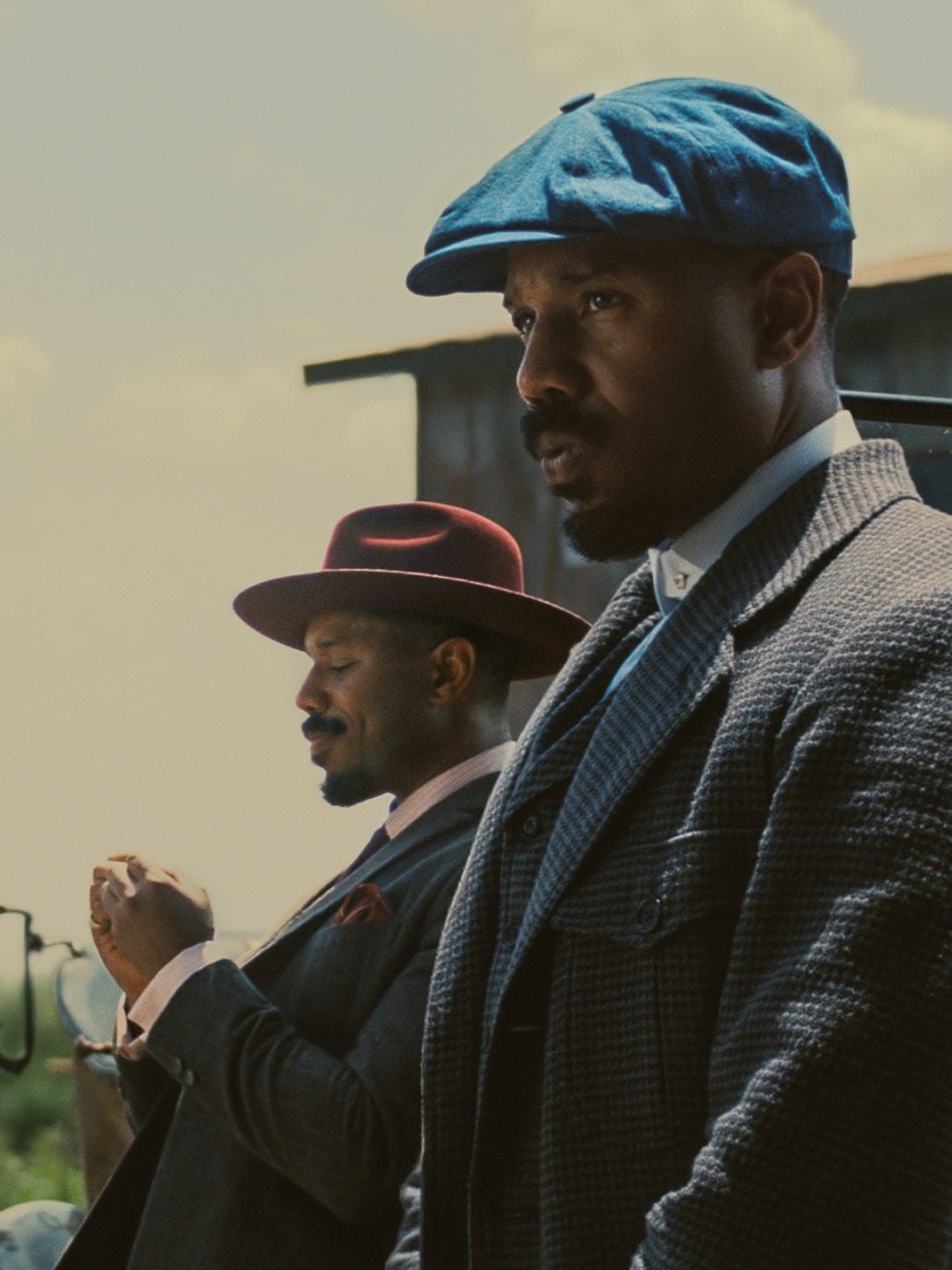
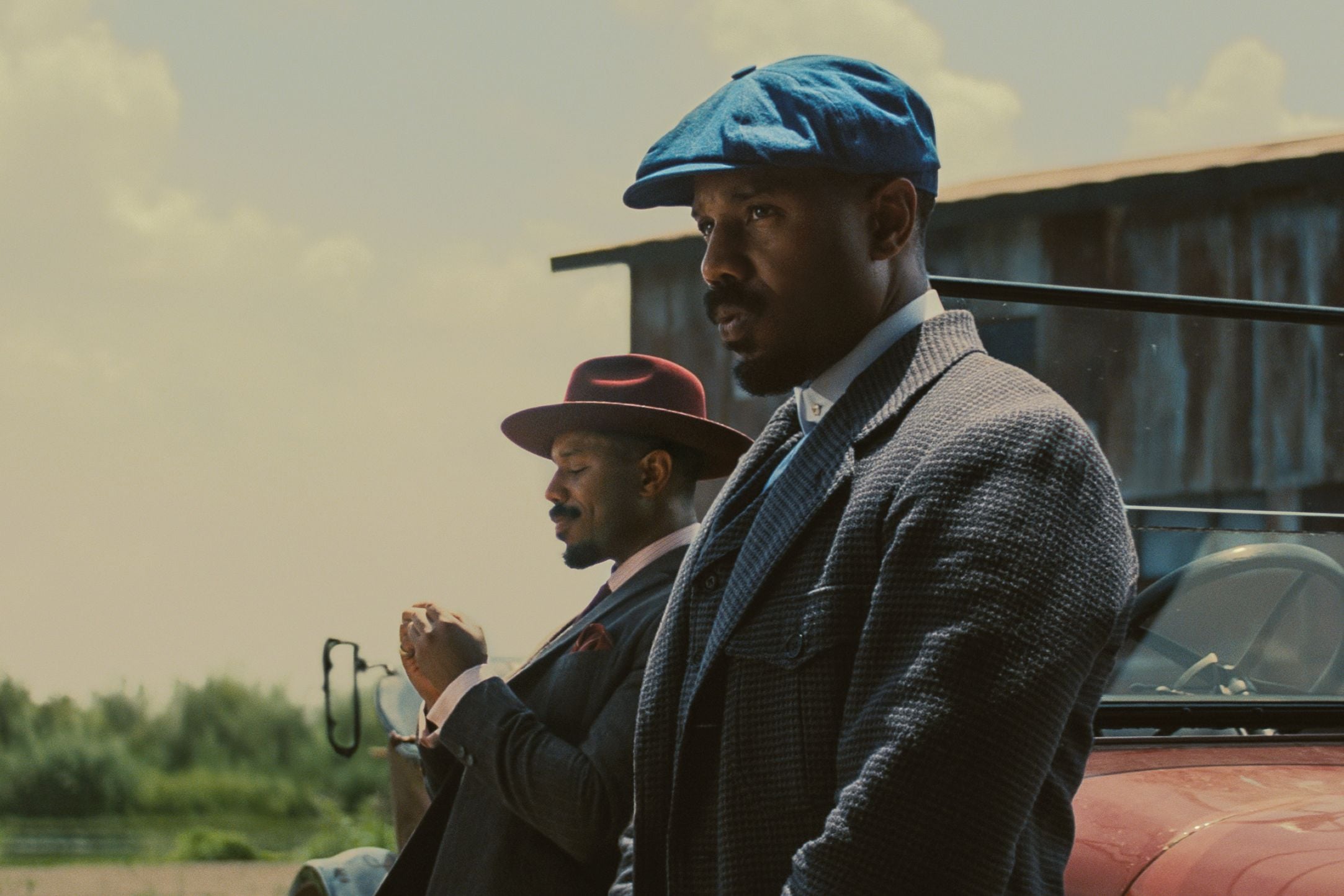
Michael B. Jordan in "Sinners." Photo: HBO Max.
HBO Max
Differentiating the Twins
First, Carter tackled the challenge of illustrating both the symbiotic bond and the distinct traits of twins Elijah “Smoke” and Elias “Stack” Moore (both played by Michael B. Jordan), Clarksdale’s prodigal sons whose Great War service and gangland dalliances up north precede them. “I wanted to tell the story of reverse migration,” says Carter. “They traveled from Chicago to the South, and I really wanted them to feel like they had come from someplace else.”
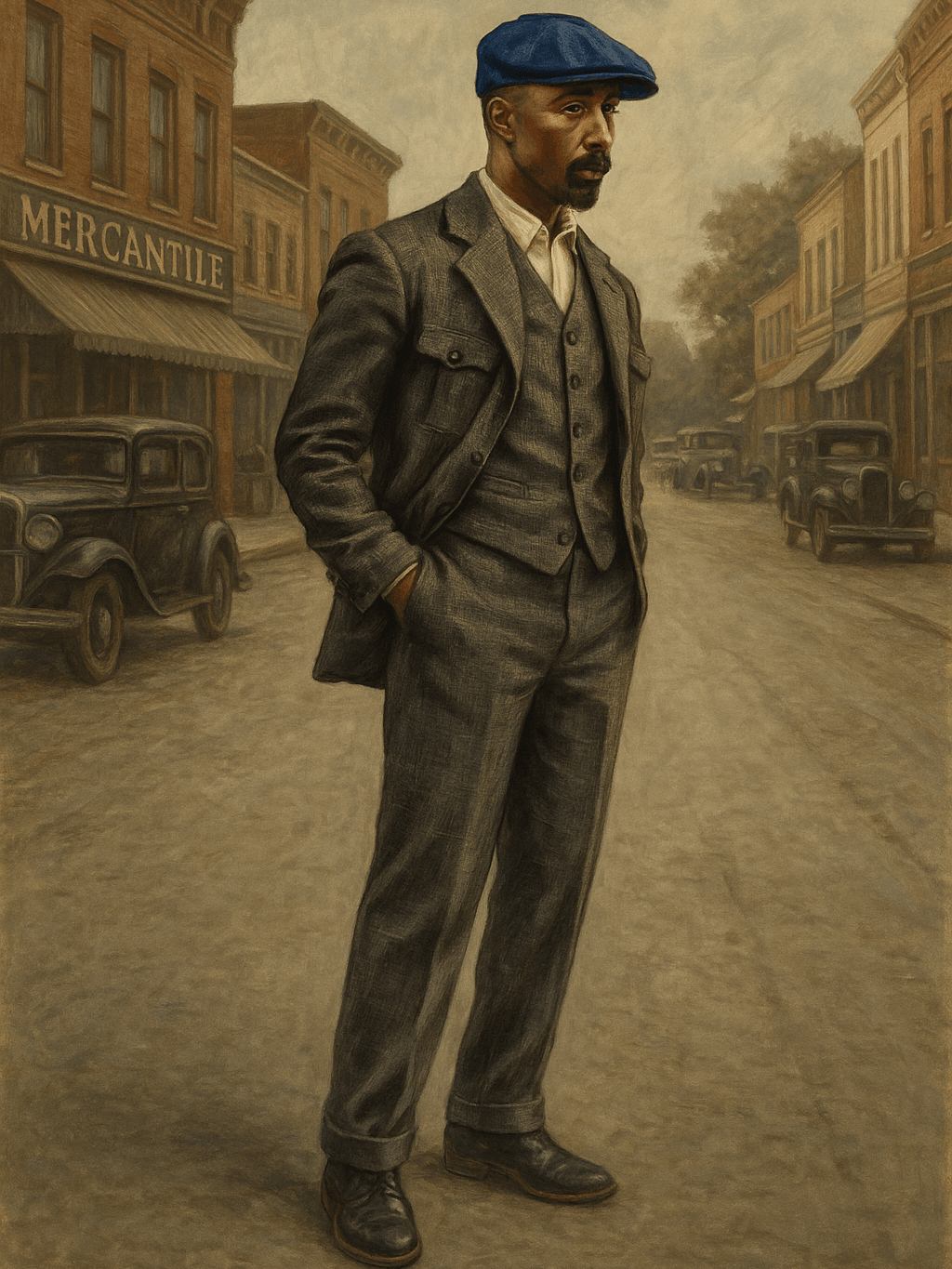

Sketch of Smoke in "Sinners." Photo: Ruth E. Carter.
Ruth E. Carter
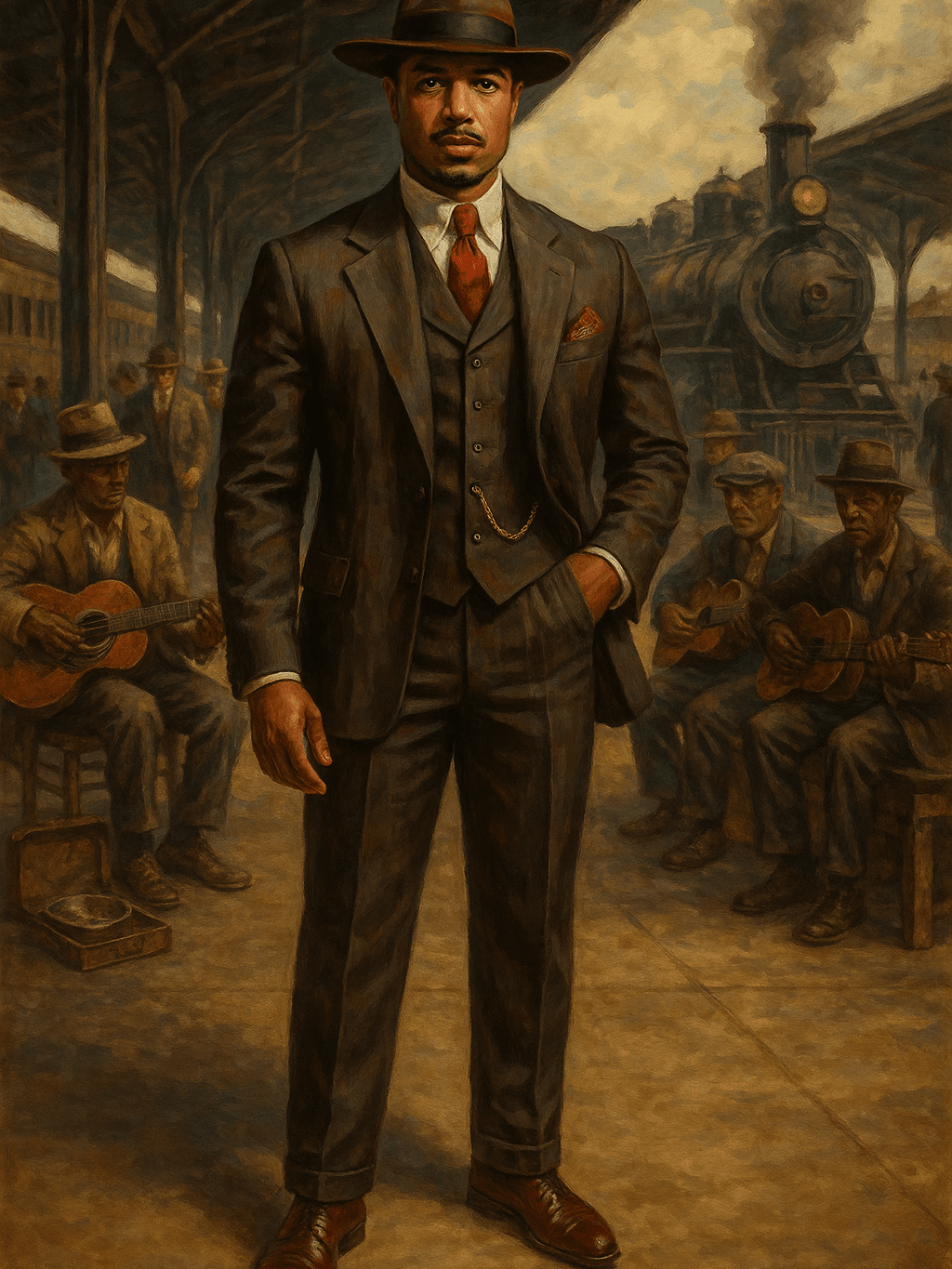

Sketch of Stack in "Sinners." Photo: Ruth E. Carter.
Ruth E. Carter
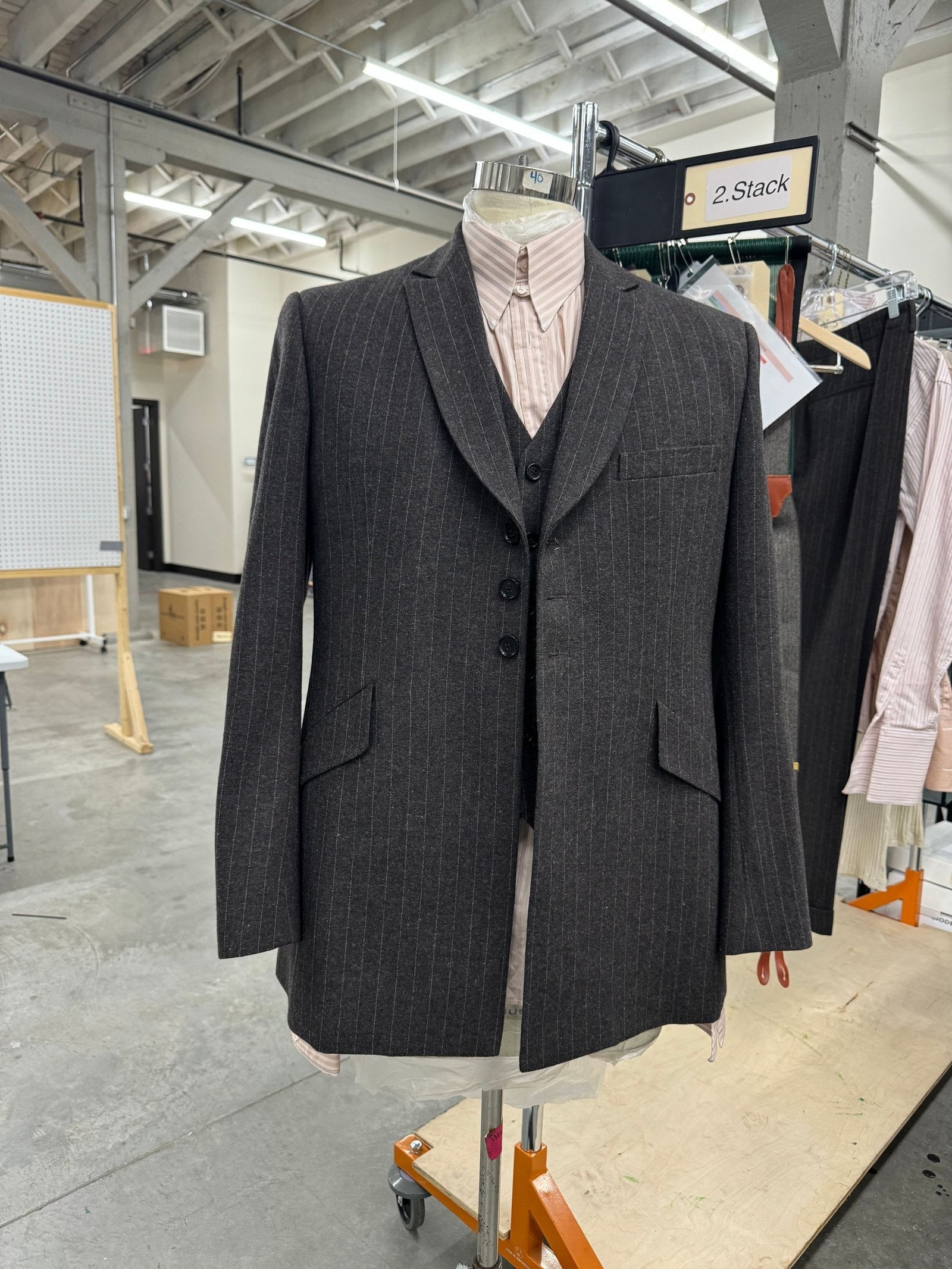

Blazer in "Sinners." Photo: Ruth E. Carter.
Ruth E. Carter
Sketch of Smoke in "Sinners." Photo: Ruth E. Carter.
Ruth E. Carter
Sketch of Stack in "Sinners." Photo: Ruth E. Carter.
Ruth E. Carter
Blazer in "Sinners." Photo: Ruth E. Carter.
Ruth E. Carter
The twins return to their plantation sharecropping community—sweltering in the Southern heat yet still nattily dressed in big-city three-piece wool suits. “Chicago ain’t shit but Mississippi with tall buildings instead of plantations. Might as well deal with the devil we know,” Smoke tells their little cousin Sammie (Miles Caton), whose preacher father disapproves of the blues that feed the workers’ souls as they recuperate over the weekend.
Smoke, the restrained protector and fixer, wears a rugged, but sharp houndstooth suit with a boxier silhouette and practical chest-flap pockets. “We wanted to put all kinds of things in his coat, and he was hiding weapons,” says Carter. “He wasn't as self-conscious as Stack was.” Stack, the fast-talking, charismatic hothead, charms in pinstripes accented with debonair accoutrements: a tie pin and tie bar, chunky jewelry, cuff links, and a pocket-watch chain. “Stack was more of a ladies' man, so he had more Italian tailoring,” says Carter, who accordingly gave him a three-button suit in a 1920s cut.
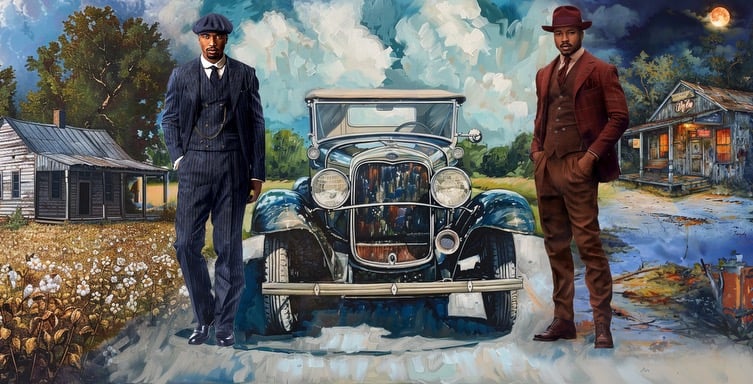

Sketch of Smoke and Stack in "Sinners." Photo: Ruth E. Carter.
Ruth E. Carter
With a color theme running throughout the film, Coogler envisioned Stack as red and Smoke as blue. Carter deftly translated the assignment into their bold hats, an essential accessory for men in the 1930s. For Stack, Carter found a rich ruby fedora, with a ‘30s-appropriate high crown and wide brim, which she transported from Los Angeles to New Orleans, where the movie was shot. He also wears his hat with purpose. “Very pristine, at all times—never dipped or buckled. It always had to be really perfect,” says Carter. “The dressers on set had a special case for that hat.” Smoke dons a vibrant blue flat cap, made out of denim, connecting him with his hometown locals. “It was very important that Smoke have the image of every man, a man's man, the worker,” says Carter. “Denim is part of the American tapestry and we were telling an American story.”
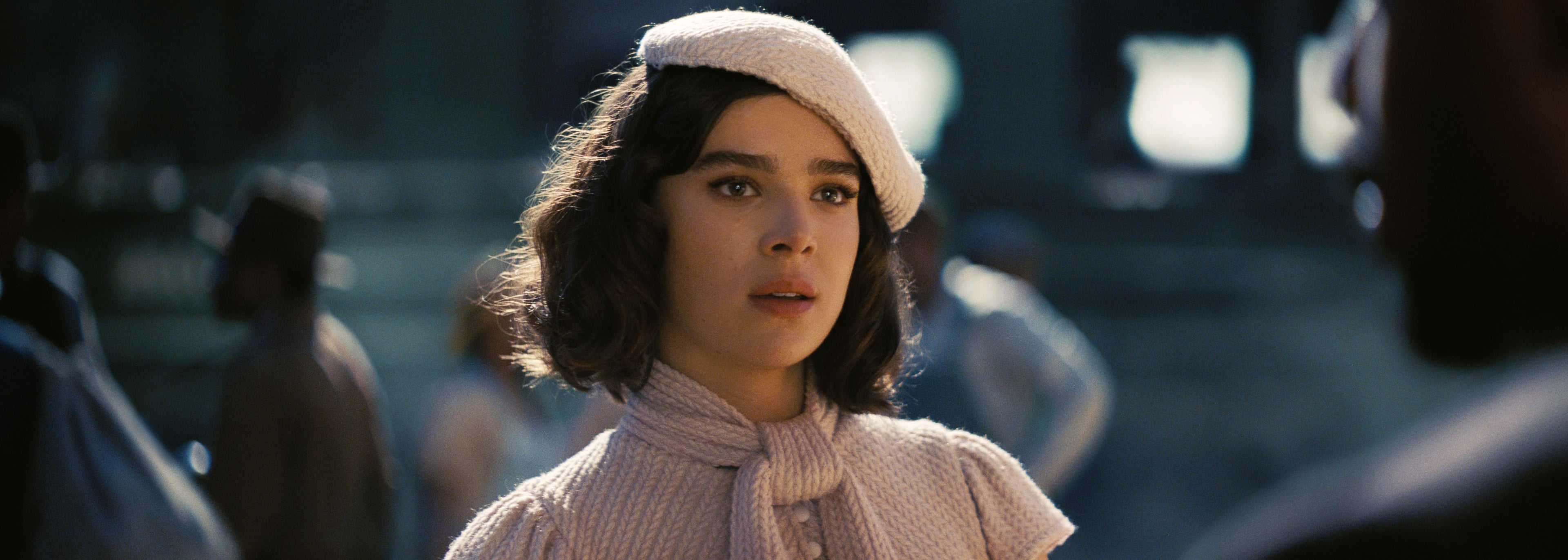

Hailee Steinfeld in "Sinners." Photo: HBO Max.
HBO Max
Mary’s Haunting Pink Dresses
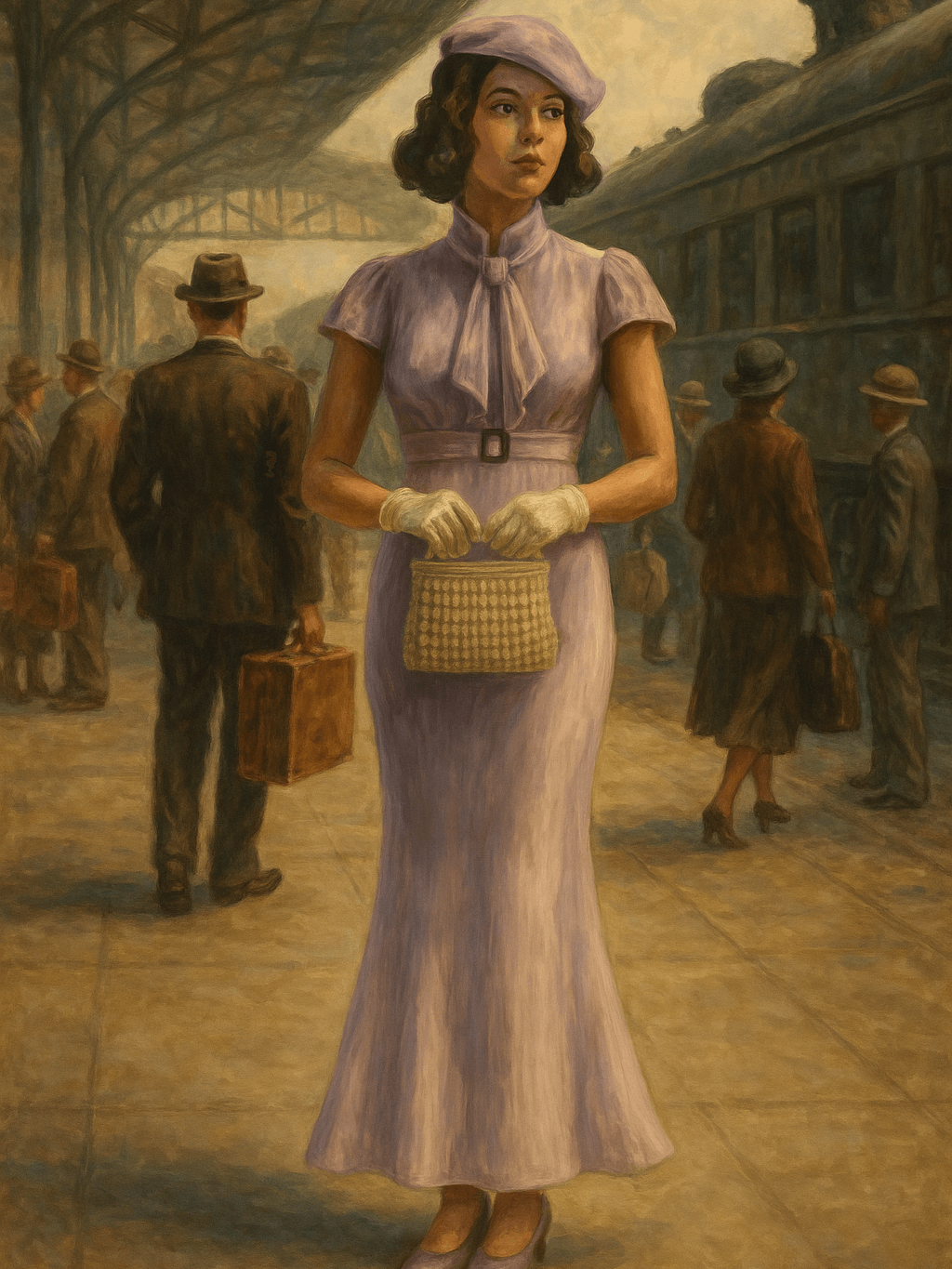
The twins’ first venture back home is one for the community: a Saturday night of transcendent live blues and revelry at a juke joint they’ve opened for sharecroppers after a grueling week in the cotton fields. As Smoke handles the clandestine shipment of booze and operations in town, Stack heads to the train station to book the talent—and runs into past love and childhood friend, Mary (Hailee Steinfeld).
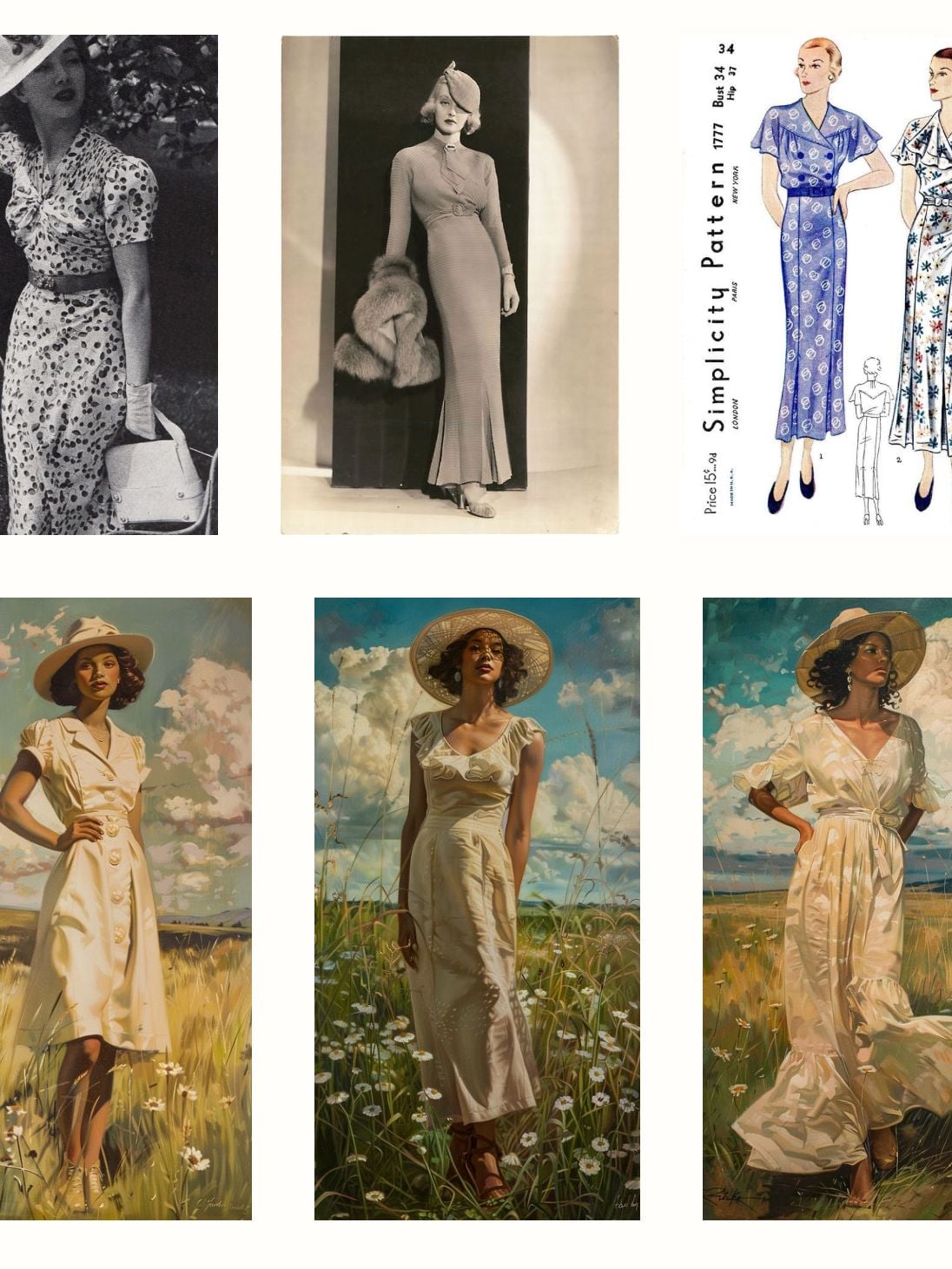

Mary fashion references for "Sinners." Photo: Ruth E. Carter.
Ruth E. Carter

Sketch of Mary in "Sinners." Photo: Ruth E. Carter.
Ruth E. Carter

Fabric samples for "Sinners." Photo: Ruth E. Carter.
Ruth E. Carter
Mary fashion references for "Sinners." Photo: Ruth E. Carter.
Ruth E. Carter
Sketch of Mary in "Sinners." Photo: Ruth E. Carter.
Ruth E. Carter
Fabric samples for "Sinners." Photo: Ruth E. Carter.
Ruth E. Carter
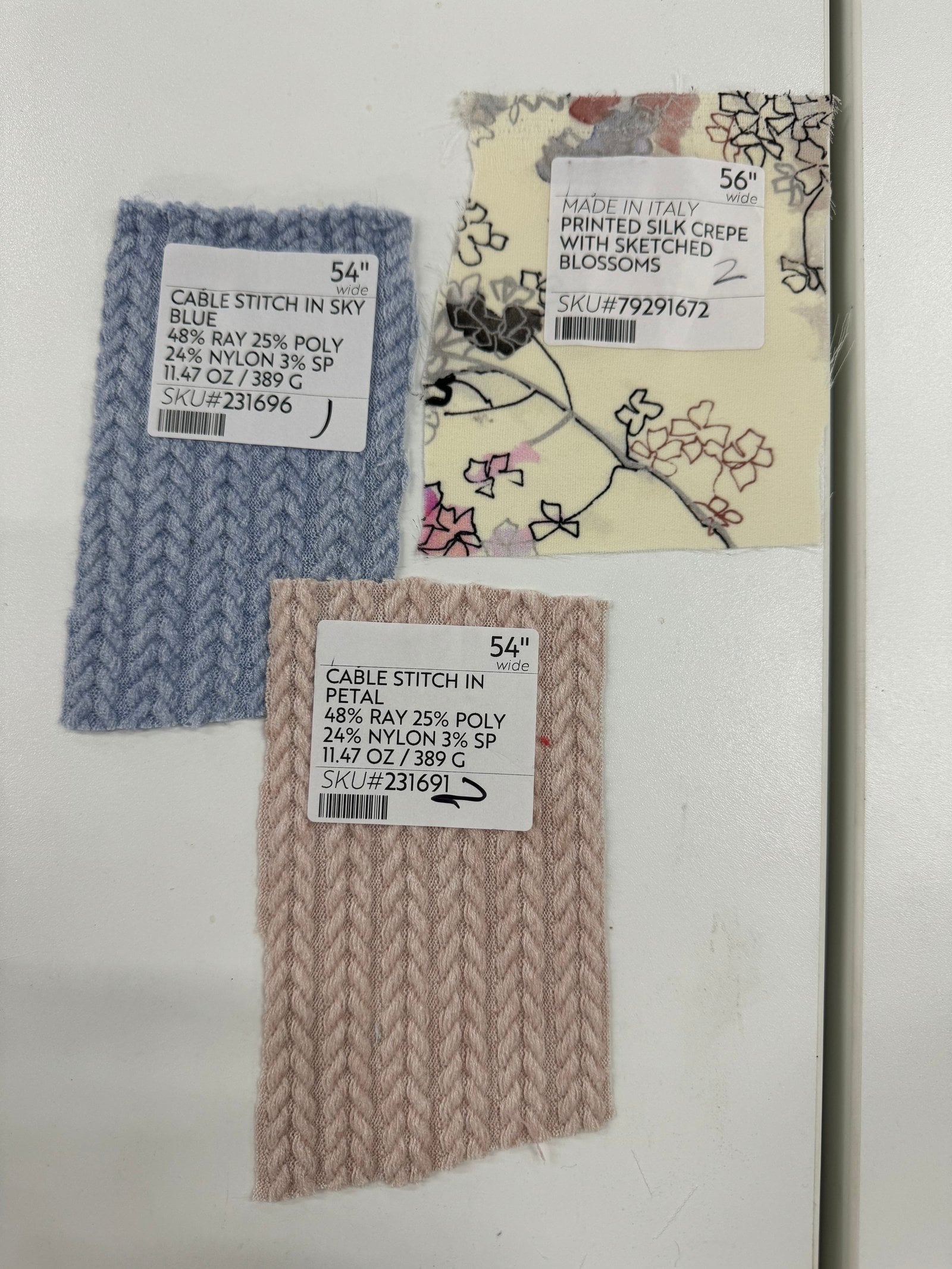
“She was almost like a ghost returning to the past,” says Carter. White-passing Mary left Clarksdale to marry a wealthy white man in Arkansas and start a new life, as exemplified by her immaculate, intricately knit long dress in the palest pink. “She’s also the barometer of where we are in time. She's telling us it's 1931,” says Carter. “Because this is a story about sharecroppers and people who aren't going to be up to the minute. Fashion doesn't evolve evenly.”
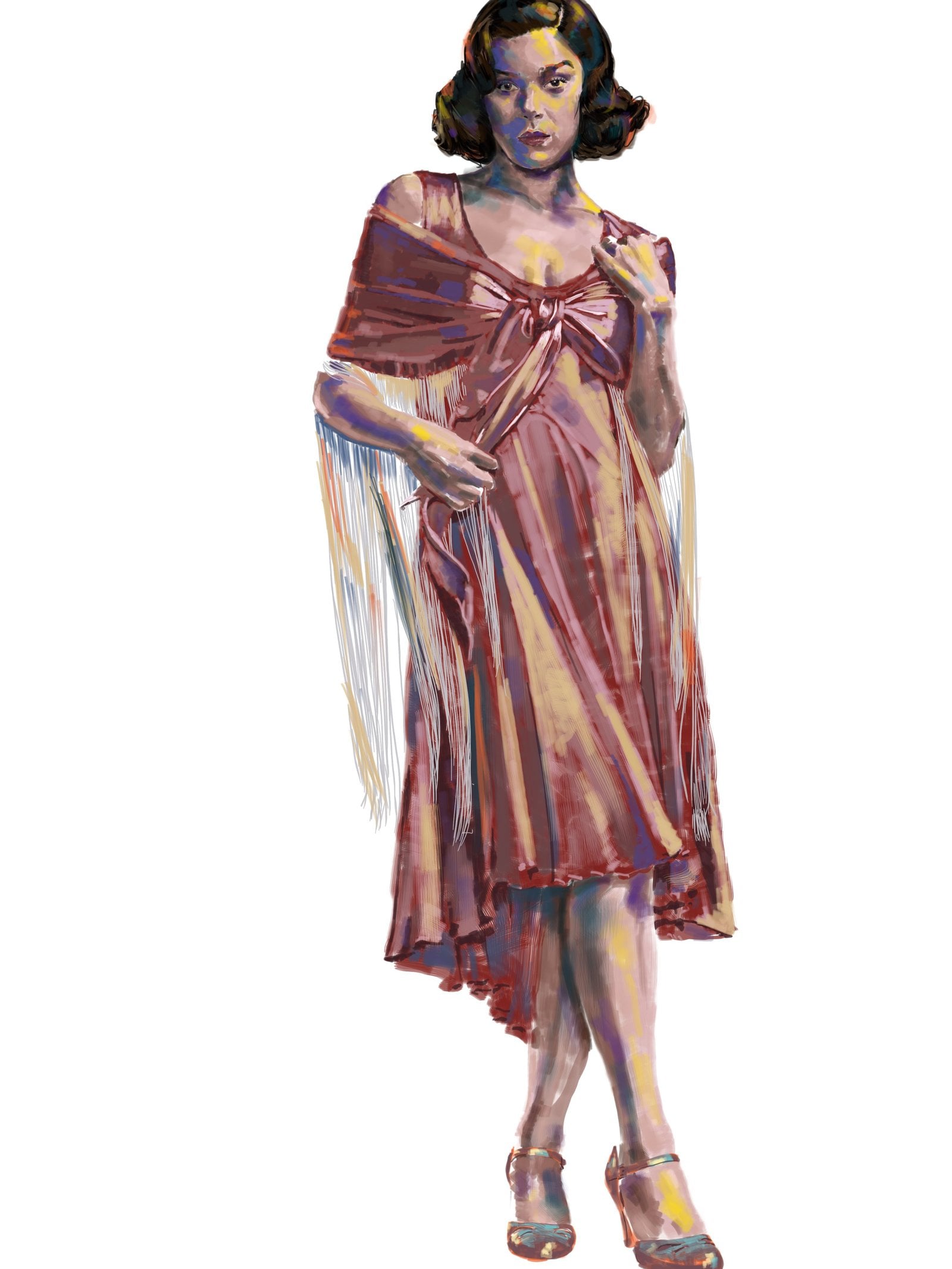
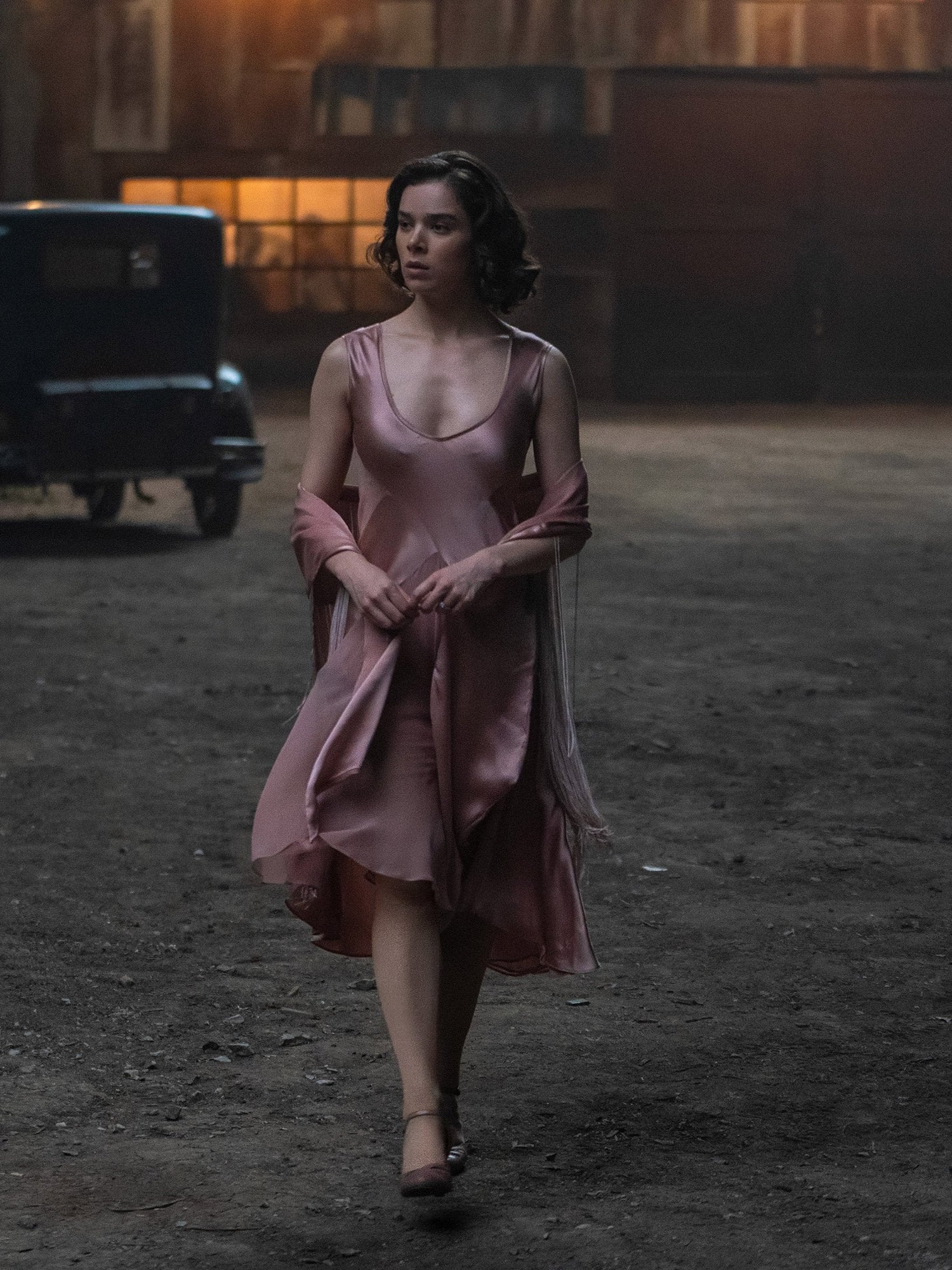
Mary decides to remain in Clarksdale for the juke joint night and sheds her long knit-dress layer, with the bias-cut silhouette. She enters the party in her slip underlayer: an airy, mid-calf-length dress recalling flappers of the 1920s. “I wanted that to feel like it was harkening back to her past,” says Carter.

Sketch of Mary in "Sinners." Photo: Ruth E. Carter.
Ruth E. Carter

Hailee Steinfeld plays Mary in horror period drama "Sinners."
Warner Bros. Pictures
Sketch of Mary in "Sinners." Photo: Ruth E. Carter.
Ruth E. Carter
Hailee Steinfeld plays Mary in horror period drama "Sinners."
Warner Bros. Pictures

Wunmi Mosaku in "Sinners." Photo: HBO Max.
HBO Max
Annie’s Spiritual Jewelry
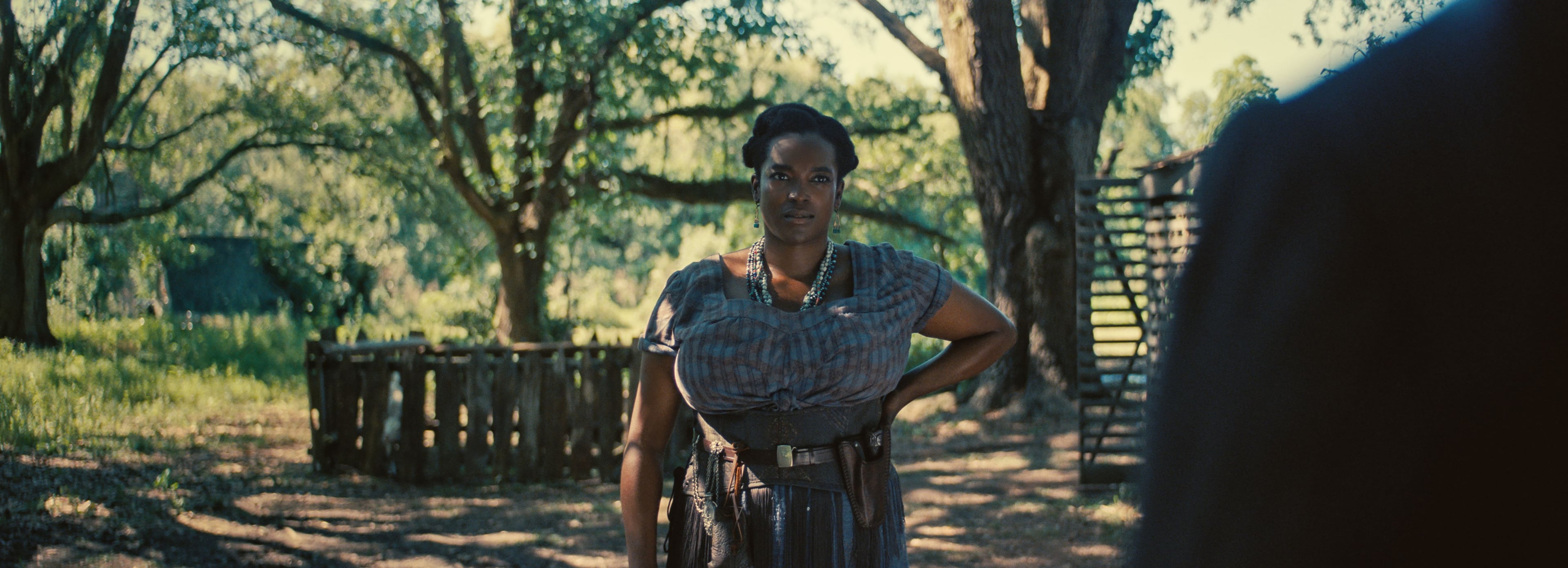
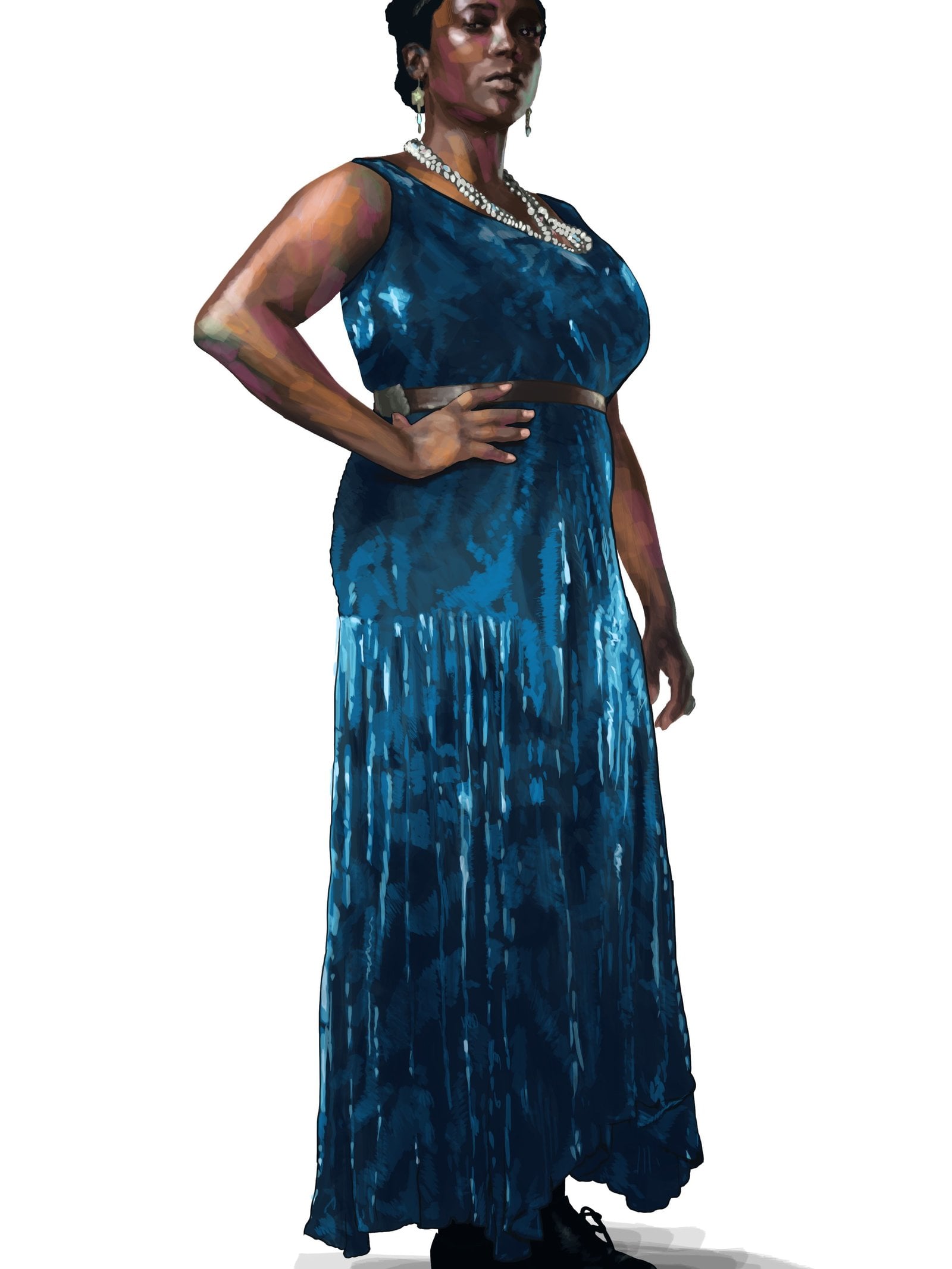
Carter designed the costumes for Clarksdale’s denizens to reflect systemic oppression and socioeconomic struggle. Most likely making their own clothes, they dress with pride in their Sunday best and juke-joint finery, but without jewelry or accessories, conveying the realities of the time. But Annie (Wunmi Mosaku)—the community healer, herbalist (or root worker), Hoodoo practitioner, and Smoke’s estranged wife—wears layers of spiritual beads and drop earrings as both protection and an expression of her spirituality.
“I just remember meeting people in my lifetime who had those beads under their clothes,” says Carter, referencing, opens in new tab blessed Eleke beads of the Yoruba of West Africa. “They would wear them in stacks and stacks, and the colors of the beads had different meanings.”
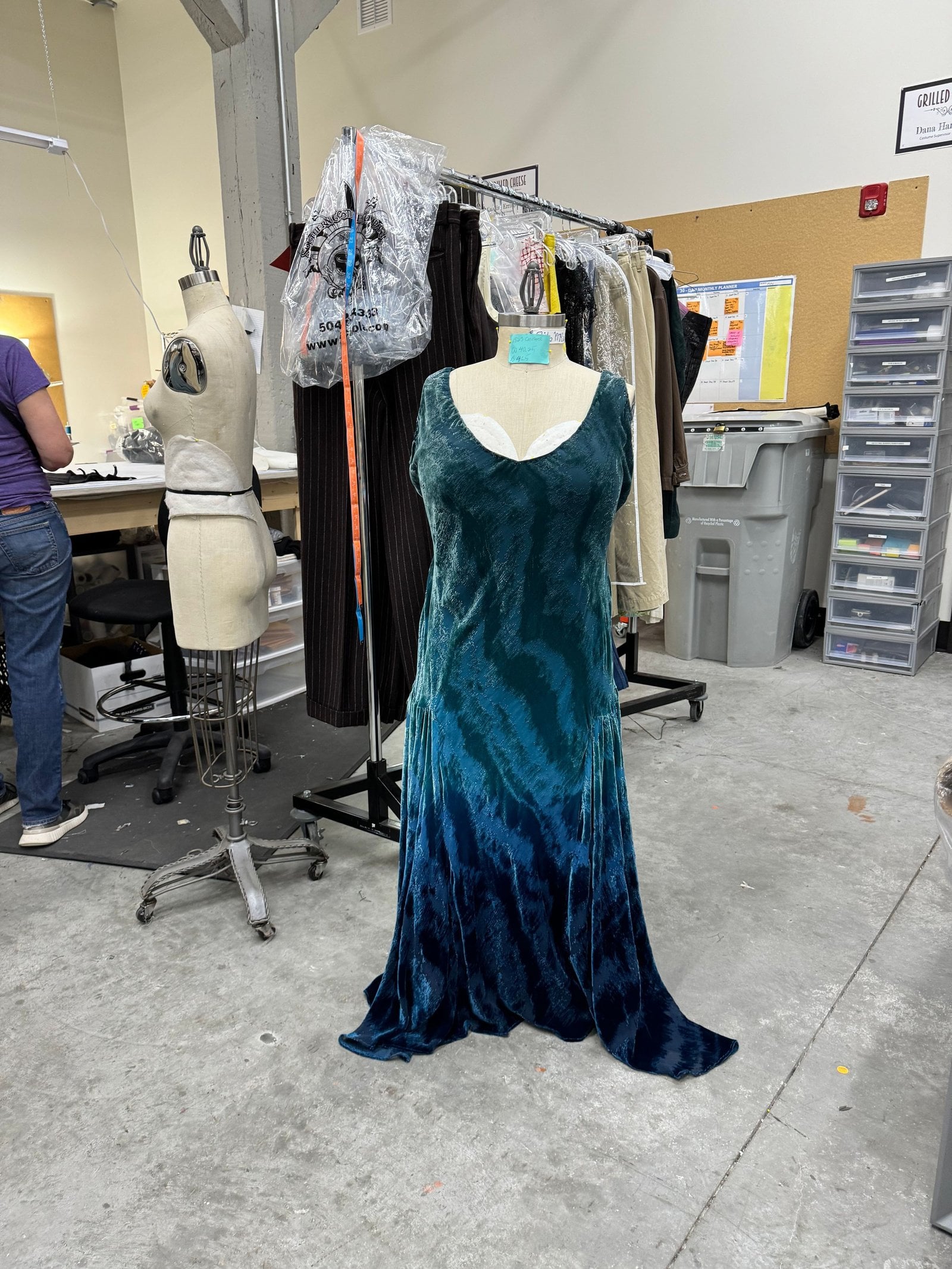
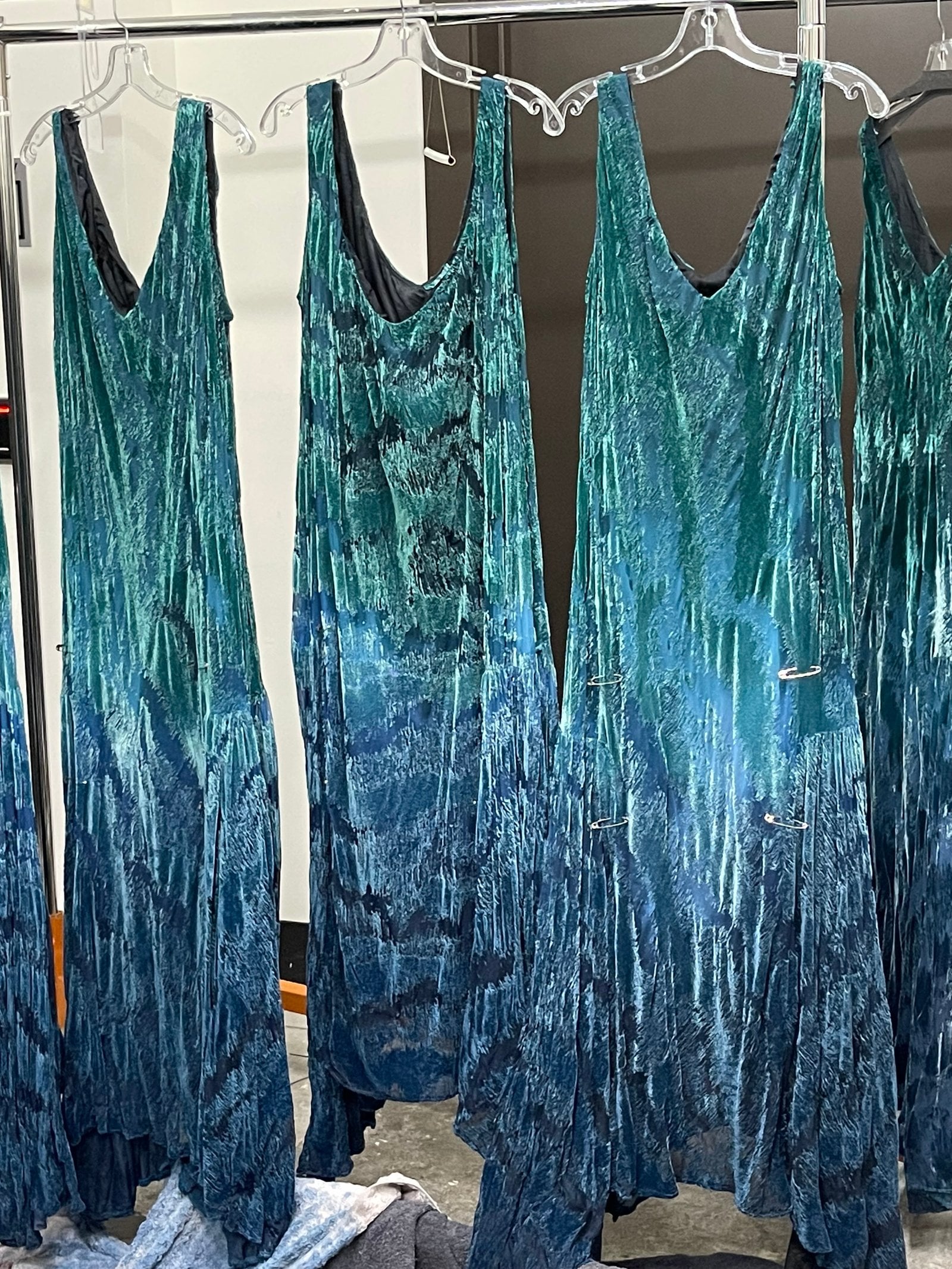
When Smoke pays respects to their daughter’s grave at Annie’s shack in the woods, she’s outfitted for work with a watercolor-like pattern in light “haint” blue on her dress bodice. Carter explains that the hue is a tradition of the Gullah-Geechee, opens in new tab people, descendants of enslaved West Africans in the Lowcountry of the Southeastern U.S. “Haint blue protects you from evil spirits because they can't travel over the water,” she says.

Sketch of Annie in "Sinners." Photo: Ruth E. Carter.
Ruth E. Carter

Blue dress in "Sinners." Photo: Ruth E. Carter.
Ruth E. Carter

Behind the scenes blue dresses for "Sinners." Photo: Ruth E. Carter.
Ruth E. Carter
Sketch of Annie in "Sinners." Photo: Ruth E. Carter.
Ruth E. Carter
Blue dress in "Sinners." Photo: Ruth E. Carter.
Ruth E. Carter
Behind the scenes blue dresses for "Sinners." Photo: Ruth E. Carter.
Ruth E. Carter
Carter recalls discussions with Mosaku about representing Annie’s role in the community, and not continuing previous trope-filled depictions of spiritual healers on film. “Instead of putting a shawl around her shoulders, giving her a pipe, and making her some stereotype, we put the fringe on her skirt,” says Carter, who also highlighted how Annie’s work served the community in a segregated society with no healthcare access. A brace around her waist holds her root-working tools—scissors, a pocket knife, and the herbs she gathers.
Annie’s raw-silk skirt glimmers with tiny lurex stars, and she later changes into a velvet ombré burnout dress—in protective blue—for the juke joint, and armors up in her spiritual beads. “She was this anchor in the community, but also separated and set apart because of the type of healing that she was doing,” says Carter. “It's not often that you can do that much with one character.”
The Final Scene Bringing Carter’s Career Full Circle
In the 1992-set mid-credits sequence, Stack and Mary—turned into vampires on the fateful juke joint night—saunter into a Chicago blues bar just after Sammie (played as an adult by Grammy-winning blues legend Buddy Guy) finishes his set. The undead couple embodies early-’90s fashion and culture, especially Stack in a colorful Coogi sweater. “The Coogi sweater was so big across the country during that time,” says Carter. She recalls the popularity of the Australian knitwear line, famed for its intricate, multicolored, 3D-effect knits, embraced by the hip-hop scene, and immortalized in The Notorious B.I.G.’s “Big Poppa.”
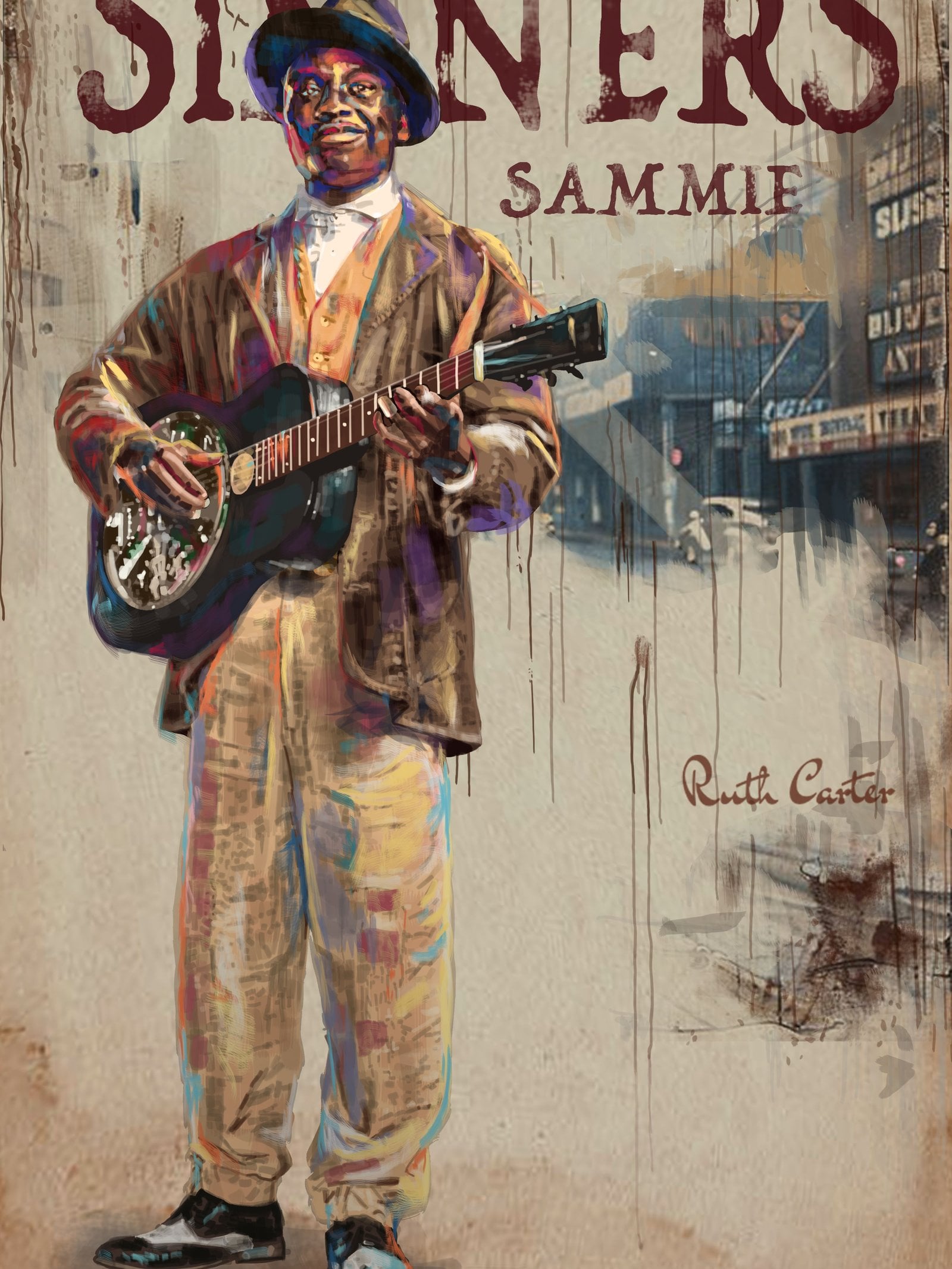

Sketch of Sammie in "Sinners." Photo: Ruth E. Carter.
Ruth E. Carter
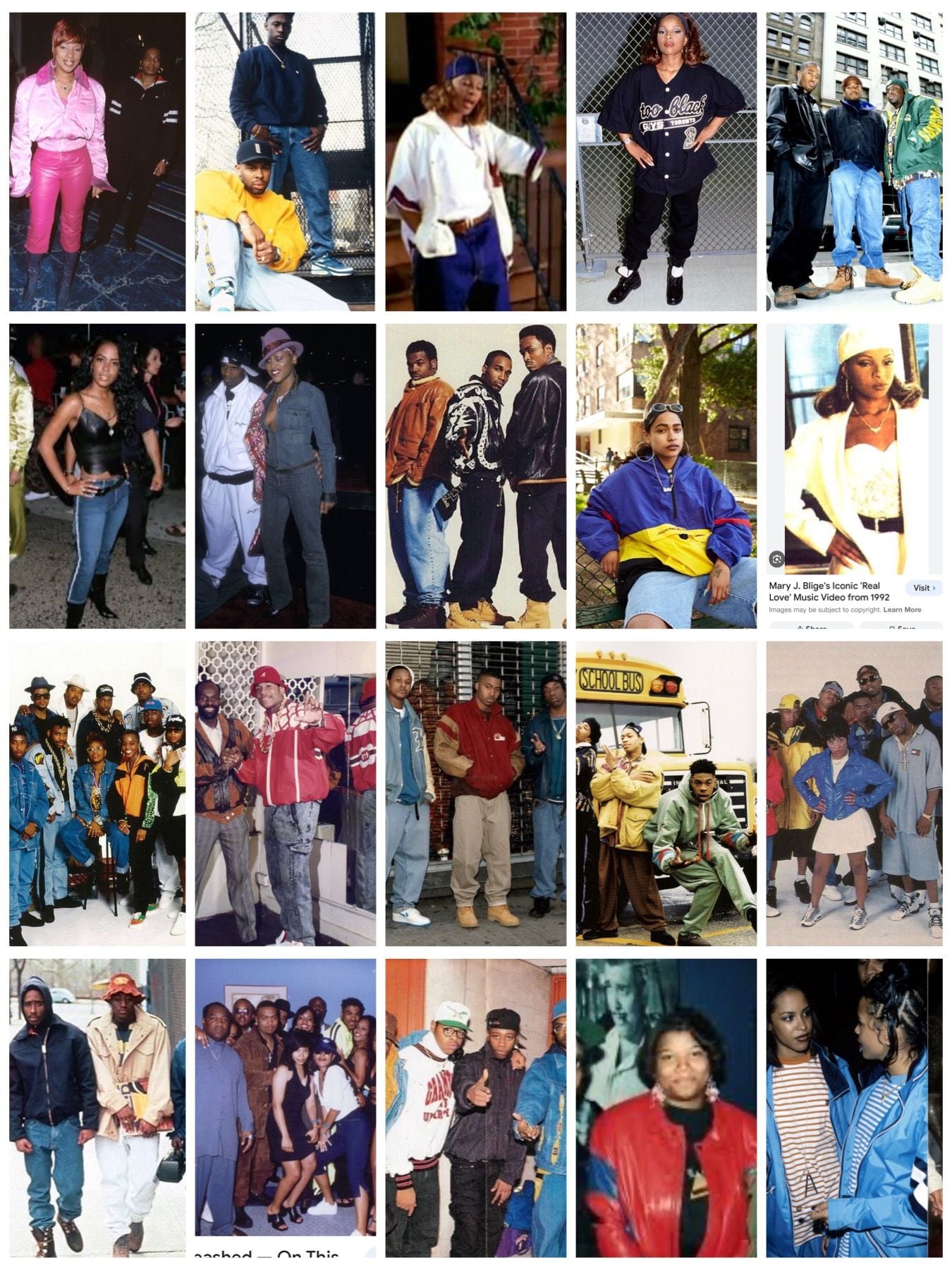

Eighties mood board for "Sinners." Photo: Ruth E. Carter.
Ruth E. Carter.
Sketch of Sammie in "Sinners." Photo: Ruth E. Carter.
Ruth E. Carter
Eighties mood board for "Sinners." Photo: Ruth E. Carter.
Ruth E. Carter.
“Of course, when Ryan Coogler said maybe Stack should wear this Coogi sweater, I was like, ‘Oh yeah,’” says Carter. She looked back to one of her first jobs, dressing the guest hosts of “Showtime at the Apollo” in 1987. “I would go to this place on the Upper West Side and pull like six or seven Coogi sweaters,” adds Carter, reminiscing. She knew exactly who to call, and quickly found a vintage collector in Los Angeles for Stack’s sweater.
Coogler also suggested that Mary’s look references singer, dancer, and now-TV host Paula Abdul during her “Straight Up” and “Forever Your Girl” era. “The high waist jeans, the bustier, and the cropped leather jacket with the dolman sleeves. Are you kidding?” says Carter, with a huge smile. “I had that outfit.” She intuitively snapped up Mary’s black-and-white checked jacket and leather bustier from Palace Costumes in Los Angeles. “It definitely felt very nostalgic for me,” says Carter.