
How ‘Sense and Sensibility’ Found a Fresh Look for a Familiar Story
Interiors
Production designer Francesca Di Mottola transformed historical manors and sourced authentic flora and fauna to create a grounded, naturalistic take on Jane Austen’s beloved classic.
Jane Austen’s 1811 novel “Sense and Sensibility,” published under the byline “By a Lady,” was itself a radical act. So when filmmaker Georgia Oakley decided to adapt the beloved classic, she envisioned a fresh take centered on the relationship between the Dashwood sisters: prudent Elinor (Daisy Edgar-Jones) and passionate, outdoorsy Marianne (Esmé Creed-Miles). Despite the societal constraints of the Regency period, the sisters assert their agency and follow their own values, depicted through Oakley’s grounded, naturalistic approach.
From the sprawling but timeworn family home of Norland Park to a secluded cottage on the moors to a spectacular London ball, the production design by Francesca Di Mottola takes a similarly fresh approach—using settings never before seen on screen and shooting exclusively on location, with no sets built on soundstages. “It is, of course, a period drama, but we wanted to try and make it less like the very much seen English period dramas that we're all very much used to,” says Di Mottola, who also donned a location scout cap for the film—one of several hats she wore during the production.
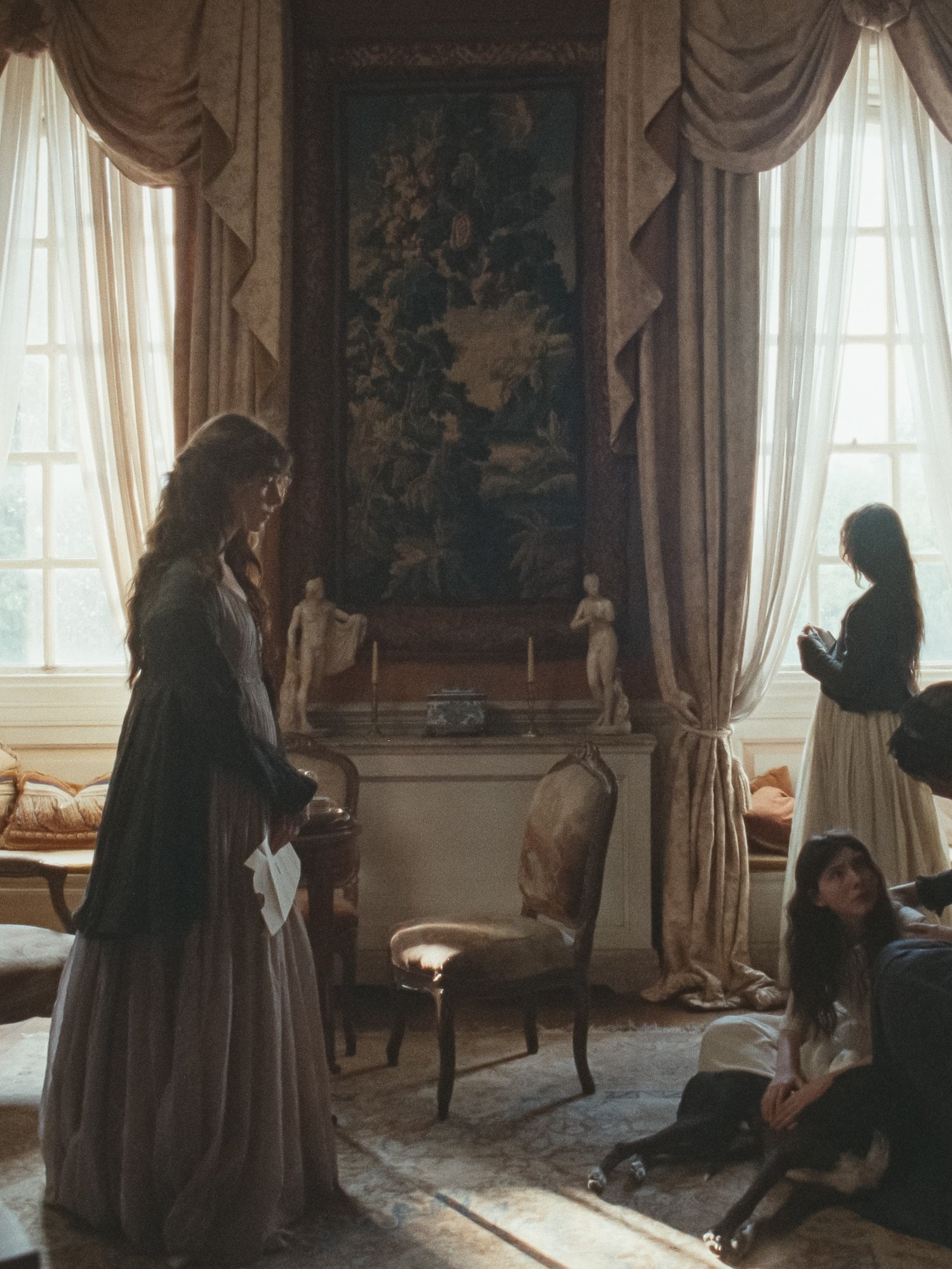
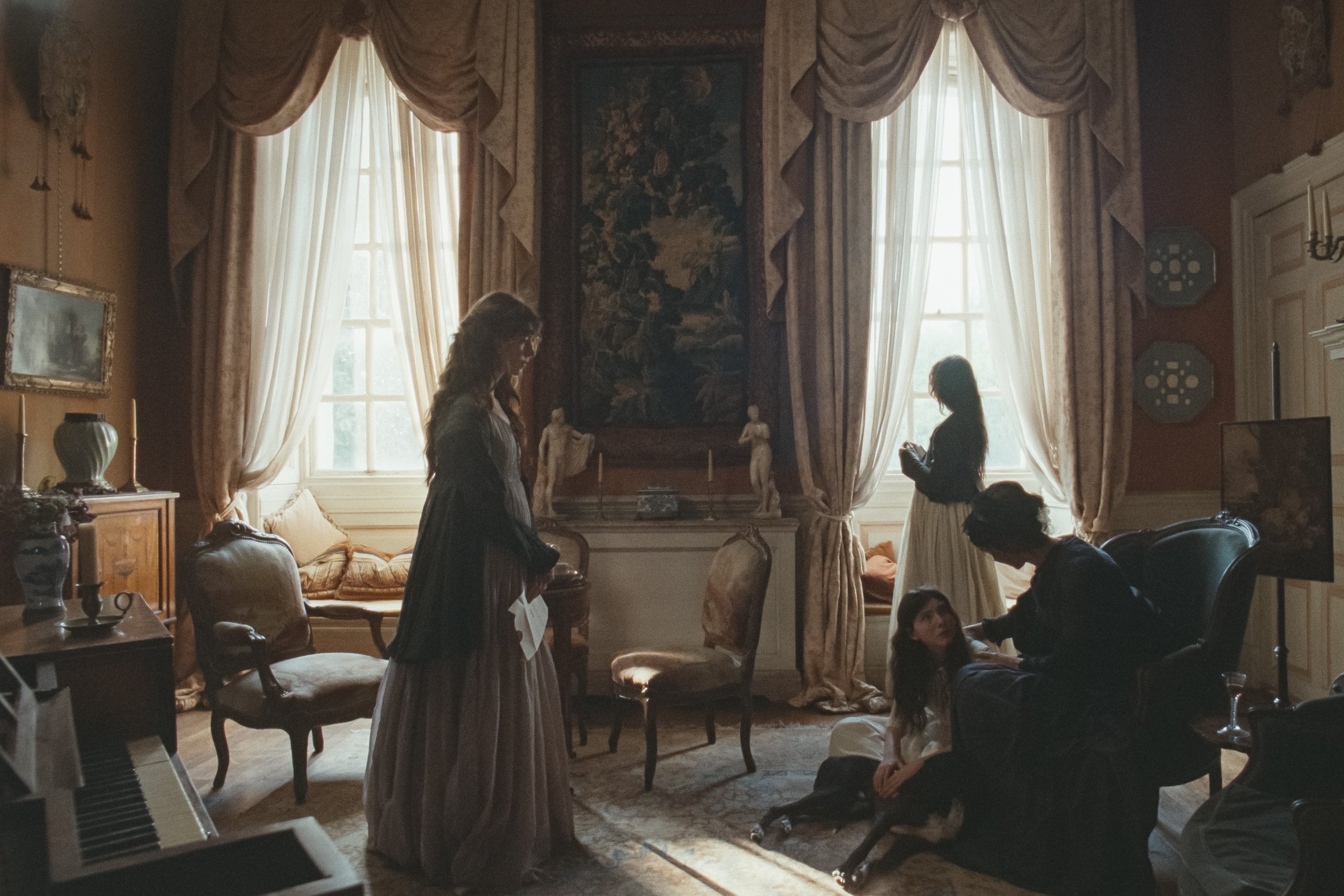
Kingston Russell House, which dates back to the 17th century with Jacobean heritage and a Georgian stone façade, makes its big-screen debut as Norland Park, the Dashwood family estate that was bequeathed to the only son, John (Tom Brooke)—instead of Elinor, Marianne, and youngest sister Margaret (Bodhi Rae Breathnac). “What is interesting is that you see the house has changed with time, so it's got history. That's something that we were really after,” says Di Mottola, who then pinpointed which spaces to reimagine into familiar, broken-in Dashwood family rooms. “The dining room is the most beautiful room in the movie. It has this beautiful original 18th-century hand-painted Chinoiserie wallpaper. I was absolutely determined to make it work.”
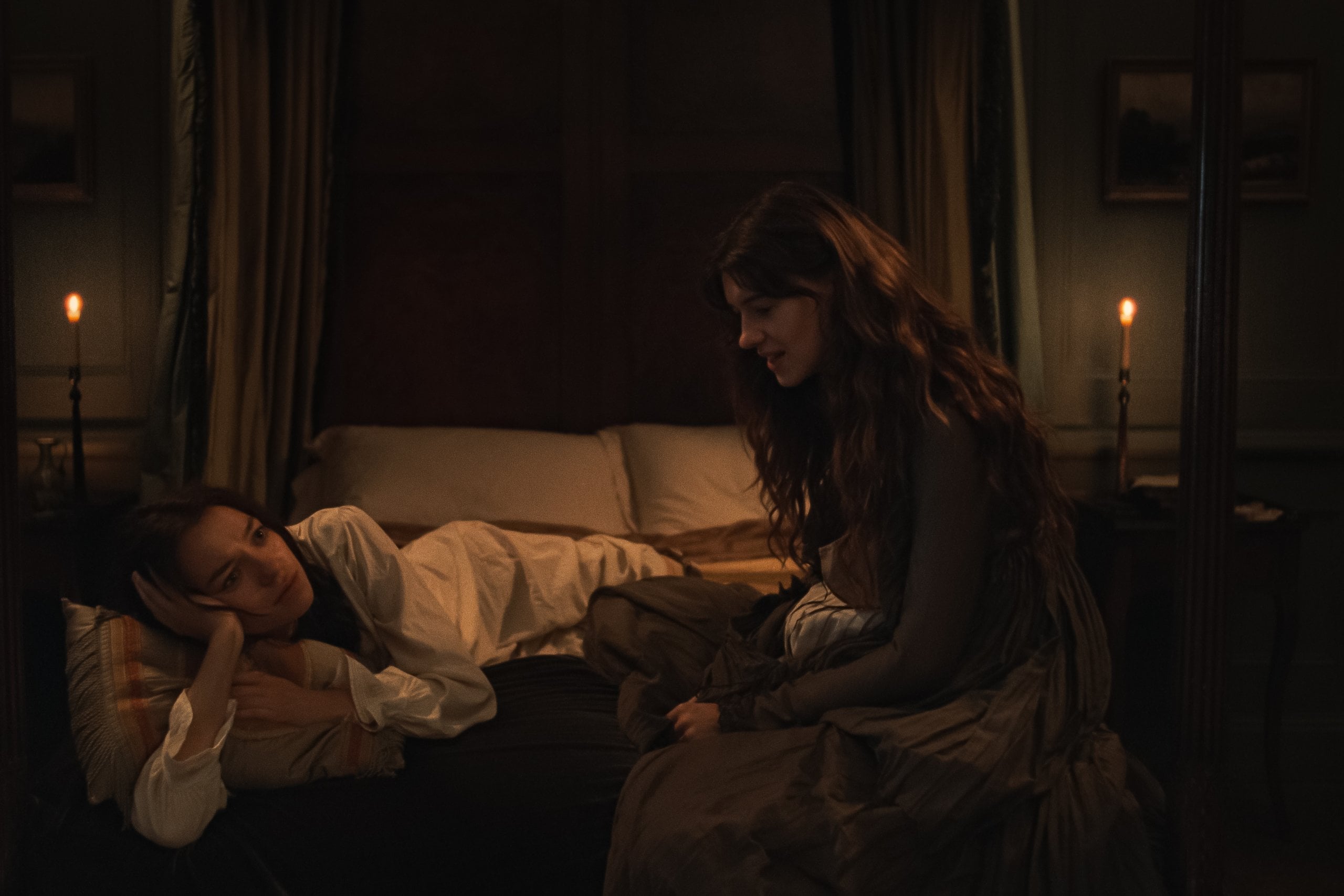

Esmé Creed-Miles and Daisy Edgar-Jones as the Dashwood sisters in "Sense and Sensibility".
Focus Features
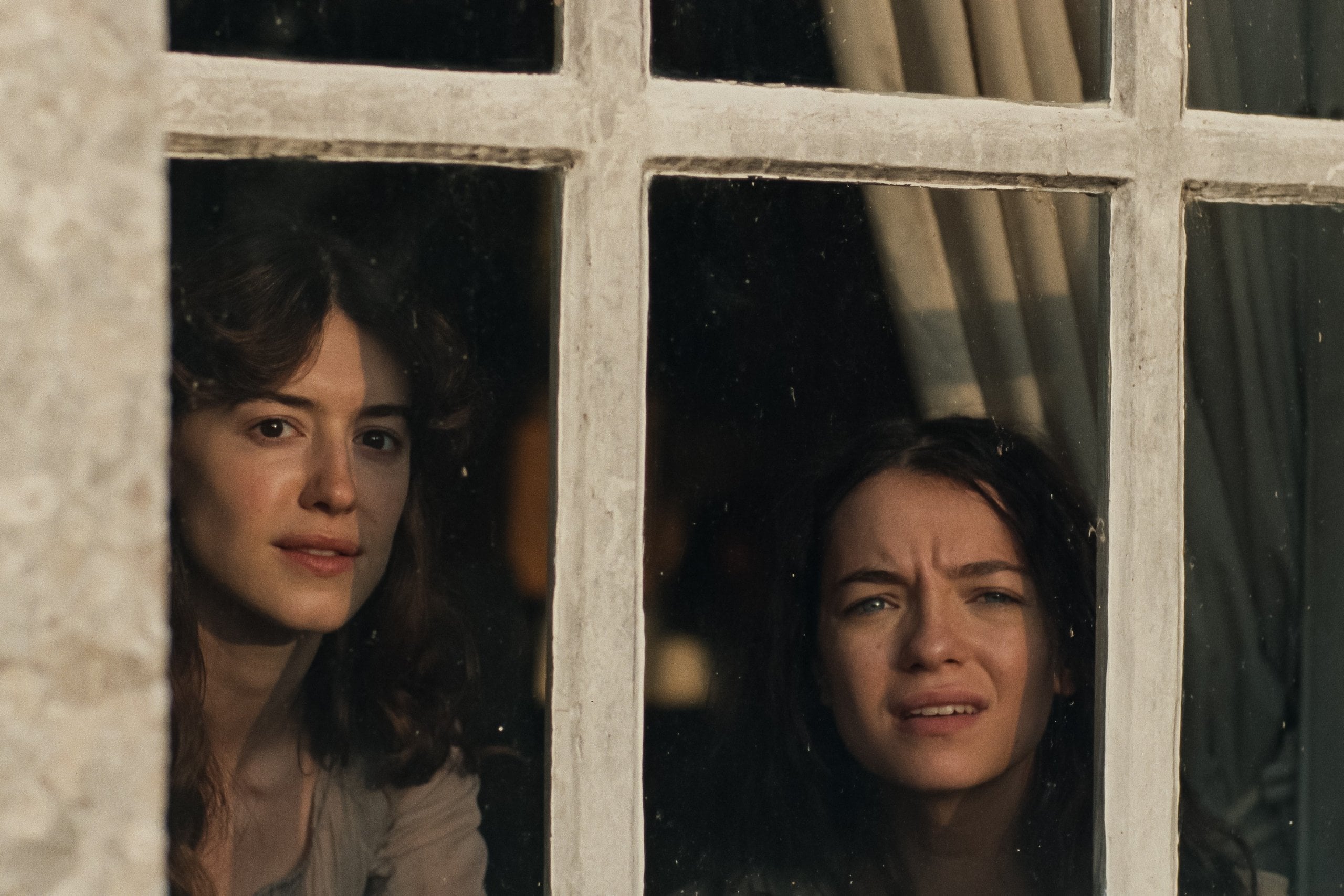

Daisy Edgar-Jones and Esmé Creed-Miles in "Sense and Sensibility."
Focus Features
Esmé Creed-Miles and Daisy Edgar-Jones as the Dashwood sisters in "Sense and Sensibility".
Focus Features
Daisy Edgar-Jones and Esmé Creed-Miles in "Sense and Sensibility."
Focus Features
She explains that every shooting location, from outdoor courtyards to manor house bedrooms, was either transformed or built to achieve the movie’s distinctive and unexpected feel. For instance, Di Mottola converted a study—devoid of books—at the Dorset-based property into the Norland Park library, with walls lined with appropriate shelving, artwork, and portraits of Dashwood ancestors. “We clad it entirely, with upholstery and wooden bookshelves. So that was a major build within one of the rooms,” says Di Mottola, who then transitioned the space into Marianne’s bedroom, with the plush canopy bed where she and Elinor giggle and gossip. “We had four days to turn it around and close the bookshelves with panels and paint it and decorate it.”
However, Di Mottola preserved the house’s natural aging and wear and tear, which further conveyed what Norland Park means to the Dashwoods, who need to move out so John and his family can take over the estate. “It gave us this feeling of a lived-in house. From the beginning, whenever there was damp in the wall or peeling paint, we were very much embracing, if not enhancing, it,” she says. “We wanted it to feel like this family was probably quite well off once upon a time, but had possibly fallen a little bit.”
At the invitation of a generous distant cousin, Mrs. Jennings (Fiona Shaw), the now-destitute Dashwoods relocate across southern England to a humble, rustic cottage on her son Sir John Middleton’s (Turlough Conver) estate, Barton Park. Mrs. Dashwood (Caitriona Balfe) and her daughters experience a bit of culture shock as they open the front door directly into a dust-covered sitting and dining room—with no foyer or parlor—featuring exposed wooden beams and stone walls.
But the actual house in southern Devon was even more deconstructed before Di Mottola and her team began: just a single windowless open room structure with stone floors and no roof. “We had to clad part of the exterior walls and the interior ceiling, which was borderline rotting, in fake stone. We had plasterboards, and worked with the original beams and added some fake beams. So it was an entire set build within this shell of a house,” says Di Mottola, who also constructed two fireplaces in the sitting room and the kitchen. “But again, it had character, and I just had to mold it to our necessities.”
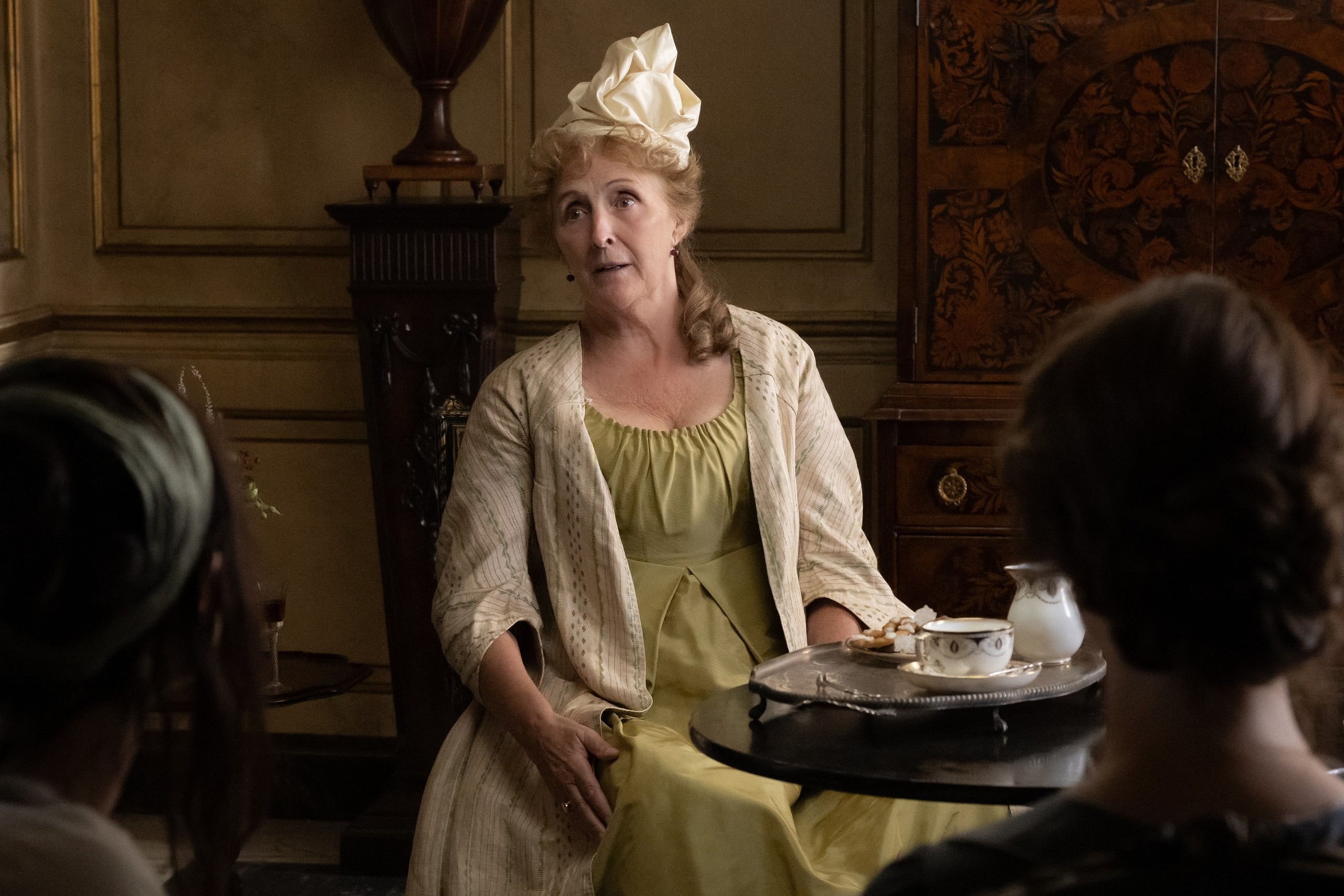

Fiona Shaw in "Sense and Sensibility."
Focus Features
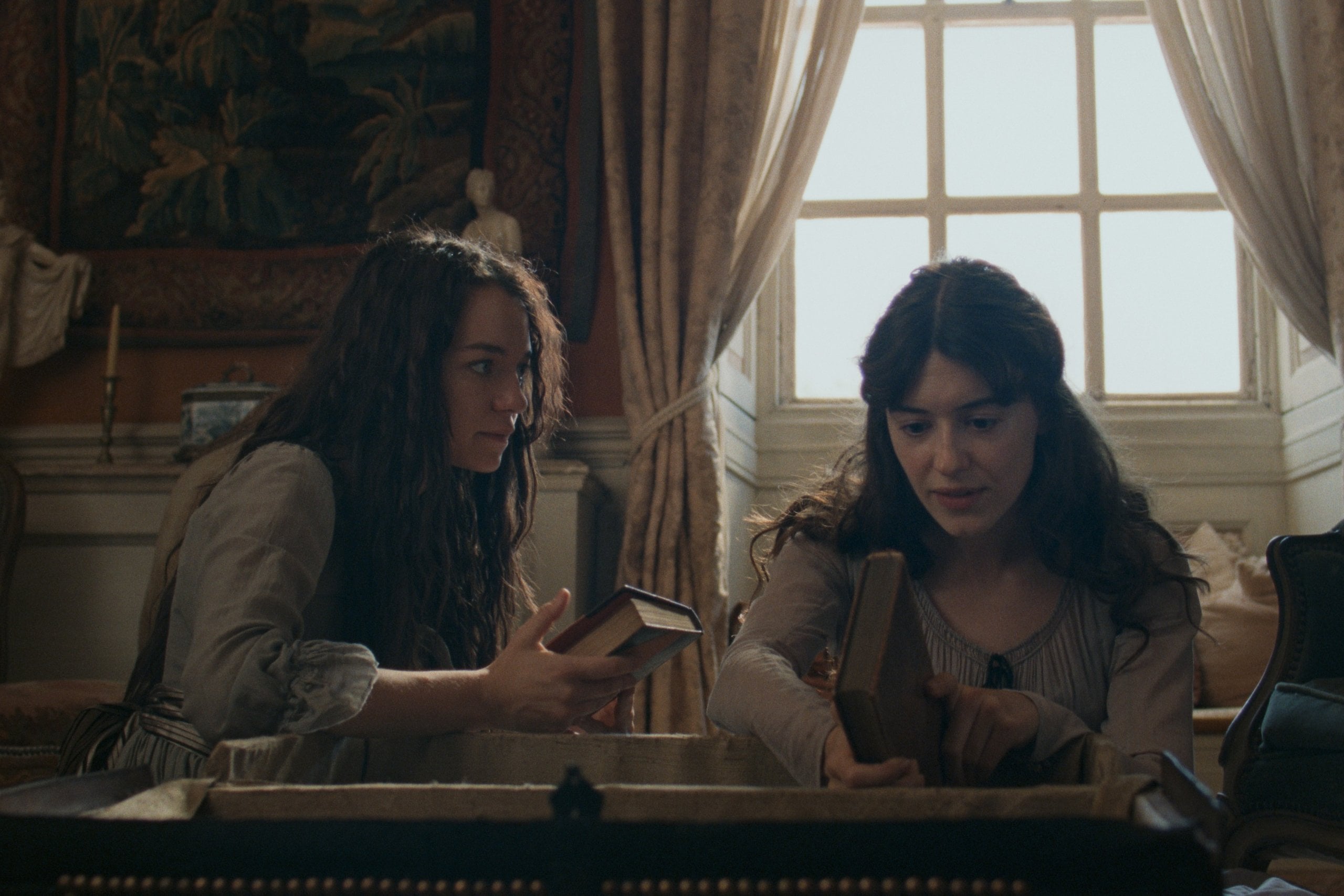

Daisy Edgar-Jones and Esmé Creed-Miles in "Sense and Sensibility."
Focus Features
Fiona Shaw in "Sense and Sensibility."
Focus Features
Daisy Edgar-Jones and Esmé Creed-Miles in "Sense and Sensibility."
Focus Features
The location of the remote Barton Cottage, surrounded by acres of misty farmland dotted with animals and greenery, also helped build out the Dashwood world for this part of the family’s journey. “[Oakley] wanted the actors to feel like they were in the middle of nowhere and to believe that they belong to this space in nature. It was really important to do it in an existing location—and not just any location, really one that was in the moors in the middle of nowhere,” says Di Mottola.
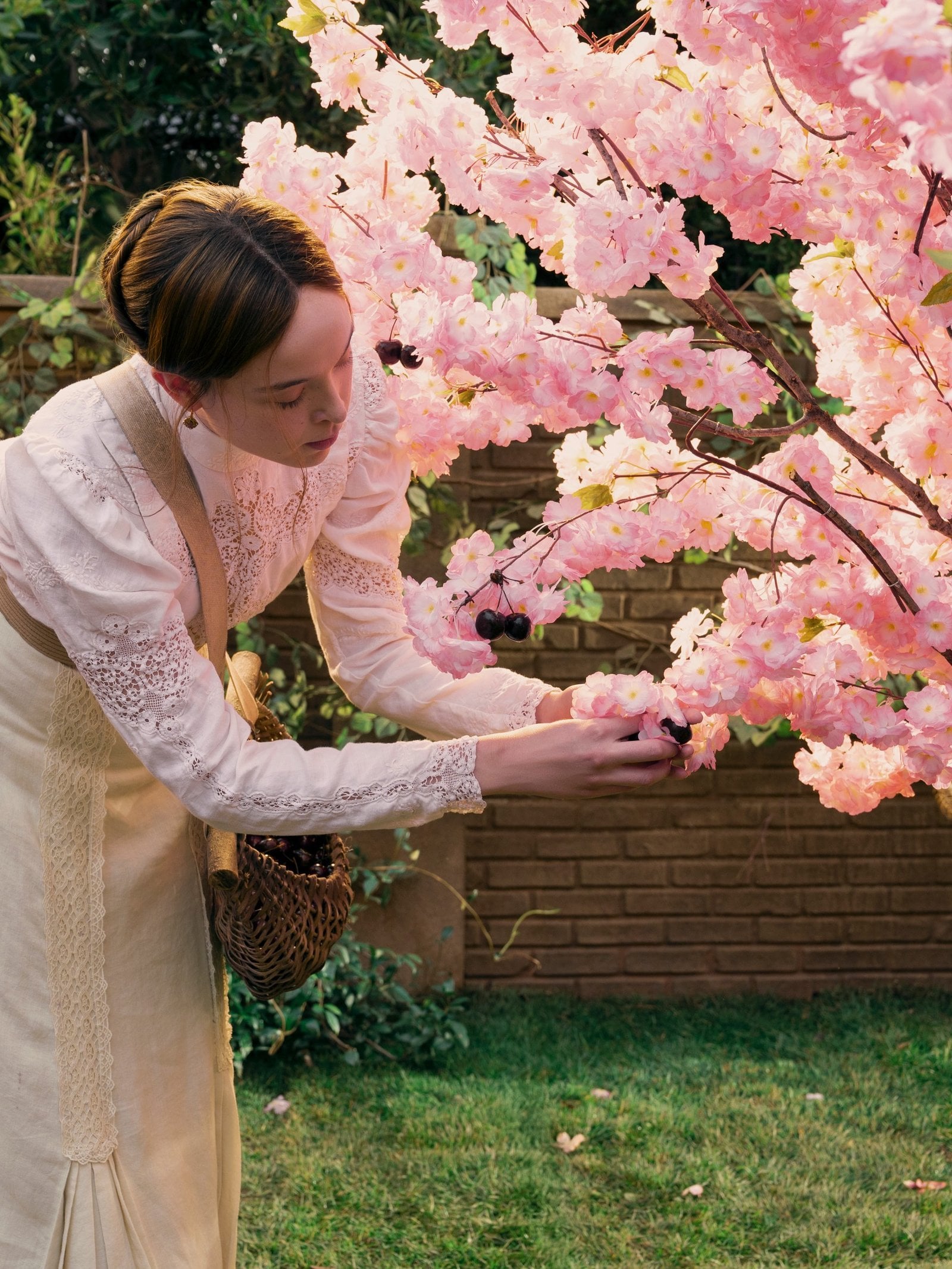
The production design also involved the bucolic landscape surrounding Barton Cottage, with an emphasis on authenticity to the region in Regency times. The family now has to do their own laundry and source and cook their own meals—a learning curve for Mrs. Dashwood—so Di Mottola built a vegetable garden next to the cottage. She also collaborated with a florist with local expertise.
"We wanted the plants and the flower arrangements to feel like the girls pick them in the fields. So what would they find? What’s the right season?” says Di Mottola, who even researched what animals would be roaming the fields surrounding Barton Cottage, in addition to the goats, sheep, and wild ponies already there. “We had to bring in some cows. It wasn't easy to find there, but it was all really well thought about what species of cows. The family dog that travels with them, the cat that stays behind, the horses that draw the carriages, and the horse that Mr. Willoughby (Frank Dillane) gives Marianne—all of this was like a major part of the production design,” says Di Mottola, who even hunted down the appropriate farmers to wrangle the animals. “It was a long process.”
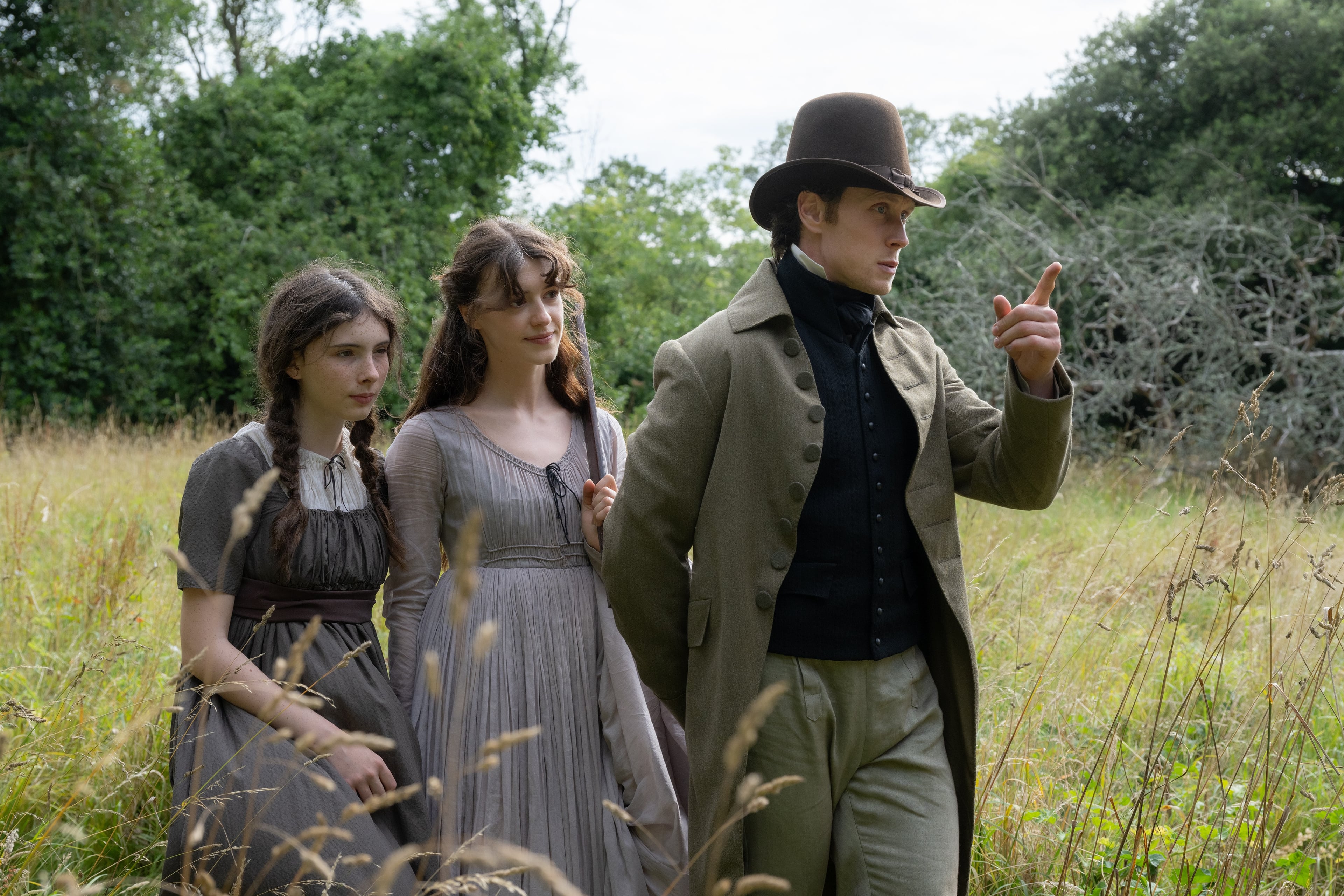

Esmé Creed-Miles, Daisy Edgar-Jones, and George MacKay in "Sense and Sensibility".
Focus Features
Di Mottola also brought the rugged, natural feel indoors for the Hop, a lively country party hosted by Sir John Middleton, where Marianne and Willoughby captivate the village with a spirited yet intense folk dance. A castle in another town with stonework interiors doubled as the Barton Park ballroom. “The feel of [the space], with beautiful beams and stonework, tied in with Barton Cottage and Barton Park. It had to feel rustic—like it could have been a big hall in the town square,” says Di Mottola. “For decoration, we had two really big, long medieval tables to the sides to leave the middle space free for dancing. The food also had to feel like countryside game food rather than the sophisticated London ball [fare].”
Elinor and Marianne eagerly accompany Mrs. Jennings to London, excited for their first visit to the glamorous city and hopeful of seeing their respective romantic interests: the thoughtful, honorable Edward Ferrars (George MacKay) and the caddish Willoughby. The four eventually cross paths at a glittering gala that culminates in heartbreak for both sisters. After a long search, Di Mottola made an exception for a grand London space with marble pillars, a winding staircase, and majestic paintings—one that has actually been featured “a lot” in movies. But the production was able to film on the second floor, which hadn’t yet had an on-camera moment.
“I covered the walls with murals and frescoes to tie into the rest of the house,” says Di Mottola, who also removed an existing billiards table and brought in a sizable banquet display overflowing with sumptuous cakes, sweets, and other delights. “That was enough to make [the space] feel unique to us, and legit to our approach of only shooting in places we haven't seen.”
The sophistication and opulence of the London ball also serves as a reminder of how much Elinor and Marianne have evolved since leaving Norland Park—and where they ultimately feel at home together. “That's the moment in which they're like, ‘Okay, this is it. Our London time is over. We don't belong here. Let's go back to Barton. We belong to nature. This is our life,’” says Di Mottola. “In its richness, [the London space] creates this very separate feel to the countryside and the Barton that they left.”