
Inside the Blood Red & Blossom-Filled World of 'Monster: The Lizzie Borden Story'
Interiors
Production designer Matthew Flood Ferguson breaks down the foreshadowing wallpaper and the antique couch inside the Gilded Age home at the center of the Netflix series.
“Right off the bat, this was a show that was going to be a little bit heightened and elevated in its visual style,” says production designer Matthew Flood Ferguson of “Monster: The Lizzie Borden Story,” the latest installment in Ryan Murphy’s true crime Netflix series. Centered on the infamous alleged axe murderer, “The Lizzie Borden Story” ages down the accused murderess from 33 to star Ella Beatty’s 26 years, playing up her stilted adulthood as a spinster still very much treated like a child by her parents and would-be victims, Andrew (Charlie Hunnam) and stepmother Abby Borden (Rebecca Hall). Directors Max Winkler and Sarah Adina Smith’s fantastical world is punctuated by rock songs, cherry blossoms, and a triple storyline that reaches female murderers both past and future in the form of 16th-century Hungarian noblewoman Elizabeth Báthory (Vicky Krieps) and 1990s serial killer Aileen Wuornos (Sarah Paulson).
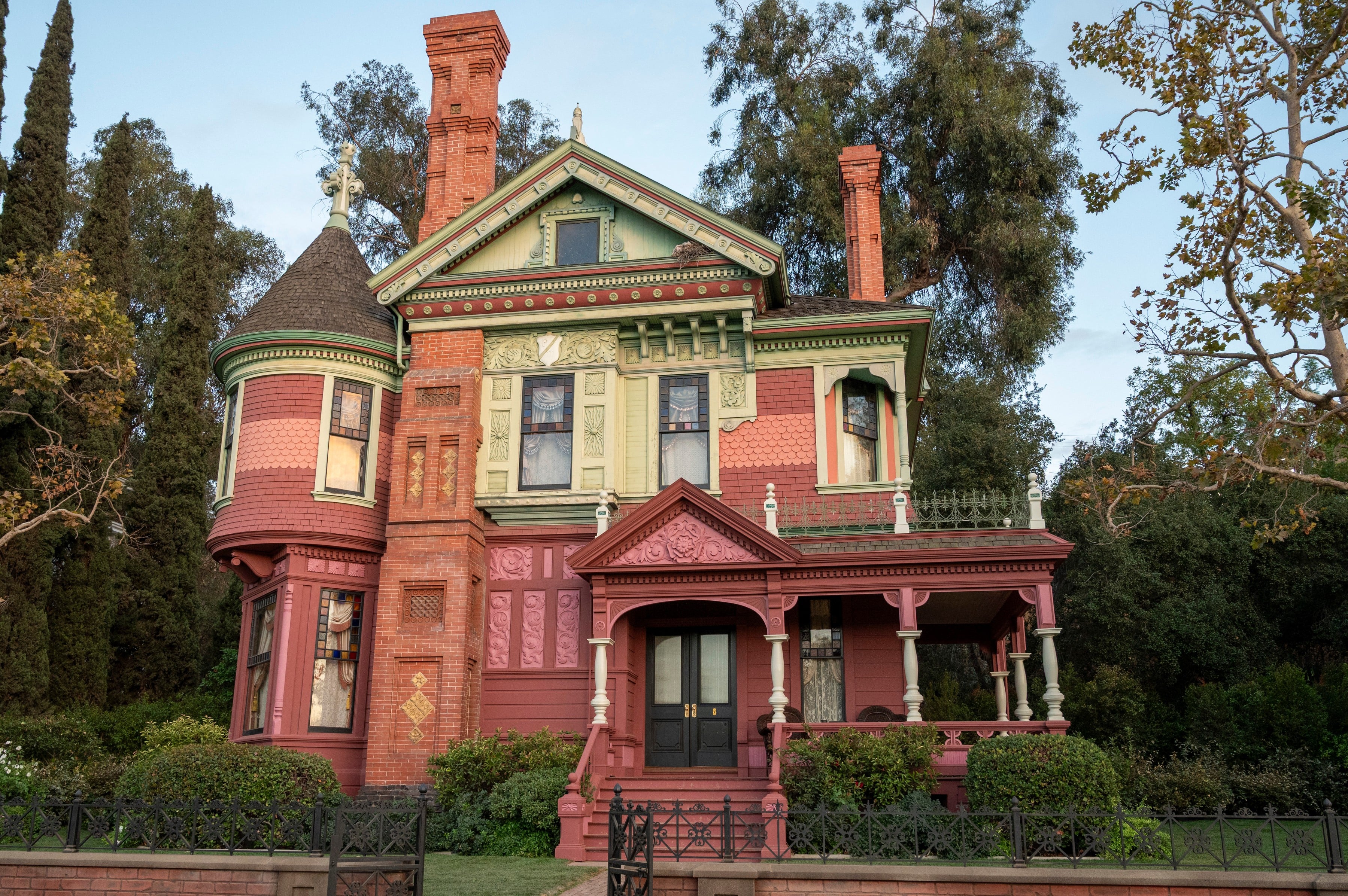

The exterior of the Borden house in “Monster: The Lizzie Borden Story”.
Netflix
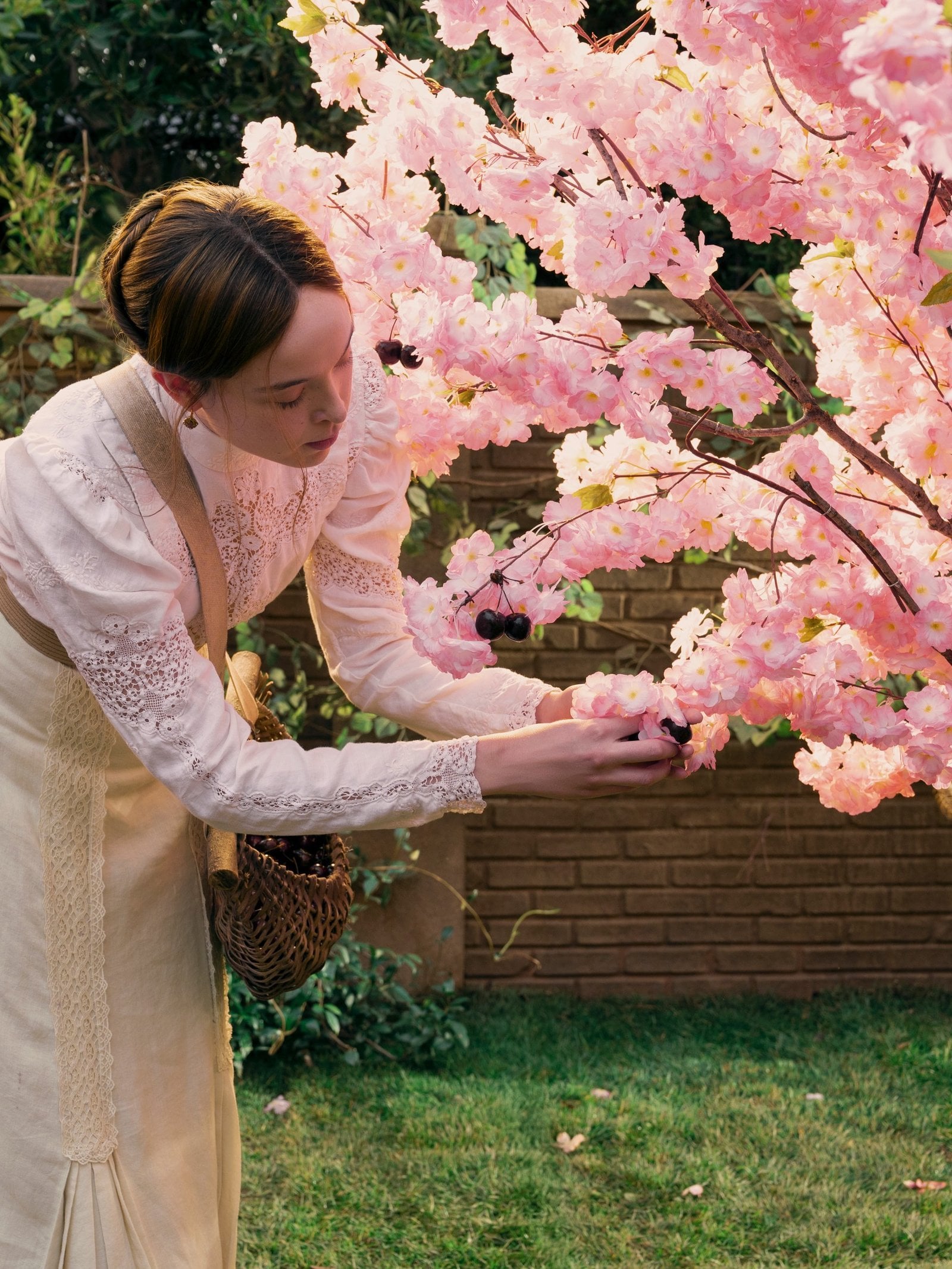
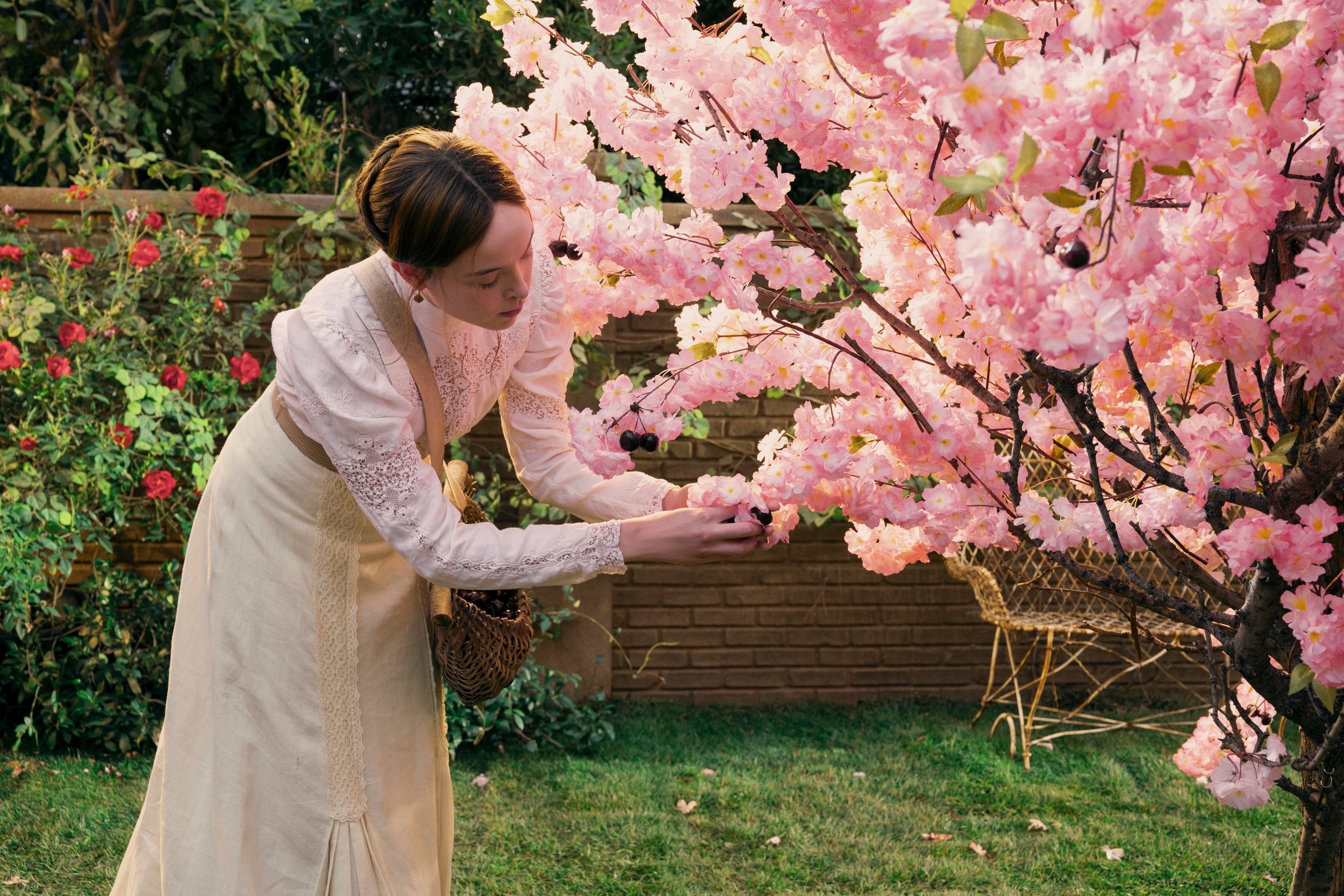
Speaking from Italy, where he’s working on another top-secret Murphy show for Hulu, and where the Báthory scenes in “Monster” were filmed, Flood Ferguson tells The Set Set that he drew inspiration from Borden’s documented love of the natural world. “That was partly to try to incorporate Lizzie’s feminine side. She was such a curious character and so interested in animals and in nature,” Flood Ferguson says, hence Borden’s dovecote and cherry orchard, where she escapes from her stifling upbringing and imagines a different existence for herself, both of which were especially built from the ground up for “Monster.”
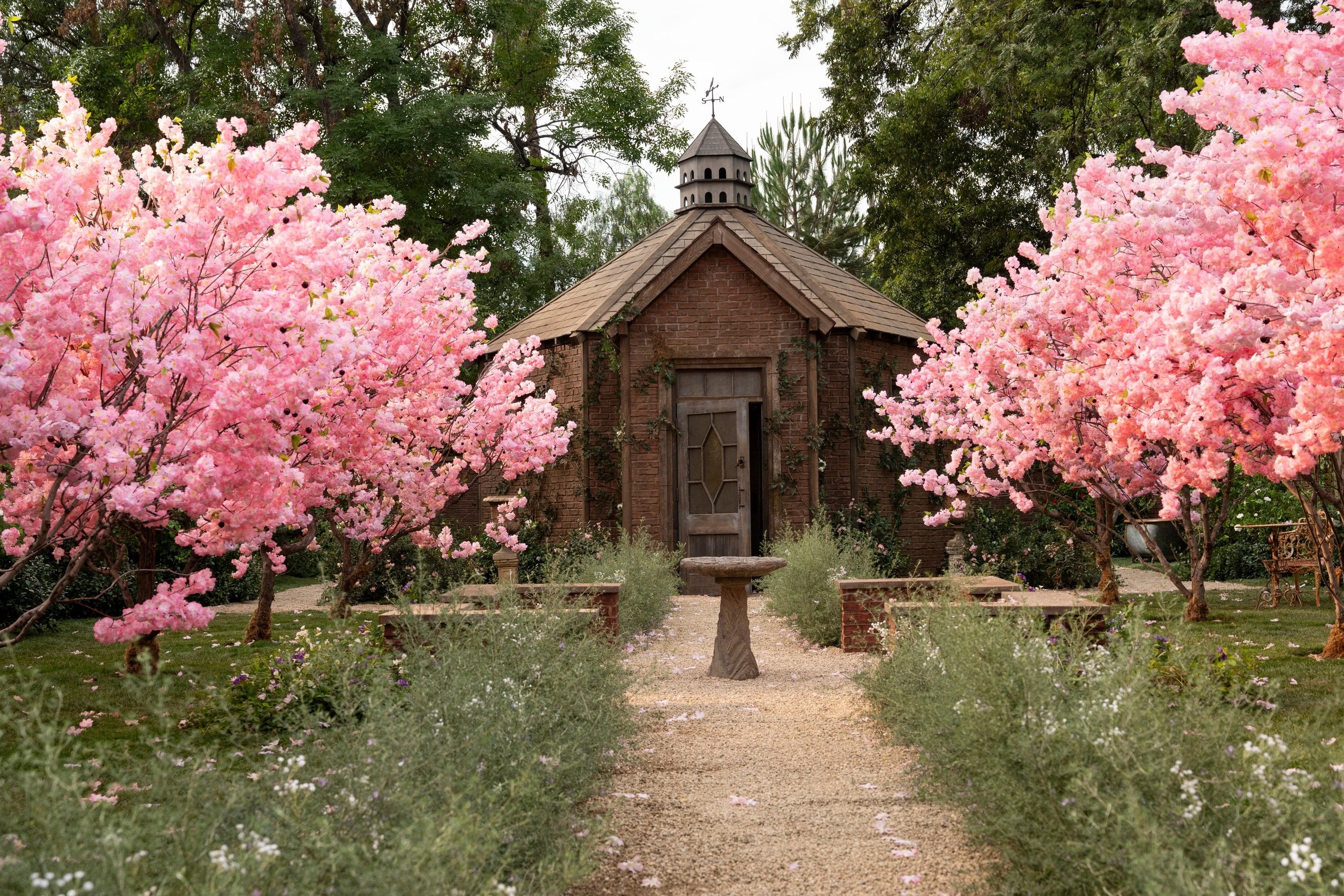

The cherry blossom garden in “Monster: The Lizzie Borden Story”.
Netflix
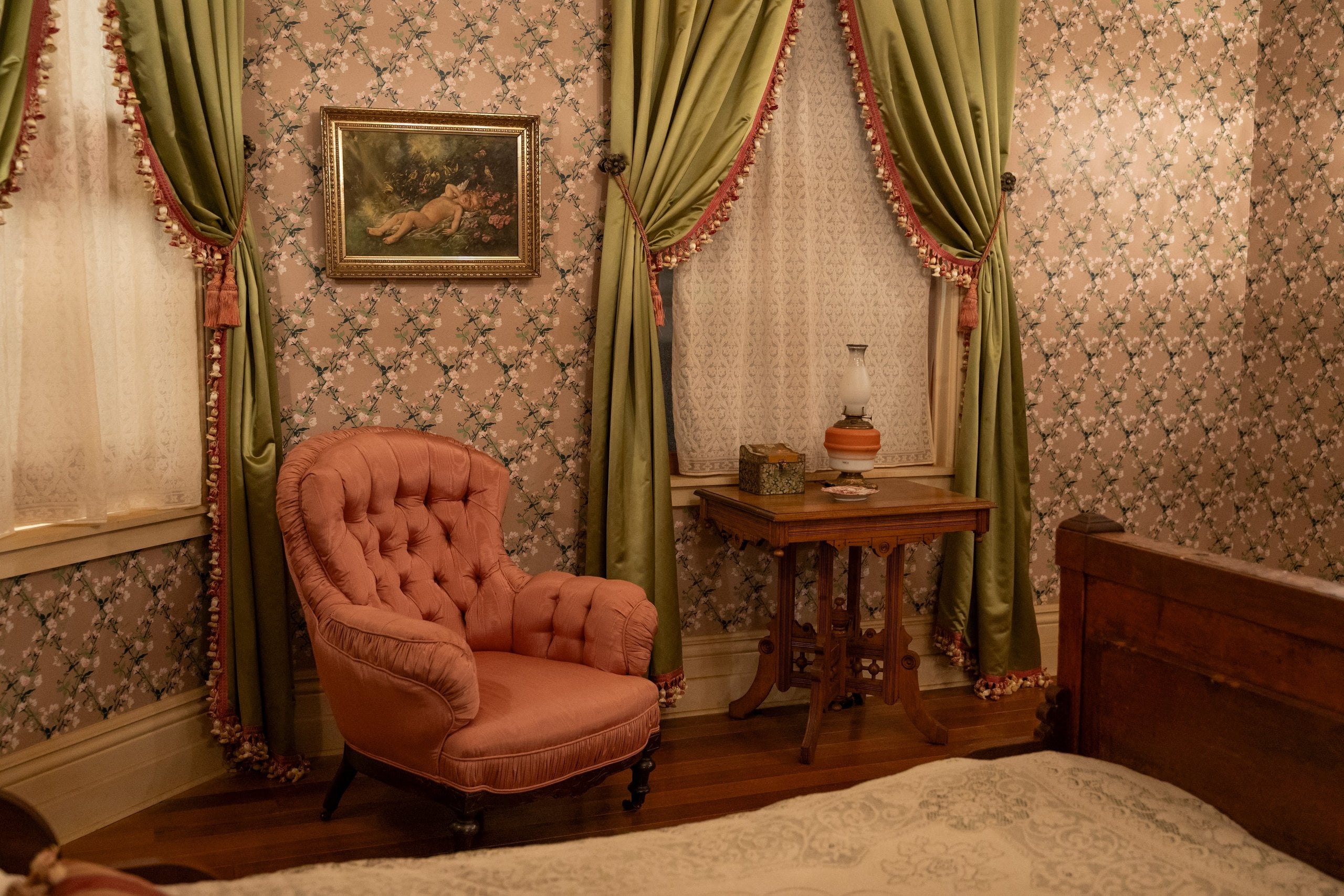

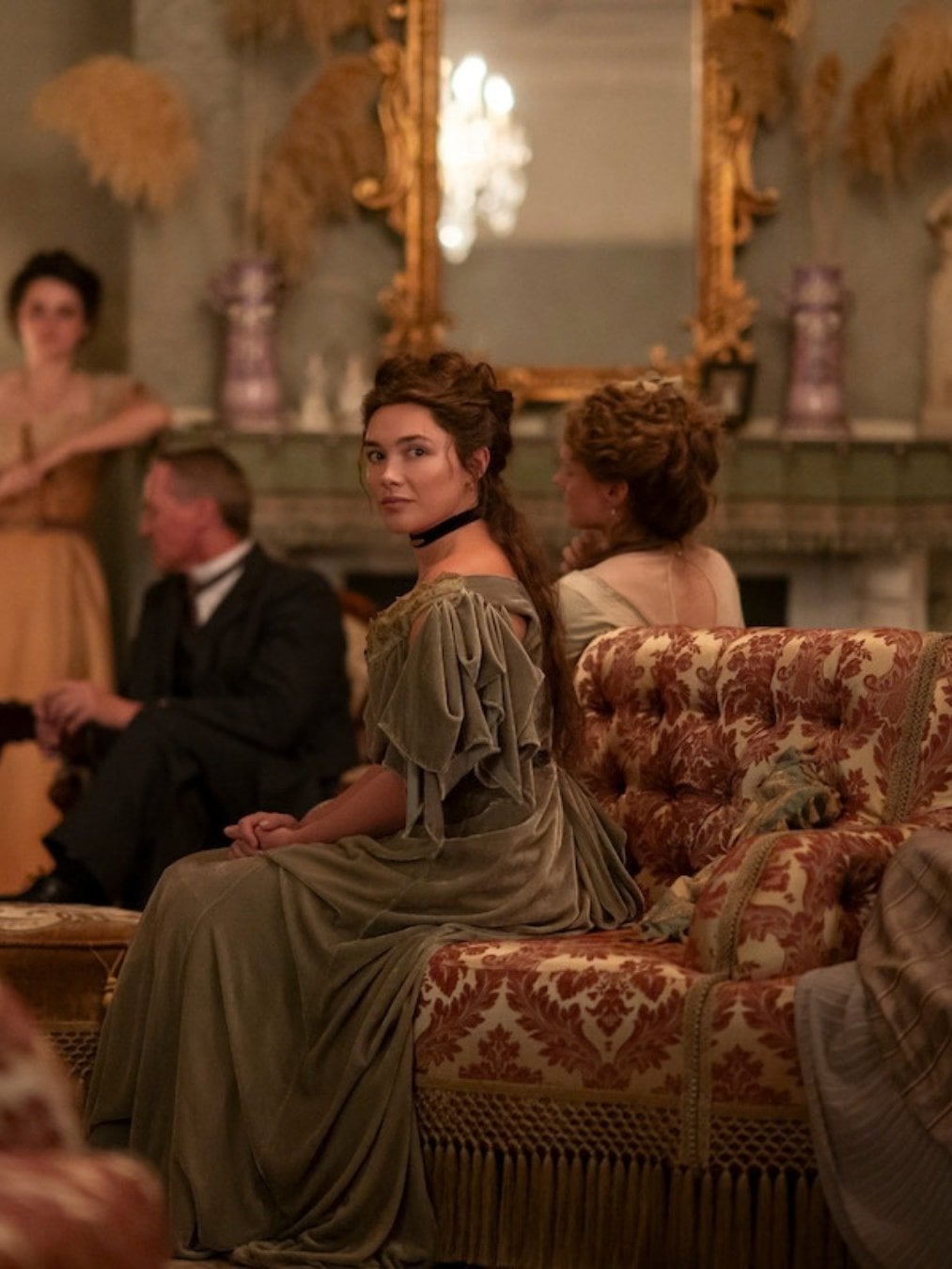
The interior of the Borden house in “Monster: The Lizzie Borden Story”.
Netflix
The cherry blossom garden in “Monster: The Lizzie Borden Story”.
Netflix
The interior of the Borden house in “Monster: The Lizzie Borden Story”.
Netflix
Her father, Andrew Borden, was a notorious cheapskate despite his wealth, so the “Monster” team had to embellish the Borden residence—the exterior of which was a private home located in Los Angeles’ Heritage Square; the interior erected on soundstages in the city—in order to make it a sumptuous indicator of the Gilded Age period when the murders took place. “I brought a lot of elements, like wallpaper and fabrics, with creeping vines in soft pinks and reds into the house to evoke the inner world of Lizzie Borden, our character,” Flood Ferguson says.
One such wallpaper, which was from a book of wallpaper samples from the 1800s and recreated using two layers of printing (one on mylar), was a deep red and had a sheen to it that evoked dripping blood and so perfect for the sitting room where Andrew Borden was found slain. “I gravitated towards that as a foreshadowing of what was going to happen in that room,” Flood Ferguson says.
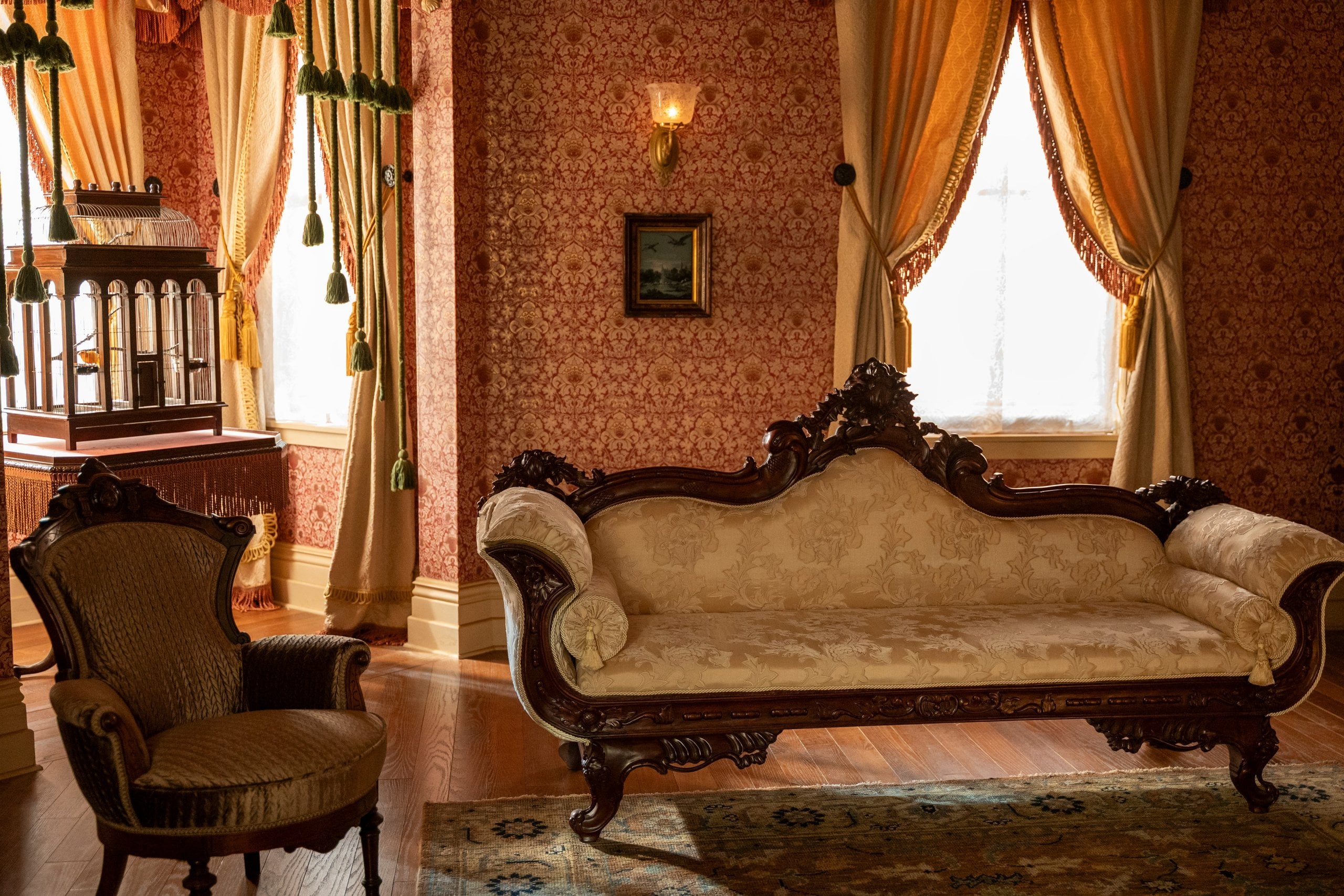

The fainting couch in “Monster: The Lizzie Borden Story”.
Netflix
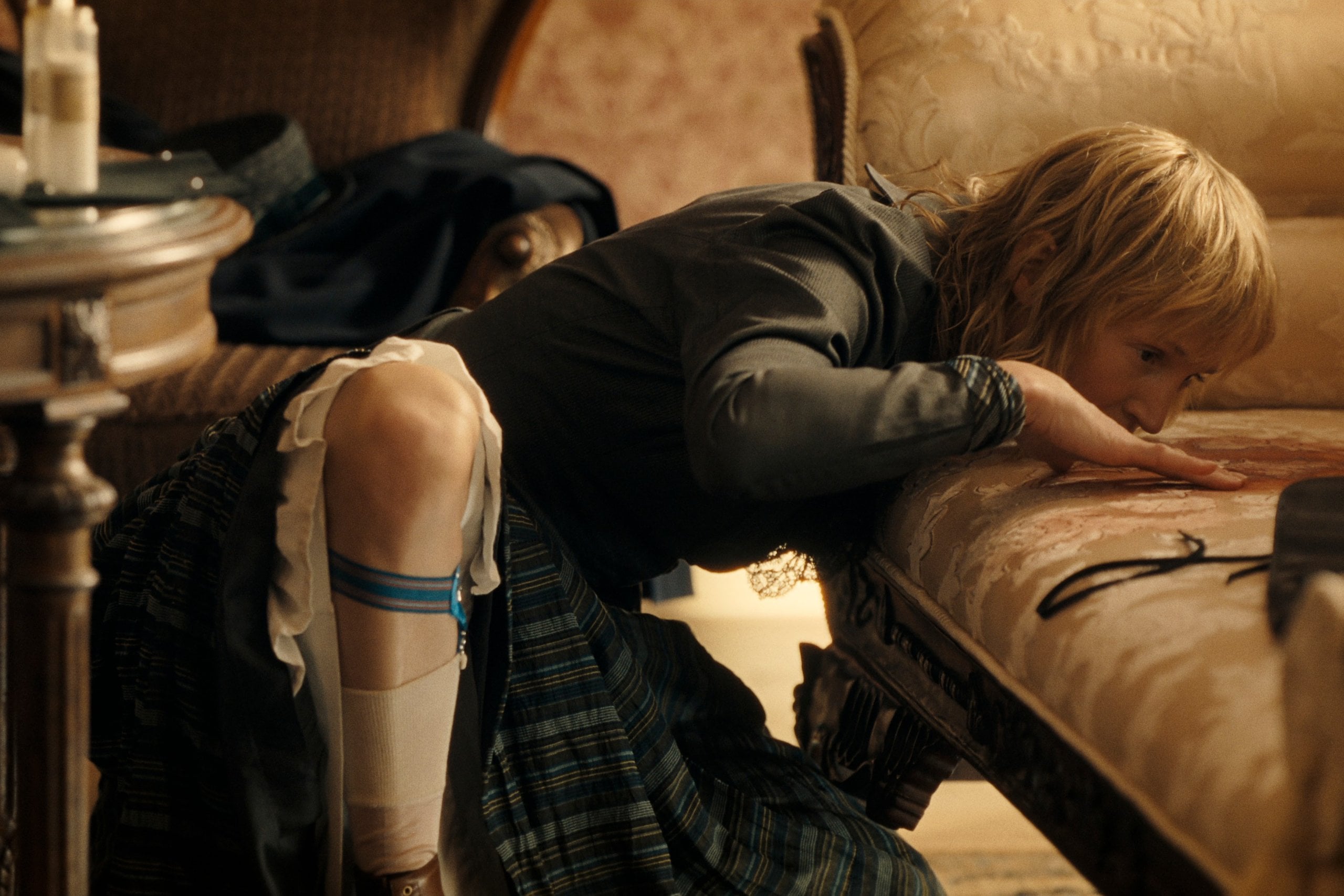

Vicky Krieps in “Monster: The Lizzie Borden Story”.
Netflix
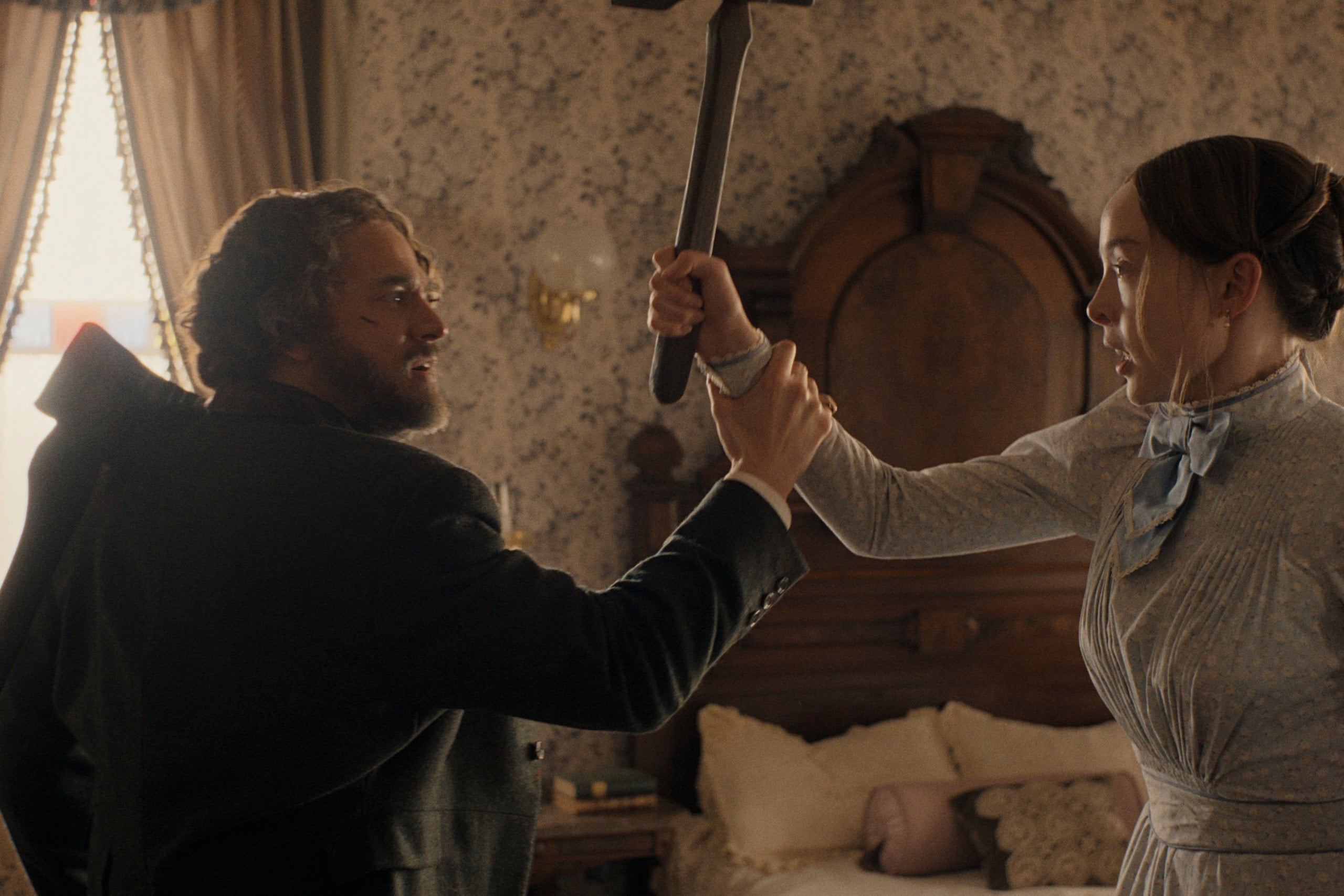

Charlie Hunnam and Ella Beatty in "Monster: The Ed Gein Story".
Netflix
The fainting couch on which Andrew’s body was found becomes almost a character in its own right, with his wife Abby harping on about how “it has been in my family for three generations.” As she says, it was “hand-carved from Congolese mahogany and upholstered in bone white mulberry, carted overland over deepest yellow China.” Certainly it’s a centerpiece of much of the action, including Lizzie’s untimely onset of her menstrual cycle during an ill-fated meeting with a male suitor. This then leads to the Borden family’s new maid, Bridget (Krieps, in a dual role), proving she’s indispensable by successfully managing to get the blood stain out of the fabric. Because the couch underwent such wear and tear in the script, Flood Ferguson and his set decorator Melissa Licht, who sourced the antique from Southern California, built various inserts to reflect the “bone white mulberries” evolution over the course of the season. There’s that fruit blossom theme again, coursing through “Monster” like blood, their dark juices at times easily mistaken for the claret fluids spilled throughout the Borden manor, both in the mysterious crime and Murphy’s anthology series’ fantastical recreation of it.