
‘Making Marie Antoinette’ Gives Craftsmanship the Royal Treatment
Beauty
In Eleanor Coppola’s fly-on-the-wall documentary, she goes behind the scenes of her daughter’s cinematic reimagining of 18th-century Versailles, one candy-colored wig at a time.
As is the case with many cult classics, when Sofia Coppola’s “Marie Antoinette” premiered in 2006, the world was not ready for it. Although the production team went through painstaking effort to recreate the opulence of 18th-century France in the real-life Palace of Versailles, Sofia’s stylized departures from the time period—think Converse sneakers and a New Order soundtrack—distracted the press from its many feats in period accuracy and world-building. Twenty years later, the historical drama is now beloved for the very same reason it was initially panned, but the remarkable work of the craftspeople who brought its vision to life has never quite received the same attention until now. Compiled from 80 hours of behind-the-scenes footage, the late Eleanor Coppola’s documentary, “Making Marie Antoinette,” finally offers an intimate portrait of the creative work that went into bringing the film to life.
The documentary opens with hair stylist Odile Gilbert applying a shroud of hairspray to Antoinette’s (Kirsten Dunst) towering pile of coiffed blonde curls as she reclines in a bathtub. Behind her, Sofia softly feeds direction to Gilbert and Dunst alike. Across every craft category, “Marie Antoinette” was a feat in teamwork, combining Gilbert’s elaborate wigs and hairstyles with Milena Canonero’s Oscar-winning period gowns and K.K. Barrett’s transformation of a modern-day Palace of Versailles into its state of pre-French Revolution opulence. “For the last 15 months, Sophia and I have driven to Versailles 100 times,” the film’s producer Ross Katz tells the camera. “Everyone told us you’ll never get this access, and here we are with our drapes [and] our huge crew.”
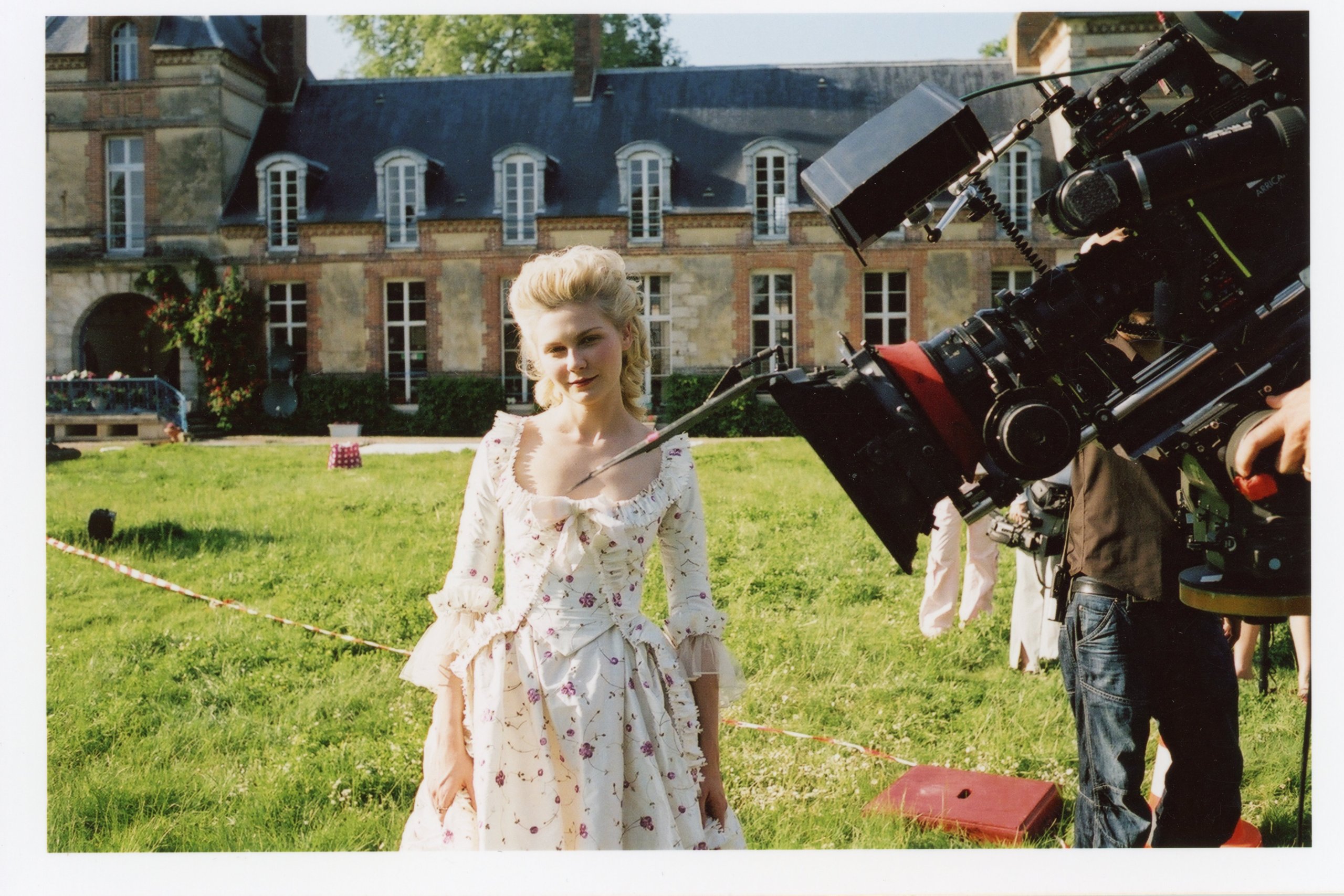

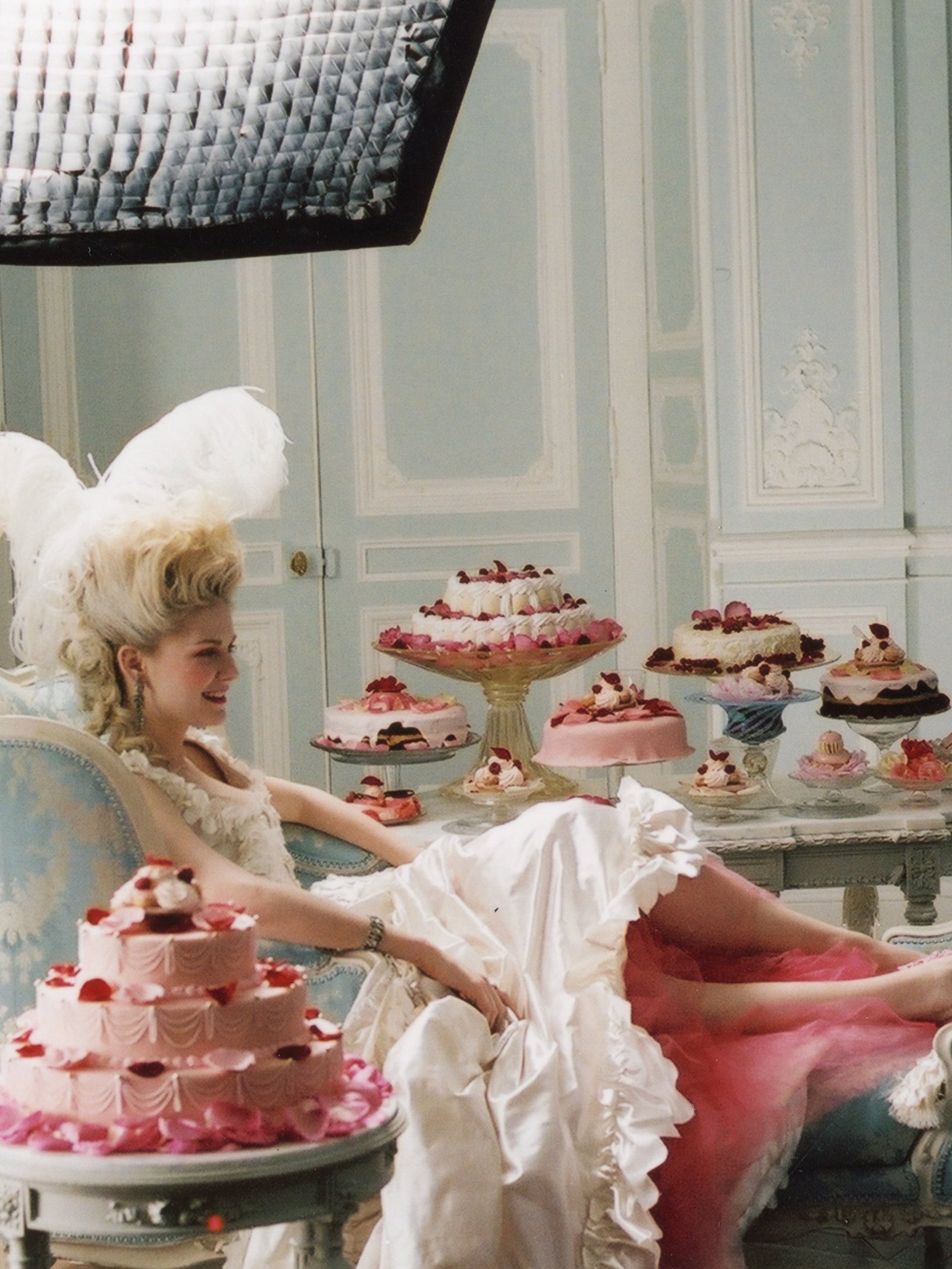
Kirsten Dunst on the set of "Marie Antoinette."
Sofia Coppola
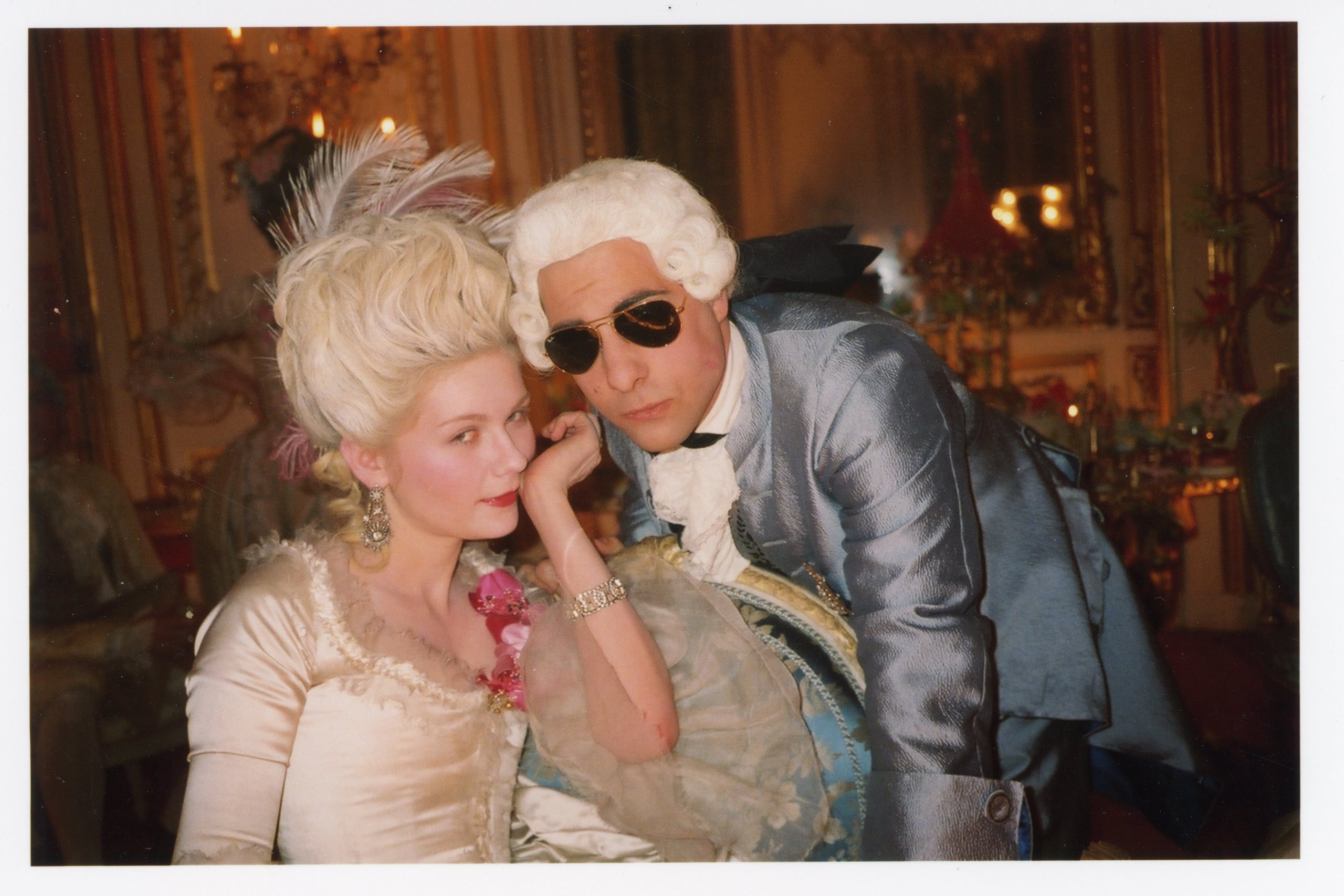

Kirsten Dunst and Jason Schwartzman on the set of "Marie Antoinette."
Sofia Coppola
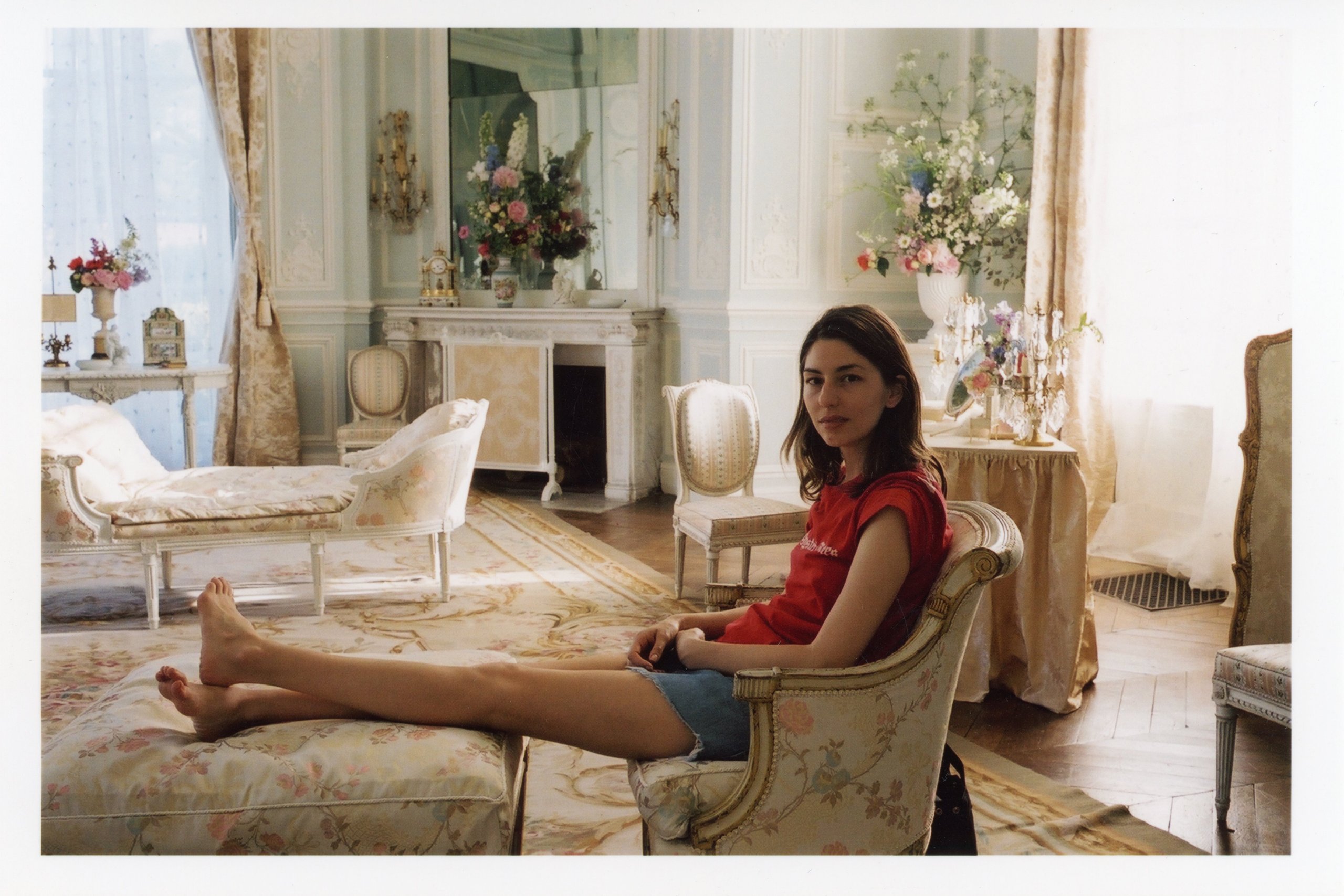

Sofia Coppola on the set of "Marie Antoinette."
Sofia Coppola
But securing Versailles was only the first production feat of many. Executing Sofia’s visually dense aesthetic once within the palace took a village—one that Eleanor goes out of her way to document with her handheld, cinéma-vérité camerawork throughout the doc. “Milena had outdone herself. I loved seeing all the extravagant ball gowns and costumes, including wigs that had to be washed, dried, restyled, and freshly powdered each day,” Eleanor shares in a voiceover narration lifted from her diary during film production. But you don't need the voiceover to understand the sentiment: entire sequences are dedicated to depicting the extraordinary work that goes into a production of this scale, like Gilbert’s wig room or Canonero’s dress workshop. Still, Canonero and Barrett’s presence in the documentary is sparse and hurried, illustrating the stress they were under to perform under a tight filming schedule. Rather than give formal, sit-down interviews, the production heads scurry in and out of frames with their hands literally or metaphorically full of props and accessories.
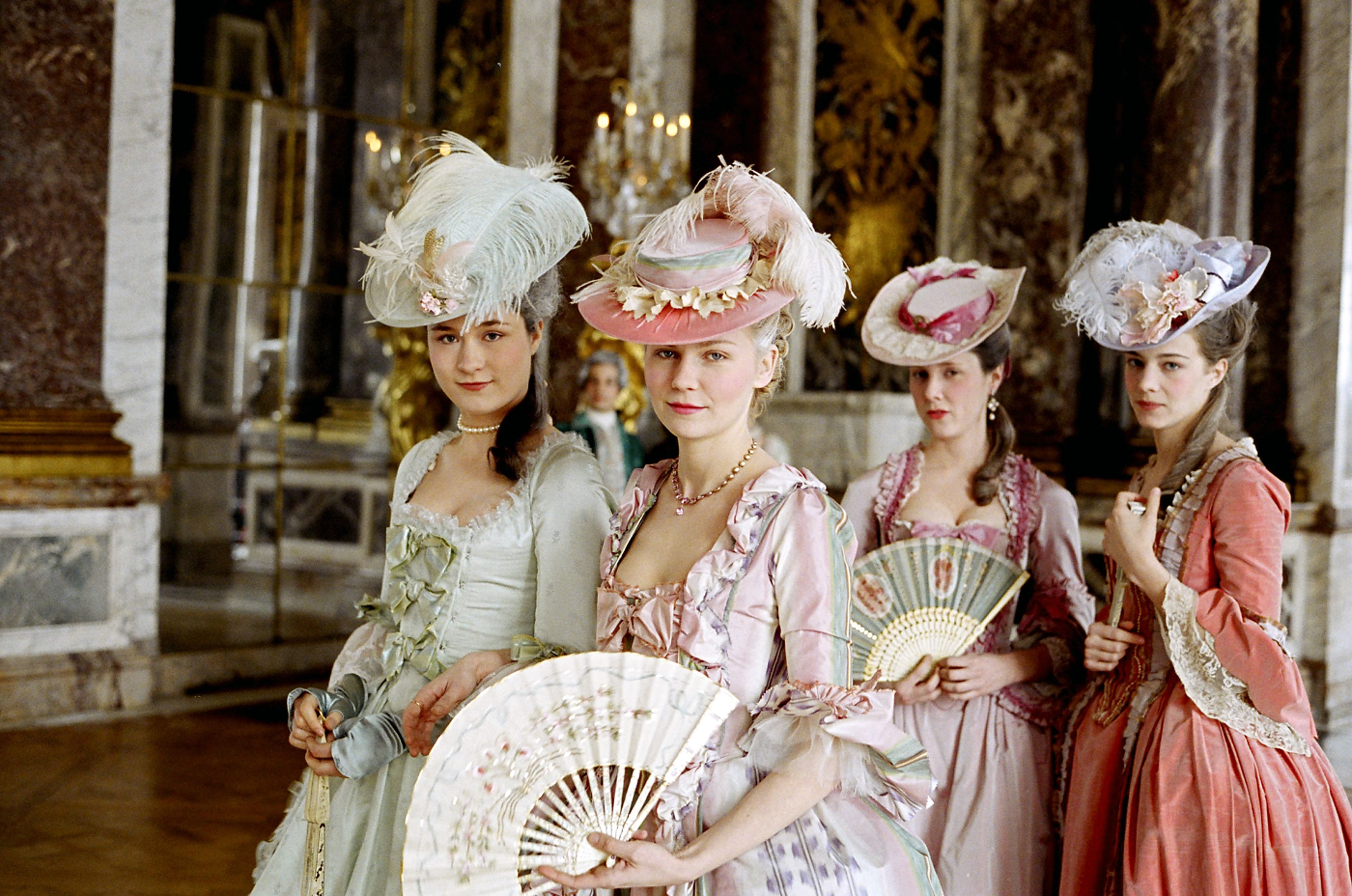

Kirsten Dunst in "Marie Antoinette".
Sony
Across 57 shooting days, Canonero constructed 72 original dresses for Dunst alone, completed with custom Manolo Blahnik kitten heels. “In this film, you have plumes, plumes, plumes,” Canonero says. “It’s a marathon with an avalanche following you all the time.” Throughout filming, the costume, hair, and makeup team were under tremendous pressure to conduct elaborate costume changes for extras and leads as fast as possible. Gilbert estimates that each wig change took one and a half hours, while the costume changes required an additional couple of hours, adding stressful constraints on an already crammed schedule. The Duchess of Polignac’s (Rose Byrne) wardrobe borrowed from Canonero’s previous work on Stanley Kubrick’s “Barry Lyndon,” while the rest of the costumes were custom-made by a team of seamstresses for the film.
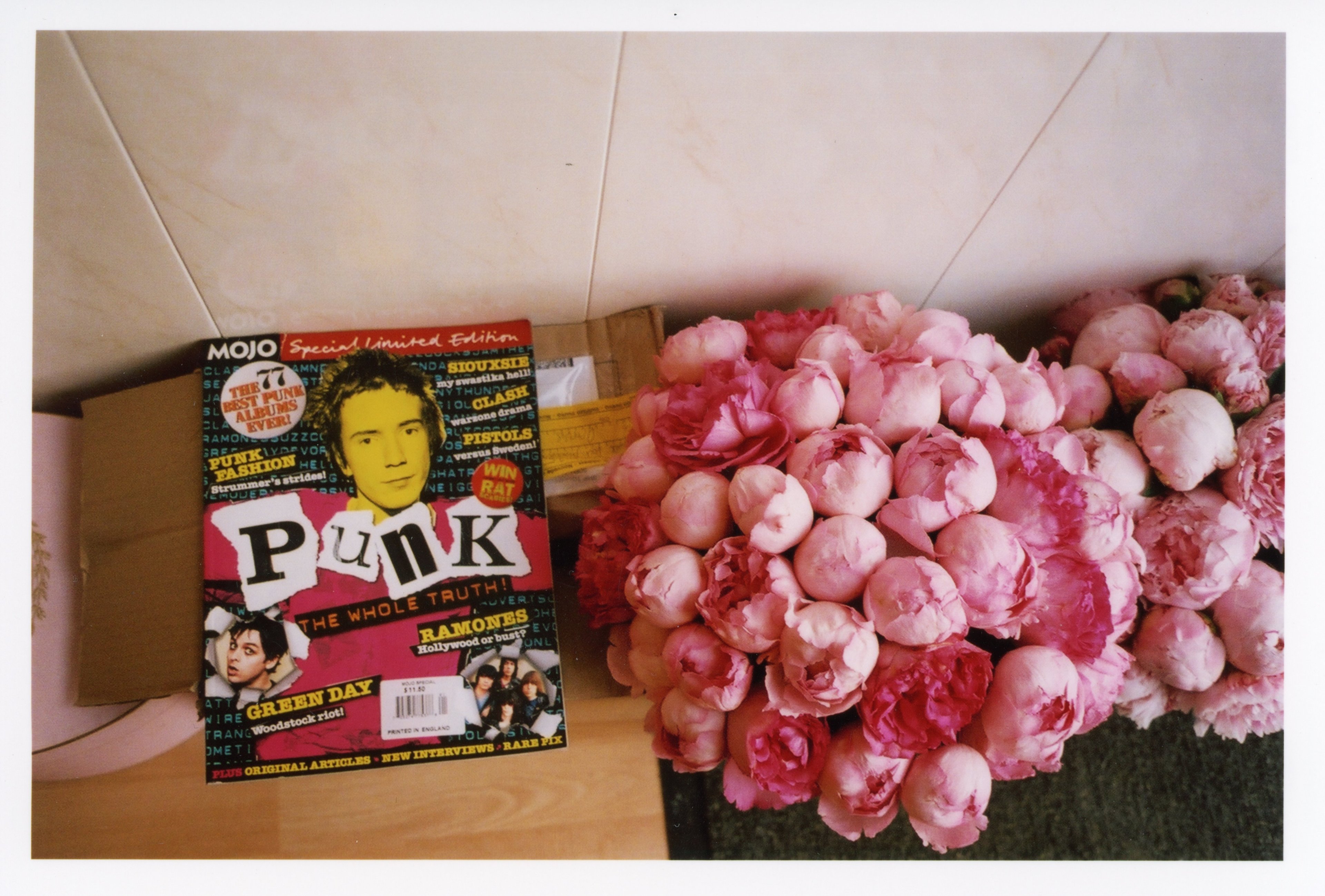

A bouquet of Thierry Boutemy's flowers on the set of "Marie Antoinette."
Sofia Coppola
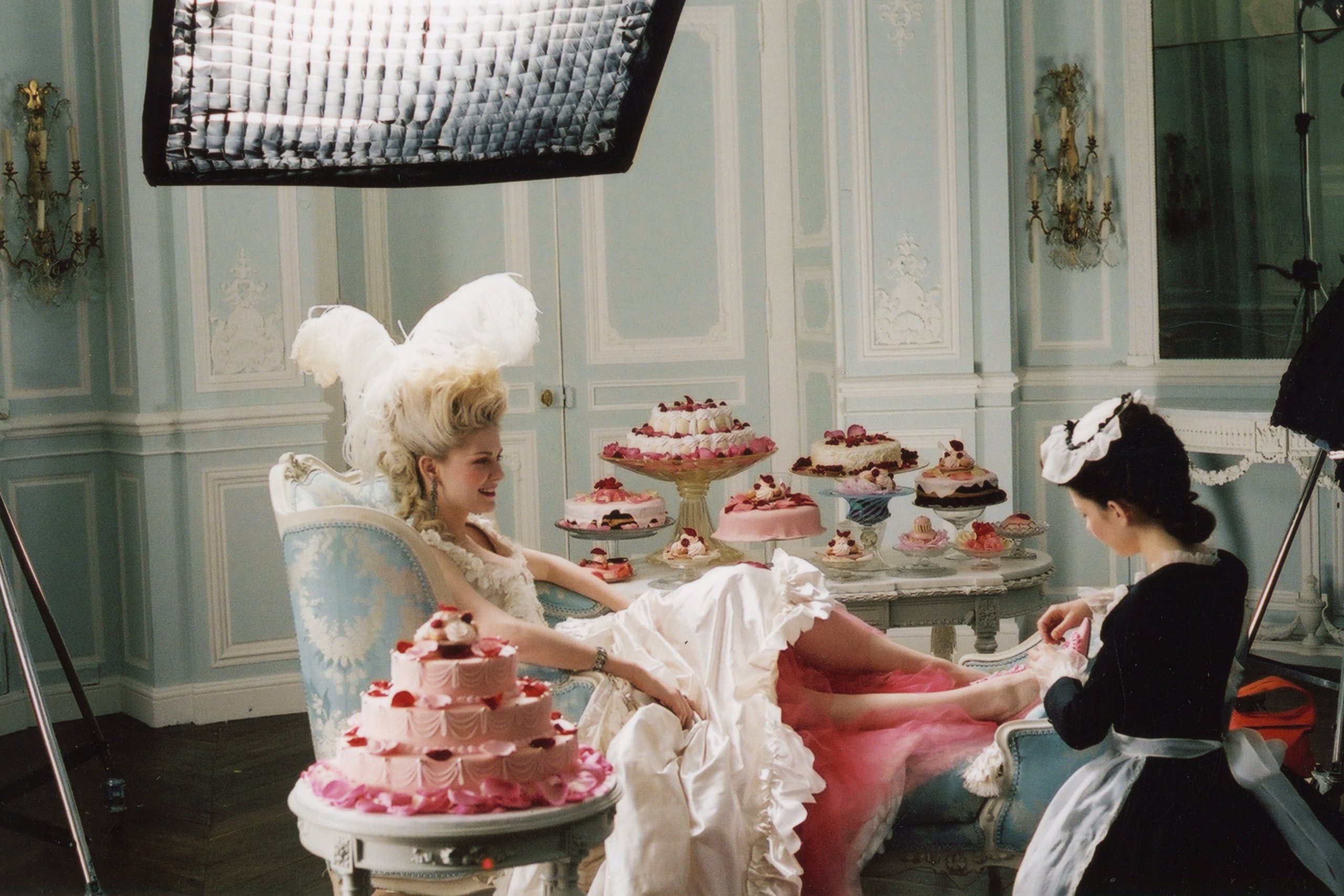
Taking notes from Ken Russell’s surrealist treatment of the 19th-century composer Franz Liszt in “Lisztomania” (1975), Sofia treats Antoinette’s story with comparable design choices evocative of the New Romantic movement. During a court dinner, smoke escapes out of a large hand-painted egg, nestled between plates of meticulously arranged plates of seafood and macaroons. “[The actors] can eat anything they want,” Barrett proudly says. Dunst grimaces at a pile of meat and peas coated in a towering mound of gelatin and exclaims to the production designer, “This looks disgusting, I don't even know how you did this, KK.” Her distaste for the overly-produced appetizer mirrors her character’s discomfort in the stuffy, court setting as a newly-appointed queen, as likely intended. At a later banquet, hosted by Antoinette once she has adjusted to a life of luxury, the food looks almost too beautiful and sumptuous to touch, with peony-accented trifles and pink macaroon towers. Across every banquet or party, the food is edible and the flowers are real—-as arranged by the Belgian florist Thierry Boutemy. According to Eleanor, the set always smelled of fresh flowers, and she documents the bouquets as they are shuffled into sets and color-coordinated to each scene’s costumes, upholstery, and wallpaper.
In the end, Sofia and her team set an exceptionally high bar for craftsmanship while still relaying a human story. Likewise, “Making Marie Antoinette” captures the beauty, and labor, of teamwork while paying ultimate homage to Eleanor’s relationship with her daughter. “I told her to make [the film] totally the way she wanted, and [that] the more personal it was and the more it was her impression of what all this was like, the better it would be,” Sofia’s father and executive producer, Francis-Ford Coppola tells the camera.