
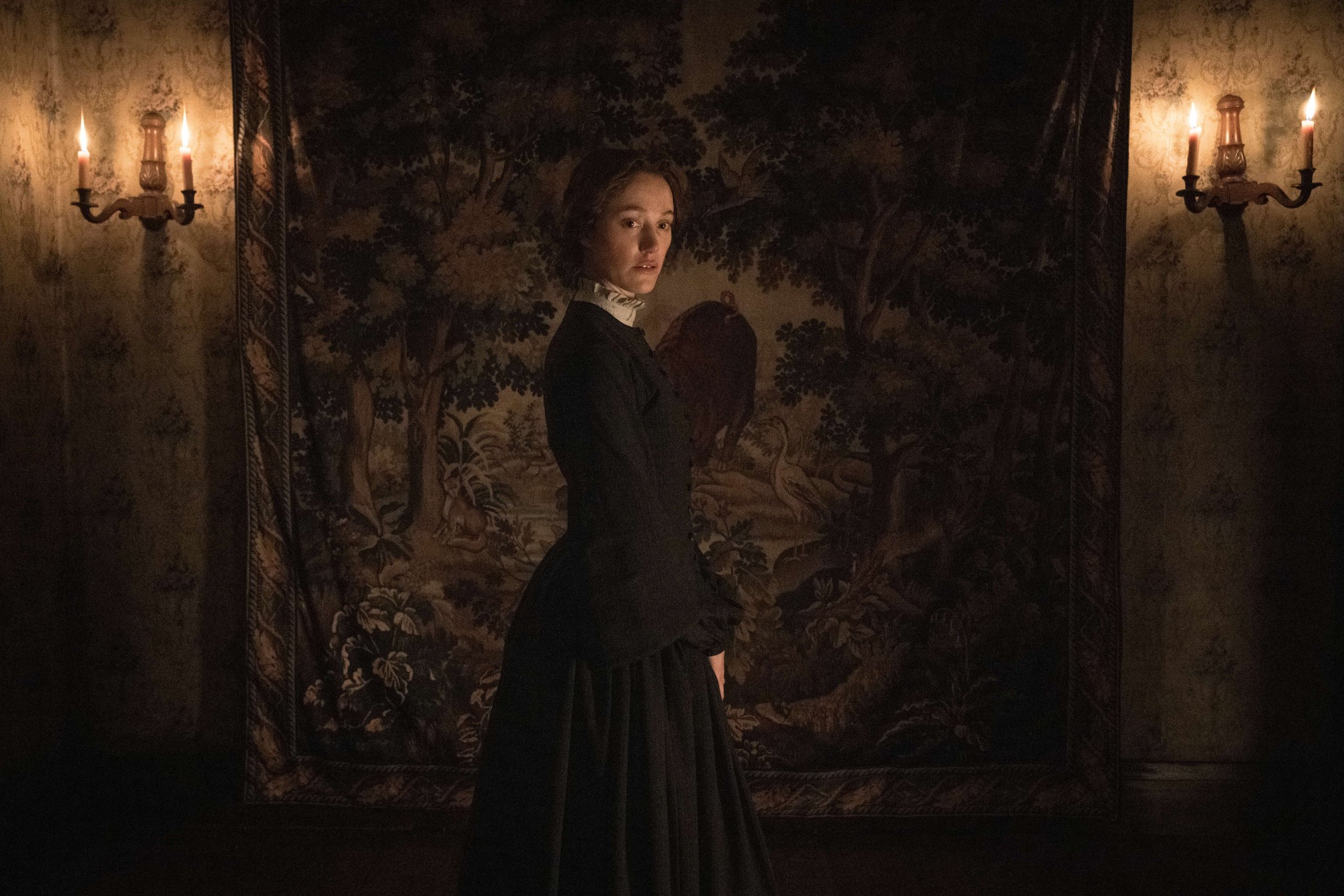
In ‘Victorian Psycho,’ the Grand Gothic House Is as Unsettling as Its Governess
Interiors
Production designer Jeremy Reed transformed one of Ireland’s oldest castles into a jewel-toned Victorian estate,
Set in 19th-century England, “Victorian Psycho” follows an eccentric governess whose arrival at a remote Gothic manor sets off a series of increasingly macabre events, culminating in an altogether bloody affair. Still, Winifred Notty (Maika Monroe), hired by Mr. and Mrs. Pounds (Jason Isaacs and Ruth Wilson) to care for their two spoiled children, assures us in her narration that she is the sanest person she’s ever met.
For production designer Jeremy Reed, creating the world of the film meant resisting some of the more familiar visual conventions of Gothic horror. Rather than give the Pounds family a crumbling mansion with peeling wallpaper and damp-stained ceilings, he wanted to establish a home of lavish grandeur, one that would make Winifred’s arrival, and the “rot” she brings with her—as Reed puts it—all the more unsettling. “It’s not the house that’s rotting, it's her,” he explains.
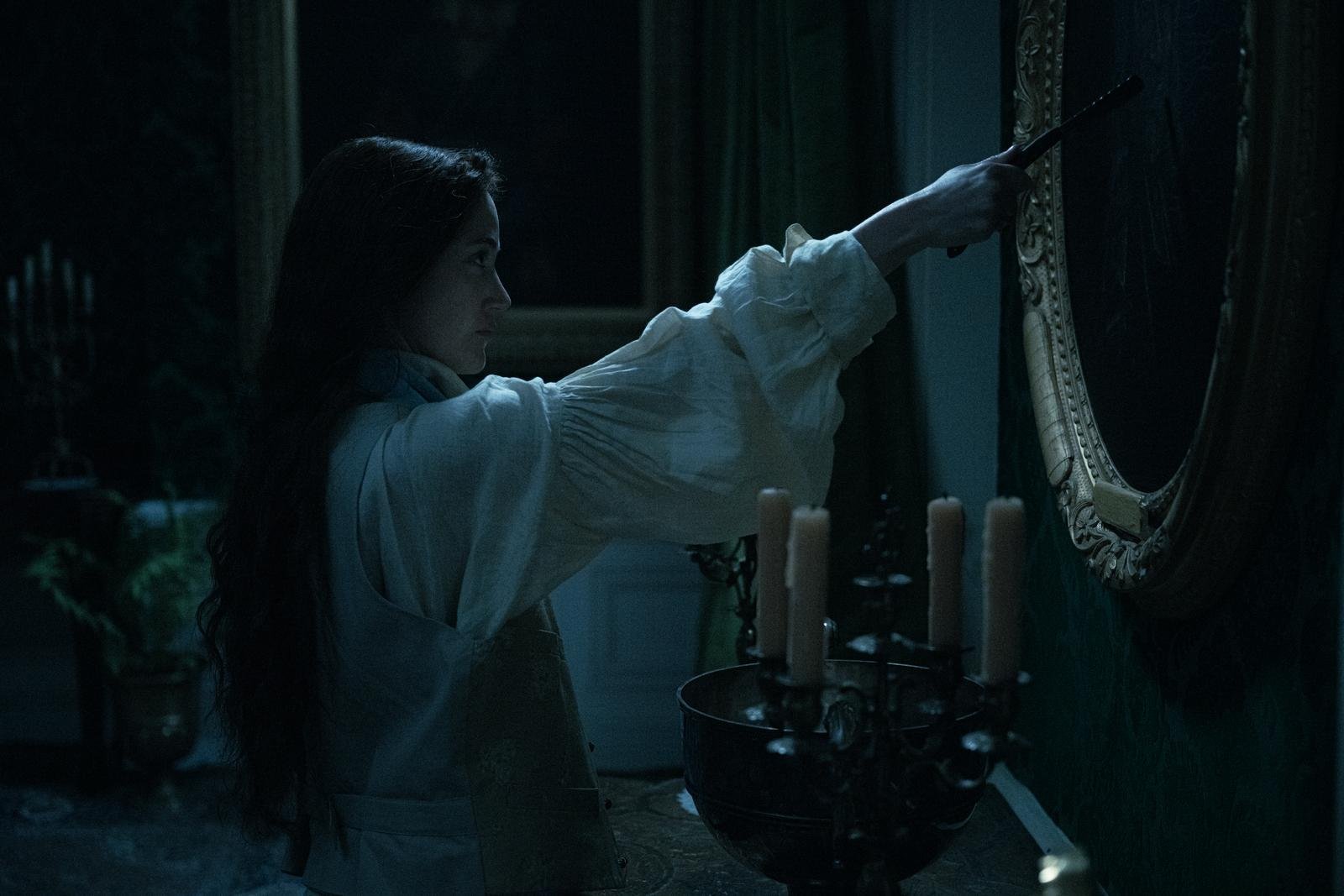

Maika Monroe in "Victorian Psycho".
Bleecker Street
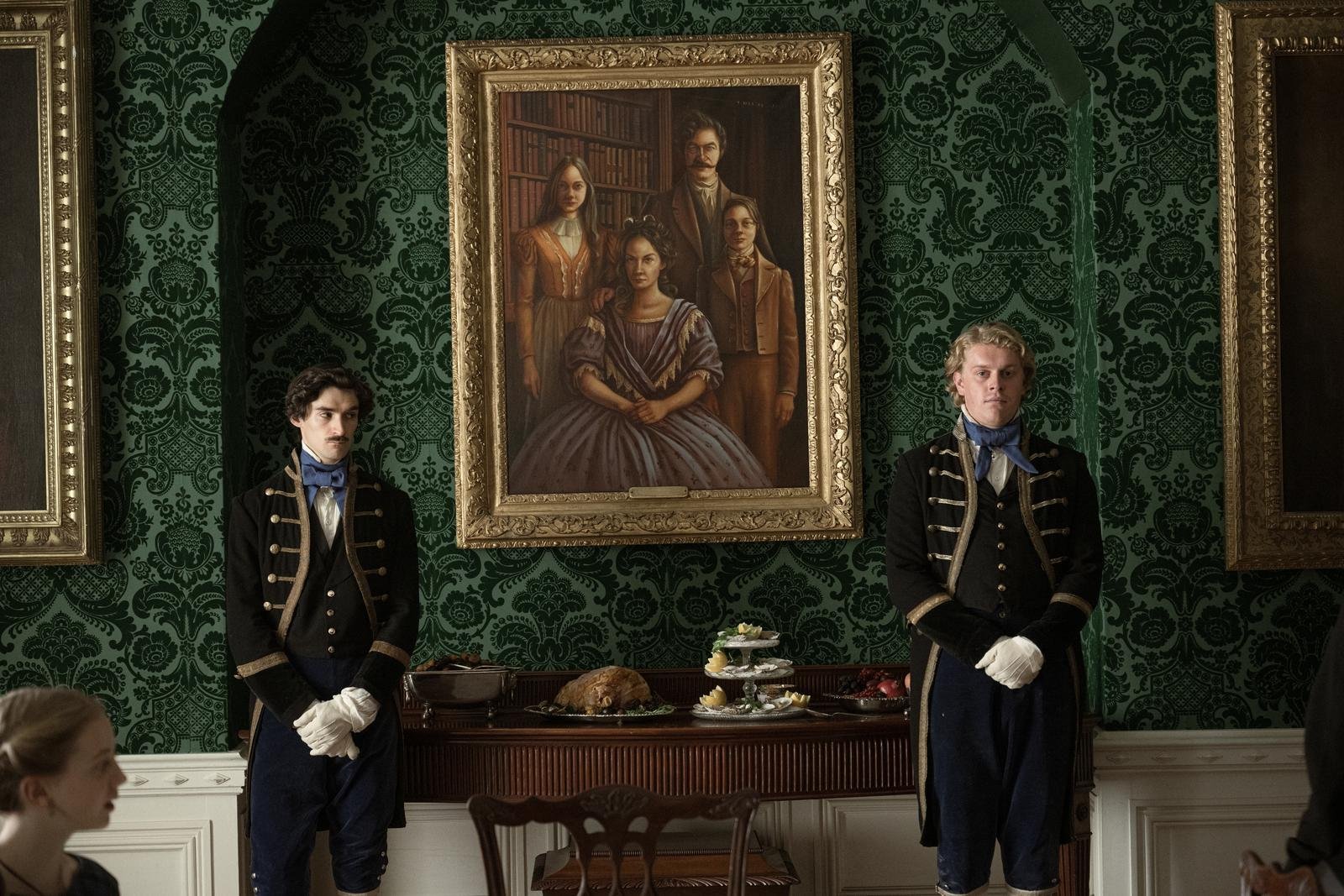

The family portrait of the Pounds family made for "Victorian Psycho".
Bleecker Street
Maika Monroe in "Victorian Psycho".
Bleecker Street
The family portrait of the Pounds family made for "Victorian Psycho".
Bleecker Street
That idea began with the property itself. Although set in rural England, “Victorian Psycho” was shot in Ireland, with Dunsany Castle on the outskirts of Dublin serving as the principal location for Ensor House. One of the best-preserved properties in Ireland and dating back to Anglo-Norman times, the property offered Reed and director Zachary Wigon exactly what they wanted in the backdrop of their deeply disturbing story. “Everything we were doing wth this story was a little bit amped up,” Reed says. With that in mind, he “didn't want the period to wear us; we wanted to wear the period,” and Dunsany Castle, with its combination of architectural eras on display and “labyrinthine” layout, meant that it offered a strong visual foundation but also allowed Reed to make sure it didn't simply look like another familiar period-drama location.
Sets were constructed inside existing rooms in the absence of nearby soundstages, meaning that every scene was indeed shot on location, just with a little movie magic. “The owner let me do things that a lot of people wouldn't allow because he wanted the film to be good,” Reed says. “He understood that people had shot there before, and he knew how important it was to me to create something that had never been seen before.”
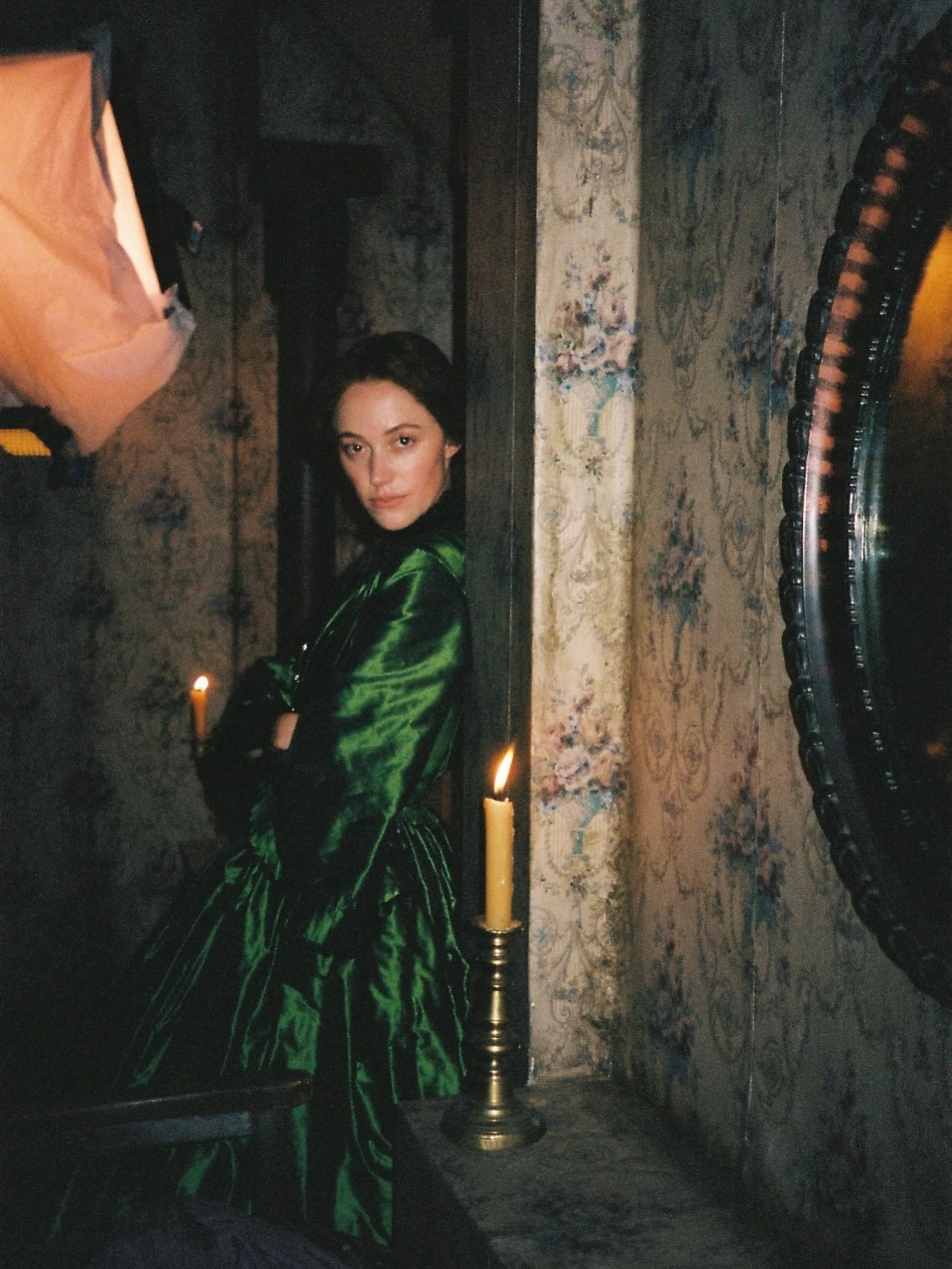

Maika Monroe in "Victorian Psycho".
Bleecker Street
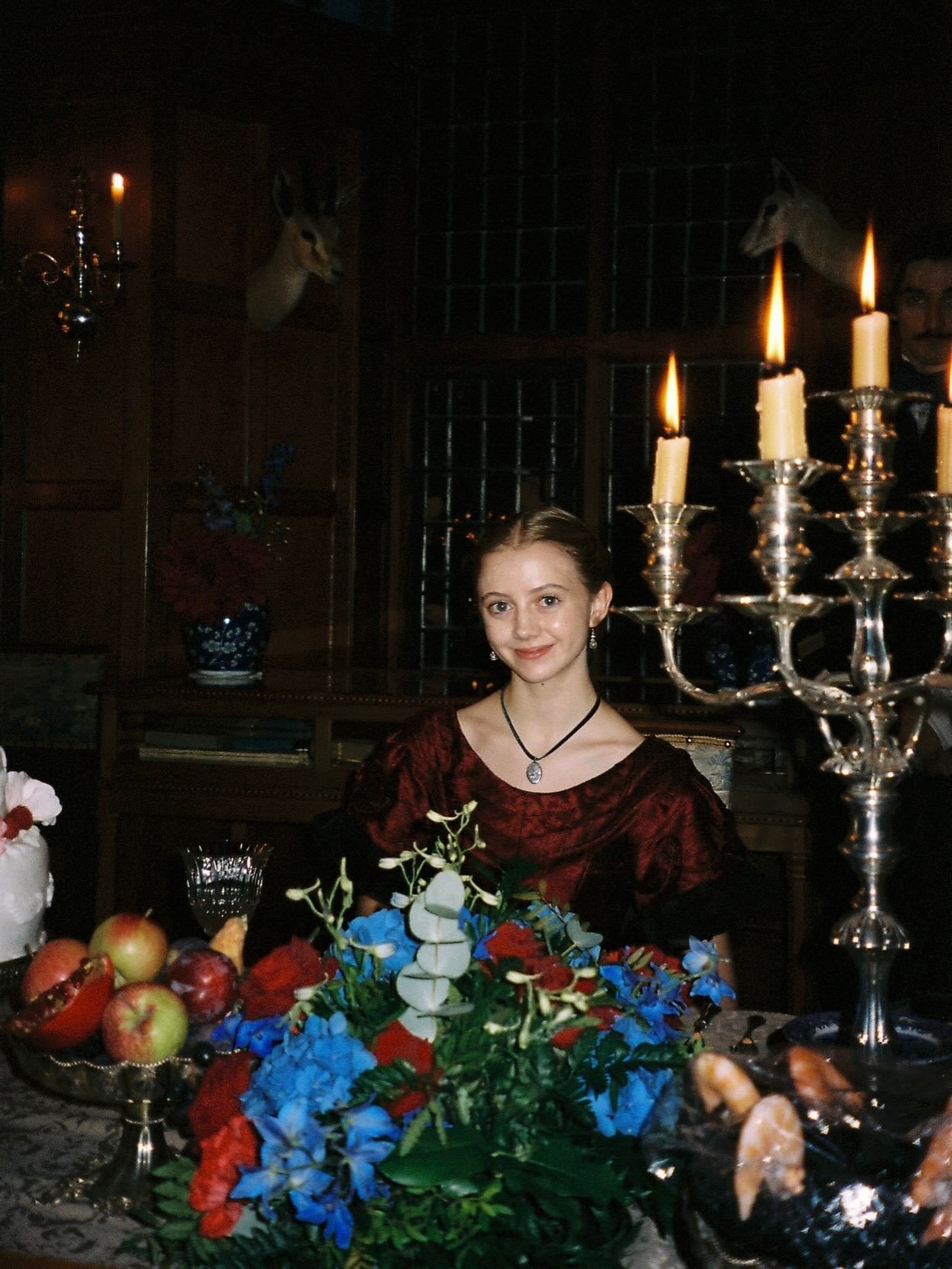

Evie Templeton in "Victorian Psycho".
Bleecker Street
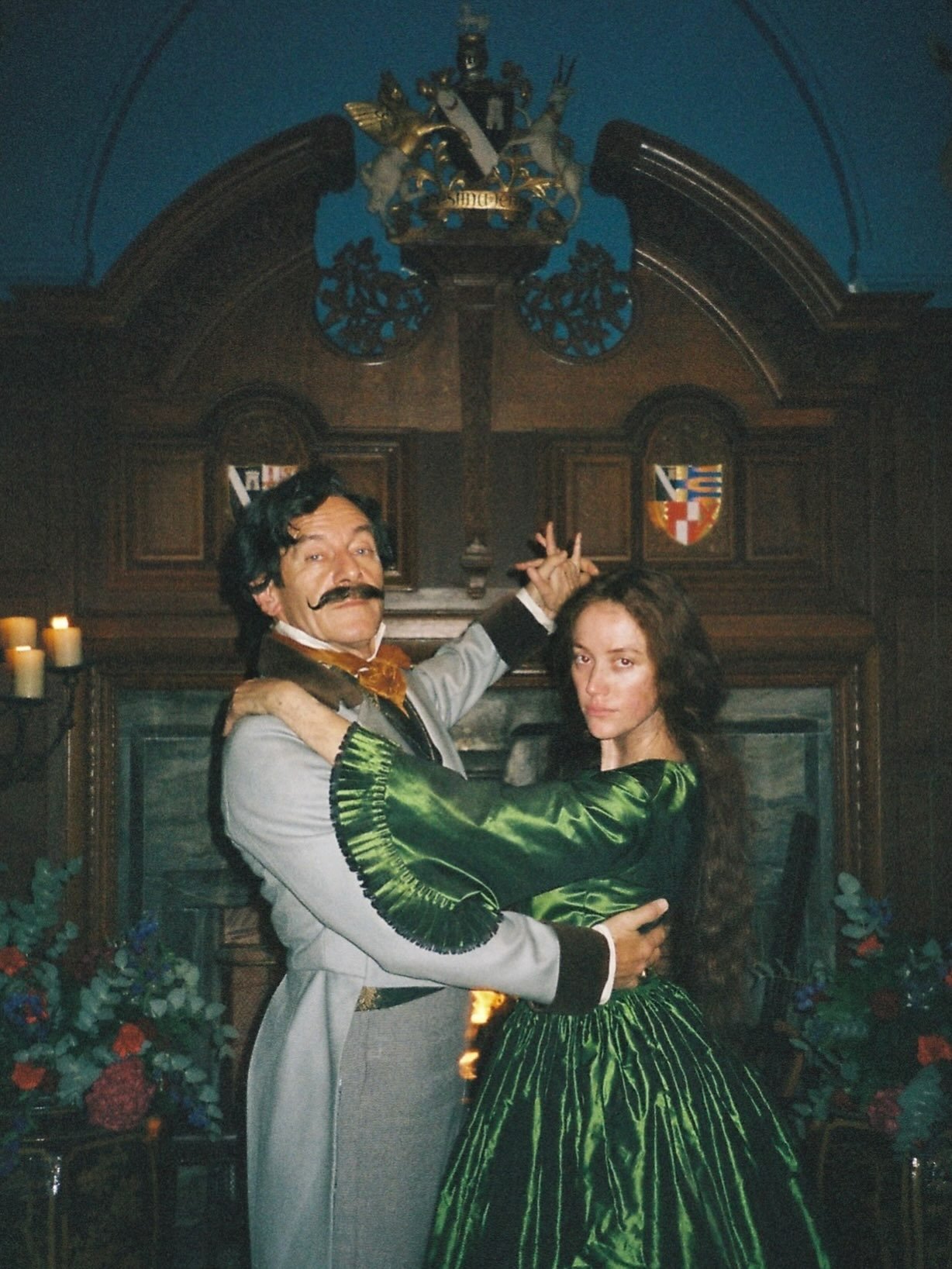

Jason Isaacs and Maika Monroe in "Victorian Psycho".
Bleecker Street
Maika Monroe in "Victorian Psycho".
Bleecker Street
Evie Templeton in "Victorian Psycho".
Bleecker Street
Jason Isaacs and Maika Monroe in "Victorian Psycho".
Bleecker Street
The transformation was convincing enough to disorient even the people working inside it. Reed recalls that Thomasin McKenzie, who plays one of the maids, was particularly thrown when she entered the room in which Winifred's bedroom set had previously been created, only to find it transformed into the children's schoolroom for a new scene.
Reed's background creating the look of music videos, including System of a Down’s “Aerials,” Katy Perry’s “Dark Horse,” and others for Nine Inch Nails, Linkin Park, Jay-Z, and Taylor Swift, also informed his approach. “Everything was a blank canvas,” he says of his early years, when directors were looking for the most original ideas. “My beginnings were based on a slightly heightened aesthetic. So that's kind of carried through in the way I work.” Even so, he did not want to veer into the anachronistic, but stay true to what was conceivably Victorian.
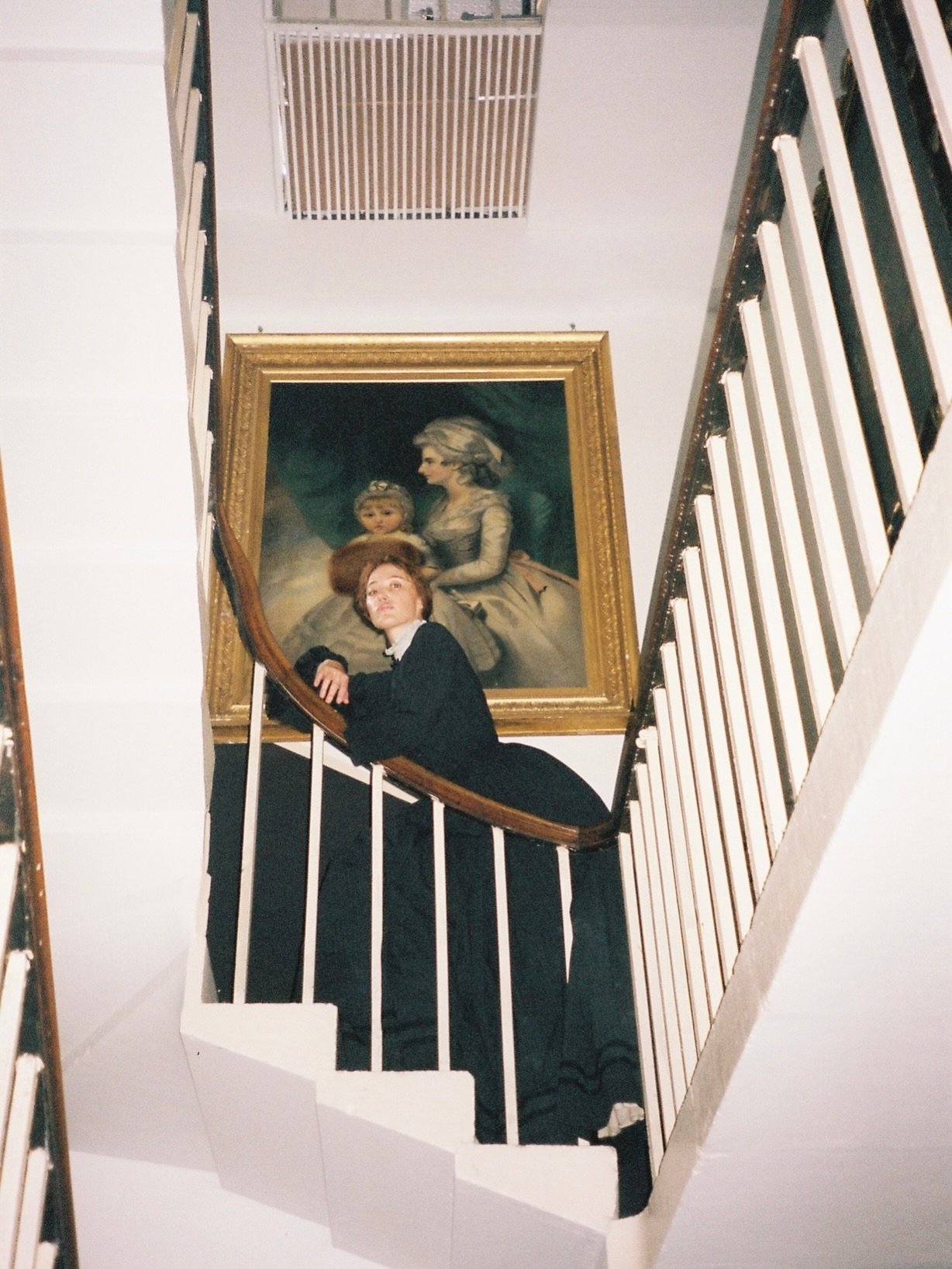

Maika Monroe in "Victorian Psycho".
Bleecker Street
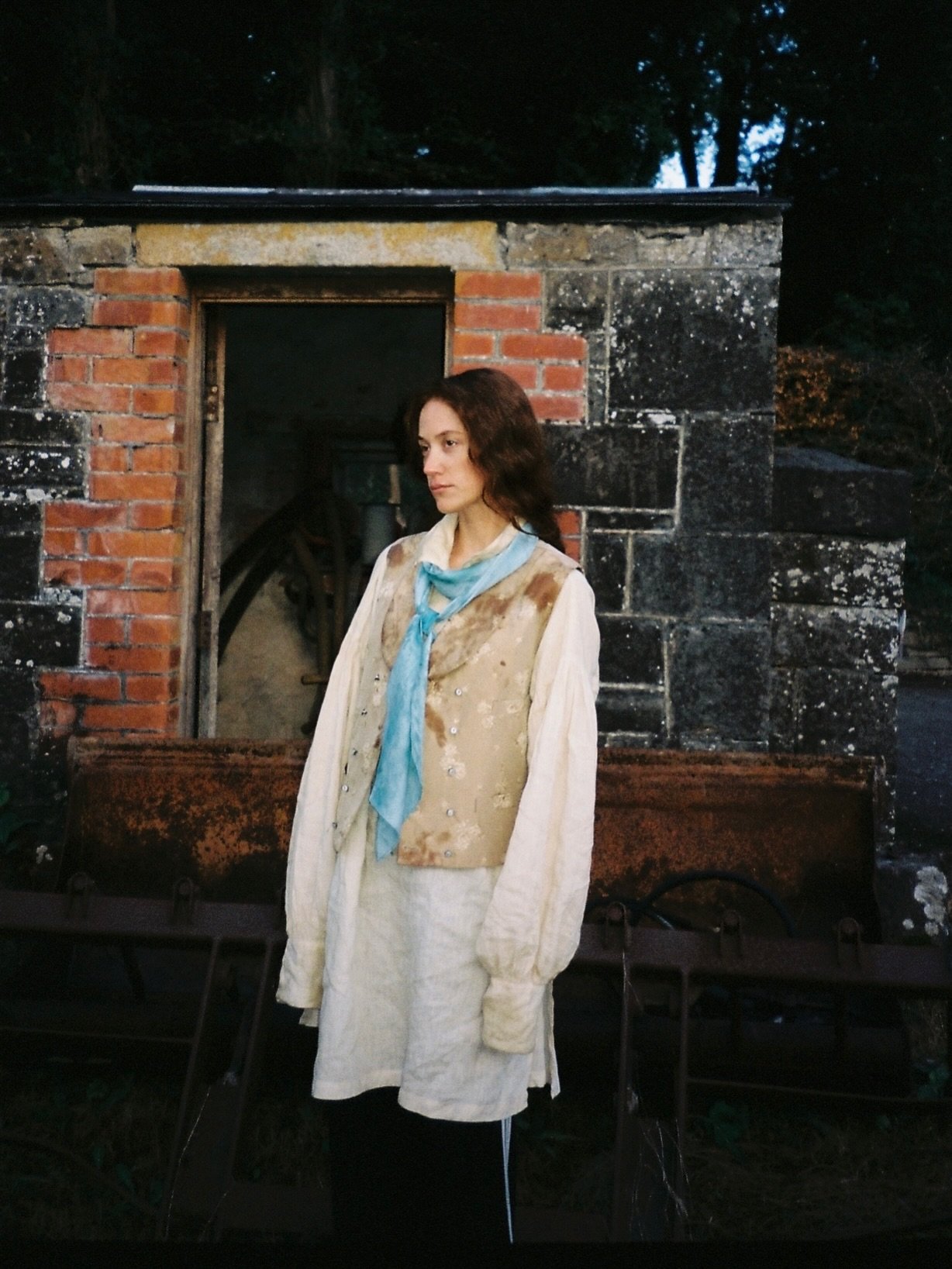

Maika Monroe in "Victorian Psycho".
Bleecker Street
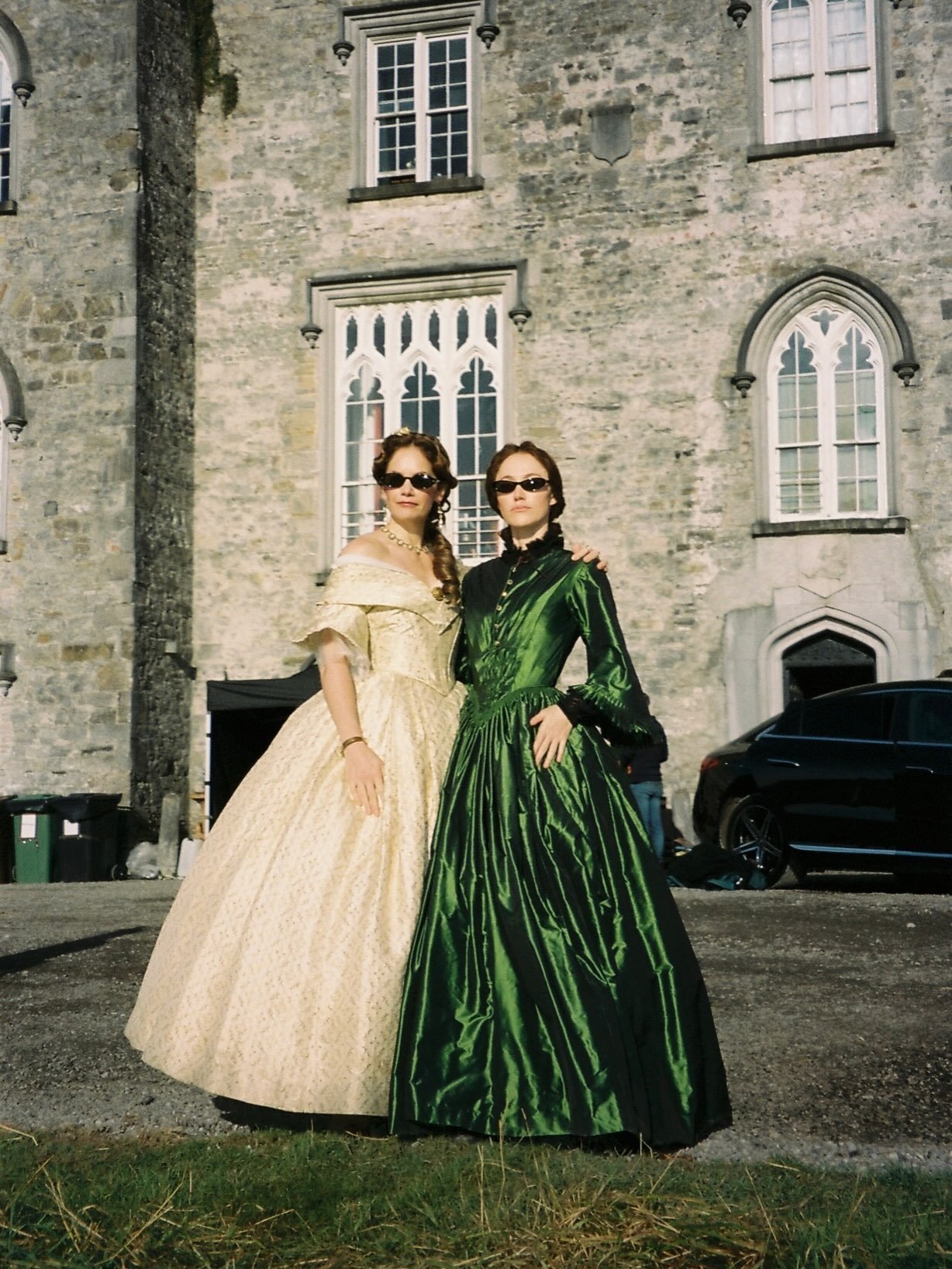

Ruth Wilson and Maika Monroe in "Victorian Psycho".
Bleecker Street
Maika Monroe in "Victorian Psycho".
Bleecker Street
Maika Monroe in "Victorian Psycho".
Bleecker Street
Ruth Wilson and Maika Monroe in "Victorian Psycho".
Bleecker Street
The result is a home that feels distinctly more colorful than the muted palette audiences might expect from a Victorian setting. “When you go back to those periods, things are a little bit greyer and browner,” Reed notes. Instead, for Ensor House Reed wanted “a lot of jewel colours,” and the production designer even imagined the wealthy family commissioning a celebrated decorator du jour to give the home a little extra flair. “Imagine that Augustus Pugin had been hired by the family to come in and do some decorating,” he jokes. “I mean, they’ve got money, so they would employ these kinds of people to come in and jazz up their house.”
Some of the film's most striking design decisions were also made for practical reasons. Take the staircase, which stretches across five floors and is finished in a particularly vivid shade. “It's a very sort of lurid purple,” Reed says. “It was not that color before when we went there.” The change came out of conversations with cinematographer Nico Aguilar about the film's night scenes, many of which were lit by candlelight. The staircase's original paler shade were affecting how the actors' faces appeared on camera, so the team needed to find a shade that worked with the lighting as well as the film's visual language. “We found a color that worked within our narrative that also worked to make the actors look as good as possible,” he explains. “Some of these colors came around because of technical needs, as opposed to just straight-out aesthetic needs.”
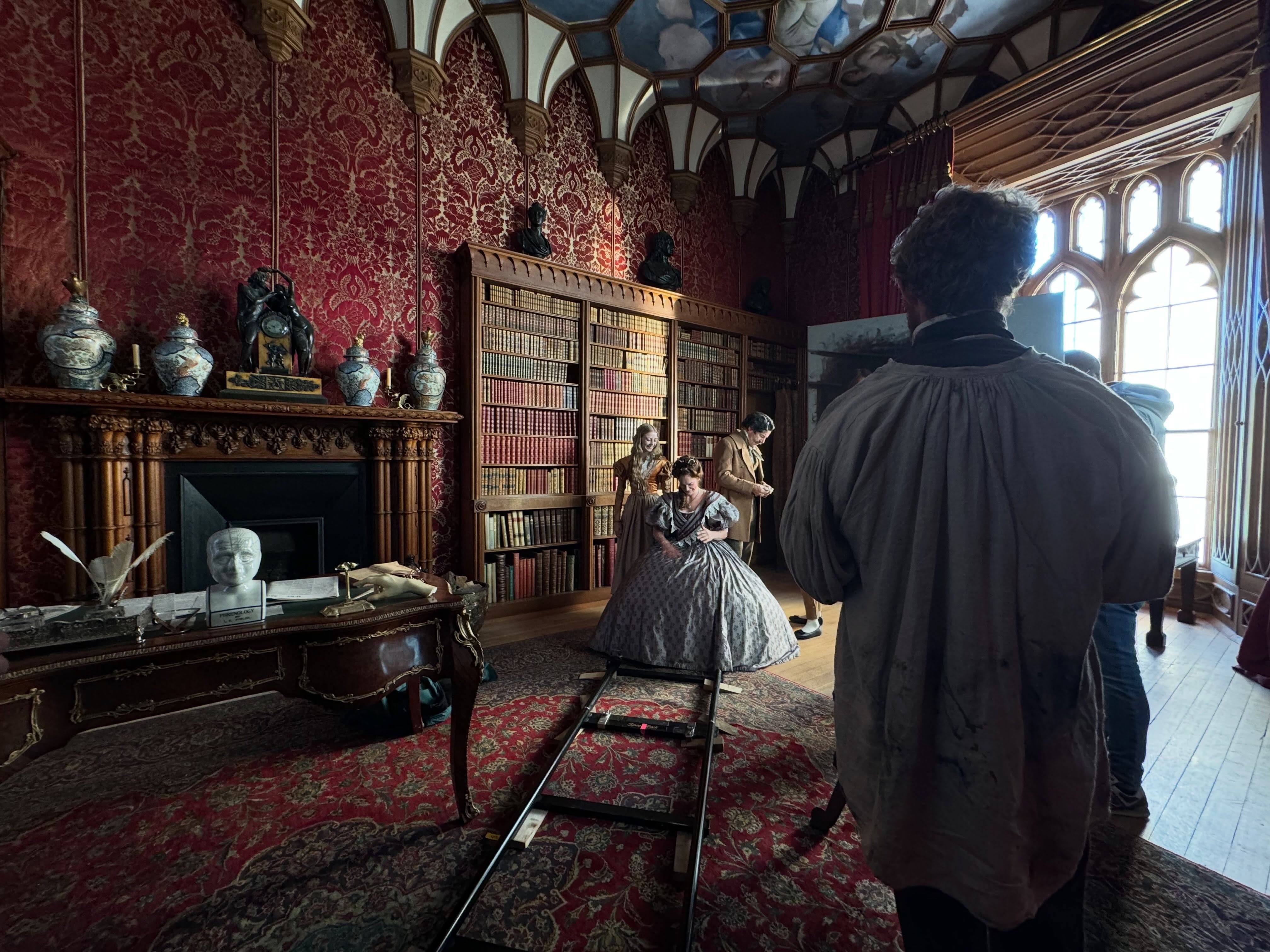

The library set of "Victorian Psycho".
Bleecker Street
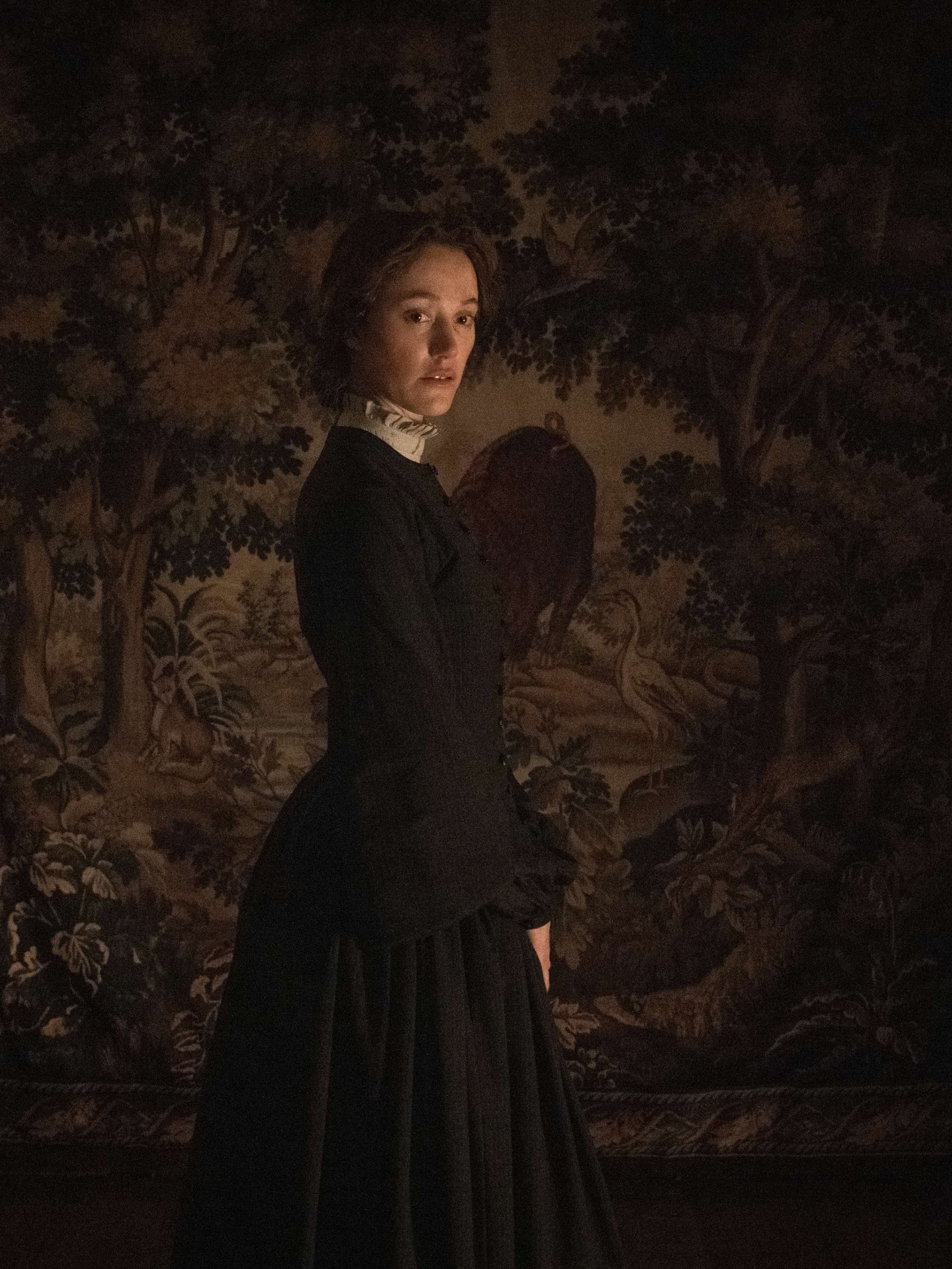
The staircase also became a showcase for the artwork that can be seen throughout Ensor House. While “some Rembrandts and Raphaels” had been hanging on the walls long before the production arrived, the team embellished the space with custom-made Pounds family portraits commissioned from a local Irish fine-art artist. Elsewhere, a series of bespoke tapestries featuring boars provides a more deliberate piece of visual storytelling. Designed by Reed and two collaborators he had previously worked with on 2020’s “Gretel & Hansel,” the tapestries chart Winifred's deteriorating state of mind as the film progresses. “They took us through certain stages,” he says. “They were a sort of a reflection of Winifred's loss of her sanity,” Reed says, encouraging viewers to take a closer look at them when watching the film.
That gradual deterioration is central to Reed's approach to the house. “I think people, when they have a movie like this where there's horror involved, they sort of expect a rotting mansion,” he says. “They expect a home with peeling wallpaper and damp on the walls and ceiling.” Instead, he wanted the rooms to feel warm, with “exquisite light” and “high-end furniture,” suggesting the kind of lavish upper-class estate the Pounds would inhabit. Still, there are signs of Winifred’s influence on the house to look ou for. The plants dotted around the house should gradually begin to decay as the film goes on, a detail that audiences might not immediately notice.