‘Furious’ Explores New York City’s Power Structure Through Office Cubicles & Luxury Apartments
Interiors

Interiors
Production designer Chris Trujillo prioritized authenticity, from messy, meme-filled NYPD desks to one-percenter art collections in the Hulu crime drama.
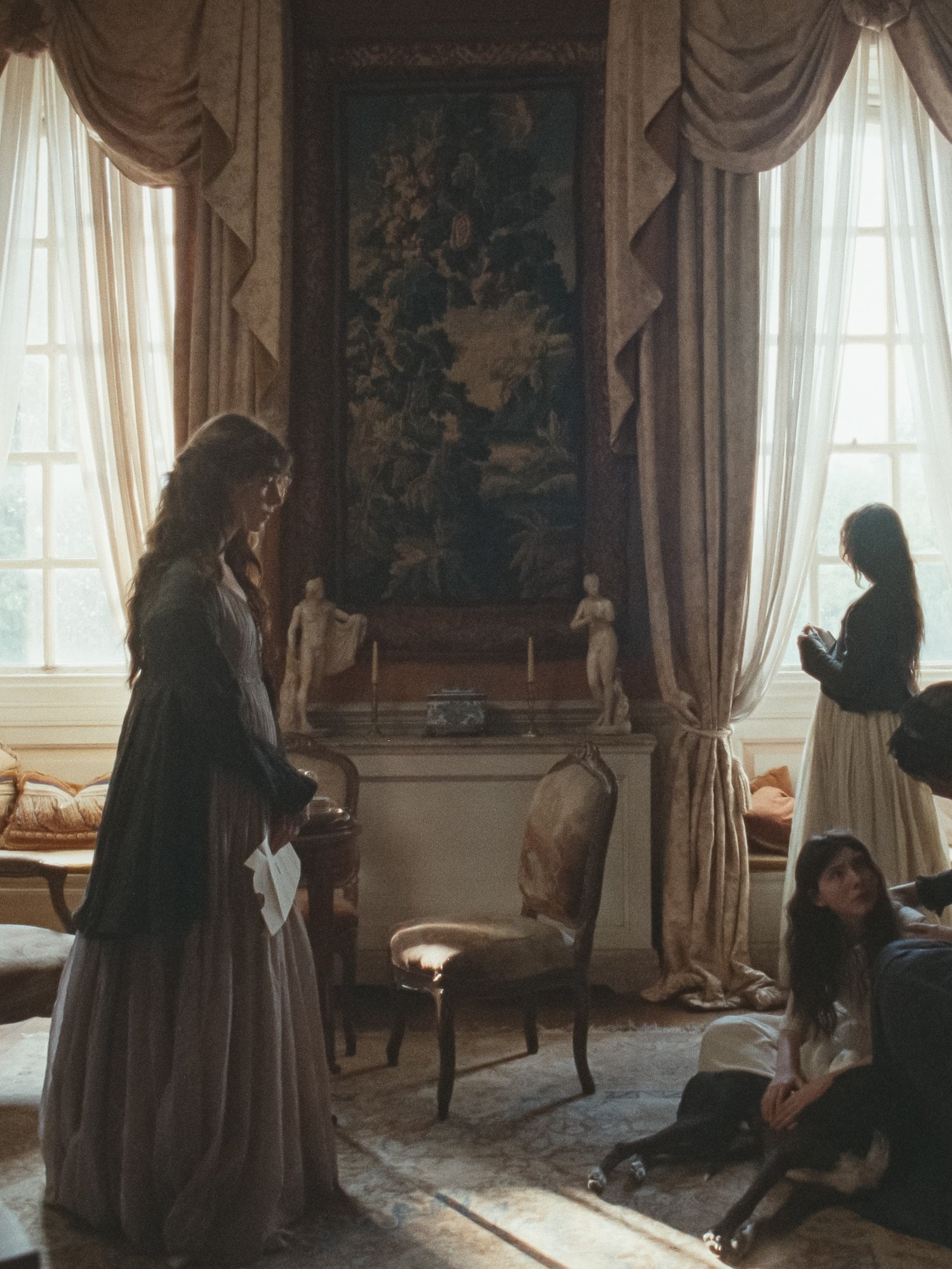
Within the thrilling hunt for a serial killer, confrontation of personal trauma, and dark, violent secrets among the one percent, Hulu’s “Furious” is ultimately a New York City story that unfolds through a spectrum of homes and offices populating the series. “We really wanted to focus on the different socio-economic strata and the power structures,” says three-time Emmy-nominated production designer Chris Trujillo. “In the pursuit of realism and really getting a portrait of New York City, we really went out of our way to find super authentic locations.”
Law Enforcement in Their Fishbowls

Emmy Rossum in "Furious".
Hulu
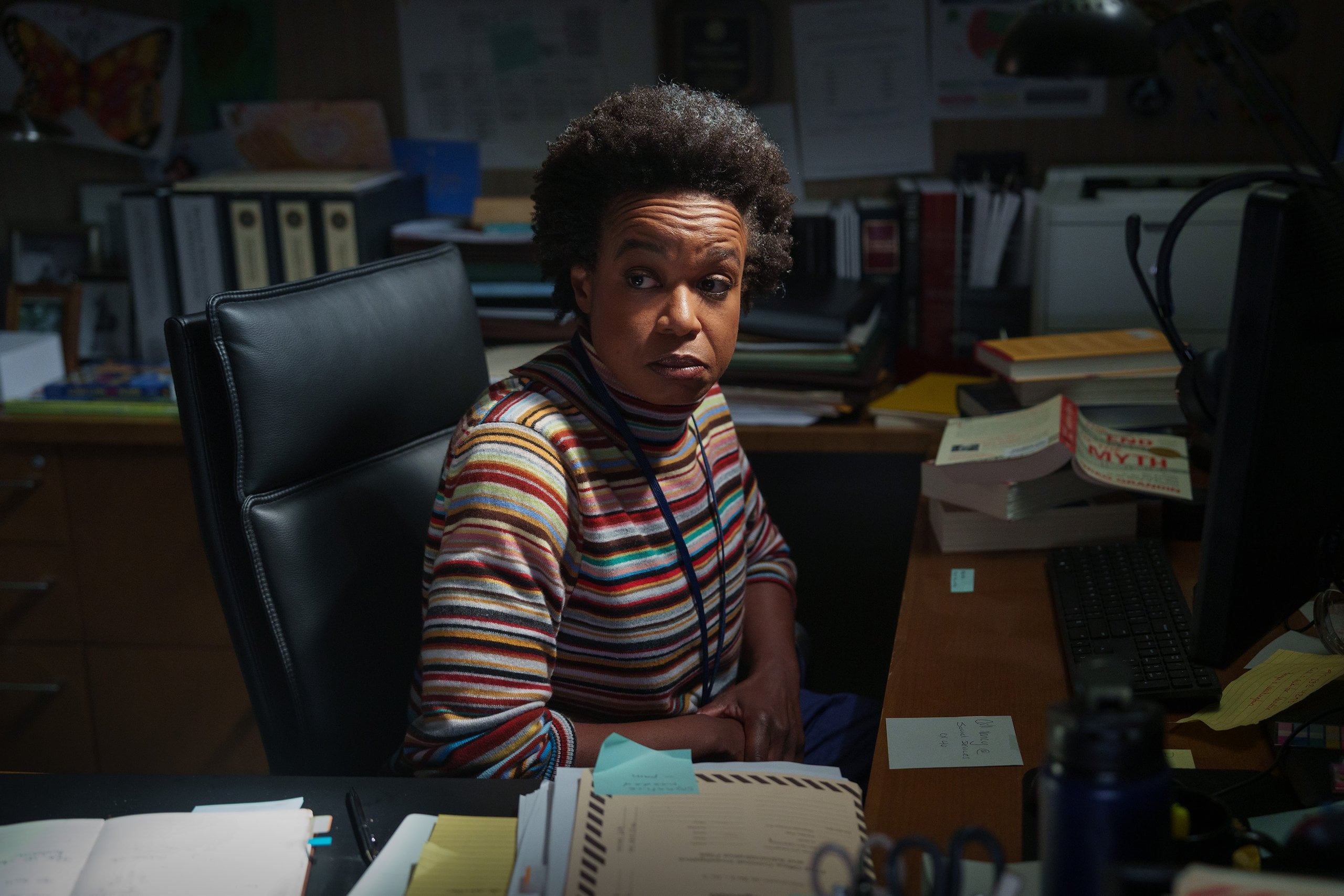

Quincy Tyler Bernstine in "Furious".
Hulu
Emmy Rossum in "Furious".
Hulu
Quincy Tyler Bernstine in "Furious".
Hulu
Former detective and now-probationary FBI duty agent Alice Black (Emmy Rossum) left the NYPD to distance herself from her abusive ex and colleague Marshall Connelly (Jake Lacy). But her new job doesn’t offer much refuge.
She’s surrounded on all sides by sexism and skepticism from her fellow male agents—and boss—from her exposed workstation in an institutional, gray-toned open-office plan. When old friend and Brooklyn homicide detective Danny Kelly (Scoot McNairy) requests her help on a suspicious overdose death, Alice is pulled back into her former life. “We definitely went in with a very deliberate sense that these characters operate in this very specific world that’s a little more rigid, contained, and compartmentalized,” says Trujillo.
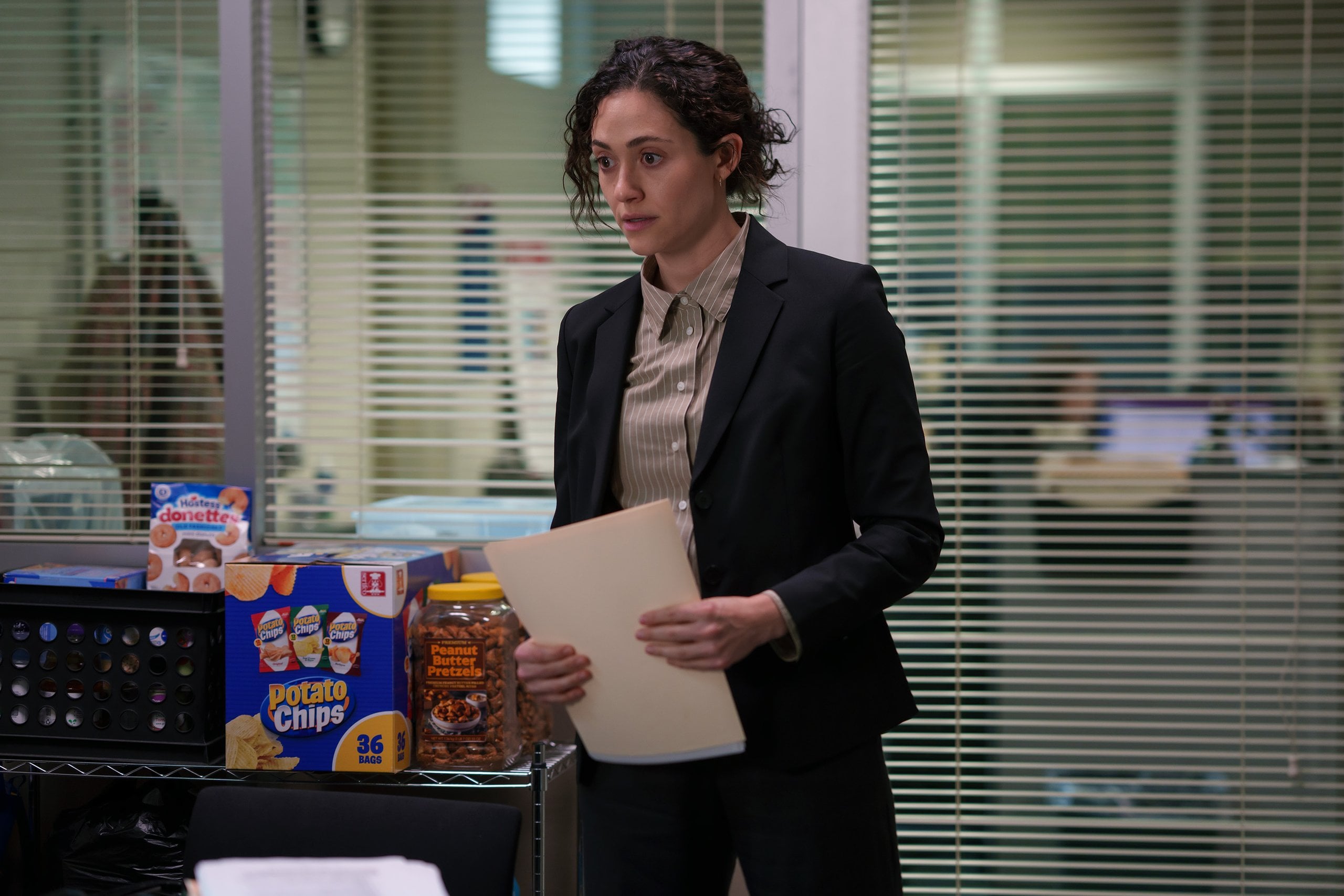
Danny works out of his relatively spacious, glass-enclosed, pen-like cubicle at the NYPD’s Brooklyn homicide station with no natural light, just the flicker of fluorescent lights overhead. Like his fellow detectives, Danny personalizes his uniform space with haunting crime scene images, interspersed with snippets of his life, such as New York Mets paraphernalia, a child’s drawing, and “who you lookin’ at”/animal viral gags, but on paper. “We were really proud of that set,” says Trujillo, praising set decorator Kendall Anderson and her team and a police liaison who arranged “unfettered access” to the homicide division in a Williamsburg, Brooklyn NYPD precinct.
“We were shocked at how densely layered their world is—everything from family photos to every little strange meme that they enjoy. You could see the psychology. Every cop's personality was so clearly different from desk to desk,” says Trujillo, who photographed and catalogued the tiniest of details in the self-expressive work spaces of real detectives. “We essentially recreated the real world of Brooklyn detectives, but with a character specificity.”
After uncovering a connection to an underage human trafficking ring, Alice achieves her professional goal of joining the FBI’s sex crimes unit. Housed in an appropriately grim and austere basement, built by Trujillo on a soundstage, Alice settles into another harshly lit, fishbowl-like workspace. “The police and FBI are analogous worlds and fundamentally similar in the purposes they serve and the people who work there,” says Trujillo. “So we very deliberately wanted to have them feel like mirrors of each other.”
The One-Percenter Real Estate Porn
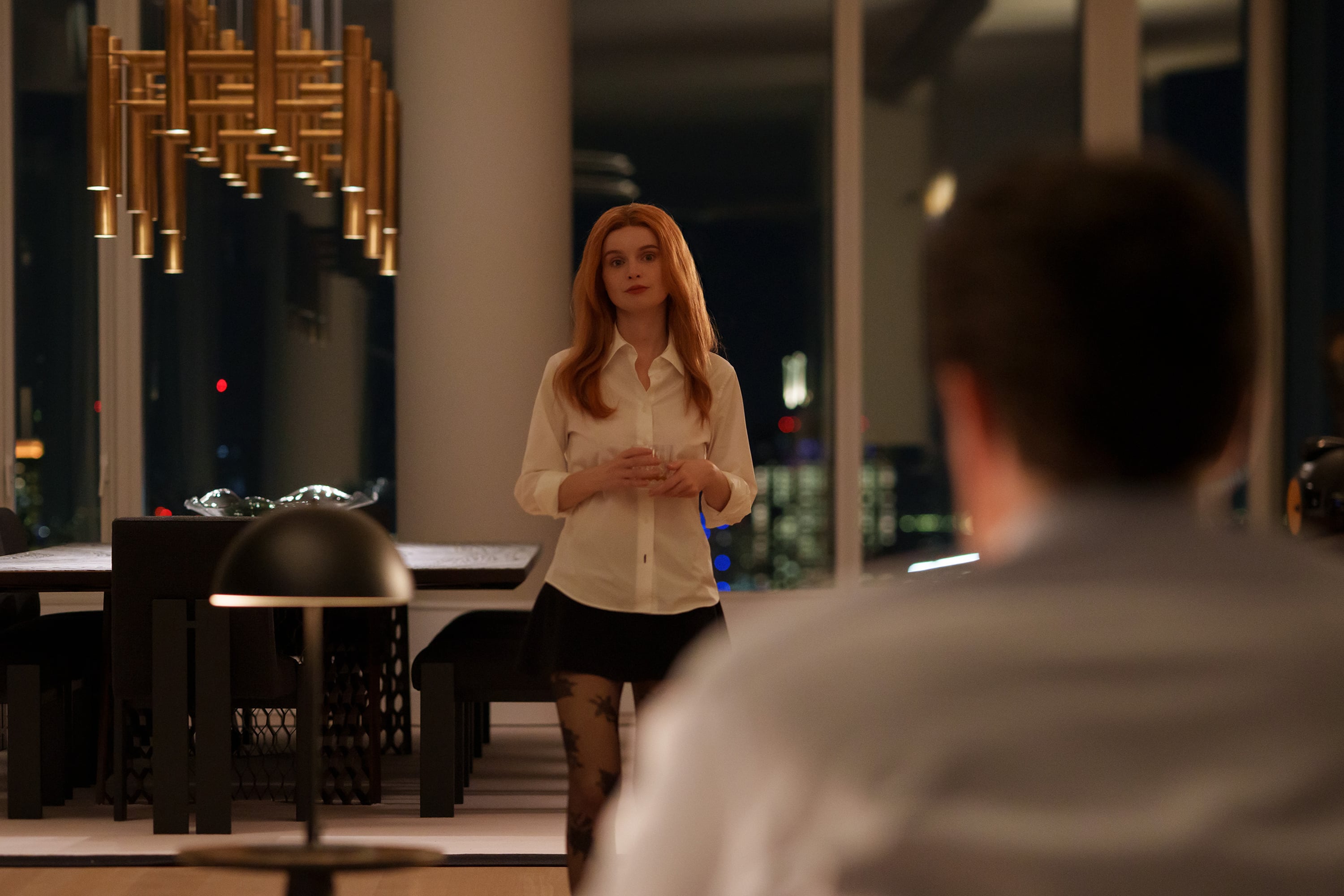

Lola Pettigrew in "Furious".
Hulu
Serial killer Catherine (Lola Pettigrew), who survived unspeakable abuse after being trafficked as a teen, makes her way through New York City’s rarefied neighborhoods on a carefully constructed path of vengeance. Targeting powerful men responsible for her past trauma, she lures each one back to his own home—turning their high-end residences into luxury prisons to mete out her slow punishment. “In the pursuit of realism—and really getting a portrait of New York City and the different layers—we really went out of our way to find super authentic locations,” says Trujillo.
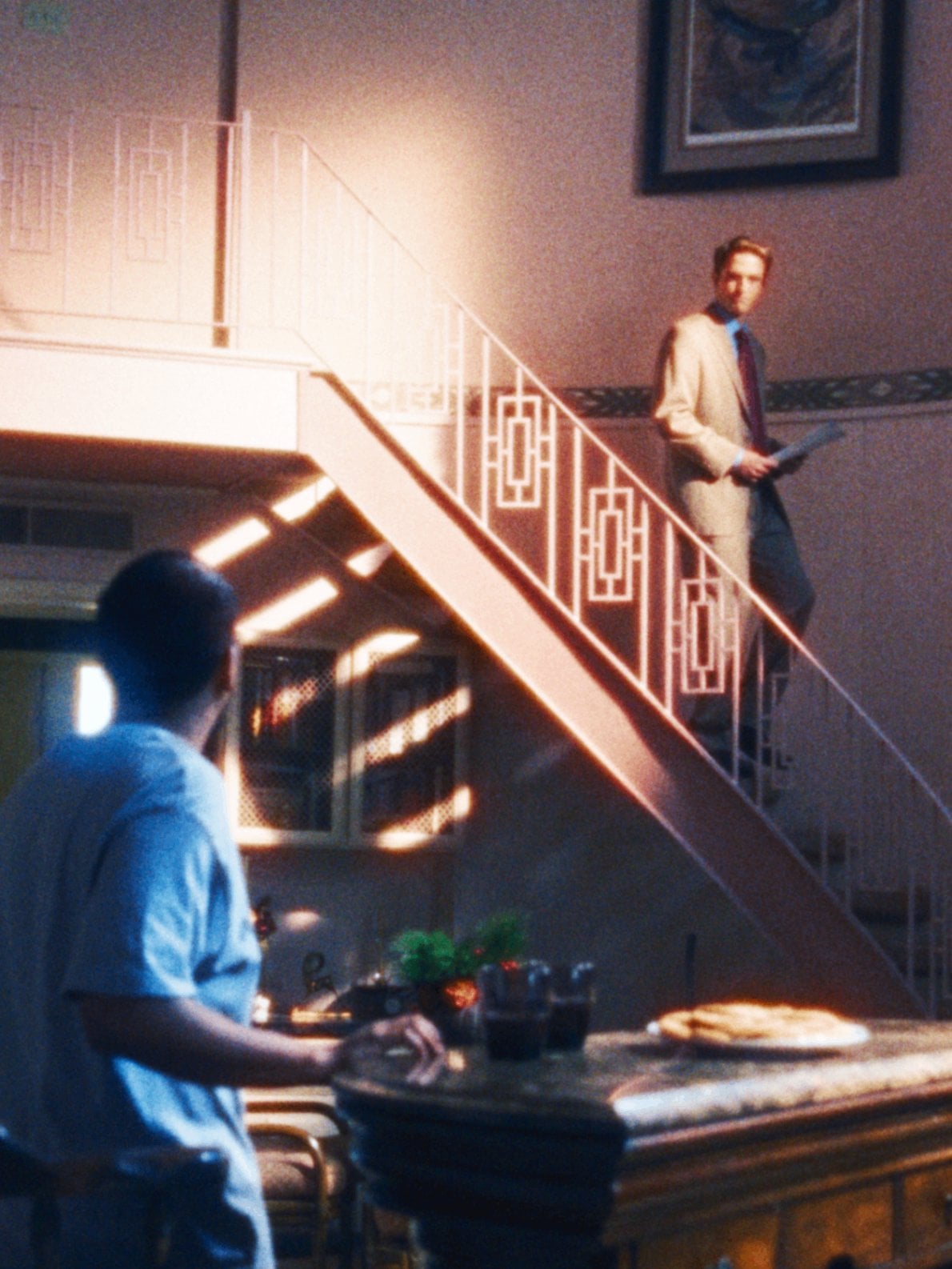
After murdering old-money scion Caleb Easton (Clark Moore) in his Brooklyn Heights townhouse, Catherine coaxes her way into slimy attorney Oliver Charles’s (Rob Delaney) spectacular Central Park-adjacent skyrise residence. As she gazes out at expansive New York City skyline views from his floor-to-ceiling windows, he overshares about his divorce, snorts cocaine, and brazenly demands that Catherine sign an NDA. “We wanted to show that version of wealth and power—which is profoundly expensive—like a glass box in the sky above it all, right?” says Trujillo. “But also, there's a weird loneliness and emptiness that’s just fundamental to the space, as well.”
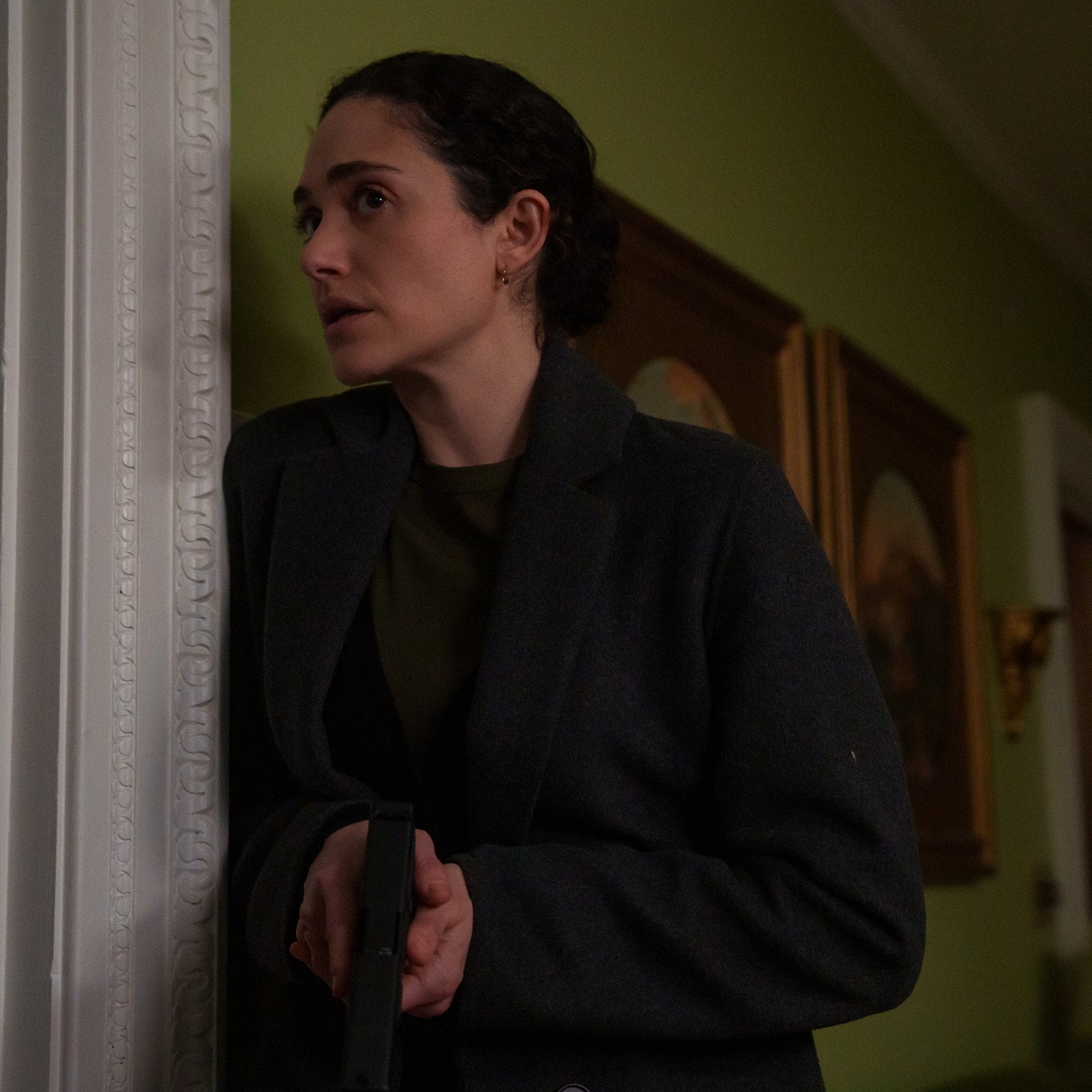
Hal Hartford (Campbell Scott), the establishment lawyer who holds the key to Catherine’s ultimate target, lives in a grand, art-filled pre-war apartment on the Upper West Side. “Those are really beautiful apartments with incredible old historic detail. But they're not huge,” says Trujillo, emphasizing the challenges of shooting on-site. “By nature, they’re a little bit tight and labyrinthine. We sucked it up, and, in the interest of getting an accurate apartment, we squeezed ourselves into this beautiful Upper West Side apartment. So we got all the historical details there.”
Trujillo also differentiated the predatory, powerful men through the exquisite ornamentation of their homes—right down to the art adorning their walls. “With all of these higher-end sets, we wanted to have an art collection that accurately reflected the buying tendencies and tastes, which oftentimes are less a matter of taste and more a matter of investment for a lot of these folks,” says Trujillo.
Conveniently, producer Sam Hoffman’s wife, Andrea Crane, co-founder and partner of 291 Agency, which represents visual artists, provided expert insight as the production’s de facto art consultant. “We put a lot of time into thinking about what any given character's art collection ought to feel like and how it would reflect their specific inclinations and character,” says Trujillo of selecting the artwork seen in the show.. “The same way we were trying to accurately depict the FBI, the NYPD, and the shelter system, we also wanted to accurately depict the subtle differences in the ways that the upper echelon and the one percent are living.”
The Influential Easton Mansion
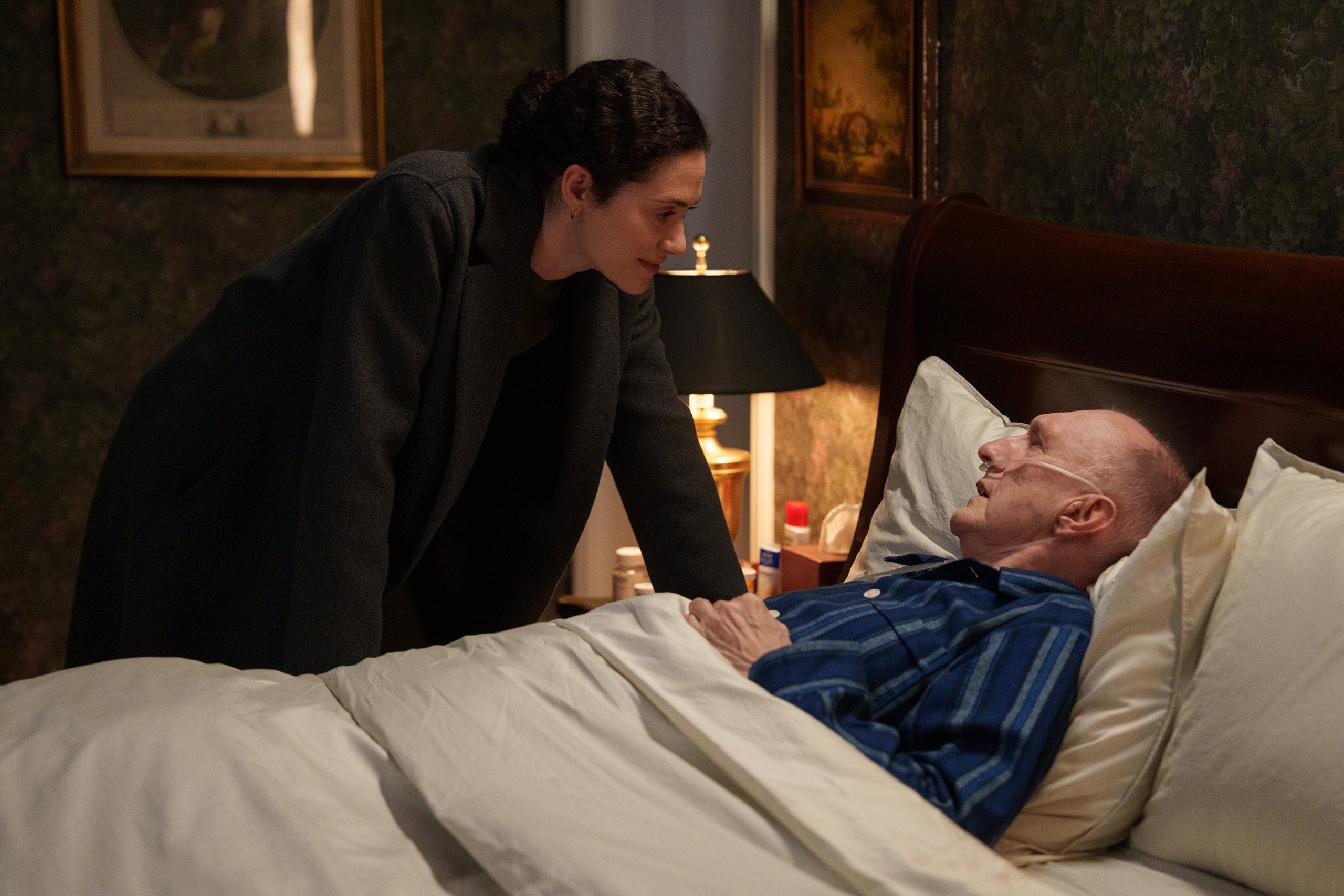

Emmy Rossum and Peter McRobbie in "Furious".
Hulu
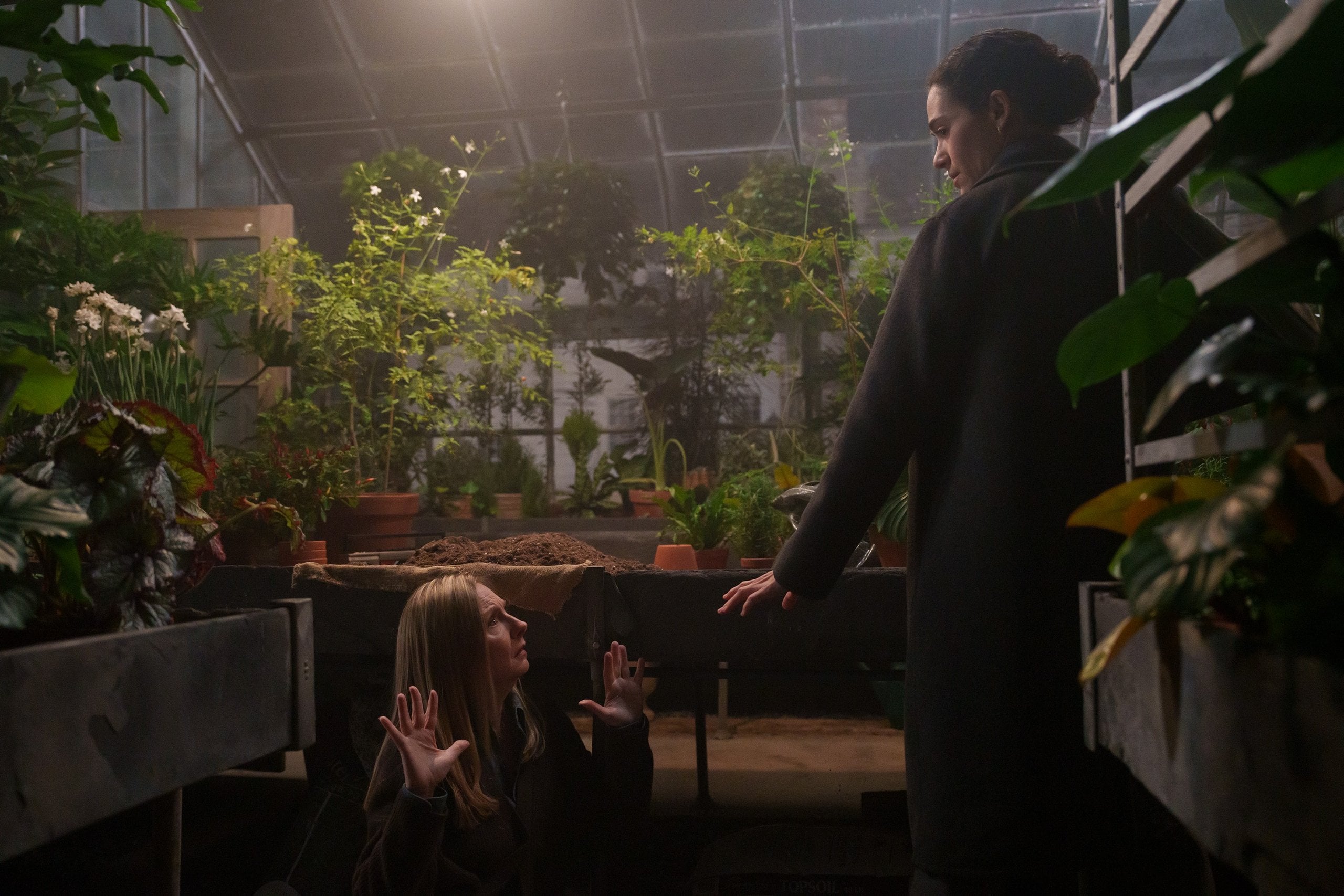

Hope Davis and Emmy Rossum in "Furious".
Hulu
Emmy Rossum and Peter McRobbie in "Furious".
Hulu
Hope Davis and Emmy Rossum in "Furious".
Hulu
But the ultimate one-percenter of the story is victim number one’s father, the seemingly untouchable billionaire Jay Easton (Peter McRobbie), who’s protected by his bottomless bank account and his loyal daughter, Emma (Hope Davis). He pulls the strings—and conducts nefarious business—from his sprawling compound in Connecticut.
Trujillo explains that finding the right palatial location for the thrilling finale showdown took the most time and effort. “Because it says so much about the character—and because Jay Easton is so essential to the story,” says Trujillo. “We looked at a number of places that were a little bit more on-the-nose, like the villain’s lair.” Finally, the team landed on a coastal New England, Kennedy-esque aesthetic and “stumbled upon” a family estate that began as a farmhouse generations ago.
“It felt like it had a history right off the bat. There’s lots of different dimensions to it,” says Trujillo, pointing to the “little breezeways” connecting the maze-like wings and the refined solarium where Alice and Danny first interview the guarded family. “Then, of course, the greenhouse immediately spoke to us,” he continues. “That’s one of those serendipitous things and a testament to how creatively open everybody was to letting the world inform the show a little bit. Liz Merriweather, our writer-showrunner, was really flexible and interested in adapting. As soon as we saw the greenhouse, we were all like, ‘Oh my god! This is so special.’ She tailored some of the climactic scenes to show more of it.”
As Alice and Danny get closer to the truth, Emma carefully tends to her botanicals flourishing throughout the peaceful white greenhouse framework. She projects a façade of nurturing benevolence while avoiding any acknowledgment of her enablement—if not outright support—of her father’s disgusting crimes. “It added a little bit of dimension to the character,” says Trujillo. Filming within the mansion’s dynamic rooms and winding hallways heightened the finale’s suspense, but Trujillo cleverly built Easton’s secret panic room on a soundstage, seamlessly integrating it without disrupting the shocking reveal.
“The secret space was its own thing and really bleak and horrible,” says Trujillo, describing the stately gray-toned room of horrors hidden behind an unassuming floral painting. “We duplicated the hallway outside of [Easton’s] office space, the green gloss room, and it opens behind the desk into the panic room. But otherwise we shot mostly on location because the house was so sprawling and special that we wanted to use it.”