
The Spectacular Production Design in ‘Digger’ is Just as Layered and ‘Complicated’ as the Story Itself
Interiors
Production designers Dennis Gassner and Richard Johnson describe perfecting the sets for Tom Cruise’s spirited choreography and injecting dark humor into the details.
“Blah blah, blah, OK, here we go,” says Dennis Gassner, one of the production designers on the Tom Cruise-starring absurdist climate-change satire, “Digger.” He pauses while recalling his early discussions with director Alejandro Iñárritu on bringing the filmmaker’s ambitious, multilayered vision to life. He eventually settles on one word: "Complicated."
The Oscar winner joined the production after prep had begun, and was confronted with “a melee of ideas.” He needed to devise a narrative thread to bring the Brechtian story-within-a-story and its farcical exploration of political, cultural, and socioeconomic themes together. “It feels like I'm in a Hieronymus Bosch painting,” says Gassner, referring to the Early Netherlandish painter’s densely layered, fever-dream canvases filled with surreal creatures and unsettling imagery.
Reading the script, Gassner immediately realized the unifier, crediting his classical training and the Gestalt principles of using color palette as a connective visual thread. “The phone rings, and his life changes,” says Gassner, also lauding the hard work of the 300-strong crew. Digger Rockwell (Cruise) receives the news that his avaricious oil excavations have launched a global climate disaster. “So his heart started to pound, like it's never pounded before. And to me, that was red.”

Tom Cruise in "Digger".
Warner Bros. Pictures
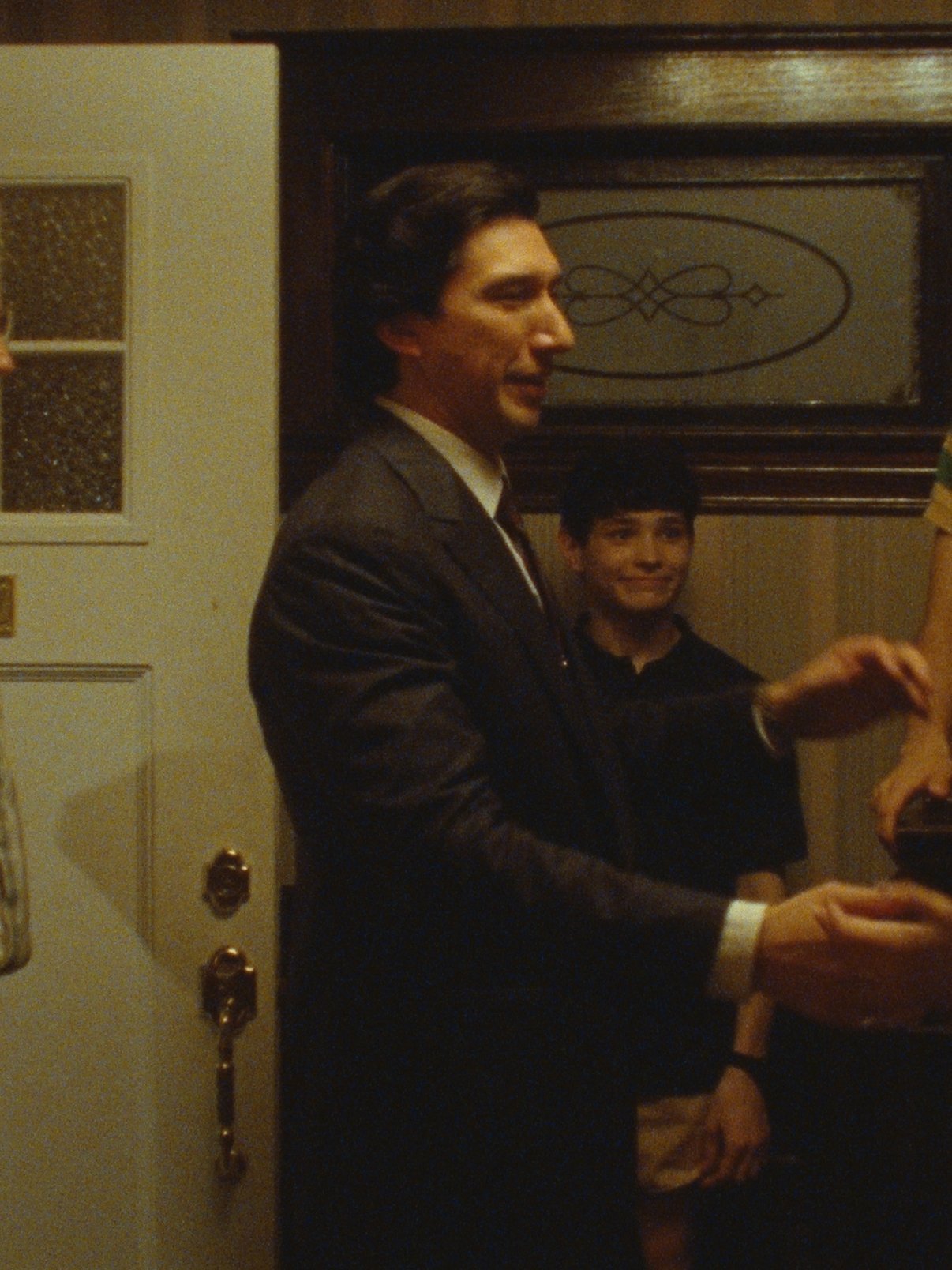
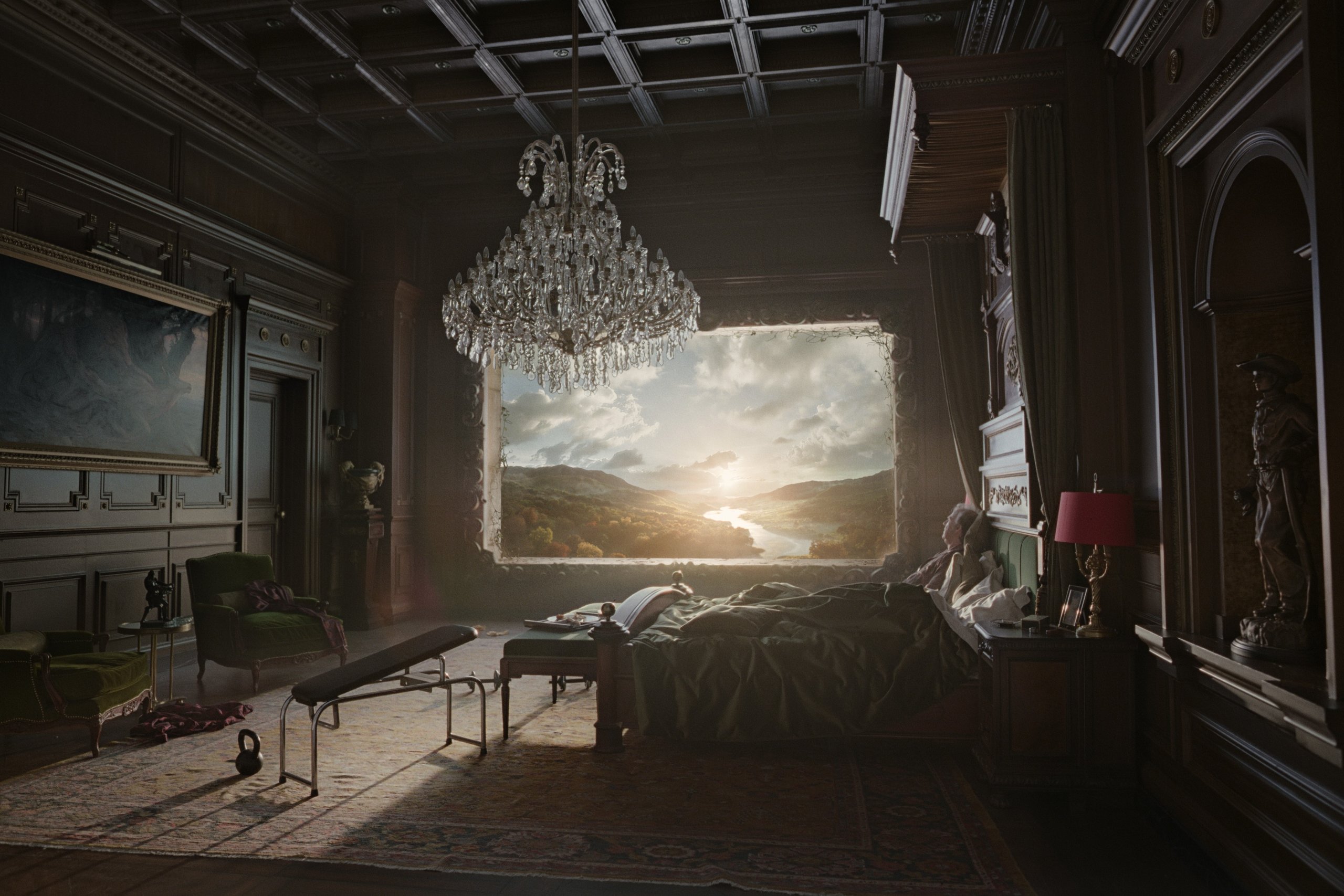
In the movie’s opening scene, Digger—or, as revealed partway through the film, a theater actor named Curtis Markson, who is playing the oil tycoon—awakens to a phone call in his opulent bedroom. An ostentatious crystal chandelier nearly dwarfs the dark-wood-paneled room, with a view of the Texas landscape out of a portrait-like window. Oxblood silk pajamas lie crumpled on the floor and a gold lamp, topped by a deep-crimson shade, sits on the nightstand. “Then we did a painting of a lion gouging an antelope, right across from his bed, so immediately you had blood flowing,” continues Gassner. “And then… the movie goes into the comedy with a cat.”
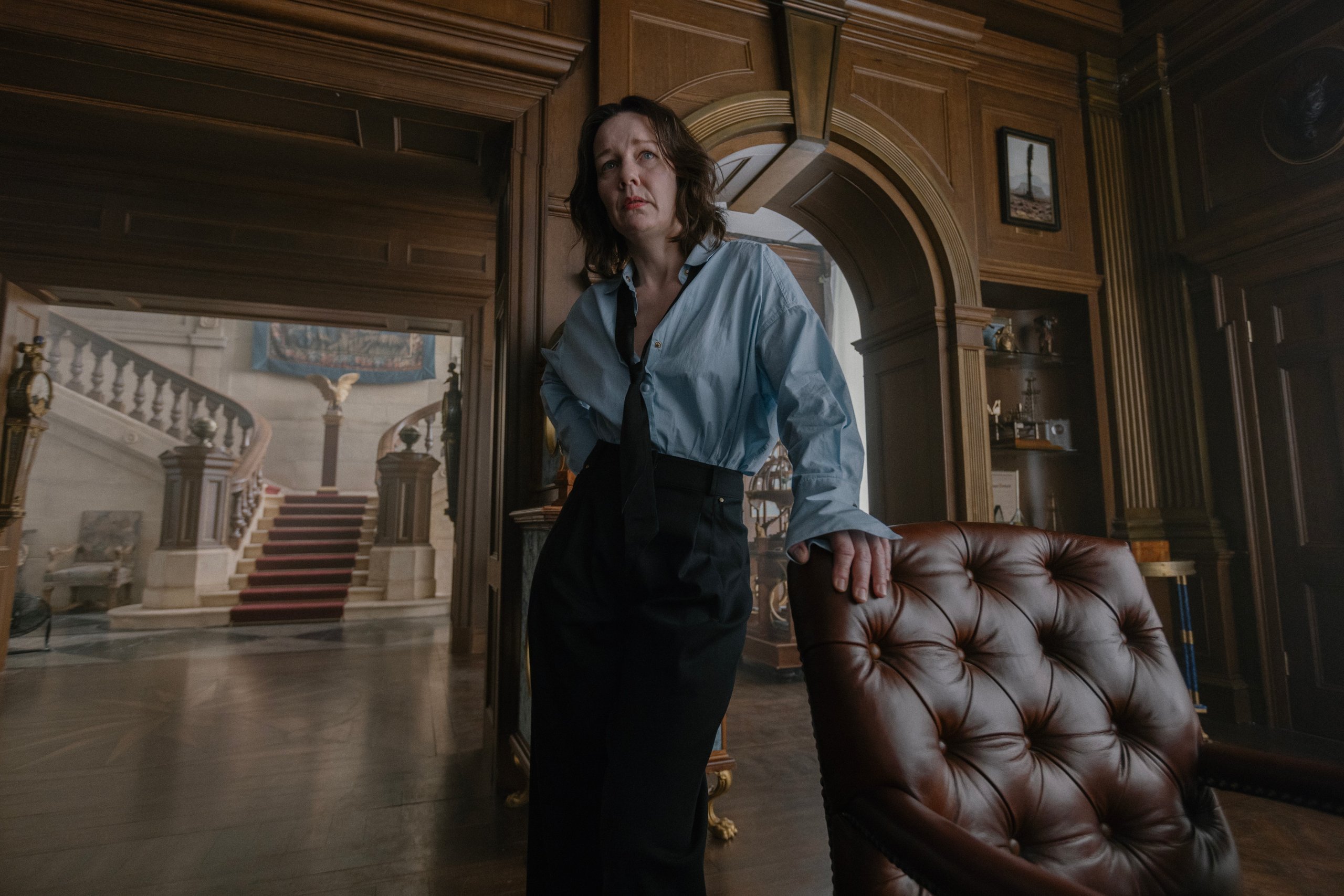
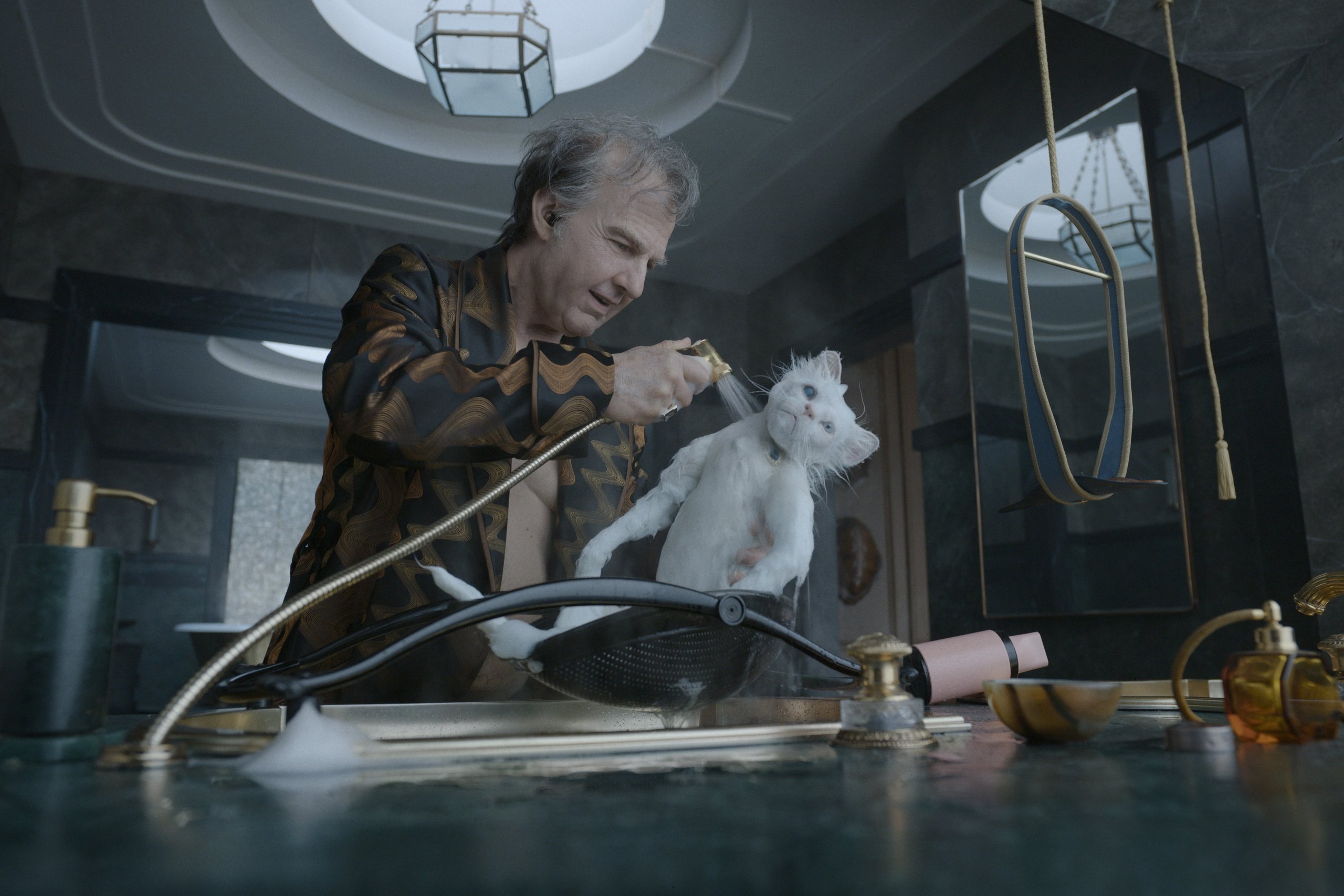
Digger’s sickly feline, Maggie, a possible victim of environmental poisoning, spends her final days in the lap of luxury—with an elaborate shower station and a palatial kitty bed. She’s also surrounded by the red motif: gold-and-ruby damask wallpaper lines the walls of the study, decorated with plush burgundy leather chairs. A scarlet runner rug spills down the center of a grand divided staircase that frames a bellicose gold eagle statue, with wings aggressively spread.
“Texas to the max,” says the film's other production designer Richard Johnson, also referring to the copious taxidermy throughout Digger’s mansion. “The wood-paneled opulence was meant to reflect a very stately, proper home, but with a hunter's mind. Texans are very eccentric. If they’ve got the money, they go out and hunt every animal on planet Earth.”


"Digger."
Warner Bros. Pictures

"Digger."
Warner Bros. Pictures

"Digger."
Warner Bros. Pictures
Hence, predatory antlers populate the manse to a comedic degree—even ominously framing a full-length mirror. Endangered species are mounted atop the ceiling of Digger’s expansive walk-in closet, which also features a side room packed with firearms. “That's very intentional,” continues Johnson. “Very much to say, ‘This guy gets whatever he wants, whenever he wants it.’”
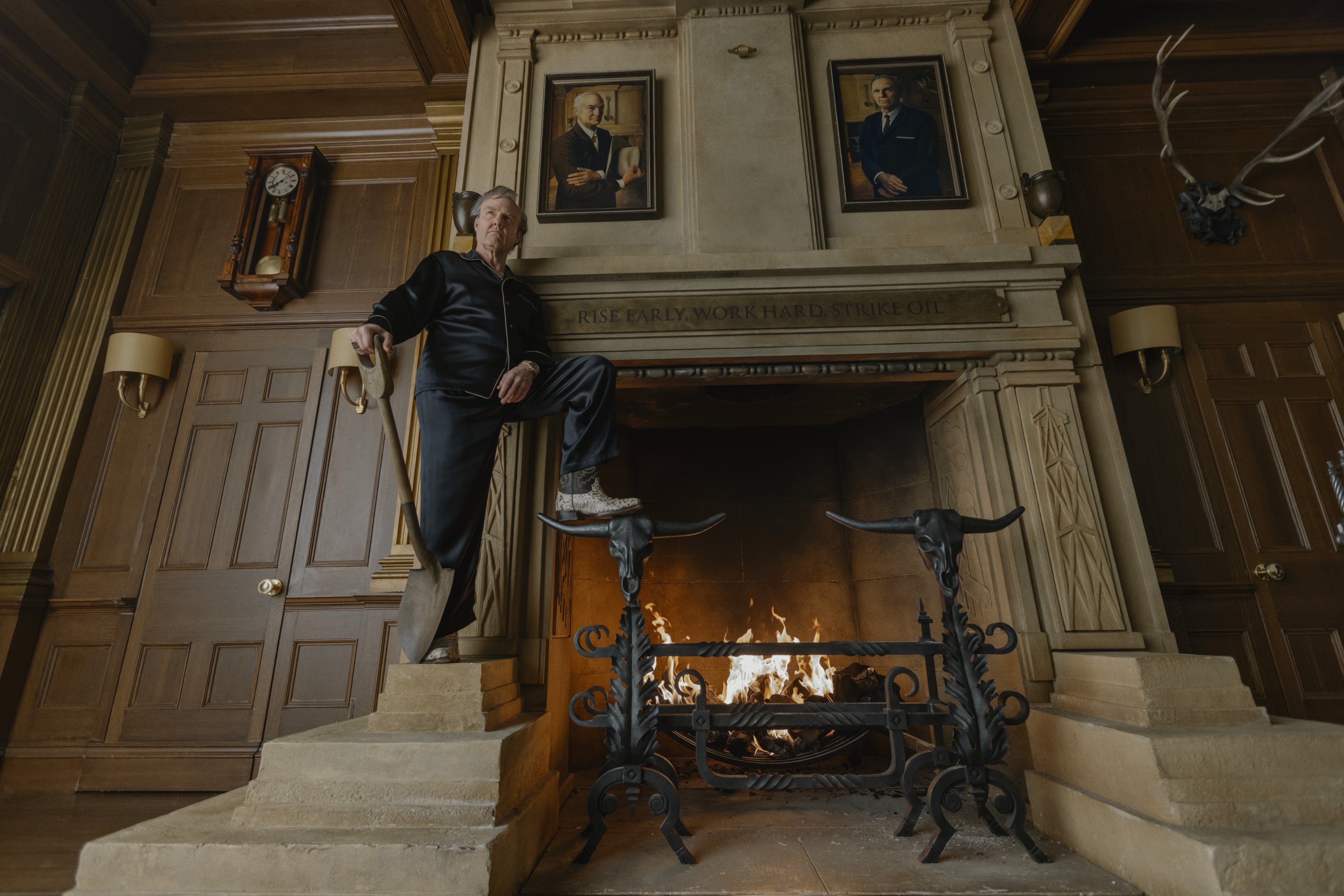
Custom-built longhorn antlers and two iron bull heads also accent the neoclassical carved-marble fireplace, which becomes a centerpiece for one of Digger’s bombastic polemics. He zealously climbs up the multi-step base to yank a shovel—displayed between two patriarchal portraits—off the wall. He then places one cowboy-booted foot atop a bull head in triumph. “That's a narcissistic prop,” says Johnson, referring to the on-the-nose shovel as a “MacGuffin” or plot device revealing more of Digger’s messianic nature.
Johnson and Gassner—longtime colleagues who’ve collaborated on more than 10 films, starting with 1998’s “The Truman Show”—explain that the paintings of Digger’s ancestors were redone “multiple times,” by set decorator Anna Pinnock to fulfill Iñárritu's vision. Fine-tuning technical aspects of the monster fireplace, integral to Cruise’s choreography and physical comedy, also proved an endeavor. “It did take a little while to figure out,” says Johnson, explaining they engineered a wooden tab onto the wall—to be removed in post—for Cruise to discreetly anchor himself as he reached with the other arm to vigorously extract the shovel.

Tom Cruise in "Digger".
Warner Bros. Pictures
“We rehearsed on mock-ups many times with Tom, and he was fine with it… and then we got to shooting it,” continues Johnson, explaining that Cruise had trouble reaching the shovel in the climactic moment of the meticulous choreography. “The one, two, three steps up—boom!—grab.” Gassner, chiming in, without missing a beat, “It was a very specific cadence.” (Note to Seth Rogen: Please cast these two to play themselves on “The Studio.”) “They demanded it be that, and it had to work that way. I know we changed the little clip that held the shovel four or five times. One was too tight, one wasn't tight enough.”
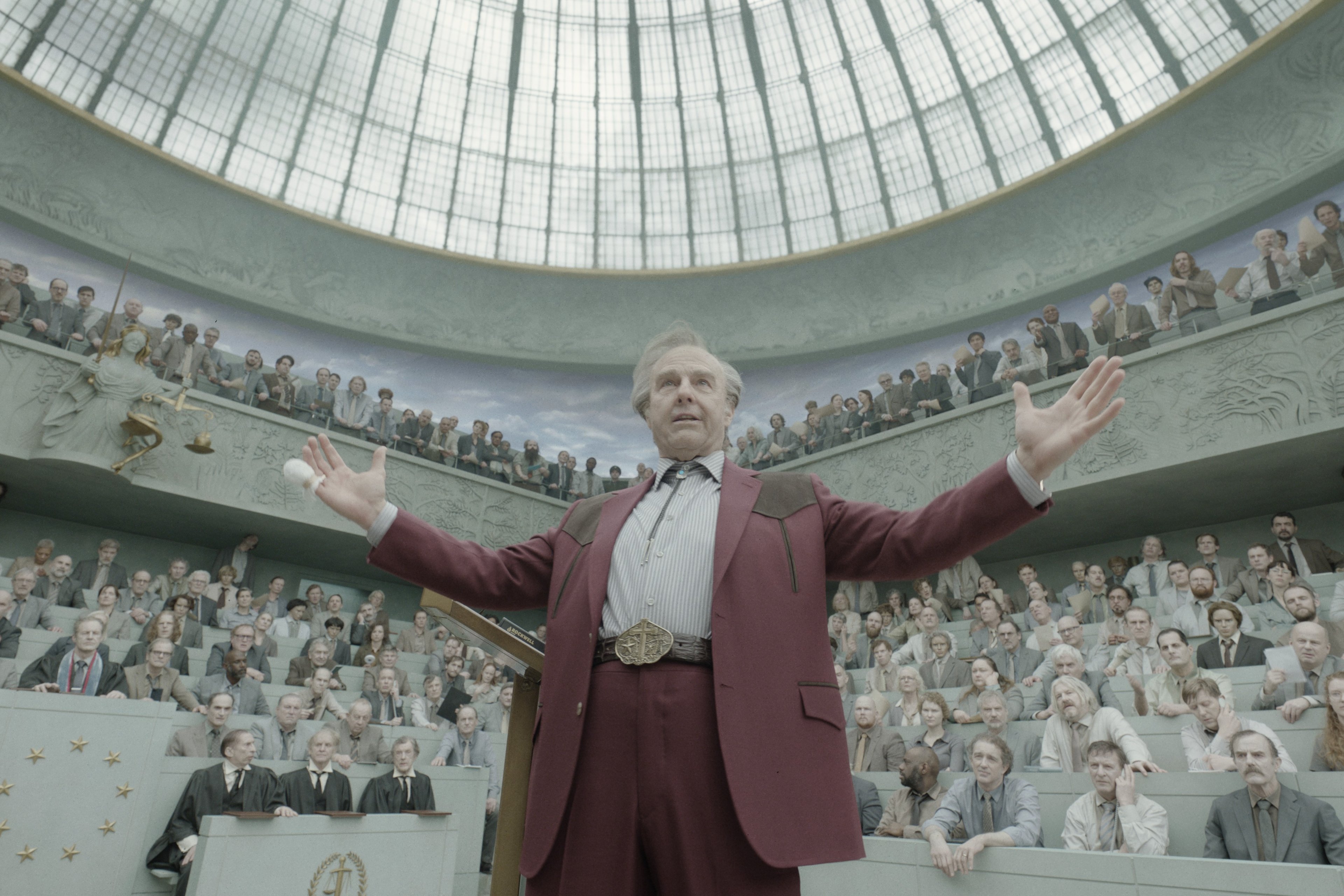
Later, Digger—in a Western suit evoking the color of dried blood, by costume designer Jacqueline West—confronts European dignitaries from the central stage of a tiered amphitheater. A gold-detailed, blindfolded Lady Justice statue hovers above Digger and the fray. “We did the Lady Justice, like four times to get the right tone,” says Johnson, crediting the “very busy” sculpture department.
Like the midcentury-inspired waiting room with a foreboding snow-covered Matterhorn fresco, the theater set takes inspiration from Eastern European Brutalist architecture in the Cold War era. The production design team needed to land on a precise concrete hue for the domed theater, populated with an audience in similarly austere neutrals. “In the end, that kind of greenish tone is basically five, six, seven—maybe eight—layers of paint,” says Johnson.
Digger unleashes another hypocritical tirade—this time refusing accountability for the devastating natural disaster and turning blame back onto the people, while spinning around the room on a rotating dais. After rehearsing the 10-minute single-take sequence in Brutalist-gray spaces, Iñárritu and his team decided that the stark amphitheater needed a punch-up.

"Digger"
Warner Bros. Pictures

"Digger"
Warner Bros. Pictures
"Digger"
Warner Bros. Pictures
"Digger"
Warner Bros. Pictures
“‘We need some irony in here,’” says Johnson, recalling the directive. “So, the bas-relief on the face of the balcony is all about the natural world growing and prospering, when in fact people are raging mad because the natural world is hell for them now.” Notably, the blindfolded Lady Justice signals impartiality, a principle Digger and his compatriots are definitely not upholding.
Along with the wink-wink symbolism, the sets offer clever clues to the big meta reveal: the Digger sets are actually scenes from a theater production supposedly sending up the anniversary of the global disaster. For instance, when Dr. Ganesh (Riz Ahmed) walks into Digger’s study, he enters from a corridor seemingly leading nowhere. (Of course, there’s also mechanical cat Maggie’s head almost detaching from her body…)
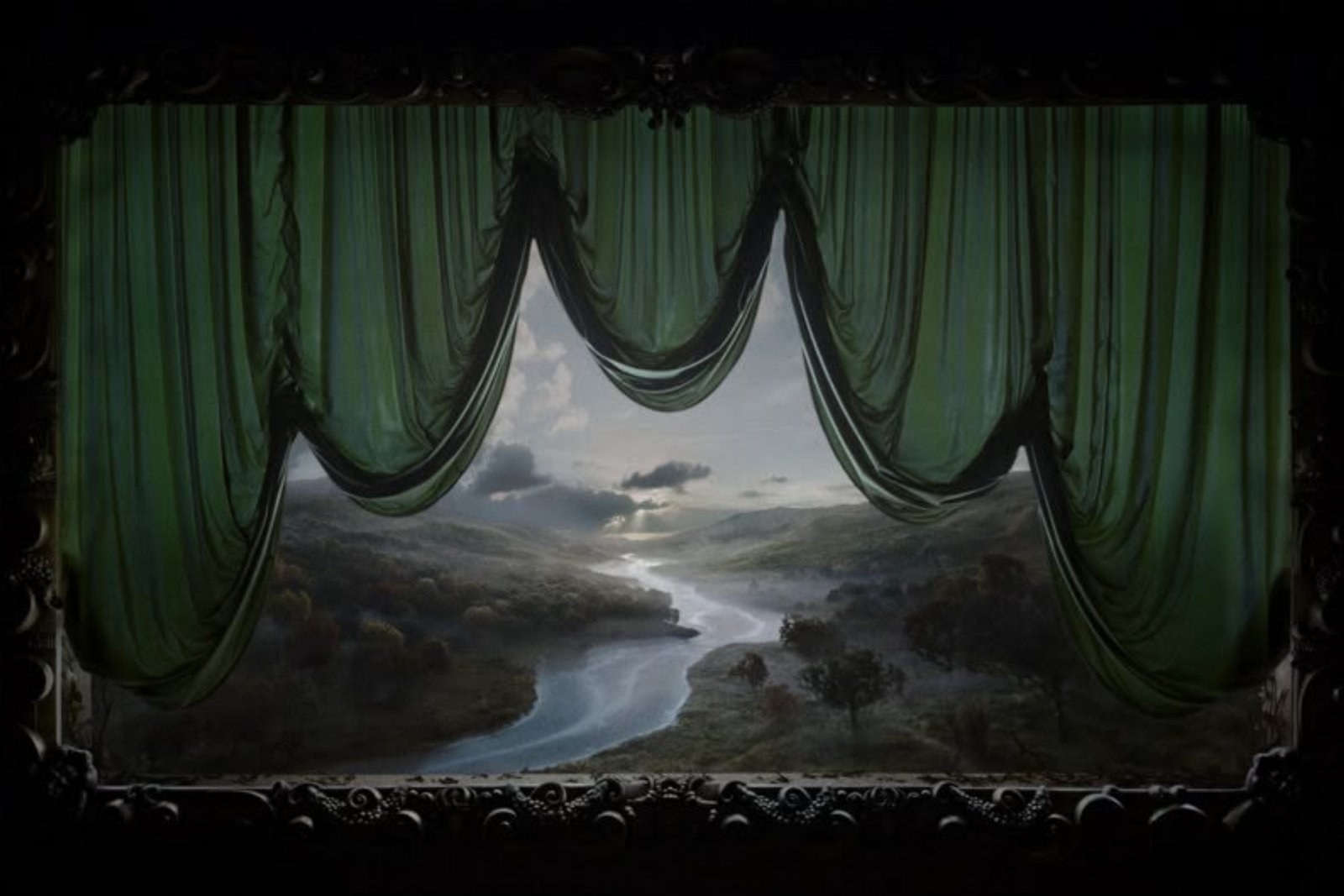
“Well, [the movie] starts with a theatrical curtain opening,” says Johnson of the clues that point to the big twist. “The window frame in the bedroom is the proscenium [a picture-frame-like arch framing the stage] in the theater at the end of the movie. It's all the same pattern.” In the final scenes, the curtain falls on the theater play, cheekily named “Fossil Fools.” Theatergoers assess the toxicity in the air before donning protective masks to venture out into a submerged urban dystopia, inspired by New York City.
“When [the camera] pulls back, the curtain goes up, and the frame goes out, and then you meet Tom in the bedroom,” says Johnson, succinctly summarizing the team’s outrageously complex undertaking. “That's the whole movie right there, and then we just manifested it into the other sets.”