
How The ‘Wild Horse Nine’ Production Designer Transported Easter Island Back to 1973
Interiors
Production designer Denis Schnegg talks through how he built John Malkovich and Sam Rockwell’s colorful hotel rooms and shipped in vintage cars for Martin McDonagh’s latest dark comedy caper.
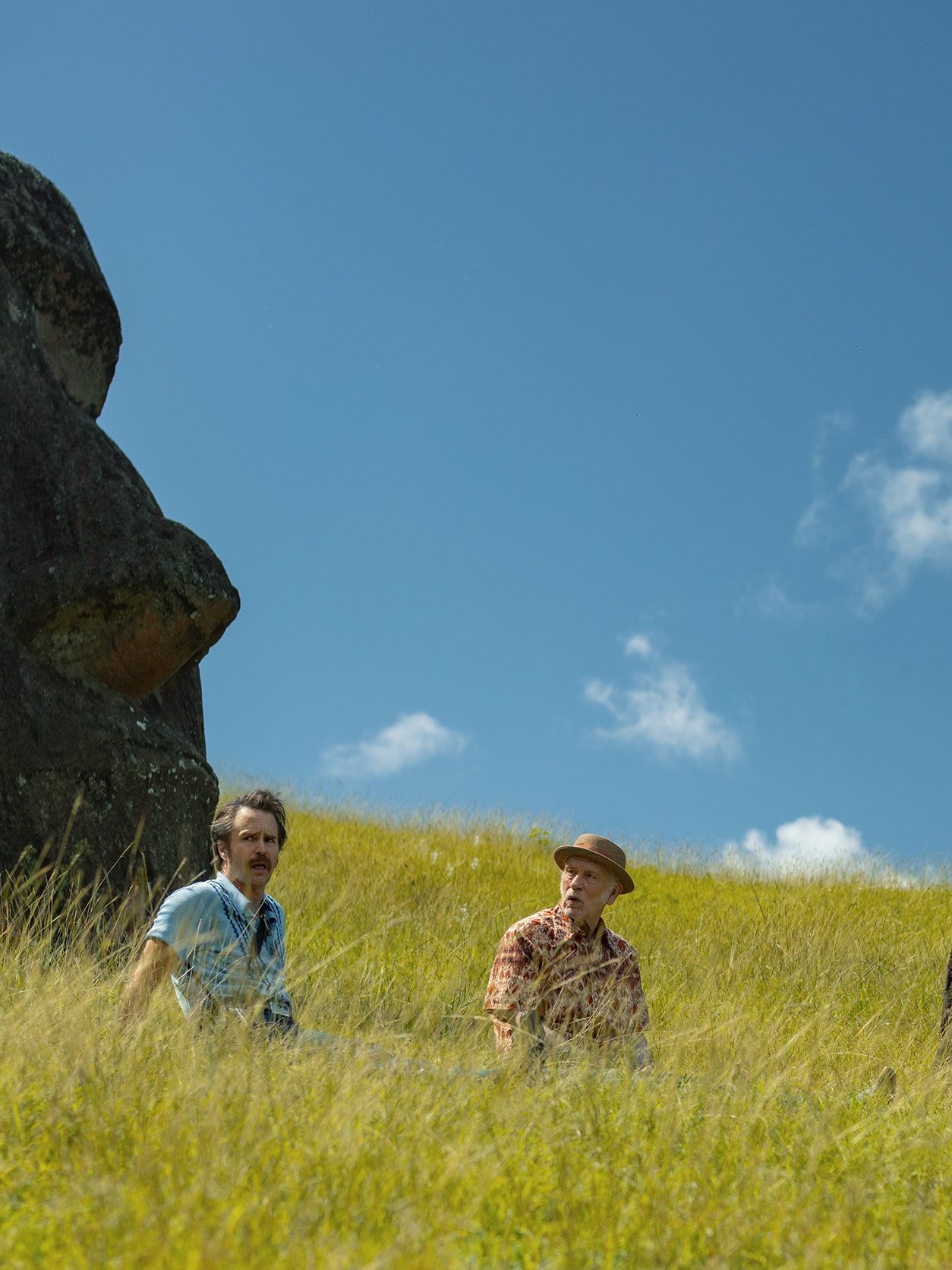
In 1973, on the eve of the CIA-supported coup to overthrow the democratically elected Socialist president of Chile, Lee (Sam Rockwell) accompanies fellow veteran spy Chris (John Malkovich) on a trip to Rapa Nui—or Easter Island, as colonial-era Dutch explorer Jacob Roggeveen named it. Amid rising socio-political tension, the longtime friends bicker and banter as they leave their foreboding, gray-tinged offices of the Santiago station for the rolling green hills, saturated color palettes, and sacred landscape of the remote island.
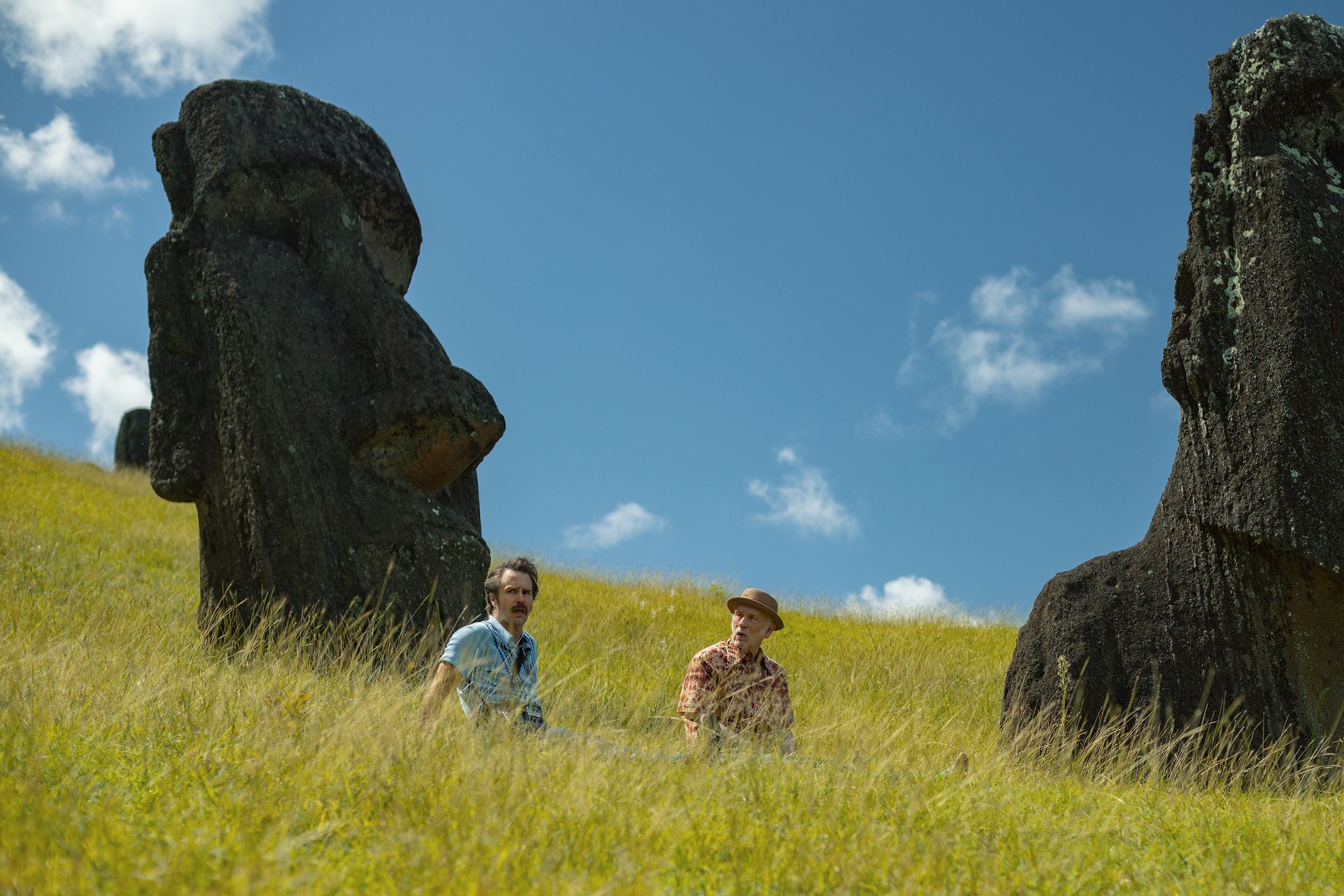
“It was an extraordinary experience to be granted access,” says “Wild Horse Nine” production designer Denis Schnegg. The Martin McDonagh film is only the second feature film, opens in new tab to shoot on the UNESCO World Heritage site, after Kevin Costner’s 1994 action-adventure “Rapa Nui.” (For the cinephiles keeping track, Pierre Kast also filmed, opens in new tab part of his 1972 sci-fi arthouse drama, “The Suns of Easter Island,” there.) The far-flung location—roughly 2,000 miles off the coast of Chile and a five-and-a-half-hour flight from Santiago—posed many challenges. “The island doesn't have a port. Everything has to either be airlifted or shipped in,” says Schnegg. Amazingly, he and his team prepped and built the hotel set in less than two months prior to the six-week shoot on Rapa Nui.

Sam Rockwell and John Malkovich in "Wild Horse Nine."
Searchlight Pictures

John Malkovich and Sam Rockwell in "Wild Horse Nine."
Searchlight Pictures
Sam Rockwell and John Malkovich in "Wild Horse Nine."
Searchlight Pictures
John Malkovich and Sam Rockwell in "Wild Horse Nine."
Searchlight Pictures
The island's terrain and rich culture of the island—celebrated for the moai, the nearly 1,000 colossal stone statues with imposing heads, carved by the Rapa Nui people—informed the production design. “We were responding to the colors, the materials, and the styles of what the island brings, and what Latin America brings,” he says. “The island is quite rich in folklore as well. There's a lot of symbology and imagery that you see everywhere.”
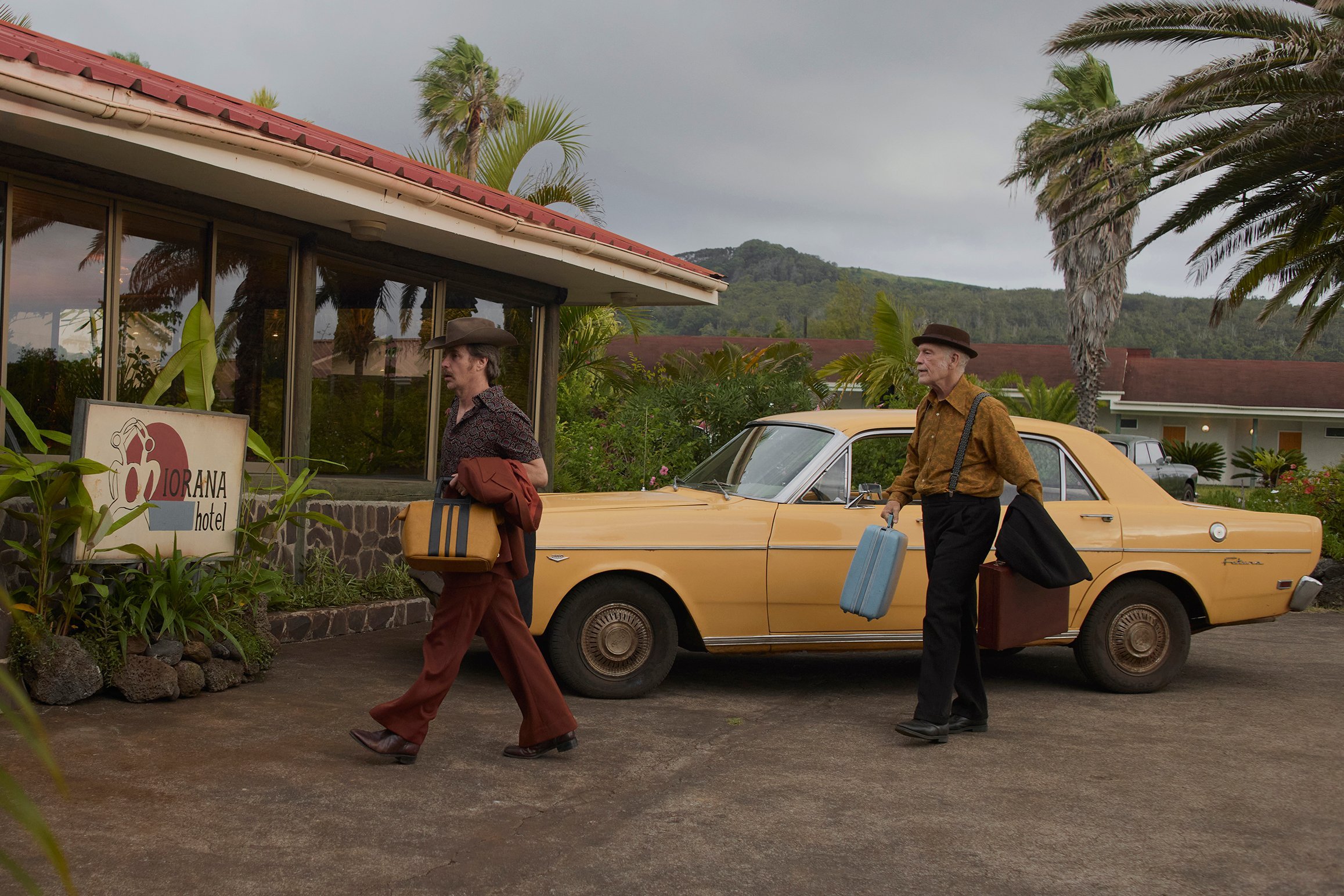
After both offending—and intriguing—two idealistic Chilean students, Monica (Mariana di Girolamo) and Alicia (Ailín Salas) before their flight, Lee and Chris check into their bungalow-style hotel surrounded by flourishing greenery and a stunning view of the cliffs overlooking the Pacific Ocean. To film on-site, Schnegg and his team happily discovered the red-roofed hotel on the sleepier outskirts of the main town, Hanga Roa, as tourism was in its infancy stages on Rapa Nui in 1973. “It’s a family-run place and virtually untouched since the ’80s,” says Schnegg.
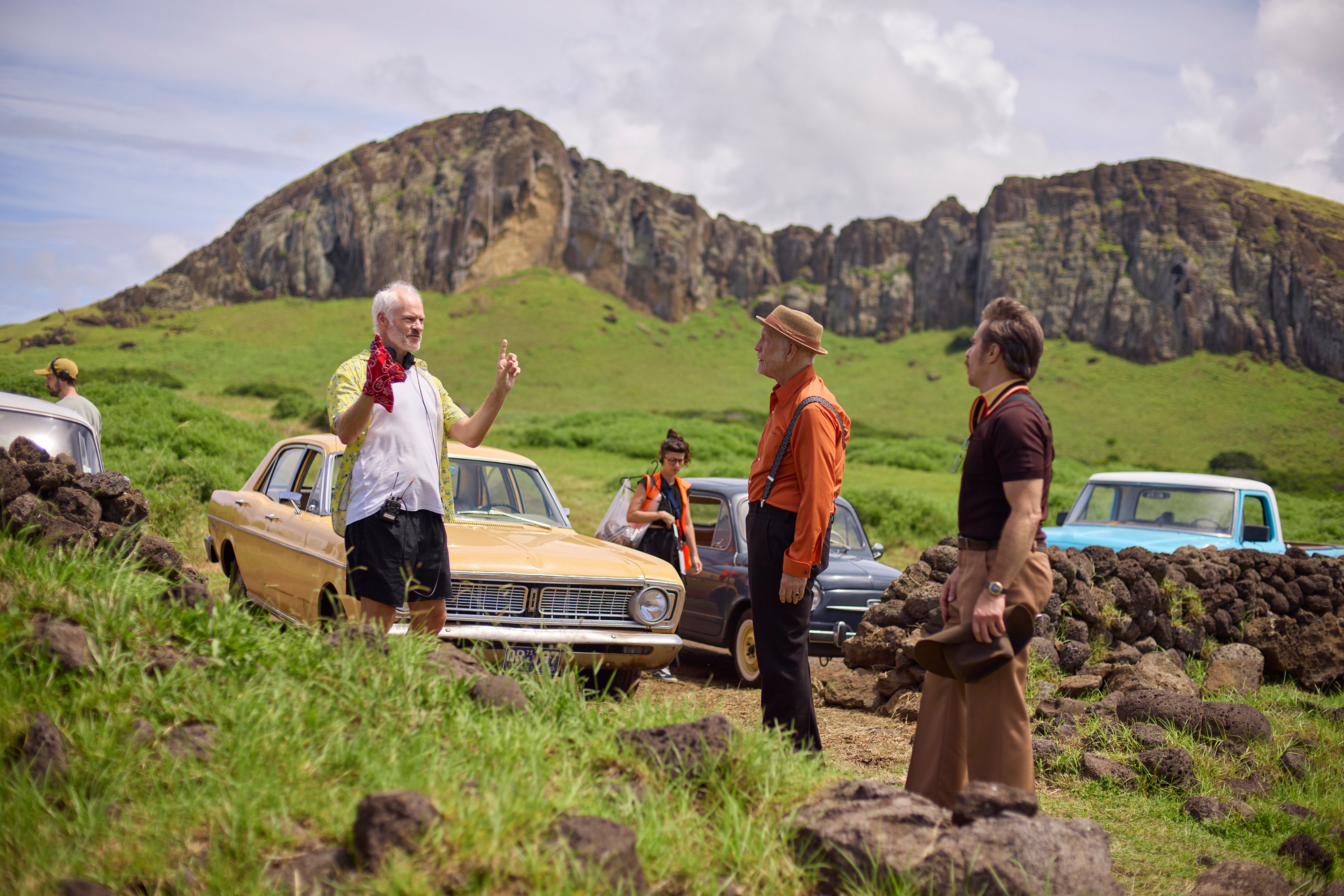

Martin McDonagh, John Malkovich, and Sam Rockwell filming on Easter Island for "Wild Horse Nine."
Searchlight Pictures
Still squabbling after Chris mischievously announces the CIA’s agenda to provoke Monica and Alicia, as well as an easily riled-up Lee, the two head into their separate, but adjacent rooms behind bold-hued doors. “They don't have boundaries. They don't have a filter. They're so familiar with each other,” says Schnegg. “Even though they're bickering all the time, there is a deep bond there, and they just use the doors in between as if it’s one space that they're sharing.”
Schegg completely built the interiors of Chris and Lee’s rooms based on the architecture, décor, and “language” of the existing hotel. He also referenced family photo albums and imagery from members of the Rapa Nui community, who generously contributed to the production—even lending décor. “[We would ask,] ‘We could really do with an old armchair or a desk or a lamp…does anybody have a radio?’” he recalls.
The design of the rooms also conveys each of Chris and Lee’s distinctively strong personalities and secrets kept from each other, as the two reflect on aging, the fragility of life, and the far-reaching consequences of their professional pursuits. The slow-burn reveal of why Chris asked Lee to Rapa Nui also comes to light. “We took a lot of the cues from what this hotel gave us, then added a bit more color and texture,” says Schnegg, pointing to the “rich, turquoise-y teal” walls of Lee’s room. “It's like the ocean. It has that depth and that slightly melancholic sense. It’s not the happiest color.”
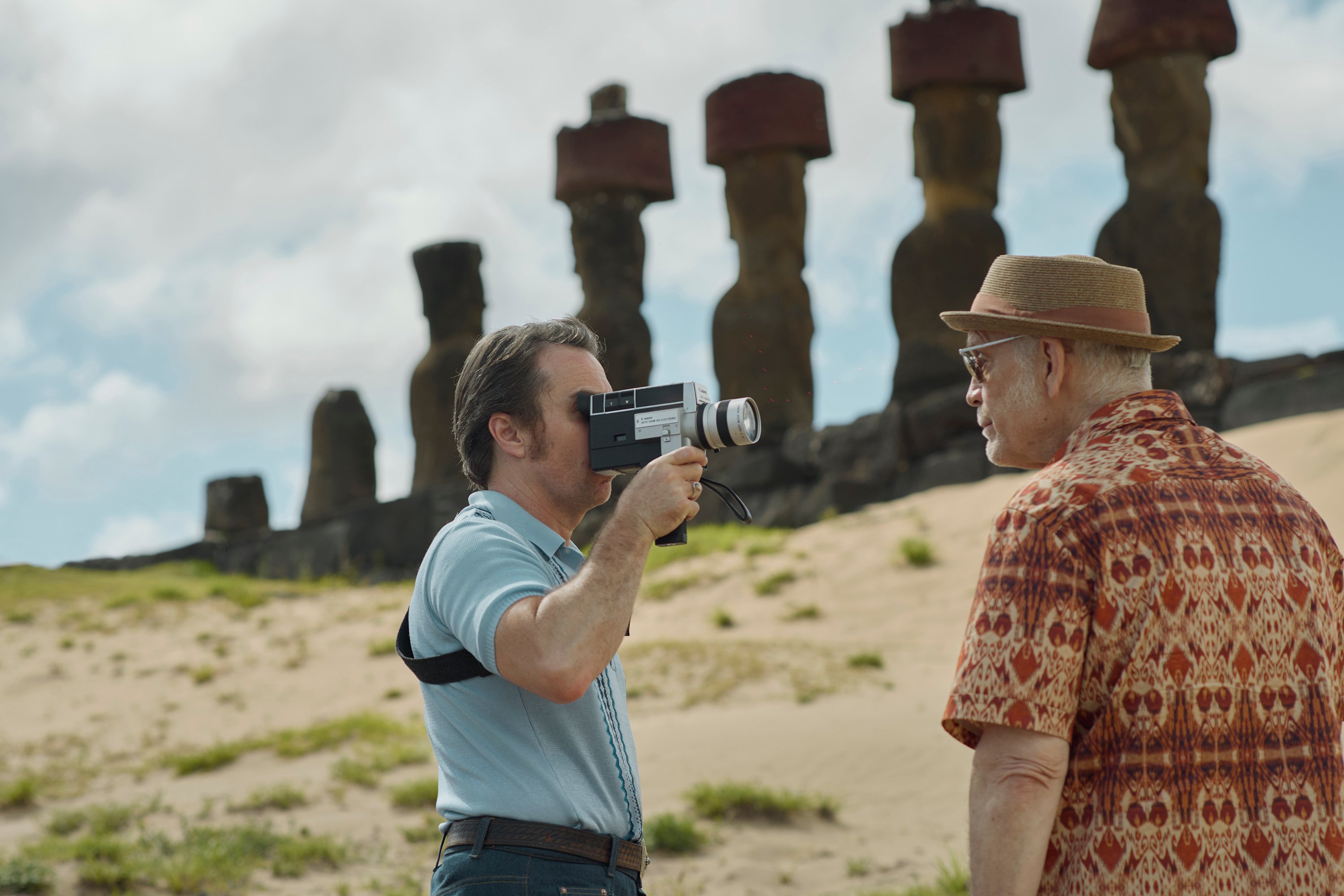

Sam Rockwell and John Malkovich in "Wild Horse Nine."
Searchlight Pictures
In his room, a ruminative Chris reclines on a blue floral-print window seat and gazes out the window framed by gauzy yellow-and-turquoise plaid drapes. “His space was a bit more secluded, with slightly more personal space,” says Schnegg. “The art, the curtain materials, the color of the sofa, and even the light changes [between the rooms].”
Meanwhile, Lee frenetically paces around his corner room, enhanced with marigold and burnt orange accents, an oceanscape watercolor and bird painting, and dark wood paneling. “Lee is constantly negotiating between different people, feeding stories, staying in touch, getting instructions, checking in and being checked on. So he's got a bit more space. He moves around a lot,” says Schnegg, also referring to Lee’s expansive window that gives him views of the beautiful scenery—and Chris’ comings and goings. “He's constantly scanning, checking, and doing, so he's got more of a panoramic relationship with the outside world. Whereas Chris is slightly more melancholic and self-reflective.”
Lee also likes to slam down his room’s rotary-dial phone after negotiating with their Santiago-stationed boss MJ (Steve Buscemi) or placating his wife Marge (Parker Posey), day-drinking in their midcentury house in New Mexico. “Lee's phone—this striking red—that was a very specific decision,” says Schnegg. “It’s got to be the phone that your eye gets drawn to. It's such a key component in who he is and how he operates.”

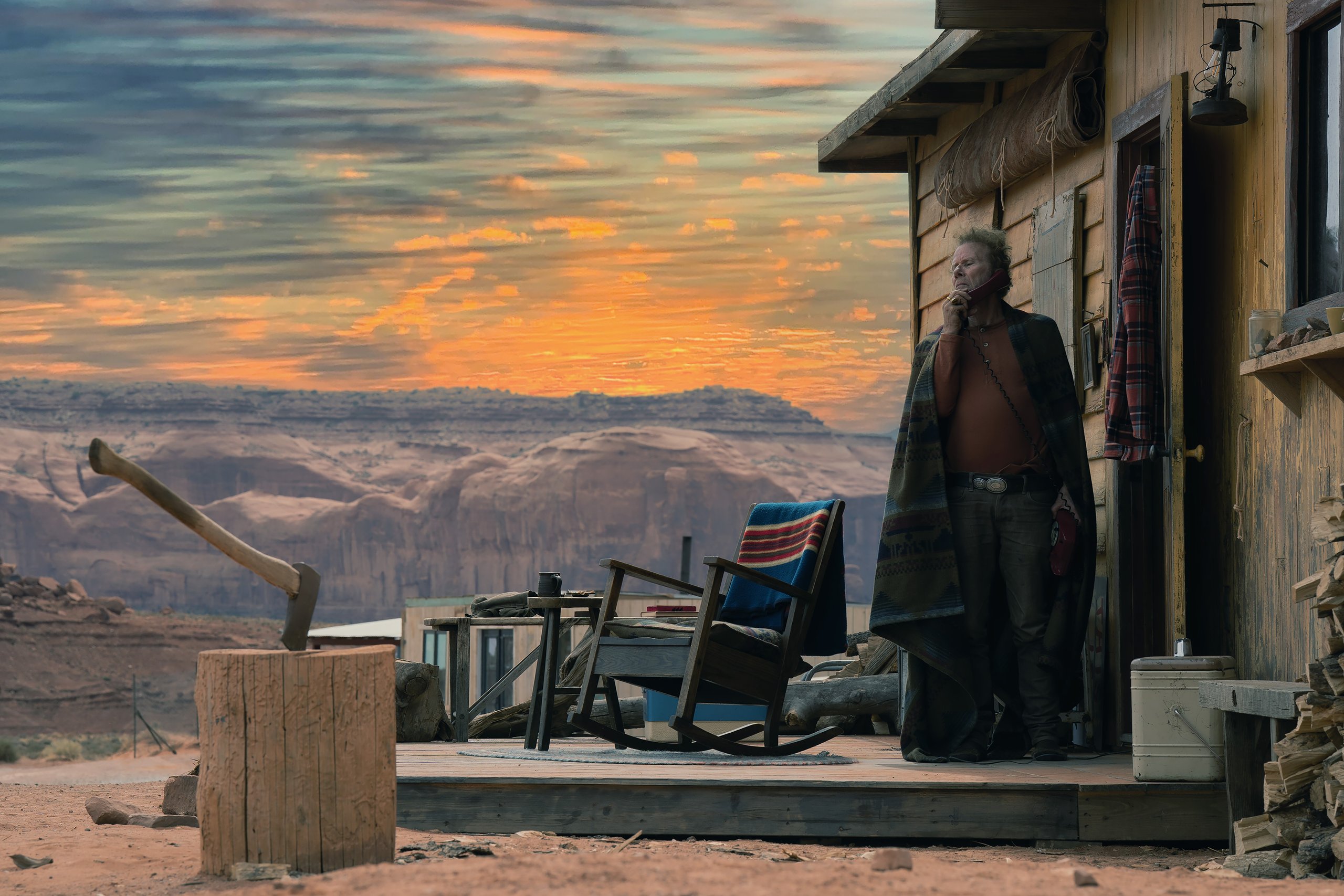

Tom Waits in "Wild Horse Nine."
Searchlight Pictures
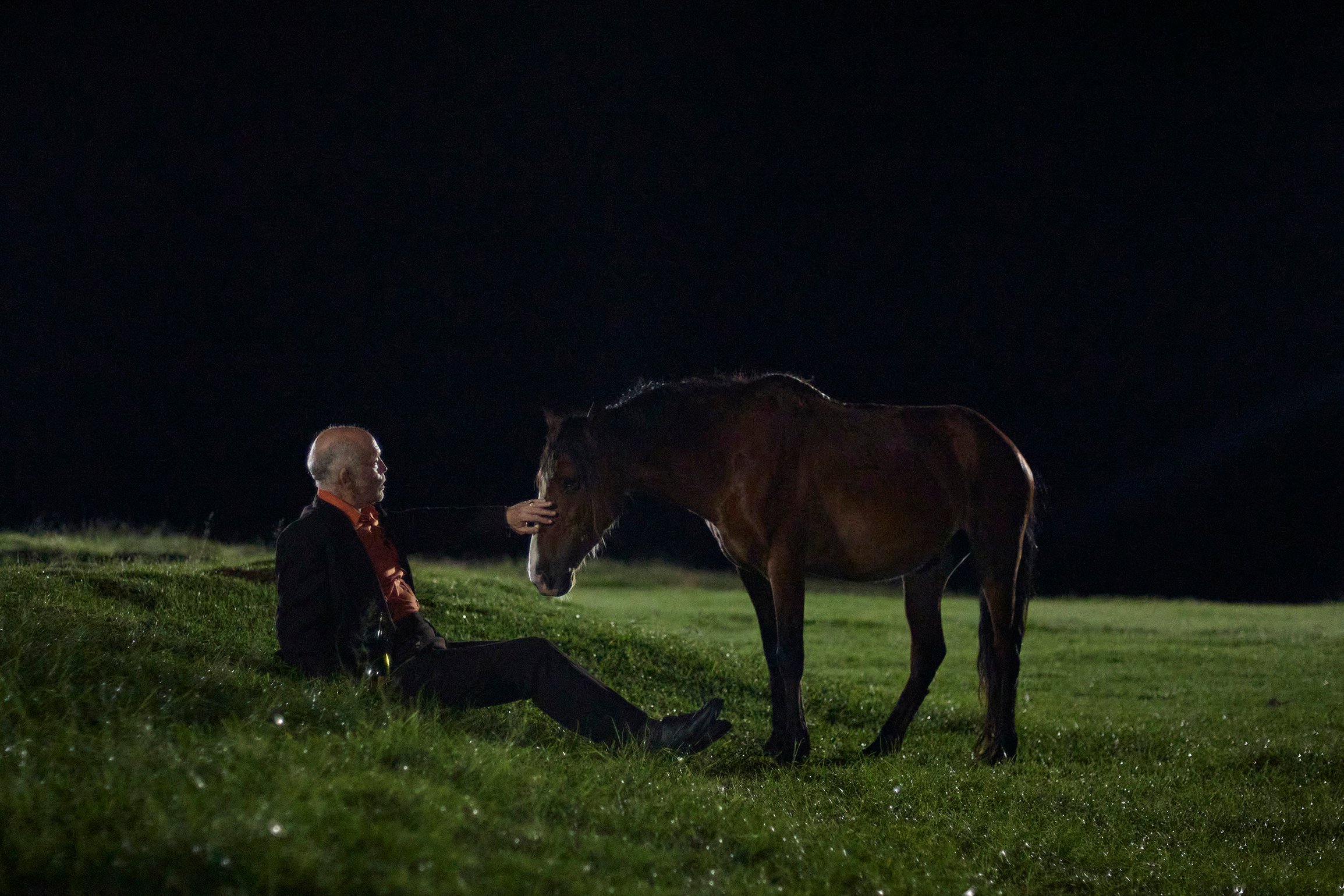

John Malkovich in "Wild Horse Nine."
Searchlight Pictures
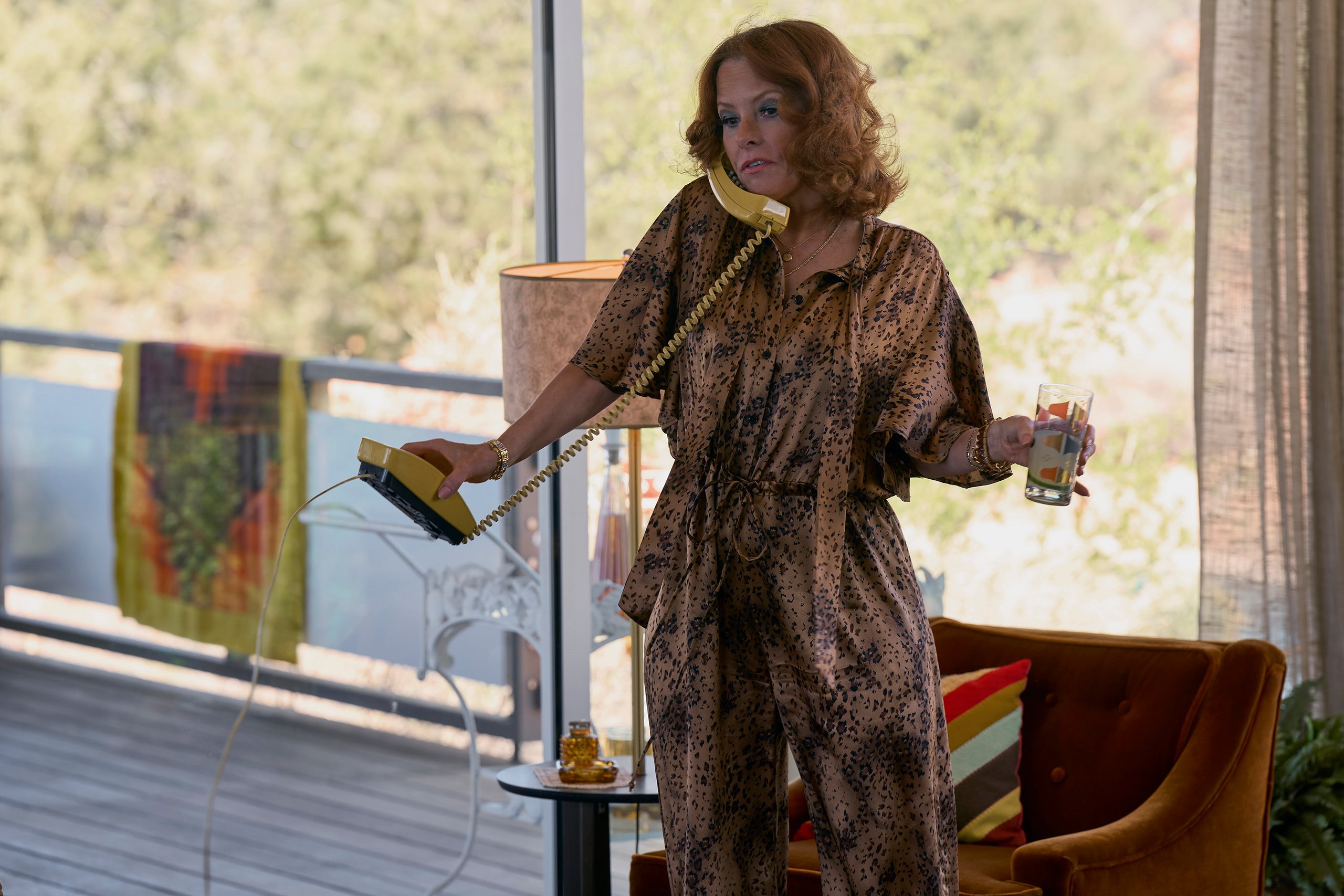
While set in New Mexico, Marge’s scenes were filmed at a contemporary house in Monument Valley, Utah, on the Navajo Nation, where Schnegg also built Chris’ brother’s (Tom Waits) abode. Schnegg explains that the production heavily researched and respected the history and culture of the land, while finding a location that could accommodate a film crew and provide visual cues to Lee’s personal life. “Who is this family? What's their relationship like? Where do they live? How much money do they have?” asks Schnegg. As Marge—in a fabulous leopard-print jumpsuit, by costume designer Eimer Ní Mhaoldomhnaigh—peppers Lee with questions, her living room offers a wealth of clues: a stocked bar cart, a hi-fi stereo system ready for entertaining, bold diagonal-striped throw pillows on a plush couch, and a damp yellow graphic-print beach towel drying on the wraparound balcony.
“The state of the house and the slightly over-the-top joy and irony of what their space looks like [offers clues],” says Schnegg, also crediting the Utah-based set decorator Monet deVilliers. “If you have Parker Posey as the person you're decorating for, immediately you know you can just go to town. She's never going to be subdued and boring, is she?”

Steve Buscemi and Sam Rockwell in "Wild Horse Nine."
Searchlight Pictures
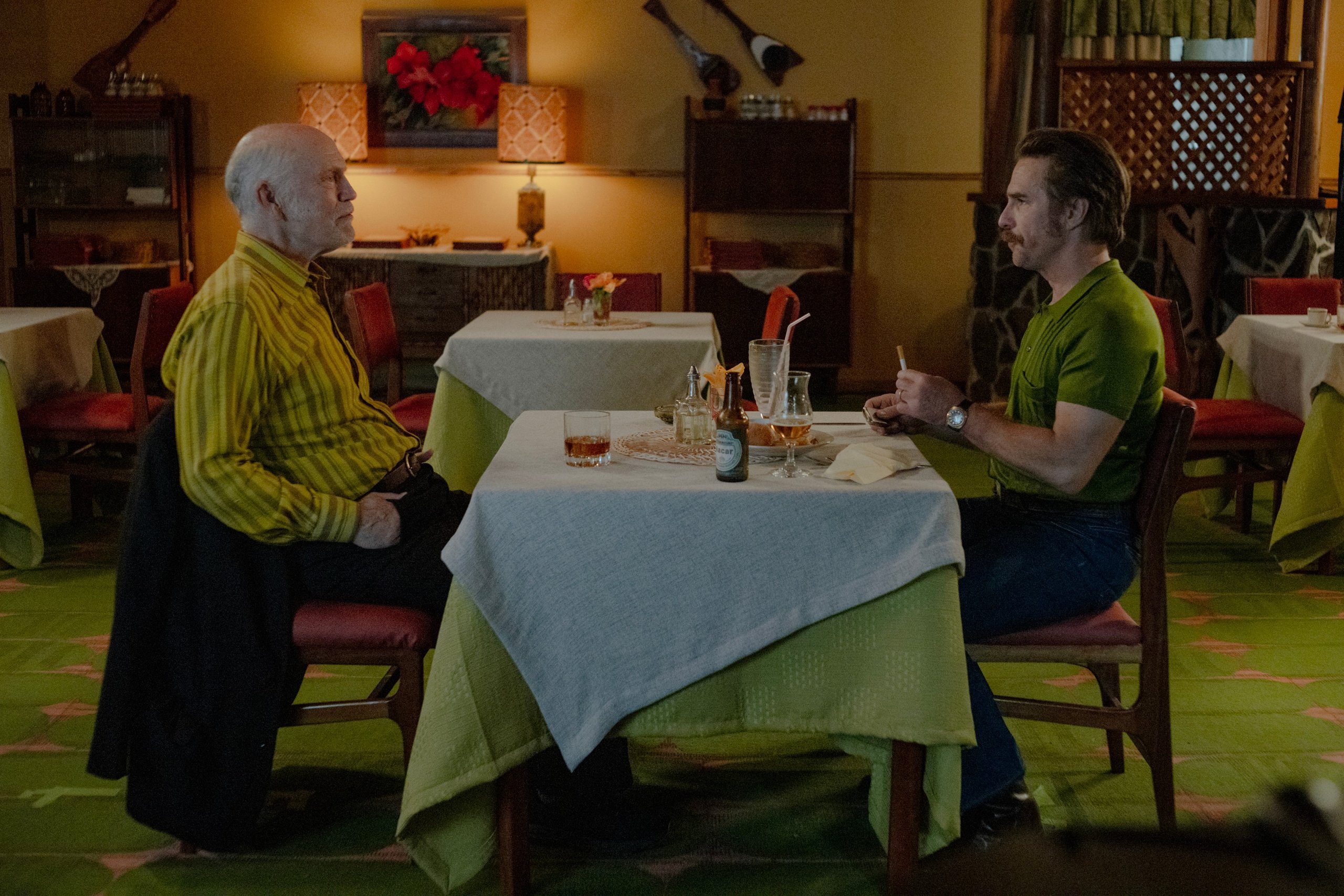
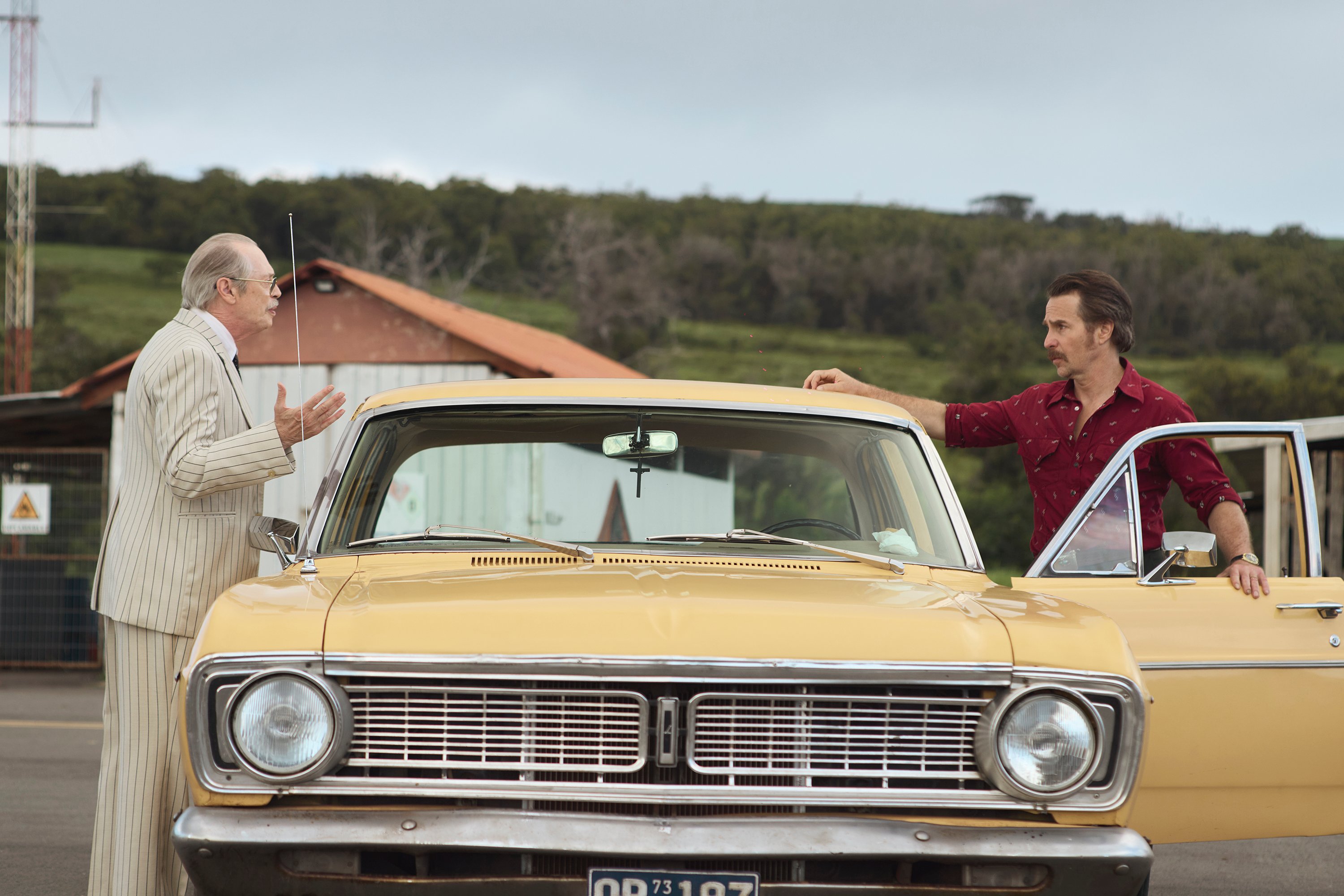
Back on Rapa Nui, along with building out the hotel’s chartreuse dining room and custom-printing and shipping a matching carpet over from Santiago, Schnegg and his team were also responsible for wrangling the circa-1973 cars—involving quite a few more challenges. The cars needed to be internationally made and commonly found in Latin America at the time, and the production required doubles of the two hero cars, plus 10 additional vintage vehicles.
The exact shades of yellow for Chris and Lee’s 1969 Ford Falcon Futura and red for a 1970 Fiat 125 also needed to harmonize with the saturated color theme on Rapa Nui. “We remade the interiors completely, so they matched the color palette,” says Schnegg. “Everything was chosen and completely fabricated in Chile: the interiors, the seat covers, the armrests. The internal and external ceilings.” Shipping the cars over also proved a monumental endeavor. “All the vehicles had to be prepared months in advance, shipped out into the ocean near the island, and then be craned from the boat onto smaller barges,” adds Schnegg.
But watching the cars speed through the winding dirt roads and verdant hills, with wild horses appearing out of nowhere, feels especially thrilling—adding to the building tension of Chris and Lee’s visit to the island.“It was a real joy and a real eye-opening experience all around for everybody. It was a daunting thing to start with because you're just not sure what you're getting yourself into, but at the same time, it's such an extraordinary opportunity,” says Schnegg. “Of course, we were all up for it.”