A Tale of Two Bedrooms In Domestic Drama ‘Fjord’
Interiors

Interiors
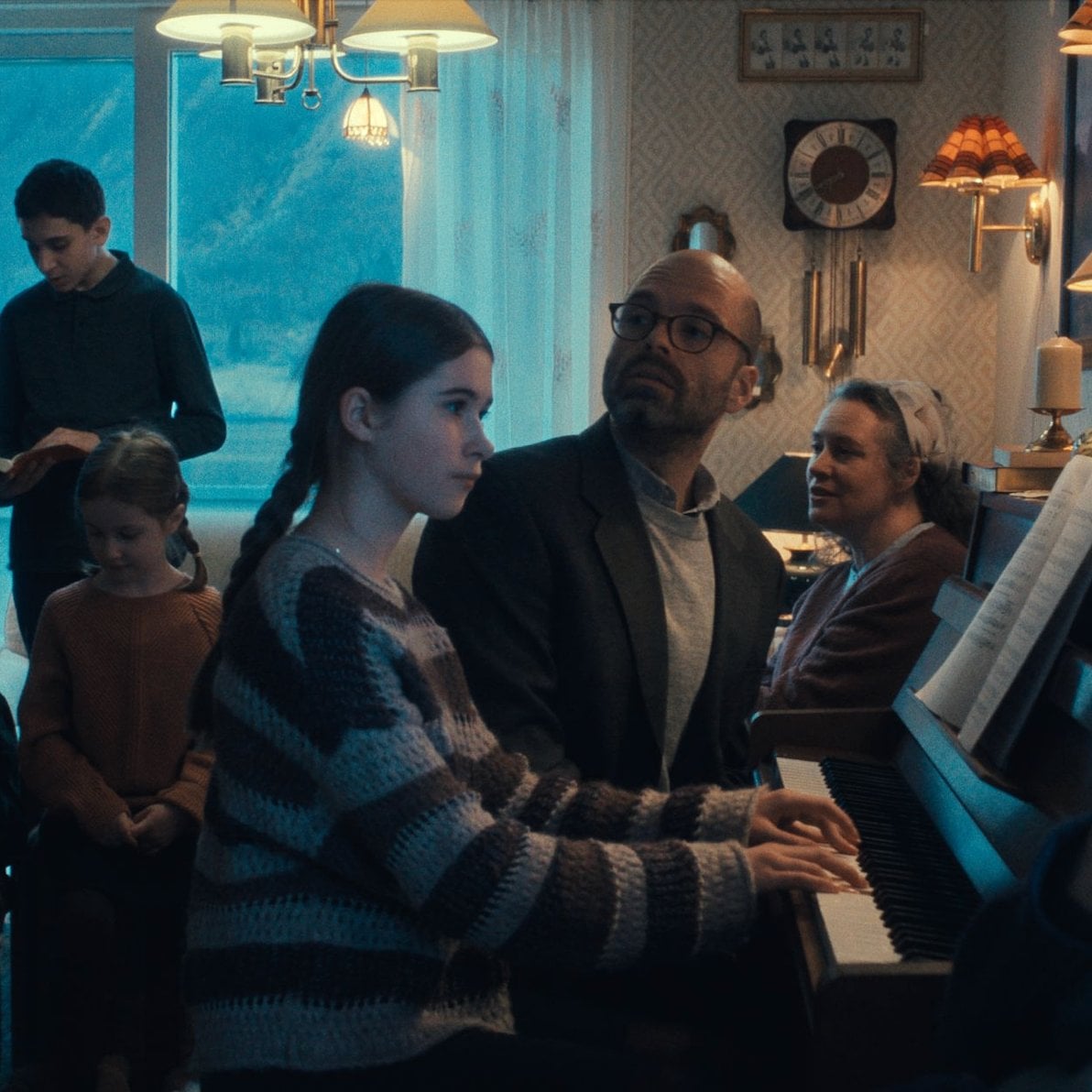
In “Fjord,” the outdated interior design of an evangelist family home brushes up against the modernity of their Scandinavian neighbors, as skillfully decorated by production designer Marius Winje Brustad.
Loosely based on a real child protection case, “Fjord” documents a conservative evangelist family’s move to Norway, and the subsequent abuse allegations that follows. The film begins with the Gheorghiu family arriving at their new seaside home with as much as they can fit in their car. The film’s central political and cultural tensions can be traced through the interior design of the family’s domestic sphere, as juxtaposed against their liberal, Scandinavian neighbor’s house next door. “The script is confusing because nobody is right; everybody has problems. Even though the façade is beautiful, nice, and calm, things behind are different,” production designer Marius Winje Brustad tells The Set Set, after serving as the film’s Scandinavian eyes and ears.
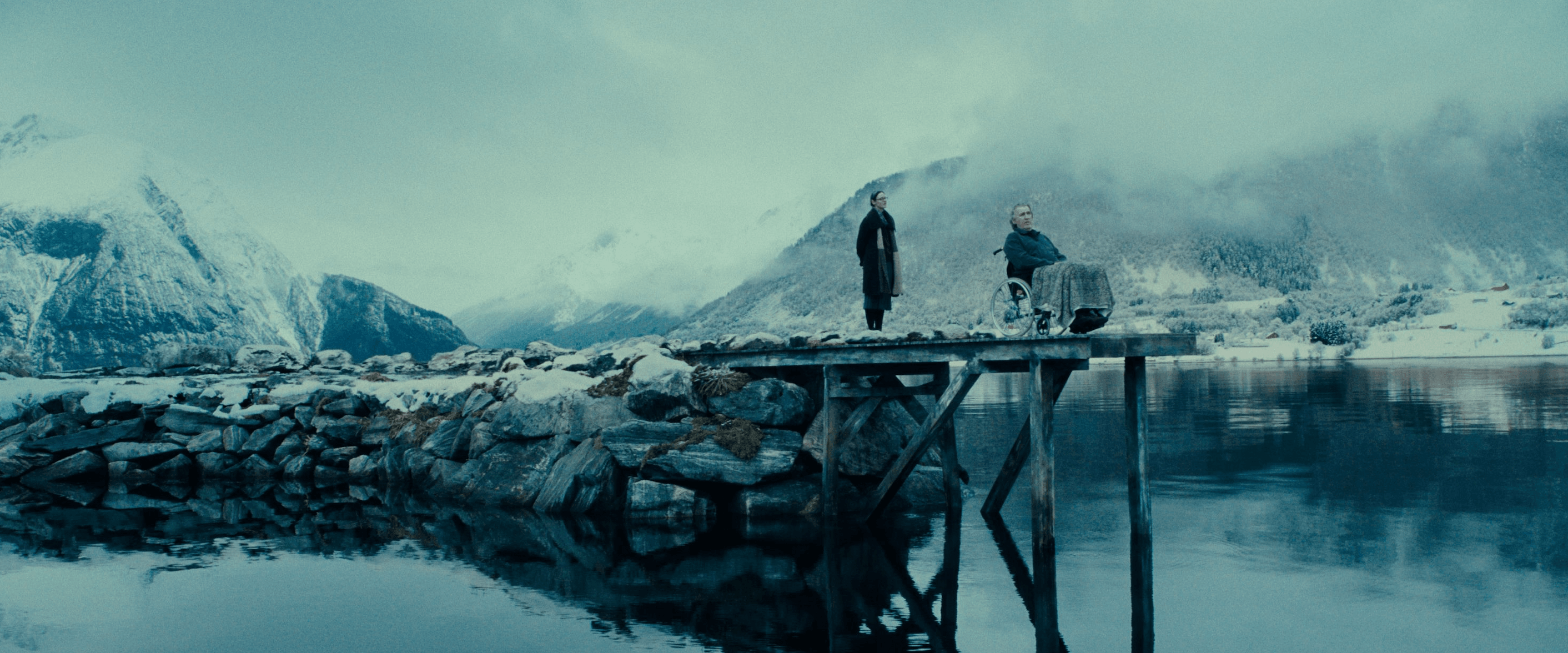

Renate Reinsve in "Fjord."
Neon
The film was shot in the Sunnmøre alps, a remote region of Norway’s west coast that happens to be the heart of furniture production. Going into the location scout, co-production designers Brustad and Simona Pădurețu knew that they wanted to create an aesthetic juxtaposition between the deeply religious Gheorghiu family and their run-of-the-mill, Scandinavian neighbors. According to Brustad, the families’ neighboring homes were the “darlings” of production: one, an old house from the early 1900s, and the other a new build from the ’70s or ’80s.
While Brustad did not step inside the Gheorghiu home until just before shooting, the building’s juxtaposed 1900s exterior provided him with a template to start “playing around with different contrasts” without entering the premises. Once Brustad got access to the inside of the older home, he discovered that it had been renovated and required intensive restructuring. “We did a lot of work on the first floor in the Gheorghiu house just to make it [look] more like an old house that nobody really lives in,” Brustad says. “We wanted it to look dated and create this warm and cosy atmosphere, like it's a big family.”
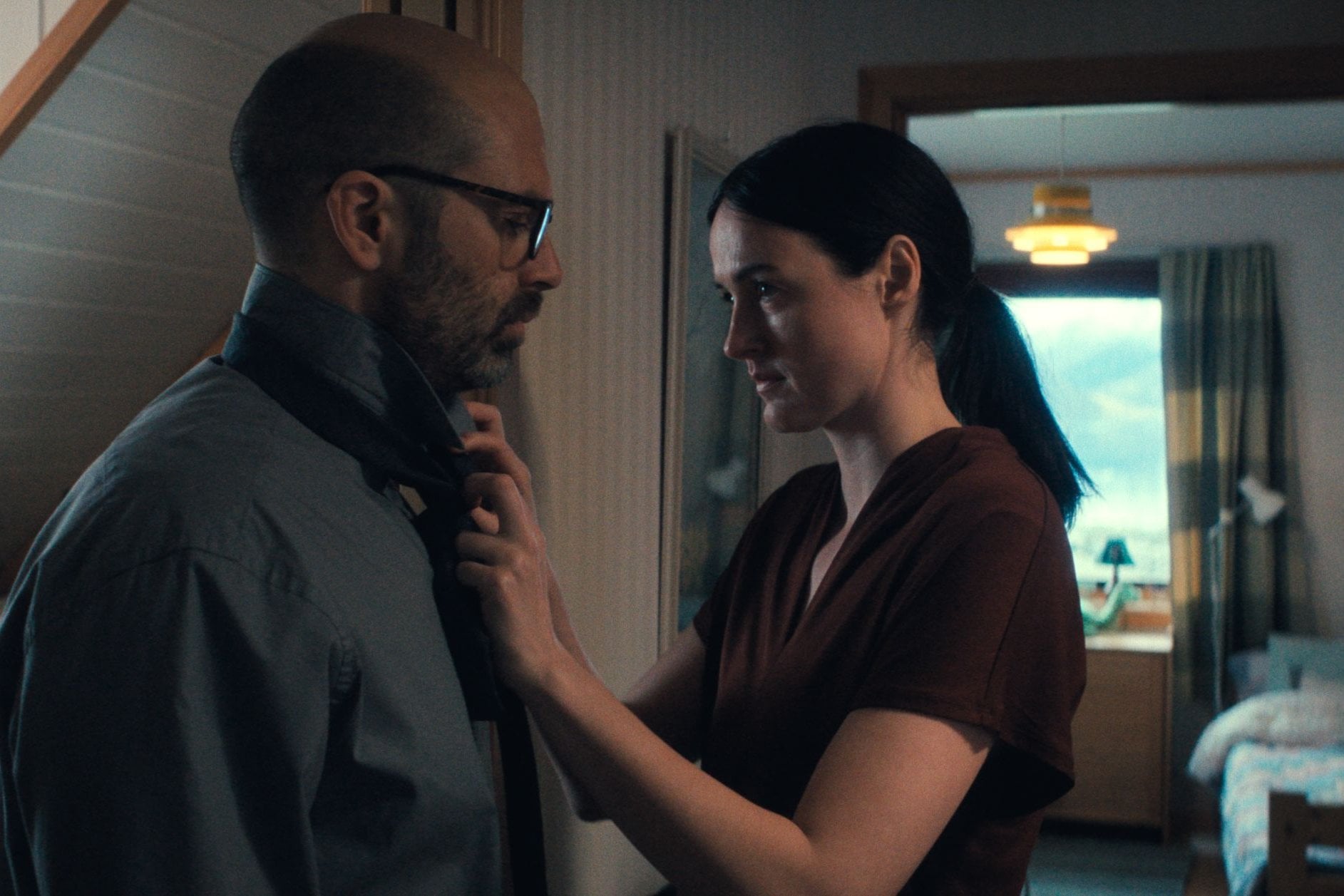

Sebastian Stan and Renate Reinsve in "Fjord."
Neon
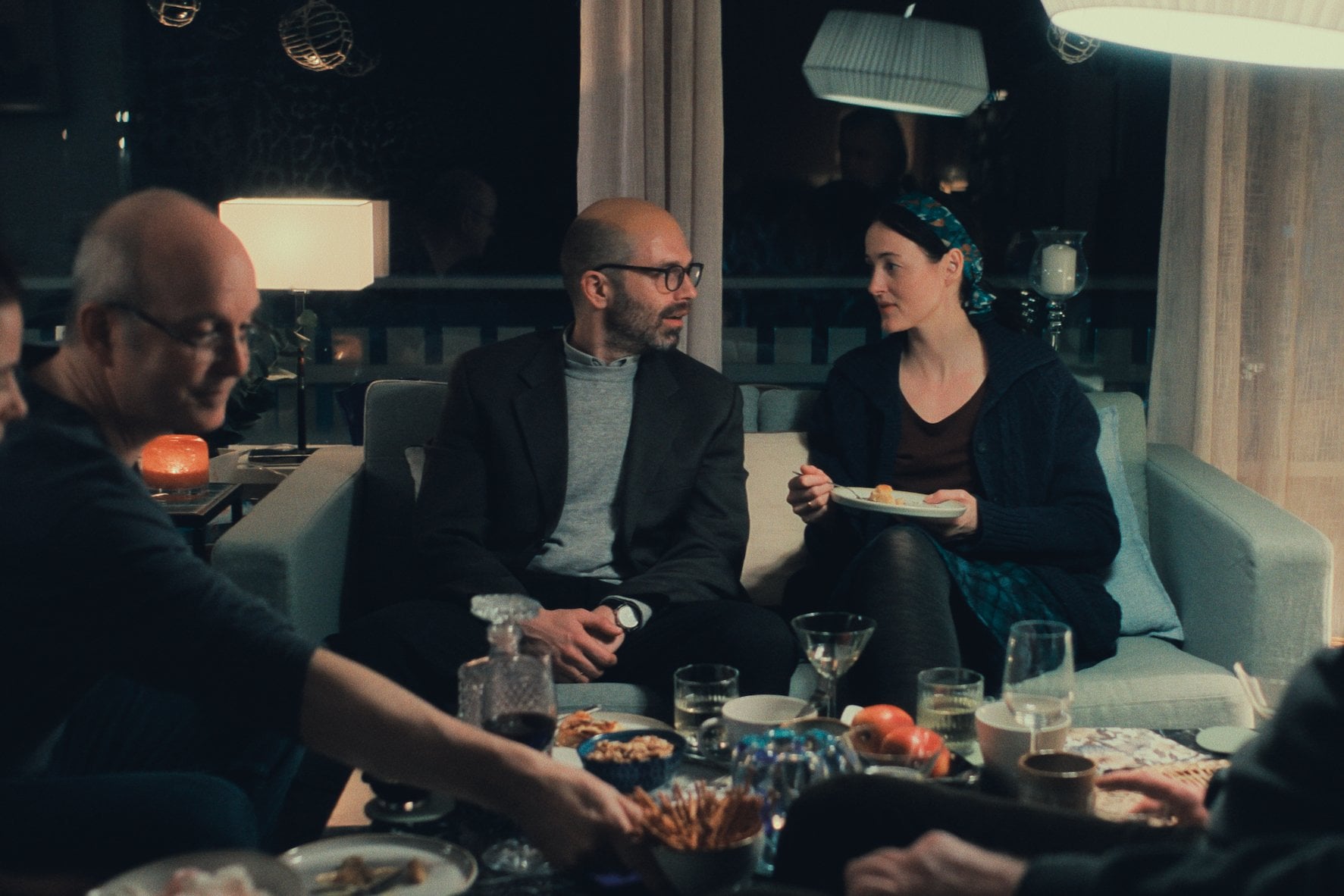

Sebastian Stan and Renate Reinsve in "Fjord."
Neon
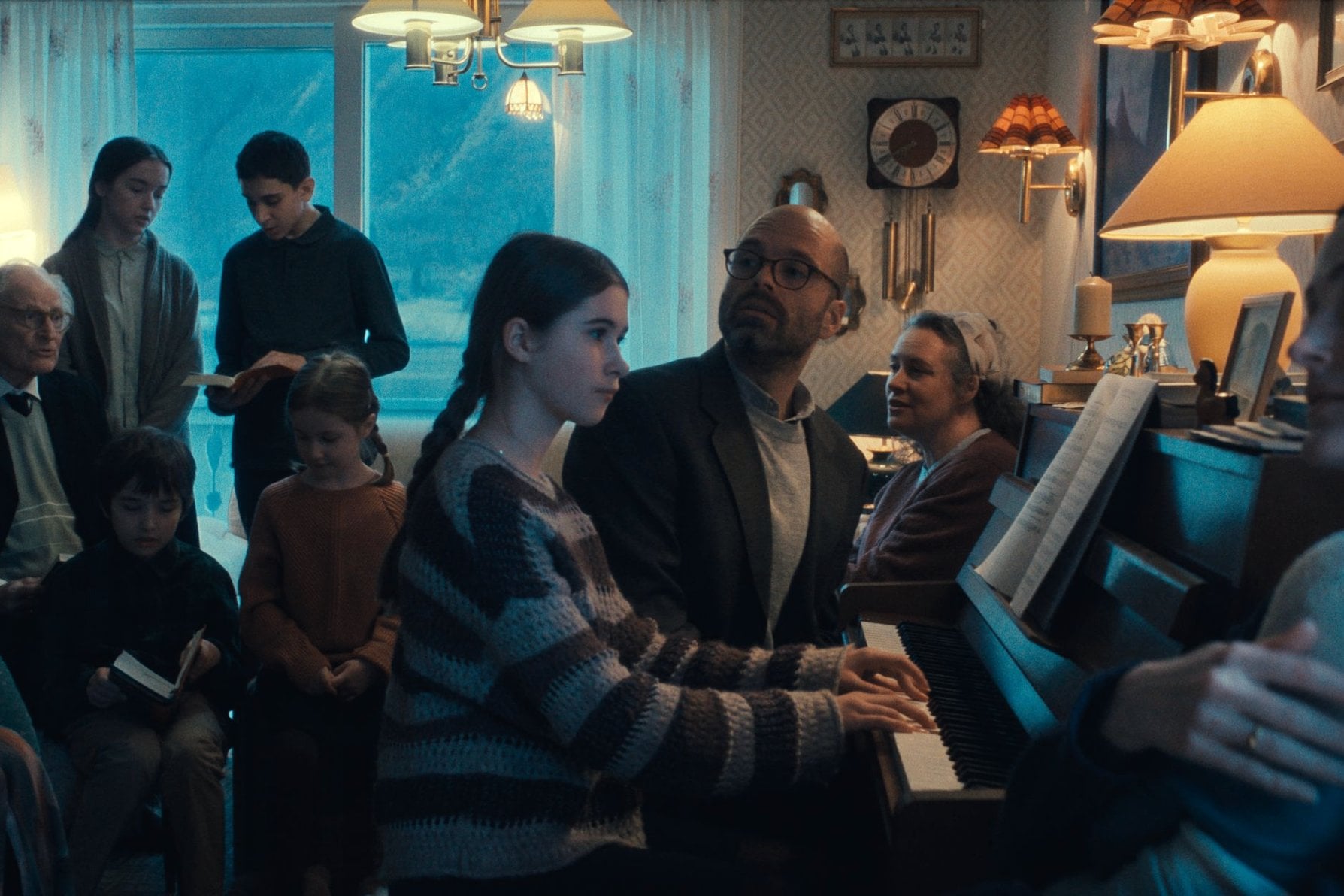
The cast of "Fjord."
Neon
Brustad and his co-designer, Pădurețu, brought their own slate of cultural references to set: with Pădurețu providing a uniquely Romanian point of view for the Gheorghiu residence and Brustad serving as a Norwegian consultant for their neighbors. Coming off production for “Sentimental Value,” where he served as art director, Brustad was well-versed in the art of domestic Scandinavian decor. The designer even drew inspiration from personal photo albums, emulating the “chunky furniture” and dated wallpaper of his childhood in the film whilst also referencing photographs from the DigitaltMuseum in Norway. “My mood board contained the things I remember from my grandmother's house back in the nineties, because that's what I wanted to create,” Brustad says.
Brustad’s task was to bring to life “an interpretation of Norway” through director Christian Mungiu’s eyes, creating authentic Norwegian spaces from a Romanian perspective. “When you look into Norwegian homes, so many living rooms are painted grey. There's no color; no soul, it's just a bit boring,” Brustad says. Brustad channeled cultural conformity into the Halberg’s house, which was designed to represent “a modern Norwegian family,” drawing on a beige-gray color palette and simple, minimalistic furniture. While the home incorporates elements of Norway’s cozy hygge aesthetic, the goal was not to create something off of Pinterest. Inside the teenage daughter’s bedroom, a Löded Diper poster—a niche reference to “The Diary of a Wimpy Kid” movie—and a lava lamp take over the space. “It was important that the Halberg [family] was more modern, non-religious, and self-righteous,” Brustad says. “They are the opposite of the Gheorghius in every way.”
On account of the Gheorghiu family just moving in, the interior design of their home is tailored to the outdated taste of the previous homeowners. Drawing on his personal insight into renting culture in coastal Norway, the Gheorghiu house is adorned with retro and vintage furnishings from the early 1900s, “things that belong to the house” rather than the family occupying it, Brustad explains. “I come from the coast of rural Norway, where somebody just owns a house and rents it out,” Brustad says. “As long as the water and electricity work, you can live there. You don't need to have the most modern furniture, you don't need to repaint the walls every five years. It can just be there.” He and his team of set decorators sparingly incorporated decorative crosses and religious iconography around the home to represent the few things the family could have reasonably transported from their previous residence. The idea was that the family was renting out a neglected home with “clearly dated set dressing,” Brustad says.