A Look Inside Jordan Firstman’s Fabulous Chinatown Apartment in ‘Club Kid’
Interiors

Interiors
The production designer of “Anora” transforms the streets of NYC into a new sort of partygoers' playground, aligned with director-actor Jordan Firstman’s lived experience.
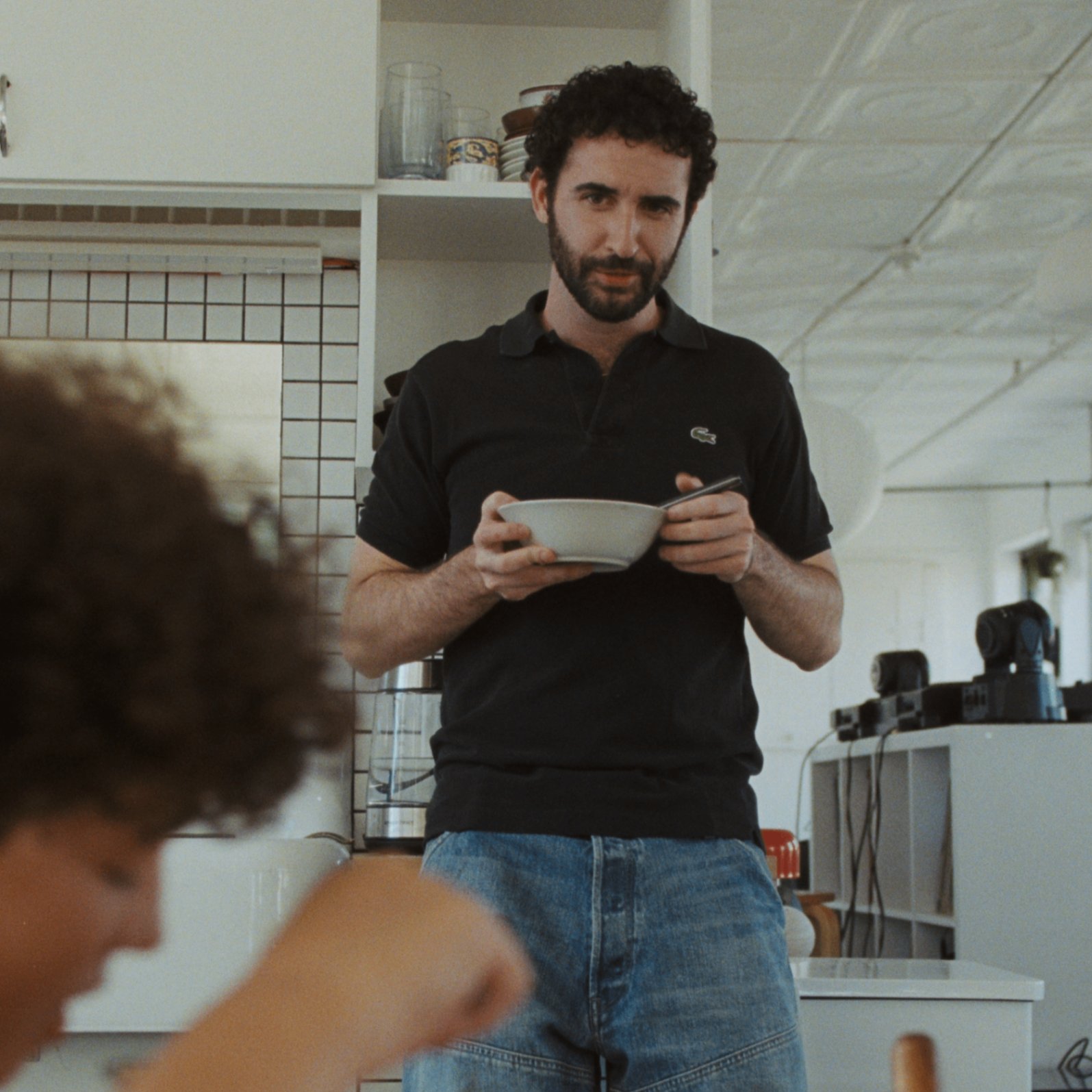
In “Club Kid,” even the trash littering Charlie’s (Jordan Firstman) Chinatown walk-up provides a window into the protagonist’s vibrant nightlife. The space is introduced at its messiest, with empty Hawa smoothies and the previous night’s drug paraphernalia decorating an otherwise aspirationally styled top-story loft, adorned with DJ equipment, greenery, and raunchy artwork. For production designer Stephen Phelps, the assignment was to hone in on a queer subculture of New York whilst demonstrating Charlie’s personal growth throughout the film. Luckily, Firstman provided Phelps with a Rolodex of ”networking connections through the scene” to help source decor, and a Spotify playlist to better understand the character.
Phelps understood Charlie’s aesthetic as “high design minimalist yet eclectic,” basing his interior design off Apartamento video interviews from queer Manhattan artists. “Jordan had a very specific world he wanted to capture,” Phelps tells The Set Set. “So we had a lot of references we're going through between movies like “Unmarried Woman” and “Cruising,” and a bunch of apartments of people in queer culture in New York that we wanted to mimic.” One such imitated detail was a welded steel chainlink table resting beside the leather sofa. “Jordan was like, ‘everyone has this table, we have to get that,’ which was harder to track down than I thought,” Phelps recalls. Luckily, the production’s set decorator, Kit Sheridan, was able to find and borrow the original Rubén Gutiérrez-Martin design, which showed up in multiple of Phelps’ reference images. For the accompanying coffee table, Phelps borrowed from the designer himself. “It's this angular metal, very bold choice table that [came with] a chair and some special little mirrored ashtray-type devices,” Phelps says.

Charlie (Jordan Firstman) and Arlo (Reggie Absalom) in "Club Kid."
A24
Charlie is hardly the type of shopper to decorate his space in one fell Restoration Hardware swoop, so Phelps curated a patchwork effect of second-hand furnishings collected over time. In true cosmopolitan fashion, his production team supplemented borrowed statement pieces with furniture from Facebook Marketplace. “With the dining room table, getting a set of matching chairs just felt wrong,” Phelps says. “So we have this yellow metal chair, this other one that feels sort of mid-century with plastic and metal feet, and a wooden chair.” Firstman and Phelps envisioned Charlie as the type of impulsive, irresponsible spender who drops way too much on a designer piece only to adorn the rest of his space with thrift finds, which informs the apartment’s decorative idiosyncrasies. “[The apartment] has a bit of an eclectic nature, but it still feels pretty specific to that culture,” Phelps says.
When Charlie discovers he has a kid, he and his apartment are forced to adjust to newfound fatherhood. The loft’s abundance of once-dying greenery gets watered regularly, and some of Charlie’s raunchier wall art—like a photograph of male genitalia covered in whipped cream and an assless denim chaps version of the “Born in the USA” album cover—get switched out for more PG decor. “We started with the thickest version and the bolder choices and then had it evolve into a more grown-up, put-together type space,” Phelps says. By the end of the film, the apartment has curtain sheers on the windows and the aforementioned coffee table is swapped out for something a bit more practical. As Charlie matures out of his partyboy lifestyle, his apartment tidies up while still maintaining its cool, countercultural spirit.
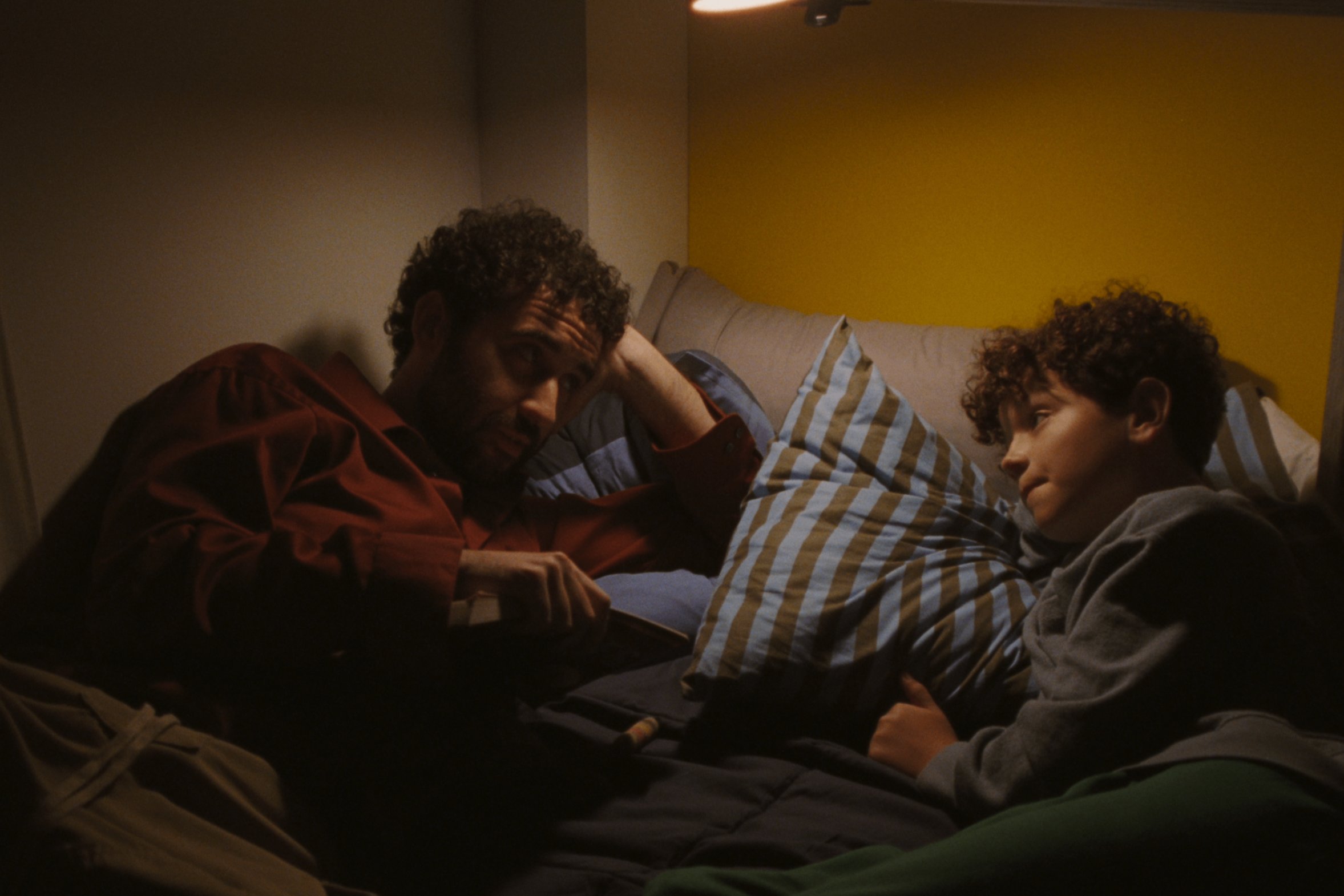

Charlie (Jordan Firstman) and Arlo (Reggie Absalom) in "Club Kid."
A24
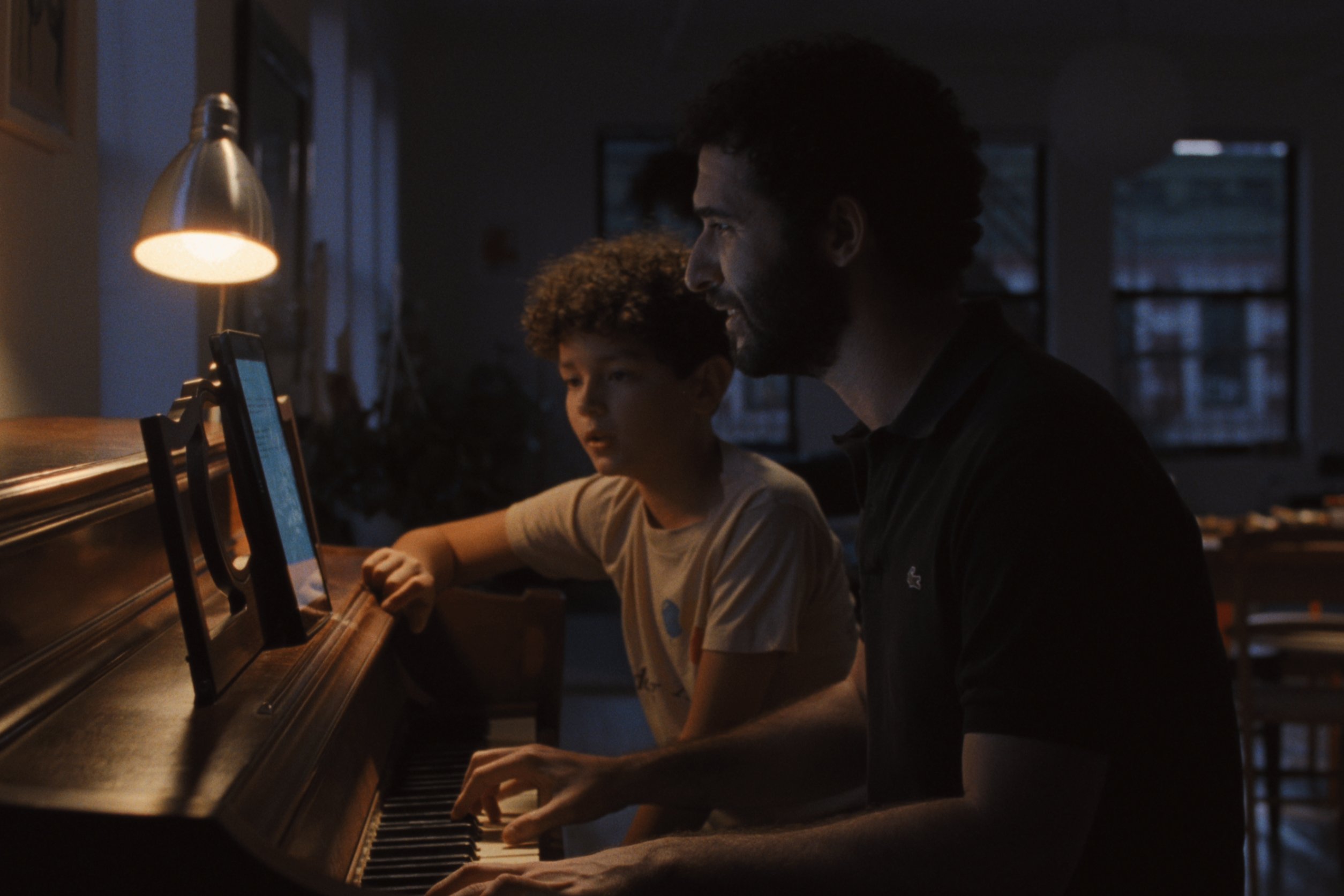

Charlie (Jordan Firstman) and Arlo (Reggie Absalom) in "Club Kid."
A24
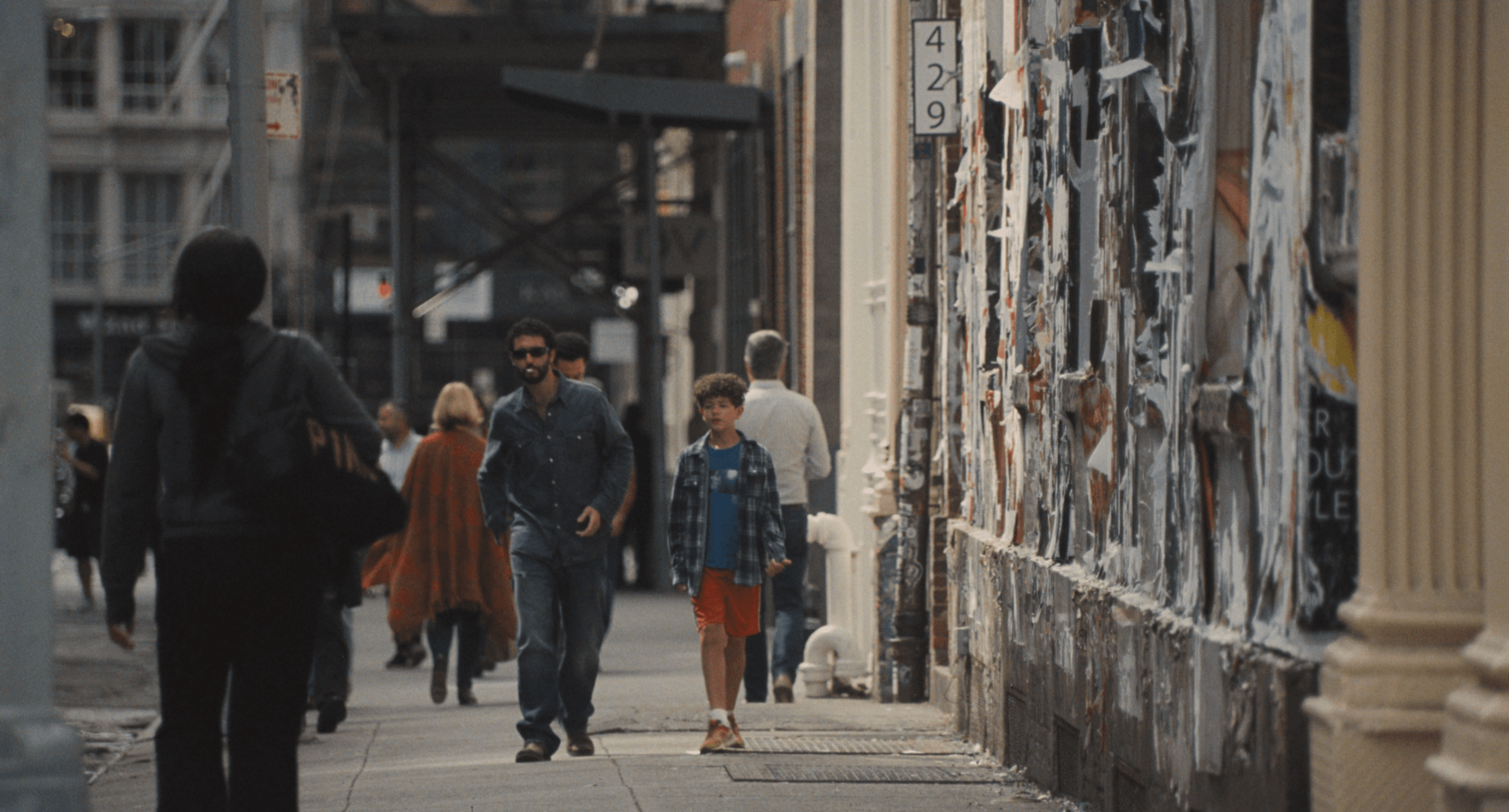
For Phelps, the location scout dually functioned as character research and inspiration. While he ended up landing on a Lower East Side loft off Canal Street, he took inspiration from the apartments he didn't select. “Even if the [apartments] weren't the right place to shoot, they gave me a lot of design inspiration, and then on top of that, we were able to be like, ‘I want to borrow those two pieces,’” Phelps says. As a New York native, he felt that “shooting New York for New York” was fundamental to the story, and looked for spaces and designs tethered to the city. When Charlie takes his son Arlo (Reggie Absolom) out for breakfast, the real-life Balthazar restaurant serves as a set. “Most of us who worked on the film, at least in the art department, [have] lived in New York City,” Phelps says. “So we wanted something that had this classic feel from a movie, while also placed specifically in a time and place.”