
'Widow's Bay' Production Designer Steve Arnold Anchors The Satire With Nods To Classic Thrillers
Interiors
TSS Creative
Steve Arnold
Veteran production designer Steve Arnold foreshadows—and lands the jokes—through maritime décor and analog-era office relics, as well as references to Kubrick and Hitchcock titles.
In “Widow's Bay,” try-hard mayor Tom Loftis (Matthew Rhys) excitedly welcomes New York Times reporter Arthur Lloyd (Bashir Salahuddin) to the historical society on his quirky New England island. Hoping to rebrand the low-tech, possibly cursed locale into a destination rivaling Martha's Vineyard, Tom awkwardly tries to downplay the island’s dark past and pivot the conversation.
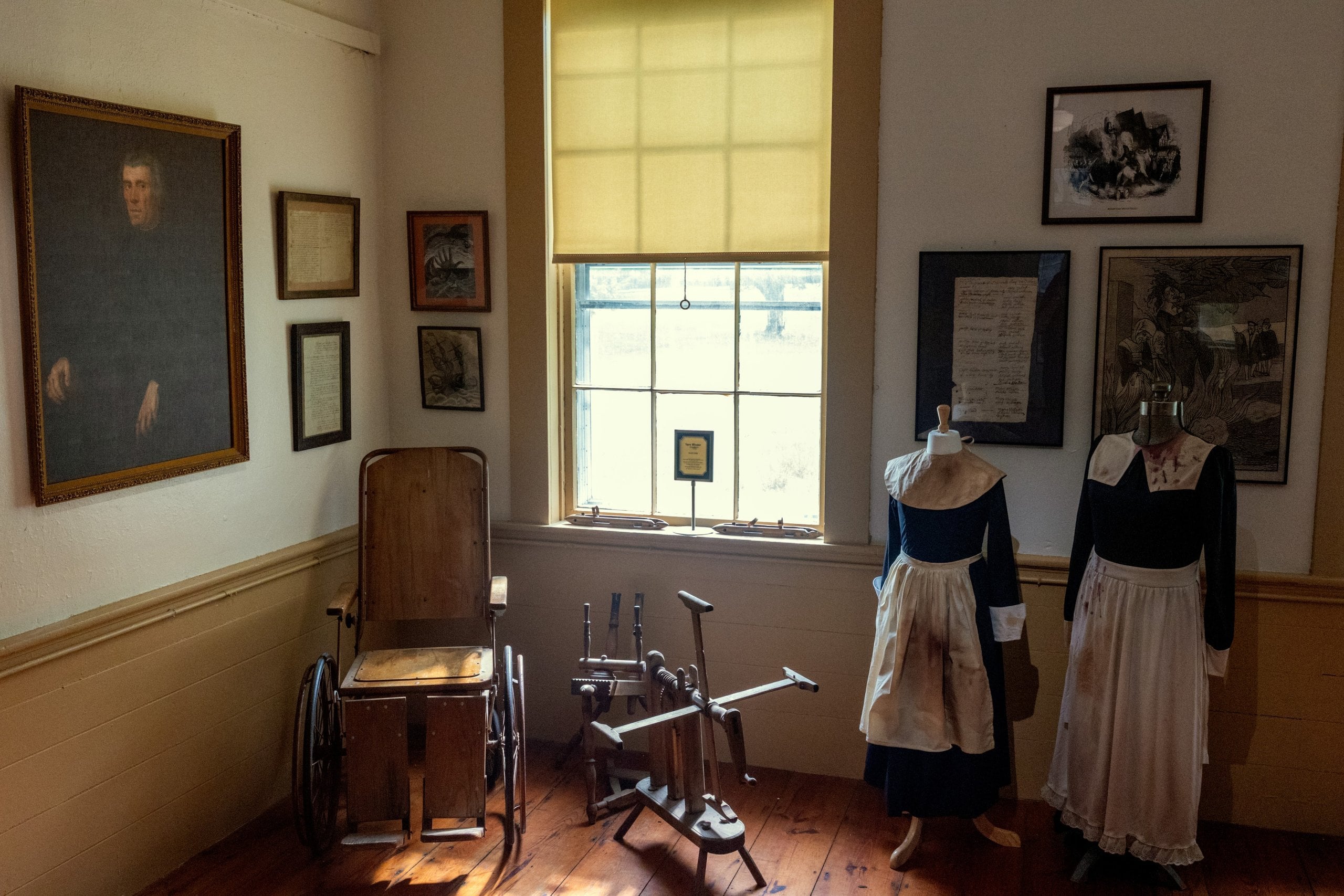
“But was there cannibalism?” Arthur asks, as the two men stand before a framed vintage newspaper with the all-caps headline: “CANNIBALISM IN GOD’S HOUSE.” The moment nails the show’s offbeat dark humor, while a black-and-white drawing of a dilapidated house—complete with a ghostly figure staring out of an upstairs window—offers some bone-chilling foreshadowing. Blood-spattered 19th-century dresses from the island’s witch trial further enhance the macabre comedy.
“We were just trying to come up with things that were a little bit off,” says veteran production designer Steve Arnold, whose résumé includes Mike Flannagan’s “Midnight Mass,” also set on an isolated island. “If you look behind the reporter, there’s a mannequin in a straitjacket.”

On the set of comedy horror "Widow's Bay."
Apple TV
When Arnold first came across the comedy-meets-horror script by Katie Dippold, his delighted reaction was, “What is this? This is such a strange concoction of things”. But classic thrillers, like “The Shining” and “Jaws”—coincidentally Dippold’s favorite movie—immediately came to mind, which Arnold incorporated into his presentation and, ultimately, the show’s sets.
In the second episode, a still-skeptical Tom agrees to spend a night in the Captain’s Suite of the newly renovated, but definitely haunted Breakwater Inn—home to a century of atrocities, from a New Year’s Eve party catastrophe to a circa-1951 serial killer clown. For the exterior, producer Christian Sprenger spotted a Victorian house in Maynard, Massachusetts, which resembled Edward Hopper’s spooky painting, “House by the Railroad.” “It has this peaked cupola—a little tower that sticks up,” says Arnold, noting that the artwork famously informed the creepy Bates home in Alfred Hitchcock’s “Psycho.” “I thought we really needed to do that.” Movie magic added the cupola to the Maynard house in post-production.

"Widow's Bay"
Steve Arnold
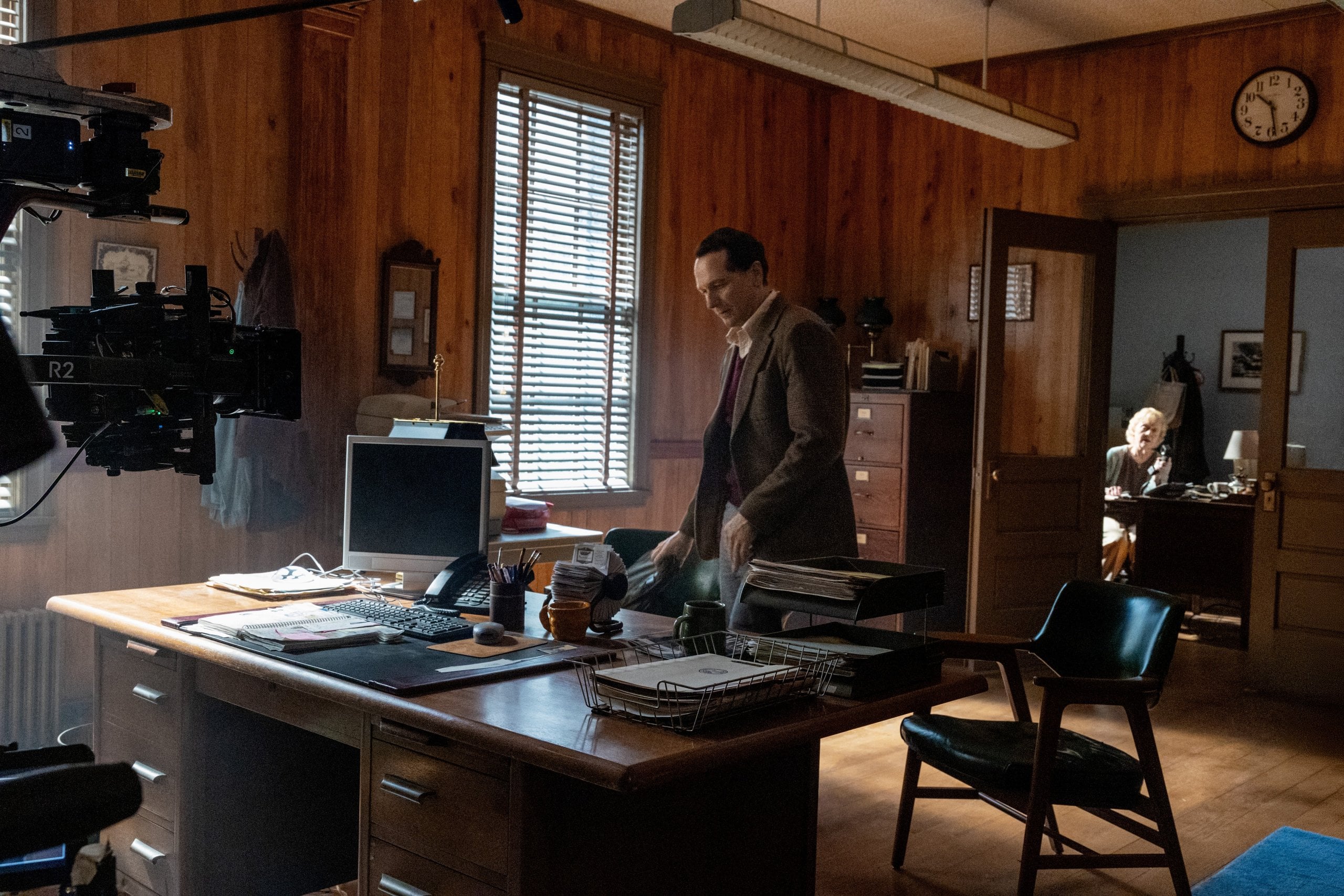

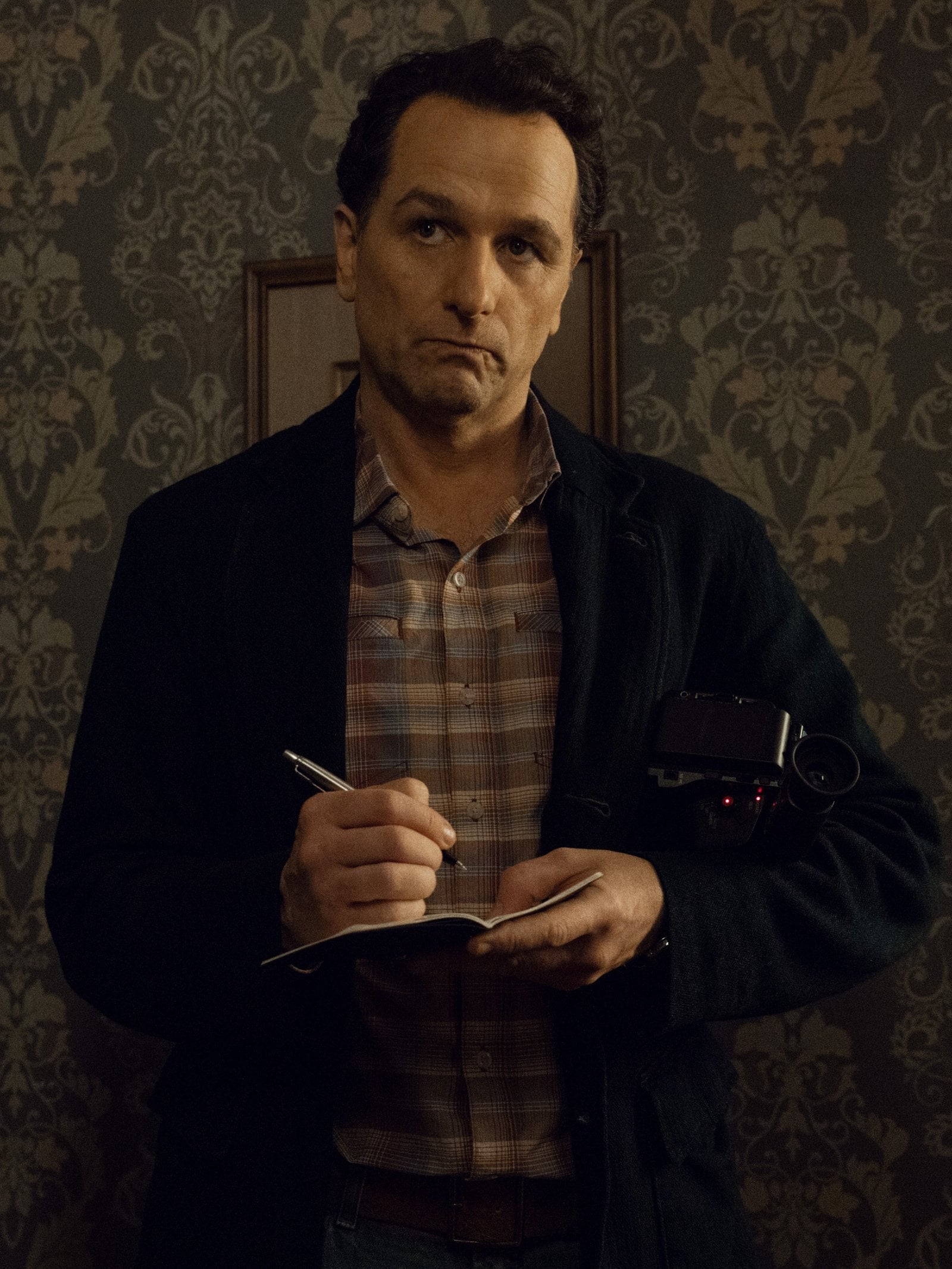
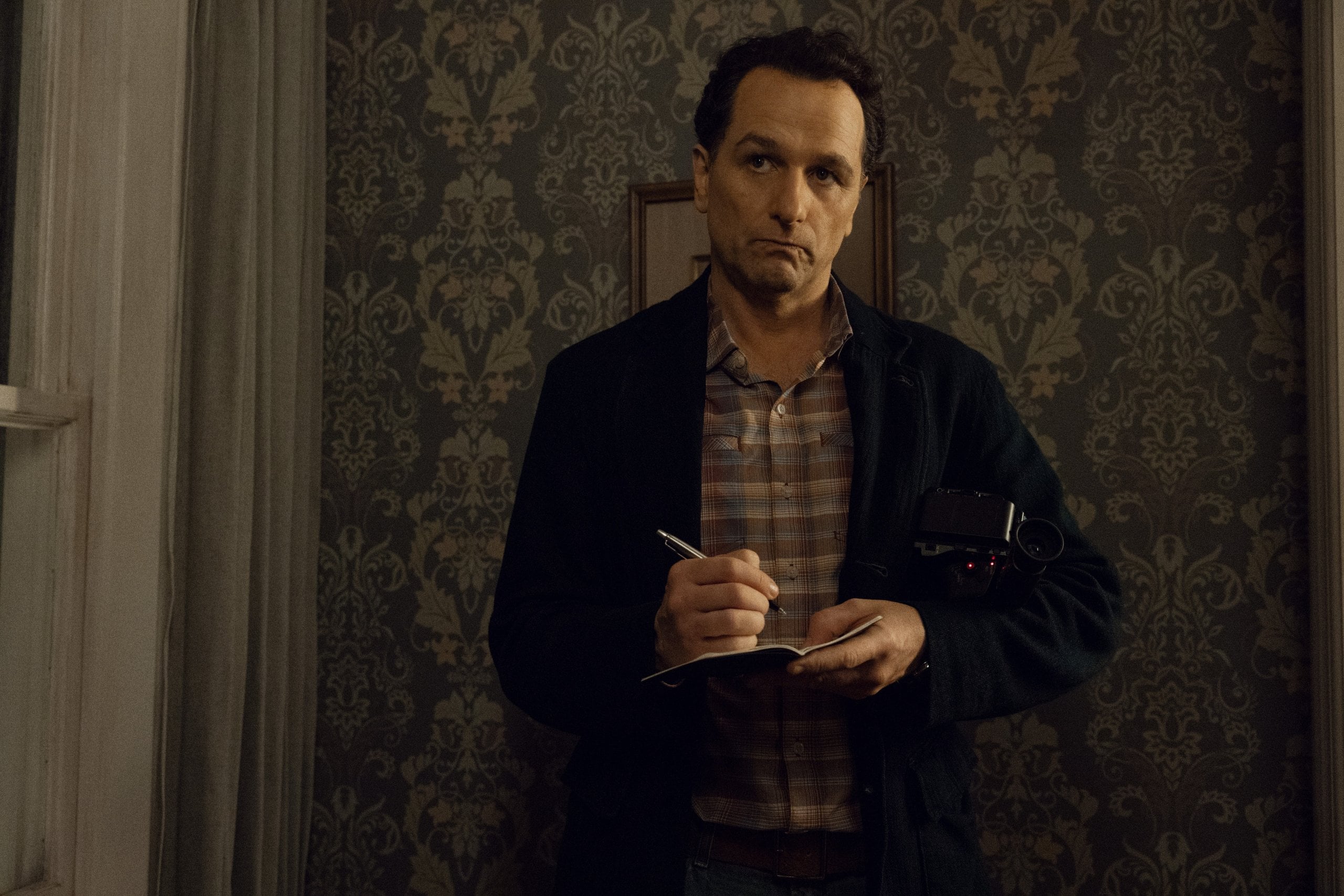
Matthew Rhys on the set of "Widow's Bay."
Steve Arnold

The set of "Widow's Bay."
Steve Arnold
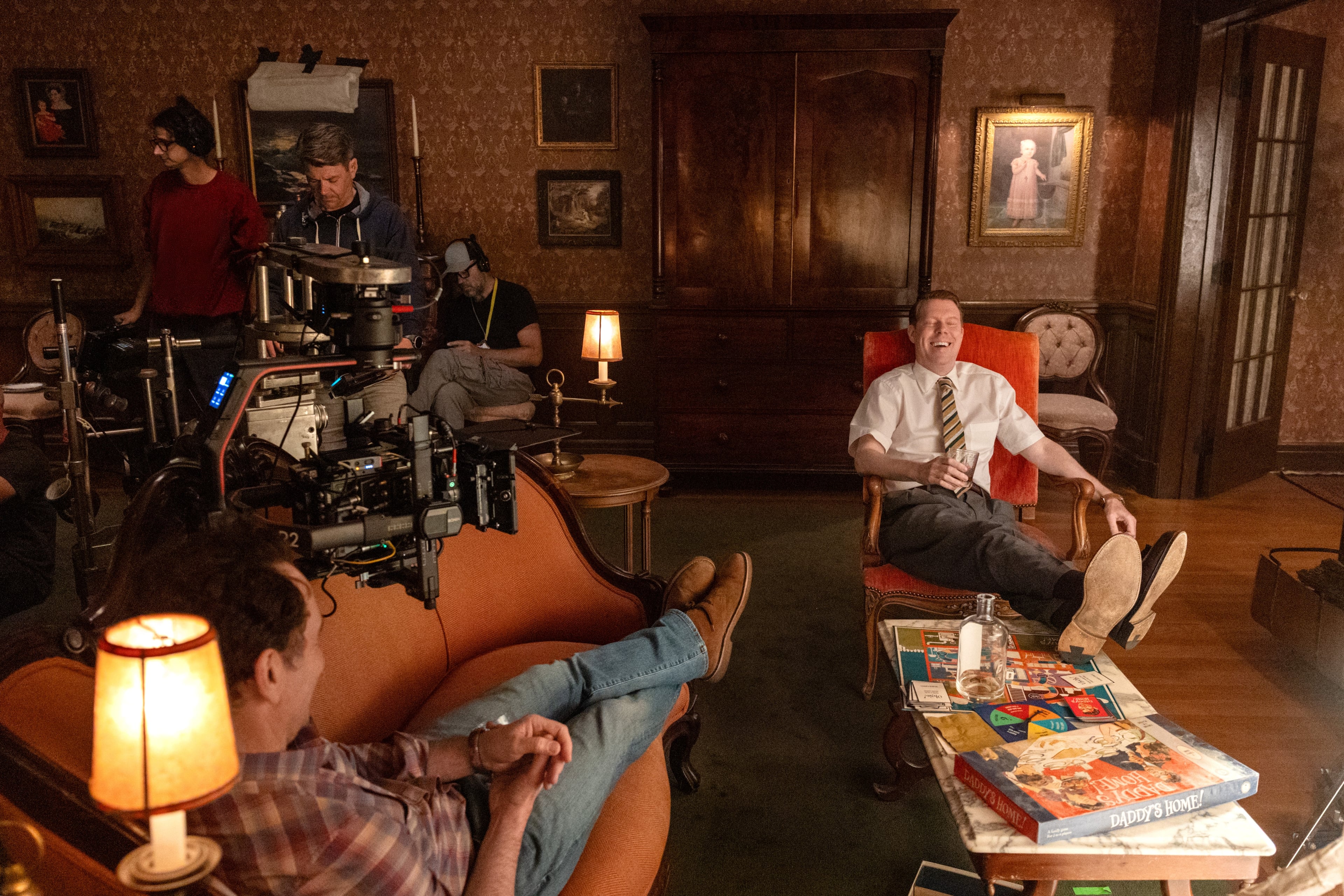
For the inn’s interior, which was built on a soundstage, Arnold custom-designed the ghostly blue Victorian damask wallpaper in homage to “The Shining,” along with the vintage decorative grate in the Captain’s Suite bathroom through which Tom hears the foreboding New Year’s Eve countdown. While innkeeper Kurt (Neil Casey) removed some of the “more provocative” 18th-century oil paintings, guests checking into Widow’s Bay are still greeted by a fairly disturbing—and still arresting—depiction of children escaping Widow’s Bay on a harrowing boat journey. “We had a brilliant portrait painter working with us,” says Arnold of local contemporary realist artist Brittany Haynes, who also painted a large portrait in a future episode that supports some excellent physical comedy from Rhys.
For the parlor, the show’s graphic designer Ellen Lampl created the vibrantly lampoon-y, yet deeply unsettling board-game visuals: “Daddy’s Home,” “She Shouldn’t Have Said That,” “Run,” which Tom absolutely should have done, and “Teeth,” which simply features a pair of pliers. “Really fantastic work,” says Arnold.
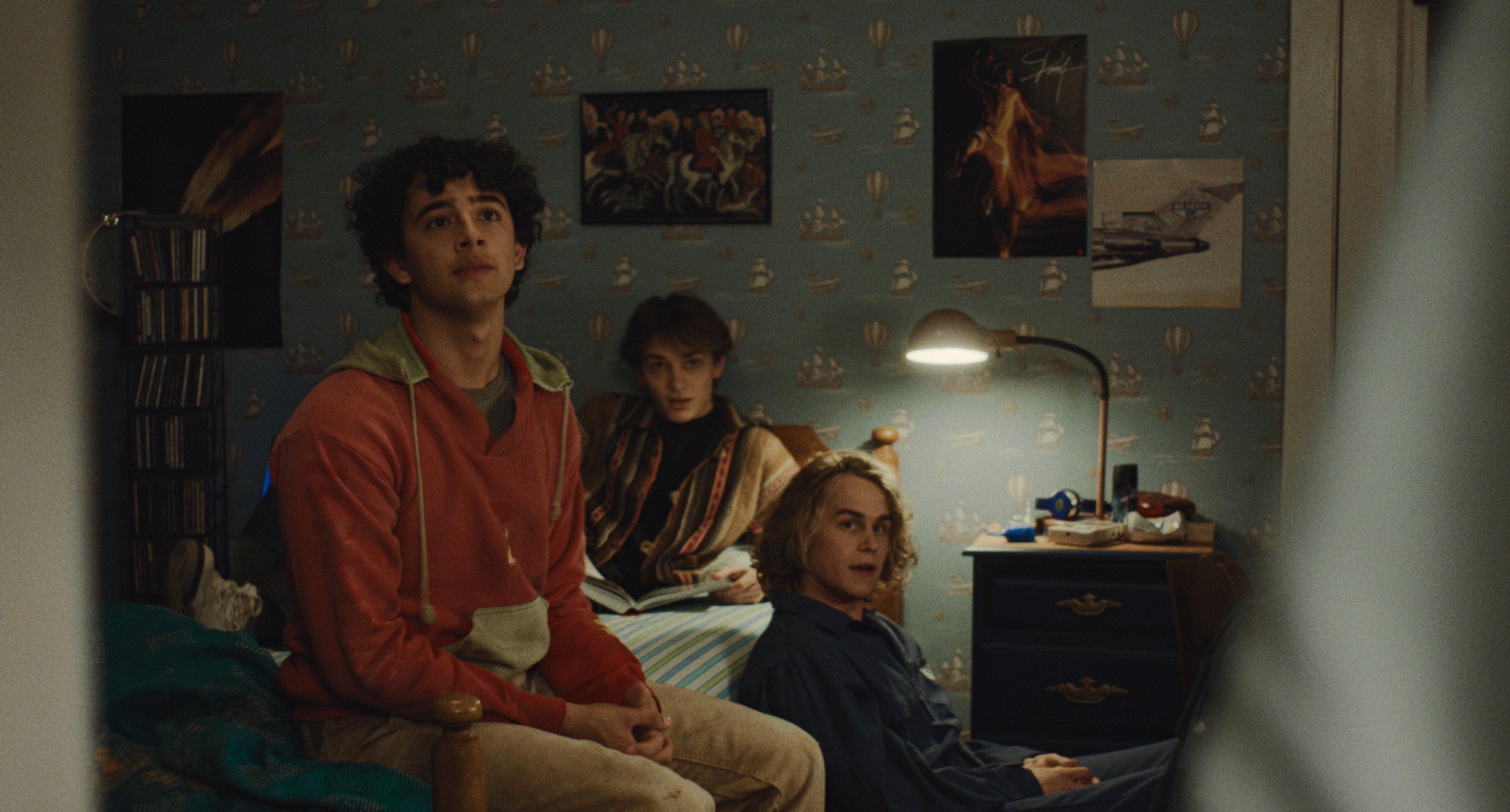

Tom's son Evan (Kingston Rumi Southwick) features a pattern of hot air balloons and boats, nodding to his desperation to leave the island.
Apple TV
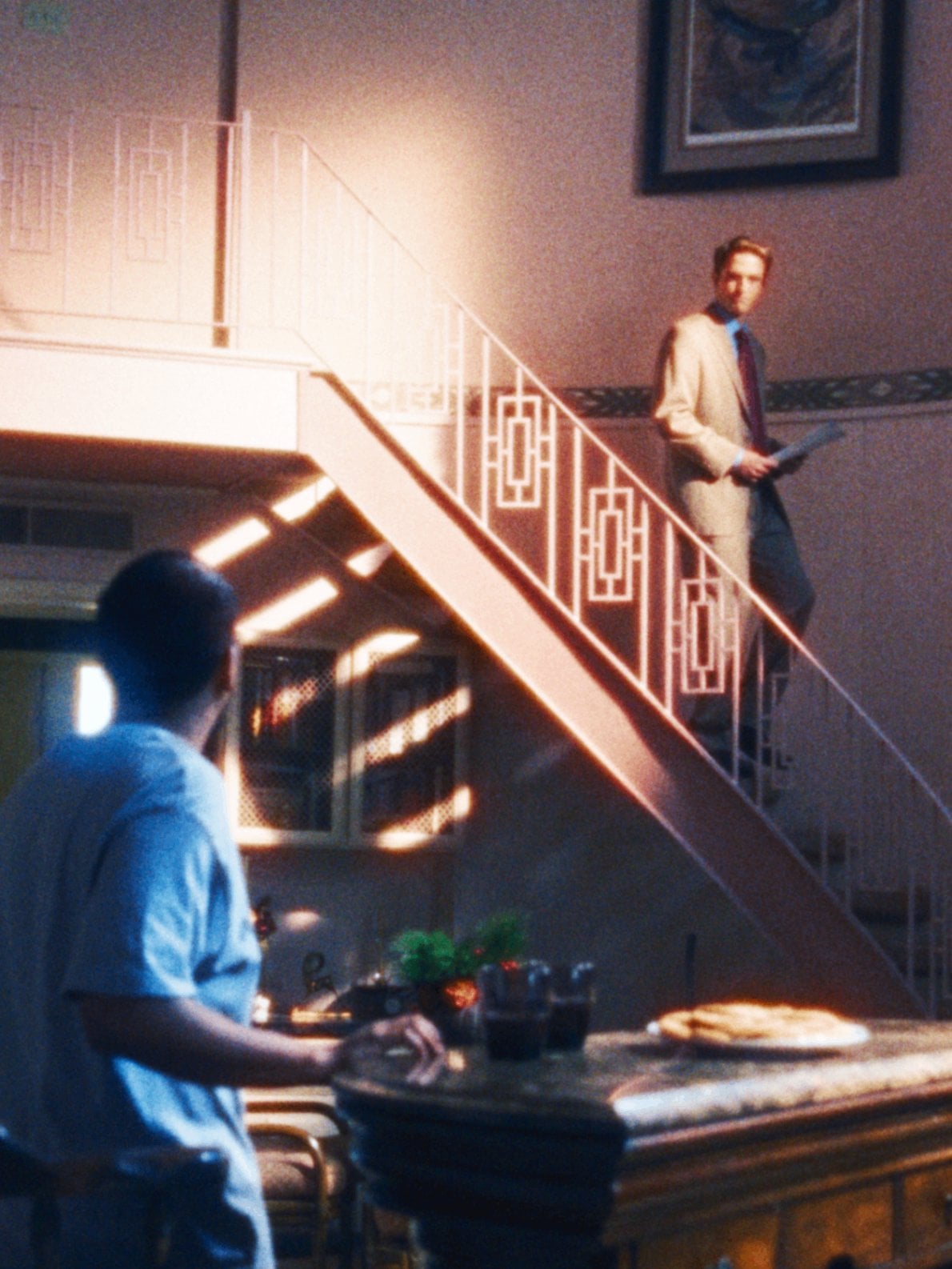
Tom’s cozy house features a dedicated nod to the hero of another action-filled island thriller. “Jaws.” Set decorator Jennifer Engel “matched the curtains in the kitchen and the fixture above the table to the police chief’s house,” says Arnold, also emphasizing Tom’s connection to the island with maritime tchotchkes throughout and a coffee table created from a boat door hatch. But Tom’s restless teenage son, Evan (Kingston Rumi Southwick), can’t wait to escape the wifi-free seclusion of Widow’s Bay. “Evan really wants to get off the island, so the wallpaper in his room features all modes of transportation: little boats, hot air balloons, and airplanes,” says Arnold. “We attend to a lot of super fine detail.”
Easter eggs also abound in the town’s fine dining establishment, The Salty Whale, which serves “the best lobster in America,” according to Tom. The moodily-lit restaurant, dotted with retro red-covered light fixtures and chandeliers, hosts a series of spine-chilling events, including a possessed dance party, thrown by town administrator Patrica (Kate O’Flynn). “I had the vision of an old wharf building or something that was in the fishing industry world,” says Arnold, of the wood-paneled bi-level space with ship wheels throughout the interior and a wall lined with boat paddles. “We took a boat, cut it in half, and stuck it on the wall.”
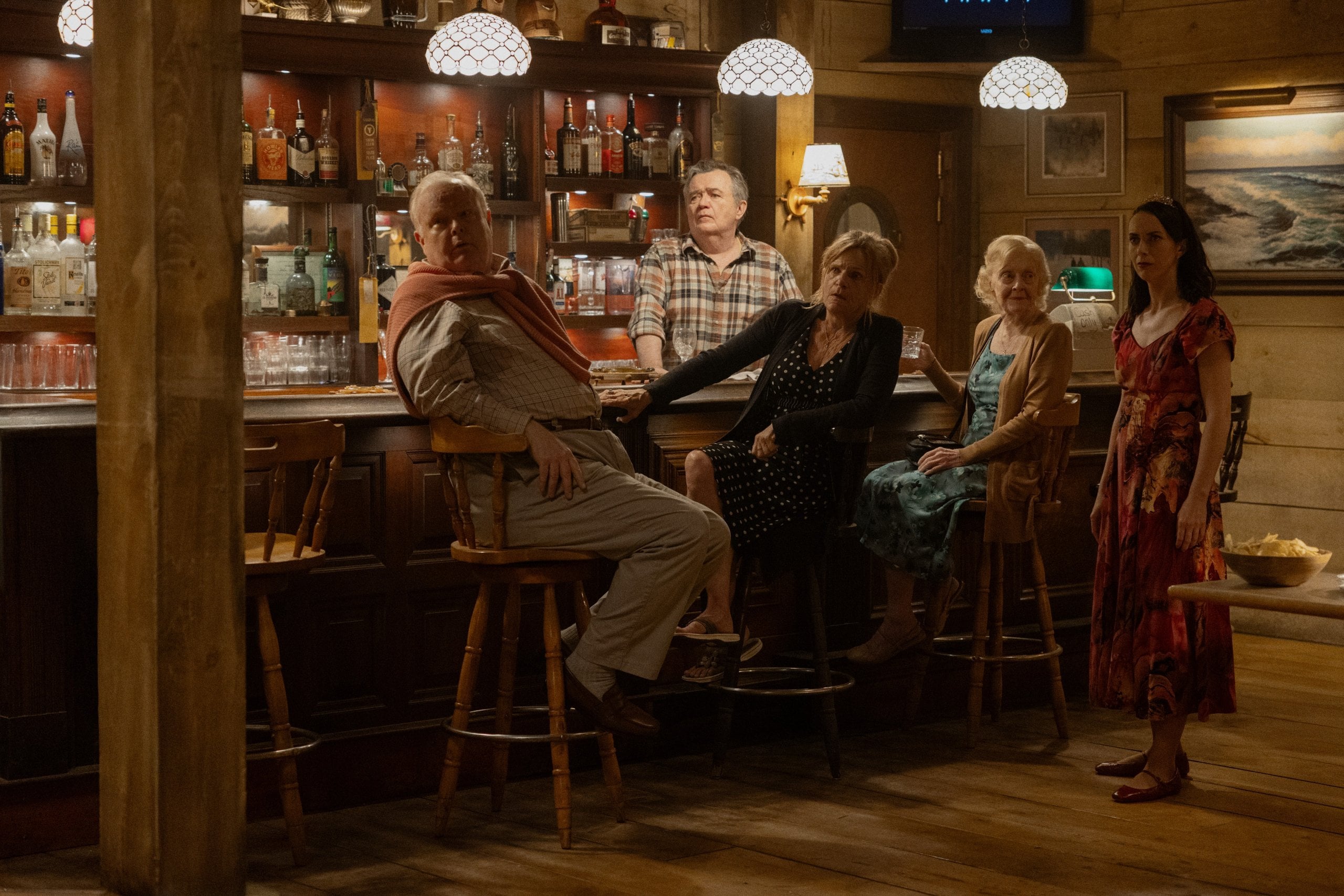

“I had the vision of an old wharf building or something that was in the fishing industry world,” says Arnold of his custom-built sets for The Salty Whale.
Apple TV
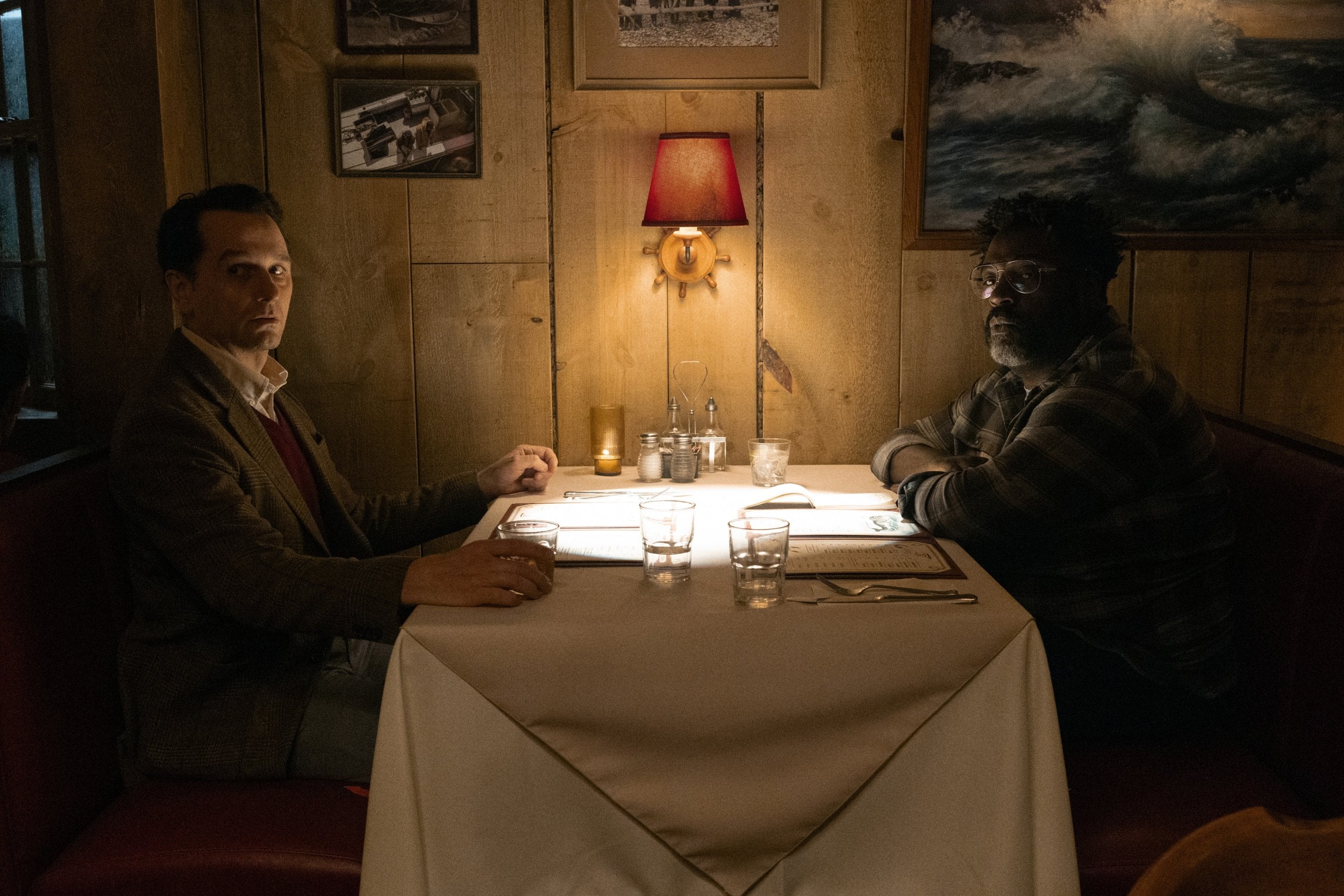

There are nautical nods throughout the set design for the restaurant.
Apple TV
“I had the vision of an old wharf building or something that was in the fishing industry world,” says Arnold of his custom-built sets for The Salty Whale.
Apple TV
There are nautical nods throughout the set design for the restaurant.
Apple TV
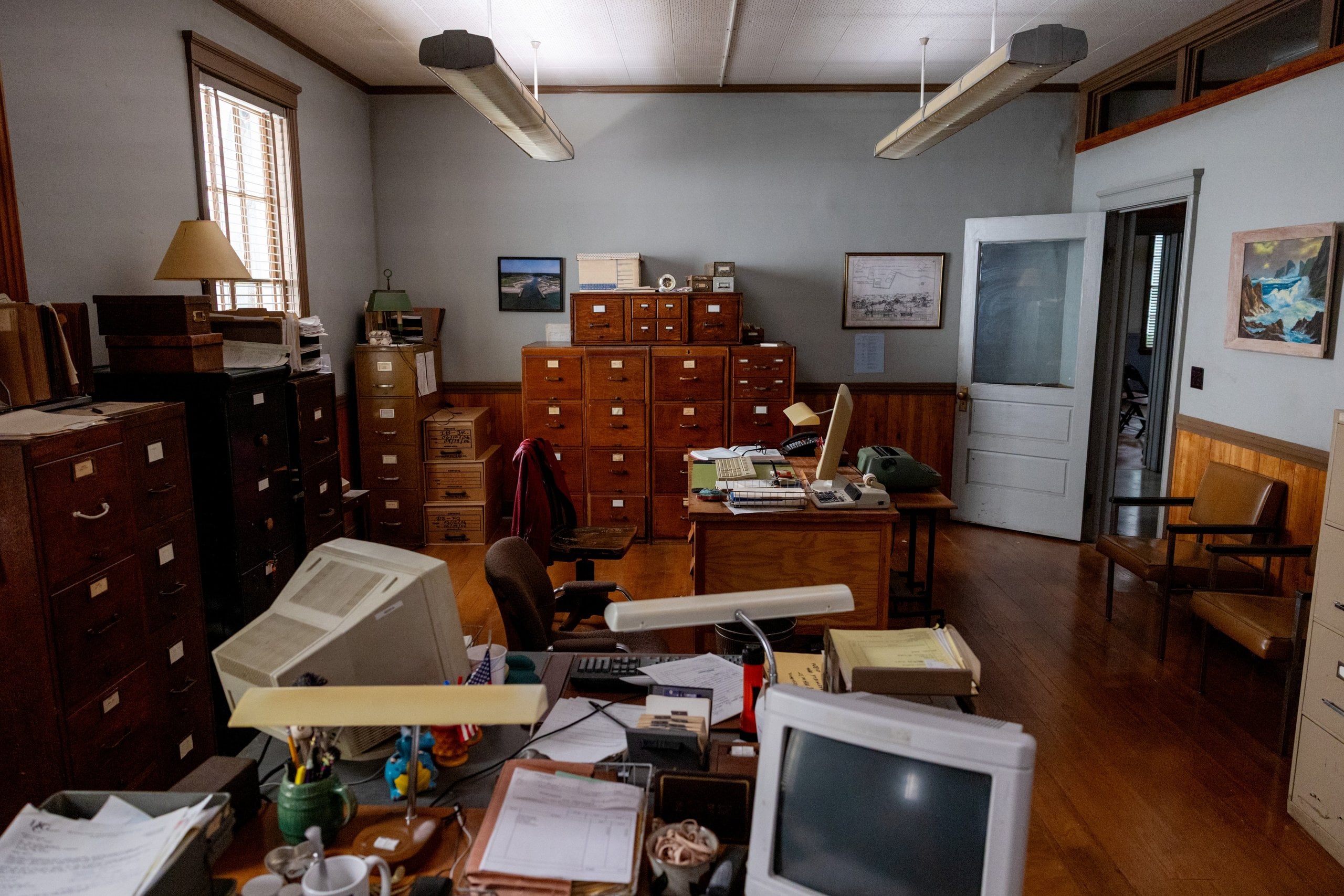
The island, devoid of cell service, feels hauntingly out of time—augmented by a litany of old-school devices, like a ’50s/’60s-era cigarette machine beneath a “Don’t Give Up the Ship” sign by the bathroom. “We had several phone booths, one in the town square and another by the town hall,” says Arnold. “Just things that you don’t see anymore.” Desktop landlines also populate the town hall offices, evoking a general sense of late-20th-century bureaucratic drudgery. “This is a building from the 1800s, but maybe it had been redone or rehabbed in the ’50s,” says Arnold, pointing to the midcentury clerestory windows at the top of the walls. “I put things like that in and we had some really fantastic construction workers and painters. There's a predominant gray-green color that’s very municipal and not updated.”
Analog-era office apparatus—haphazardly filled paper trays, bulky computer monitors that probably have disk drives, an overhead projector for one of the funniest sequences—reinforces the otherworldly back-in-time feel and turns the background into a spirited and nostalgic hunt for clues. “I mean, Tom's got a Rolodex on his desk,” says Arnold. “These days people won't even know what that is.”