
Bringing Historical Accuracy And Heart To 'Little House on the Prairie'
Fashion
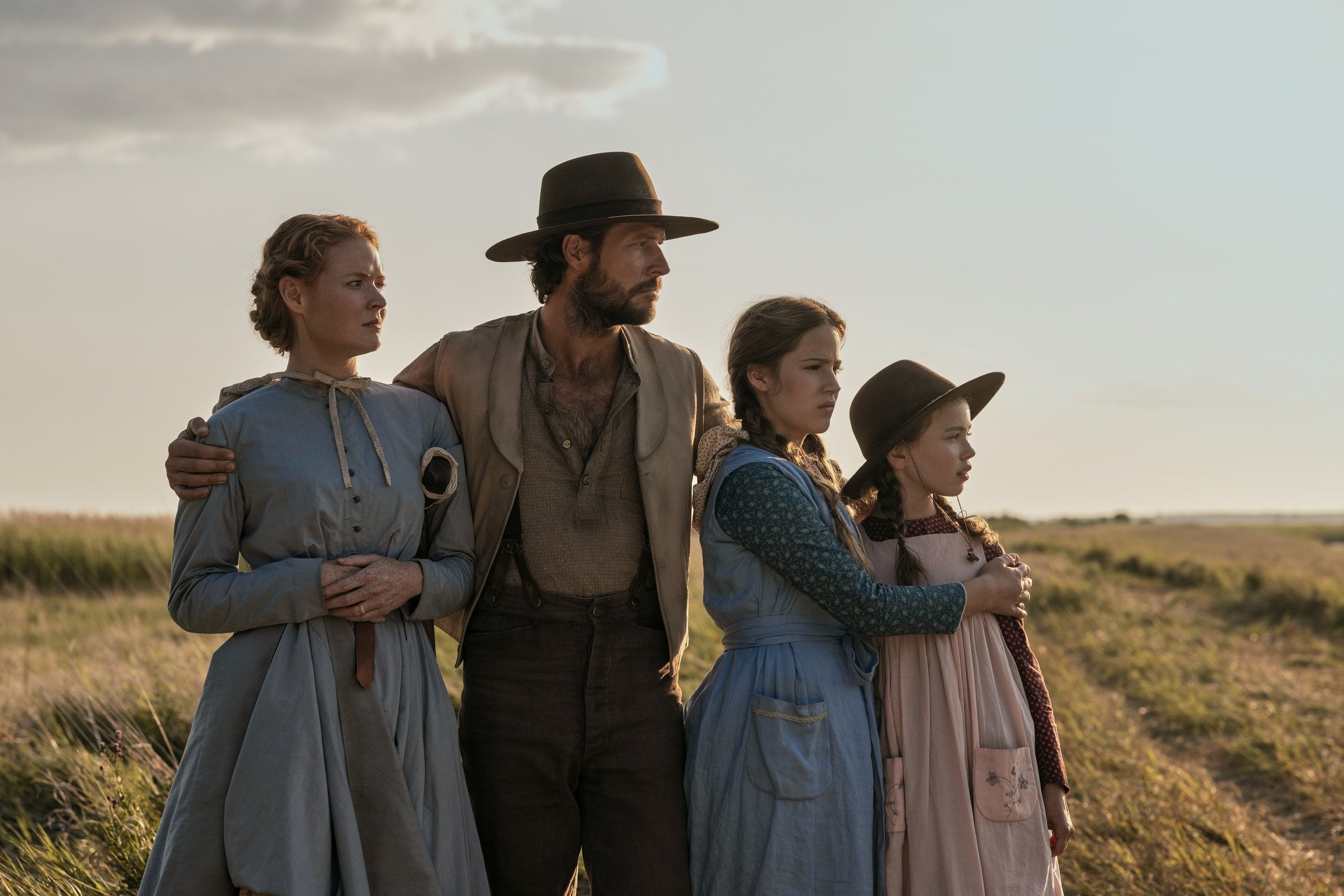
In the latest adaptation of “Little House on the Prairie,” costume designer Mitchell Travers and art consultant Julie O'Keefe designed a wardrobe of outfits ready to brace the elements.
Like countless other Americans, costume designer Mitchell Travers first encountered literature—or at least the elementary schooler's version of it—through Laura Ingalls Wilder’s semi-autobiographical book series, “Little House on the Prairie.” Decades later, he is now costuming Netflix’s eight-episode adaptation of the story, which follows a pioneer family’s relocation across the American frontier with heightened period and cultural accuracy.
Going into the reboot, Travers knew that the world needed to feel “giant.” As he says, “I was trying to get myself back into the headspace of a young person, where things feel limitless and expansive and you're not as afraid of the world as you are as an older person.” Looking to the natural world for inspiration, he played off of the series sprawling Midwestern landscape for costume inspiration.
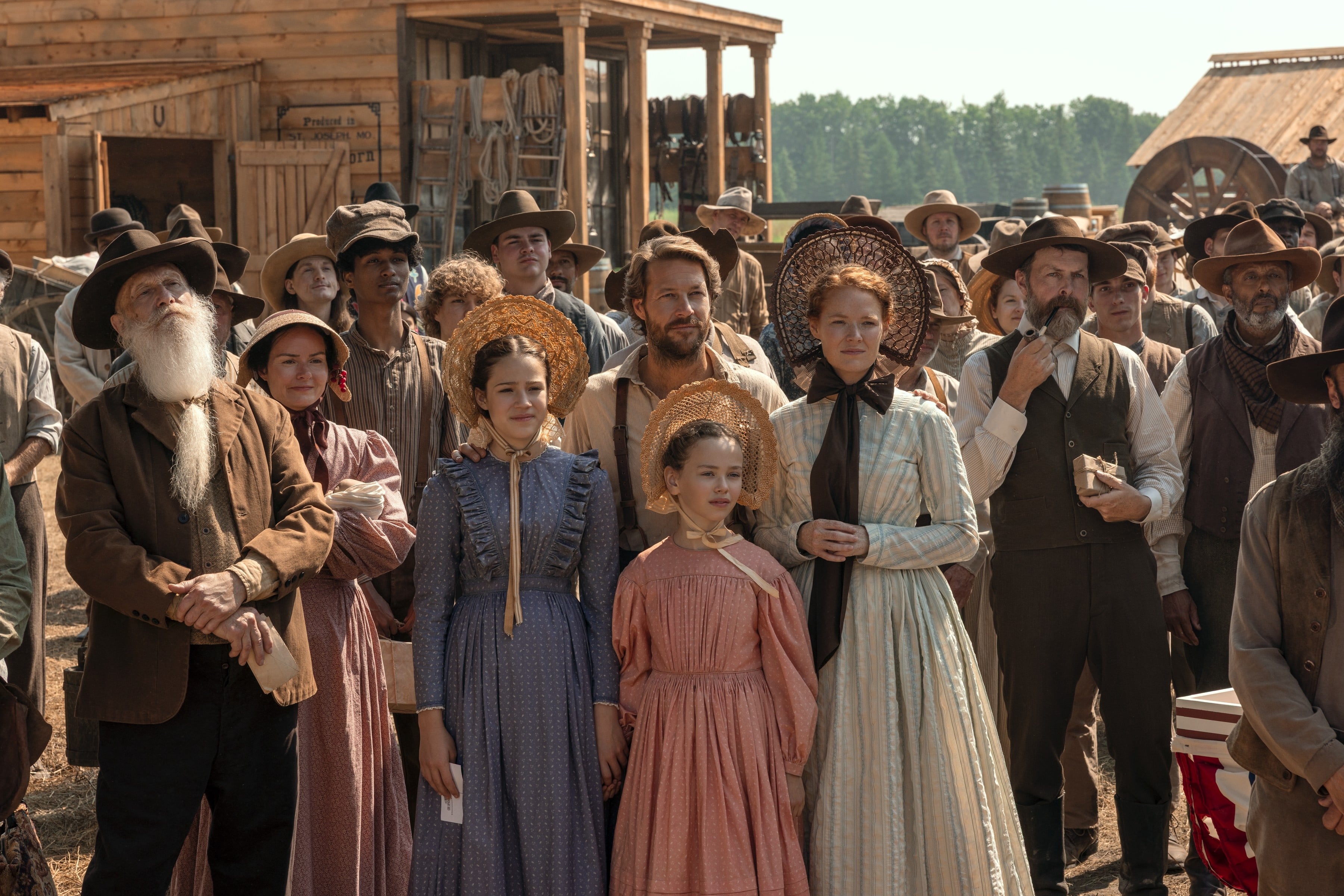
To accommodate the setting, Travers collaborated with the art department to create a custom grass and sky backdrop to shoot all of his fitting photos against. “When I came up to Winnipeg and started to look at the locations, I realized the true backdrop of this show is the sky and land and so I wasn't going to be able to do the show without shooting the clothes against those two colors,” Travers explains. Every pattern and color of handmade clothing “had to feel like it came from the earth” in order for Travers to include it in the show.

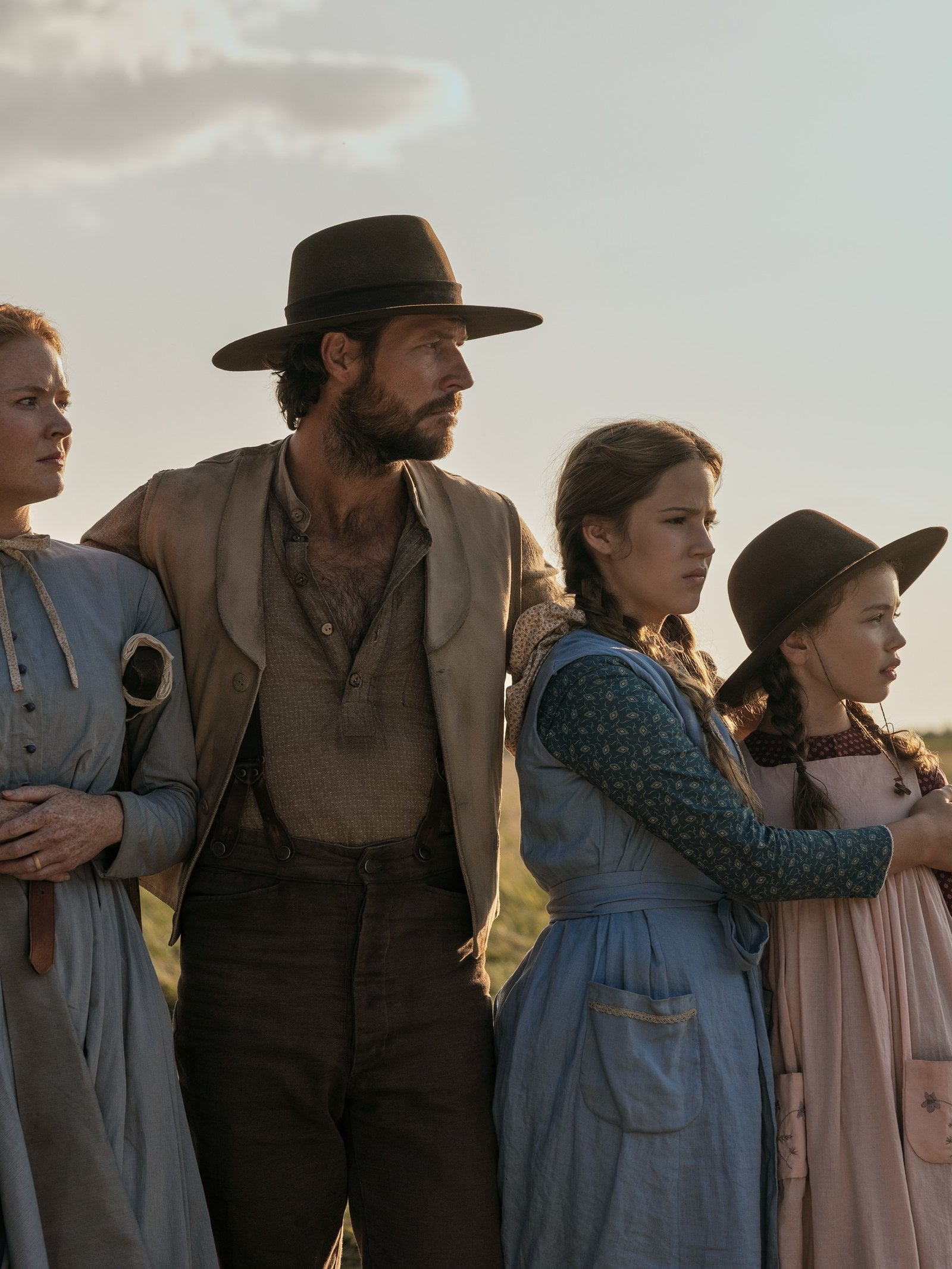
The Ingalls family in “Little House on the Prairie."
Netflix
When it came to distinguishing the daughters of the Ingalls family, Travers paid special attention to the color palette of Laura’s (Alice Halsey) garments. Often clothed in earthy, brown garments, Travers wanted to subtly assert Laura’s connection with the natural world while maintaining period accuracy. “She's not her sister who loves ribbons and accessories and things like that, but I wanted it to feel like as Mary has grown out of things, they've become Laura's,” Travers explains. The costume designer used wear-and-tear to create a sense that Laura “rides a little bit harder” in her clothing, even adding hand-sewn mended patches into her dresses.
In keeping with the central themes of the book series, thrift was the foundation of Travers’ costume ethos. “If Ma can make anything, then what can we make? If we only have this bolt of fabric, can she turn it into two dresses? Can she turn it into a shirt for Pa? A bandana for Jack?” Travers says. To create a “sense of history,” it was important for Travers to have an idea of where each garment started in the family. A belt on Laura's dress, for example, was imagined to have originated as one of Pa's (Luke Bracey) work shirts.
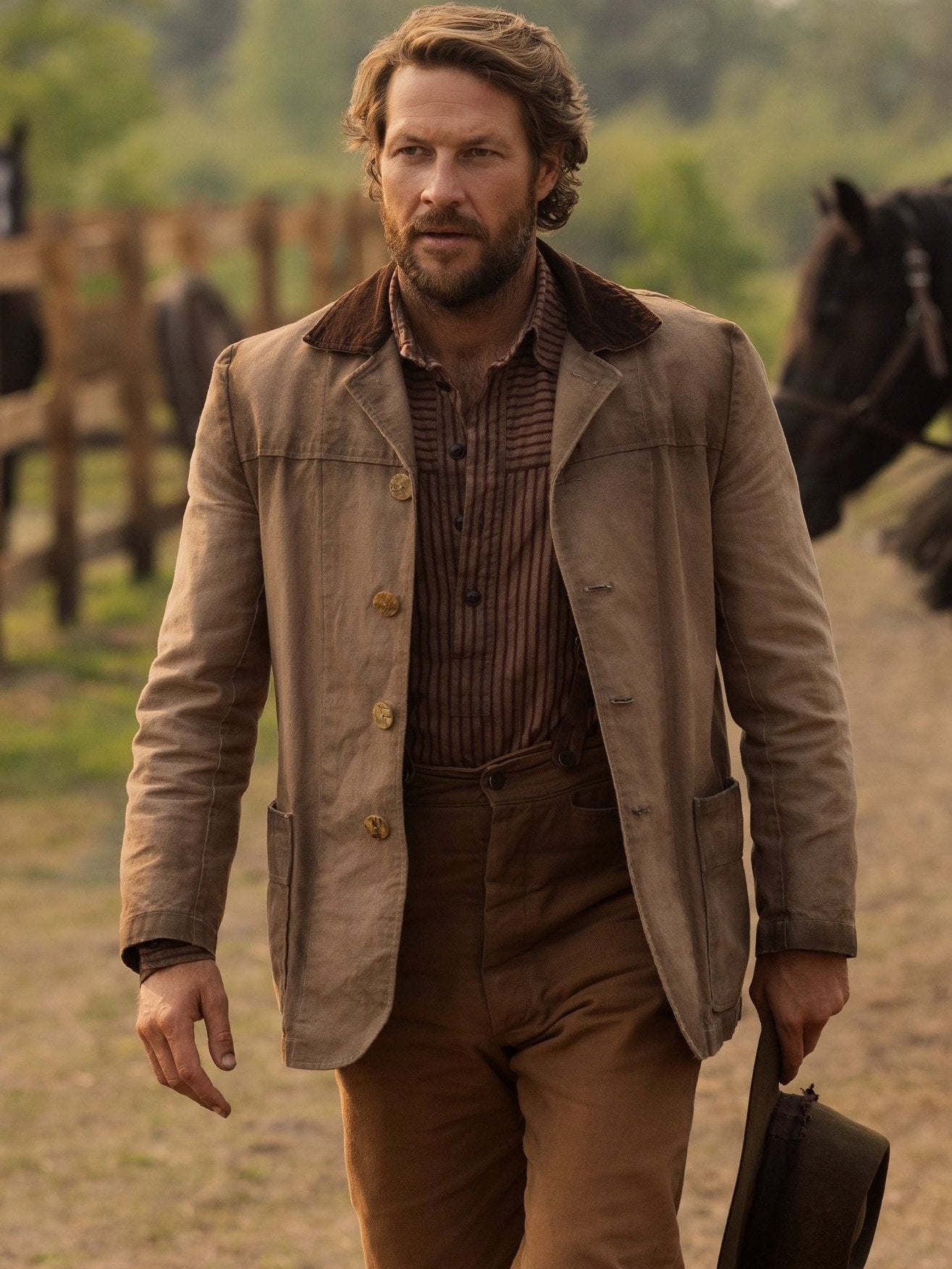

Luke Bracey as Charles Ingalls in “Little House on the Prairie."
Netflix
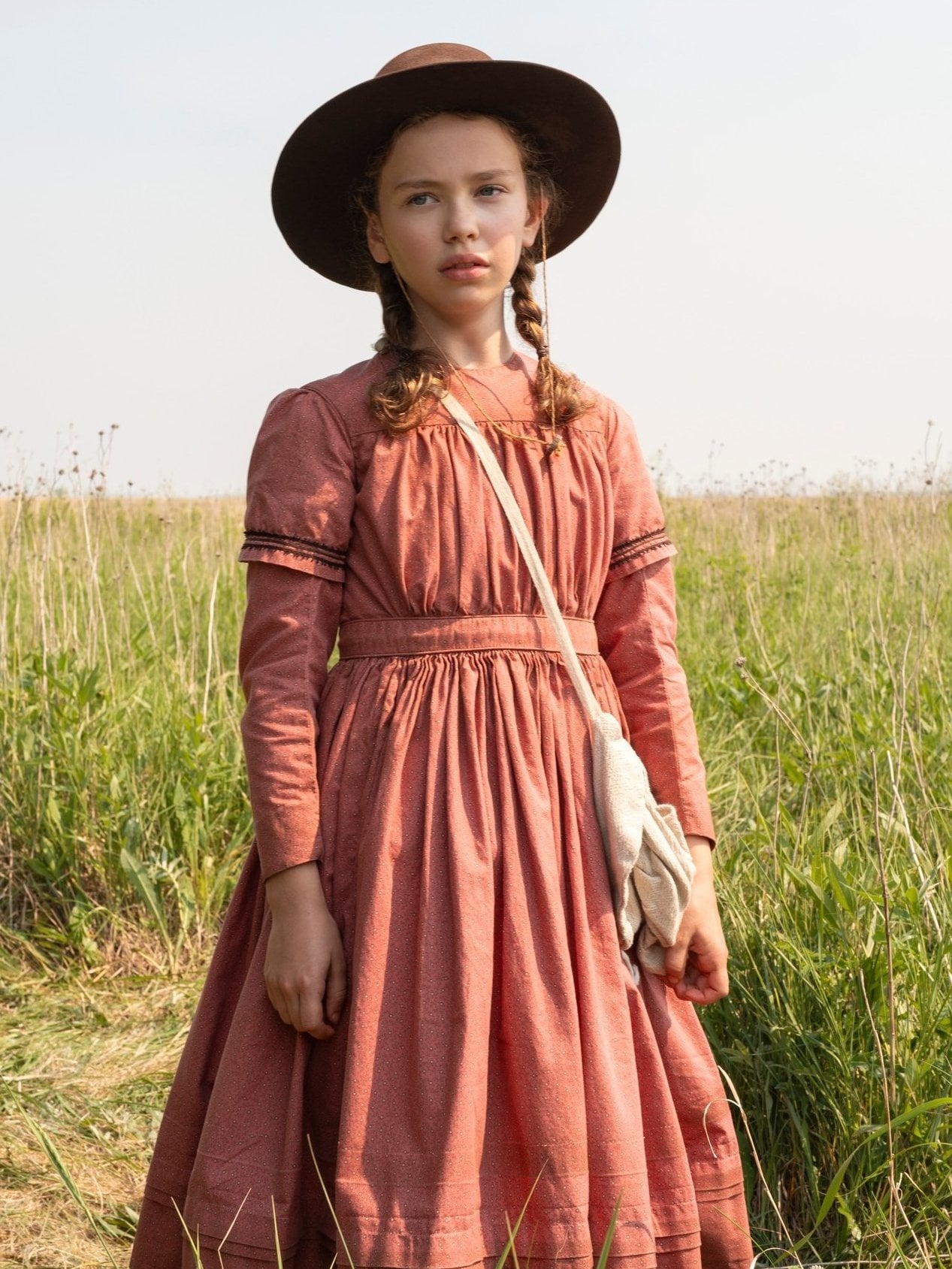

Alice Halsey as Laura Ingalls in “Little House on the Prairie."
Netflix
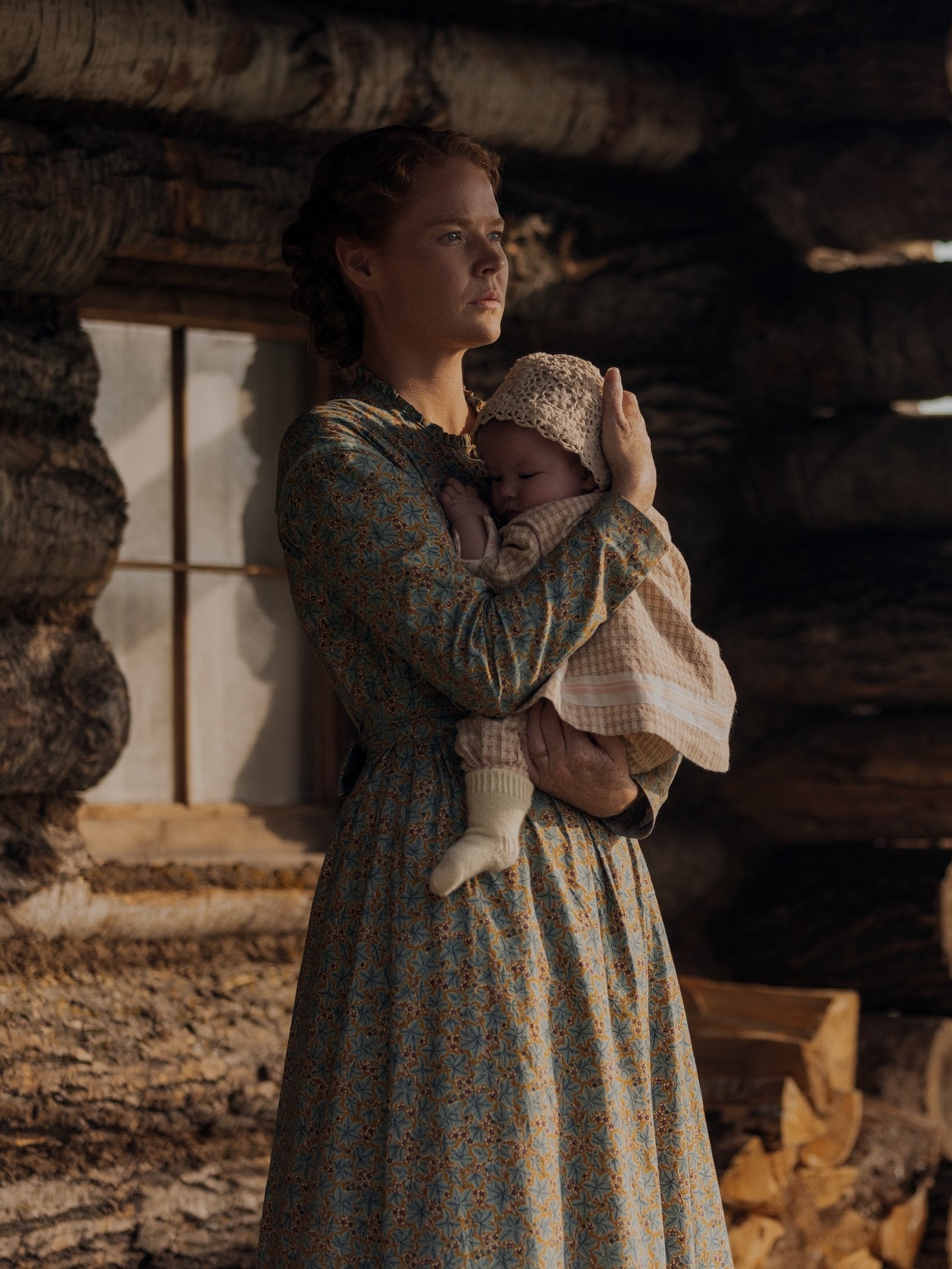

Crosby Fitzgerald as Caroline Ingalls in “Little House on the Prairie."
Netflix
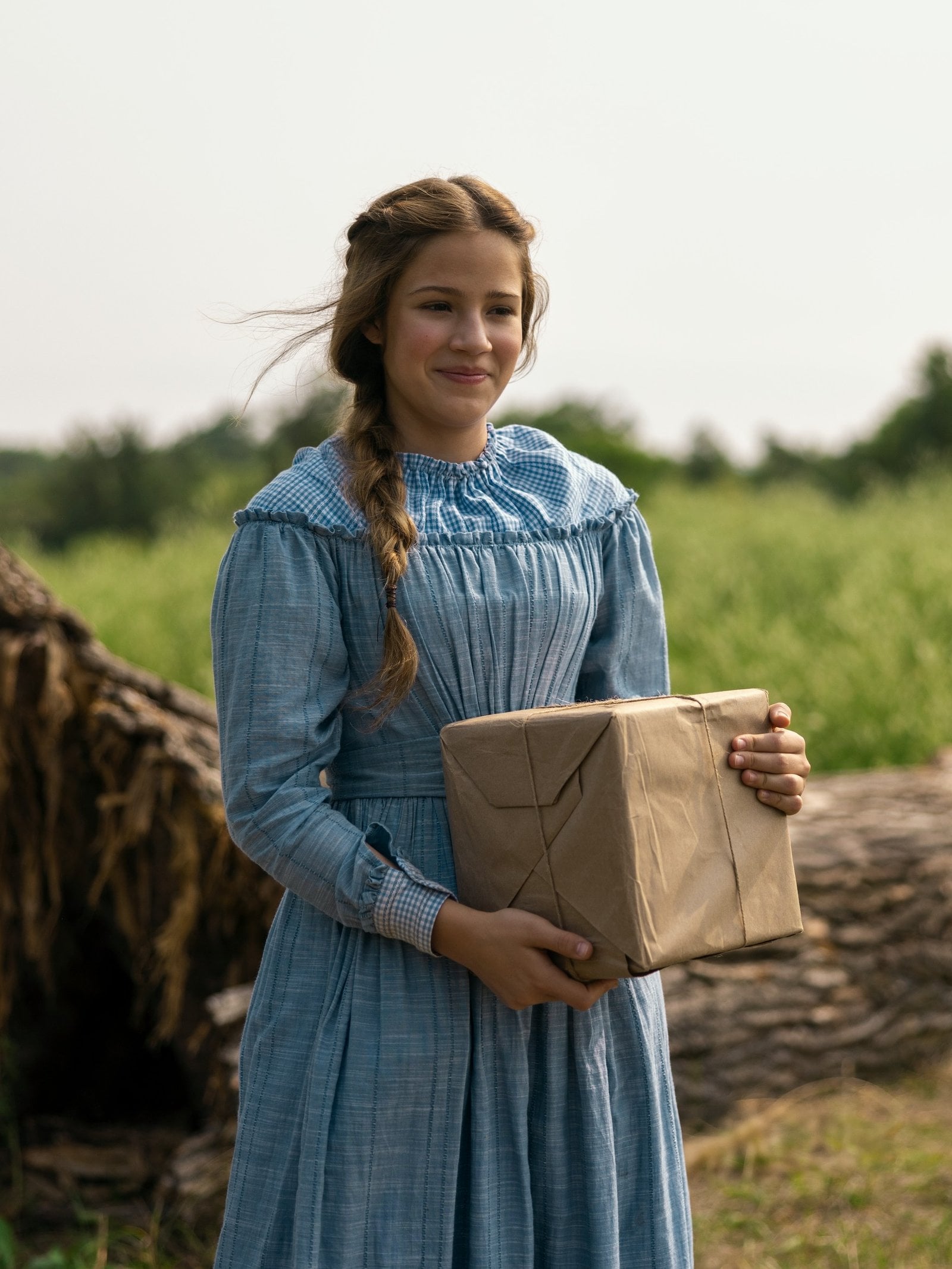

Skywalker Hughes as Mary Ingalls in “Little House on the Prairie."
Netflix
Pa’s wardrobe grounded the aesthetic universe of the series in more ways than one: being both the source material for many of his children’s clothing and a throughline in times of change. “As the girls grow, as their world changes, as the elements change, there is sort of a simplicity and a predictability and a stability to [the style of] Charles Ingalls,” Travers says. Throughout the show, Pa sports familiar, almost modern-seeming details: rivets, the single back pocket, high-waisted pants, and square-toe boots. “Online people are like, ‘he looks like he's in Buck Mason,’ and I'm like, well, that's because Buck Mason is inspired by these practical, enduring details that have lasted forever,” Travers says. “We're not adding corduroy to a collar because it's cute, we're adding corduroy to a collar because that's the place that it would receive the most amount of wear and corduroy was one of the more affordable and durable fabrics that people were trading and selling at the time.”
For the Indigenous characters in the show, Travers collaborated with Osage consultant Julie O'Keefe, who had previously worked on “Killers of the Flower Moon," to ensure cultural accuracy. The duo paid special attention to move away from earlier on-screen depictions of Indigenous people that portrayed them as an aesthetically homogeneous monoculture. “Human beings have expressed themselves as individuals from the dawn of time, and so I was excited for the opportunity to work with the Osage community to design these characters in a way that they felt very individual.”
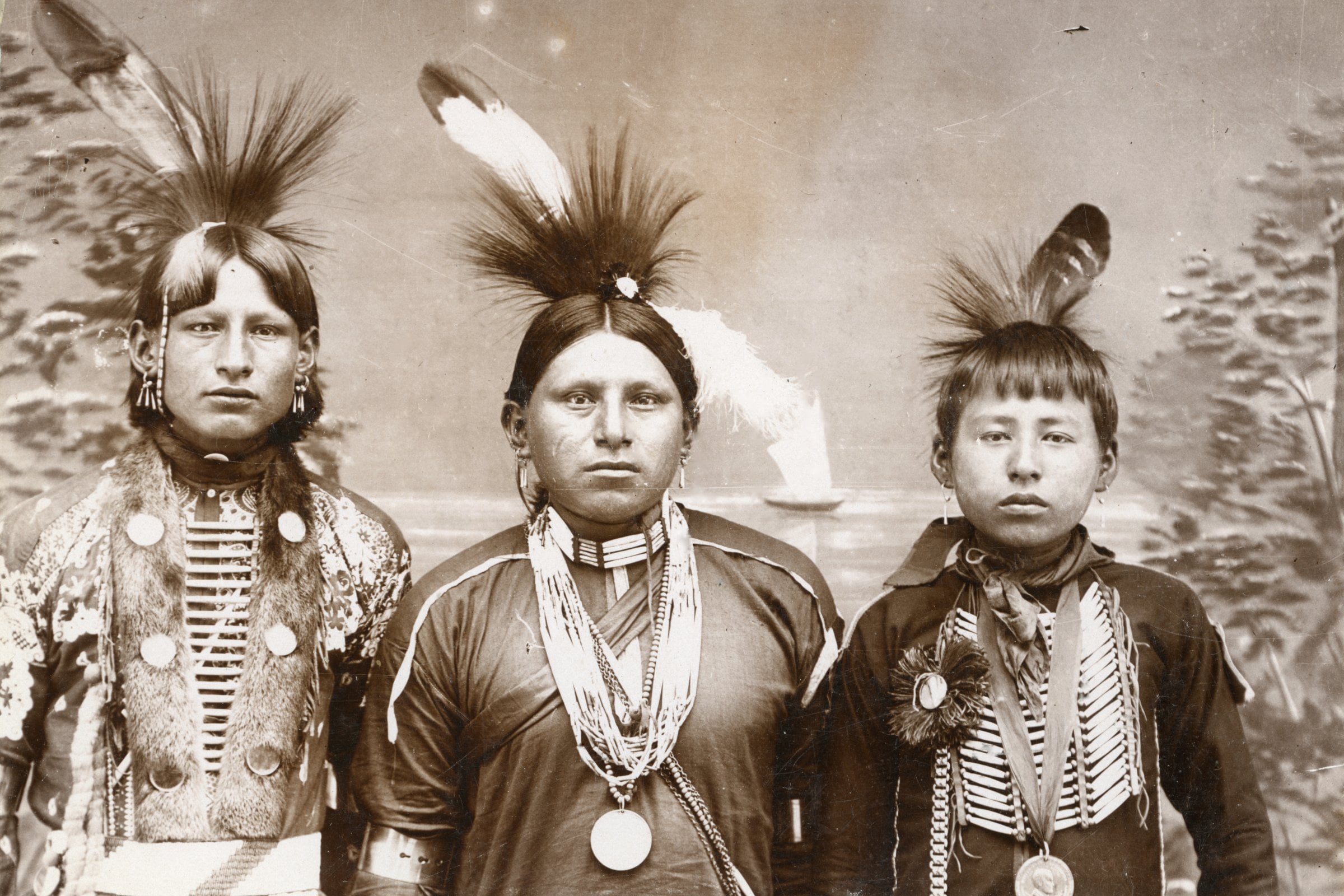

Left to right: Unidentified; Ke-tum-kah (Paul Buffalo) [Allottee #563]; Wa-we-se-ah (Pierce St. John) [Allottee #623].
Osage Museum Collection [P01-0643].
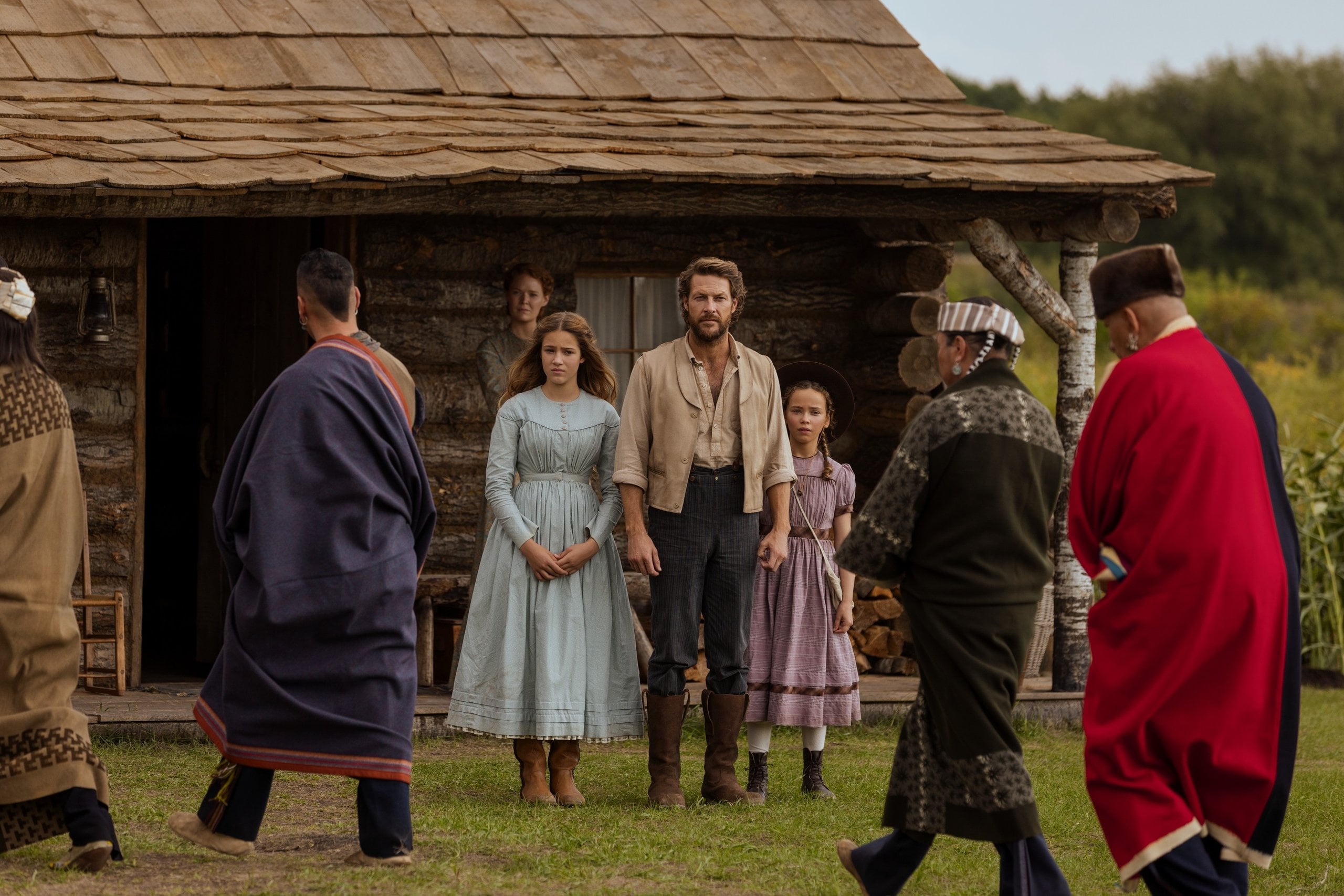

Episode seven of “Little House on the Prairie."
Netflix
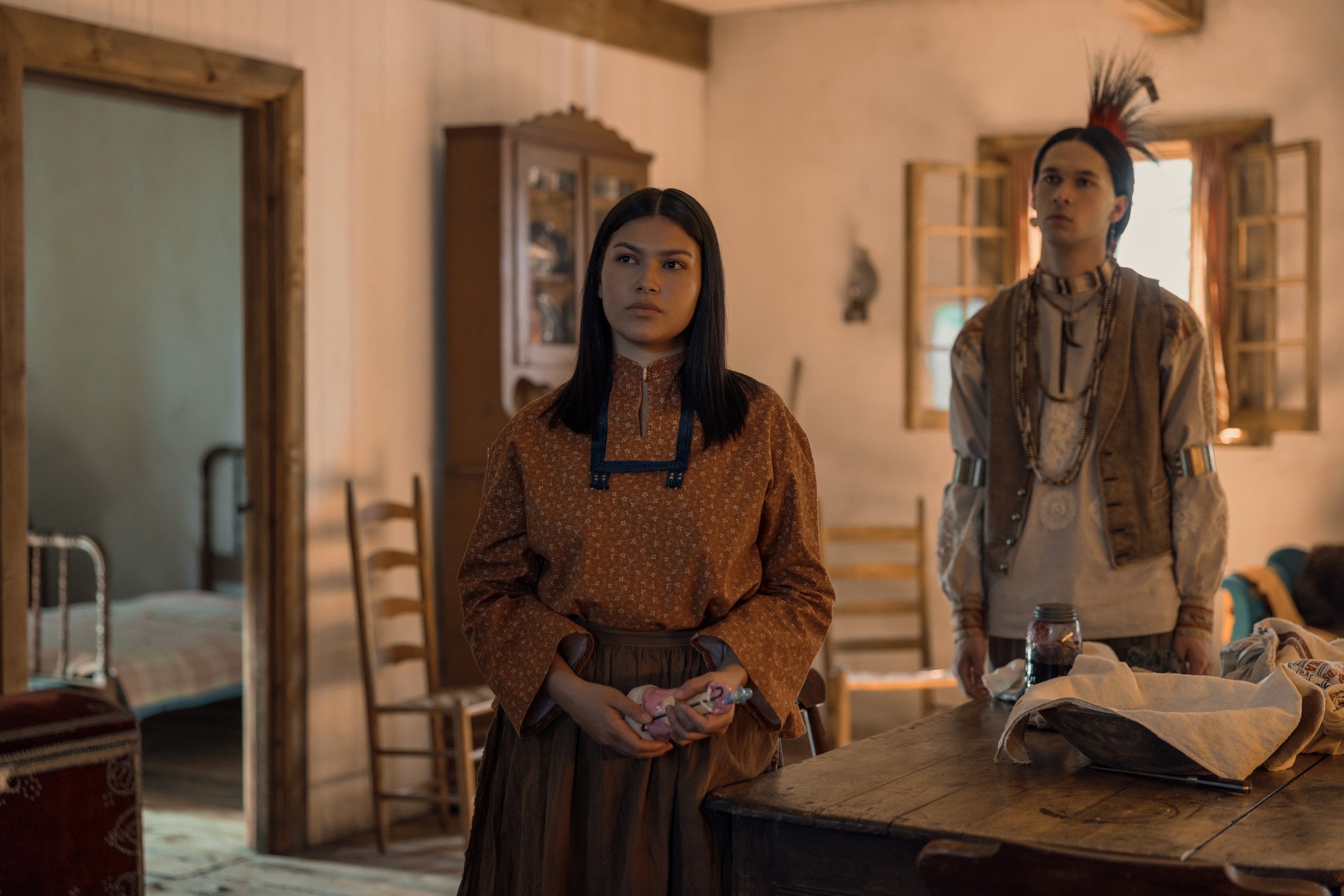

Alyssa Wapanatâhk and Xander Cole in “Little House on the Prairie."
Netflix
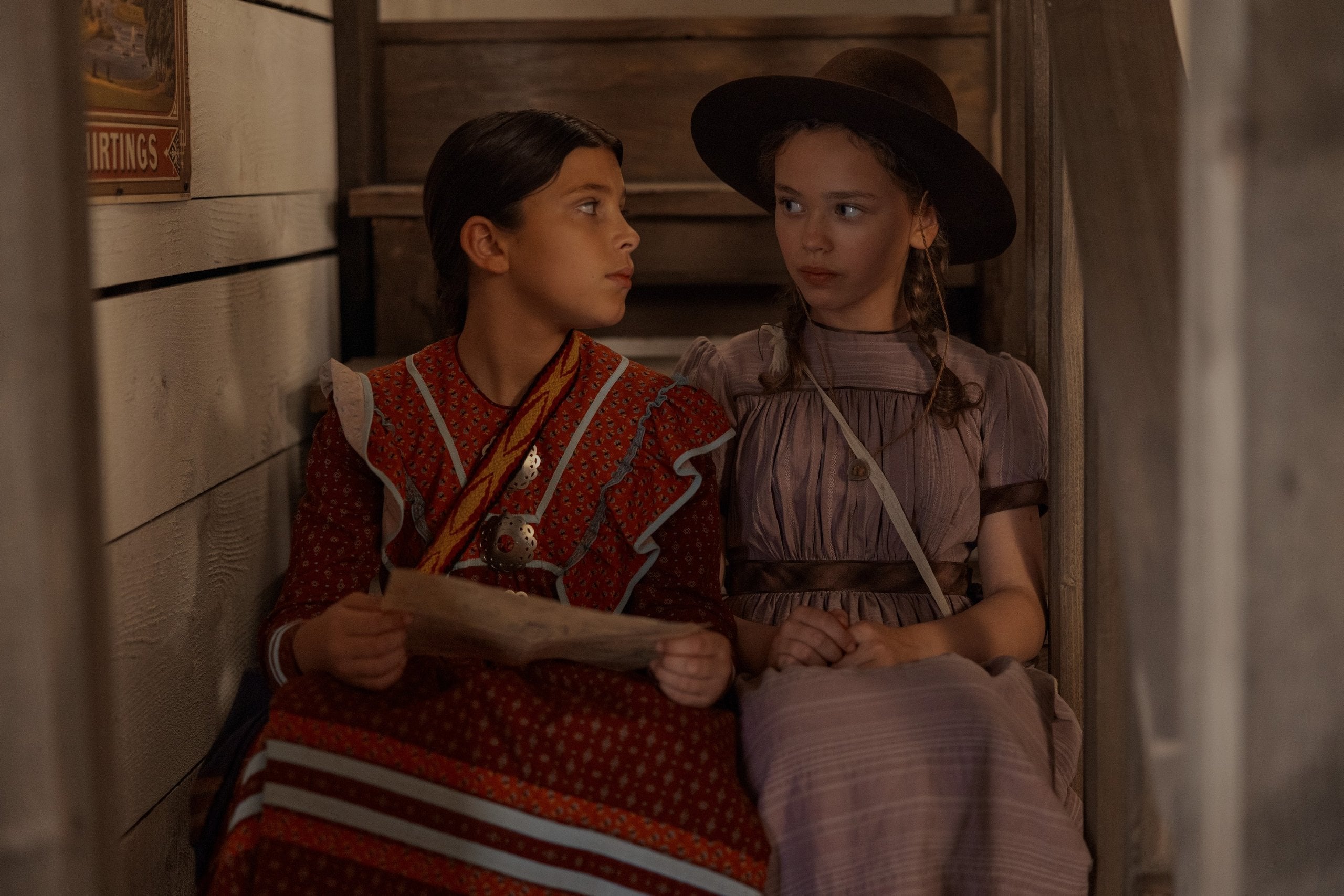

Wren Zhawenim Gotts and Alice Halsey as Laura Ingalls in “Little House on the Prairie."
Netflix
In a particularly inspiring photo that Travers stumbled across during his research, an Osage teenager repurposed pre-cut women's collars into a “masculine” and “cool” embellishment on his shirt. “I think that the details are the design,” Travers says. “Sometimes you can spin a whole character just from a little anecdote that you found in a diary entry.”
Among the Osage, different levels of dress can be seen in different contexts. Still, there are details that can be seen in all levels of formality. Throughout the show, many of the Osage characters wear a special beaded necklace handcrafted by O’Keefe herself. Using check glass beads and seed beads, O’Keefe spent entire meetings spinning the beads onto strings and wires and twisting them into the jewelry that we see on screen.
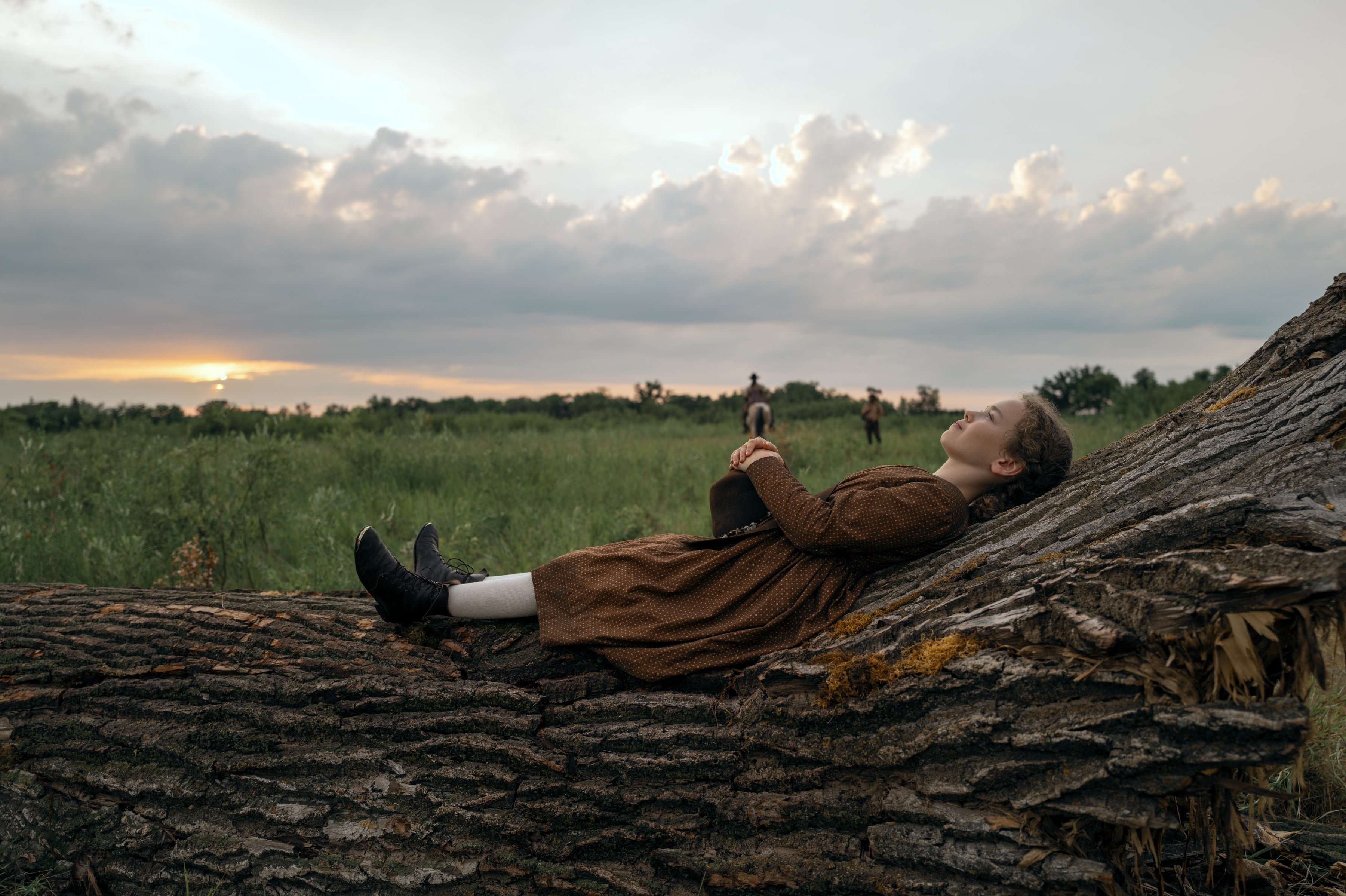

Alice Halsey as Laura Ingalls in “Little House on the Prairie."
Netflix
One of Travers’s favorite costume details from season one was the ever-changing embellishment on Laura’s signature brown hat. Taking inspiration from the chapter-opening illustrations in the books, he used the decoration to subtly signal where each episode’s story was headed, using ideas lifted from Halsey herself. “I was trying to put myself in that headspace of this young child seeing nature for the first time, and I thought it would be interesting for [Halsey] to decorate herself in some way, just using things from the planet,” Travers says.
Travers’ costume design played a crucial role in establishing the reboot's historical authenticity, as female actresses wore up to nine layers of finely woven cotton garments to accurately recreate period dress. Ironically, the cast ended up being more comfortable than the crew for this very reason. “As we got into the elements, the period was taking care of us in ways that I didn't predict,” Travers says. “At first I was like, wow, They're gonna be so warm and, my god, the laundry, but you realize all of that layering was done so that the base layers can get laundered the most frequently,” Travers says.