
From Lake Maggiore To Guy Ritchie’s Estate, ‘The Gentlemen’ Season 2 Goes Bigger & Bolder With Its Locations
Interiors
When production designer Martyn John returned for season two of “The Gentlemen,” he knew the world of the Netflix series was expanding, but didn’t realize just how ambitious Guy Ritchie had planned to make it .
At the beginning of season two of “The Gentlemen,” Eddie Horniman (Theo James) is no longer a reluctant heir to his aristocratic family’s estate. Gazing over the sprawling fields surrounding his country pile, he tells his loyal gamekeeper (Vinnie Jones) he’s determined to regain control of not only the land, but the power his family has frittered away over generations. “I want it back, Geoff. I want it all back,” he says.
And across the season that follows, this mantra drives Eddie to not only lean into a darker side of his personality, but also push his criminal enterprise beyond England into continental Europe, refusing to let any rival syndicate or family member undermine his authority. “It was astonishing how much bigger, bolder, and more ambitious this season was compared to the first one,” production designer Martyn John tells The Set Set. But for John, who worked as the supervising art director for the 2019 Guy Ritchie film of the same name and as production designer on the first season of the show, it wasn’t until he began breaking down the scripts that he realized quite how ambitious the new season would be.
To do it right—“The Gentlemen” is, after all, a show built on the fantasy of money, status, and excess—John leaned more into real locations this time around, finding spaces that could already provide the grandeur, eccentricity, and sense of status the story demanded. “We didn’t build as many sets as we did the first season,” he explains. “It was a lot more location-based.” The trick was finding places that felt as though they belonged in the heightened, slightly romanticized version of Britain that the Hornimans—and, to extent, the Glass family—inhabit. “We do make a romantic sort of version of both underground London and aristocratic London,” John says.
For the latter, that meant returning to Badminton House in England’s south west for the exterior of Halstead Manor, where the story picks up with Eddie now fully entrenched as Lord of the Manor. Inside, however, the house has evolved with him over the year that has passed since the events of the season one finale. His late father’s bedroom has become Eddie’s office, with John updating the space to reflect a younger, more modern heir while retaining the aristocratic trappings established in season one. “Guy wanted to make him a bit more modern, but still traditional, so we leaned into a slightly British version of Ralph Lauren for that,” he says. The result is a room that feels inherited rather than newly decorated: beautiful sofas and a new desk sit alongside family portraits and traditional details, suggesting that Eddie may be a thoroughly modern duke, but he’s still operating within the weight of his family’s history. Elsewhere, the shooting party scenes in episode one was filmed at Ritchie's own country house, Ashcombe Estate, with his lavish grounds doubling for that of Eddie's.
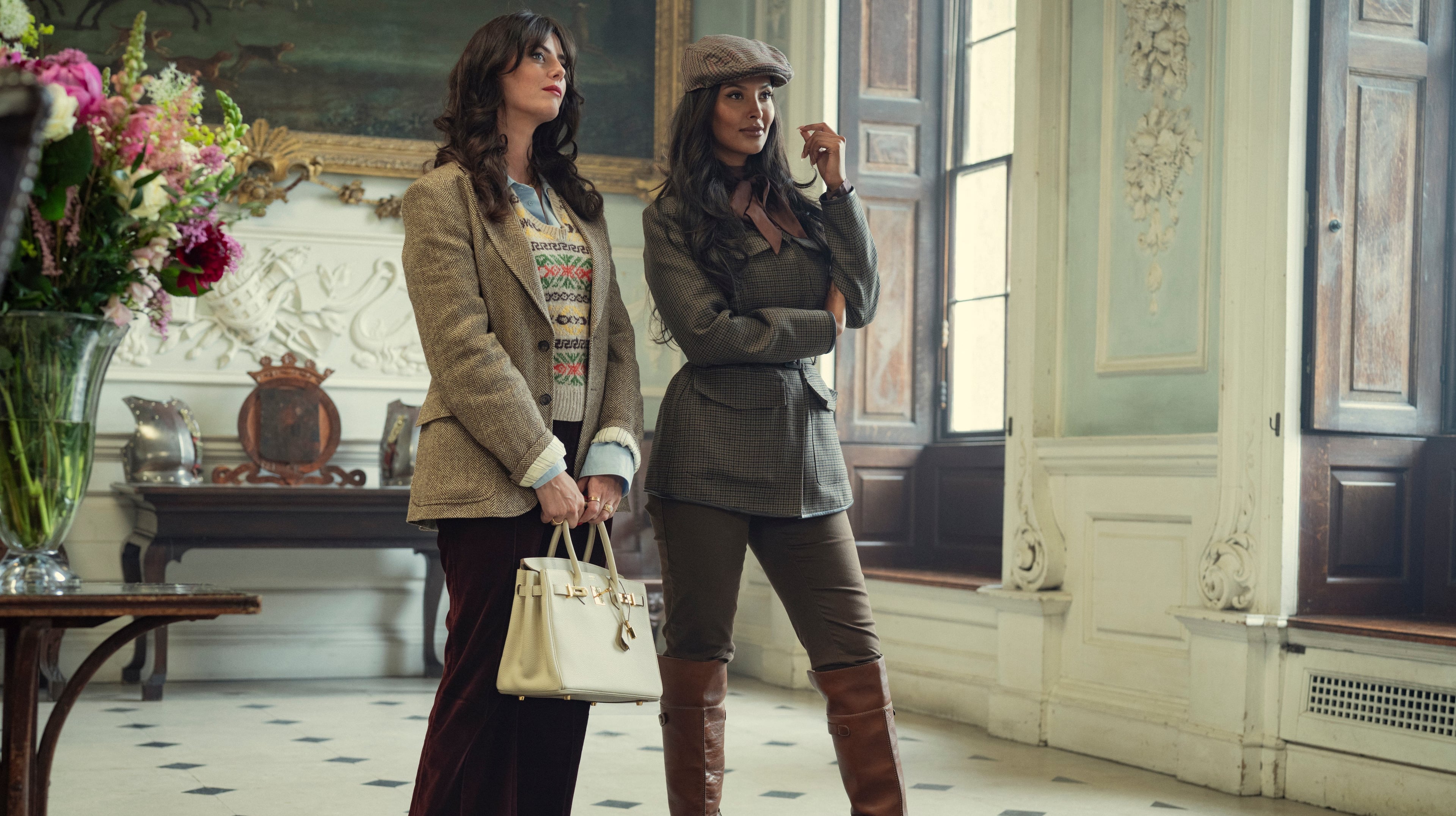

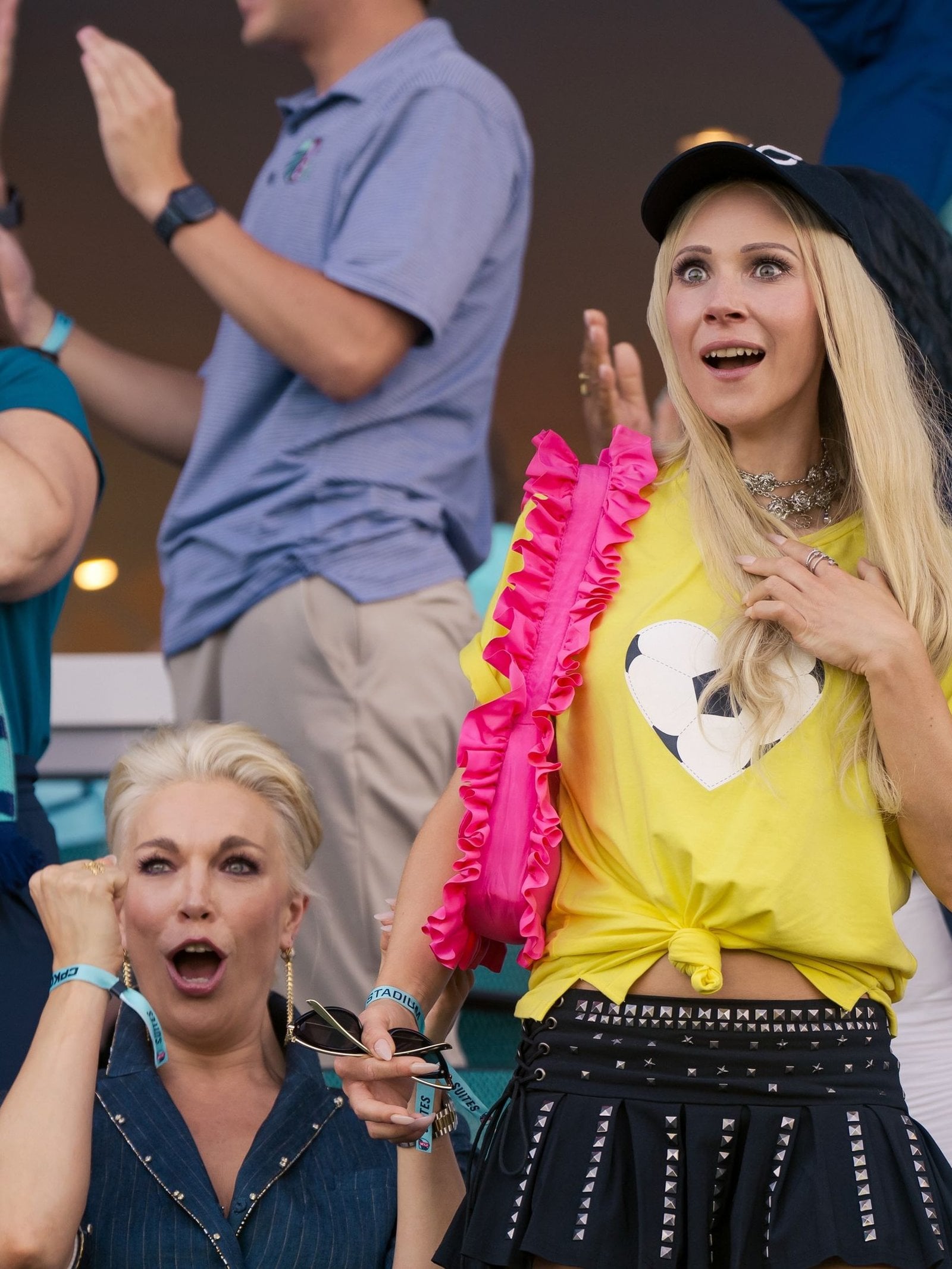
Susie (Kaya Scodelario) and Aisha (Maya Jama) in "The Gentlemen" season two.
Netflix
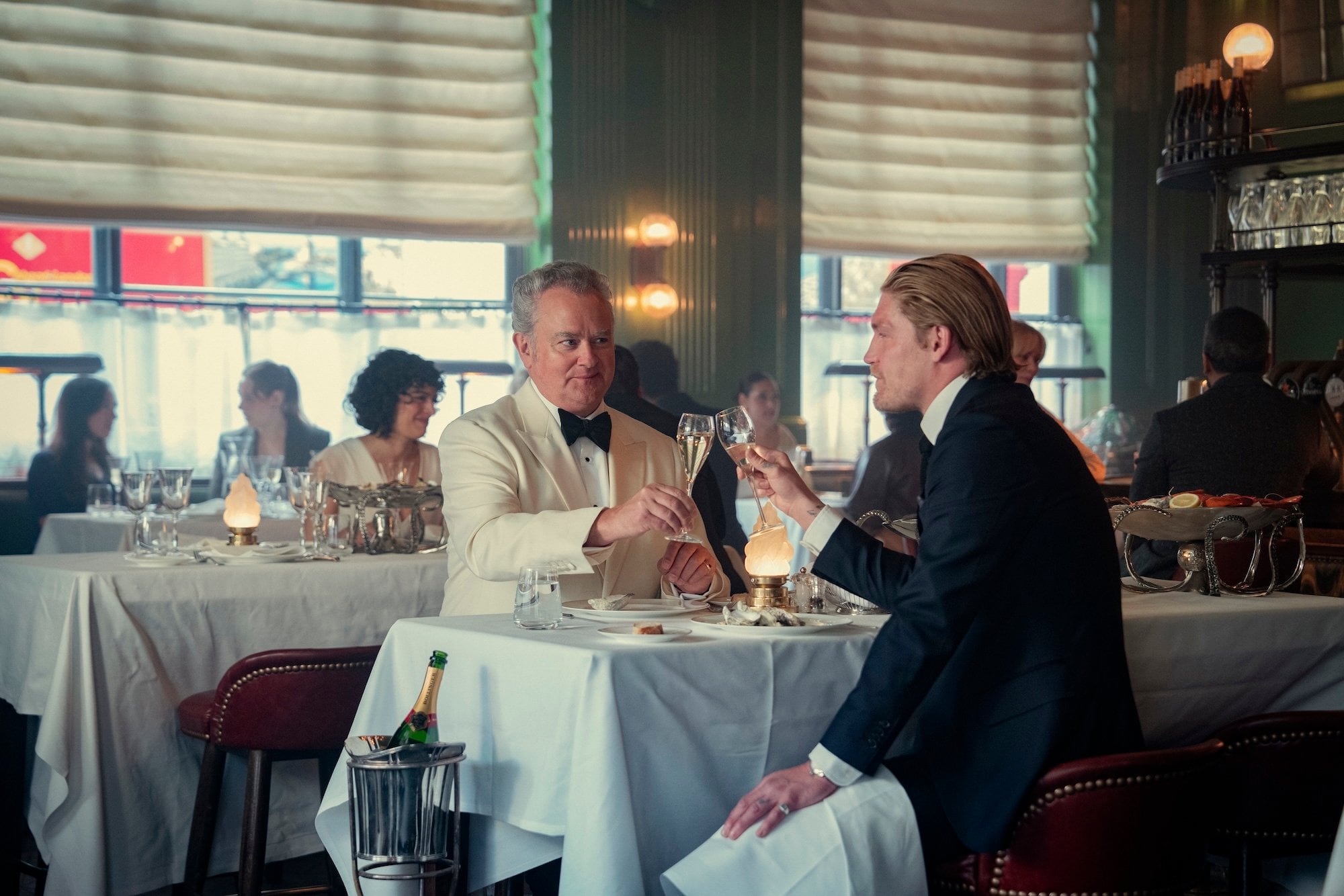
That balance between old-world grandeur and contemporary luxury extends throughout the season. When scouting London locations, John and supervising location manager Iggy Ellis looked for spaces with “scale and a panache about them to be worthy of ‘The Gentleman,’” he says. Restaurants, hotels, clubs, and private spaces all needed to feel like an extension of the characters’ wealth and style. For that exact reason, The Wigmore, a bar attached to the Langham Hotel, was chosen as the meeting place for Lord Hawthorne (Hugh Bonneville) and Jack Glass (Harry Goodwins) in episode two (“it's the most incredible colour green and so beautiful on camera,” John says), and Carlotta, an Italian eatery loved by influencers for its maximalist aesthetic, is where Eddie, Susie, and their dates find themselves in episode four for a special night out. “I’m always up for new places because it's awful when you’re watching a film or TV show and you know exactly where the locations are,” John says. “So we always like to drop in places when we’re scouting around London. I also like to use search engines quite a lot. I put things in like ‘the most fabulous restaurants in London’ just to see what comes up.”
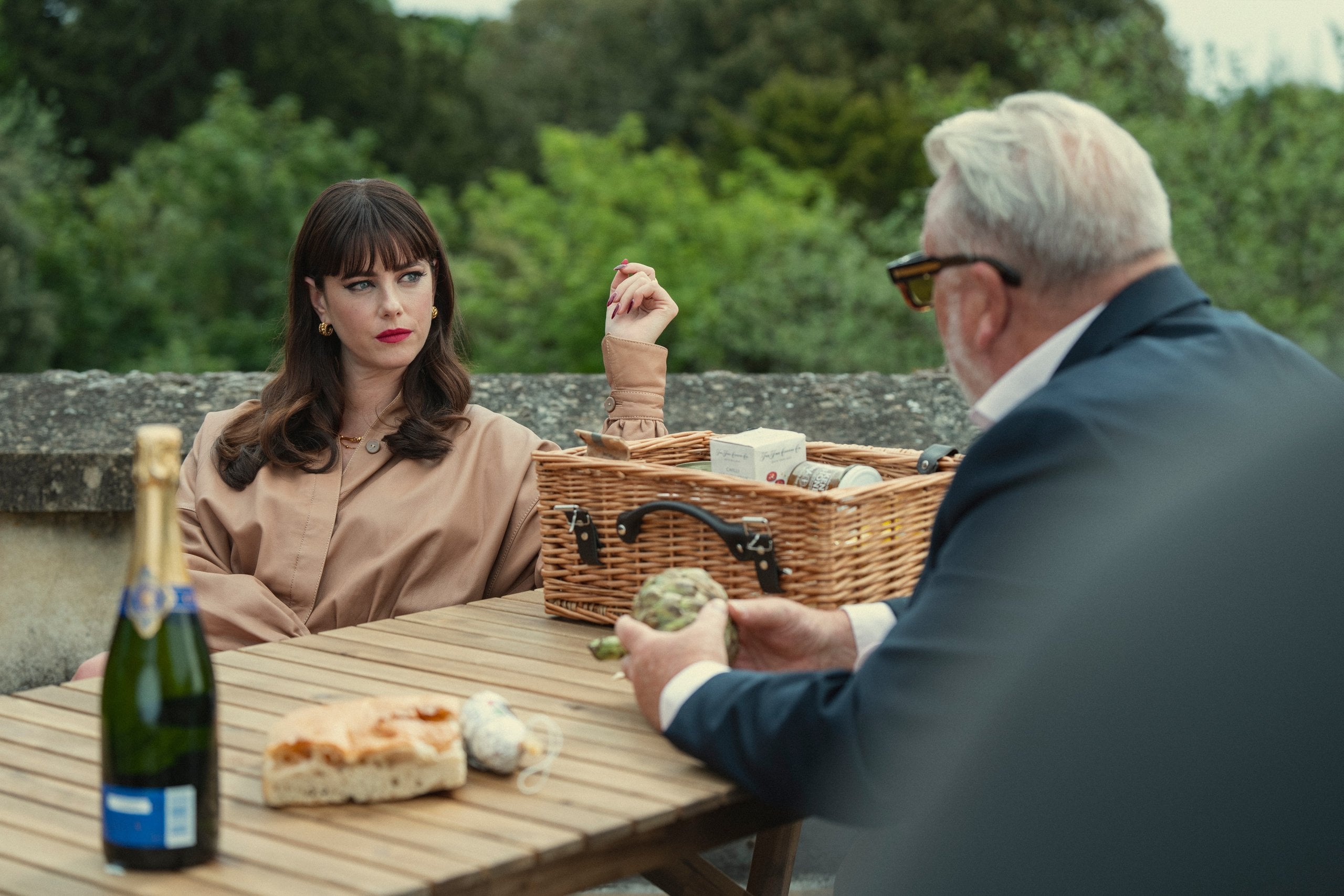



Some of the season’s most memorable spaces, meanwhile, were created through a combination of real locations and John’s art department. Bobby Glass’s (Ray Winstone) lakeside sauna, which the show returns to again and again, was something Ritchie actually asked John to build from scratch since the filmmaker loved the idea of Bobby’s prison functioning more like a private country retreat than a standard correctional institution. “Guy loves a sauna. I’ve done a number of jobs abroad with him, and I always have to build him a sauna,” John laughs. “And so for this, he said to me, ‘Martyn, I really want this sauna to have a fantastic view.’” The idea of building it on a pontoon that would float in the water was quickly ruled out (there would be too many logistical problems and health and safety concerns), and so they went for the next best thing: building it right up to the water’s edge so that you could swim right up to it. The sauna itself was inspired by a Russian dacha, complete with ornate detailing and an oversized interior. It even included a trapdoor with steps leading into the water, alongside a veranda, hot tub, and dining area.
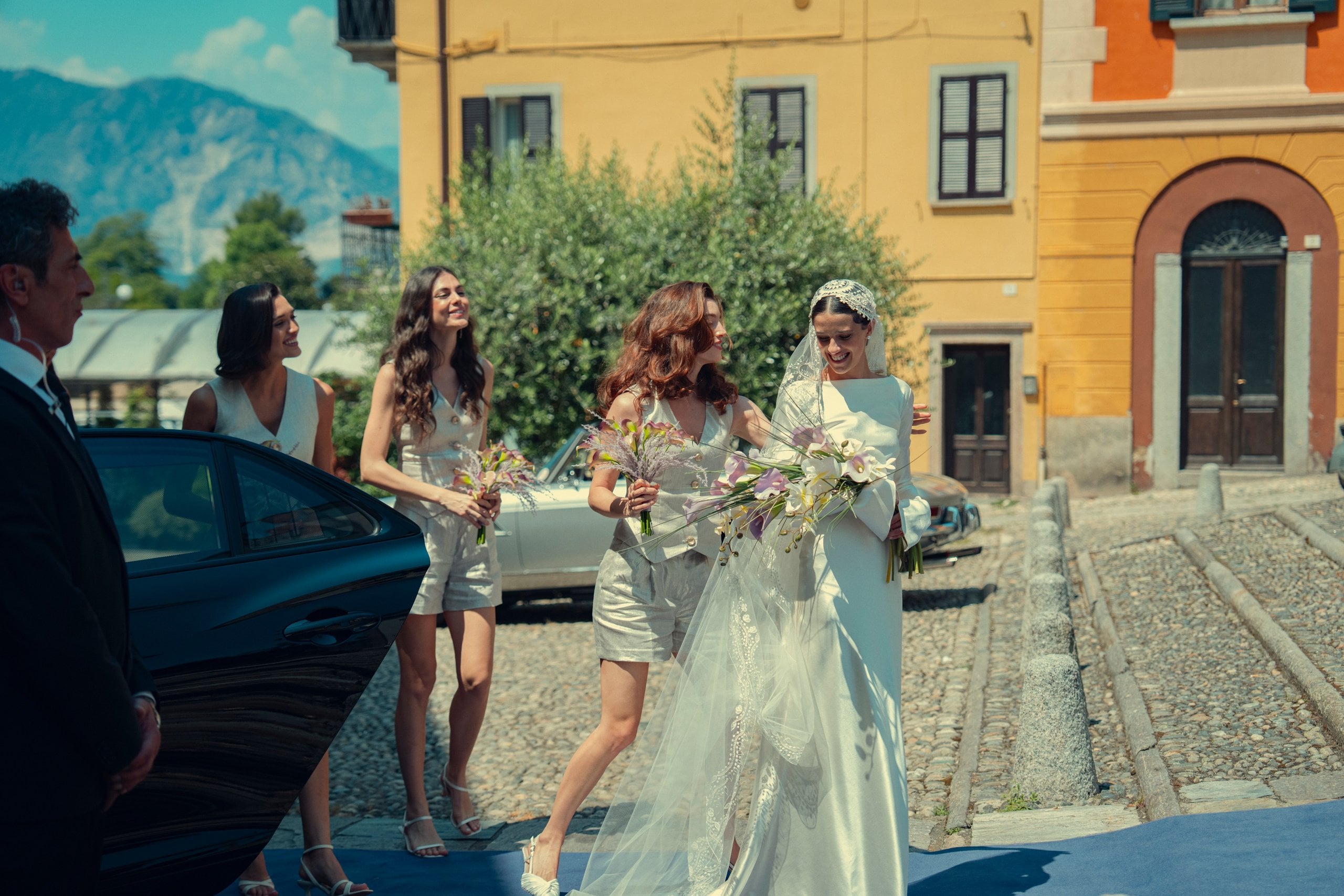


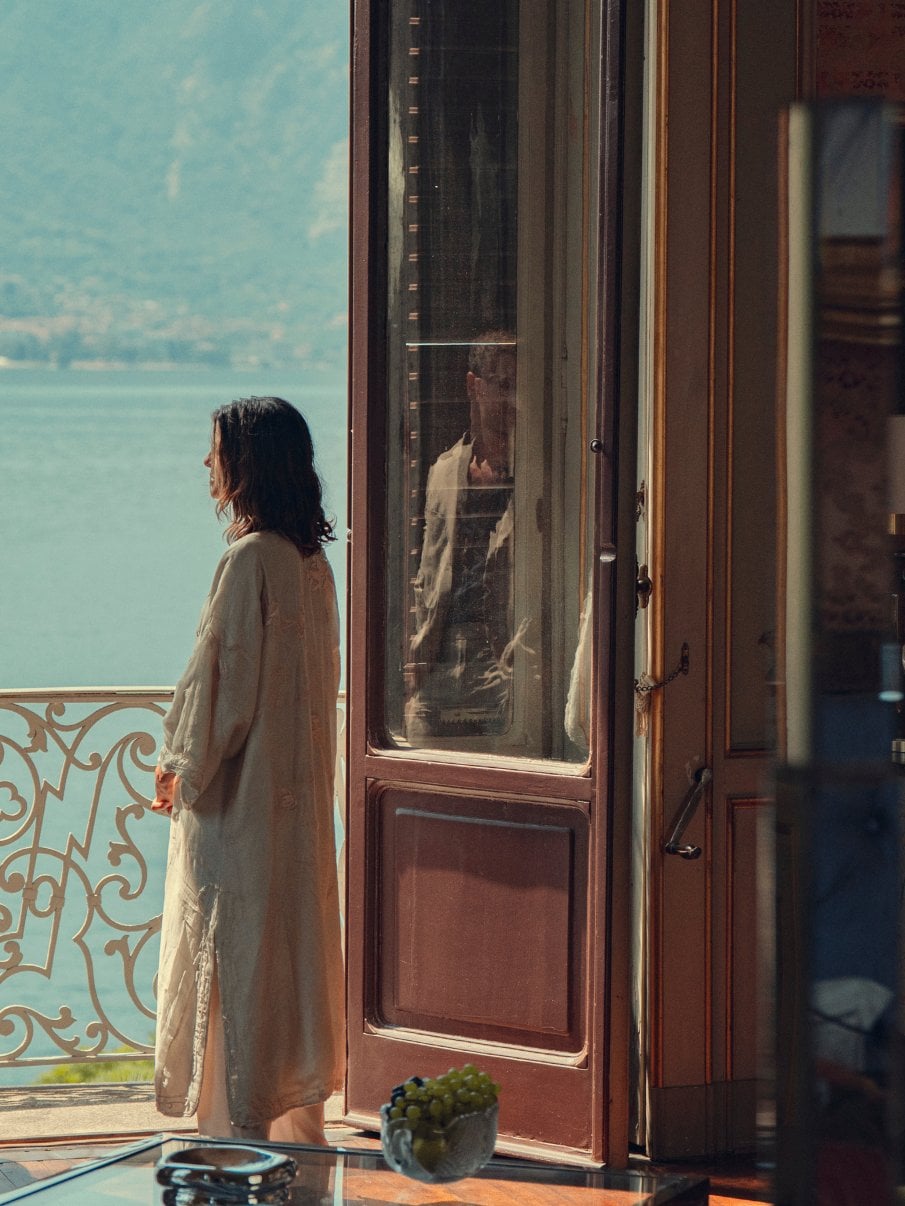
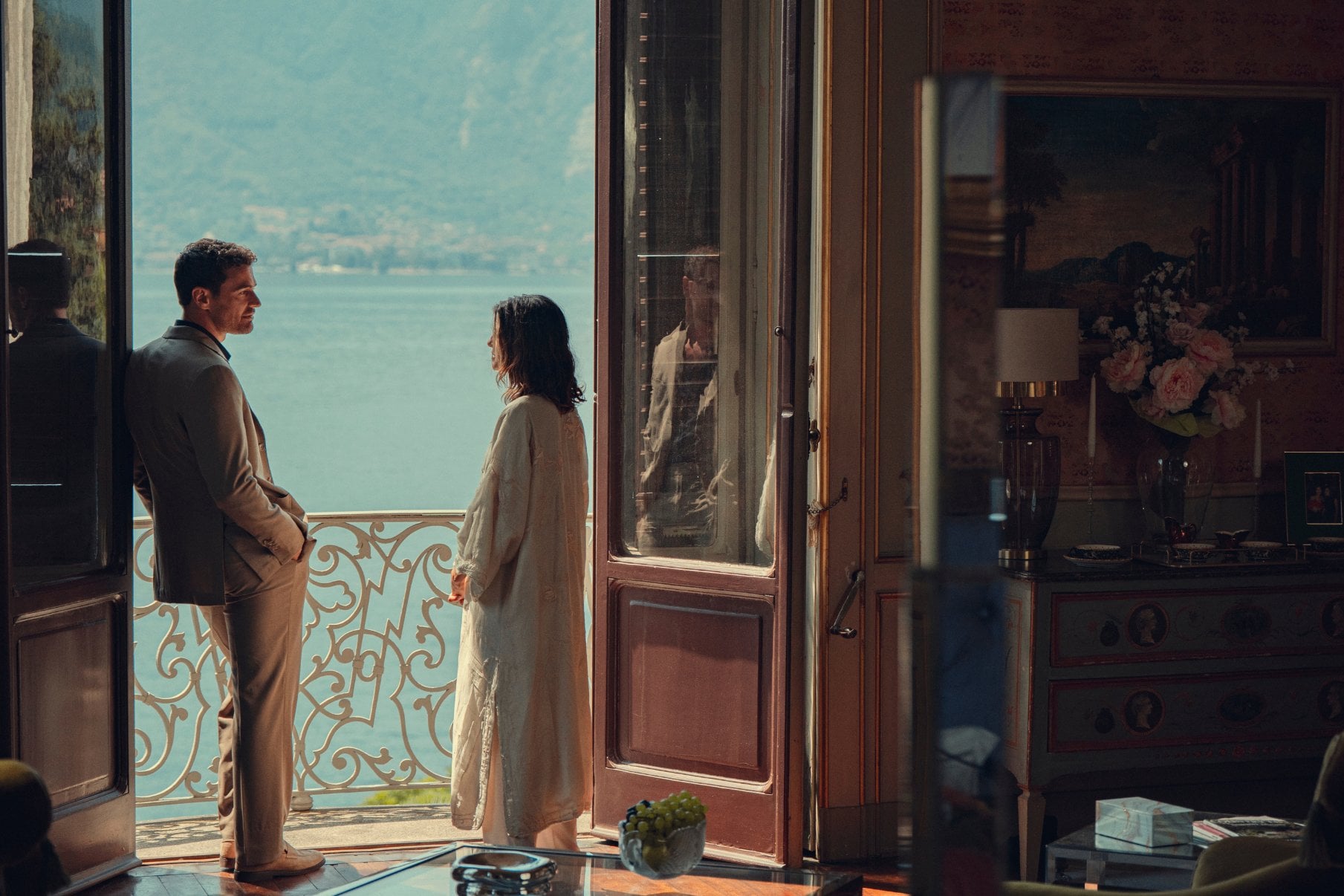
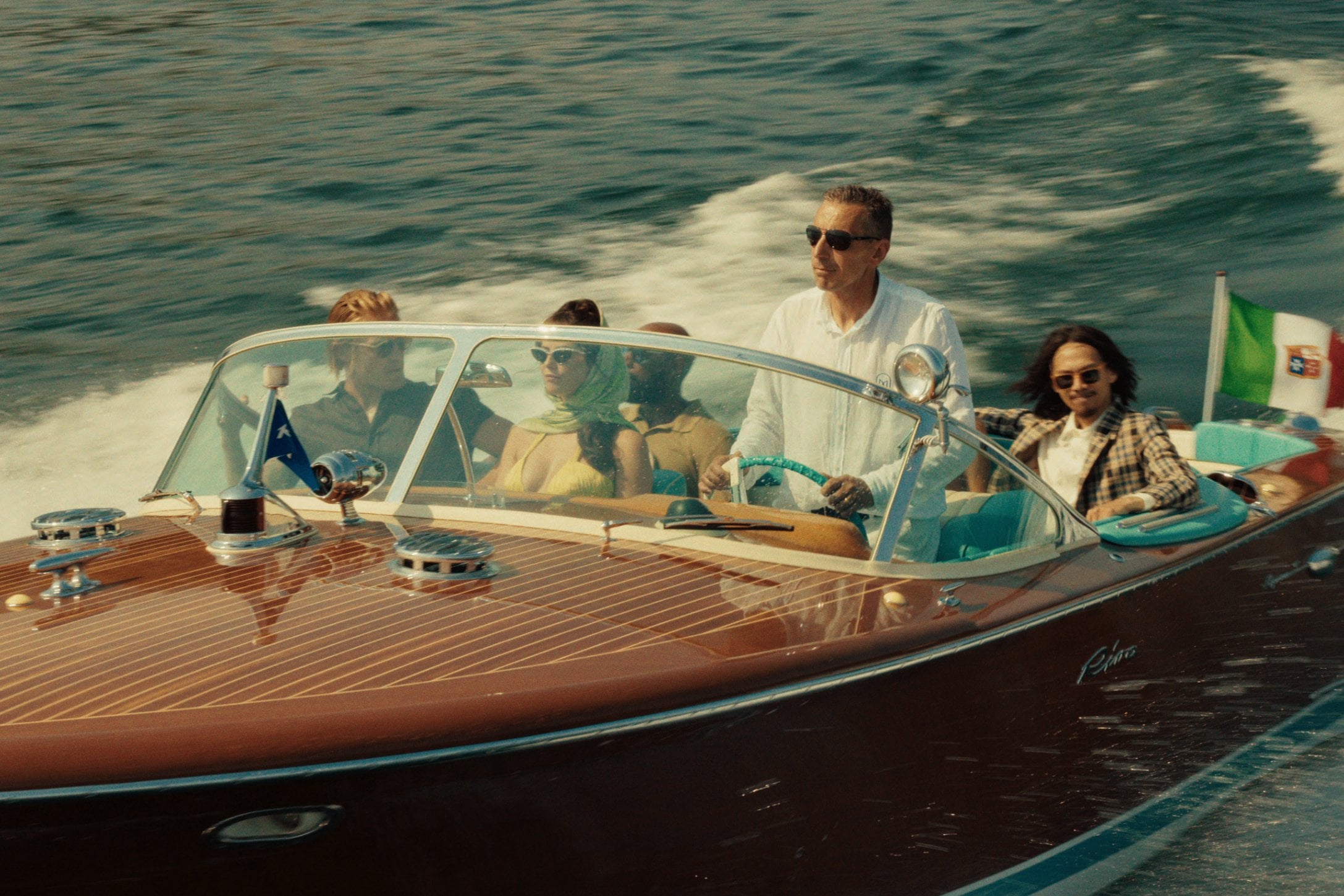
When not getting instructions and advice from Bobby in his sauna, Eddie and Susie spend a great deal of time expanding their criminal empire in Italy, taking the cast and crew across the continent. For the Italian villa owned by Bella (Benedetta Porcaroli), John deliberately looked for something that could rival Badminton House and act as its foil, and was delighted when he came across Villa Rusconi-Clerici in Verbania, on the Piedmont shore of Lake Maggiore. “We trawled Lake Como, and it became obvious that actually Lake Maggiore was the best place to go,” owing to the variety and sizes of villas in the latter, John says. “Then we found the villa and it was a similar color to Badminton House. It had this yellow-ochre exterior which we also had at Badminton and, I hope they don’t mind me saying so, the same faded grandeur.”
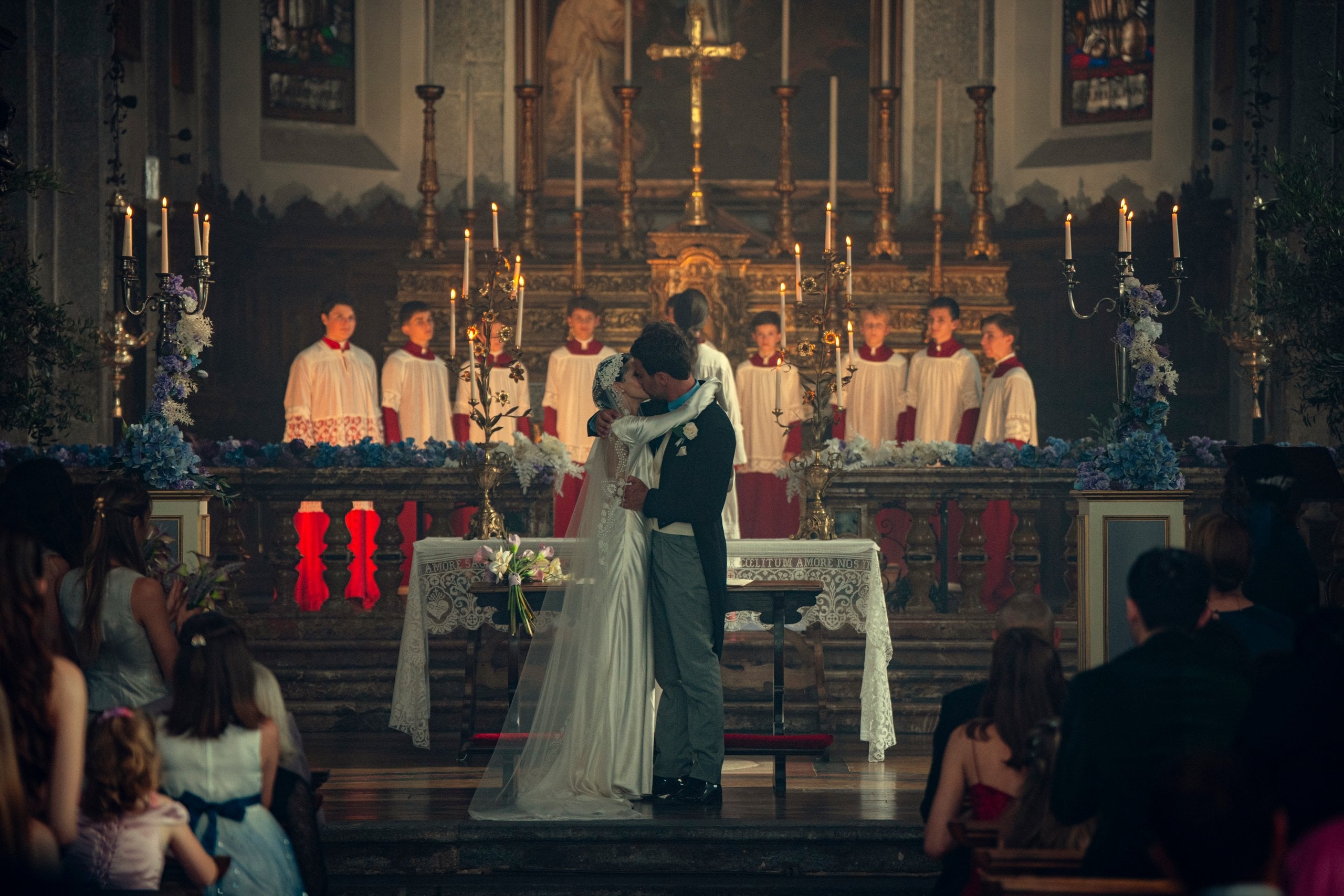
Even the wedding church was chosen with the same eye for scale and spectacle. The team wanted somewhere grand enough to feel appropriate for the occasion but intimate enough to retain the sense of a family wedding and so settled on Chiesa San Leonardo. John and his team dressed the venue with olive trees and brought over florists from London to prepare for Bella and Eddie’s wedding in episode six. But not everything set in Italy was actually filmed there. Some of the hotel bedrooms were shot back in England since John was able to find a particular Italianate house that looked convincing enough on camera.
For John, though, all of these details ultimately come back to the same question: does the space serve the story? That’s the most important thing,” he says. And in season two, the answer meant making Eddie’s world feel bigger in every direction.