Meet the Production Design Duo Bringing Back This Hitchcock-Era Set Design Approach
Interiors

Interiors
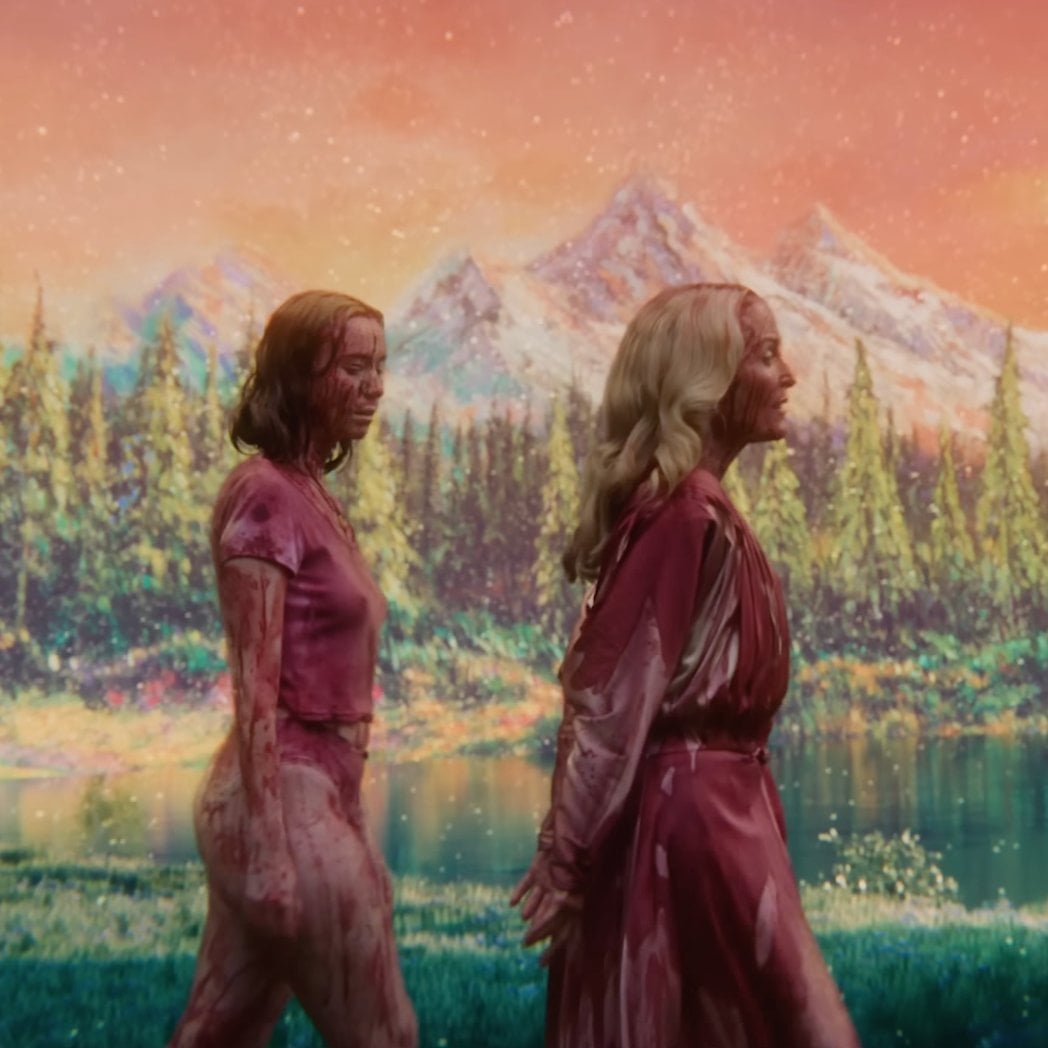
Brandon Tonner-Connolly and Matt Hyland hand-painted five glass backdrops to create the storybook landscapes in “Teenage Sex and Death At Camp Miasma.”
In the era of artificial intelligence, the most innovative approach to set design might just be a return to the manual methods of Classic Hollywood, where hand-painted glass planes predated green screens and every film had its own on-set “snow guru.” No project better epitomizes this dedication to craft and human creativity than Jane Schoenbrun’s latest release, “Teenage Sex and Death at Camp Miasma,” where the artifice of the set design is precisely the point, recalling the nostalgia of summer camp slasher films and children’s book illustrations.
Schoenbrun is the type of rare, directorial talent whose work defies easy categorization. In their latest picture, a sexually frustrated film director visits the home of Billy Presley (Gillian Anderson), the actress responsible for her sexual awakening in a cult horror franchise—in the hopes of recruiting her for an updated remake. The protagonist, Kris (Hannah Einbender), traverses through snowy lakes, rural gas stations, and a flesh-padded abyss crafted by production designers Brandon Tonner-Connolly and Matt Hyland without the crutch of overbearing digital effects.
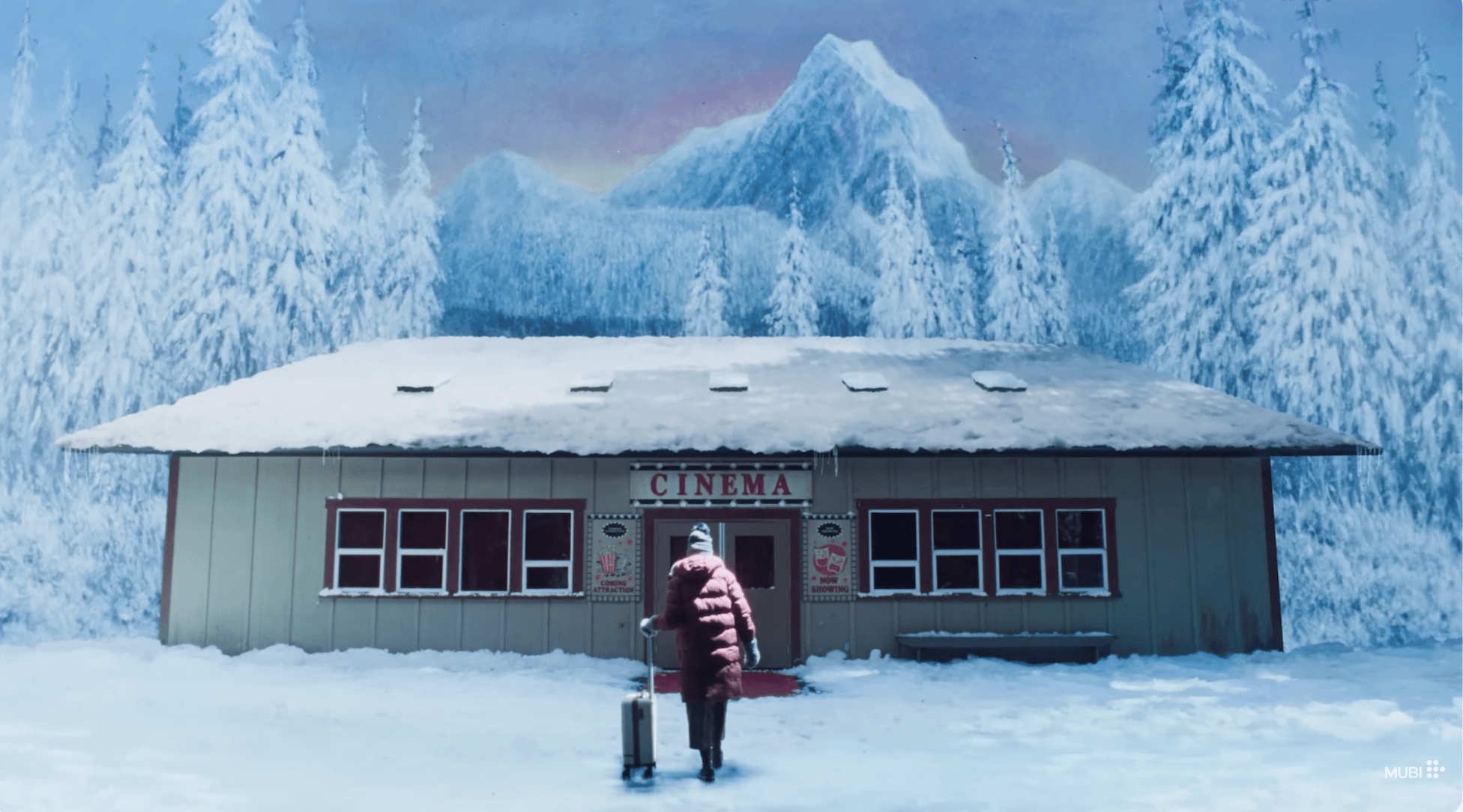

Hannah Einbinder in "TEENAGE SEX AND DEATH AT CAMP MIASMA."
Mubi
Taking a page out of Hitchcockian-era production design, Tonner-Connolly and Hyland used glass matte painting to create their impressionistic backdrops, a technique where parts of a scene are hand painted onto a glass plate placed between the camera and the set to create an illusory, storybook background. “As you paint on that glass, it is blocking off what is really there, so you have your actors walk through a scene in such a way that doesn't interact with the painted, blocked bit,” Hyland explains. “From the perspective of the camera, everything works seamlessly and it looks like the actor is walking in the world that you've painted on that glass.”
While many filmmakers opt for hyper-realism in contemporary film, the Camp Miasma team was more concerned with capturing an emotional resonance. “A lot of times the whole goal [of production design] is to extend the world of your movie seamlessly,” Hyland says. “In our case, we were anchoring it a bit more on an emotional side of things, and that let us get a lot more playful with the technique.” As Kris spends more time in Billy’s eerie compound, her grasp on reality loosens and the viewer is lost in the illustrative surreality of it all. “We very intentionally wanted [Kris] to get more and more absorbed in the landscapes and in this storybook romance inside this fantasy world that Billy's constructed at the camp,” Tonner-Connolly says.
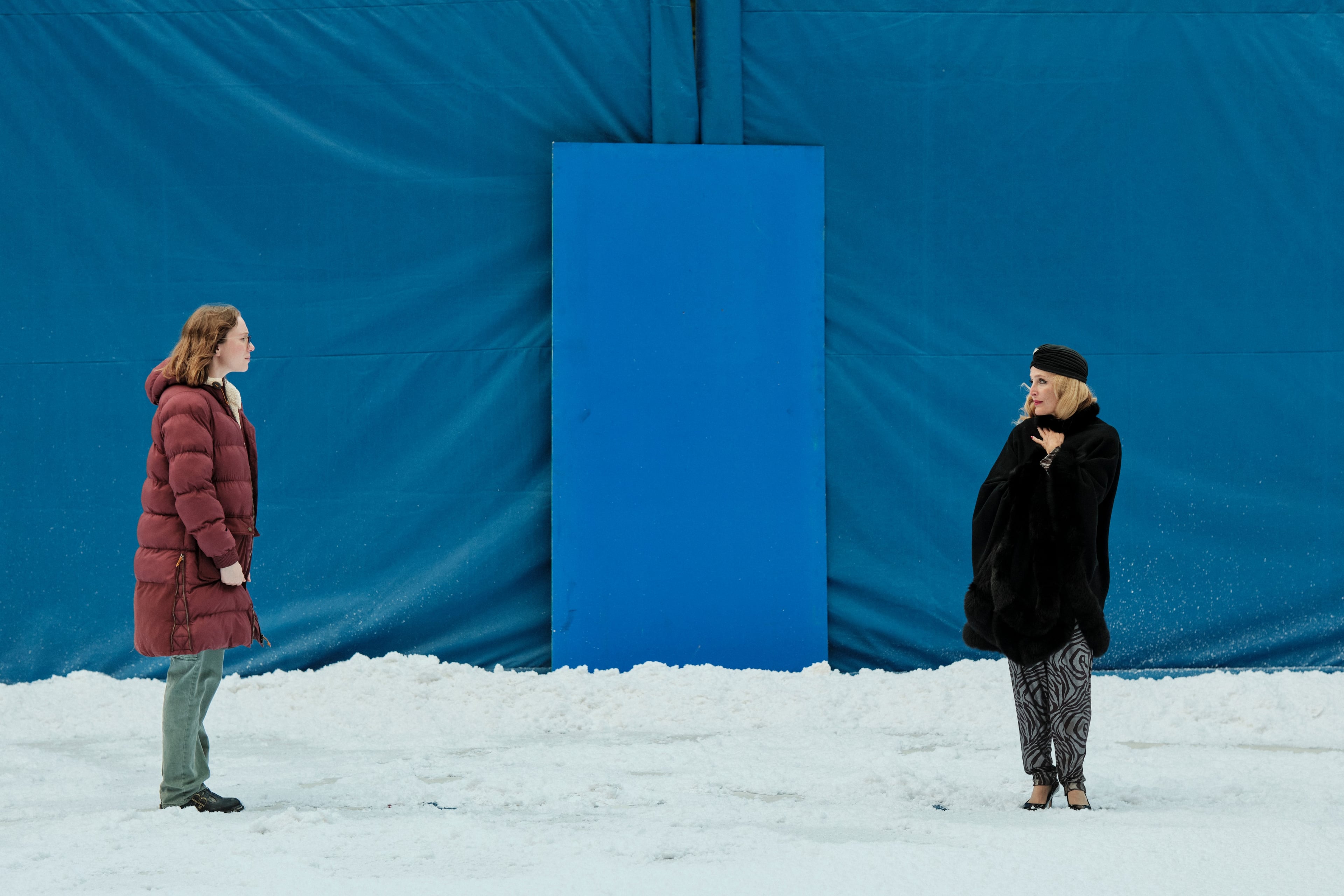

Hannah Einbender and Gillian Anderson in "Teenage Sex and Death At Camp Miasma."
Mubi
The resulting illusion is reminiscent of John Carpenter films, without parodying any one aesthetic. “[We] wanted to use them to draw you into the emotional landscape of the characters, and they're kind of these intentionally dreamlike visuals that act as portals to this fantasy world of play that Billy is constructed,” Tonner-Connolly says. Schoenbrun ended up being so taken with the manual matte painting setup that they integrated additional footage of the glass installation into the film, which Hyland saw as a testament to the “intimate collective experience” of being out on location and watching a special effects illusion happen in real time. “The really fun thing about the glass mat is that it's shot live,” Hyland explains. By nature of the glass illustration being placed in front of the camera lens, the scene must be filmed all at once or it doesn't work.
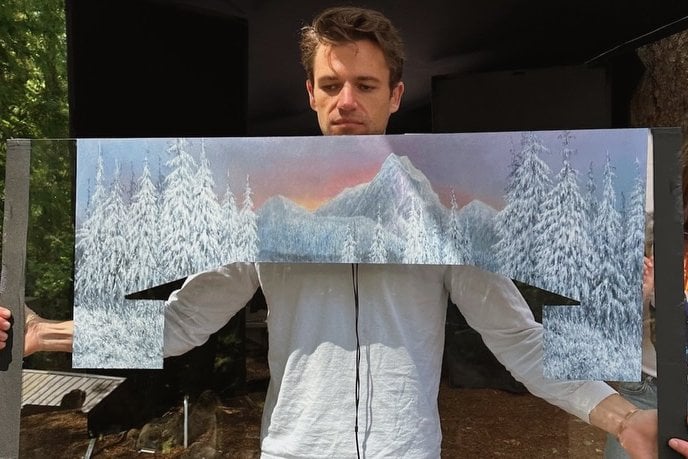

Co-producer Willy McGee holding up one of the hand-painted glass panels used in "Teenage Sex and Death At Camp Miasma".
Matt Hyland
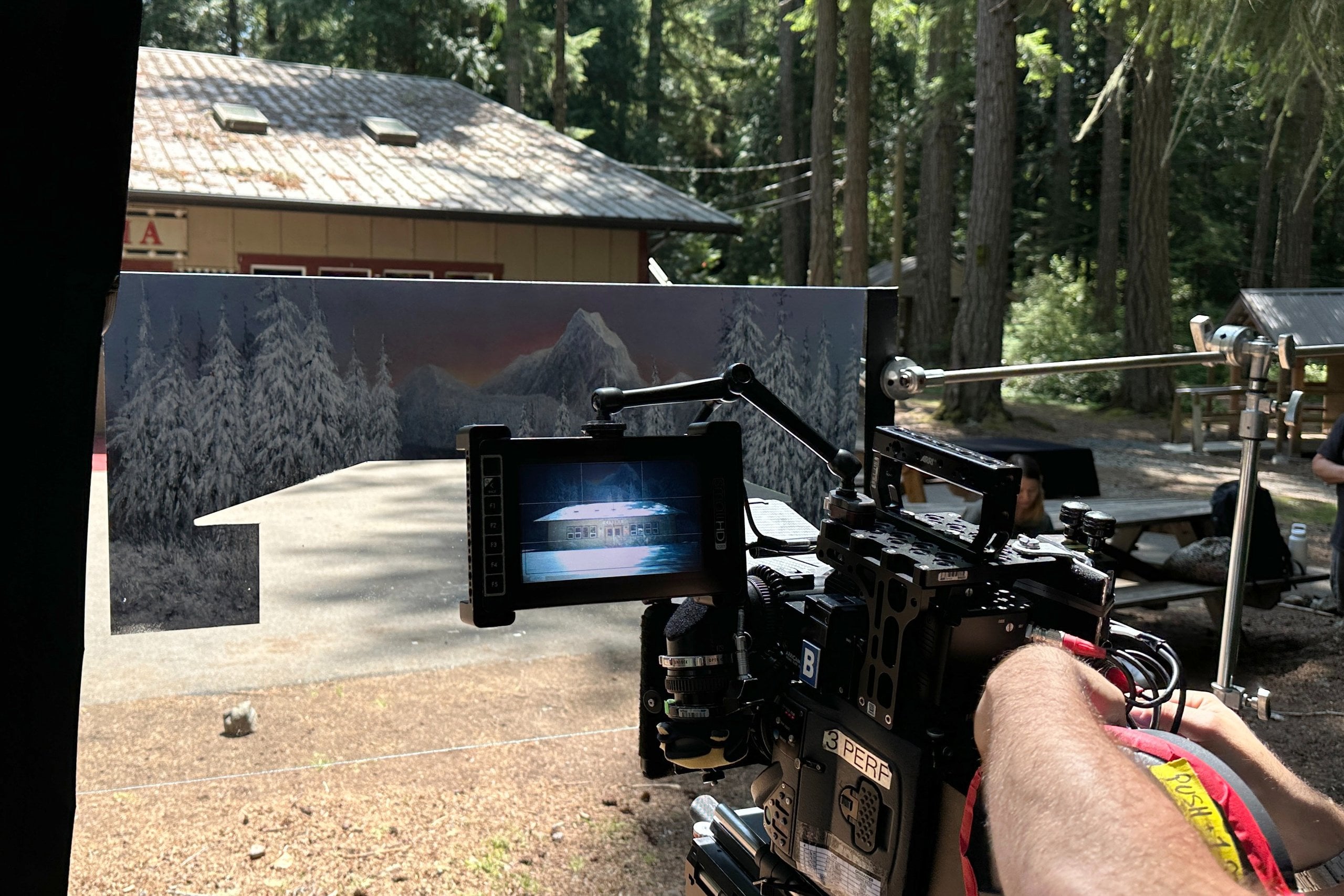

What the hand-painted glass panels looked like on set.
Matt Hyland
Co-producer Willy McGee holding up one of the hand-painted glass panels used in "Teenage Sex and Death At Camp Miasma".
Matt Hyland
What the hand-painted glass panels looked like on set.
Matt Hyland
The more tangible sets of “Teenage Sex and Death at Camp Miasma” include a frozen-over lake and remote wooden cabin, both of which were shot on Vancouver Island and draw on the slasher movie canon, without veering into parody. Tonner-Connoly applied the same philosophy he used for the show-within-the-show in his previous collaboration with Schoenbrun, “I Saw the TV Glow,” to the Camp Miasma franchise. “That show didn't need to look like '90s TV shows, but instead it would look and feel like the memory of watching them,” he says. The goal was to elicit “images and scenes remembered and misremembered” that trigger the emotions young audiences had while watching camp and slasher horror films for the first time. “We wanted to create this new thing out of these powerful emotions, and speak the language of the genre without necessarily retreading familiar territory,” he says.
For Billy Presley’s wooden cabin, which Kris learns is built on the location of the original Camp Miasma franchise, the design duo took to antique sales in and around Vancouver Island for those charming “character details” that could only be sourced out of someone’s garage. Tonner-Connoly’s favorite find was a ' 70s-era Plinko game. “Instead of it having a pellet or ball, it ran on M&M's,” Tonner-Connoly explained. “So it was all these kinds of little details that refer to Billy's sweet tooth, and we had little things where the ice bucket in her house on the bar doesn't have ice in it; It has Sour Patch Kids.”