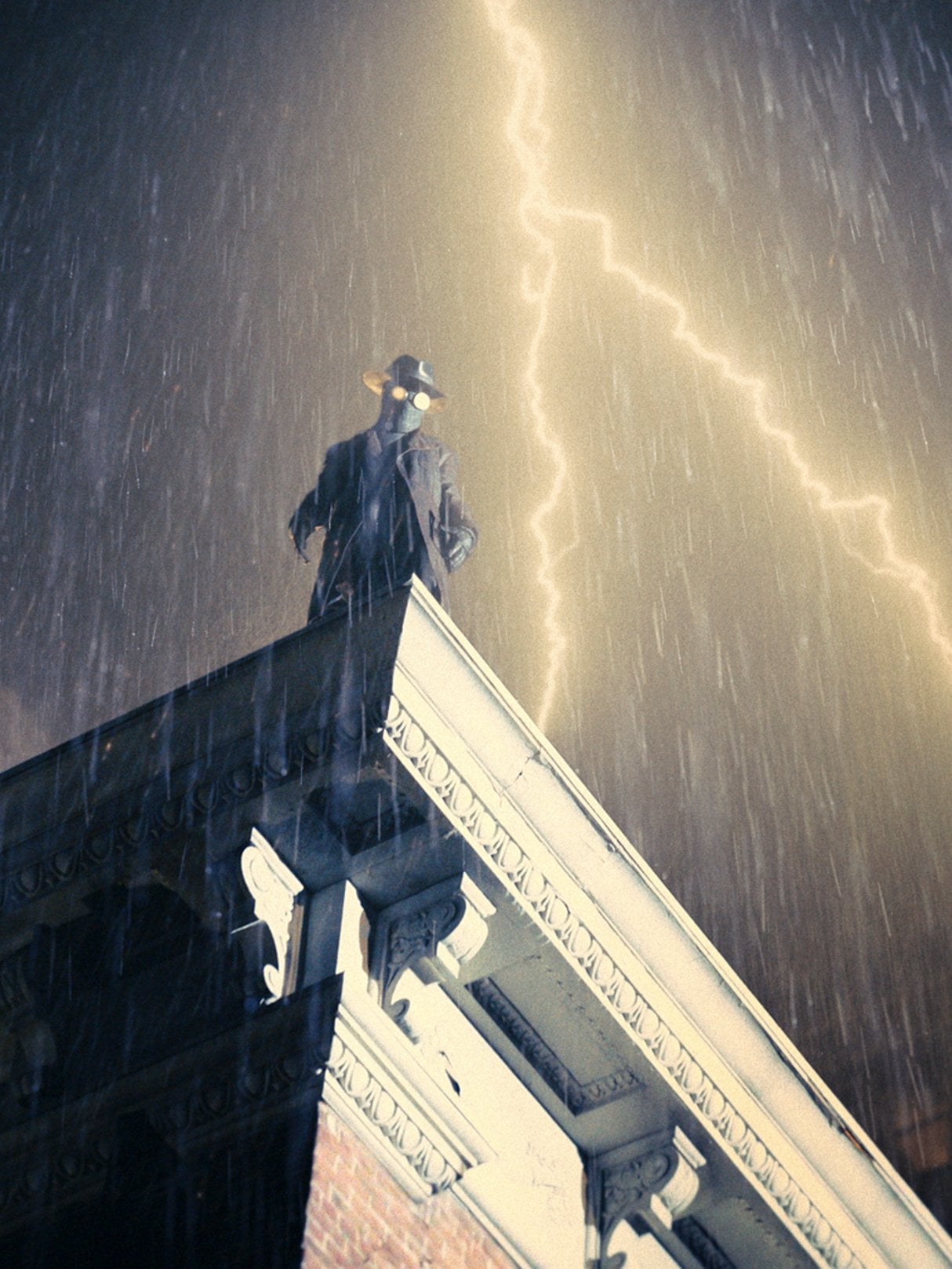

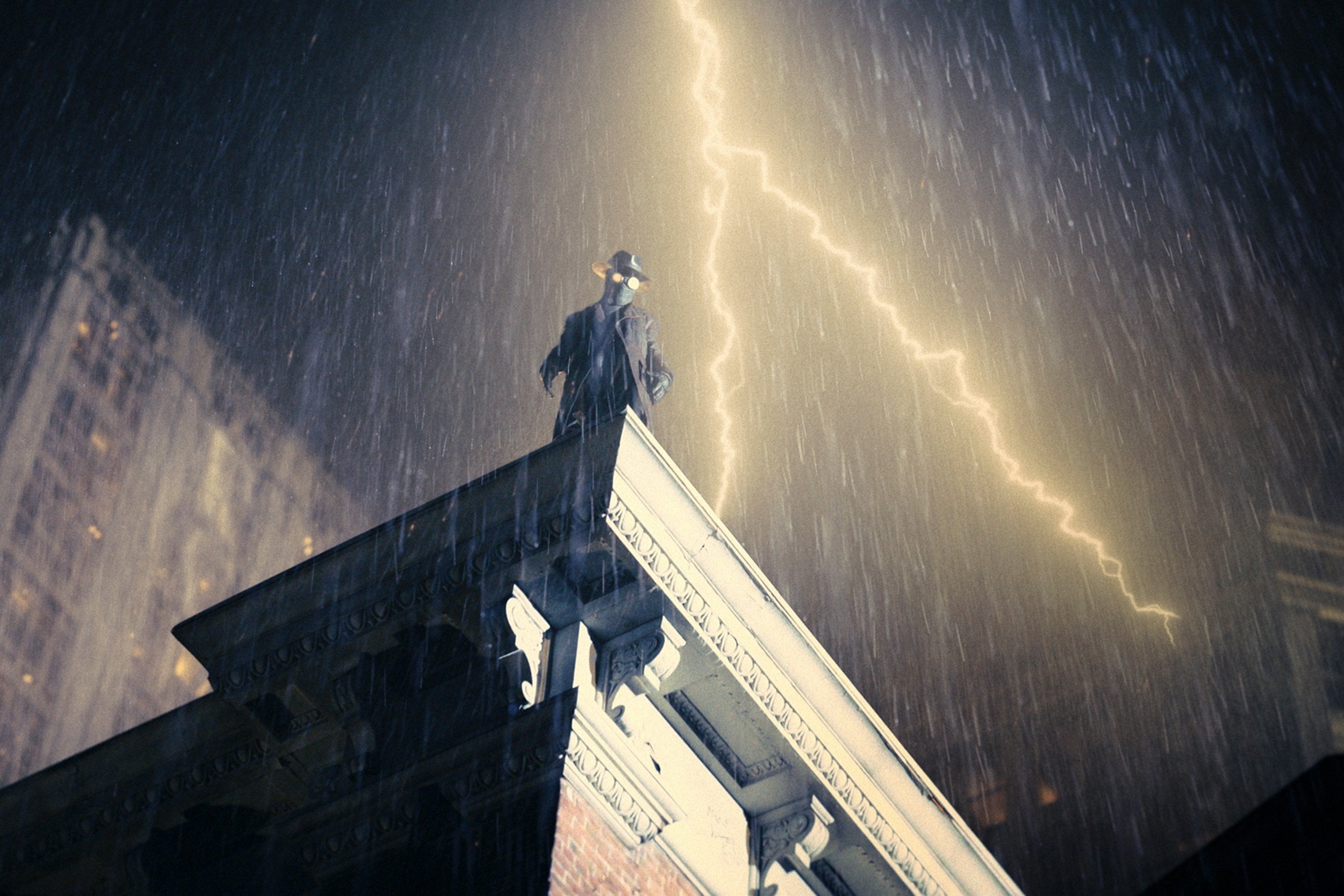
How The World Of 'Spider-Noir' Was Designed to Work In Both Black-and-White & Full Color
Interiors
Emmy-nominated production designer Warren Alan Young on the many colors it takes to create a black-and-white show.
There are two ways to watch “Spider-Noir”: in black and white or in what Prime Video calls ‘True-Hue Full Color.’ The Emmy-nominated series occupies a space in the Spider-Verse in Depression-era New York, where Ben Reilly (Nicolas Cage) swings onto the screen as a hard-boiled detective and unwilling hero in a city in peril. Staying true to the titular genre, production designer Warren Alan Young suggests viewers watch the series in black and white first because, he argues, “it's a very different experience in understanding the worlds of these characters.” Then turn on the color, he adds, “because there will be some surprises.”
The way Cage sweeps, and at times stumbles, through rooms in a floor-dusting coat and face-shadowing hat feels like he came through a portal from the 1940s and 1950s. In black and white, there’s a heightened sultry air and sense of mystery to it. Young cites John Huston’s 1941 directorial debut “The Maltese Falcon” as a film he personally found important in developing the project, with Orson Welles’s 1947 “The Lady from Shanghai” serving as another central reference.
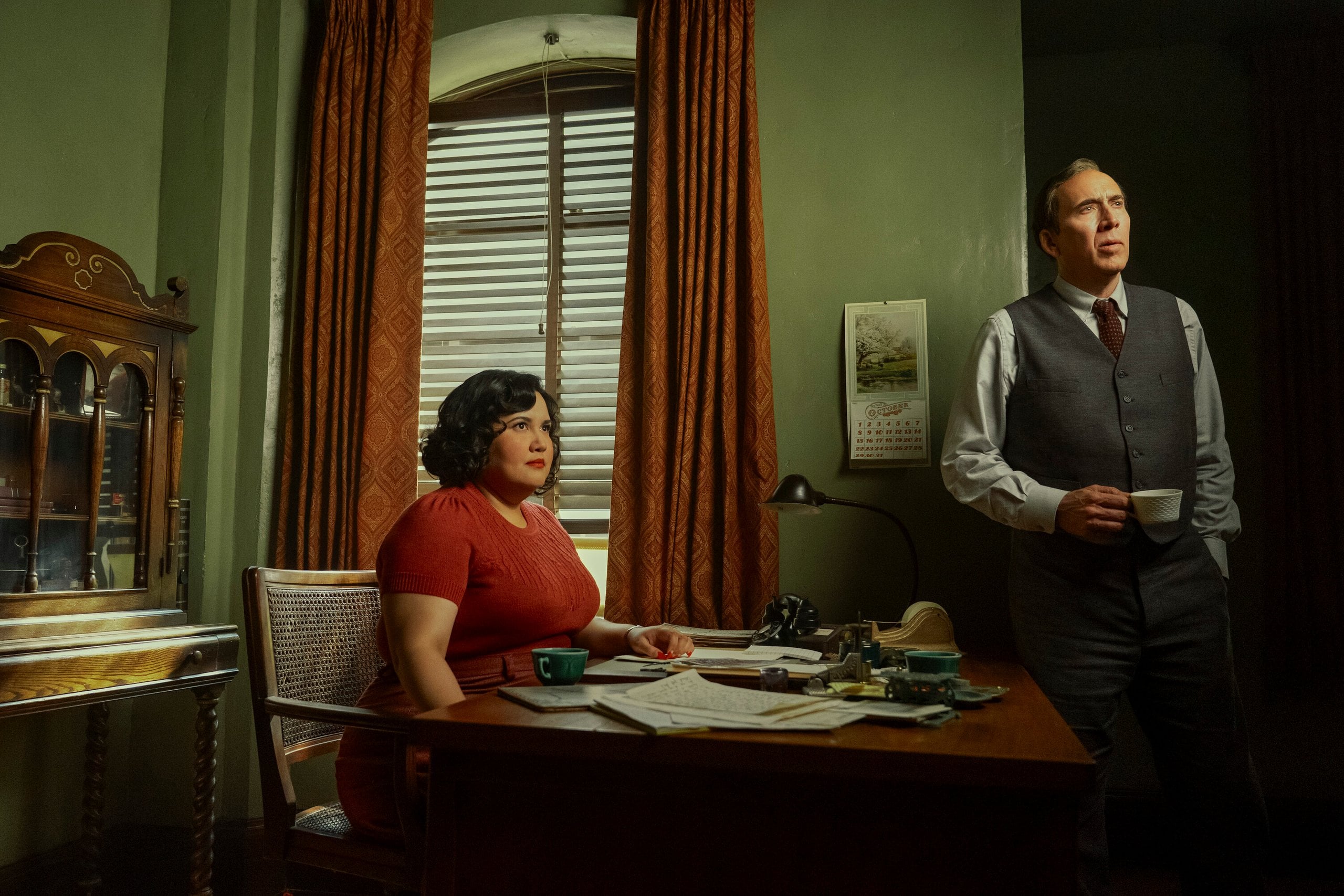

Janet Ross (Karen Rodriguez) and Ben Reilly/Spiderman (Nicolas Cage) in "Spider-Noir".
Aaron Epstein/Prime Video
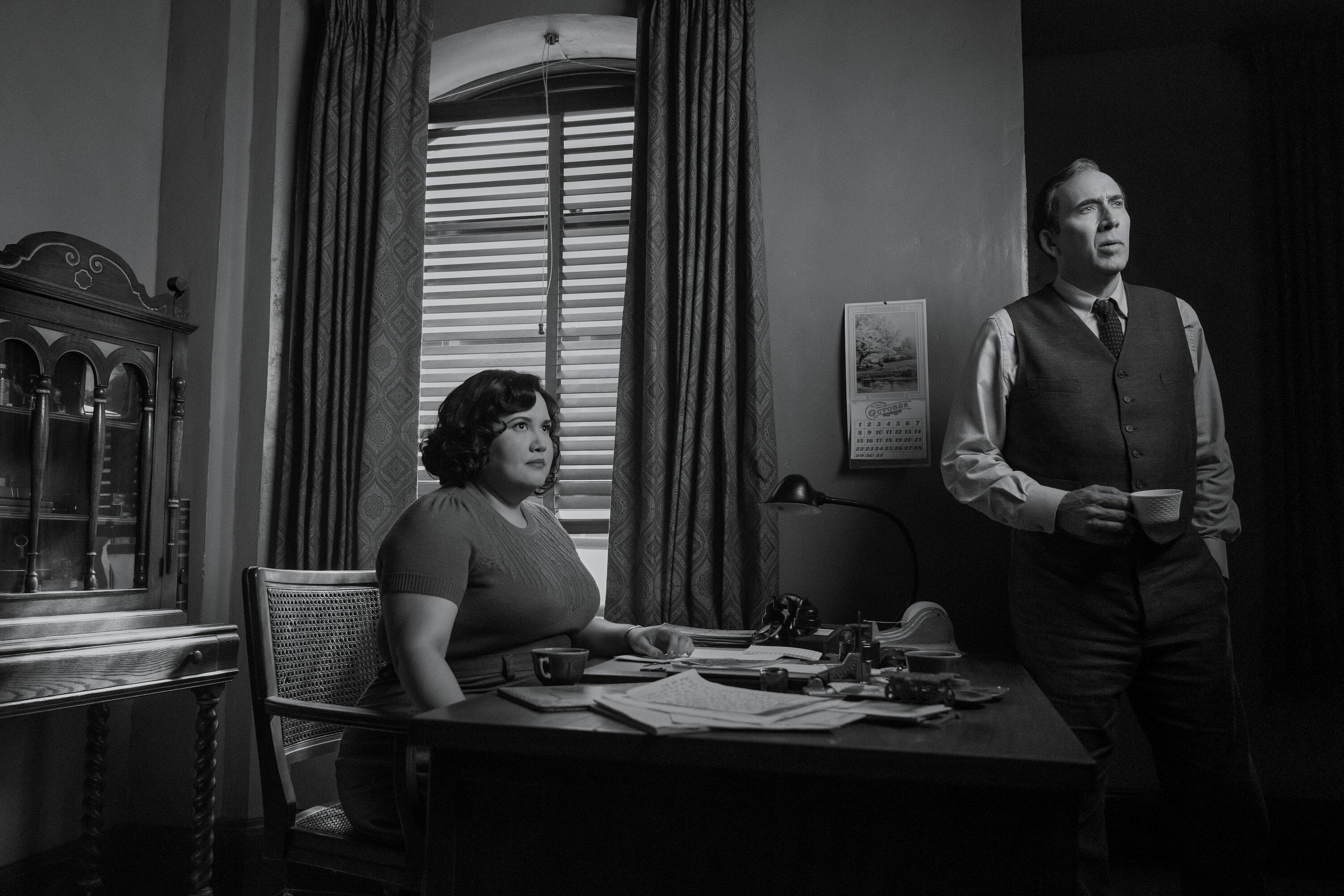

Janet Ross (Karen Rodriguez) and Ben Reilly/Spiderman (Nicolas Cage) in "Spider-Noir".
Aaron Epstein/Prime Video
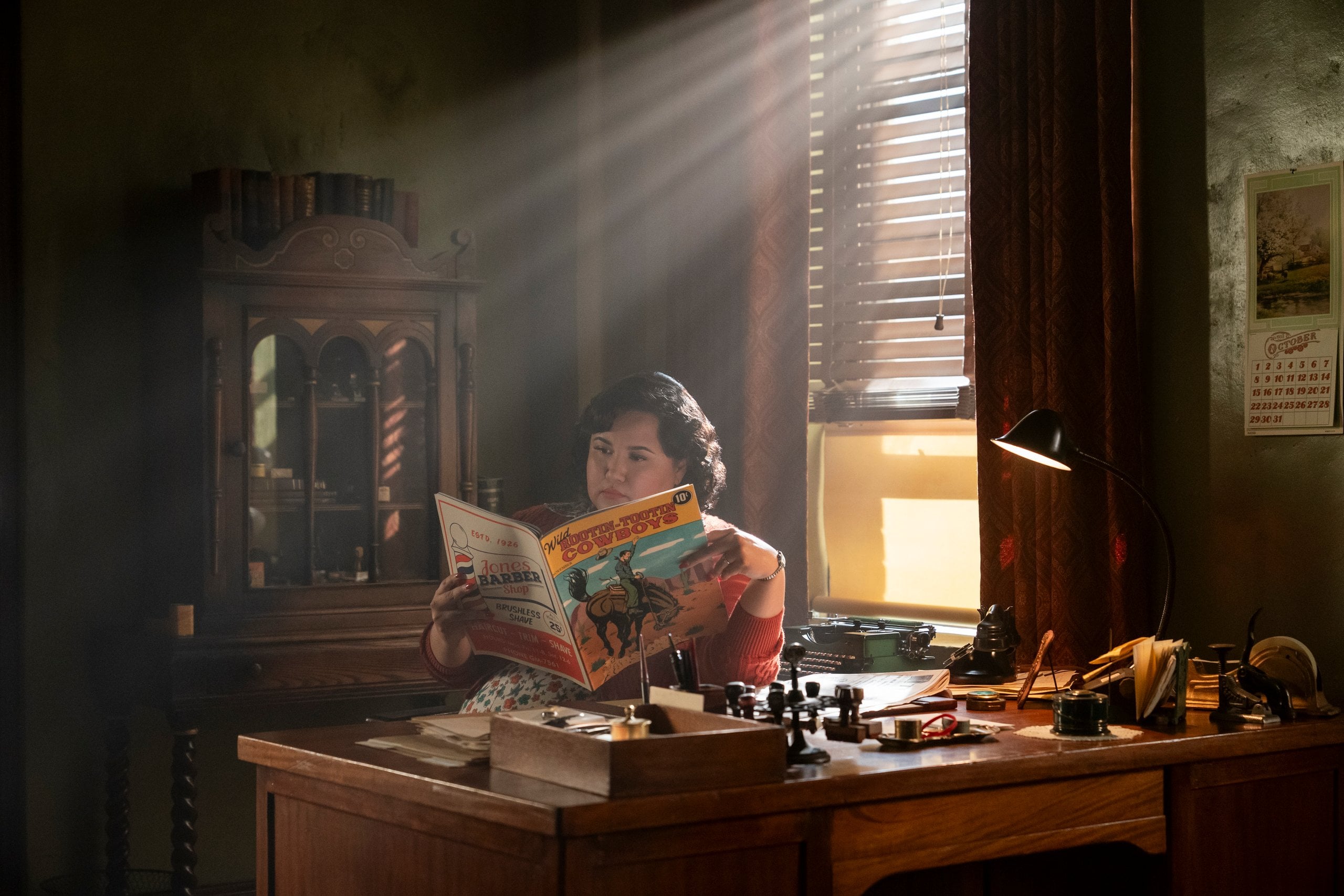

Janet Ross (Karen Rodriguez) in "Spider-Noir".
Aaron Epstein/Prime Video
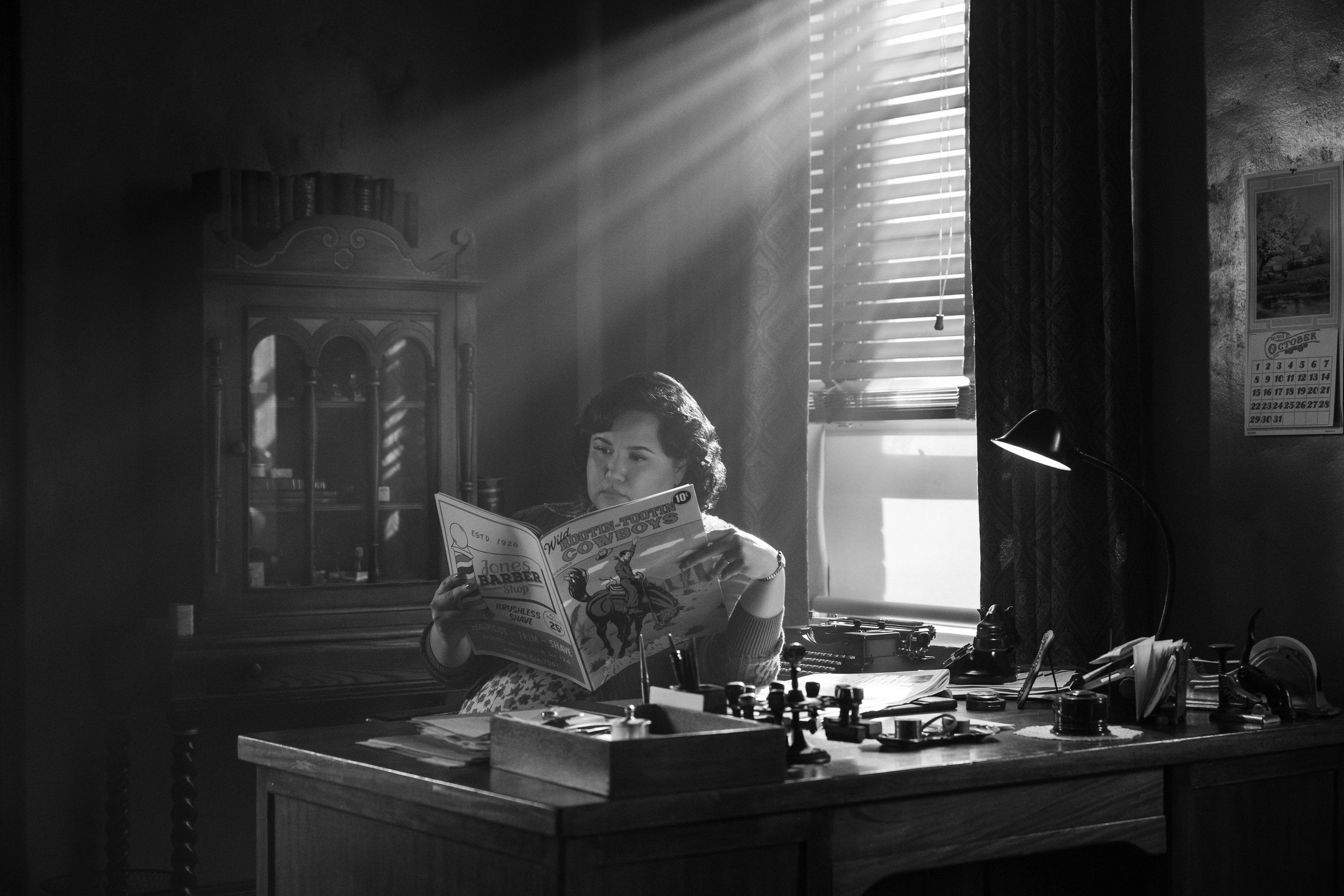

Janet Ross (Karen Rodriguez) in "Spider-Noir".
Aaron Epstein/Prime Video
“We initially only looked at black and white, so not any neo-noir,” Young adds when Roman Polanski’s 1974 classic “Chinatown” is brought into the conversation, a film that arrived when the genre was reinterpreted decades later. Those films were, conversely, shot in color and dealt with subverting the tropes of the film noir movement. As production on “Spider-Noir” evolved, the team was tasked with creating a color version at the same time. “That opened the pathway to more research,” says Young, “but I would still say it’s deeply rooted in the black-and-white idea—classic noir.”
Though, in the seventy or so years since its heyday, techniques for shooting in black and white have changed. “I called my friend and mentor, Laurence Bennett,” Young recalls of the moment he first learned he’d come onto “Spider-Noir” as a production designer. Having earned an Oscar for his production design work on 2011’s “The Artist,” Bennett recommended Young check out “El Conde,” Pablo Larraín’s vampire film. “I left [Bennett] alone after that,” says Young with a laugh. “Watching ‘El Conde’ was a great exercise in really understanding light and shadow in noir as a project that would be made today.”
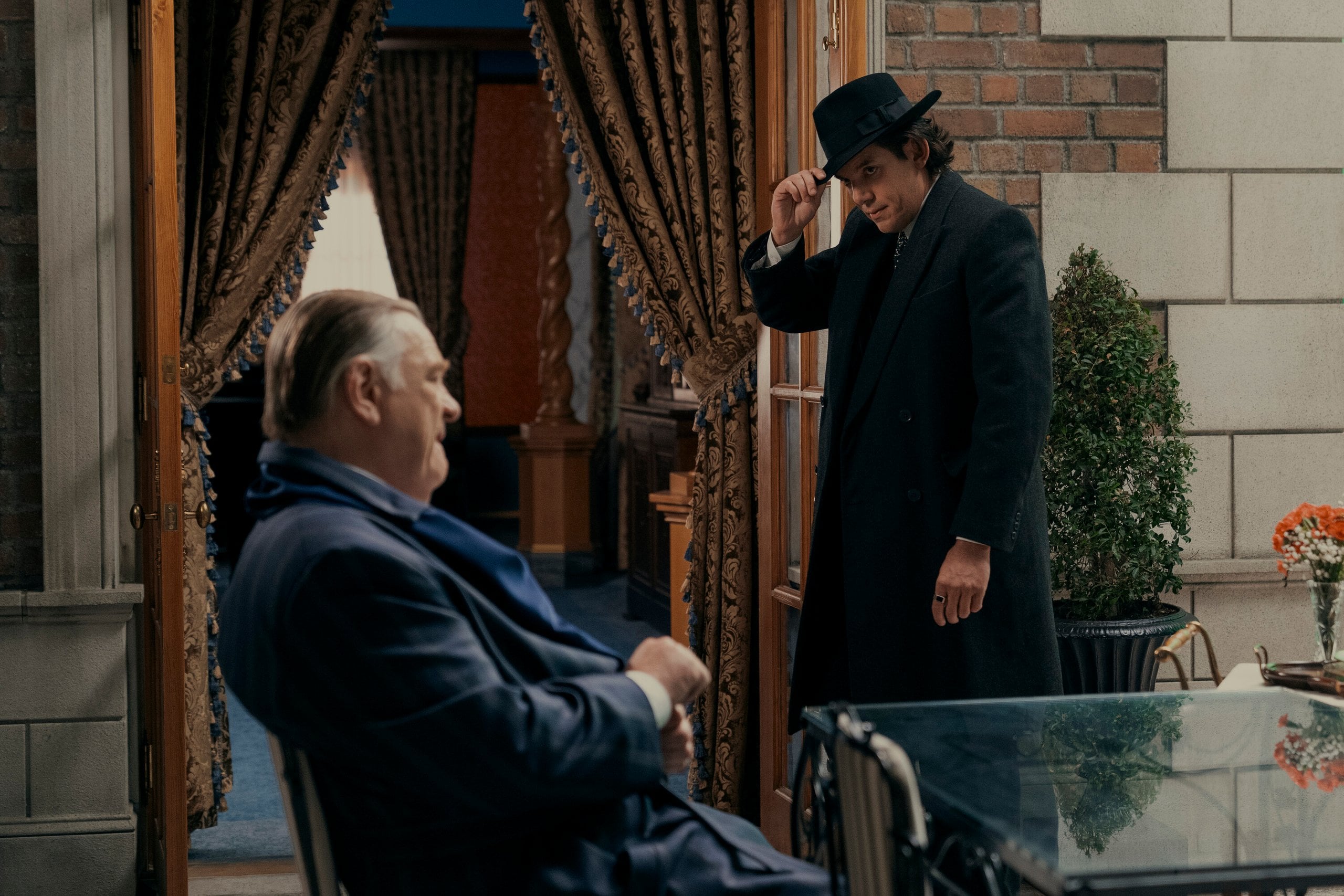

Finn Byrne/Silvermane (Brendan Gleeson) and Winston (Lukas Haas) in "Spider-Noir".
Prime Video
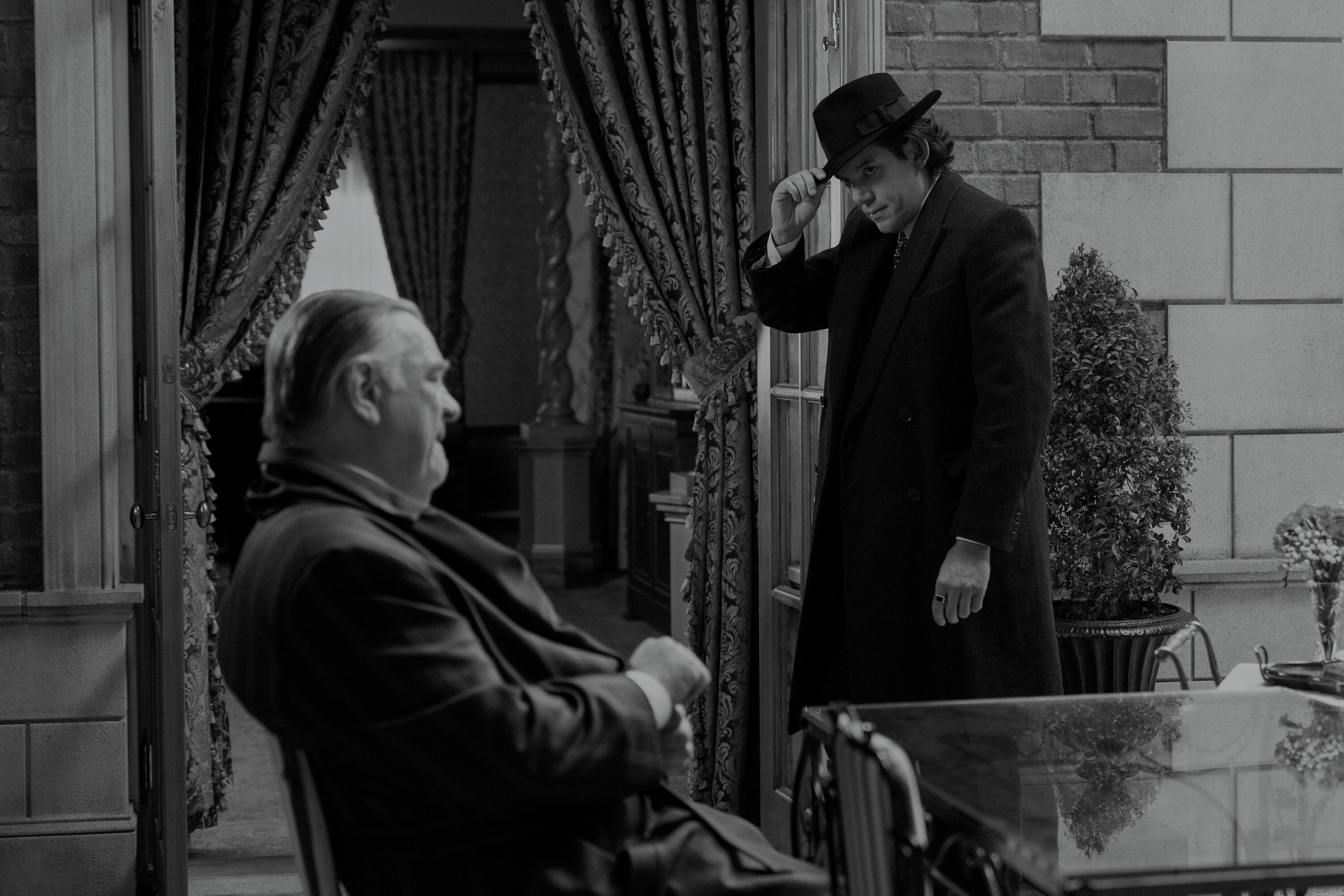

Finn Byrne/Silvermane (Brendan Gleeson) and Winston (Lukas Haas) in "Spider-Noir".
Prime Video
Finn Byrne/Silvermane (Brendan Gleeson) and Winston (Lukas Haas) in "Spider-Noir".
Prime Video
Finn Byrne/Silvermane (Brendan Gleeson) and Winston (Lukas Haas) in "Spider-Noir".
Prime Video
Young gives a small primer on how the sets of the past compare to those of “Spider-Noir”. “You walked onto the set [for an older film] and something might look vibrant purple to you, but when it's in black and white, it's something else. Their goal during that era was to create effectively as many different grays as possible.” He elaborates on how, as cameras, lighting, and other techniques evolved, so did the way productions treated the potential of color on screen.
In order to create the textures, shapes, and contrast that would translate in both modalities, Young and his team were constantly testing swatches, colors, materials, lighting, and composition. Speaking with the production designer, his love for photography quickly revealed itself not only in conversation but in practice. He recalls that a big part of the development process was the consistent use of a Sony FX3 camera to test how sets would appear when captured. “I'm shooting a lot of things that I might be curious about.” Young talked about how he and his team were using a point-and-shoot version of the cameras used to film the show. “This was a unique scenario because the best way to ensure things would come out the way we wanted was to test them in advance. There's almost always a camera test that's done during pre-production.”
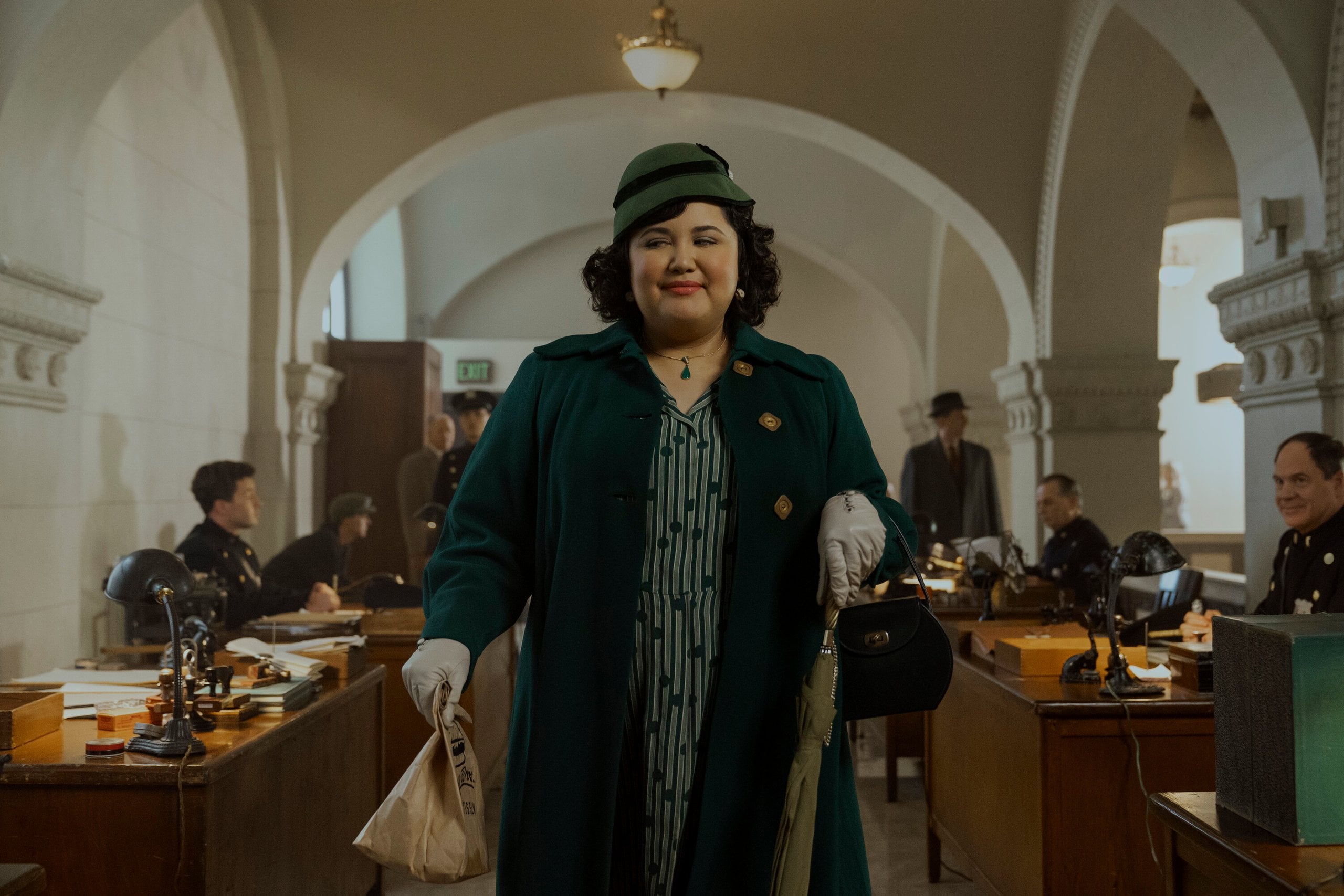

Janet Ross (Karen Rodriguez) in "Spider-Noir".
Aaron Epstein/Prime Video
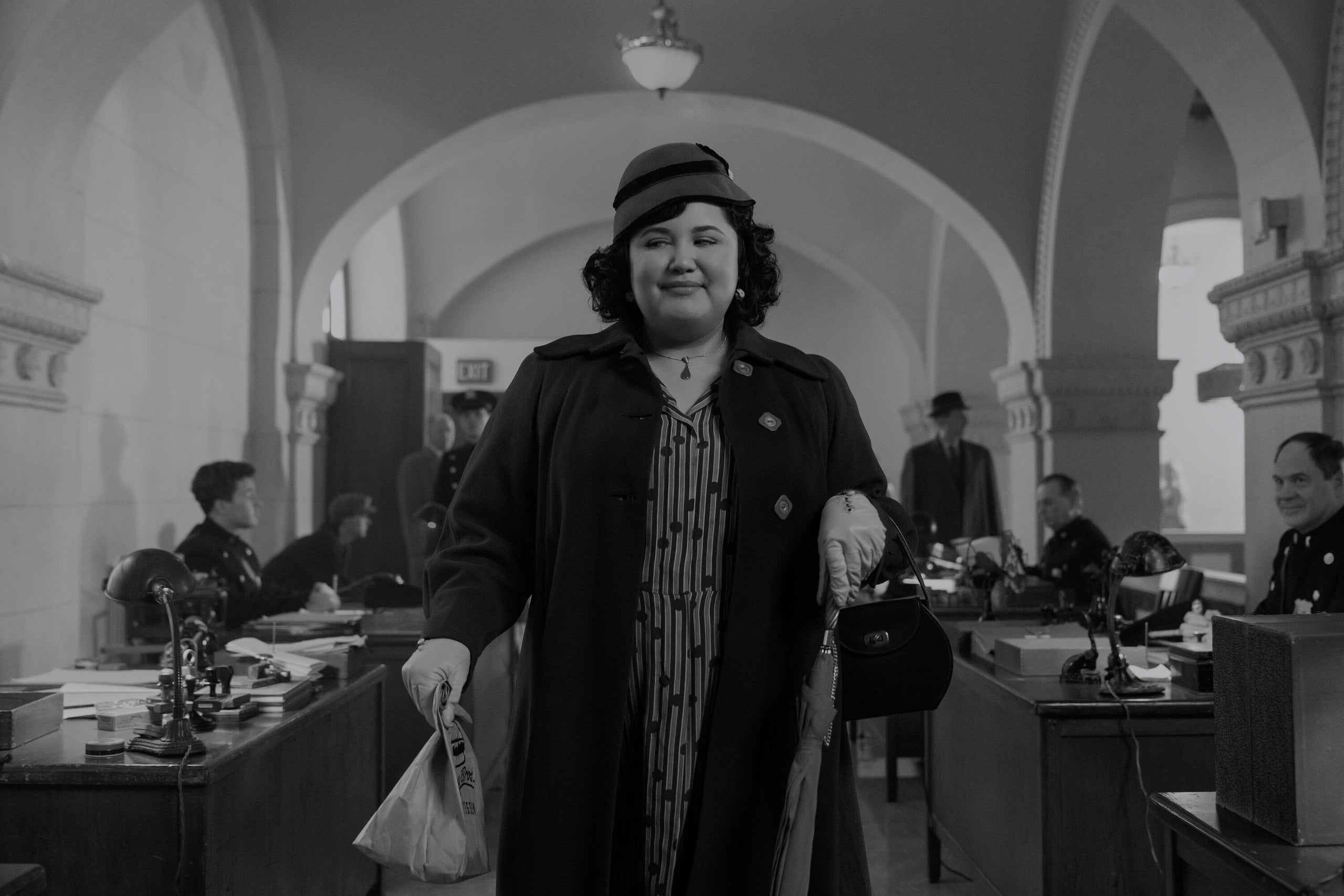

Janet Ross (Karen Rodriguez) in "Spider-Noir".
Aaron Epstein/Prime Video
Janet Ross (Karen Rodriguez) in "Spider-Noir".
Aaron Epstein/Prime Video
Janet Ross (Karen Rodriguez) in "Spider-Noir".
Aaron Epstein/Prime Video
When the color version of “Spider-Noir” is viewed, a rich world of turquoise, reds, crimsons, and emeralds is revealed. In order to achieve this, the production design team was testing “every fabric, every color, every wallpaper, every texture to see how it would look in black and white and in color…I would remind my team that, you know, if you've got two things that are red,” depending on the camera filters, lighting conditions, and material of the object, “you can see something very different” in the resulting image. “That's one of the reasons why we would test literally everything. We didn't want to have scenarios where something just wasn't working, and we had the opportunity to do the exploration in advance. It was very involved—it's like making two series at the same time!”
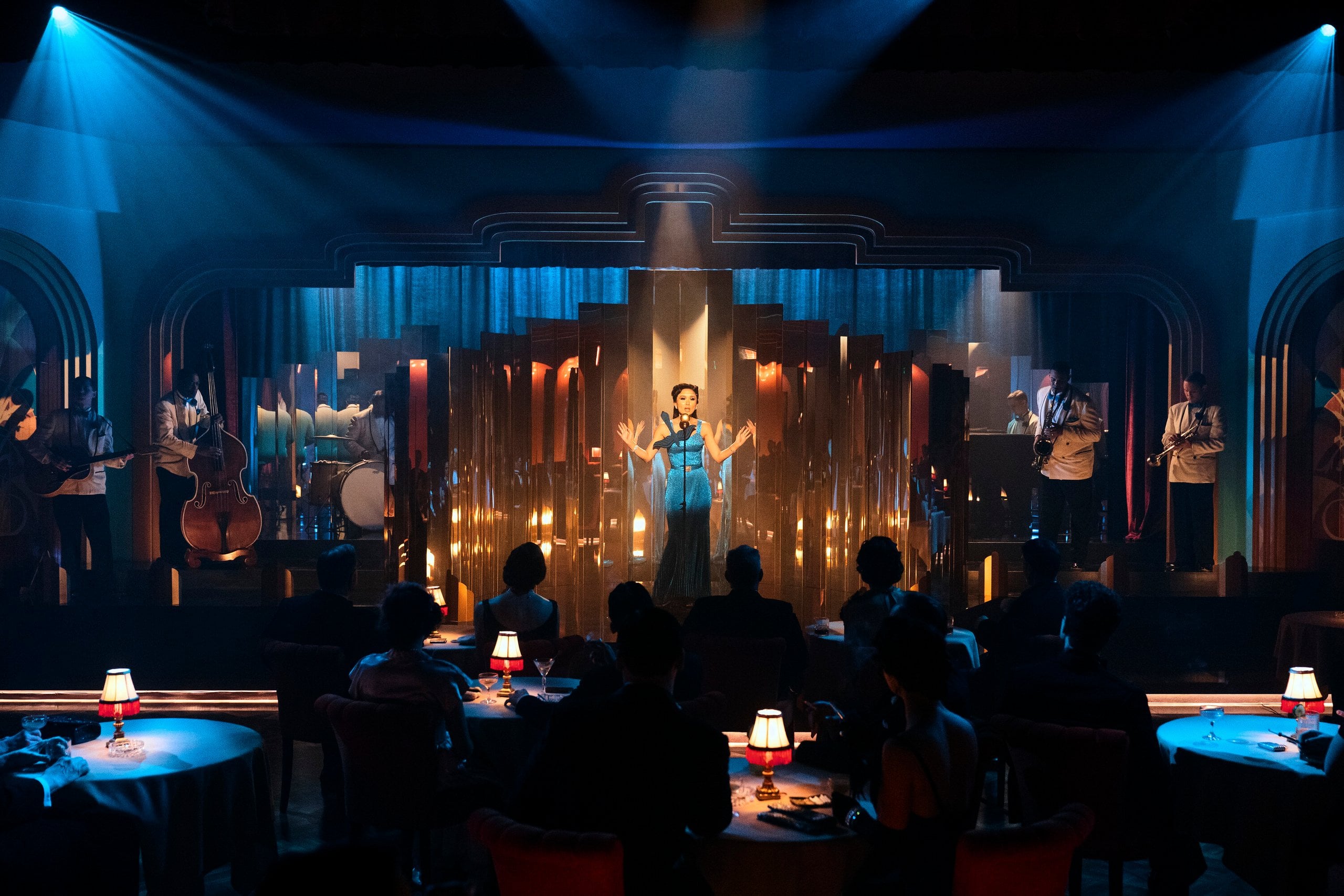

Cat Hardy (Li Jun Li) in The Alcove in "Spider-Noir".
Aaron Epstein/Prime Video
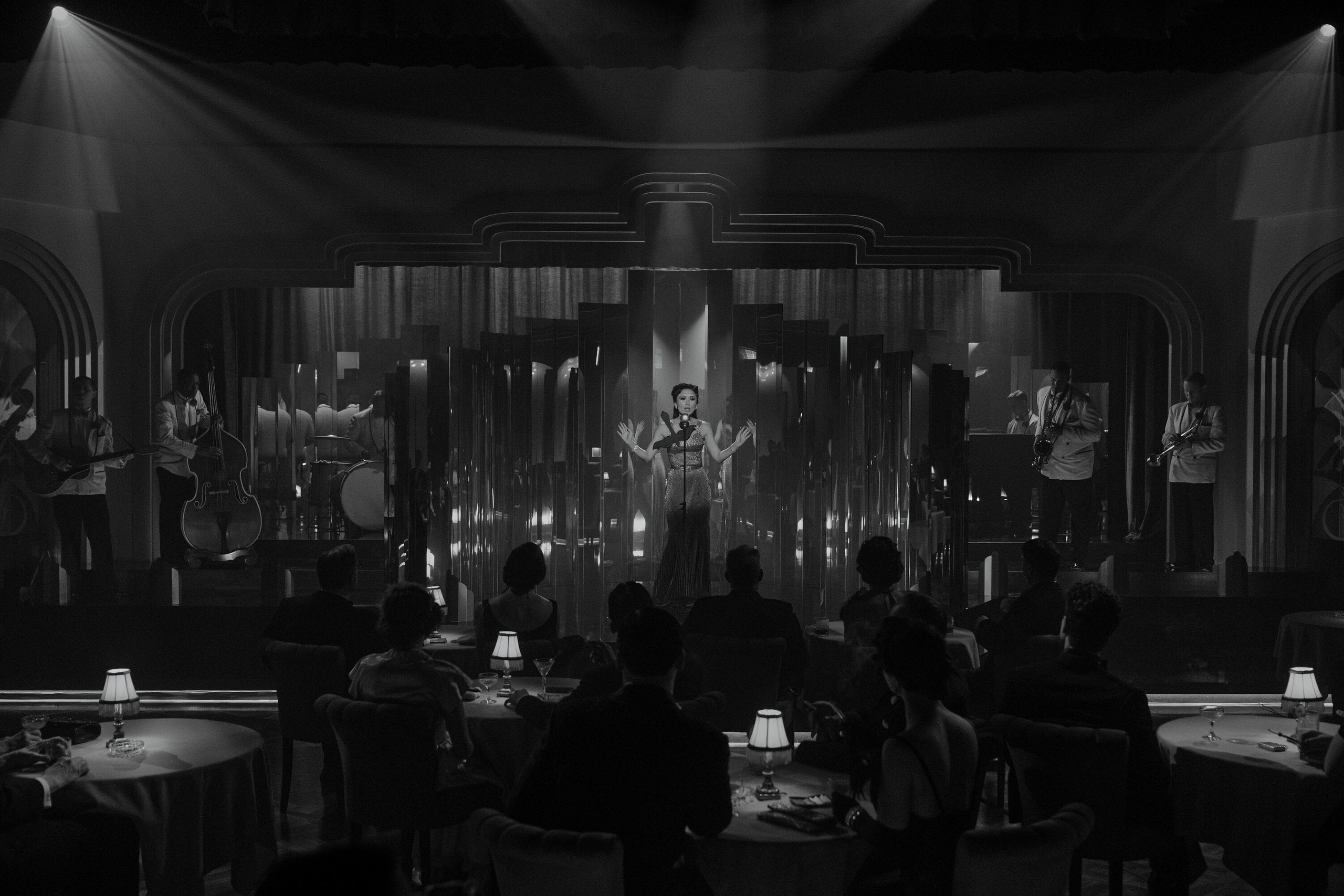

Cat Hardy (Li Jun Li) in The Alcove in "Spider-Noir".
Aaron Epstein/Prime Video
Cat Hardy (Li Jun Li) in The Alcove in "Spider-Noir".
Aaron Epstein/Prime Video
Cat Hardy (Li Jun Li) in The Alcove in "Spider-Noir".
Aaron Epstein/Prime Video
One of the standout sets in “Spider-Noir” is The Alcove, the hazy underground lounge and theater where the worlds of mobsters, singers, and spiders cross paths. The stage and its pit are shaped as much by the arches and plush seats as by the lights that welcome its performers and patrons. Light, being an important medium, didn’t come only from Young’s love for photography but from the legacy of film noir itself. There was “a lot of unmotivated shadow and light,” says Young of the characteristic chiaroscuro of the period. “Ultimately that became a style, but the real motivation behind it was money. They didn't have the money to create a lot of the textures that they might have wanted on those films.” So, on set, they found opportunities “to replicate those ideas.”
“The lighting was really key,” Young says of achieving the layers and textures of the set. “We designed [The Alcove] knowing that we were going to see a lot of darker grays, and in some instances, black.” They were able to create ambience and mystique by designing lighting elements into the architecture of the building, in columns and pilasters.


