
Inside the Gory, Ingenious Prosthetics of ‘Monster: The Lizzie Borden Story’
Beauty
Special effects makeup designer David LeRoy Anderson talks through the 80-pound dummies, fake eyeballs, and many, many bloody scenes shot for the latest season of the anthology series.
“Most often I’m hired to create the monster,” prosthetics and special effects makeup designer for “Monster: The Lizzie Borden Story” David LeRoy Anderson tells The Set Set. “In this case the monster was stunningly beautiful and powerful and elegant, and I was in awe of her presence.” Anderson has an impressive resume that includes dramatic work such as “Frost/Nixon” and “Cinderella Man” as well as horror such as “Cabin in the Woods,” in addition to his credits on Ryan Murphy productions including “American Horror Story” and “Scream Queens.”
“Monster: The Lizzie Borden Story,” starring Ella Beatty as the titular monster, is the latest instalment of the controversial true—though heavily embellished—crime series following some of America’s most fascinating murderers, including Jeffrey Dahmer, the Menendez brothers, and last season’s subject, Ed Gein (Charlie Hunnam), whose confronting crimes kept Anderson up at night. “It’s very hard for me to deal with some of the subject matter because I have to take such a deep dive into the psychological elements of what happened,” he says.
With “The Lizzie Borden Story,” Anderson found the mood significantly lighter, perhaps owing to the fact that Borden was acquitted of the gruesome, hatchet-axe crimes she was accused of committing against her parents, Andrew Borden (also played by Hunnam) and Abby Borden (Rebecca Hall), in Massachusetts in 1892. It’s also the series’ first take on a female (alleged) murderer and one that has been positioned as a meditation on female rage, enveloping the stories of serial killer Aileen Wuornos (Sarah Paulson) and “The Blood Countess” Elizabeth Báthory (Vicky Krieps, in a dual role also playing the Borden’s maid who is implicated in the murders).
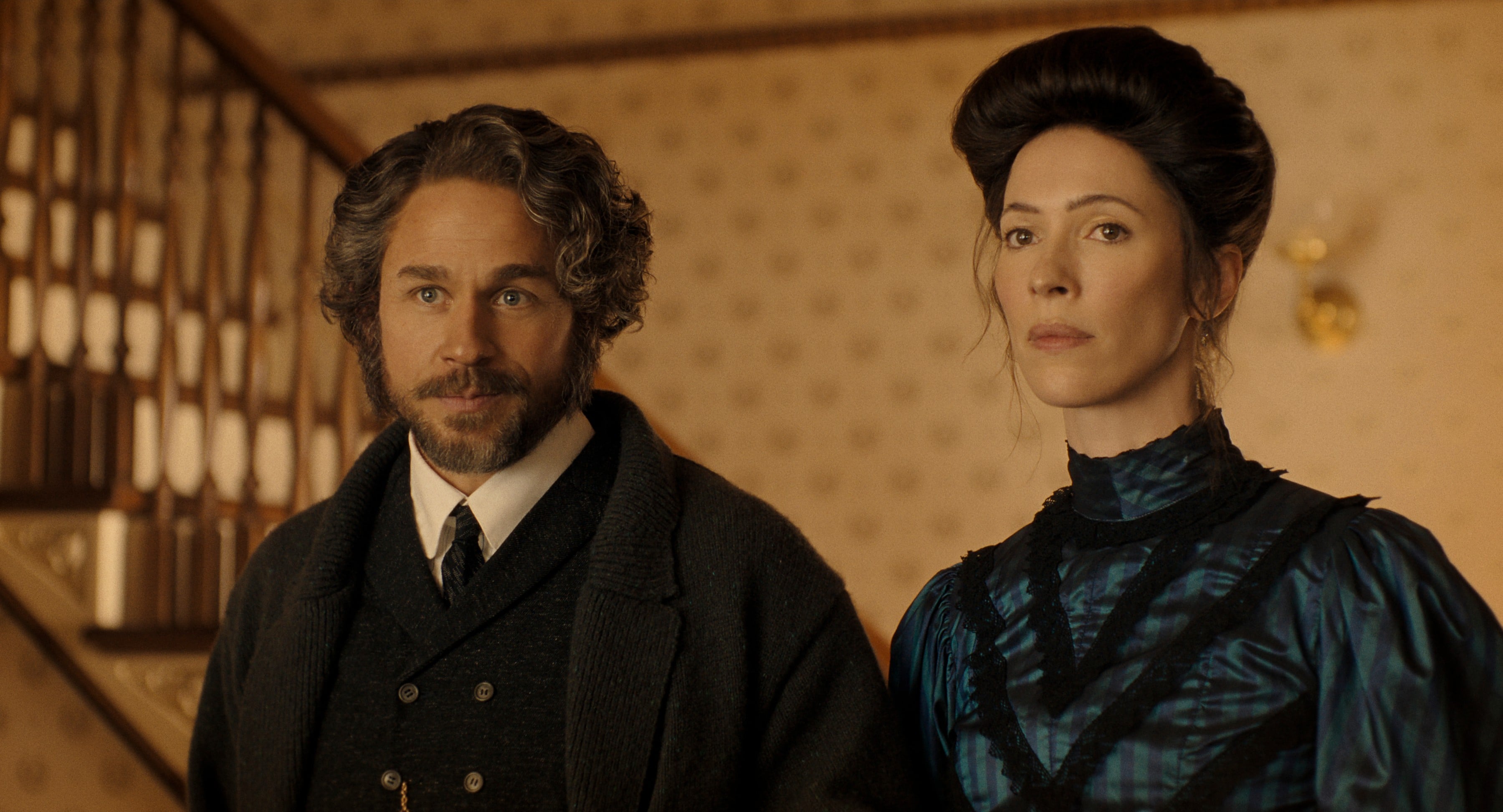

Charlie Hunnam and Rebecca Hall in "Monster: The Lizzie Borden Story".
Netflix
“It’s a story about female rage. I kind of like getting involved in that,” Anderson says, noting another recent project with a similar theme, the 2024 Melissa Barrera horror-musical, “Your Monster.” “I seem to be in this trend of working on these projects and helping to realize these female rage stories.” Anderson is no stranger to Borden, either, having coincidentally worked on the 2015 miniseries "The Lizzie Borden Chronicles" starring Christina Ricci, which also operated on the premise that Borden did commit the murders. This allowed for creative license in depicting not only the crimes—which, in “Monster,” are drawn out over a period of days when official testimony contended that they were carried out within an hour—but in creating Borden’s dreamy world.
That said, though, Anderson says he “didn’t get creative” in regard to his design process, interpreting the scripts, written by showrunner Ian Brennan, as they are given to him. “I stayed within the facts. They are horrifying enough. Forty blows is a lot! If done well, none of it has to be exaggerated. We probably toned it down a bit because it could have gotten too messy.” For the history nerds amongst us, the commonly misunderstood idea that Borden’s mother was given “40 whacks” and her father 41 originates from the infamous nursery rhyme. Historical records show Andrew Borden was struck 10 or 11 times and Abby Borden was hit 18 times.
Another embellishment is the similar axe murder of society matron Bertha Manchester (Linda Reiter) early in the season, whose death actually occurred after Lizzie was acquitted but within the show allowed for what is perhaps Anderson’s most impressive creative feat. Max Winkler, who directed six of the eight episodes, wanted a point-of-view shot of the axe chop to Bertha’s eye, but neither Winkler nor Anderson knew how they would achieve it. Anderson ultimately crafted a half-sphere lens using a brittle silicone mold that would smash upon the axe’s impact, placed on a piece of glass with gel on the bottom. “You put a camera underneath it and it’s this fisheye,” Anderson says. “I thought, that’s going to be neat! We made a bunch of those and painted a pupil hole in the middle and faded brown patterns, so the camera was looking through the eyeball, out through the colors of the iris and the pupil hole, and you see the axe go through.” Anderson delivered six of those to the set—meaning Winkler and team had six shots to get it right.

Ella Beatty in “Monster: The Lizzie Borden Story”.
Netflix
Little merit can be given to the storyline that mortician Andrew Borden posthumously amputated his patrons in order to fit his so-called “custom” caskets. But this was another opportunity for Anderson to flex his creative muscles by rigging a jig that would allow for an axe to cut through the space between an actor’s legs and the prosthesis—or, in one case in which Andrew misfires, a torso. “[The pieces were] held together with magnets and you can put the blade through to push them apart. It was a series of cuts.”
For each Borden parent, Anderson created several head and body prosthetics in his workshop that were then delivered to the set. “The fact that their wounds were subtractive—half of his head was gone; half of her cheek and nose were gone—kind of rules out the opportunity to do that makeup on the actors and have them play those dead scenes. So it was understood that once they were dead, they were dummies,” Anderson explains.
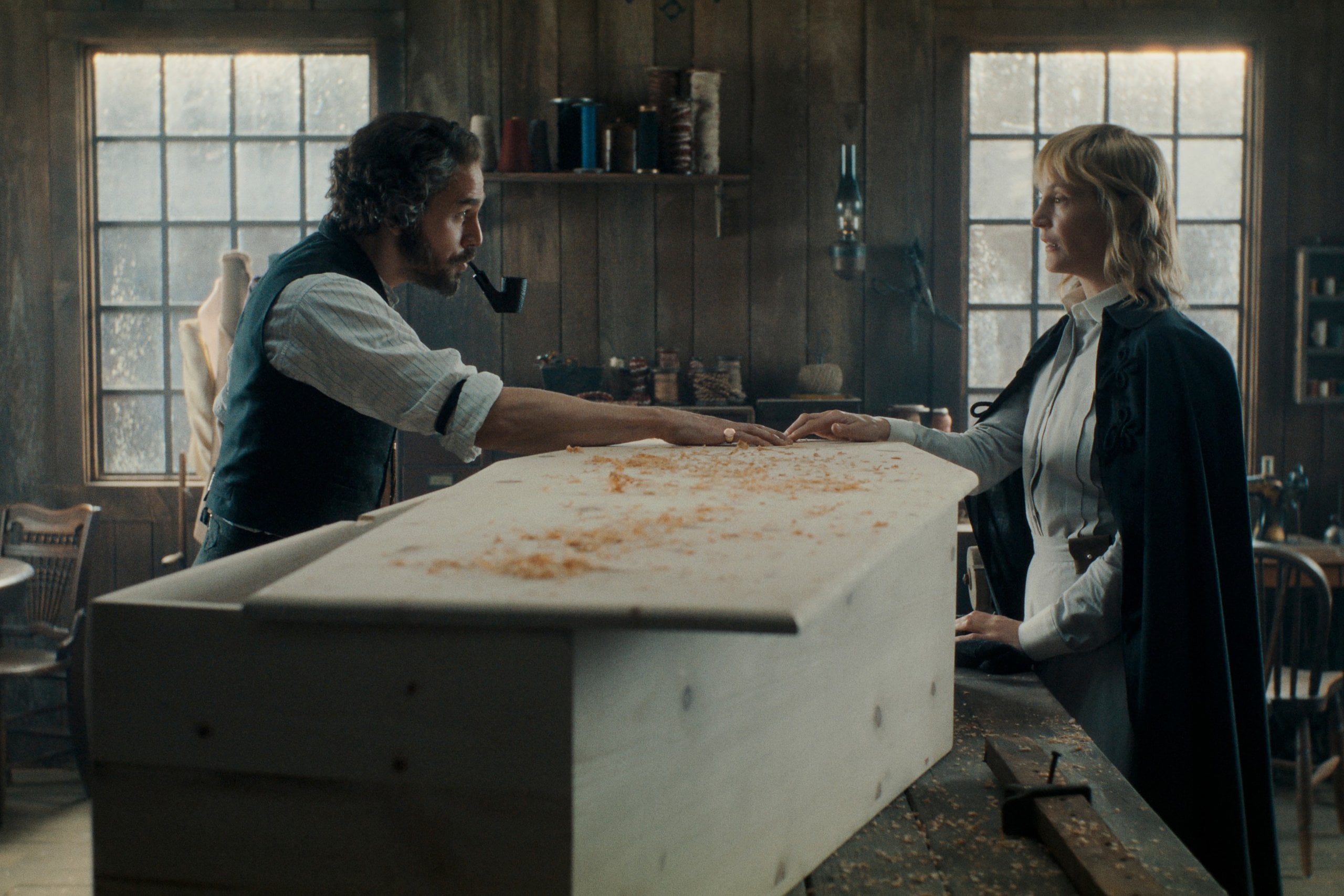

Charlie Hunnam and Vicky Krieps in "Monster: The Lizzie Borden Story".
Netflix
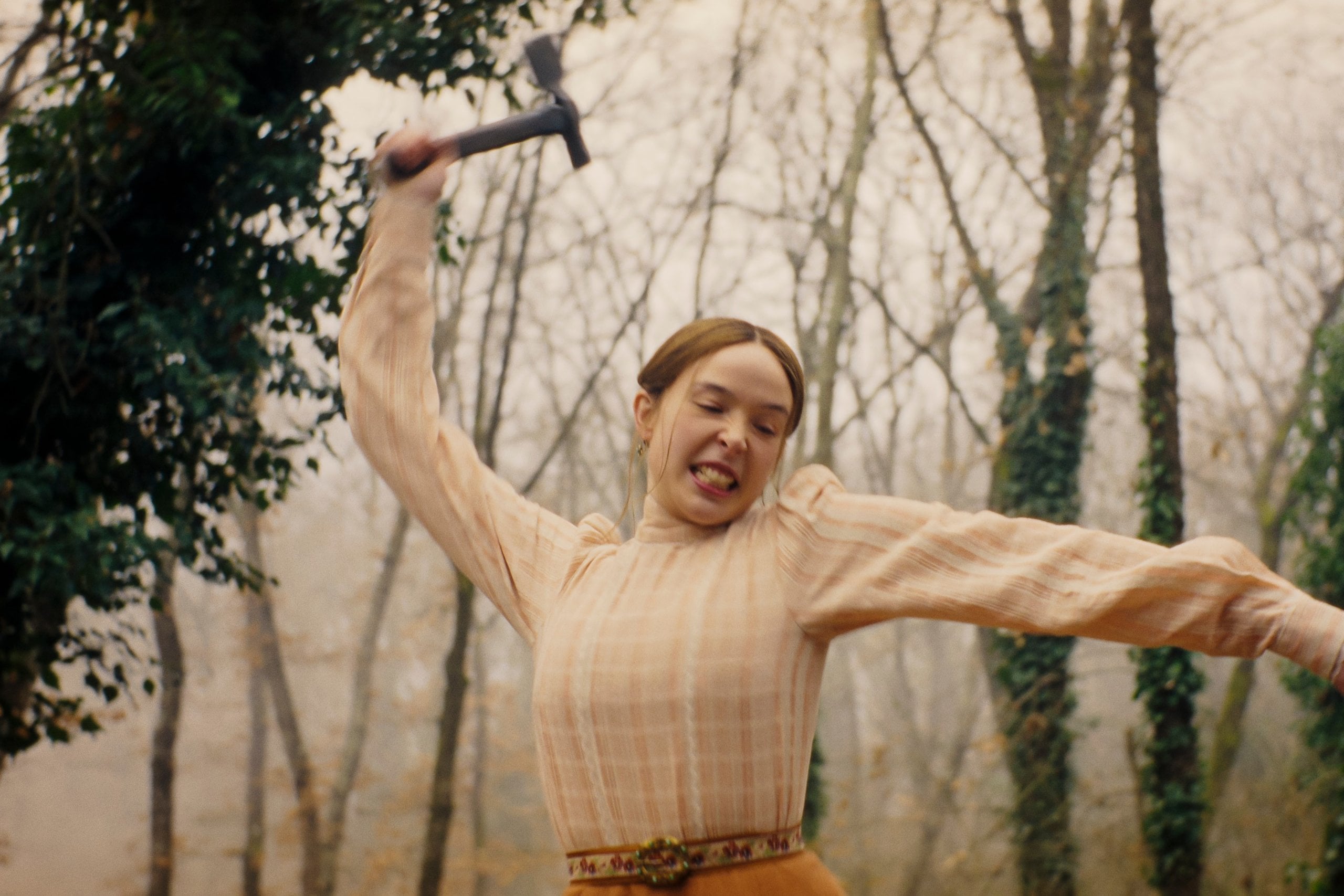

Ella Beatty in “Monster: The Lizzie Borden Story”.
Netflix
Charlie Hunnam and Vicky Krieps in "Monster: The Lizzie Borden Story".
Netflix
Ella Beatty in “Monster: The Lizzie Borden Story”.
Netflix
“With Abby, the majority of the [wounds] were done on the back of her head,” Anderson continues. “For us, that’s convenient because you have a recognizable face on the front that is not a disfigured pile of hamburger.” Also impressive was the cheek and nose injury to Abby, which was originally supposed to be a mortal gash to the face, but it wouldn’t be “Monster” if they didn’t have fun with it. So the director of the episode in which Abby’s murder occurs, Sarah Adina Smith, thought it would be more inventive for Abby to undergo a “glancing blow” in the foyer that left the tip of her nose and some of her cheek on the floor while she ran upstairs, but Anderson didn’t get the memo that he also needed to create said nose tip and sliver of cheekbone. “‘What cheek and nose piece? There are no cheek and nose pieces; we just did a wound,’” Anderson remembers thinking. “They were like, ‘No, they’re the stars! We’re going to do a shot of them on the ground,’ but nobody ever talked about that!” he laughs. “So I had to race to fabricate a little nose tip and put it on the ground. That damn thing and the cheek piece were hot props—they had to be brought to set and taken away each day [they were shooting that scene]."
Andrew Borden’s prosthetics were, in effect, simpler, though for a scene in episode six director Max Winkler wanted a 360-degree shot in which both sides of his death mask were visible as Wuornos hallucinates his body on the fainting couch during her visit to the Lizzie Borden House bed and breakfast (ye, that’s a real thing). Anderson and his assistant were just out of frame, ready to bear hug Andrew’s prosthetic dummy and fall to the ground by the time the camera came around to show that he wasn’t actually there. “Just another inch [the wrong way] and you’d see me lying on the ground,” he chuckles.
Anderson says the dummies were around 80 pounds each and operated like real dead bodies—heavy, floppy, and full of blood and guts. For an autopsy scene, for example, Andrew and Abby’s stomachs were cut open to verify Lizzie’s claim that they were all sick from eating a rancid clam stew the night before the murders. “There were these little surprises in their bellies that they were going to cut into later and find them. Easter eggs buried in the bellies!
Anderson was also asked to create a “clean” Andrew dummy—again, filled with all the good things that make up a human head, like a skull, brain, and eyeballs—that Beatty’s Borden could just go to town on, so to speak. “There’s a moment when one of the strikes goes in, and a fake eyeball pops out! The dailies were so horrific!”