How 'Fallout' Kept Humanity Just Beneath the Surface in Goggins' Ghoul
Beauty

Beauty
Inside the prosthetics, makeup, and hairstyling work that brought the Prime Video series' magnetic antihero—and the show's other wasteland wanderers—to life.
When “Fallout” returned to screens for its highly anticipated second season, it wasted no time plunging audiences back into the irradiated chaos of its wasteland world and the Ghoul (Walton Goggins) and Lucy’s (Ella Purnell) journey that stretches from the Mojave wasteland to the neon-scarred ruins of New Vegas. Based on one of the most beloved video game franchises of all time, the Prime Video series is one of contrasts: luxury vault dwellers versus lawless desert wanderers, nostalgia versus decay, humanity versus survival. Nowhere is that tension more vividly embodied than in Goggins’ unforgettable performance as the Ghoul.
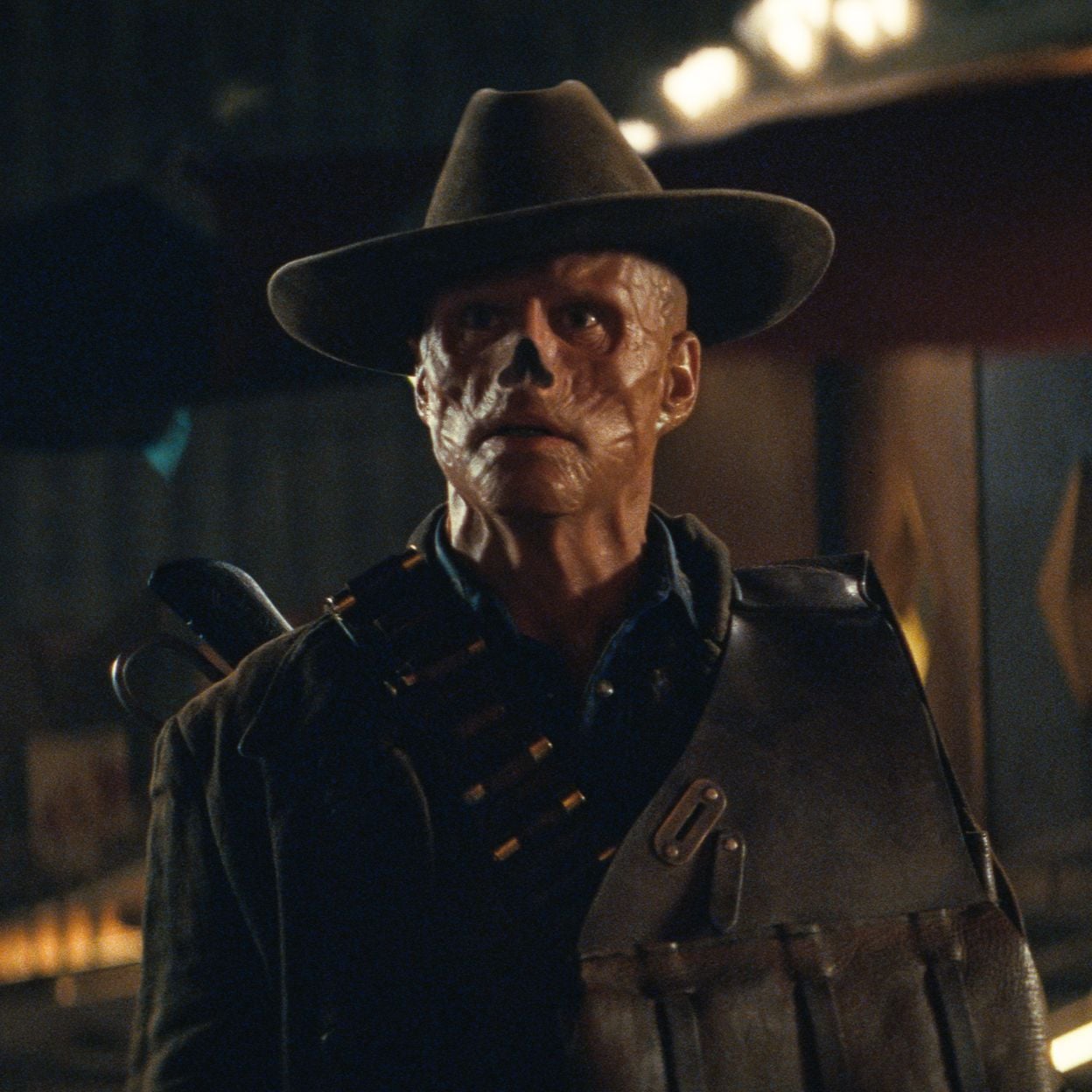
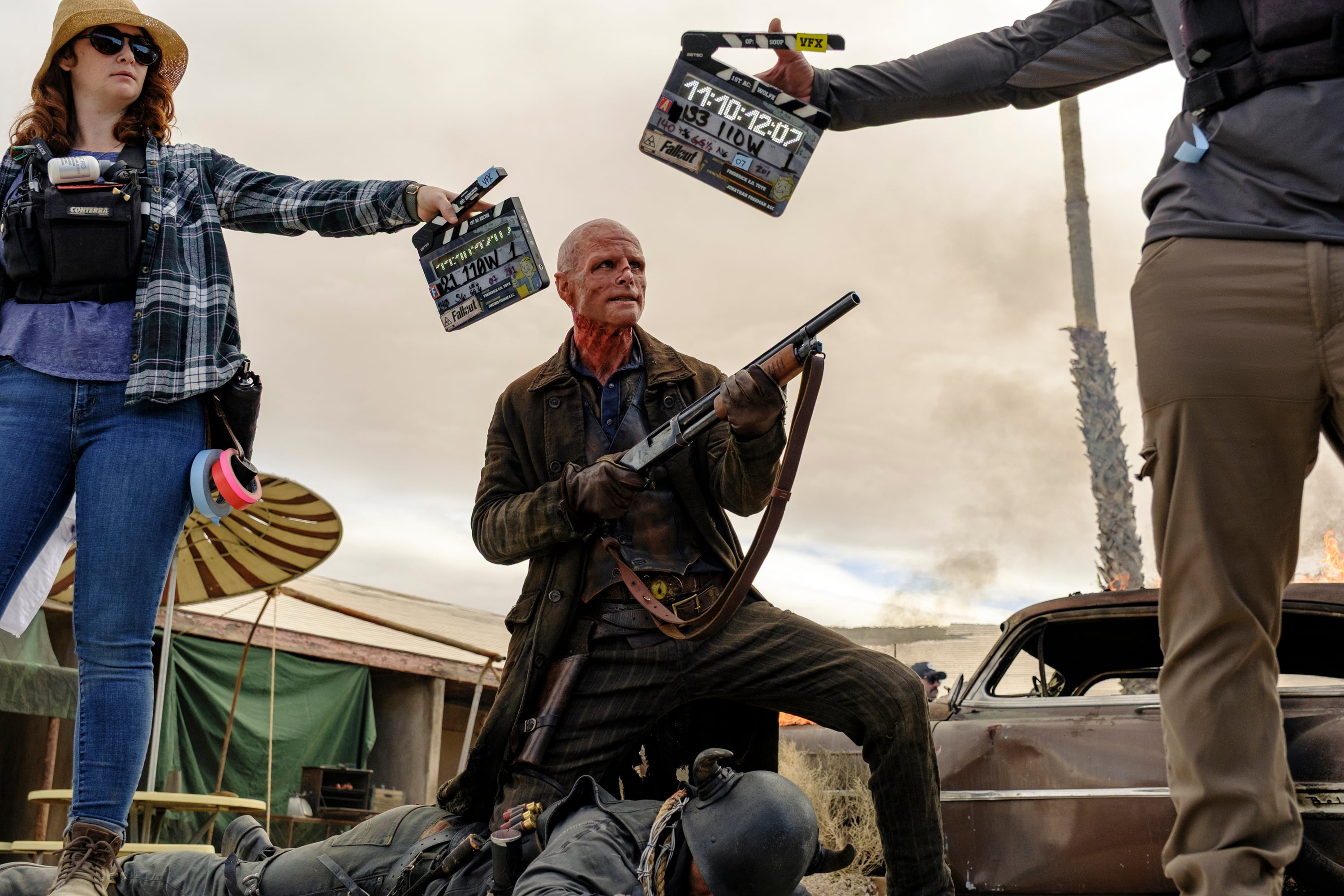
Once a man named Cooper Howard, now a 200-year-old apocalypse survivor stripped of skin, civility, and sentimentality, the Ghoul is “Fallout”’s most striking visual creation. His missing nose and ears, weather-beaten flesh, sunken eyes, and corroded teeth render the actor almost, but not quite, unrecognizable. It’s a transformation achieved almost entirely through practical effects, the result of painstaking collaboration between prosthetic department head Jake Garber, head of makeup Elisa Marsh, and hair department head Dennis Bailey.

Walton Goggins in "Fallout" Season Two. Photo: Amazon MGM Studios.
Amazon MGM Studios
The groundwork for the Ghoul’s design was originally developed by prosthetics designer Vincent Van Dyke, but it’s Garber, the head of the show’s prosthetics department, who brings the character to life by way of nine silicone pieces that stretch from the top of Goggins’ head down to his torso. The first makeup trials on Goggins took five hours at a time, but had been cut down to half that by the time shooting on season one started. Returning for season two, Garber was determined to find workarounds to make Goggins’ time in his trailer even shorter, a considerate approach given that the actor is fully encased in silicone, save for his eyes, nose, and portions of his ears. Pre-painting the silicone pieces the exact shade they needed to be before Goggins sat in the chair shaved hours off the daily application.“It was really a juggling act to figure out when I could sneak that into the schedule and have those things on standby rather than doing them the morning of.”
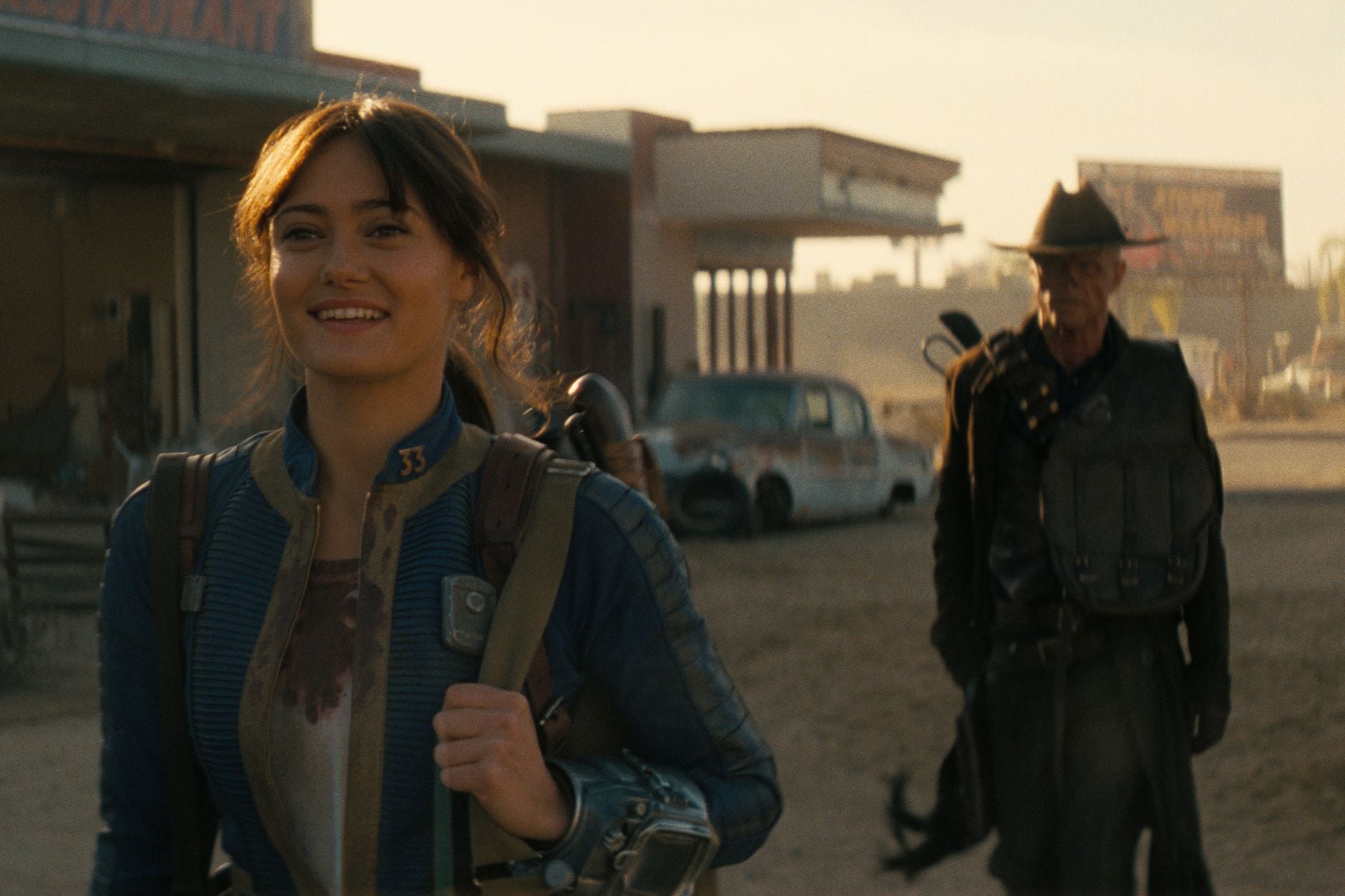
While the prosthetics do the heavy lifting in the wasteland, it’s the finishing layers—the dirt, grime, and hair texture—that root the characters in the world. For Marsh and Bailey, this is where character design feeds into narrative. “Everyone outside the vaults is dirty. Everyone,” says Marsh. But dirt, she explains, is more complex than you might think. The different factions carry different palettes, densities, and levels of decay, all shaped by their environment and history. “There’s a finesse to dirt,” she says. “If you do it wrong, everyone just looks grey.” MUA industry favorite Premiere Product Inc’s Grunge Palette and Western Grunge Palette, along with her trusty egg sponge, became her most-used products on set, as she hunted down anyone not looking appropriately begrimed.

Ella Purnell and Walton Goggins in "Fallout" Season Two. Photo: Amazon MGM Studios.
Amazon MGM Studios.
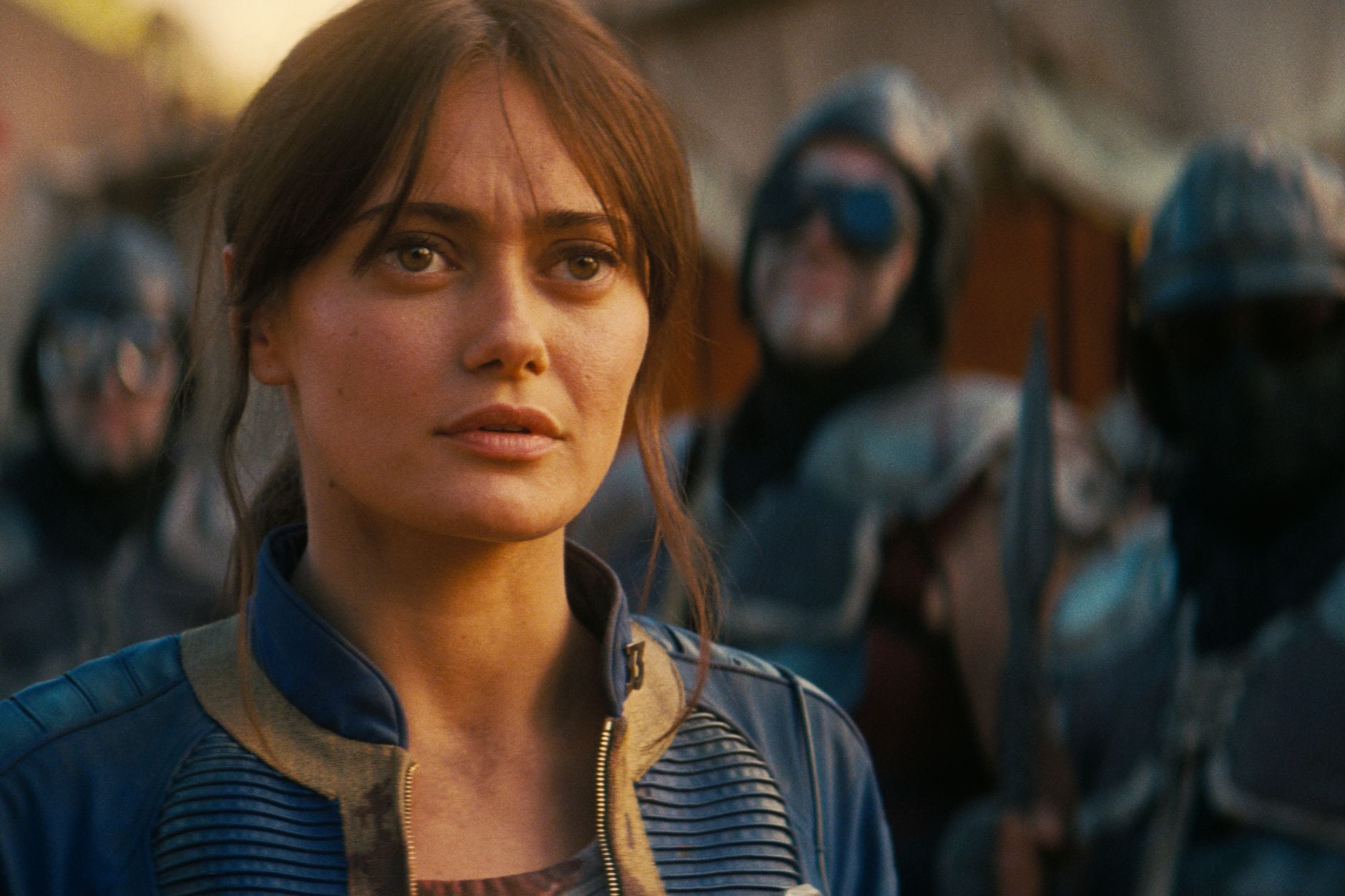

Ella Purnell in "Fallout" Season Two. Photo: Amazon MGM Studios.
Amazon MGM Studios
Ella Purnell and Walton Goggins in "Fallout" Season Two. Photo: Amazon MGM Studios.
Amazon MGM Studios.
Ella Purnell in "Fallout" Season Two. Photo: Amazon MGM Studios.
Amazon MGM Studios
Bailey approached the hair the same way. “People don’t always notice when it’s right,” he says. “But they always notice when it’s wrong.” While the Ghoul may be the most extreme transformation, across the series, viewers watch a more subtle and slow evolution as Lucy leaves her life as a vault dweller to venture into the harsh, unfamiliar wasteland to rescue her kidnapped father (Kyle MacLachlan). “She has a beautiful head of hair,” says Bailey, “and the last thing we wanted was for it to feel overdone or styled in a way that took you out of the world.” Lucy’s iconic ponytail becomes a practical choice (it’s a style she could plausibly maintain herself), gradually loosened by dust and time.
In season two, audiences spend significantly more time with Goggins as Cooper Howard, the pre-war movie star whose old-Hollywood charm stands in stark contrast to the scorched survivor he becomes. When the hair department head first sat down with Goggins, the actor was clear about one thing: he didn’t want his hair cut as short as it had been in season one. “He wanted to keep it a little longer,” Bailey explains. “He wanted to look a little cooler.” James Dean, Marlon Brando, and William Holden, as the reigning movie stars of the real ‘50s became his reference points for the hair look he subsequently created. It's a slightly loosened take on 1950s grooming that still felt era-appropriate, but better suited to Cooper’s suave, self-assured persona. “It’s still very ’50s,” Bailey says, “but with a bit more ease to it. It fit his personality.”
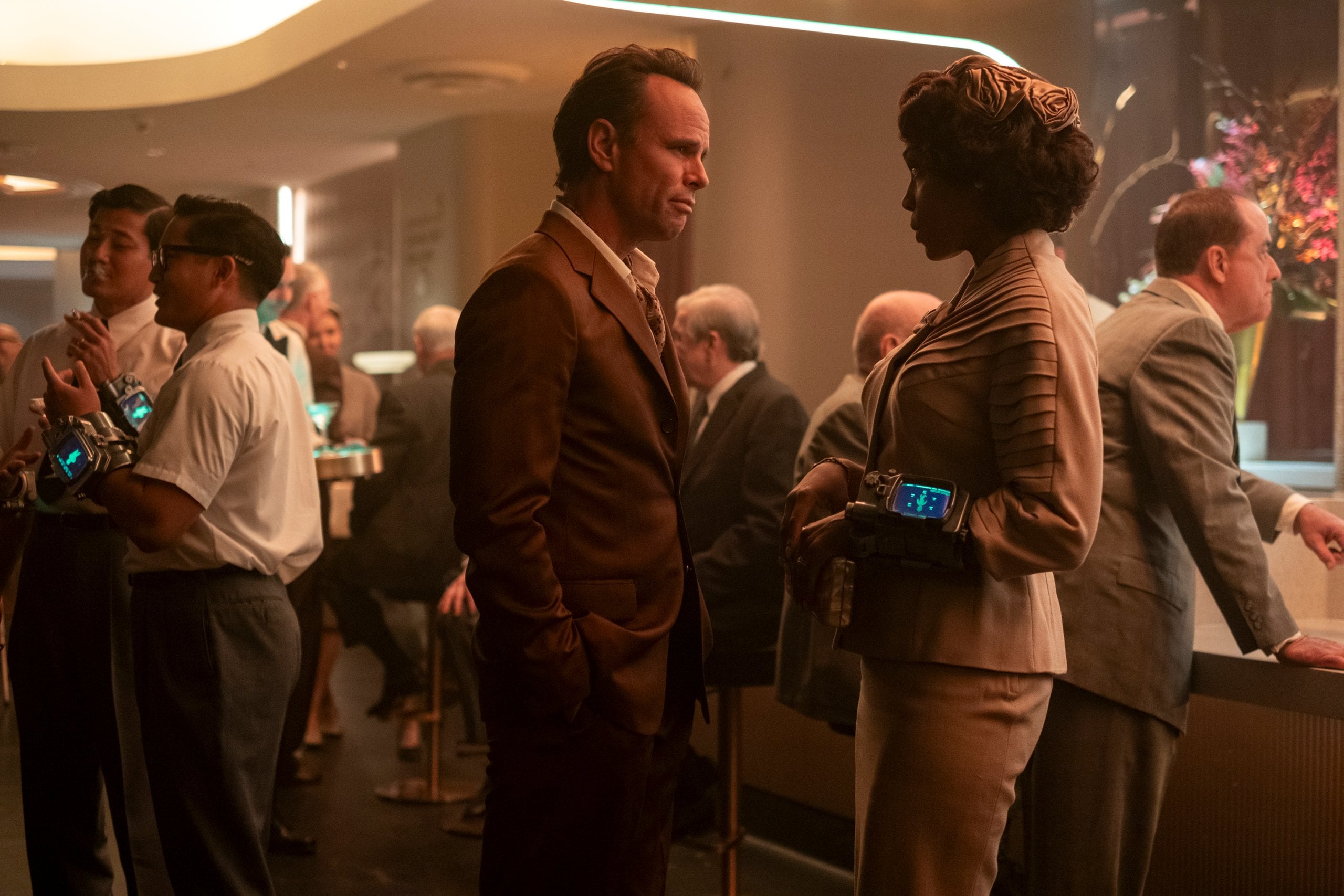

Walton Goggins in "Fallout" Season Two. Photo: Amazon MGM Studios.
Amazon MGM Studios
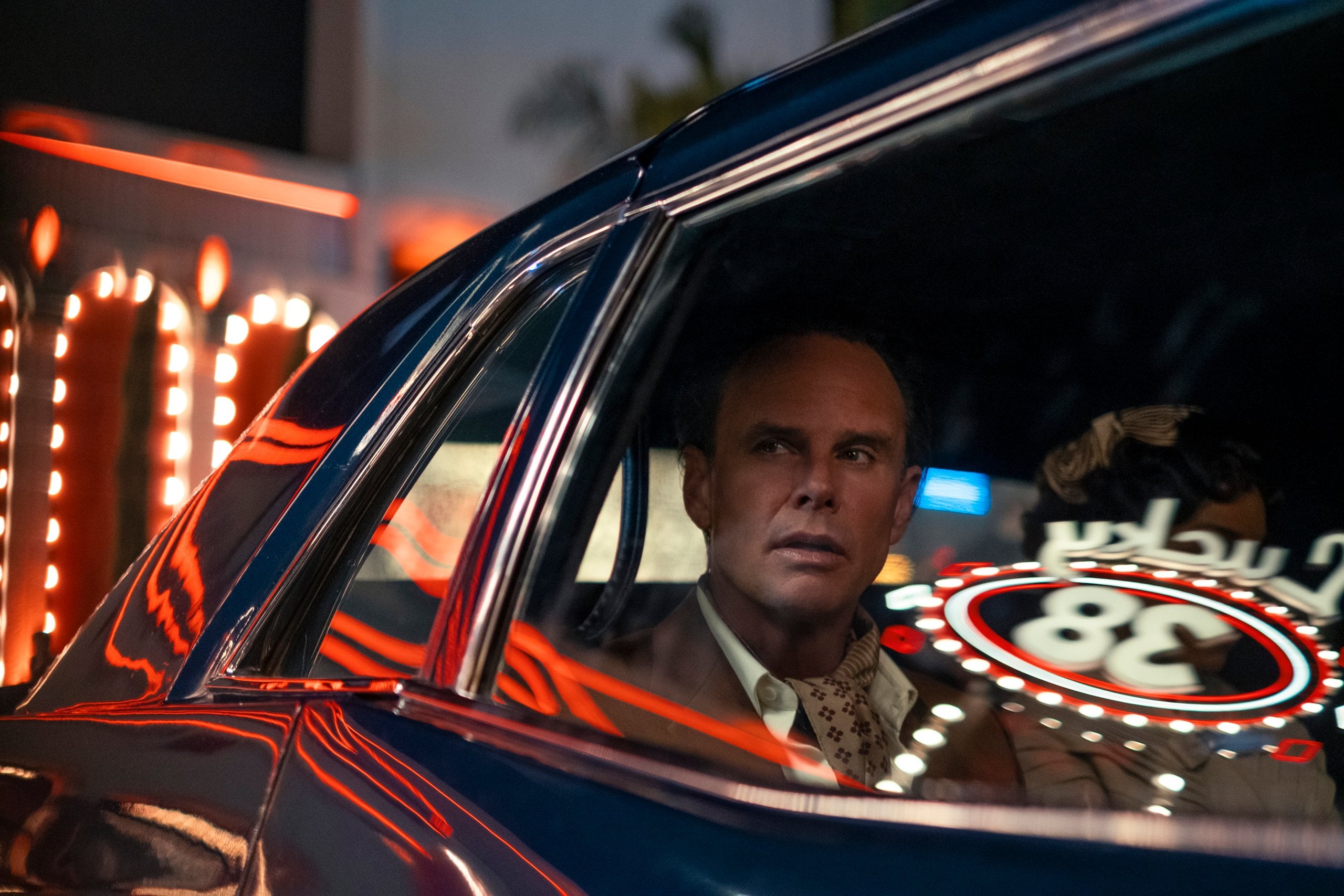

Walton Goggins in "Fallout" Season Two. Photo: Amazon MGM Studios.
Amazon MGM Studios.
Walton Goggins in "Fallout" Season Two. Photo: Amazon MGM Studios.
Amazon MGM Studios
Walton Goggins in "Fallout" Season Two. Photo: Amazon MGM Studios.
Amazon MGM Studios.
For Marsh, much of her work with Goggins as pre-irridiated Cooper was about knowing when to step back. While Cooper’s Hollywood studio work calls for heavier, pancake-style makeup and period powders, his off-camera life required something subtler—a no-makeup makeup look.“You want him perfectly enhanced, a little bit tanner,” Marsh explains, “but you don’t want him to look made up.”
Interestingly enough, Garber, who spent eight years designing on the AMC show “The Walking Dead,” says he considered turning down the offer to work on “Fallout,” thinking it would be much of the same—monstrous, half-human, half-dead creatures with half of their faces missing. While the Ghoul does have a rather prominent hole in his face, Garber was convinced to come on board when he learned the character was to look a lot less grotesque than the word ‘Ghoul’ immediately brings to mind. “There were definitely discussions about how far to take it early on. Of course, we wanted to see Walton—which we can—and we didn’t want to have it be too gruesome or anything like that,” Garber recalls. That approach was reinforced by executive producer and director Jonathan ‘Jonah’ Nolan. “He said, ‘I want him to be somebody that people are intrigued by, not repulsed by.’”
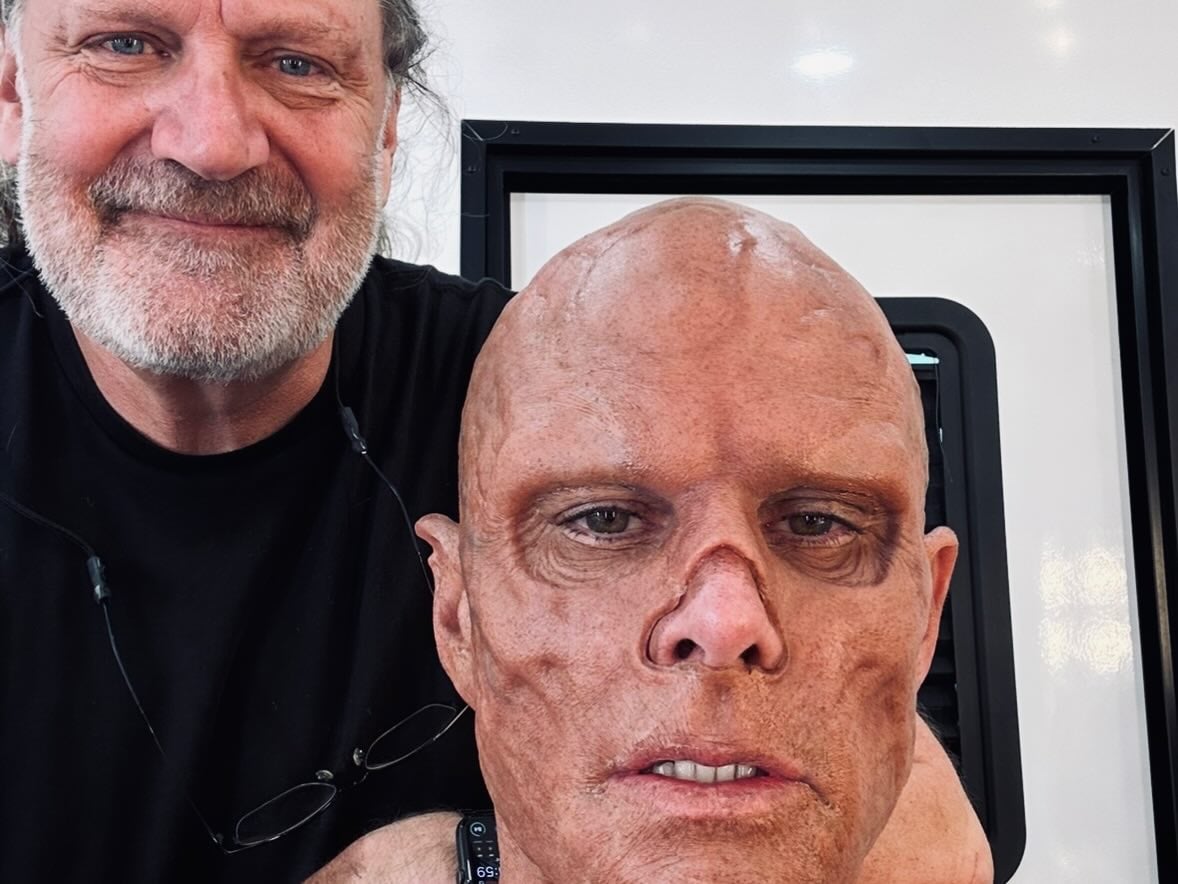

Jake Garber and Walton Goggins during the actor's lengthy transformation process. Photo: @WaltonGogginsBonafide
Walton Goggins
The internet’s reaction to the Ghoul certainly proved that Van Dyke and Garber hit the nail on the head. Critics praised the character design for allowing the pathos of Goggins’ performance to shine through, while audiences were able to look past the noseless, severely scarred gunslinger’s appearance and find something unexpectedly magnetic beneath it. “Once the show aired and all the episodes came out at once, I was seeing articles that basically said women found him sexy, guys thought he was a badass,” Garber recalls. “And Jonah sent an email to me and Vincent that just read, ‘Mission accomplished.’”
“As somebody that’s got a hole in the middle of his face, you’ve got to be pretty engaging or charismatic to pull that off,” Garber laughs. As Marsh notes, it’s the details that keep the character grounded. “He still has the twinkle in his eyes,” she says. “It’s still a cheeky smile that we see. And because we also see him as Cooper, you’re reminded of what he looks like.” Ultimately, the Ghoul’s appeal is rooted in the humanity he holds on to. “It’s his mission,” Garber says. “He just wants his family. And if he’s got to be a badass to everybody to find out what happened to them, then no is not an option.”