
Inside Andrew Scott's Hair and Makeup Transformation for 'Elsinore'
Beauty
For Andrew Scott to disappear into the role of actor Ian Charleson, every detail of his appearance had to be considered, from his hair color and piercing blue eyes to the gradual physical effects of his illness. It was a task that fell to the Oscar-winning Nadia Stacey.
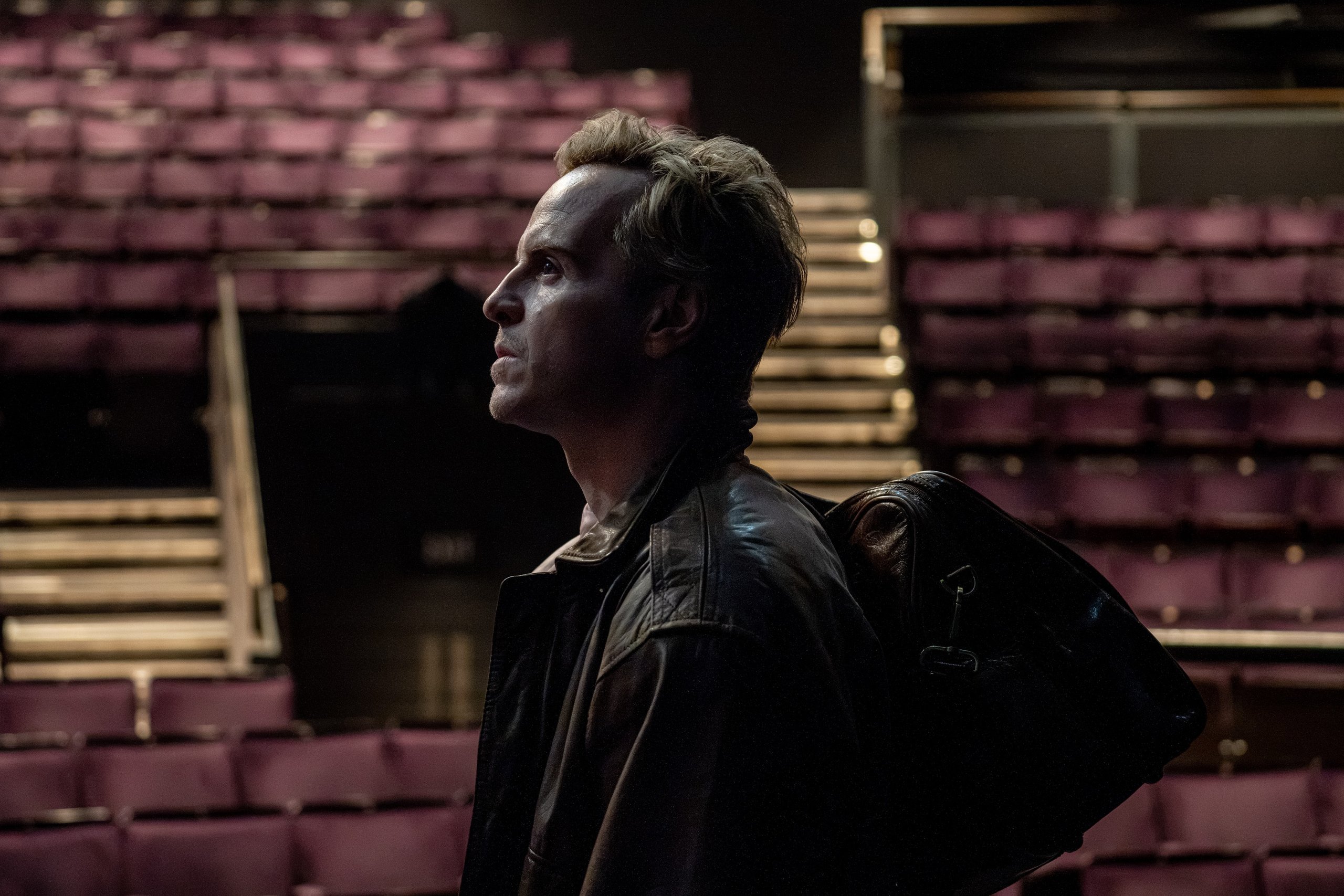
Bringing the late actor Ian Charleson to life on screen in “Elsinore” required more than a convincing performance from Andrew Scott. It also called for a carefully considered transformation from hair and makeup designer Nadia Stacey, who won an Oscar for her work in Yorgos Lanthimos’ 2023 “Poor Things.” While on that project, Stacey was tasked with turning the naturally fair-haired Emma Stone into a raven-haired Frankenstein-esque woman, “Elsinore” presented her with the inverse. “Andrew’s hair is almost black and with really dark brown eyes, and you’ve got him playing the very blonde, blue-eyed Ian Charleson,” Stacey says. As a result, transforming into the late Shakespearean actor wasn’t necessarily straightforward.
“I knew that if I bleached Andrew's hair to make it completely blonde all over, it would be almost impossible to make that look natural,” Stacey says. “On a production like this, you don't want to be pulled out of the story. You want to really believe it.” She was thinking practically, too. The Irish actor, whose performance is already generating Oscar buzz, is in just about every scene of the movie, and repeatedly bleaching his roots for the duration of the two-month shoot would have left him with a severely damaged head of hair.
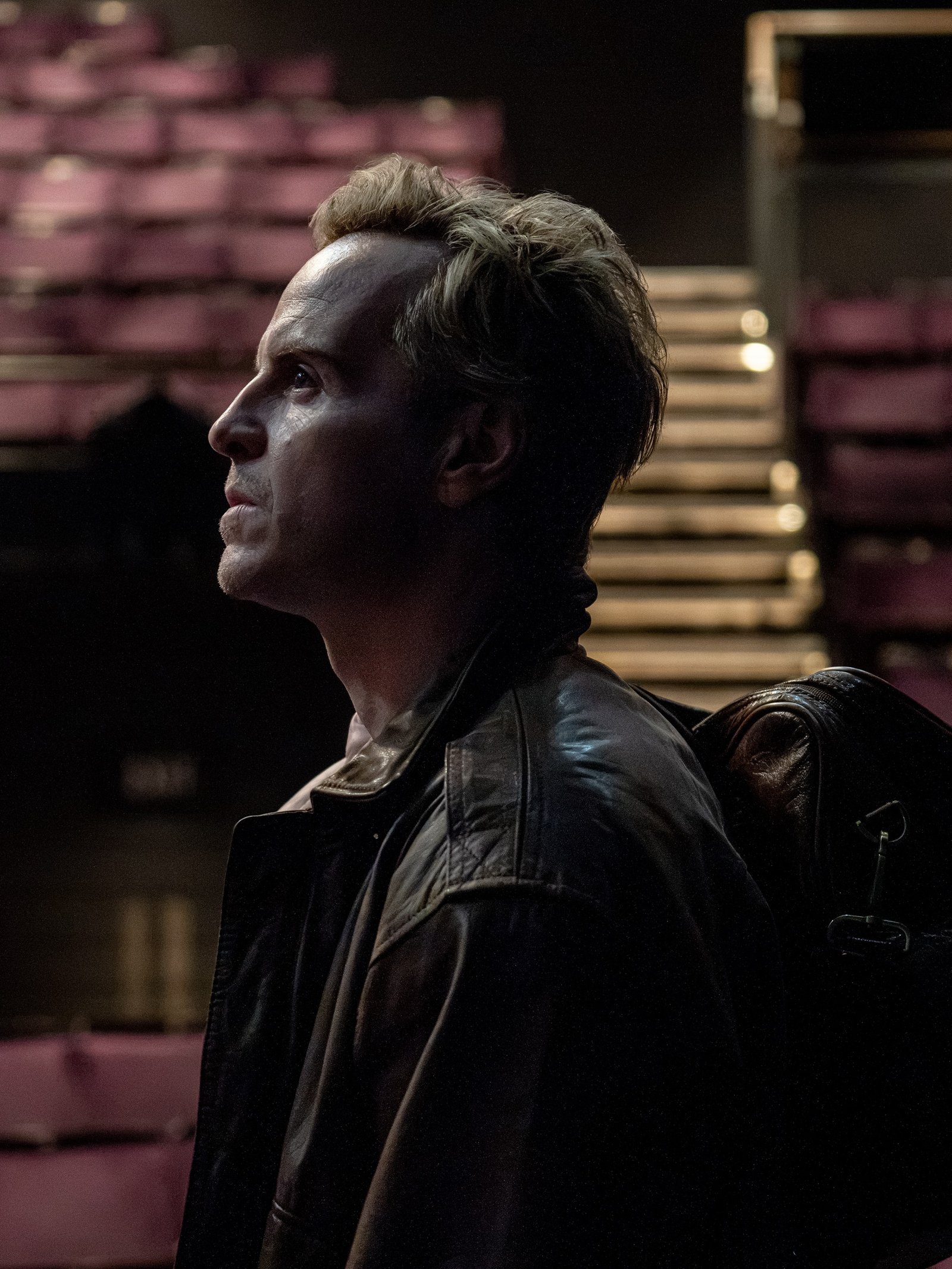
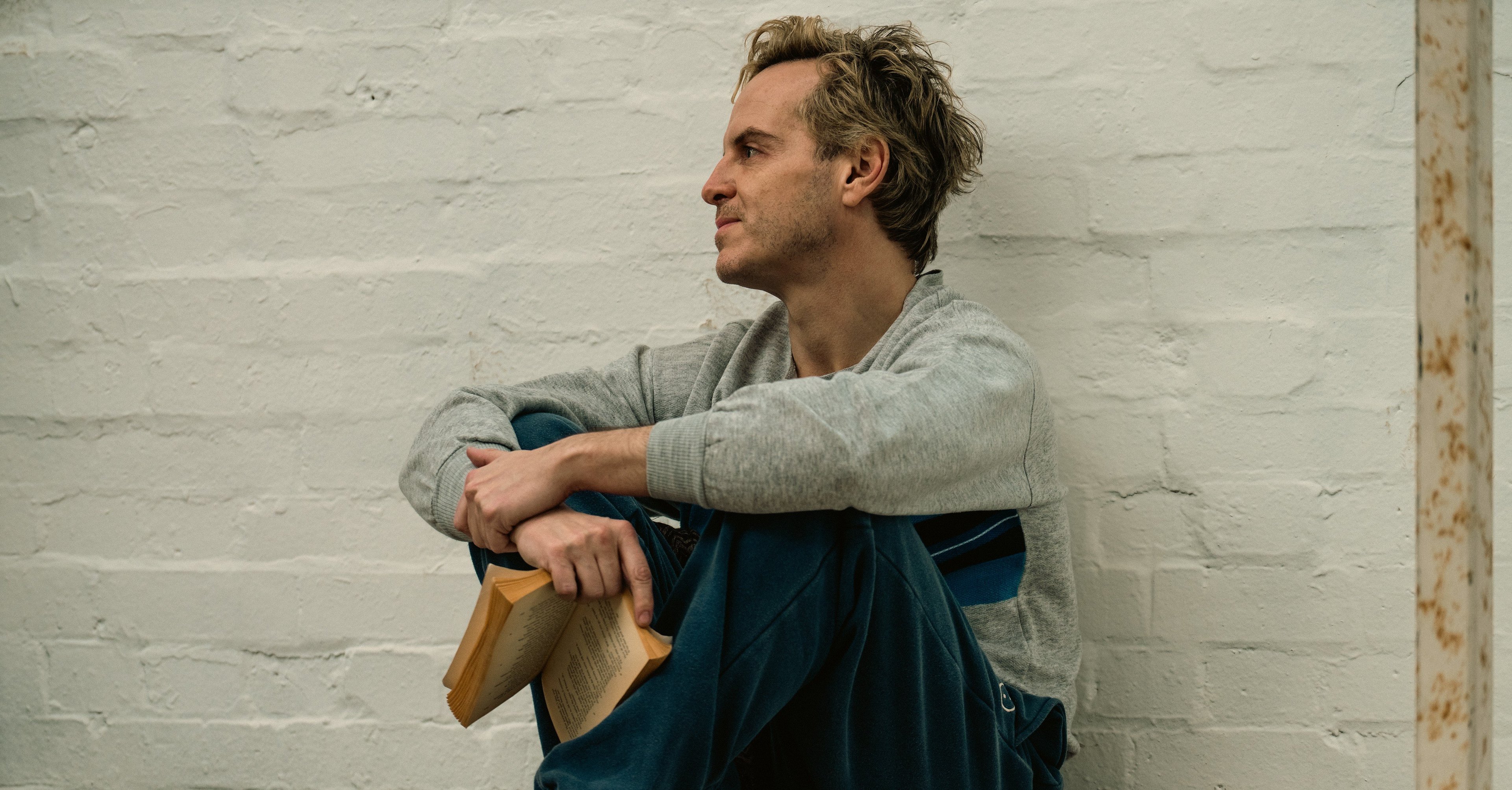
Instead, Stacey opted to give Scott a full head of very fine highlights, achieved one wintry evening in mid-December last year at the Nicola Clarke at John Frieda Salon in Mayfair, London. Knowing that filming was set to commence after Christmas, Stacey enlisted the help of leading color specialist John Clark to lighten and lift Scott’s naturally dark brunette hair in a single session, taking over the salon’s basement for the day. “It’s lots and lots of highlights so it looks very blonde, but it has some roots coming through which felt very ‘80s,” Stacey explains. “It felt very much like what an actor like Ian, living and working in London at that time, would do,” she adds, when considering that the “Chariots of Fire” star did not stick to one fixed hair shade and often changed his appearance for roles.

Andrew Scott in "Elsinore."
Focus Features
After Clark had worked his magic, Scott put on an appropriately ‘80s outfit that the film’s costume designer Mel Page had provided for the trial as well as contact lenses that turned Scott’s natural brown eyes into piercing blue. “We had the director Simon Stone and the producers around the corner, and then we brought Andrew out and went ‘ta-da!’ And honestly, it was really emotional. Andrew did this really soft Scottish accent, and we knew that Ian was here,” Stacey recalls. “It’s a really cool moment as a hair and makeup artist when you know you’ve given the actor what they need to do their performance.”
Stacey shares that she and Scott were both initially against the idea of him wearing contact lenses. “I am in the camp of: if it's going to be distracting and if you don't need to do it, don't do it,” she says. “But we agreed to get them made in a couple different versions of blue because Simon [the director] always wanted us to use lenses.” After Scott tried them at the fitting, she was happy to admit she was wrong. “Andrew and I both turned to each other and said, ‘Oh no, we’ve got to do this, haven’t we?’ It just finished off the whole look.” The shade Scott wears throughout the film was chosen after a process of trial and error, with Stacey and the film's contact lens technician testing several different colors until they settled on one that felt reminiscent of Charleson's eyes that was, as Stacey puts it, “as natural as we possibly could make them.”
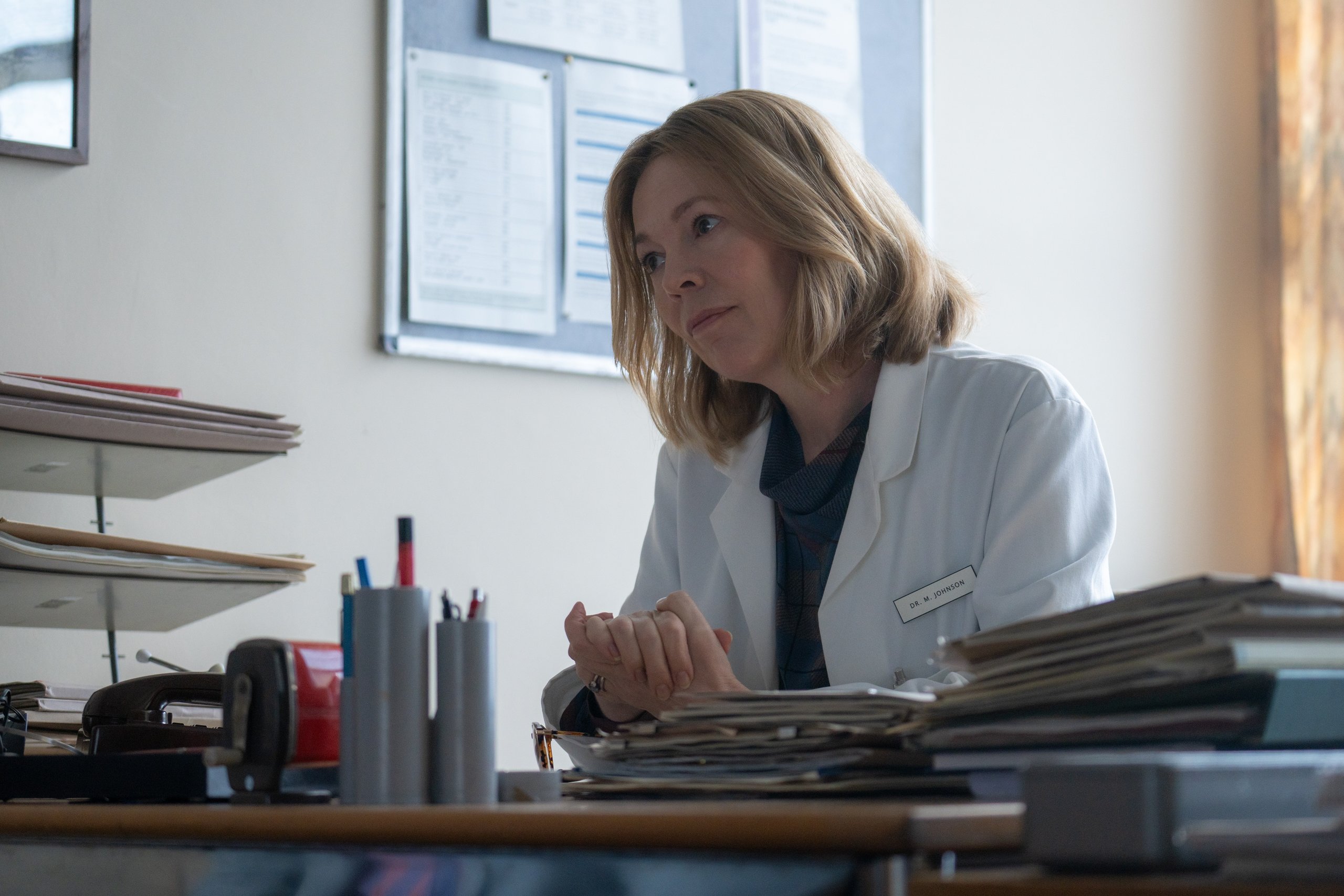
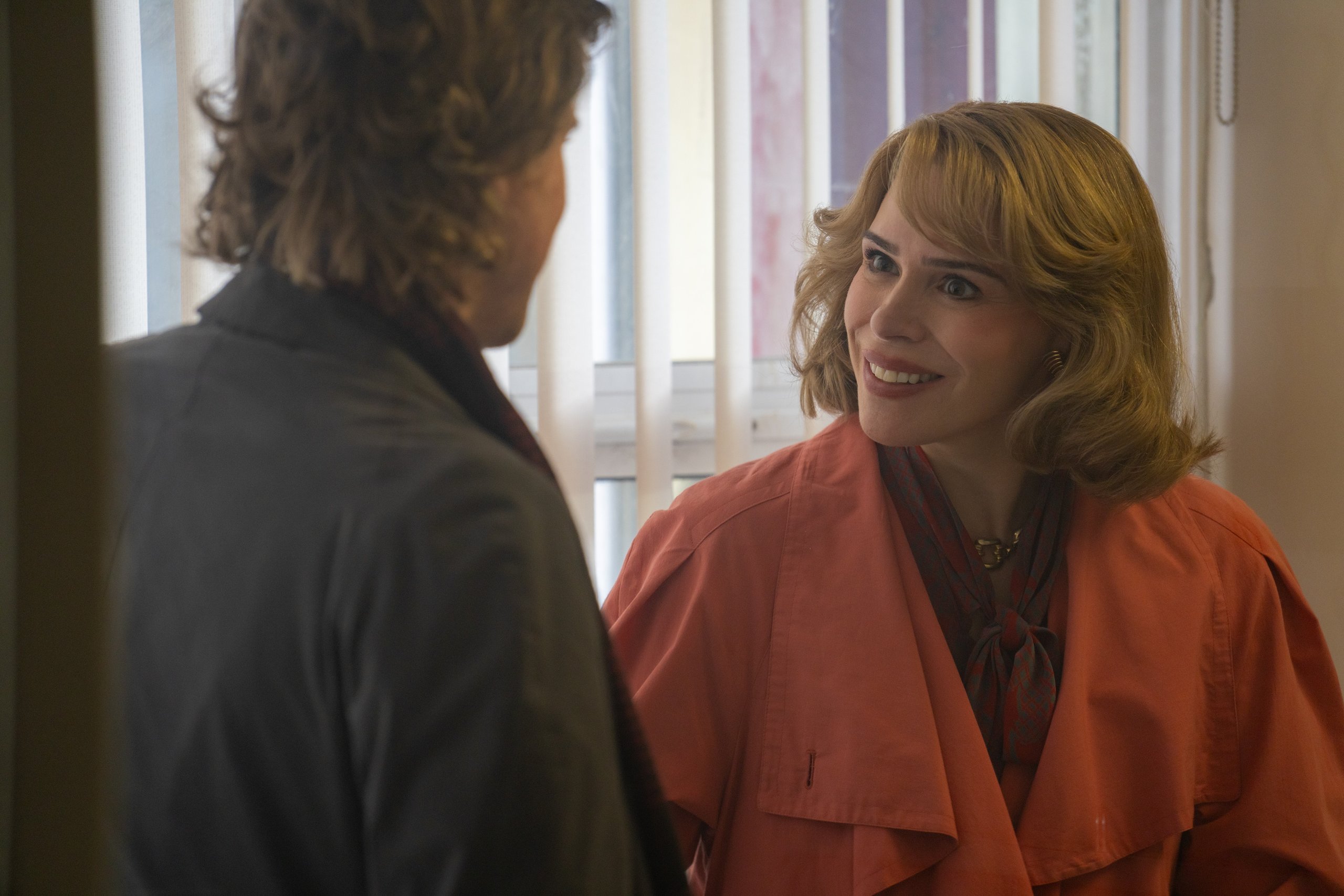
Despite Scott not wearing one, wigs were a huge part of “Elsinore,” with both Billie Piper and Olivia Colman wearing them throughout. Piper, playing Charleson’s close friend and casting director Patsy, can be seen in a perfectly coiffed copper-colored bob. Colman, whom Stacey previously transformed into a gout-ridden Queen Anne for “The Favourite,” takes on a much more grounded look as Margaret Johnson, Charleson's no-nonsense doctor and a pioneering figure in HIV and AIDS treatment. Taking inspiration from the real Margaret, Colman wears a shoulder-length ash-blonde wig. Stacey shares that the studio was initially reluctant to have the Oscar-winner sport a look so different from how audiences are used to seeing her.

Olivia Colman in "Elsinore."
Focus Features

Billie Piper in "Elsinore."
Focus Features
Olivia Colman in "Elsinore."
Focus Features
Billie Piper in "Elsinore."
Focus Features
“There’s that thing when you’re really used to someone and know what they look like that as soon as you put a wig on them, your brain says, well, that’s Olivia Colman in a wig,” Stacey says. “But it was important to Olivia and me to give her that look and portray her as closely as we could because Margaret Johnson is a huge part of the story.” As Stacey puts it, “these were real people and a very real thing that happened,” so the inclination to veer as close to reality as possible was strong. Johnson, who remains a practicing physician and helped establish a HIV clinic that was later renamed the Ian Charleson Day Centre in the actor's memory, was among those who attended the film's UK premiere at the Royal Festival Hall last month.
With the hair already dyed (he returned for a few top-up toning sessions in early January), it took just half an hour in Stacey’s makeup chair to get Scott ready to go to set every day. Stacey would start by applying a small amount of hair mousse before diffusing and scrunching to “get a soft kind of wave and movement,” achieving Charleson's boyish look. With the hair lightly styled in this way, Stacey would move on to Scott’s face, which she used to chart his decline following his HIV diagnosis. “That was the biggest part of his routine, as we took a different approach depending on where he was meant to be with the illness.” In early scenes showing Ian partying with friends in Soho, Stacey wanted him to look “as good as possible so that I then had somewhere to go.” She opted for a tinted moisturizer and a subtle concealer mixed with a bronzing gel to “add some warmth to his skin” and filled in Scott’s eyebrows slightly to help convey a youthful look.
Following that, Stacey says it was a process of “taking away” this coverage to reveal more of the natural variations on the face, such as dark circles, discoloration, and skin texture, to show Ian's decline in health. “Then when we really get to the later stages of illness, I started to change his skin tone completely. I used green- and gray-based foundations to remove all the warmth out of his skin,” Stacey says. For Ian’s Kaposi sarcoma lesions, Stacey had these created in the style of tattoo transfers that allowed her to easily place them on Scott’s body and keep them looking consistent for the sake of continuity.
However, as Stacey found in her research, these can “come and go,” disappearing and then reappearing throughout the illness. “That gave us some scope to kind of play with that because what we didn't want to do was go, right, he's ill and now he's covered in these sarcomas for the rest of the story.” Instead, she describes it as mapping out a “journey” across Ian's body, with the appearance of the sarcomas changing as his illness progressed, including periods when they seemed to recede before returning. “Andrew and I would sit in the morning and work out where we were in the story and ask, ‘Do we think we should add one here or take this back a bit?’ It was a huge part of the makeup journey.”
For Stacey, “Elsinore” reminded her “why [she] loves hair and makeup so much.” As she sees it, it's one of the most powerful weapons in a film’s arsenal. “You can create a character using hair and makeup—from the biggest transformation with prosthetics and wigs and down to the smallest detail—and you really see actors change in the chair when you’ve got it right."