
How Wētā Workshop Wove Alexander Skarsgård Into the Perfect Husband In 'Wicker'
Beauty
Prosthetic and makeup artists at Wētā Workshop and costume designers András and Attila talk through how they created an anatomically detailed, head-to-toe wicker suit modeled on the actor himself.
In preparing for the offbeat comedy-drama “Wicker,” Wētā Workshop faced an unprecedented challenge: creating the basket-like head and torso for Alexander Skarsgård to play the Wicker Husband. Known for its stunning special effects and prosthetic work in sweeping fantasy adventures, including “The Lord of the Rings” and “Avatar,” the New Zealand-based special effects house specializes in “monster making, orcs, armor, and clothes and sandals—sci-fi stuff,” says prosthetic makeup designer Joe Dunckley. “But this was so different: a romantic lead and he needs to hit different cues to what we're used to.”
In the period-fantasy film based on Ursula Wills-Jones’s short story, “The Wicker Husband,” the Fisherwoman (Olivia Colman) bucks societal conventions of her small-minded village by living her life independently, rejecting marriage, and shrugging off insults about her dirty clothes, unibrow, and the lingering odor that comes with the job. As a retort to the catty local women, Fisherwoman hires the skilled Basketmaker (Peter Dinklage) to make her a husband. Originally spawned as a joke, the Wicker Husband becomes an equal partner to Fisherwoman, helping with her business and household repairs, like when they break the bed on their wedding night. Originally aghast, the townspeople grow increasingly envious of their relationship and question their own marriages. The strong yet gentle and loving Wicker Husband becomes the model of an ideal man in the village—and to the Fisherwoman, who’s surprised by her own blossoming feelings.
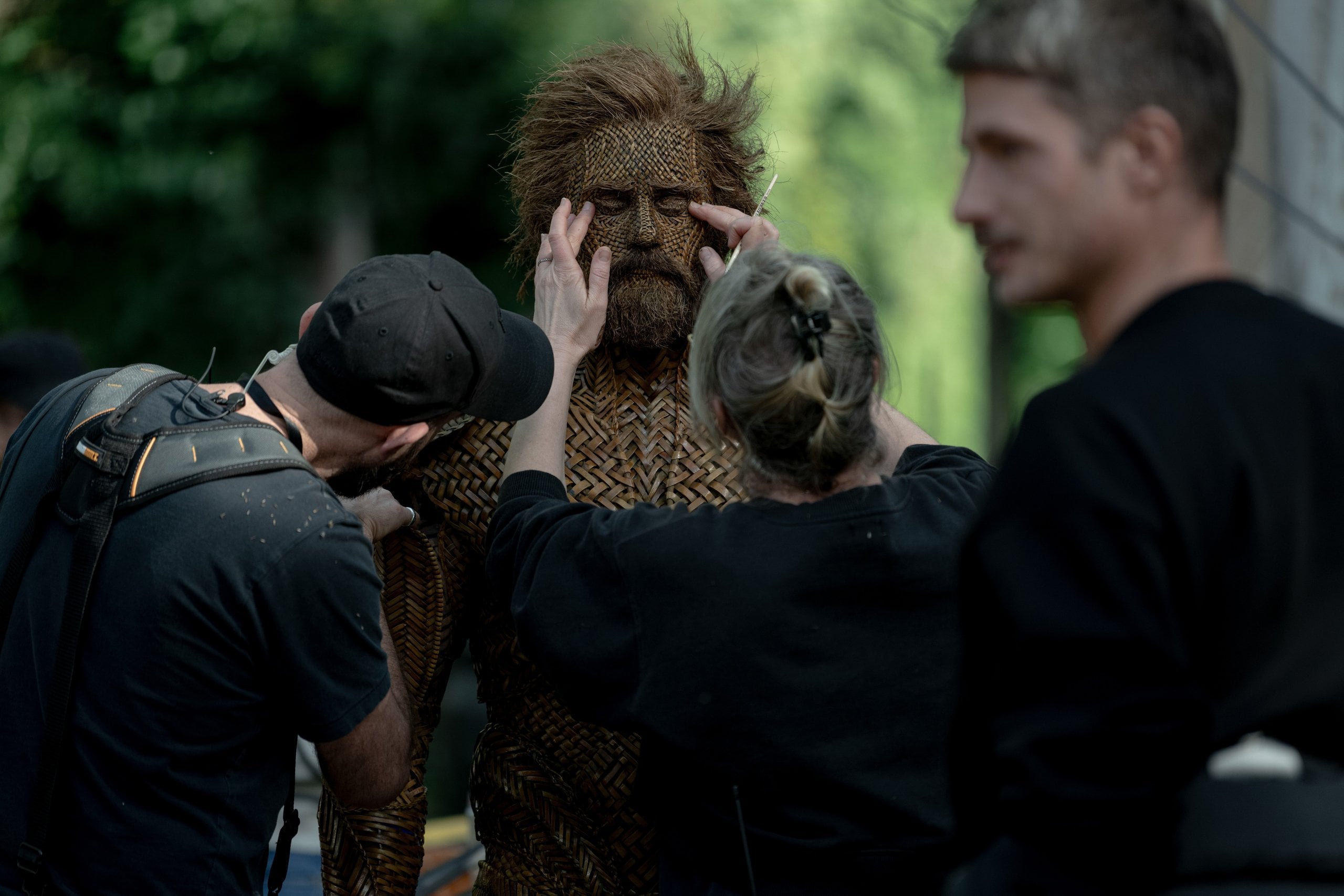

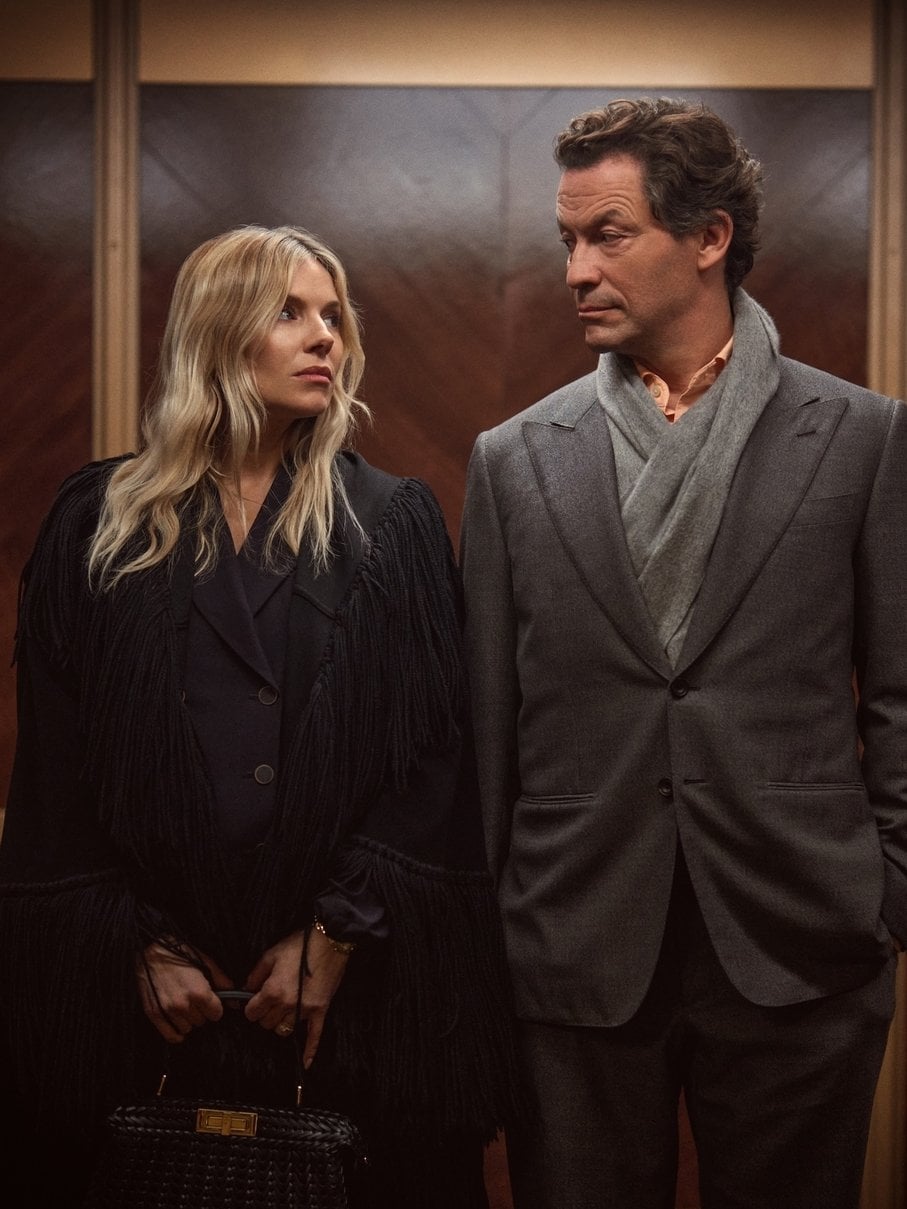
Alexander Skarsgård on the set of "Wicker."
Black Bear
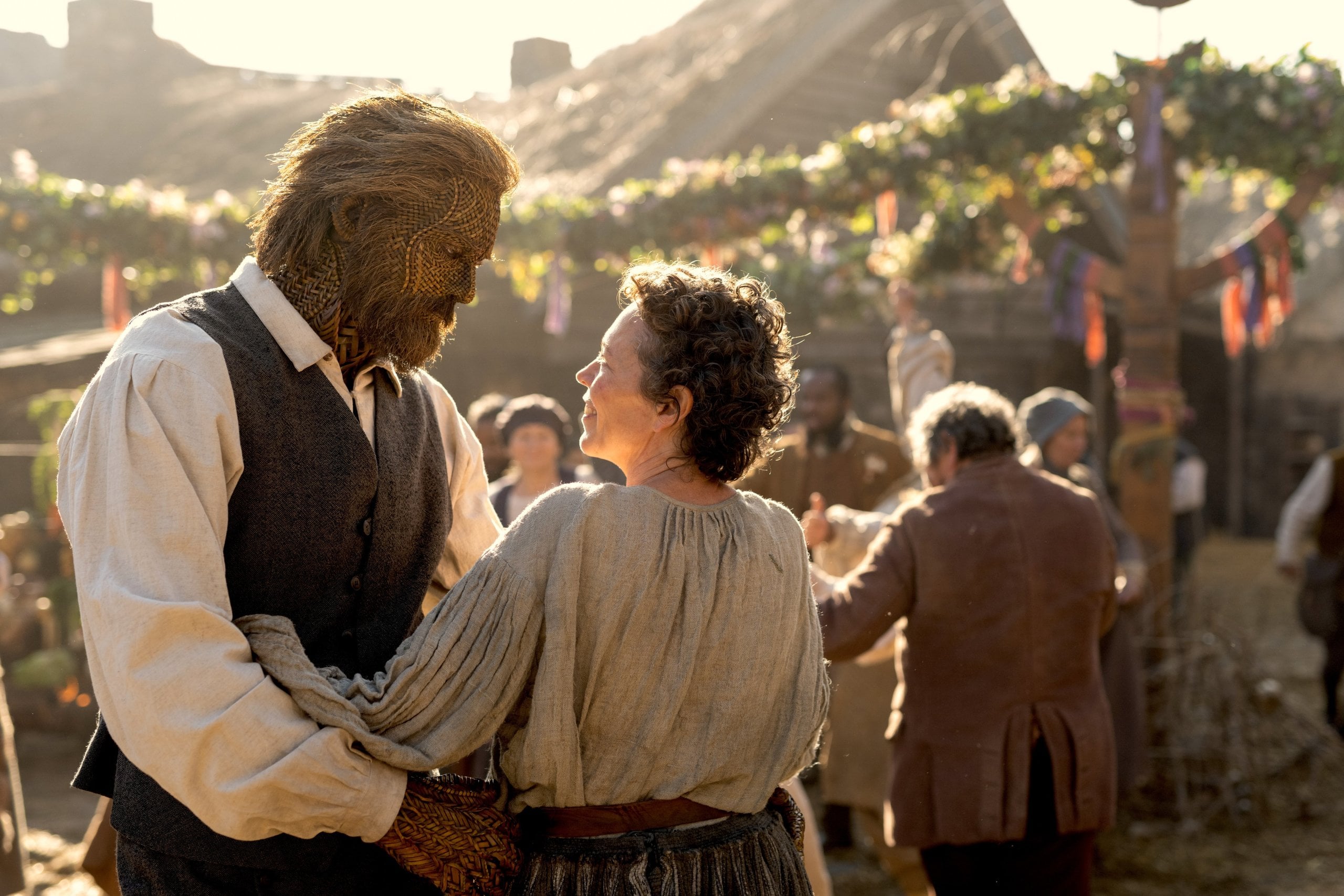

Alexander Skarsgård and Olivia Colman in "Wicker."
Black Bear


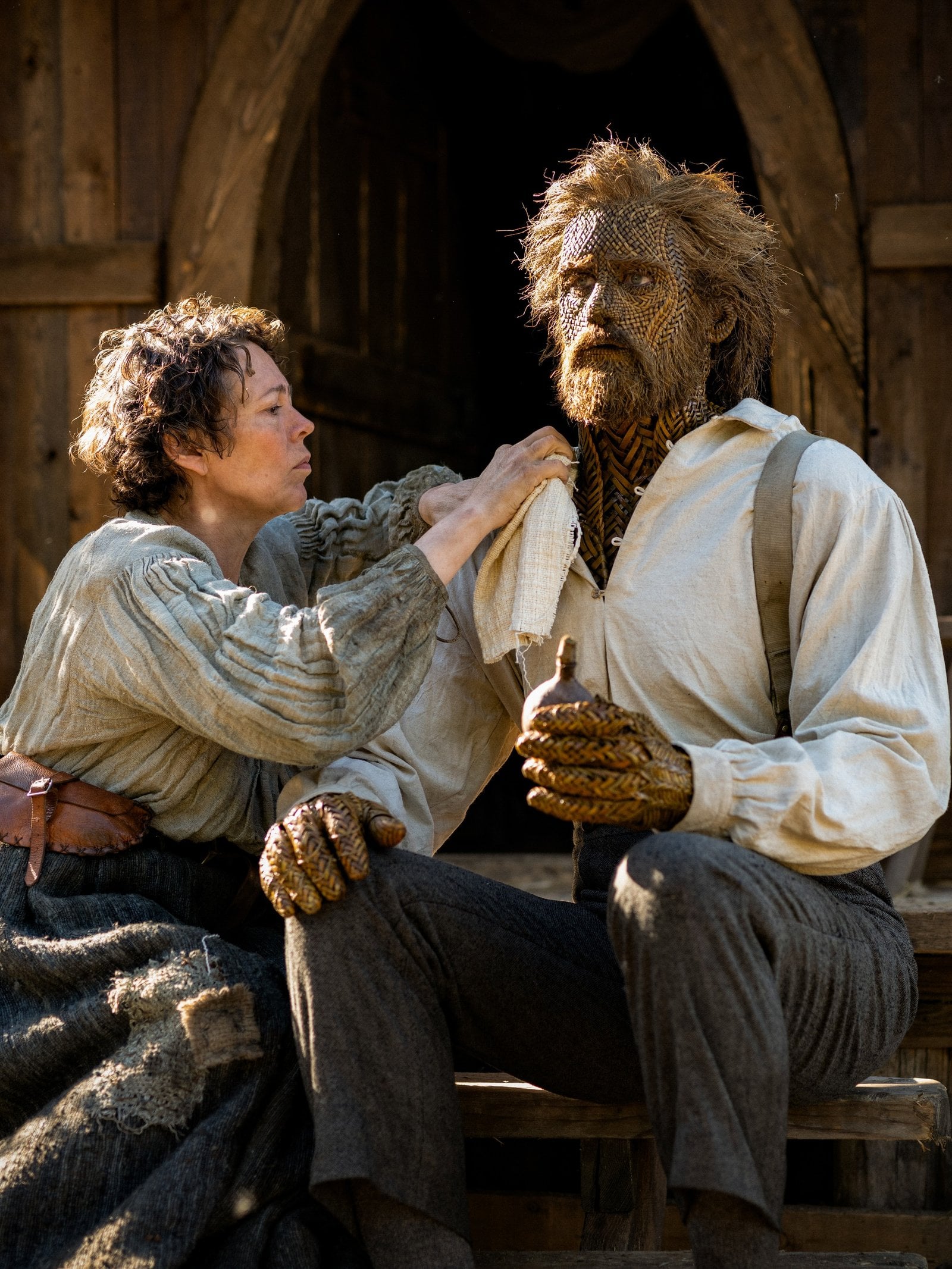
Olivia Colman and Alexander Skarsgård in "Wicker."
Black Bear
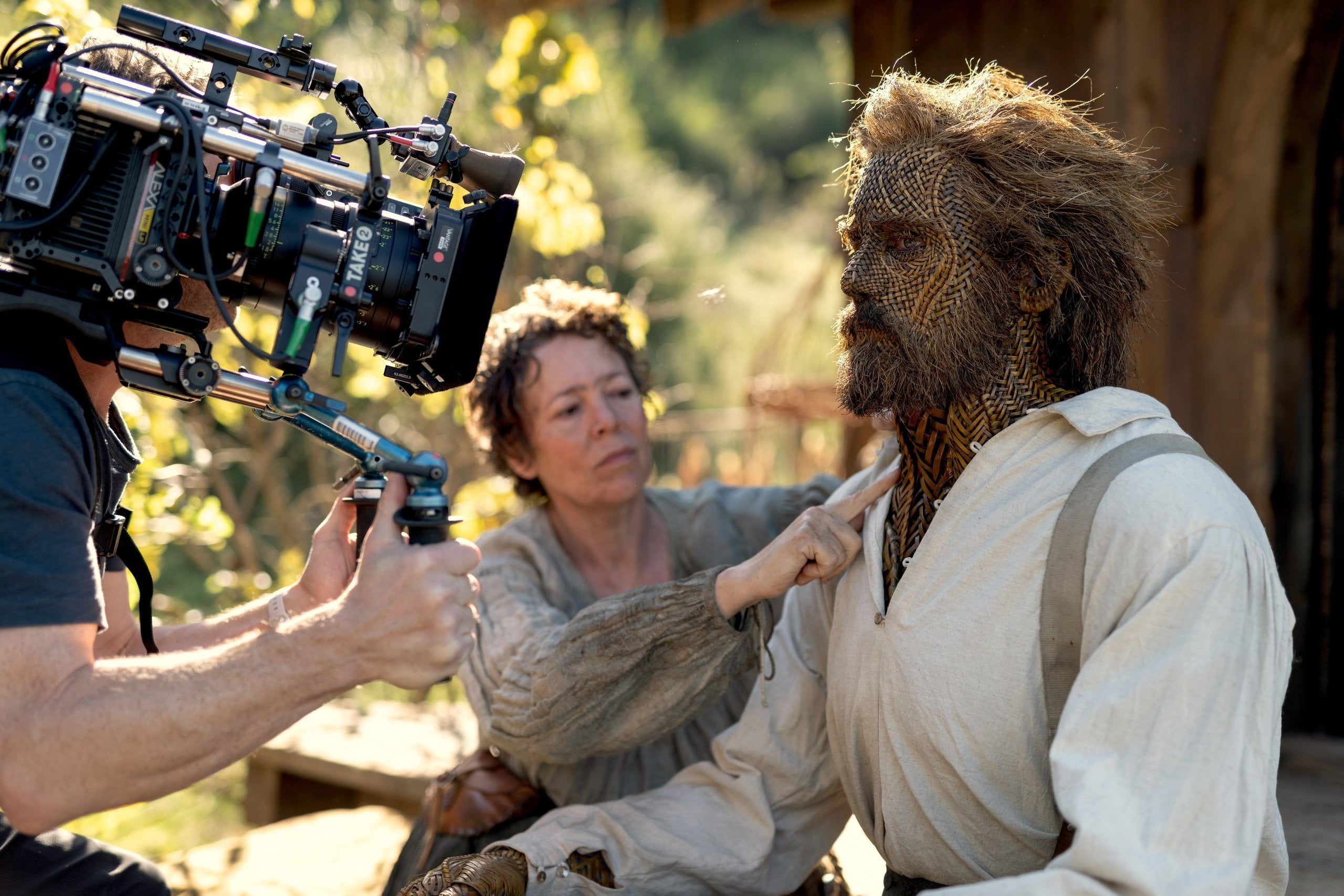

Olivia Colman and Alexander Skarsgård on the set of "Wicker."
Black Bear
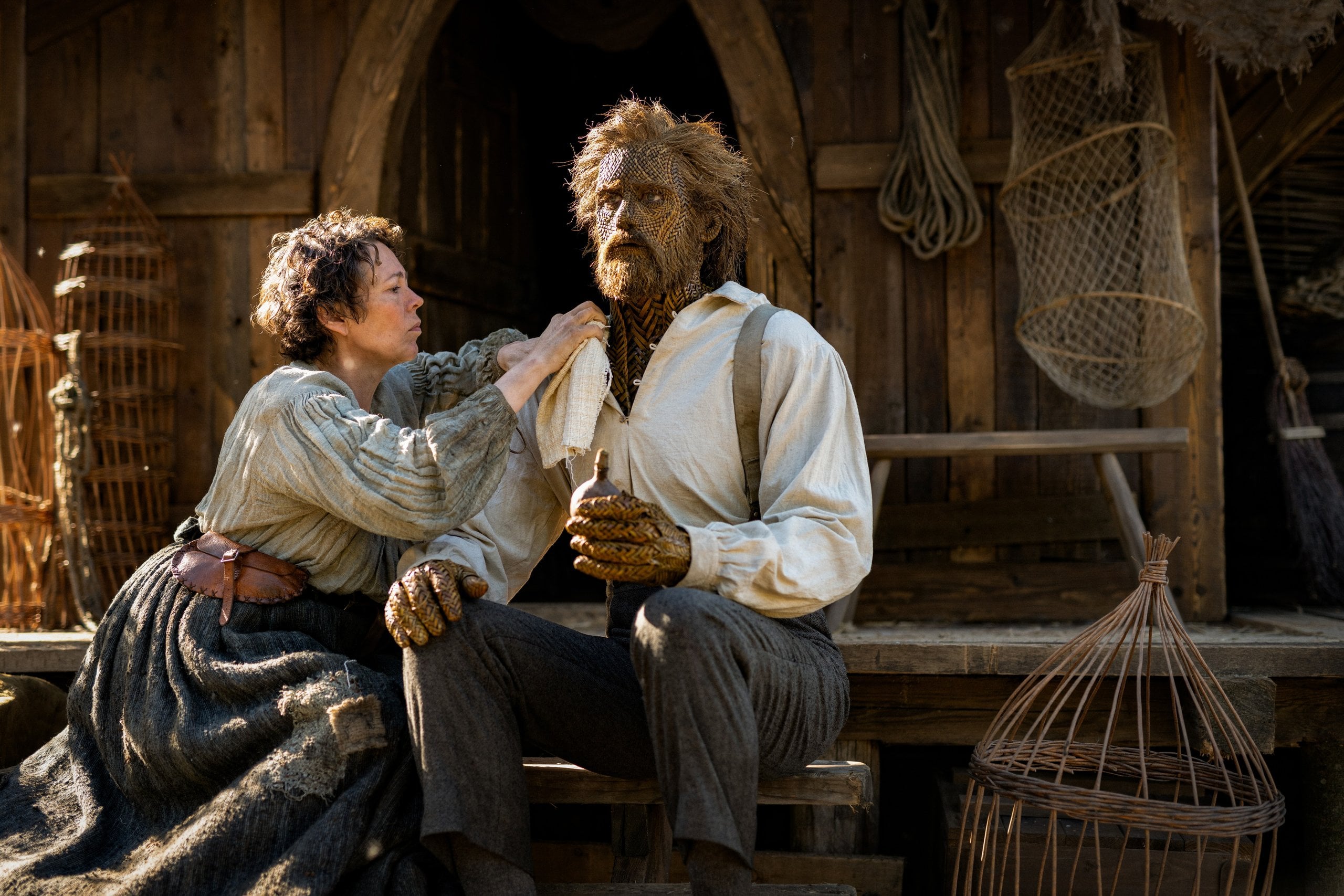
In designing the expressive upper-body suit that conveyed such an object of desire and deep affection, the Wētā team didn’t look far for inspiration. “One of the most important aesthetic cues in the design was Alexander himself,” says Dunckley. “We needed him to shine through.” To achieve that, the team used scans of Skarsgård’s 6 foot 4 inch frame, cutting-edge digital sculpting software, and 3D printing technology to create prosthetic makeup appliances and a fabricated suit from a flexible, rubber-like thermoplastic elastomer that mimicked the intricacies of basketry weave.
“We wanted to capture [Skarsgård’s] likeness in the weave, so we studied his expressions and what's iconic about his look to include that into the design, but also allow for his expressive range of motion,” says Dunckley. “He has an expression that's almost his resting face—the very handsome little furrow of his brow.”
The team used 3D animation to map out a range of Skarsgård’s expressions and engineer them into the weave, allowing the Wicker Husband to convey his pure love and dedication to Fisherwoman without saying a word. “The orientation of the pattern of weave on his face was really considered so that he could emote through the makeup,” says Sarah Rubano, lead makeup effects artist. The complex facial prosthetics, with the weaves perfectly matched up, consisted of 10 separate appliances in softer silicone and foam latex, including ears, under-eye bags, lips, chin, jaw, nose, and cheekbones. She recalls a game-changing moment when they turned the forehead piece on the bias. “All of a sudden, the range of movement was way more possible.”
The Wicker Husband’s medieval mullet and rugged facial hair—both at home on a romantasy book cover—take inspiration from Skarsgård, too. “We wanted it to be period correct, handsome, a little bit wild, and then natural for Alexander,” says Dunckley, incorporating references from the “Tarzan” and “The Northman” actor’s previous roles. The team also created the Wicker Husband’s hair and beard just as if the Basketmaker dipped into his own supplies—using muka, a shredded flax plant native to New Zealand that Māori people use for weaving. “Even the eyelashes,” says Rubano, explaining that the team’s hair specialists dyed the muka in eight shades to create natural highlights and hand-knotted individual strands into the woven surface. “So just all that fine detail.”
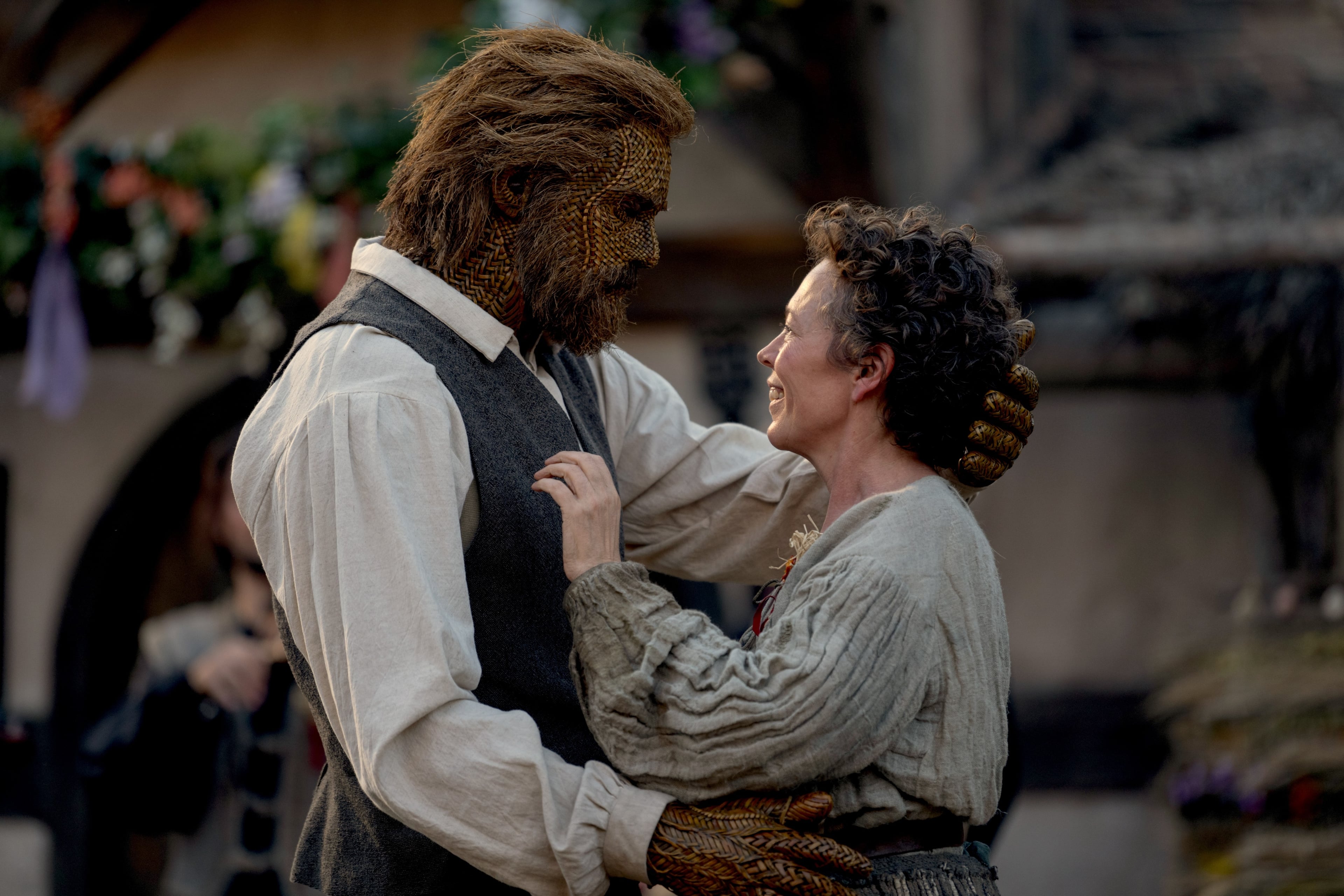

Alexander Skarsgård and Olivia Colman in "Wicker."
Black Bear
The woven torso boasts impeccable detail, moving seamlessly with a shirtless Wicker Husband as he does heavy lifting and vigorously tackles—ahem—other activities. Dunckley compares the upper-body shell’s 50 individual “plates”—from armor-like shoulder caps to sculpted pecs and scapular muscles—to a “skeletal framework,” with the weave serving as “muscle fiber.” “The 50 plates were all anchored and stitched onto very fine spandex and mesh,” says Rubano. “So in the morning, [Skarsgård] would put this suit on and we'd zip it up. There were interlocking components so Joe and I would do a bit of weaving every morning just to get him in the suit—almost like a corset in the back.”
Wētā developed the facial prosthetics and upper-body suit over 18 months, but right before filming, directors Eleanor Wilson and Alex Huston Fischer decided that the Wicker Husband needed a brief naked, full-frontal scene in which he helps his wife catch fish, so design duo András Dániel Tóth and Attila Godena-Juhász, known as András + Attila, expanded their remit to create a pair of wicker leggings for a blink-and-you-might-miss-it scene.
“We had nine days to finish the whole bottom—wicker penis included—and to make the whole prosthetic body seamless,” says András. “So we invented a technique that already existed, but not in this way.” The pair heat-treated a white silk-printed surface to create a similar woven texture and then hand-painted and shaded the woven pattern to match the upper body. “It’s basically two separate pieces but totally seamless on screen,” says Attila.
Most of the time, however, Wicker Husband wears a three-piece suit, which he picks up on the fly from the Tailor (Nabhaan Rizwan) on his way to marry the Fisherwoman. The Budapest-based fashion designers-turned-costume designers took inspiration from Hungarian folk dress for the suit. “Nobody was prepared for [the Wicker Husband’s arrival] in the village, so the tailor didn’t have the right size suit because he’s huge,” says András, explaining why the trousers are a bit too short and snug at the thighs. “It’s like when you have your suit from high school, and then you’re still wearing the same suit at your wedding, but you’ve grown out of it as an adult.”
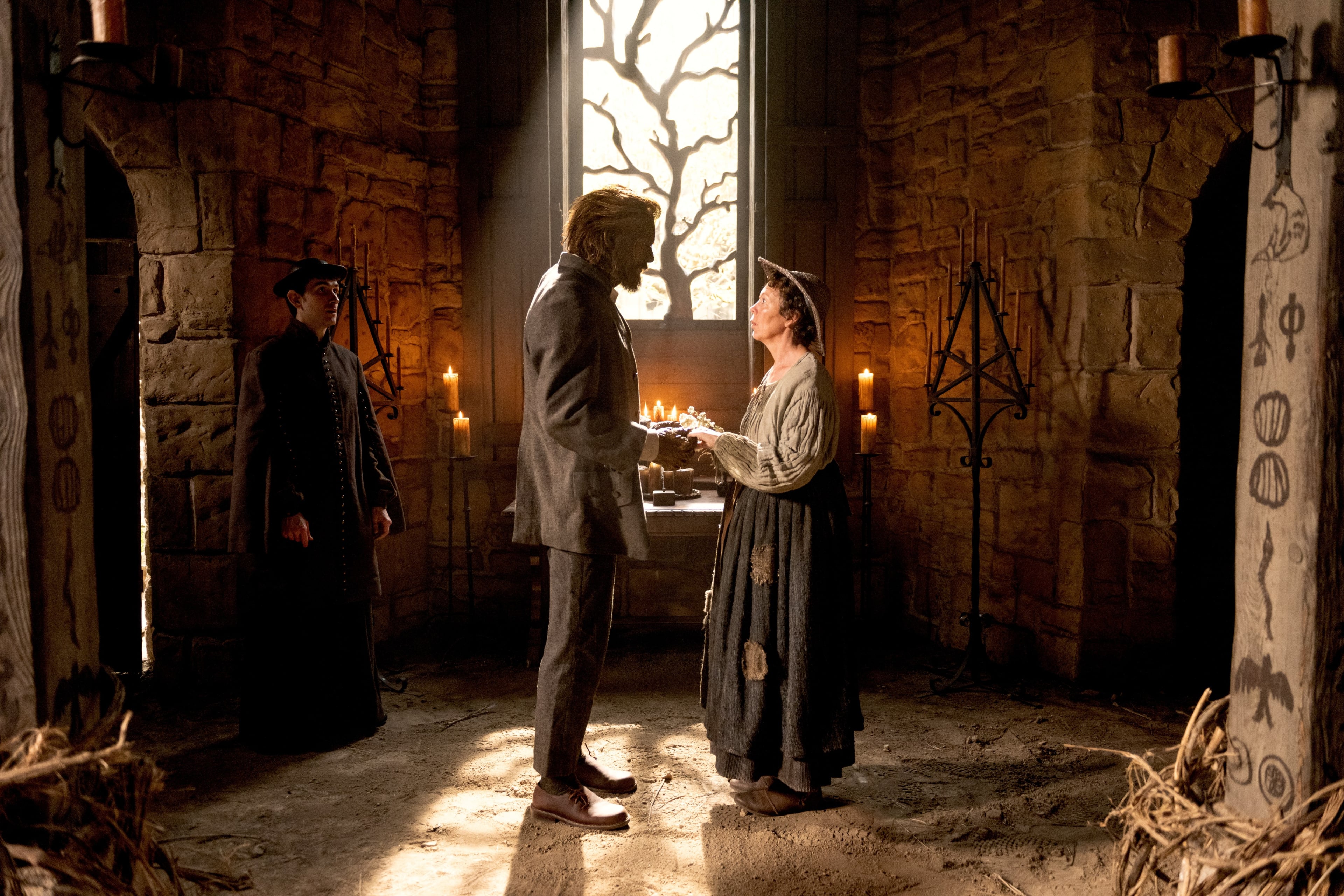

Alexander Skarsgård and Olivia Colman in "Wicker."
Black Bear
The textured 100 percent silk suit, with suspenders and a white shirt with abbreviated sleeves, also gives the Wicker Husband separate pieces to wear in different combinations throughout the story. For instance, he wears the vest and trousers for his and the Fisherwoman’s first official appearance as a couple at a village wedding. They forgo the traditional herky-jerky couple’s dance for a graceful, very steamy tango-meets-waltz-like routine. Their sensual movements, enhanced by the Wicker Husband’s hands lovingly caressing the Fisherwoman’s face, leave the already hot-and-bothered villagers completely flustered.
“We always figured movement was the key to him feeling like he was alive—this sentient being—and with the hands, we wanted the audience to be able to see when he moved,” says Dunckley, confirming that his hands were indeed gloves and not CGI. “You could see how he was moving through the structure and design of the weave.”
The Wicker Husband’s body also tracks the passage of time and the deepening of his partnership with the Fisherwoman. After months spent outside fishing with his wife, tending to the land, and fixing their home, his wicker weave reveals signs of aging, as if he’s wearing his heart on his sleeve. “There's some sun bleaching. There's some mold that develops,” says Dunckley, describing how he and Rubano airbrushed weathering details onto reusable prosthetic appliances. “How do we tell the story visually? How do we show this progression?” adds Rubano. “We would prep and have [the appliances] lined up for every various shooting day. And we didn't shoot in order.”
She and Dunckley emphasize that the availability of highly skilled talent and new technology, along with a dedicated team effort—including workshop mates András and Attila—created a perfect storm for the frenzy-inducing Wicker Husband. Skarsgård, who has referred to his wicker suit as “exquisite,” was also more than happy to spend two hours each day on the fitting and application.
“It’s not an easy thing—wearing prosthetics—but Alexander's an absolute champion in every way,” says Dunckley. “It’s physically demanding, but he is such a team player, and he's so resilient,” adds Rubano. “He really counted on us. We counted on him. We were a really great team.”