Creating the Immersive, Tactile, and Sun-Dappled World of ‘Train Dreams’
Interiors
TSS Creative
Alexandra Schaller

Interiors
TSS Creative
Alexandra Schaller
In the tender and elegiac "Train Dreams," production designer Alexandra Schaller didn't attempt to tame the natural world, she found ways to work with it.
“Train Dreams” follows a workaday logger at the beginning of the 20th century, moving deep into the fog-laden forests of Washington State. Canopies loom overhead. Gnarled trunks crowd the frame. Brooks babble, roots braid and twist. Faced with so much unspoiled nature, the average viewer might wonder what a production designer could possibly have done here. Yet in guiding the film through protagonist Robert Granier’s (Joel Edgerton) world, production designer Alexandra Schaller didn’t attempt to tame the landscape. Instead, she found ways to work with it.
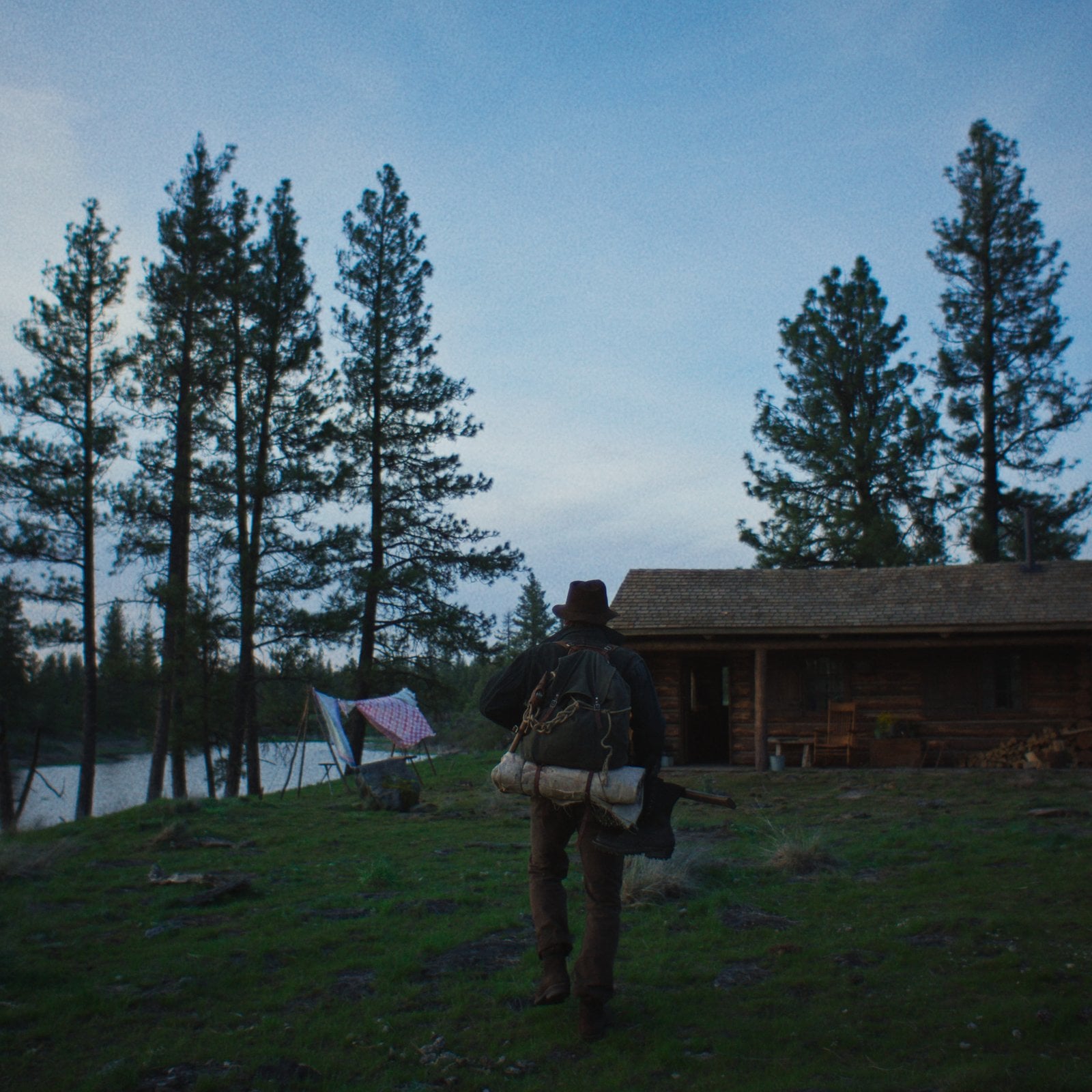
One of the most striking examples is the cabin Granier shares with his wife, Gladys (Felicity Jones), constructed multiple times using period-accurate log cabin techniques. “We weren’t really sure about how we would achieve the cabin,” Schaller says, adding that the team initially considered building it on a soundstage—a safe, controllable, perhaps more logical environment. “But nature was such an important part of the movie,” she says, describing the more daring decision to build directly in a forest in rural Washington. “We wanted that interplay between the cabin and its surroundings—we wanted it made out of real logs, because we wanted to feel the trees and be reminded of nature.”
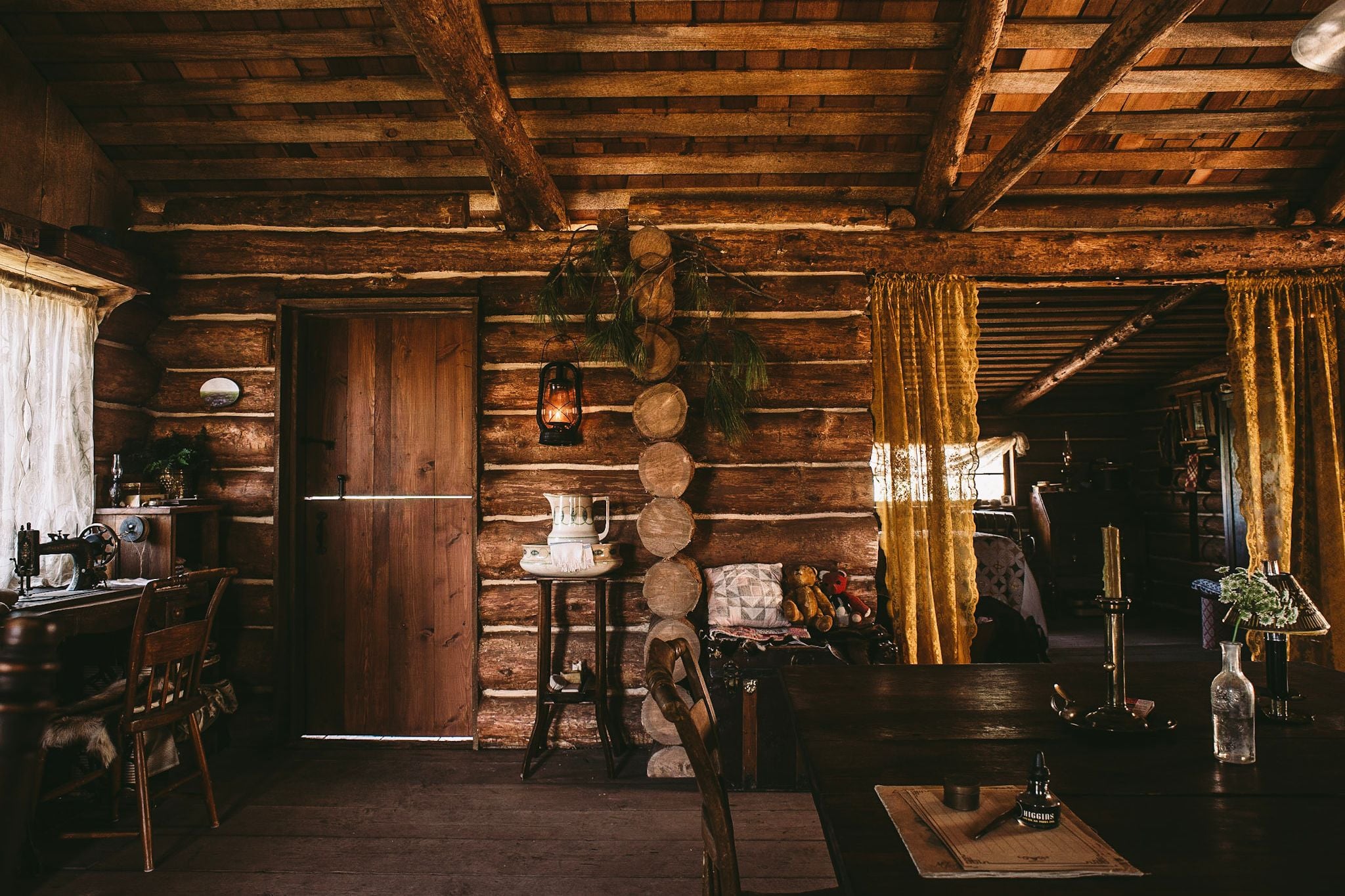

The cabin in "Train Dreams." Photo: Alexandra Schaller.
Alexandra Schaller
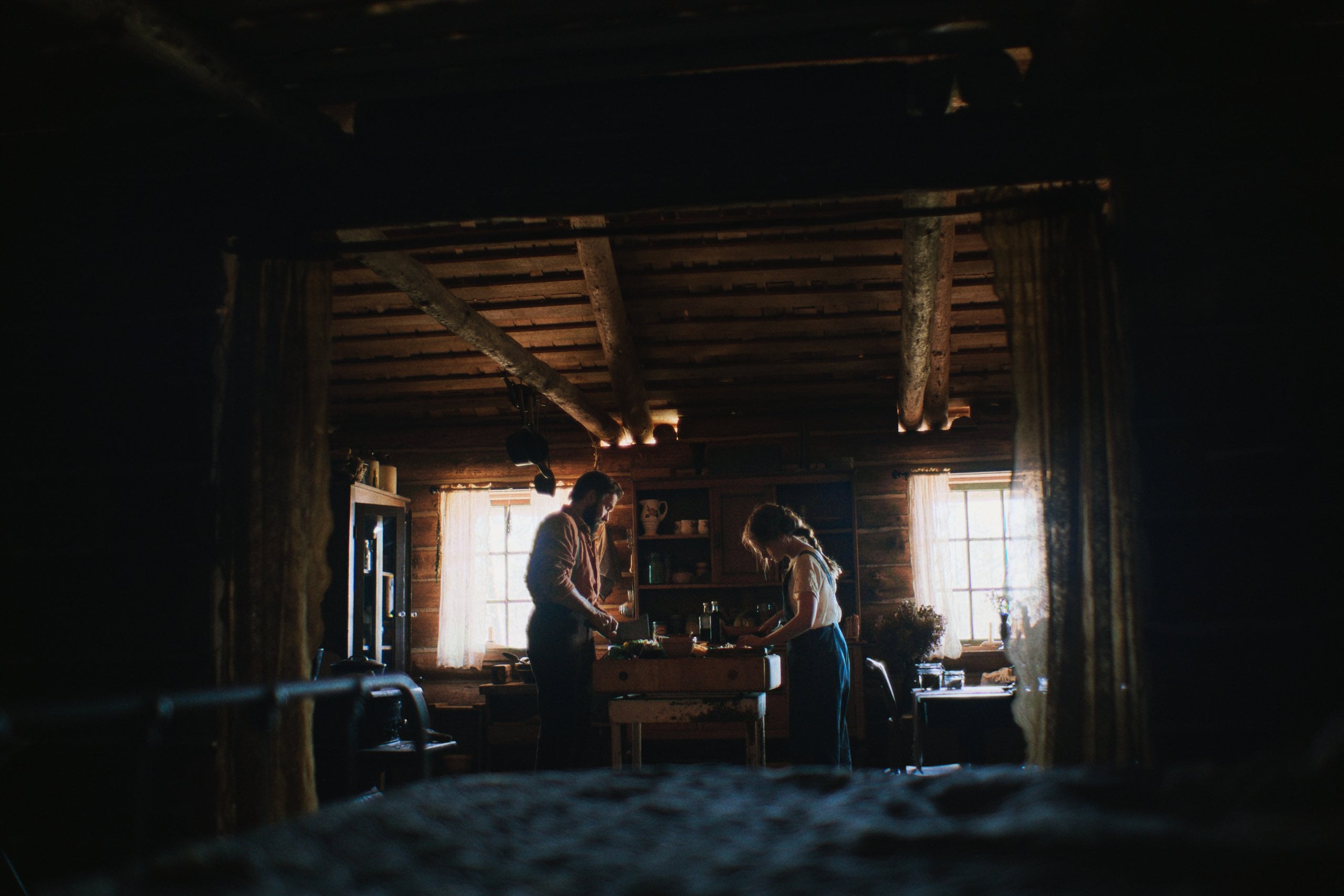

The set of "Train Dreams." Photo: Alexandra Schaller.
Alexandra Schaller
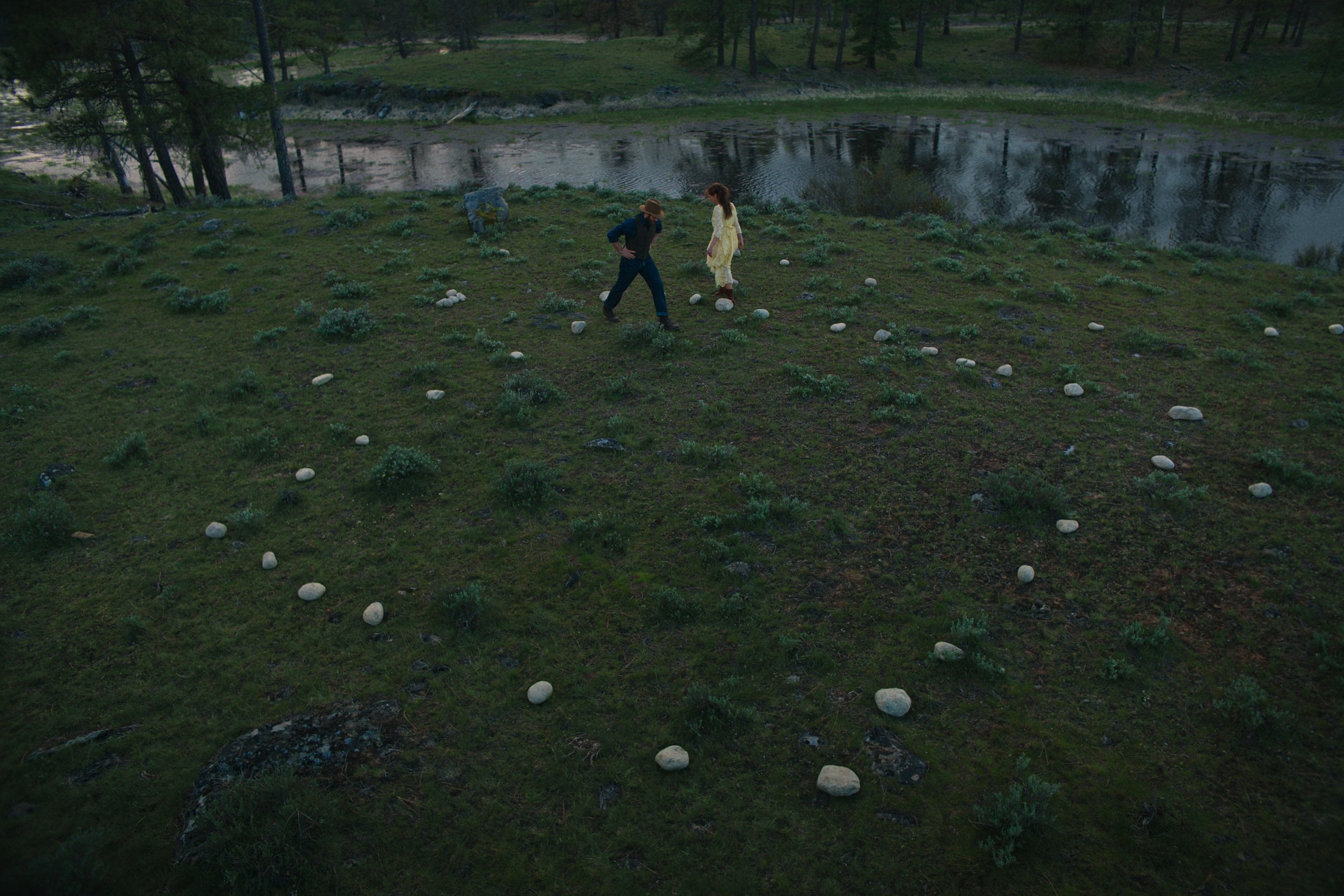

The land where the cabin is built in "Train Dreams". Photo: Netflix
Netflix
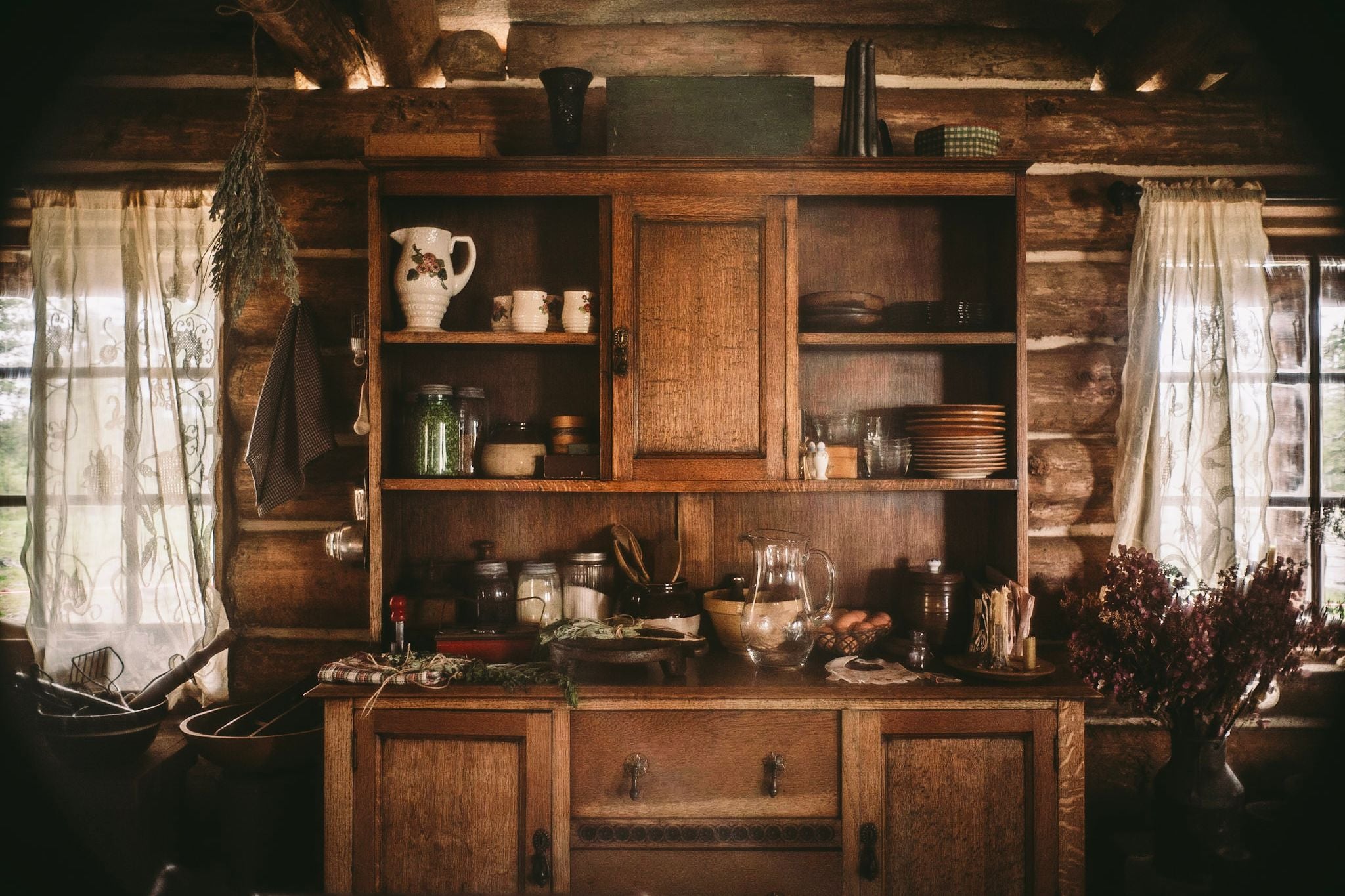

The cabin in "Train Dreams." Photo: Alexandra Schaller.
Alexandra Schaller
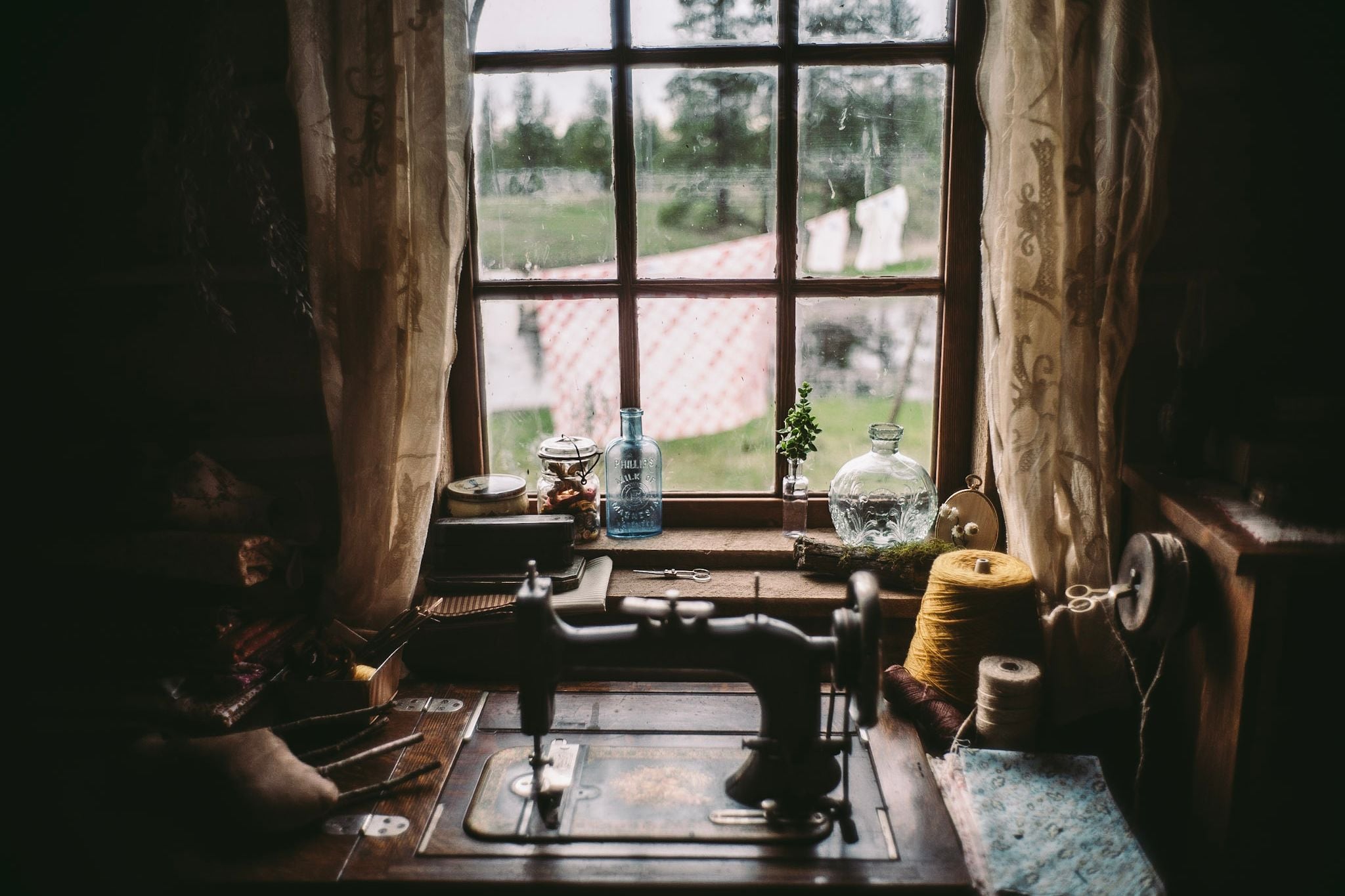

The cabin in "Train Dreams." Photo: Alexandra Schaller.
Alexandra Schaller
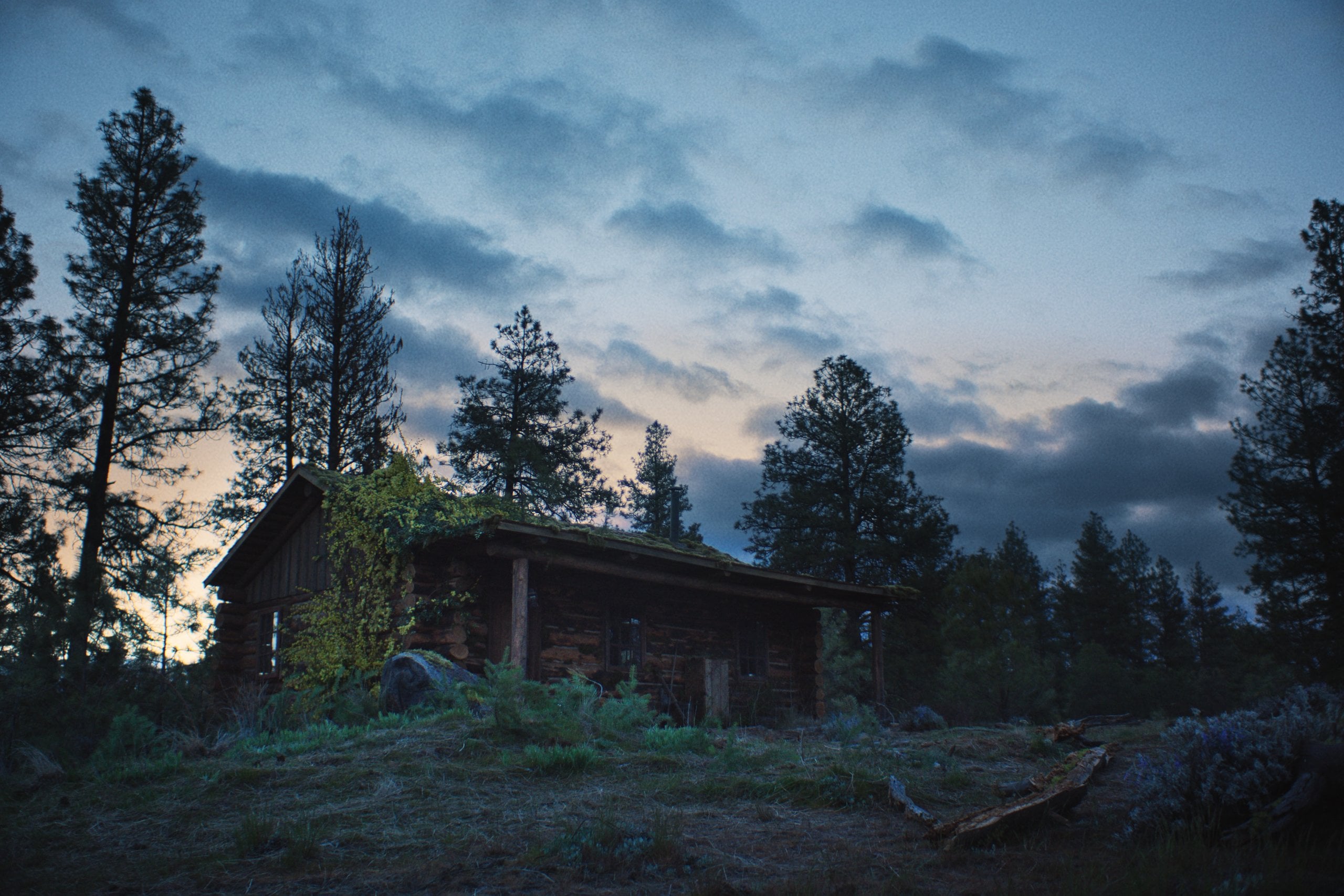

The cabin in "Train Dreams."
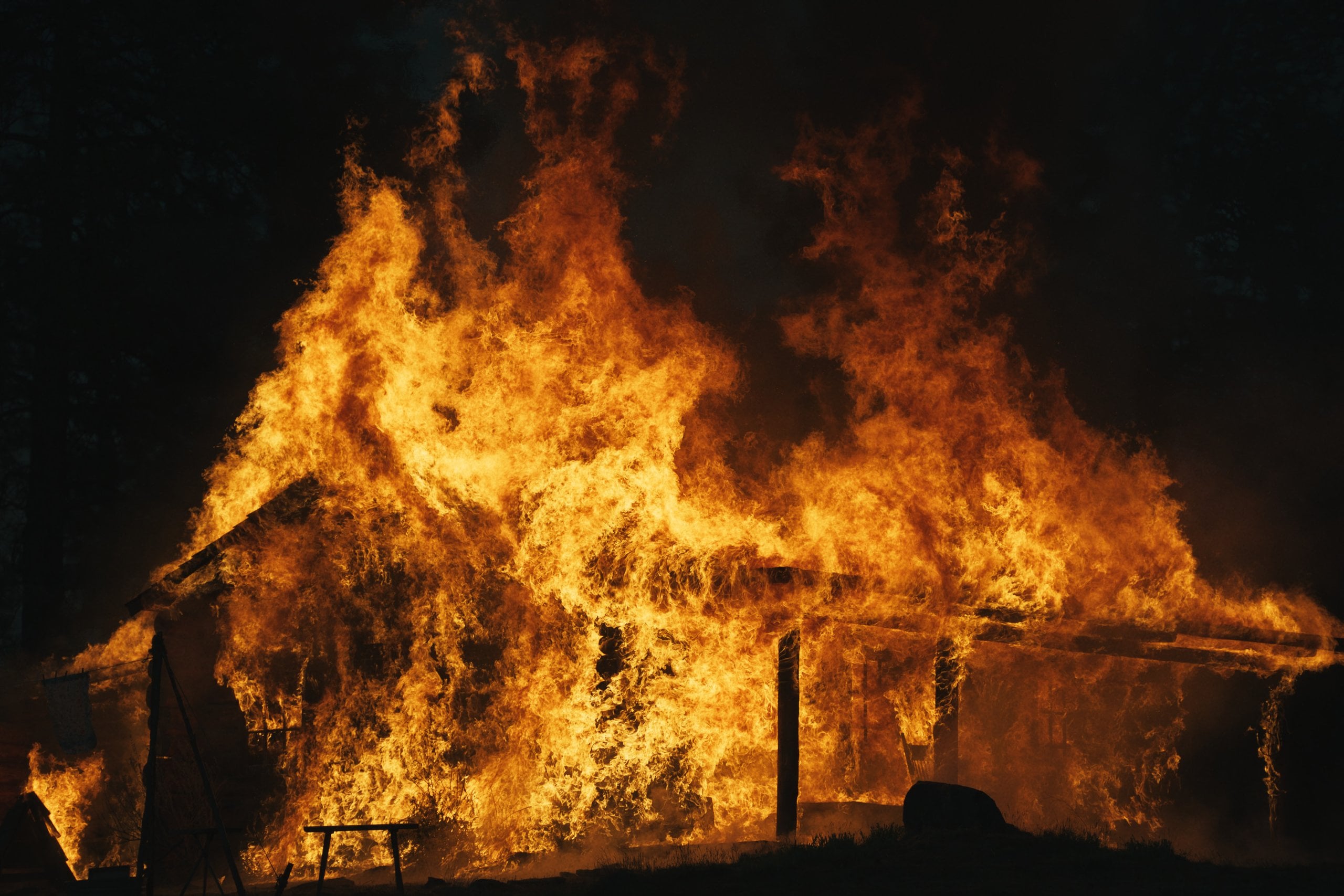

The fire in "Train Dreams" wasn't VFX—it really happened. Photo: Netflix
Netflix
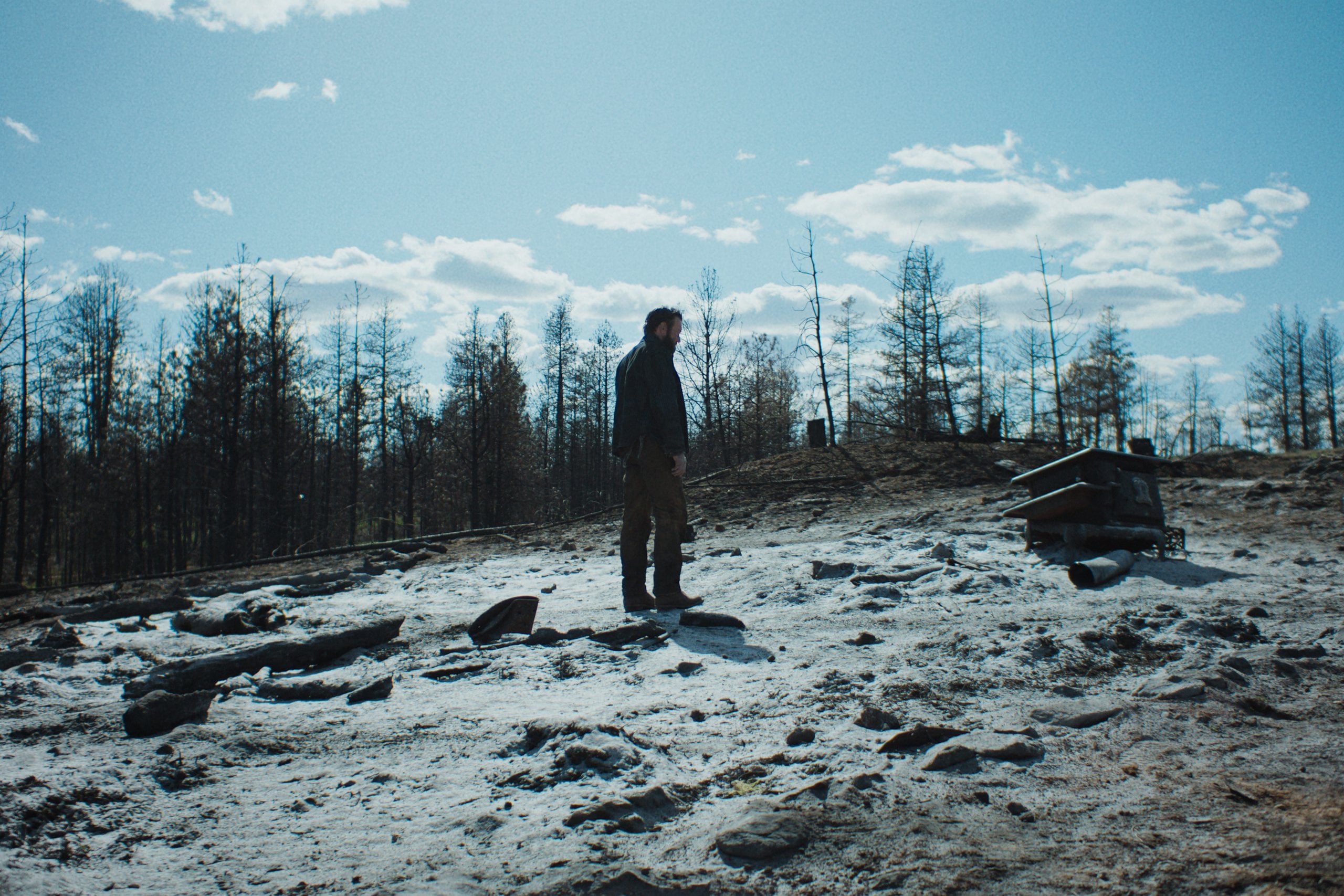

The cabin after the fire. Photo: Netflix
Netflix
The choice echoes Granier’s own life: his home, like Schaller’s set, is something assembled from the land, vulnerable to it, and ultimately consumed by it. “And then of course, we burned the cabin,” Schaller says almost nonchalantly, referring to the film’s most tragic moment. “That’s not a visual effects fire. That’s a real fire.” The production team, like Granier, builds something with care only to watch nature—or the story’s demands—take it back.
That collaboration becomes one of the film’s subtle parallels: Granier’s life is shaped, constrained, and sometimes crushed by the land he works, and Schaller’s design process, more than one might expect, was similarly ruled by terrain, weather, and the stubborn materiality of trunks and bark.
A few trees did have to be cut down—ones that were “already destined to be felled,” Schaller says—but less than one might expect for a film about logging in an era when trees were seen as a near-infinite resource. “We built a lot of trees, actually,” Schaller says, explaining that the props start with “mostly plywood or sonic tubes in the center.” Then the scenic team brought these bones to life with sculpted textures, after which the greens department (the experts in charge of all things plant-related) added another layer of realism by decorating these faux trunks with the foliage, moss, and organic life that would typically be found clinging to a fallen log.
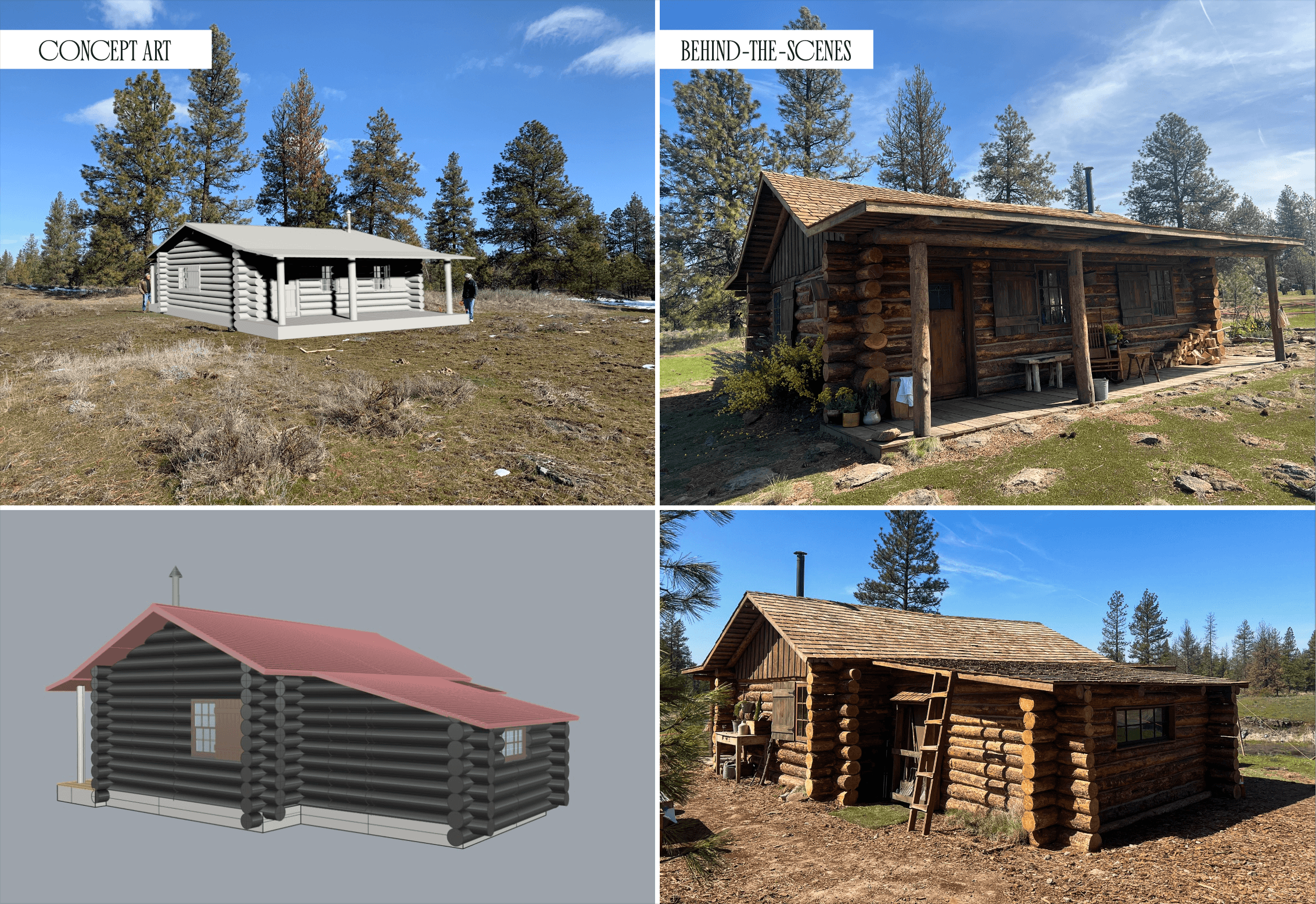

The concept art for the cabin in "Train Dreams". Photo: Netflix
Netflix
Building trees was partly a practical concern: they needed to be carried across sets by actors, pulled by horses, and made to fall at a certain angle. But these prop trees were also connected to the film’s deeper themes and to the impact of logging itself. “We’re telling a story of the beginning of America and industrialization,” Schaller says. “There were these beautiful old-growth trees: six, eight, ten, twelve feet across. The stumps—they’re huge.” Yet when her team went looking for those very trees, it proved unexpectedly difficult. “It’s because we,” referring to the American demand for wood, “cut them down at that time.” In that sense, Schaller’s work becomes a kind of inversion of Granier’s: where he fells trees in the early 20th century, she reconstructs them to make visible what his era erased.
The landscape and terrain of the period feel so immediate that it may come as a surprise how much of the film’s world was really the result of careful production. Not only were trees constructed, but so was the steam-powered locomotive Granier works on, the bridge it crosses, and the sun-yellow airplane he boards at the end of the film. Reflecting not just the physical but emotional architecture of the film, Schaller points out that it is “one man’s perspective. We live in his mind, we live in his memories, and memory isn’t always accurate. In order to play with that, we first had to sort of become experts of the world,”—mastering the details and period-specific technologies that would ground Granier’s tale.
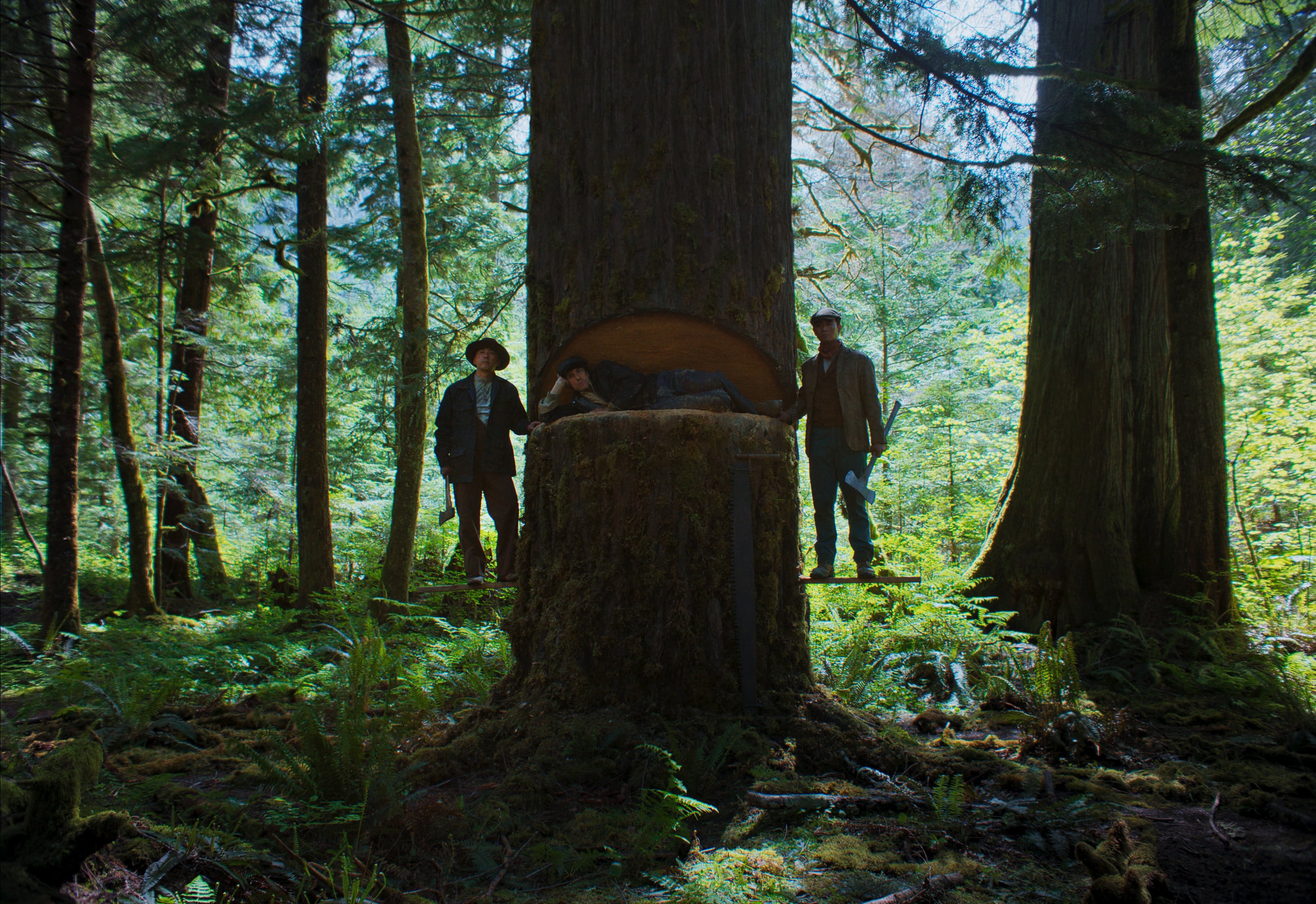

The set of "Train Dreams." Photo: Alexandra Schaller.
Alexandra Schaller
Through filming, the crew was beholden to the rhythms of nature, much like Granier’s own life was. Director of photography Adolpho Veloso and Bentley worked to shoot “Train Dreams” almost entirely in natural light, a decision that went on to influence the production design. Schaller explains how, because of this, they chose to build their sets in "super specific" locations.
The fire tower set—where Granier finds himself reflecting on his life, so formed by the unruly spirit of nature—is a prime example. The team had planned to use an existing tower, but it was snowed in and so unavailable at the time of filming. “At the last minute, we had to build it, which is not normal on a small movie,” Schaller says. She recalls walking through the woods with her phone compass, texting Veloso: “If I put the corner of the cabin here and it’s this many degrees south, southwest or something, is that okay?” She laughs, thinking about him receiving that message “somewhere deep in the woods where he’s shooting.”
In the end, the fire tower cabin was built on a cliff to capture the sweeping landscape views it would typically have, without actually building at such height. With a touch of movie magic, the visual effects supervisor was able to perch Schaller’s tower high in the sky. For her, it was important that the crisscrossing supports looked like they were made of logs, not timber, because everything on screen should, she emphasizes, “document the life cycle of the tree throughout the movie.”
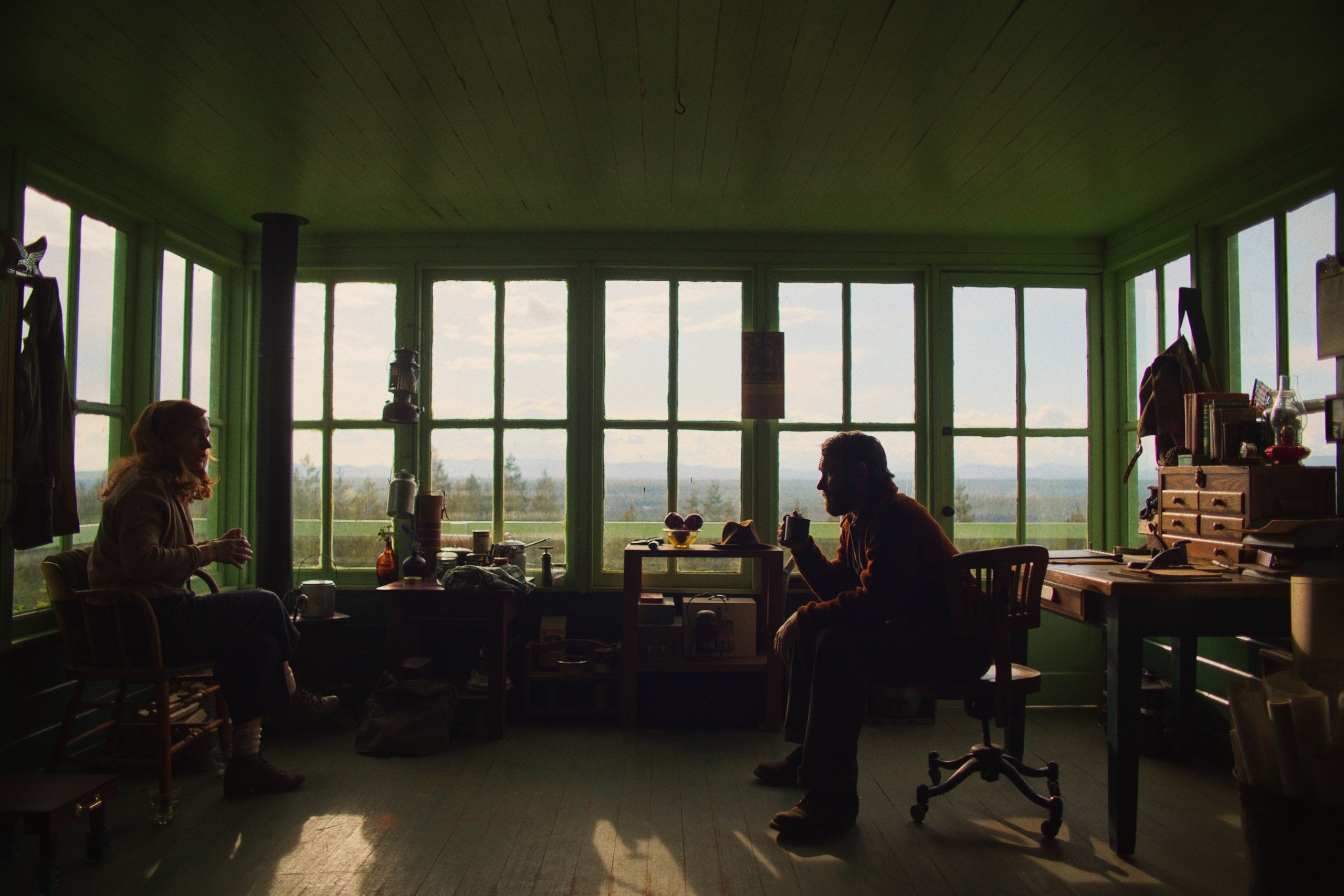

Claire (Kerry Condon) and Granier (Joel Edgerton) in the fire tower. Photo: Netflix
Netflix
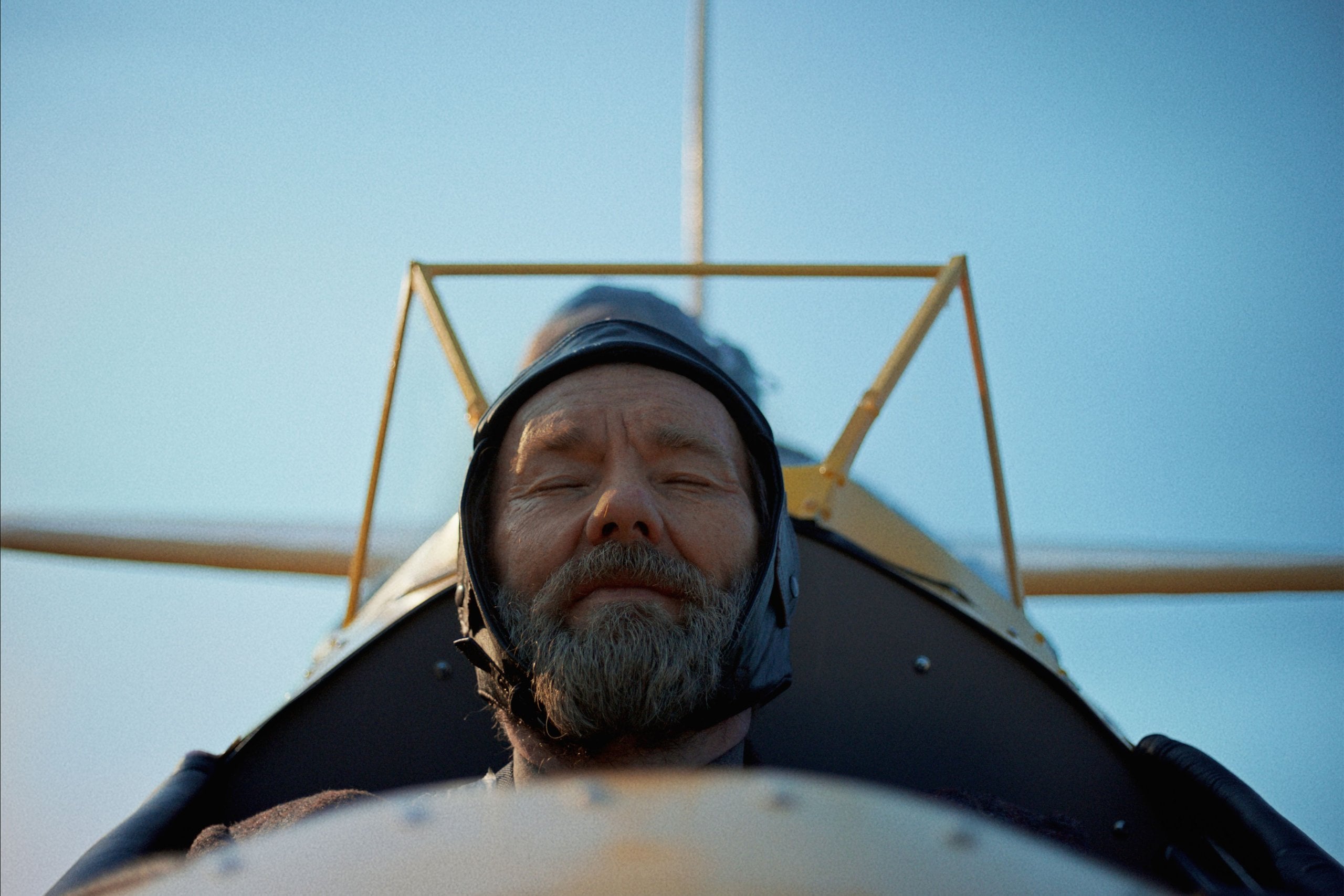

Granier (Joel Edgerton) in the airplane at the end of "Train Dreams". Photo: Netflix
Netflix
Claire (Kerry Condon) and Granier (Joel Edgerton) in the fire tower. Photo: Netflix
Netflix
Granier (Joel Edgerton) in the airplane at the end of "Train Dreams". Photo: Netflix
Netflix
Here again, Schaller’s work mirrors Granier’s: both are constructing vantage points from which to understand a landscape that is always larger, older, and more unruly than they are. Granier climbs the tower to look out over the world that shaped him; Schaller builds the tower by negotiating with that same world.
In “Train Dreams,” Schaller isn’t just re-creating the natural world, but composing it—through design, craft, and material choice—so the audience can feel its scale and power in that period. Some things are real; some are constructed; and often, the distinction hardly matters. Nature itself can be so vast, so overwhelming, that it begins to feel unreal. By choosing to build within that world and embracing real materials, real fire, and real orientation, Schaller materialized the very way Granier’s life is ruled by the landscape: each log, each track, each task a negotiation with forces larger than oneself. In doing so, the film manifests Granier’s vision of America, one that is as tangible as it is dreamlike.