How A Dated Shirt & A ’70s Denim Suit Shape Anthony Bourdain’s Origin Story In ‘Tony’
Fashion

Fashion
Costume designer Chloe Karmin discusses how she created a wardrobe charting Bourdain’s evolution from an uncertain, cocky young writer to the cultural icon he would become.
“I’m a writer,” declares a 19-year-old Vassar student, Tony Bourdain (Dominic Sessa), as he tries to impress his high school crush, Nancy (Emilia Jones), at a local dive bar. Earlier, he boldly proclaimed his ambition to write a ‘bildungsroman’ in the vein of Kerouac and Orwell. But after failing to land the fellowship that would fund his coming-of-age novel, "Tony"—both the biopic and character—follows Nancy to Provincetown for the summer, where he embarks on a bildungsroman of his own, reflected not only in his experiences in the kitchen but also in the evolution of his summer of 1975 wardrobe.
“I've read every piece of Anthony Bourdain's work, even the short Christmas book, ‘A Chef’s Christmas,’” says costume designer Chloe Karmin, a self-described “obsessive” when it comes to the writing of the late chef, television host, author, and cultural icon. “Then to revisit it with a fine-tooth comb—trying to reconstruct the person that he was before we all knew him. From a young age, he was always talking about his references and he was always building a composite version of his palette—visually, sonically—and it was super easy to follow those breadcrumbs because he left us so many.”
Mirroring Bourdain’s own accounts, the film, directed and co-written by Matt Johnson, explores the chef’s formative years filled with self-doubt and self-criticism, and ultimately self-discovery—before he became the defining, world-famous figure with a distinctive signature style. “So thinking of him as this dorkier kid, when the man that we know is just so rock and roll,” says Karmin. “He's such a constructed traveler and person who doesn't seem to ever step out of style stylistically in his food and his writing. So to show someone finding their way in clothes was super interesting. Then you take Dominic Sessa, who, I mean, if there ever was a person for the era, it's him.”
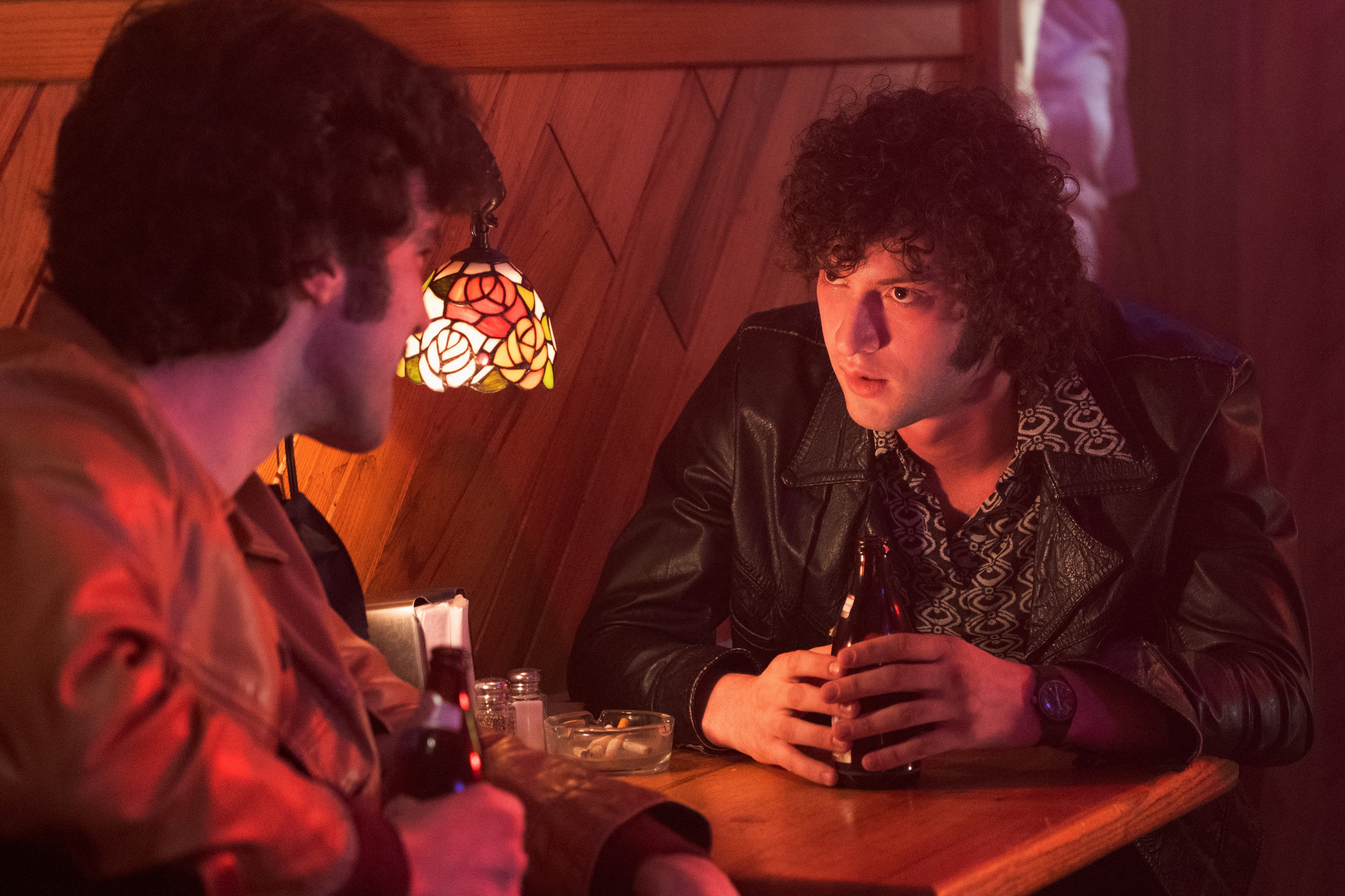

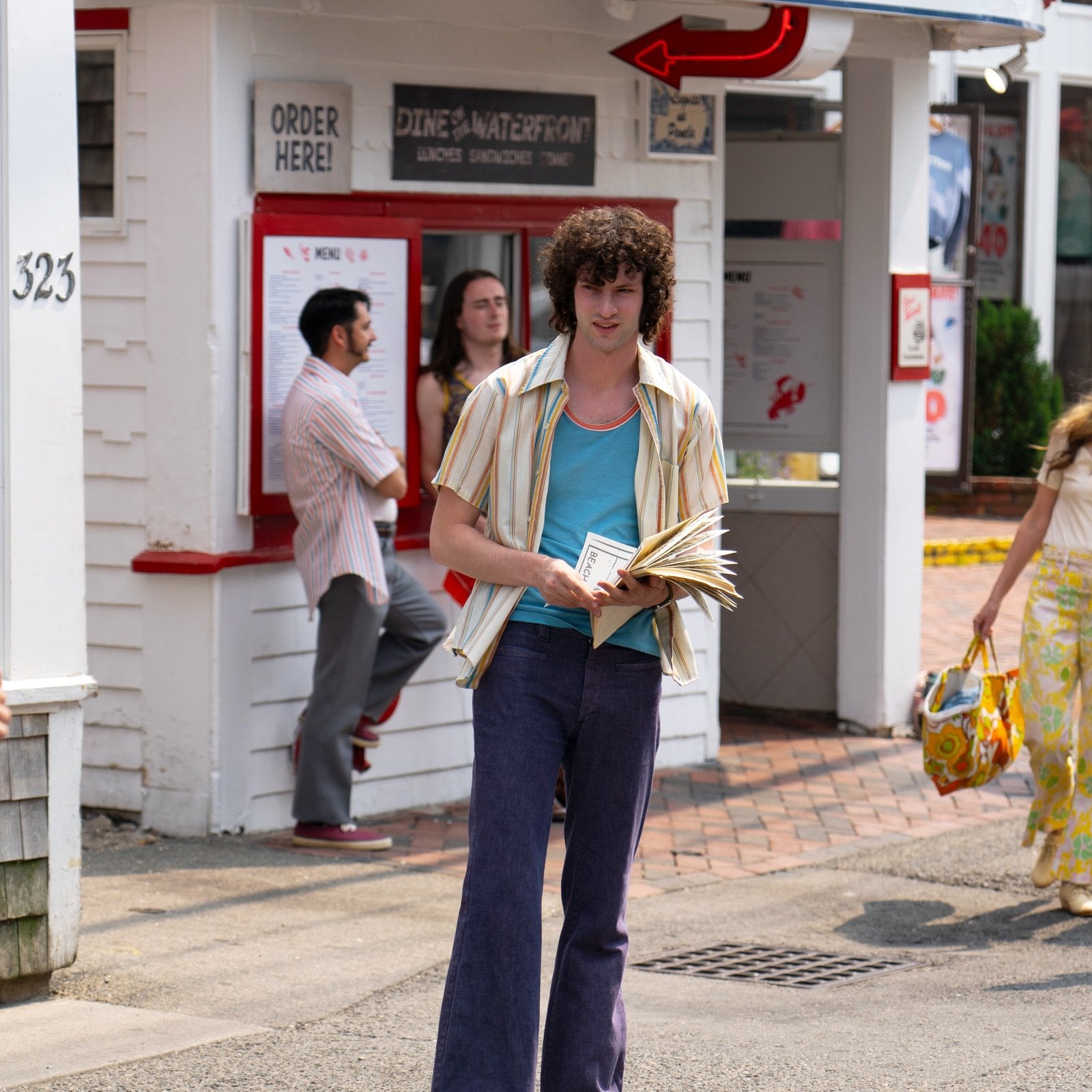
Dominic Sessa in "Tony".
A24
At the bar, Tony—in a leather jacket over a black-and-white abstract-patterned shirt—cringily drops the word “insouciant” to an amused Nancy. The swirling print reminded Karmin of the R. Crumb comics that deeply influenced Bourdain and, like Tony himself, feels out of place. “It’s a very ’60s pattern, and then mixed with the jacket, is something from the time before and not very fashionable. And then he's in this bar talking such a big game about work he doesn't really understand,” says Karmin, contrasting the “homemade” vintage shirt, which could have been sewn by his mother (Dagmara Domińczyk), with Nancy’s effortless, spot-on ’70s style. “I really wanted him to be aiming at a ’60s punk chic, but to have really missed—and fallen on the way.”
Crestfallen yet still prideful after his fellowship rejection, Tony decides to sneak away from his New Jersey family home to Provincetown, where Nancy is working a summer job. For his journey through New York City and along the coast, he dons a full pinstripe suit, white wide-collared shirt, and heeled boots. Karmin at first considered recreating the Pierre Cardin seersucker interview suit that Bourdain evocatively wrote when recalling his arrival in Provincetown in his bestseller “Kitchen Confidential: Adventures in the Culinary Underbelly.” But former Saint Laurent campaign star Sessa looked like he fit in a little too well with the polished local crowd. “Can we take some liberties here?” says Karmin, who instead custom-made a ’70s suit out of a workwear-inspired denim twill fabric.
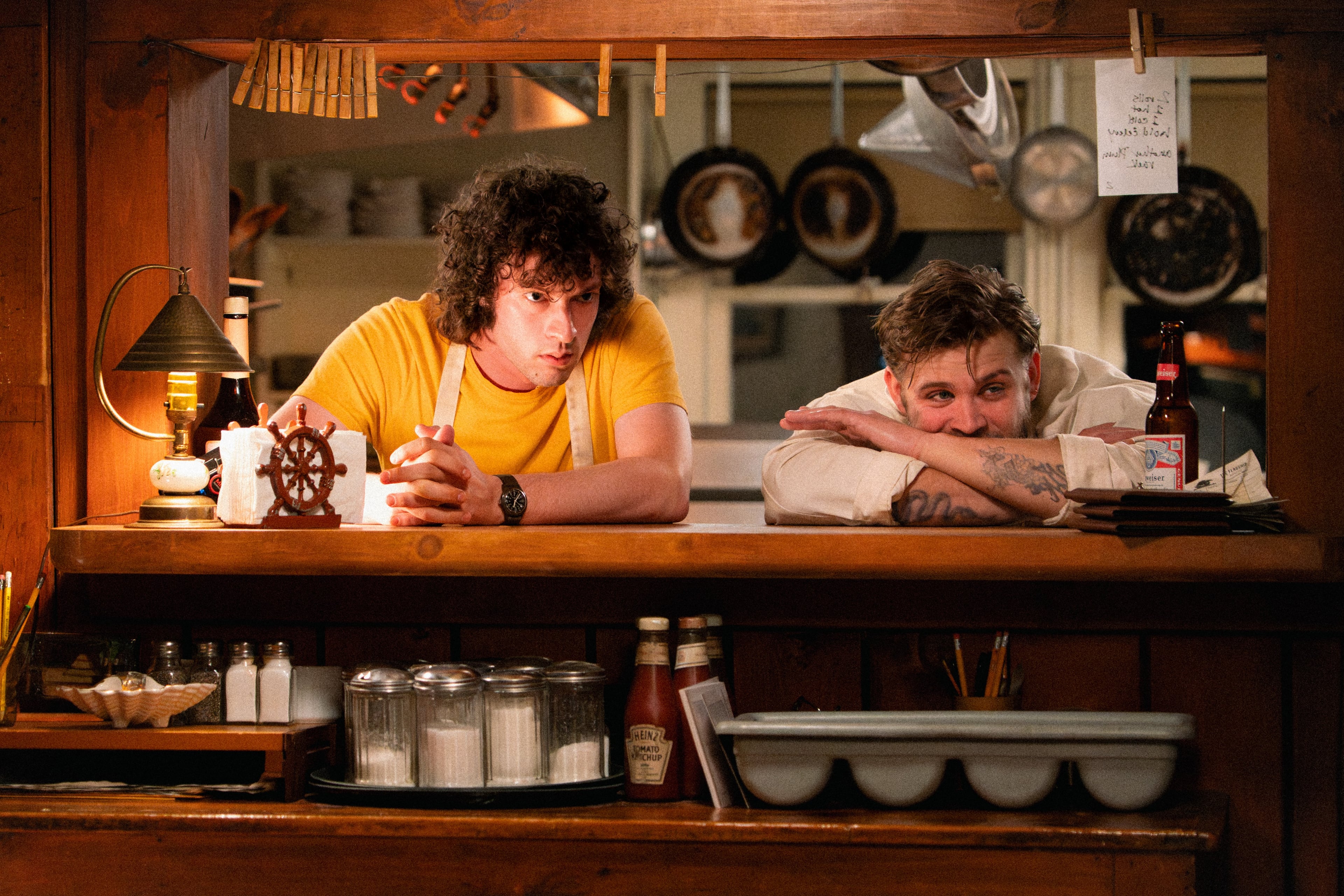

Dominic Sessa and Leo Woodall in "Tony".
A24
“I wanted him to feel out of place. [It’s also a] reconstruction of the type of music Bourdain listened to—the ironic punk avant-garde, and not the hunky dory Cape Cod—and how that would spring out against the landscape of him rolling into town.” The suit also needed to evoke the feeling of a wide-eyed child playing dress-up and venturing out beyond his depth. “Like he was trying something on,” continues Karmin. “It’s so ridiculous—the same way it would be to show up to a kitchen interview in a suit, or to sneak out of your parents’ house wearing one. What a childish thing to do. Everyone’s been six and packed their bags.”
After seeing Nancy through the pizzeria window, cozy with a hunky male coworker, Tony—once again dejected—deconstructs his suit down to an open shirt and tank, then soothes himself with oysters and too many beers at The Lobster Pot. Fueled by liquid courage, he again tries his “I’m a writer” line on the bartender, only to get himself thrown out of the establishment. But the proprietor, Chef (Antonio Banderas), takes Tony under his wing—and introduces him to the world of the kitchen and a new calling. “This summer is about him donning all these identities and deciding who he wants to become,” says Karmin. “He’s constantly pulling from everybody else—tasting and trying out everyone’s recipes, and seeing how they present themselves. This whole film is about him figuring out how to present himself to other people.”
Kitchen cook Sal (Leo Woodall) suggestively shucks oysters with ease and literally carves notches into doorframes after hookups. Tony tries to emulate his swagger and confidence through his casual wear. “At some points, Tony’s really wearing the blue-collar hopsack [trousers] with the ringer tee and boots around town,” says Karmin. “That is so Sal’s uniform.”
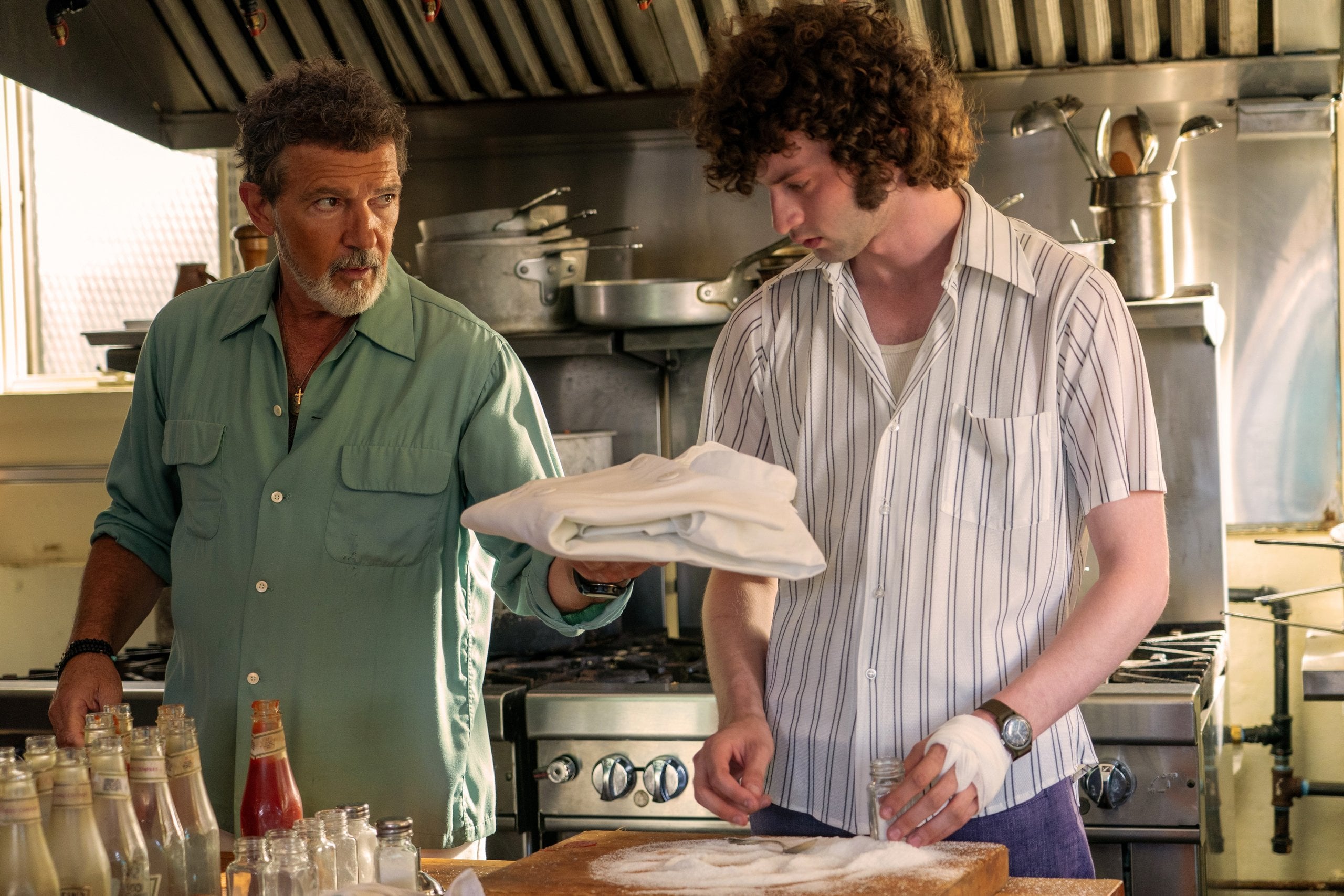

Antonio Banderas and Dominic Sessa in "Tony".
A24
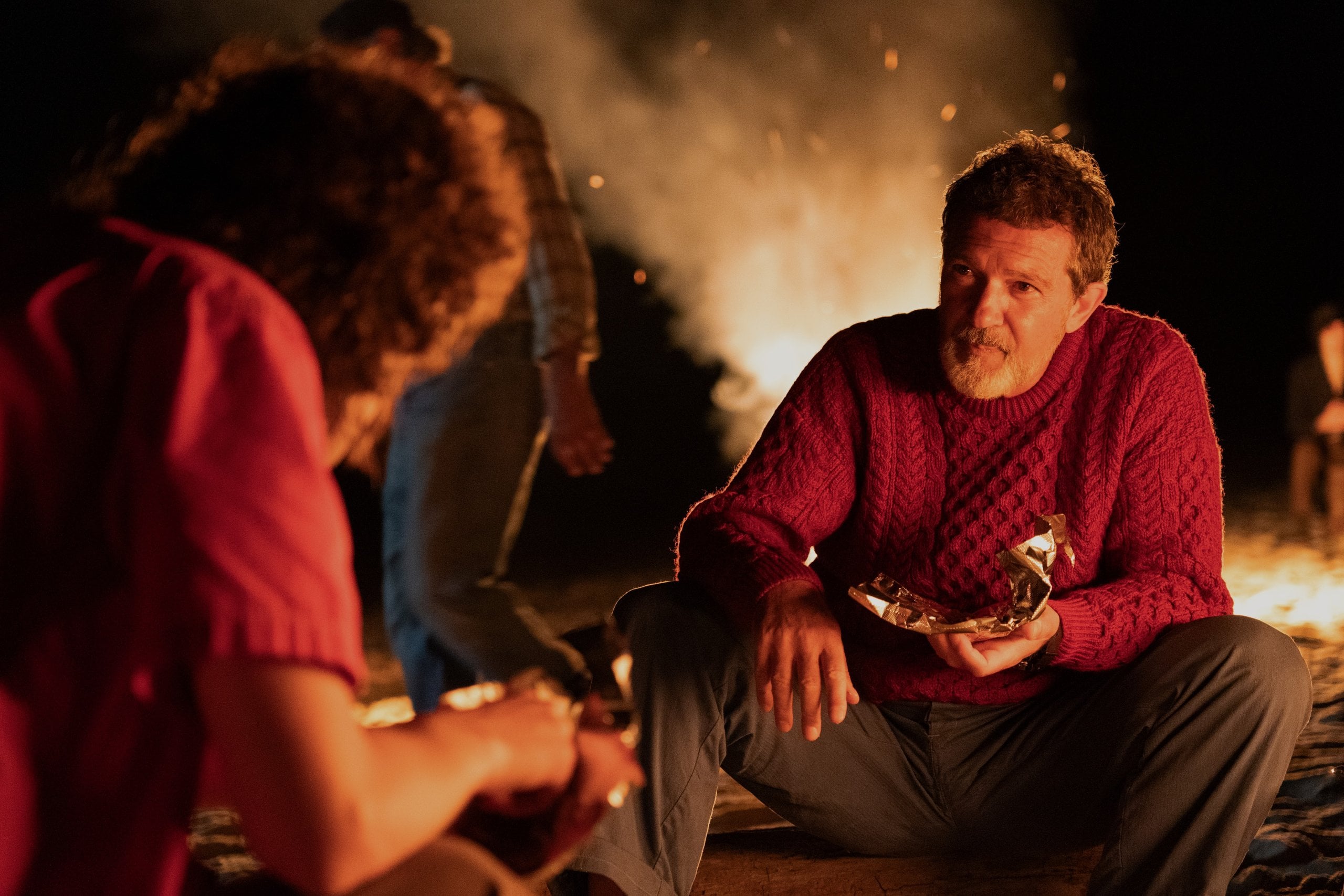

Dominic Sessa and Antonio Banderas in "Tony".
A24
Antonio Banderas and Dominic Sessa in "Tony".
A24
Dominic Sessa and Antonio Banderas in "Tony".
A24
Chef not only provides Tony with a dishwashing job and a place to sleep (his porch hammock), but also becomes a mentor as the 19-year-old searches for his place in the world. “Tony starts wearing a beautiful pair of ’50s workwear pants, and that’s where a lot of Chef’s inspiration comes in,” says Karmin, imagining that Chef also lent Tony pieces from his metaphorical wardrobe. “All of Chef’s costumes were beautifully mended and had all these pieces sewn into them, like a special holder for the pen. That craft of hand-mending and caring for your clothes.”
While the character Chef is loosely modeled after “Provincetown Seafood Cookbook” author and culinary vet Howard Mitcham, Nancy is based on Bourdain’s real-life high school sweetheart and wife of nearly 20 years, Nancy Putkoski. The real Nancy shunned the limelight, so little public documentation of her exists, giving Karmin more creative license to create Jones’ character-building costumes and reflect her evolving relationship with Tony.
“She was the hardest person to portray,” says Karmin, who looked to photographer Joel Meyerowitz’s vibrant, sun-soaked images of Provincetown in the 1970s for inspiration. “I wanted it, again, to be a mix of eras, and to have a touch of women’s lib. She wears some ’40s play clothes and a little pair of homemade suffragette shorts. I didn’t want to make her overly political or overly anything other than a challenge—a lovely, charming challenge to the scenes around her.”
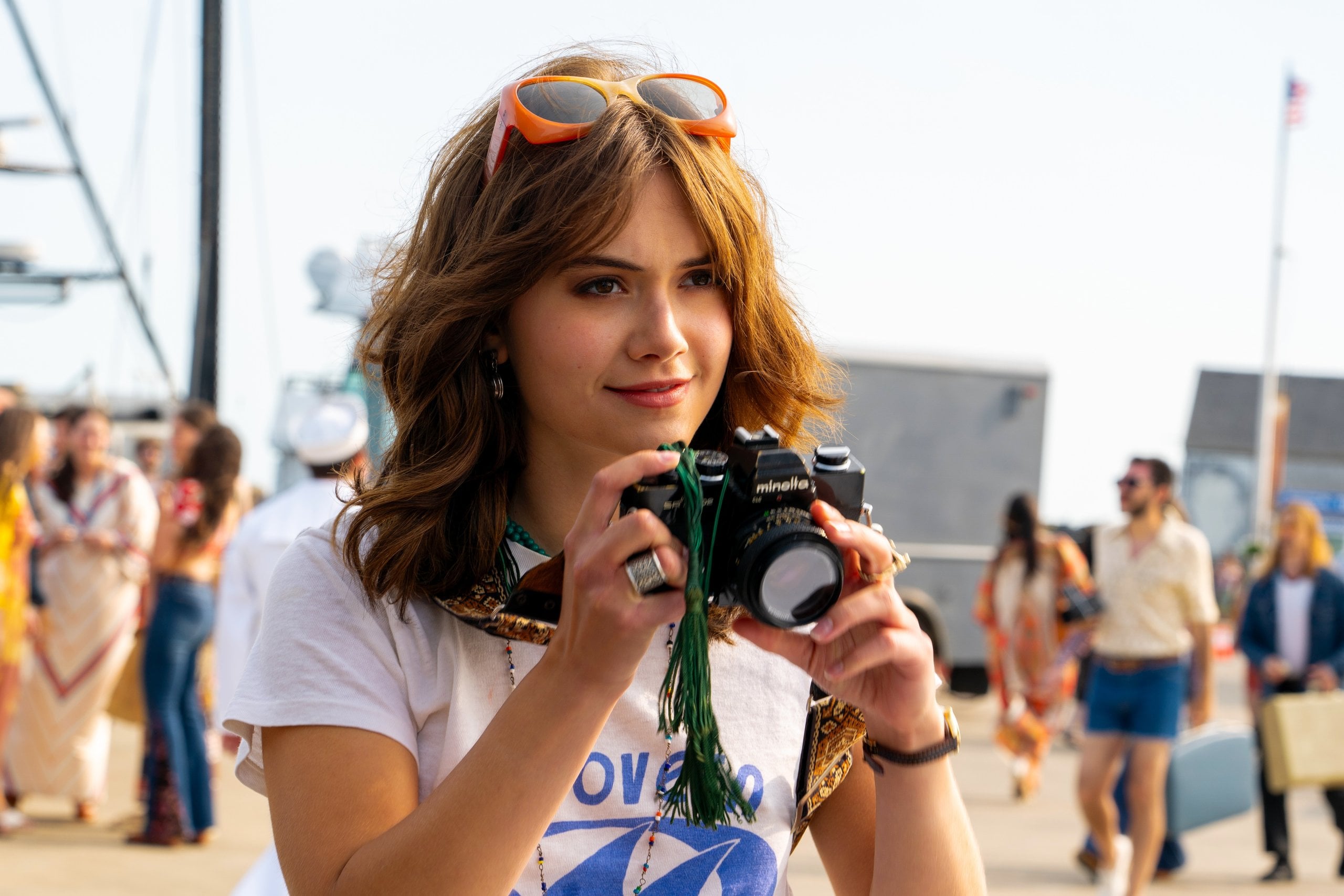

Emelia Jones in "Tony".
A24
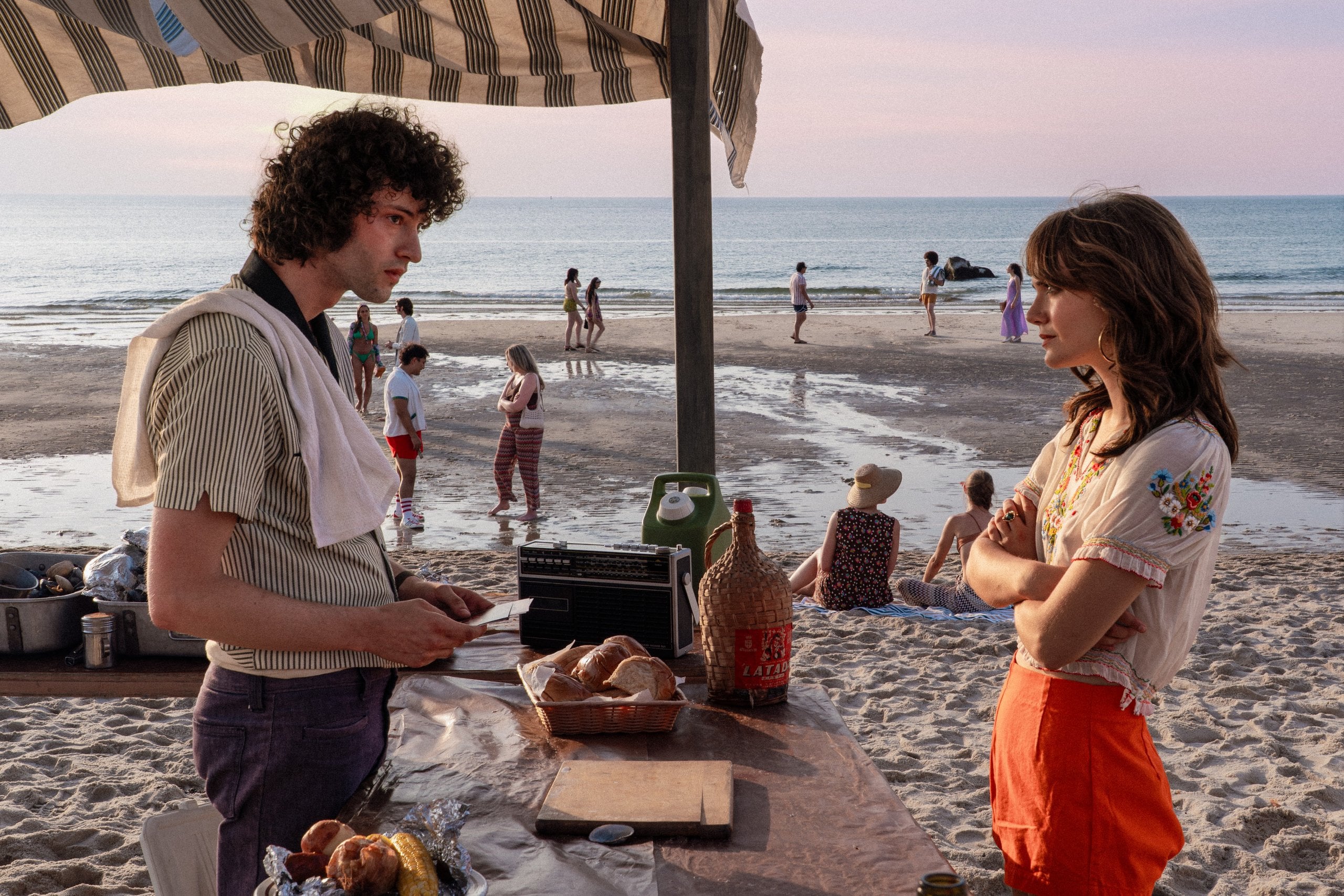

Dominic Sessa and Emelia Jones in "Tony".
A24
Emelia Jones in "Tony".
A24
Dominic Sessa and Emelia Jones in "Tony".
A24
Both Nancy and Chef also wear a palette of red, white, and blue, which Tony mirrors at certain points. The color scheme reflects the coastal town’s anticipation of the upcoming Bicentennial, but also Tony’s perception of them. “Nancy and Chef both have this unquestioning way of being that's like a true north star [to Tony] that is very primary,” says Karmin.
Toward the end of the summer—and the film—when Tony finds himself at a crossroads, forced to make the right choice for Chef and ultimately himself, he wears a vertical-stripe shirt and black trousers to host a community clam bake. Karmin imagines Tony picked up the ’40s-style shirt at a local thrift shop earlier in the summer.
“It is the arrival of this effortless rock-and-roll chic that he would wear for the rest of his life,” she says. “Those black-and-white narrow stripes nod toward the working-class dressing that Bourdain would be ascribing to for the rest of his life, and where he would really come to find a lot of peace in his craft and in working in a kitchen. Still the sharpness of that shirt and the way it sticks out—he’s referencing Chef, and he’s on the straight and narrow… for now.”