How Costume Designer Lex Wood Dressed 'The Vampire Lestat' For Rock Stardom
Fashion


Fashion
For the third season of AMC's "Interview with the Vampire" adaptation, the returning costume designer was tasked with dressing the 265-year-old vampire for his new career as a rock star.
"Everything started with the music," says Lex Wood, the costume designer behind the third season of “Interview with the Vampire”— retitled “The Vampire Lestat”—currently airing on AMC. It's a fitting place to begin when tasked with one of television's more intriguing creative challenges: dressing a 265-year-old French vampire for his rock star debut. Based on the second installment of Anne Rice's beloved book series, the season pivots away from the smoldering New Orleans drawing rooms and post-war Paris of its predecessors and drops into the present day. At its center is Lestat de Lioncourt (Sam Reid), a creature of the 18th century who has decided, with characteristic audacity, to become the frontman of a rock ‘n’ roll band and embark on a multi-city tour.
The catalyst is the tell-all book by journalist Daniel Molloy (Eric Bogosian) that exposed the existence of vampires to the human world and characterized Lestat as a "toxic bitch, anxiously attached show pony with a personality disorder." His response, naturally, is to reclaim the narrative—from the stage.
Wood, who joined “Interview With The Vampire” as assistant costume designer in season two, before the writers' and actors' strikes of 2023, and returned post-strike as its head designer, inheriting a rich visual world. Still, the leap from the post-World War II backdrop of season two to the contemporary moment was, she admits, a significant one. "The design was about honoring everything that's already happened and remaining true to the show whilst jumping feet first into this new world," she tells us. "And it was a jump!"
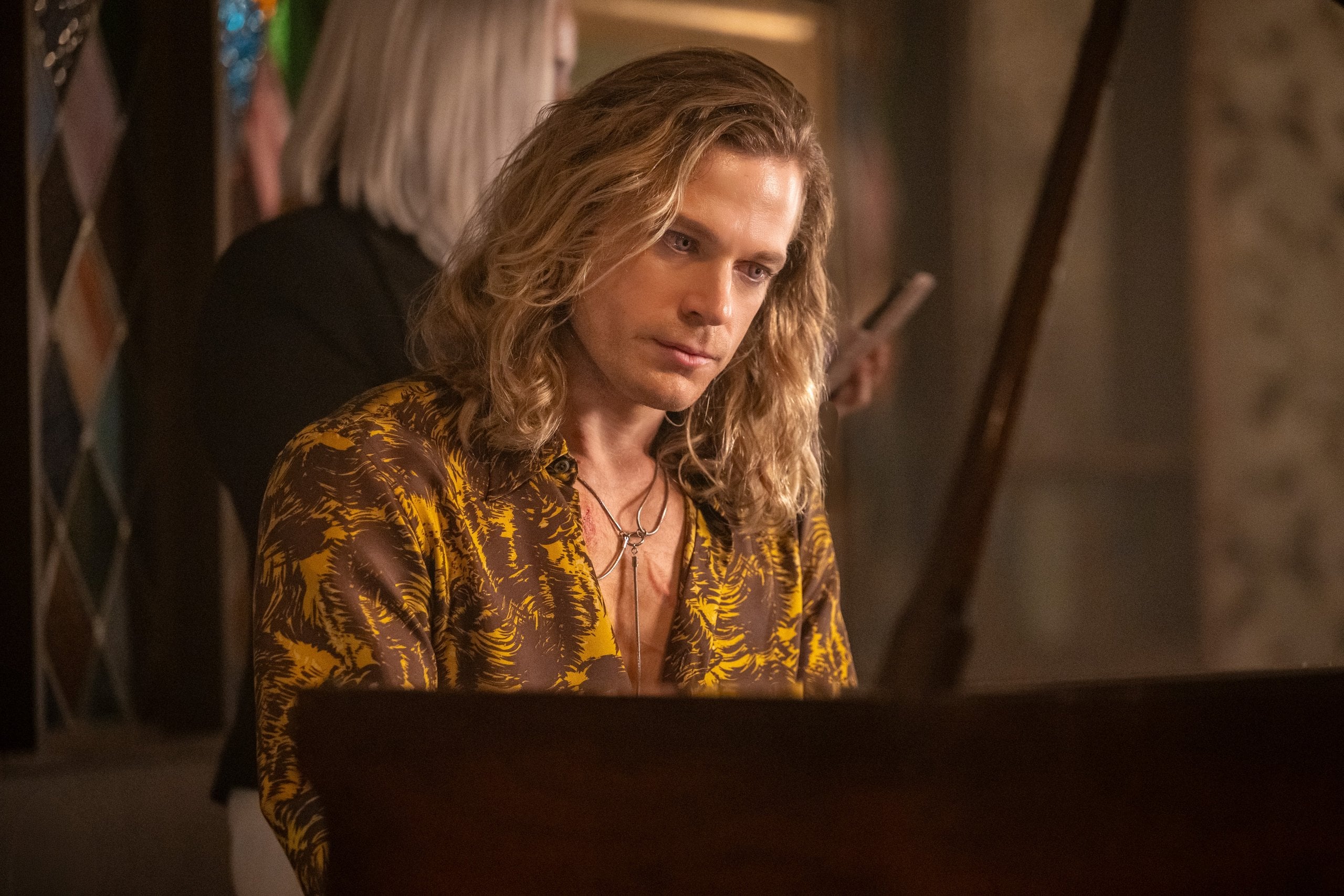

Sam Reid in "The Vampire Lestat".
AMC
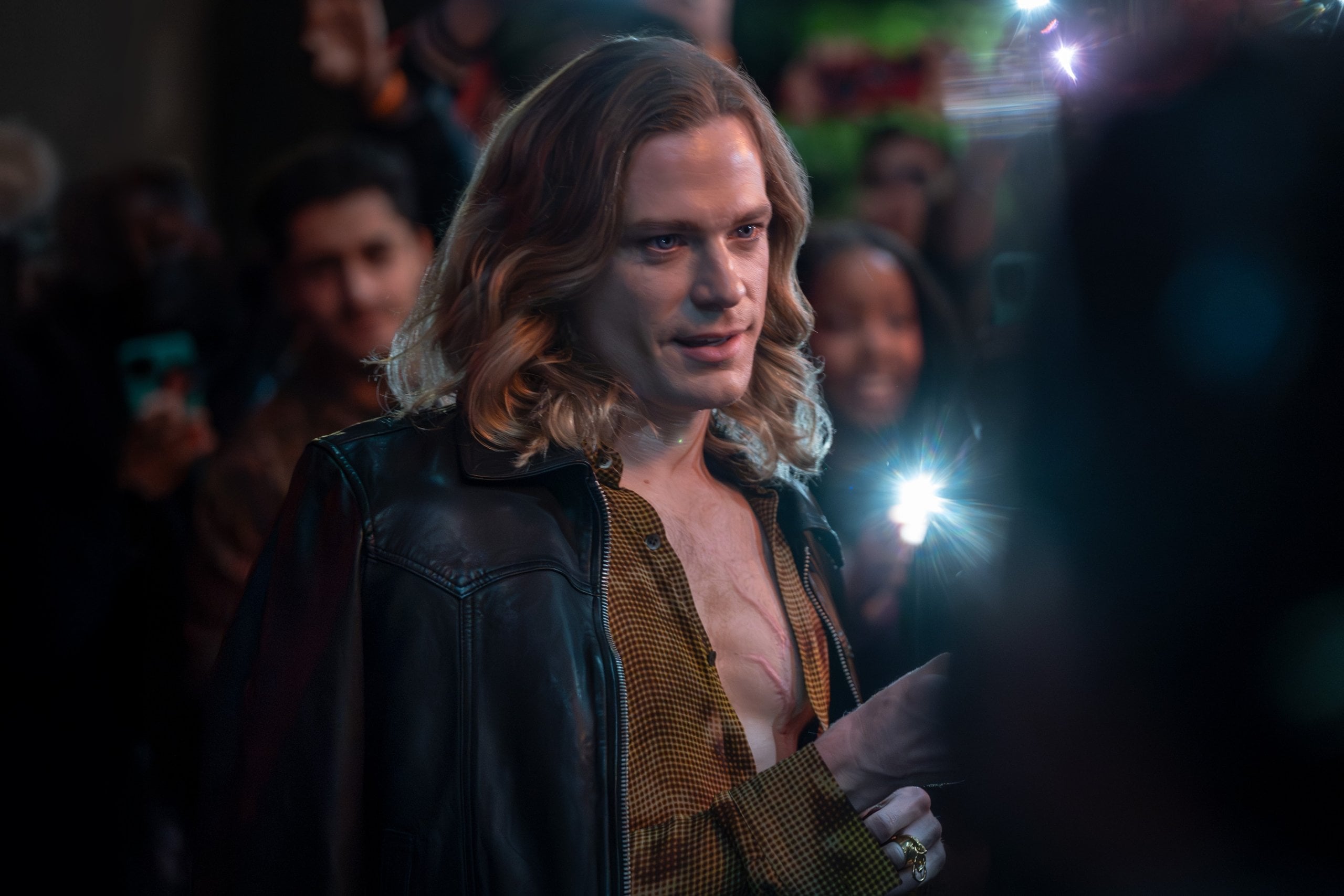

Sam Reid in "The Vampire Lestat".
AMC
Sam Reid in "The Vampire Lestat".
AMC
Sam Reid in "The Vampire Lestat".
AMC
Although Rice’s original story was set in 1985, arguably the heyday of the rock star, Wood still brought that ethos to costuming Lestat, drawing inspiration from rock gods such as Freddie Mercury, Iggy Pop, and David Bowie. The creative team was guided by a piece of music that creator and showrunner Rolin Jones played for them at the end of season two that signposted where the show was headed in season three, as well as composer Daniel Hart’s “encyclopedic knowledge” of music. More modern artists, such as Björk, were also an influence, and Wood has previously said she looked to a newer generation of performers, including Olivia Rodrigo, Chappell Roan, and Florence Welch, who invoke vampirism in their music. “Memory is a monster is the main theme of the show, so we have to be aware of everything that’s come before us,” Wood says.
But Wood was equally committed to honoring what came before Lestat's rock era, namely, the 18th century itself. It was important to Reid, too, that the physicality of the character—the way he moves, the way he inhabits a room—should carry the weight of his origins. "He's a performer from the 18th century, so it was important to Sam how he moves and how he walks," Wood says. “It was tricky to bring that into modern-day costuming.”
It's in Lestat's off-stage moments where Wood's craft is perhaps most visible. When he storms into a bookstore upon discovering Molloy's exposé, he does so in a coat constructed using an 18th-century dressmaking technique more typically associated with women's robes of that period. Then there is his dusty pink satin suit and matching corset, which harkens back to some of the more gender-fluid swagger of Prince and Reid’s fellow Australian, INXS frontman Michael Hutchence. "It was so much fun — and fun to cover in blood as well, because we love a bit of gore in this show," Wood says of the costume. "Tami Lane, our prosthetics and makeup designer, is a big fan of pouring blood all over my costumes. When else do we get an opportunity to hand-make 18th-century corsets and then pour blood all over them?"


Sam Reid in "The Vampire Lestat".
AMC
On stage, Lestat frequently performs in various states of undress. In various scenes, including Lestat serenading Armand (Assad Zaman), wearing his hair in braids and little else, we see him performing in various stages of undress throughout “The Vampire Lestat.” Wood says the idea she wanted to convey was the sense that Lestat is fully embracing his rock star status. “We don’t know how many other things have happened along the journey,” like losing a cape, Wood says, a nod to Dracula himself. “Physically allowing someone to perform means maybe we don’t have as many layers on as I would love to design.”
What grounds all of it is Wood's belief that costume exists in service of performance and never the other way around. "A costume allows a performer to do their work. It shouldn't be dictating," she says. "I needed to leave enough space for Sam to be the version of Lestat that felt true to the particular emotion of the scene, and sometimes that is with something that feels a little bit more sensual or erotic, and other times less so because it’s all in the acting.”
After years in which vampires in popular culture have dressed, more or less, like everyone else (think of the high school wardrobes seen in “The Twilight Saga,” “The Vampire Diaries” and “Buffy the Vampire Slayer,” for example), it seems style is returning to the undead.