Costume Designer Leslie Kavanagh On Dressing The Daughters Of Gilead In ‘The Testaments’
Fashion

Fashion
Rather than simply reproducing the established aesthetic of "The Handmaid’s Tale,” costume designer Leslie Kavanagh explores a different side of Gilead entirely—one viewed through the eyes of its daughters.
For Hulu’s “The Testaments,” costume designer Leslie Kavanagh was tasked with something that sounds almost paradoxical. "My whole approach was, how do I create individuality in a sea of uniformity?" she tells us. It’s a question that cuts right to the heart of the show’s central storyline and allowed Kavanagh to create something truly distinct from the show’s predecessor.
“The Testaments” follows Agnes (Chase Infiniti), the biological daughter of June (Elisabeth Moss), who is being raised within the oppressive regime of Gilead as the adopted daughter of a high-ranking Commander. A teenager, she’s studying at Aunt Lydia’s (Ann Dowd) elite preparatory school for future wives when we meet her. "The storyline is a very different perspective from what we've seen in 'The Handmaid's Tale'. It's more hopeful—it's youthful innocence, it's excitement. It's showing Gilead from the inside out,” Kavanagh, who joined “The Handmaid's Tale” for its later seasons before crossing over to helm “The Testaments,” tells us.
As such, we’re thrown into the regimented and austere world with little understanding—but thankfully, the strict color taxonomy used to categorize and control women and girls Under His Eye is explained to us by Agnes’ narration. As she tells us, at Aunt Lydia’s school, the young girls are Pinks, adolescents are Plums, and those who can bear children are Greens. Outside of this, there are also Pearls—those that have been brought to Gilead by Aunt Lydia's missionaries. Like the Handmaids’ distinct red and the Wives’ icy blue before them, each of these shades dictates the identity and biopolitical control Gilead holds over the women and girls—and it took a lot of custom dyeing from Kavanagh.
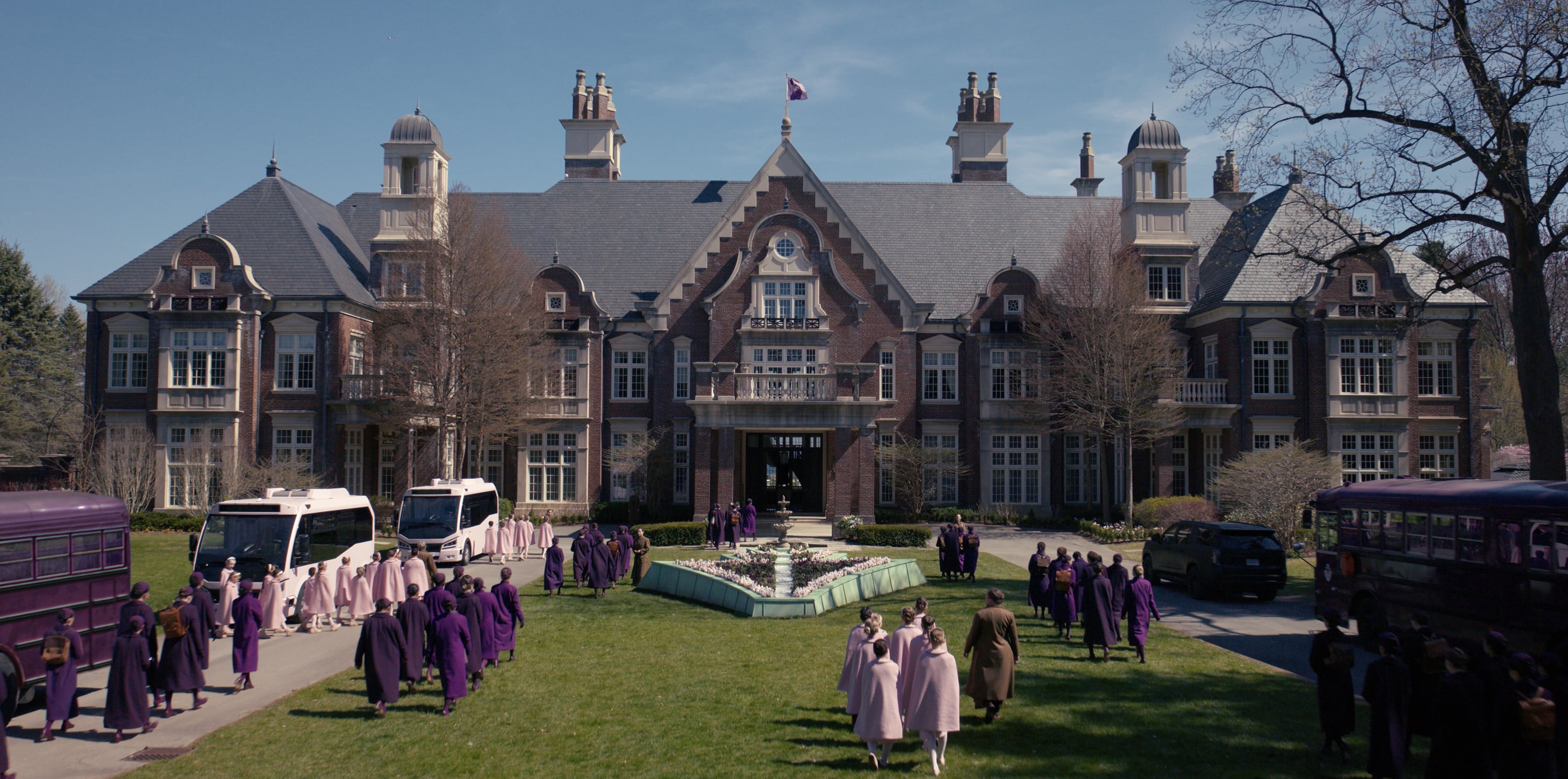

The Pinks, Plums, and Greens all attend Aunt Lydia's school for young women in Gilead in "The Testaments."
Hulu
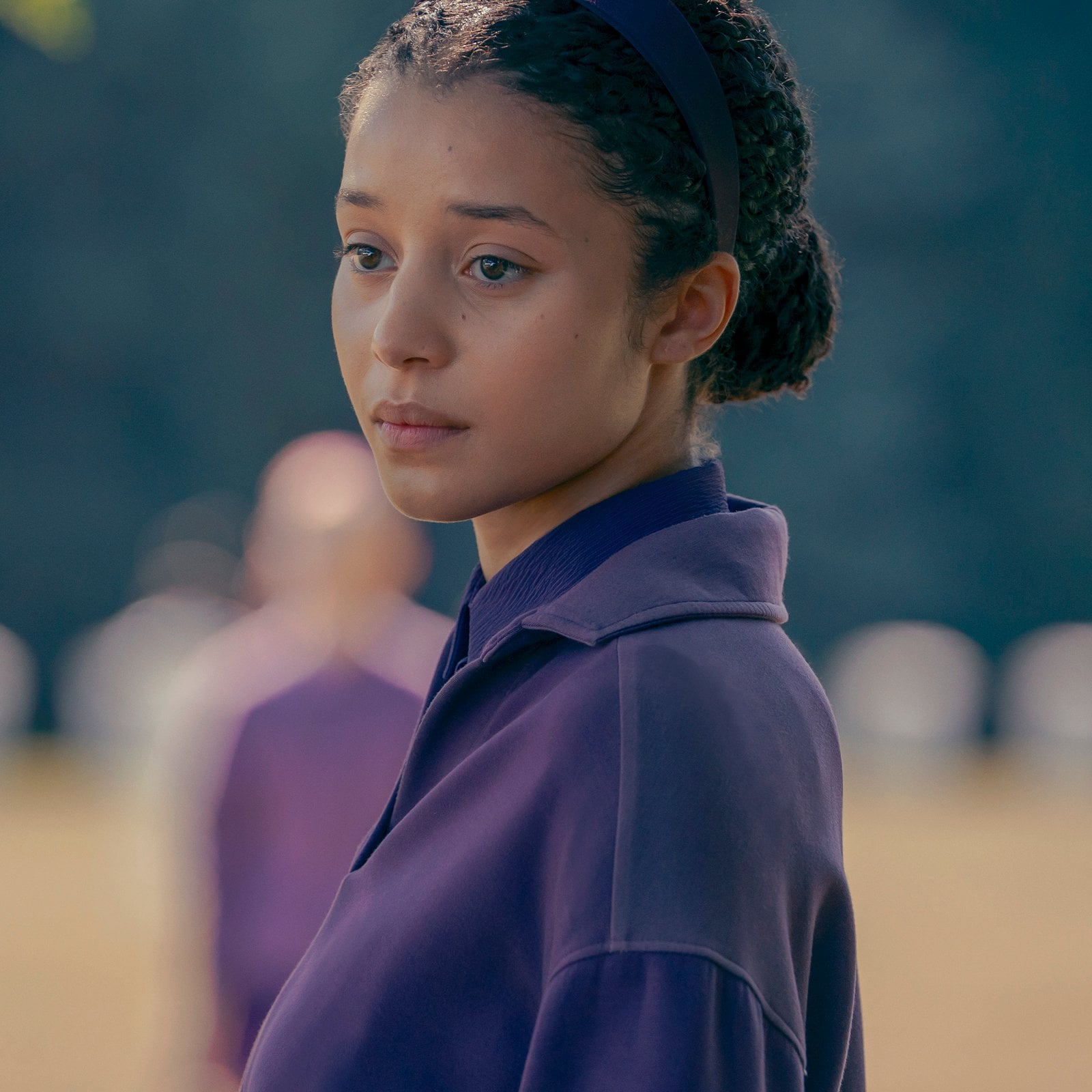
When we meet her, Agnes is a Plum and occupying the uncomfortable position that uniform places her in; she is no longer a child, but her fate—i.e., her choice of husband—has not yet been decided. "The whole point in the story is to become the next generation of wives," Kavanagh explains. "So, how do I make the details bridge a little bit? They're not quite wives yet, but they're not Pinks."
Rather than simply landing on a purple, she experimented with overdyeing the classic Handmaid red with the teal of the Wives. "They're the adoptive daughters of all these wives in Gilead, but many of these children were actually kidnapped from women who became the handmaids," she explains. The color they wear is, quite literally, the product of both worlds. It was a trial-and-error process, which resulted in a few different shades that Kavanagh camera-tested under different lighting before landing on the deep purple shade we see on the show.
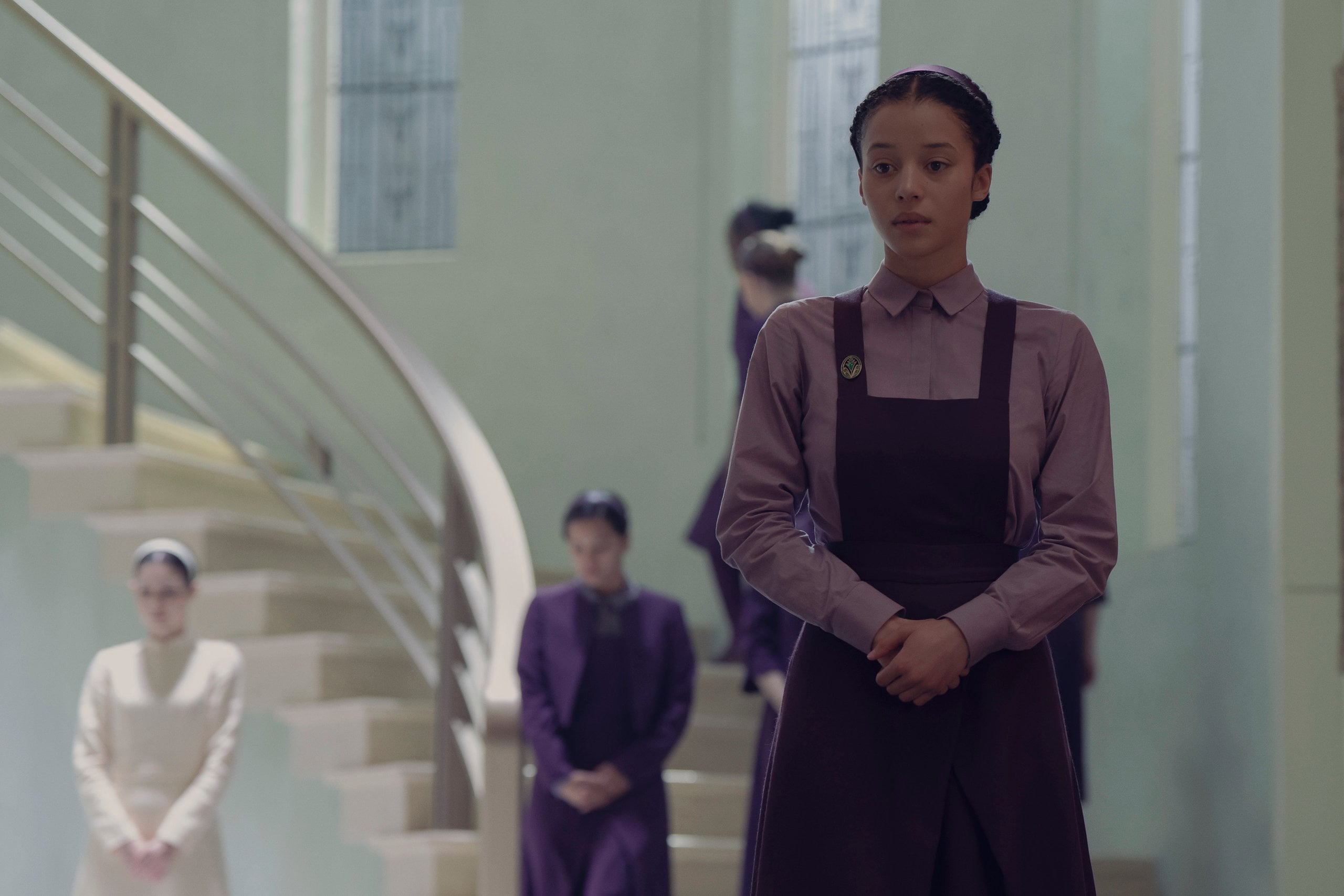

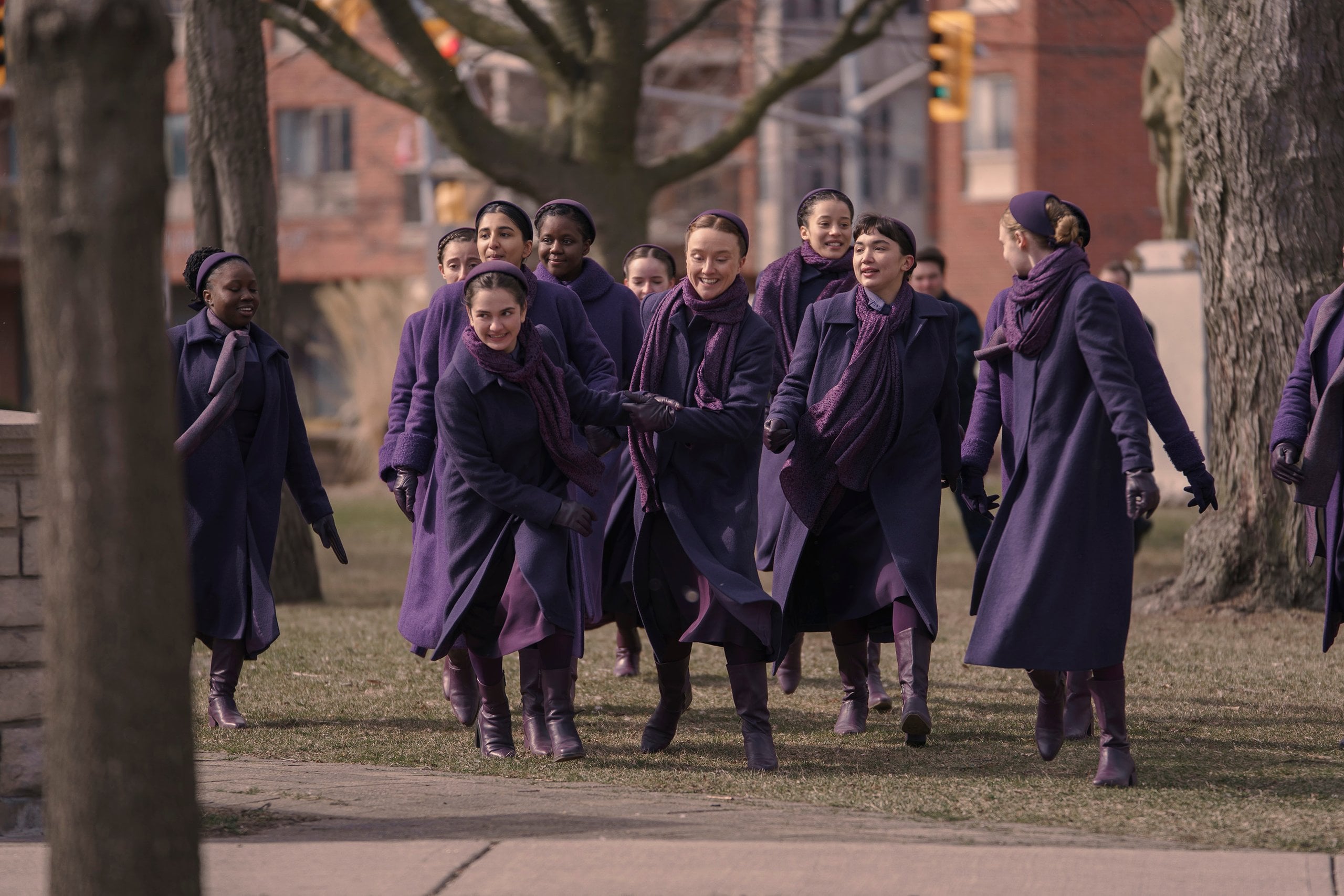

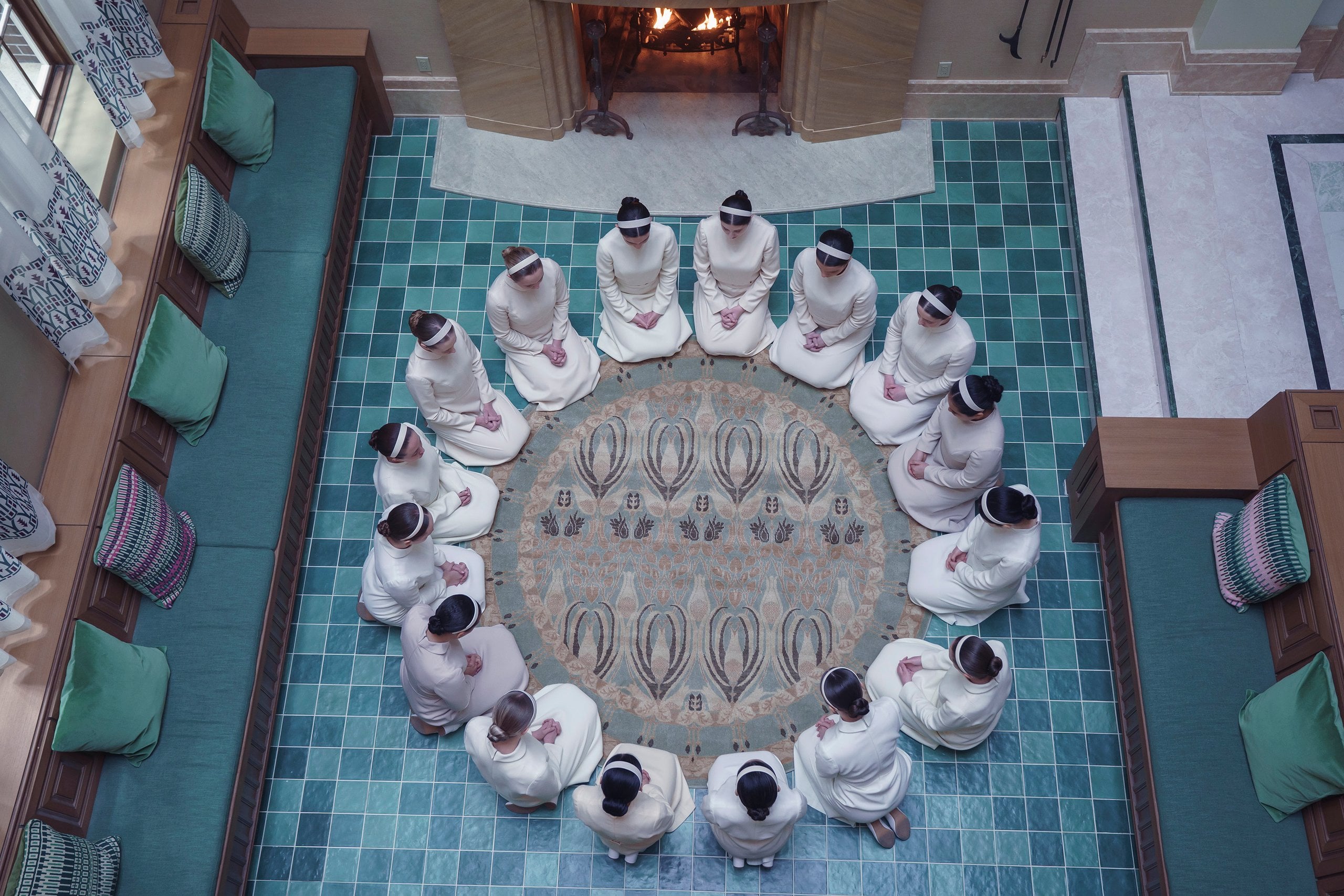

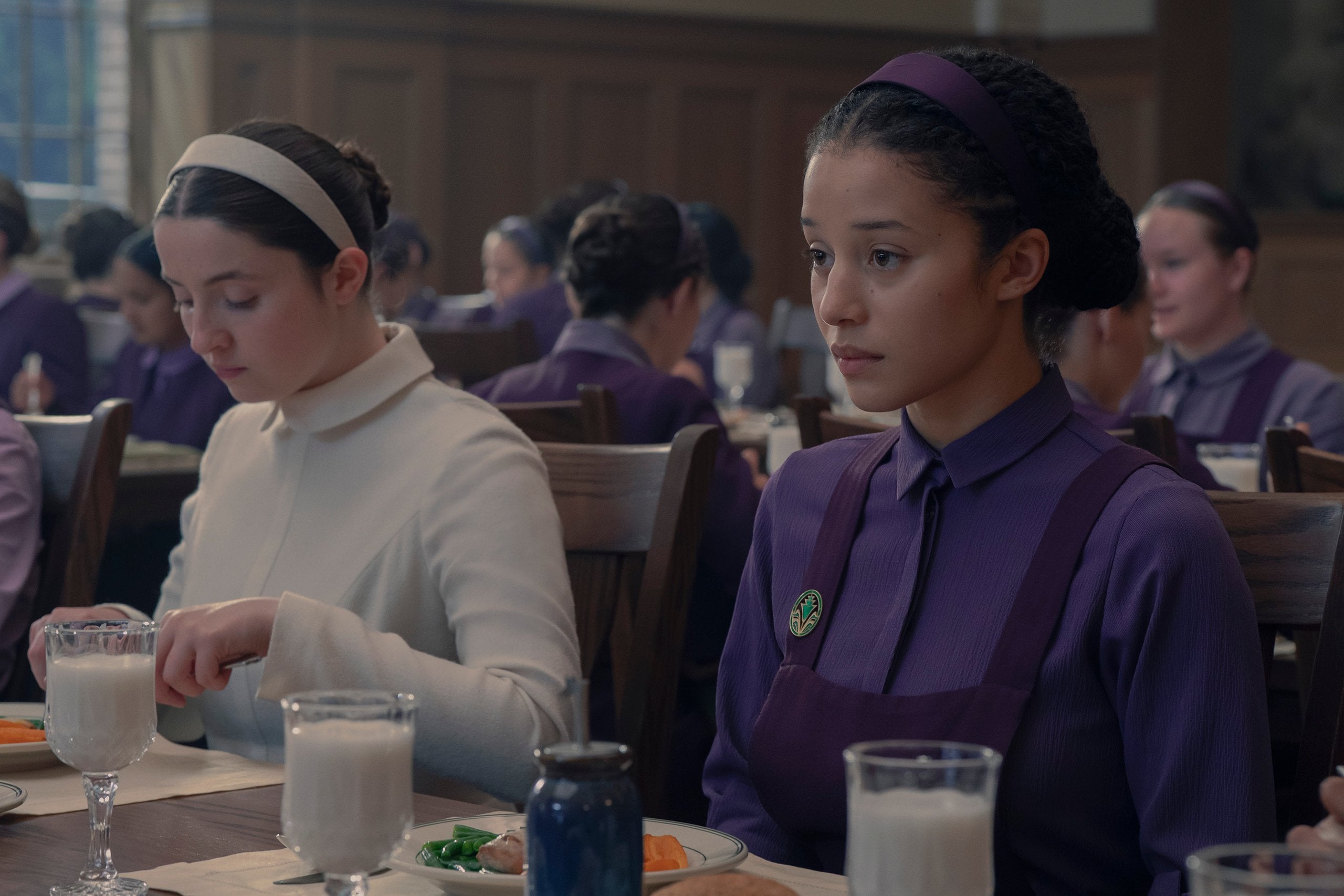

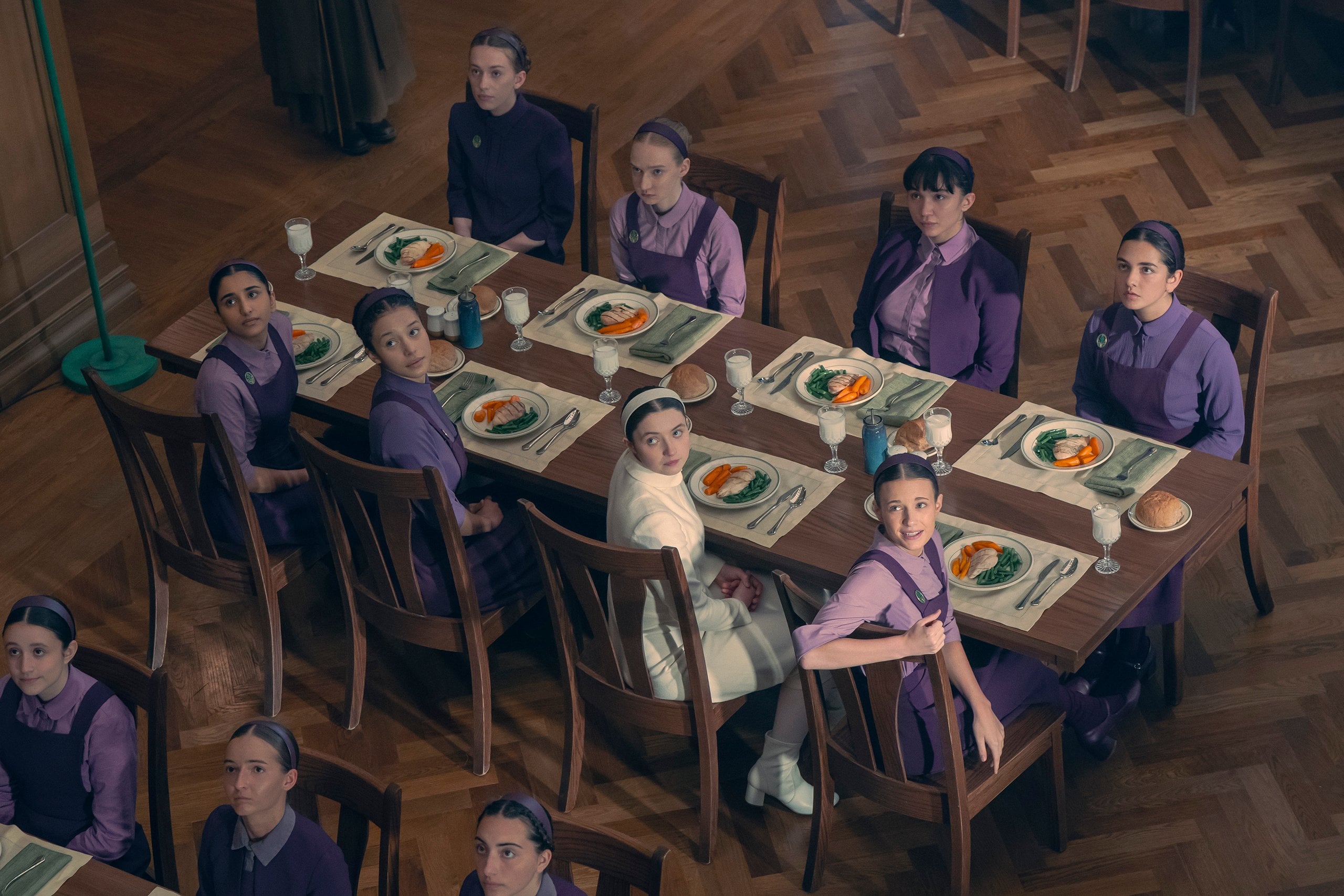

And rather than creating a single school uniform, Kavanagh designed three distinct variations that subtly chart the girls' progression through adolescence and status. There's the blouse and pinafore combination with its removable bolero jacket that the girls start with, then the keyhole dress—meant to be "alluring to the male gaze but not overly sexual,” Kavanagh says—and finally what she calls the Tulip dress, which is reserved for girls who have begun menstruating and are awaiting their graduation to Green status. Kavanagh chose the name for the dress because of its soft folds reminiscent of the overlapping petals of the flower, but it also nods to the floral motifs production designer Martha Sparrow imbued into the logo for the school, drawing a symbolic line between the girls blossoming into womanhood and fertility.
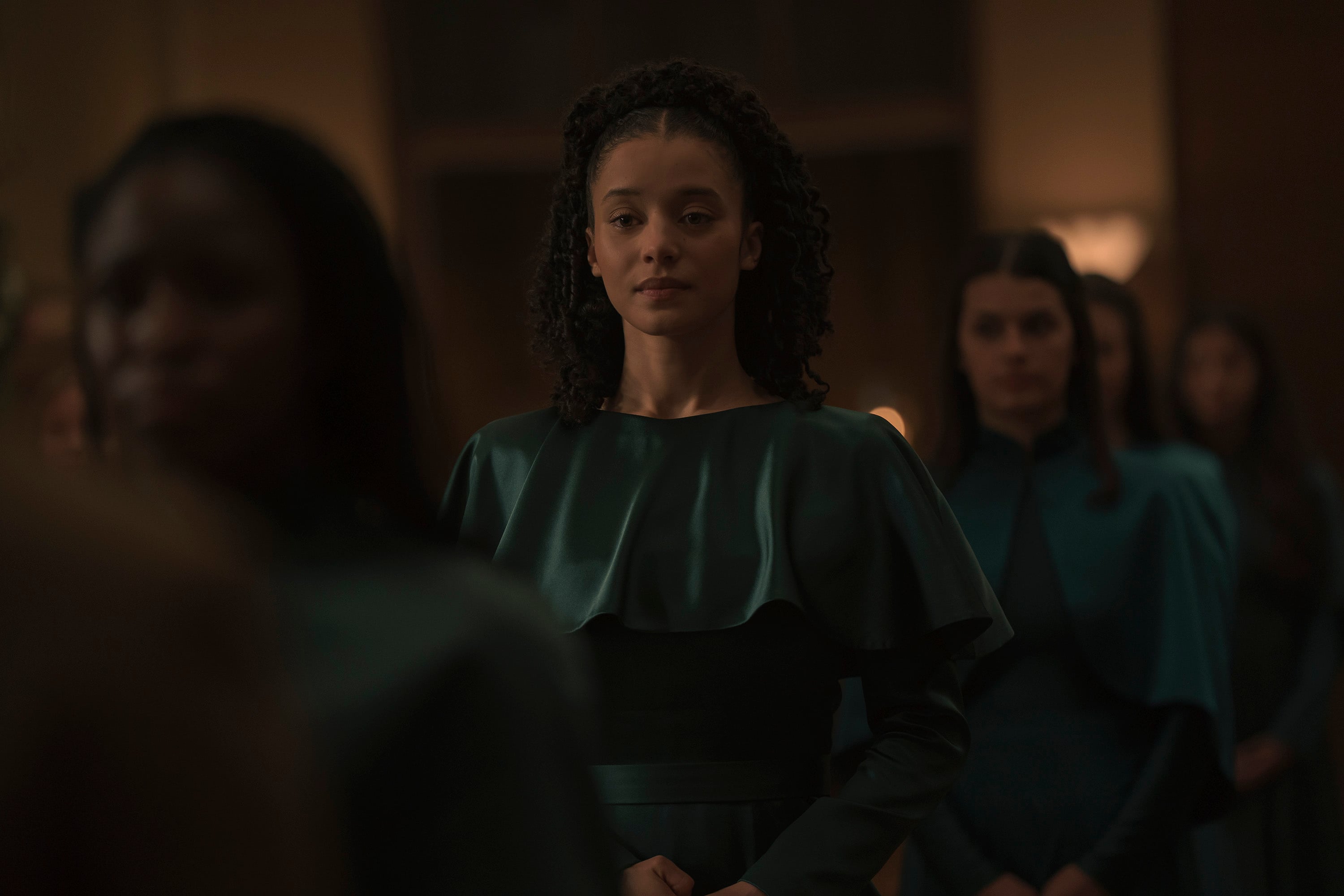

The three variations also operate on another level. "It gives the illusion of choice, which was something I wanted to play with,” Kavanagh says. “They don't really have choice in Gilead. All these uniforms are predetermined and they're pre-selected, but one day you might have this blouse, the next day you might wear this." It also creates visual depth in crowd scenes (Kavanagh was costuming up to 500 girls at a time) by allowing different layering combinations.
Kavanagh's color work extended even further. For the main group of girls—Agnes, Becka (Mattea Conforti), Shunammite (Rowan Blanchard), Hulda (Isolde Ardies), and Jehosheba Yardarm (Shechinah Mpumlwana)—Kavanagh custom dyed the costumes specifically for each actor's skin tone and hair color. "The uniform is the uniform," Kavanagh says. "But how each girl looks in their uniform is unique to them."
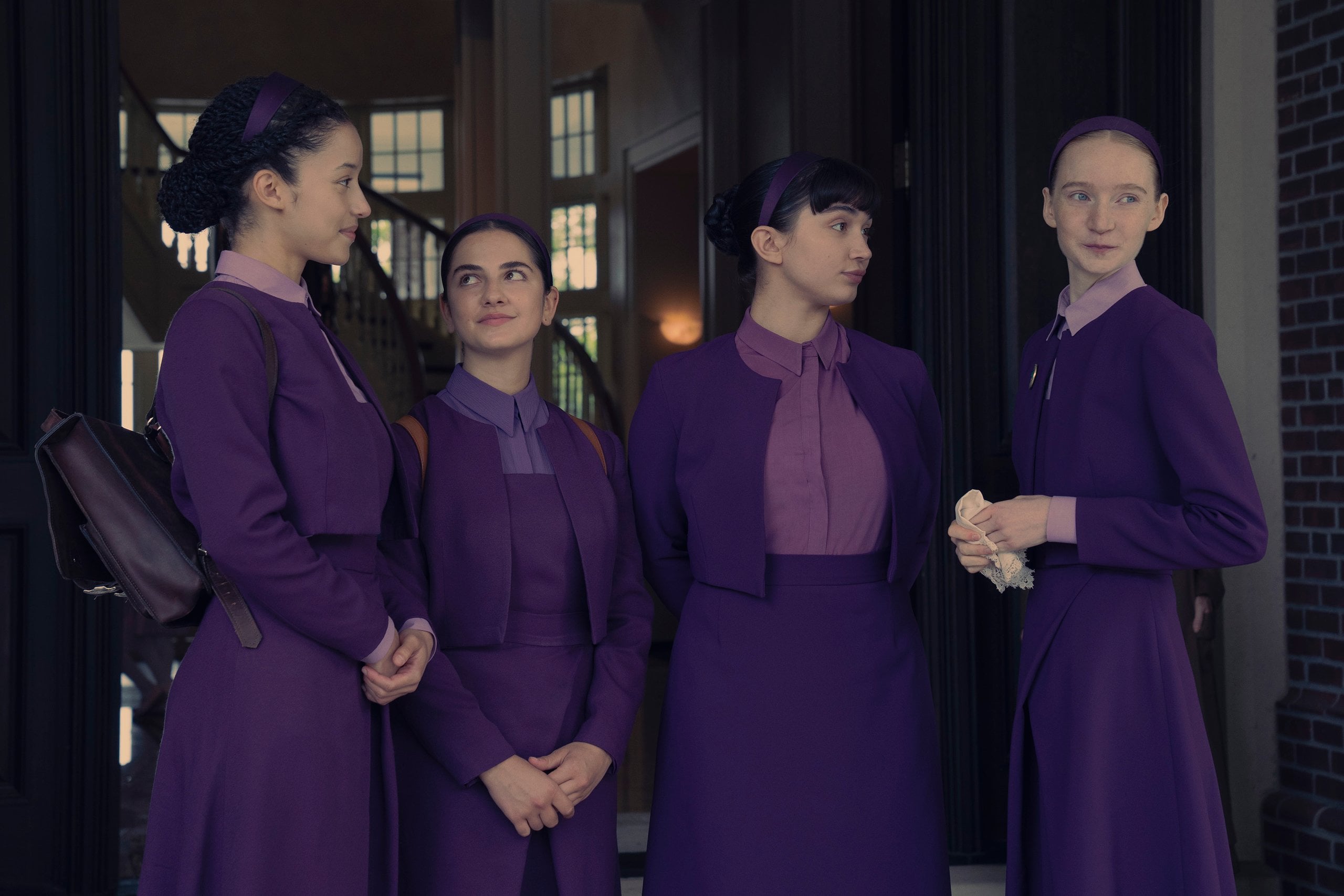

Chase Infiniti, Mattea Conforti, Rowan Blanchard, Isolde Ardies in "The Testaments".
Hulu
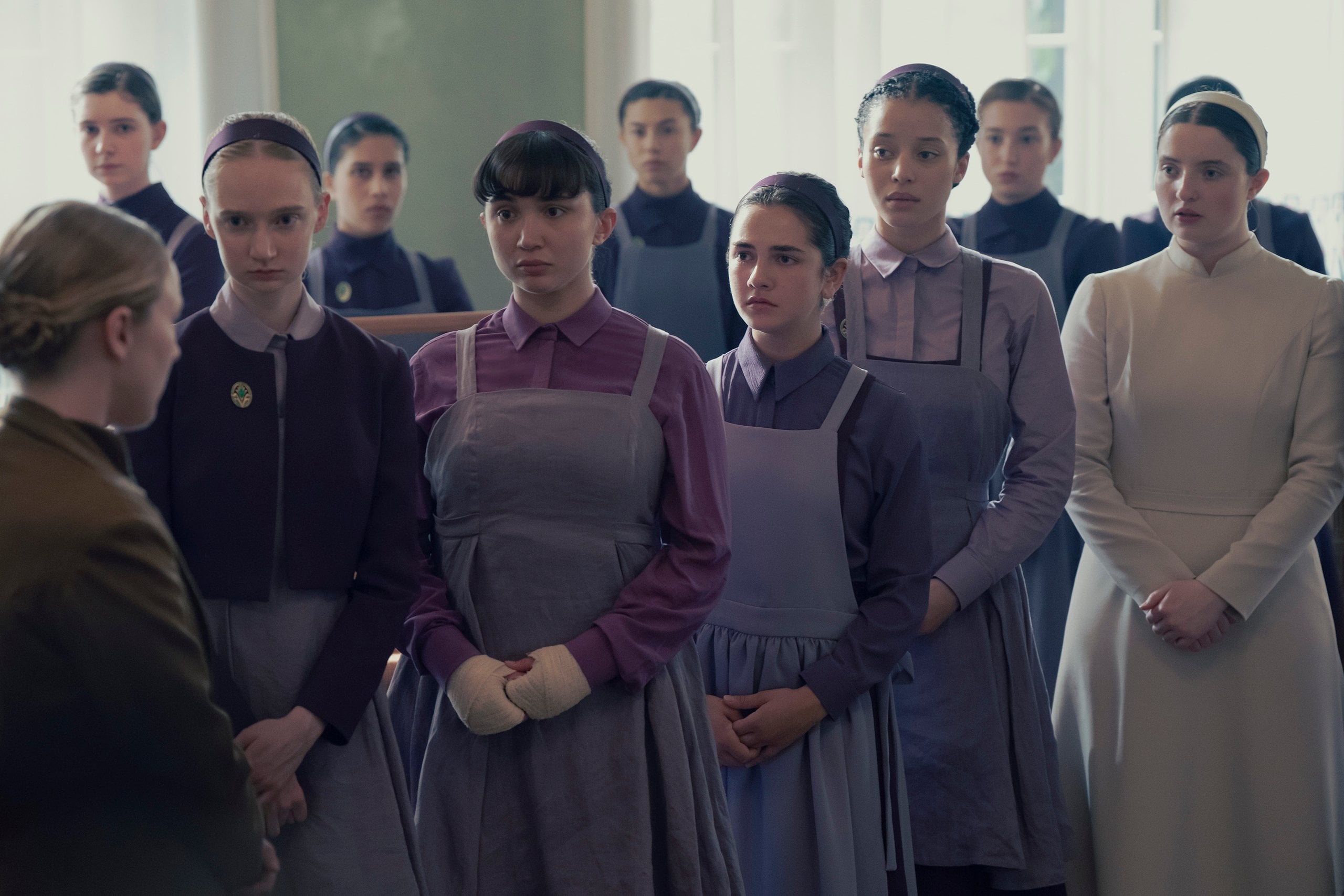

Chase Infiniti, Mattea Conforti, Rowan Blanchard, Isolde Ardies in "The Testaments".
Hulu
Additionally, within the sea of Plums, she developed a hierarchy based on fabric, tone, and texture. "I used different blousing fabrics for different girls to help denote their stature within the community," she explains. As the daughter of a high-ranking Commander, Agnes’ blouse is made of more luxurious cotton than her friend Becka, whose father is a dentist. That attention to detail is seen across the costumes of the show. “We have all younger Guardians in this show,” Kavanagh points out. “So we wanted to streamline the costume from what we see in ‘Handmaid’s’, which we did.” The aim was to reflect both their elevated posting at a prestigious school and the show's younger, more romantically charged energy.
One character whose look Kavanagh didn't alter from "The Handmaid's Tale" was Aunt Lydia. The Aunts, she explains, were carried over exactly as they were for continuity—a deliberate choice made in conversation with showrunner Bruce Miller, who wanted the familiar silhouette and shade preserved to help anchor the audience. “If I'm lucky enough to go back on season two, that is a costume that I would actually like to maybe revisit,” Kavanagh teases.