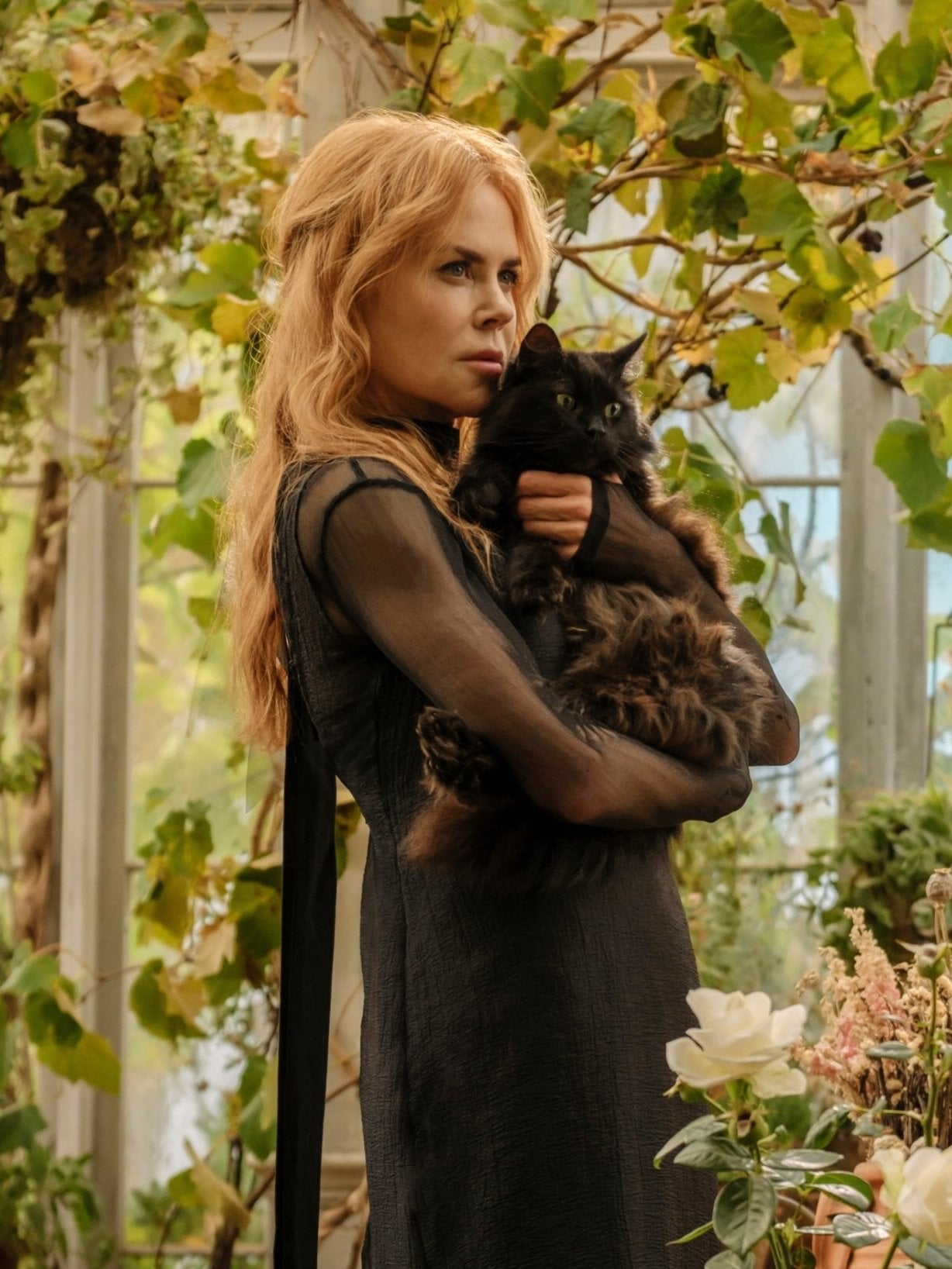
In ‘Scarpetta,’ Nicole Kidman Uncovers—and Hides—Secrets in Plaids and Pantsuits
Fashion

Fashion
For the Prime Video crime drama, costume designer Ane Crabtree custom-built a uniform that stands strong in two timelines.
As she begins working on a second season of Prime Video’s “Scarpetta,” costume designer Ane Crabtree keeps a constant reminder pinned to her board for when designing for Nicole Kidman, who plays the show’s titular medical examiner and forensic investigator. She pairs two photos—one of Kidman on a red carpet “in a beautiful blazer and trousers” and another of her as Kay Scarpetta. “Nicole is such a chameleon in the best way possible and can wear anything, but there's always the fine line,” says Crabtree.
In the non-linear mystery series, based on a long-running series of crime novels by Patricia Cornwell, Kay maintains a trademark of tailored plaid suiting—from flashbacks where a younger version of the character is played by Rosy McEwen, to the present day, as she returns to work on a 30-year-old case.
Even after nearly three decades—and now married to FBI profiler Wesley Benton (Simon Baker, with Hunter Parrish portraying him in 1998)—Kay keeps her look unfussy but precise, much like the way she works. “I gave her a uniform,” says Crabtree, who earned three Emmy nominations for her work on “The Handmaid’s Tale.” Echoing the character’s meticulous nature, Crabtree opted to custom-build most of the wardrobe.
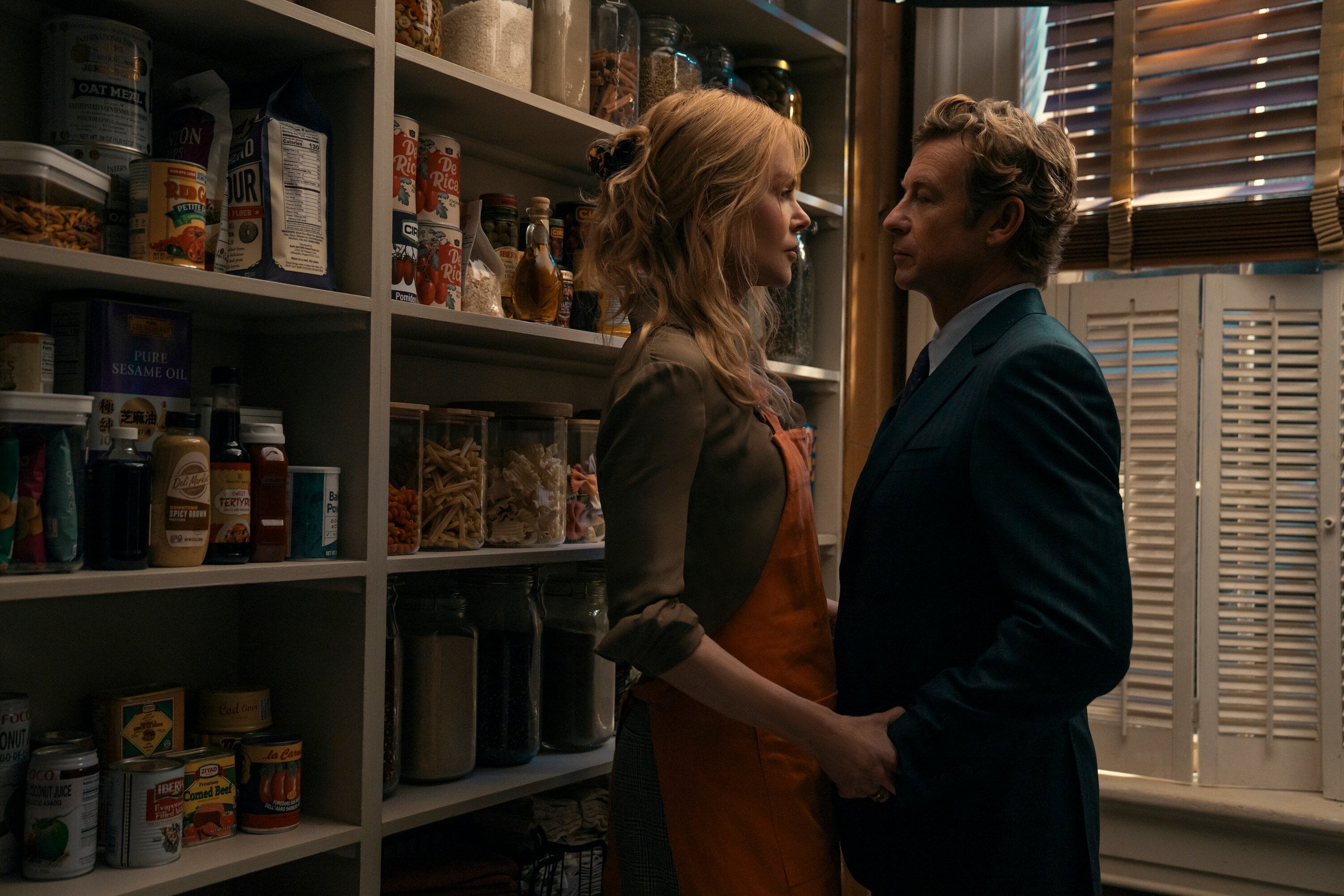

Nicole Kidman and Simon Baker in "Scarpetta".
Prime Video
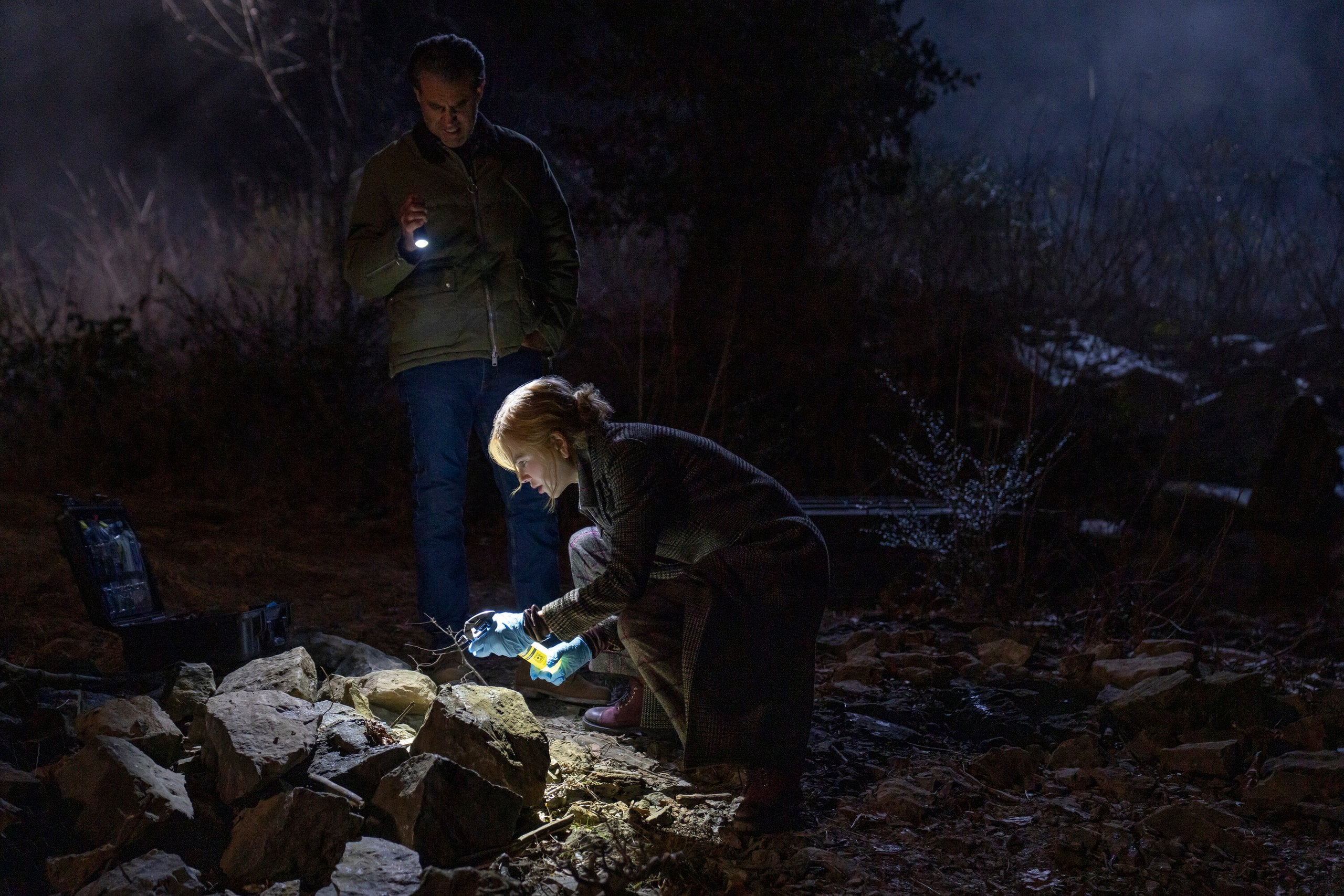

Nicole Kidman and Bobby Cannavale in "Scarpetta".
Prime Video
Nicole Kidman and Simon Baker in "Scarpetta".
Prime Video
Nicole Kidman and Bobby Cannavale in "Scarpetta".
Prime Video
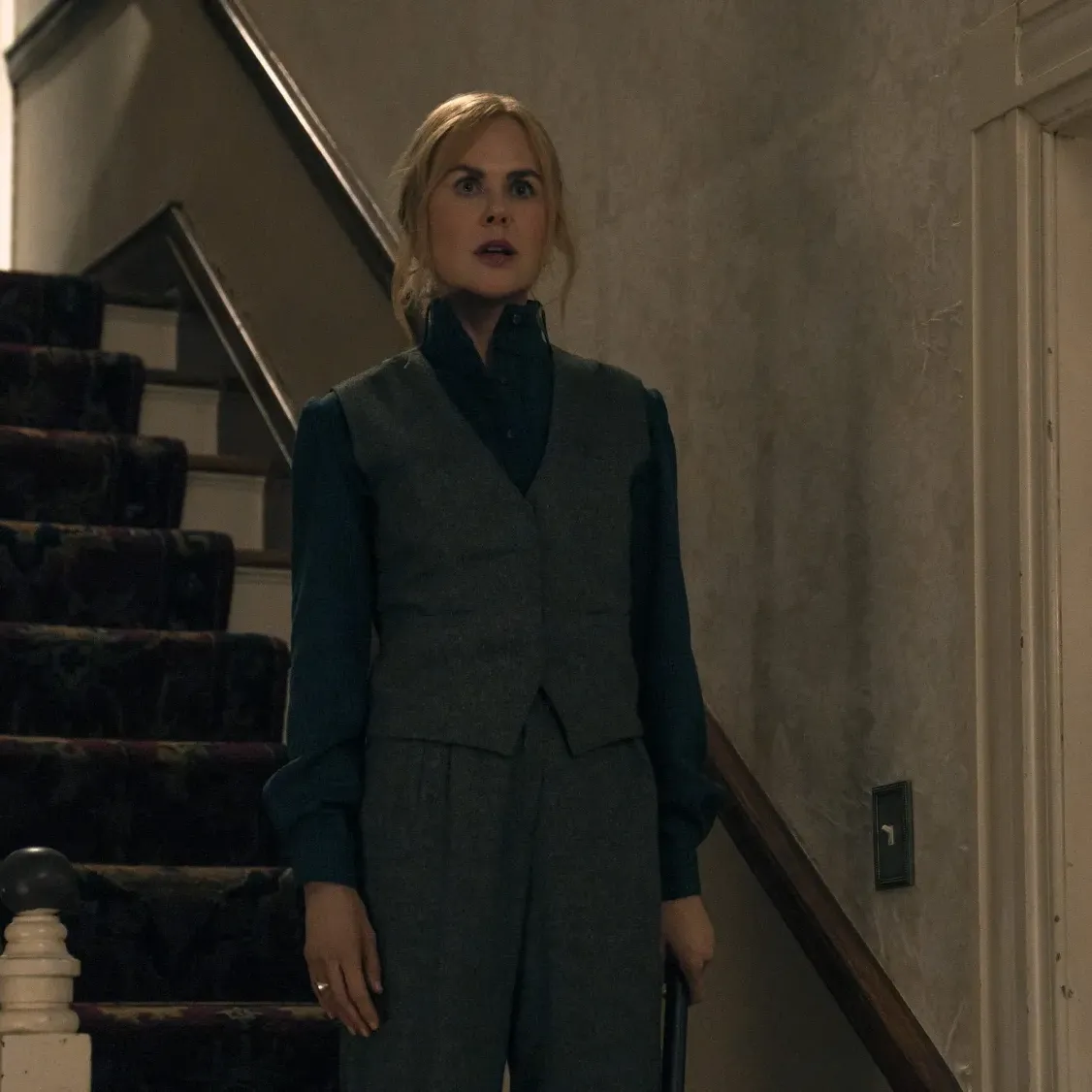
Kay’s Prince of Wales check three-piece suits and natty plaid vest-and-trouser pairings—rendered in “tactile” wools and tweeds across both timelines—serve as her professional armor in a male-dominated field full of detractors. Instead of heels, she wears practical sneakers or classic menswear-style brogues. For inspiration, Crabtree looked to her favorite Old Hollywood leading men, such as Gary Cooper, as well as groundbreaking, pantsuit-clad women of the era, including Katharine Hepburn and Lauren Bacall.
“I’ve always had a fascination for women who always traverse a man's world and always keep the integrity and their respect for their job,” says Crabtree, who also thought wove into the wardrobe Kay’s upbringing as a second-generation child of Italian immigrants in vibrant Miami. Growing up in the ’70s, the young Kay (Quinn Aune) kept busy in her parents' bustling community grocery store. “Kay Scarpetta was surrounded by her father’s clients who came into this market to get fine tomatoes and things for Italian meals,” says Crabtree. “There was a beautiful classicism in the clothing of men and women [in ’70s Miami].”
She also imagined that Kay might be honoring her mother—who raised two daughters alone after her father was killed in a robbery—through her strong pantsuits. The silhouette had become the uniform of Second-Wave feminism in the 1970s, embraced by leaders like Gloria Steinem and Bella Abzug. “I believe her mom would have been that mom,” says Crabtree. “I’m trying to knit together personal histories and clothing so that, when you put it all together into one story—whether week by week or in a binge—it reads as elevated everyday clothes.”
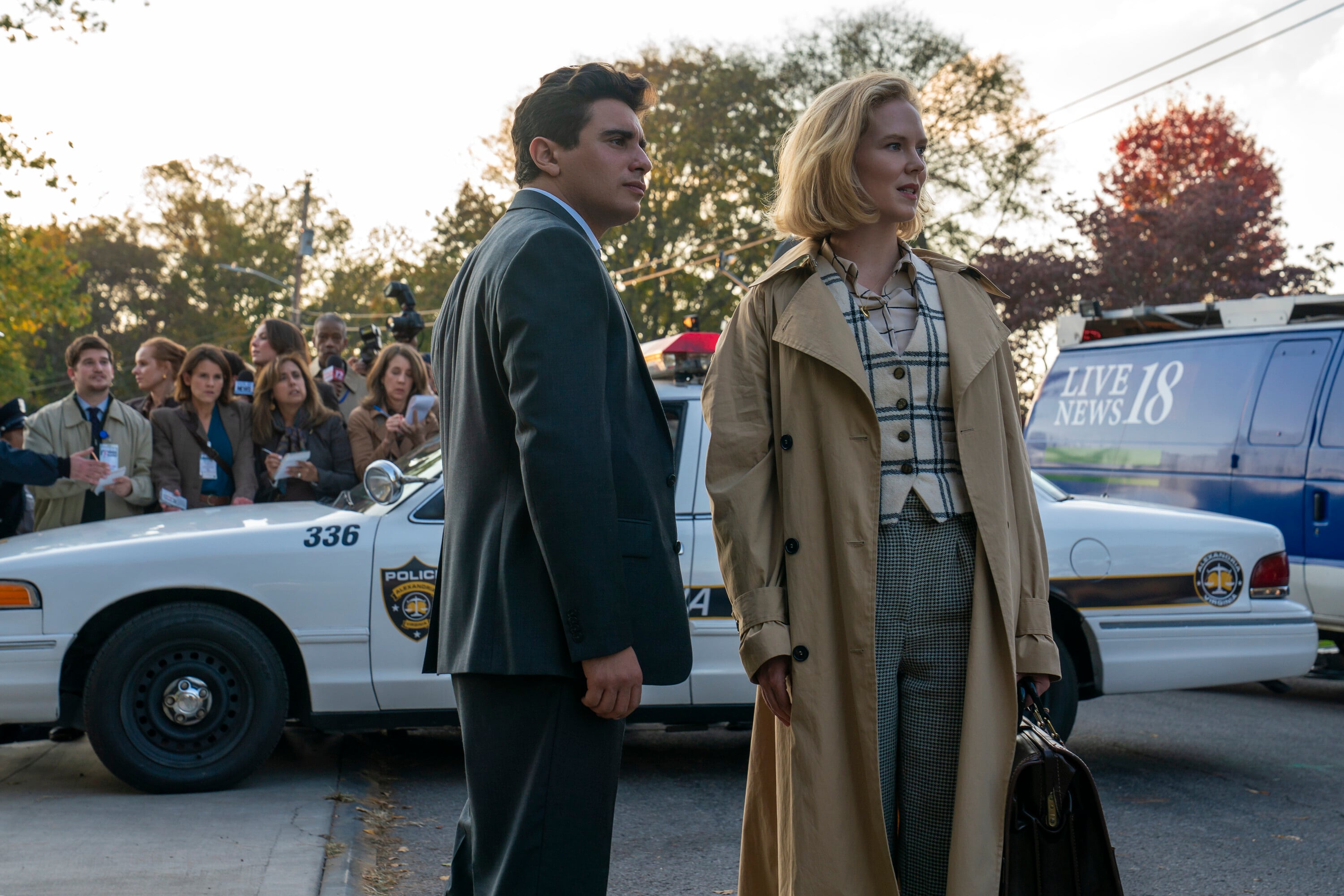

Jake Cannavale and Rosy McEwen in "Scarpetta".
Prime Video
For moments requiring confidence and authority, Crabtree amplified Kay’s presence with a dramatic twist on the vest-and-tie motif: a cravat neck flourish on a tailored shirt in a dark, refined monochrome. Crabtree admits to ironically not watching much film or television, so she missed “Babygirl” but could picture a Kidman in neckwear quite clearly. “I know what I'm not going to do is put her in a bow blouse because it happens a lot. So what feels like a men's tie, but isn't a men's tie?” says Crabtree, who landed on the ascot variation—for both style and timelessness. “Menswear tailoring is always presenting yourself as a professional person,” she adds. “And it’s never out of fashion.”
Although Kay is more focused on tracking the return of the serial killer from her first case, and keeping dark secrets of her own buried, than fitting into ’90s or 2026 trend cycles, even if she happens to look the part. Taking charge in one late ‘90s scene, Kay strides into a grisly murder scene in a jaunty print mix: a pink and black plaid wool coat altered over a black-and-white windowpane-check vest. “It’s a window into her,” says Crabtree, referring to how she establishes Kay in the first episode.
Kay begins her new, challenging job with a high-profile murder case while also parenting her precocious, tech-genius niece Lucy (Savannah Lumar, and later played by Arianna DeBose). The responsibility remains constant within Kay’s too-closely-knit, co-dependent family into 2026. The mixed prints in her wardrobe reflect both her constant multitasking and the complexity of her family dynamics. “It can convey that someone has too much on their mind and a peacefulness that belongs entirely to them,” says Crabtree, who designed McEwen and Kidman’s wardrobes like “real closets” for the actors to pull from, as if fully in character. “Kay doesn't spend a lot of money or time thinking about fashion,” continues Crabtree. “She's thinking about, ‘How do I solve this 28-year puzzle? People like that don't sleep. They just grab whatever [to wear] in the morning. So things should go together.”