‘Paper Tiger’ Sees Two Brothers Navigate the American Dream in Vintage Armani Suits and Plaid Shirts
Fashion

Fashion
Costume designer Amy Roth discusses how pristine ’80s vintage helped Adam Driver and Miles Teller immerse themselves in their characters in James Gray’s intense crime thriller.
In James Gray’s 1986-set semi-autobiographical crime thriller, charismatic Gary Pearl (Adam Driver) has a business proposal for his younger brother Irwin (Miles Teller). So he gives himself a last-minute dinner invitation to Irwin’s modest home in Queens. “Only if you wear something sexy,” says the engineer and family man, joking to his successful, recently divorced older sibling. Gary arrives at Irwin’s armed with a fully catered Peter Luger porterhouse-for-six dinner—and in an immaculate bespoke suit that would fit right in with the Wall Street power brokers of the go-go ’80s.
The former NYPD detective now runs his own security systems company and would probably seek the guidance of a custom tailor for the ideal suit to navigate the elevated circles of prospective clients—and to manifest the prestige he wants. “[The tailor] knows tradition and values,” says costume designer Amy Roth, imagining Gary’s thought process in putting his trust in an expert.
Maybe Gary went to the newly established, financier-favored Alan Flusser, opens in new tab, who happened to be the “Wall Street” costume designer Ellen Mirojnick enlisted to make Michael Douglas’ Gordon Gekko suits, opens in new tab for the 1987 classic. But for Gary’s dark, strong-shouldered business suits, Roth looked to Hollywood’s go-to: Savile Row-established and Manhattan-based Leonard Logsdail, opens in new tab. “There's something about the tradition and the control [of bespoke], giving Gary the feeling of, ‘I'm in the right suit,” says Roth.
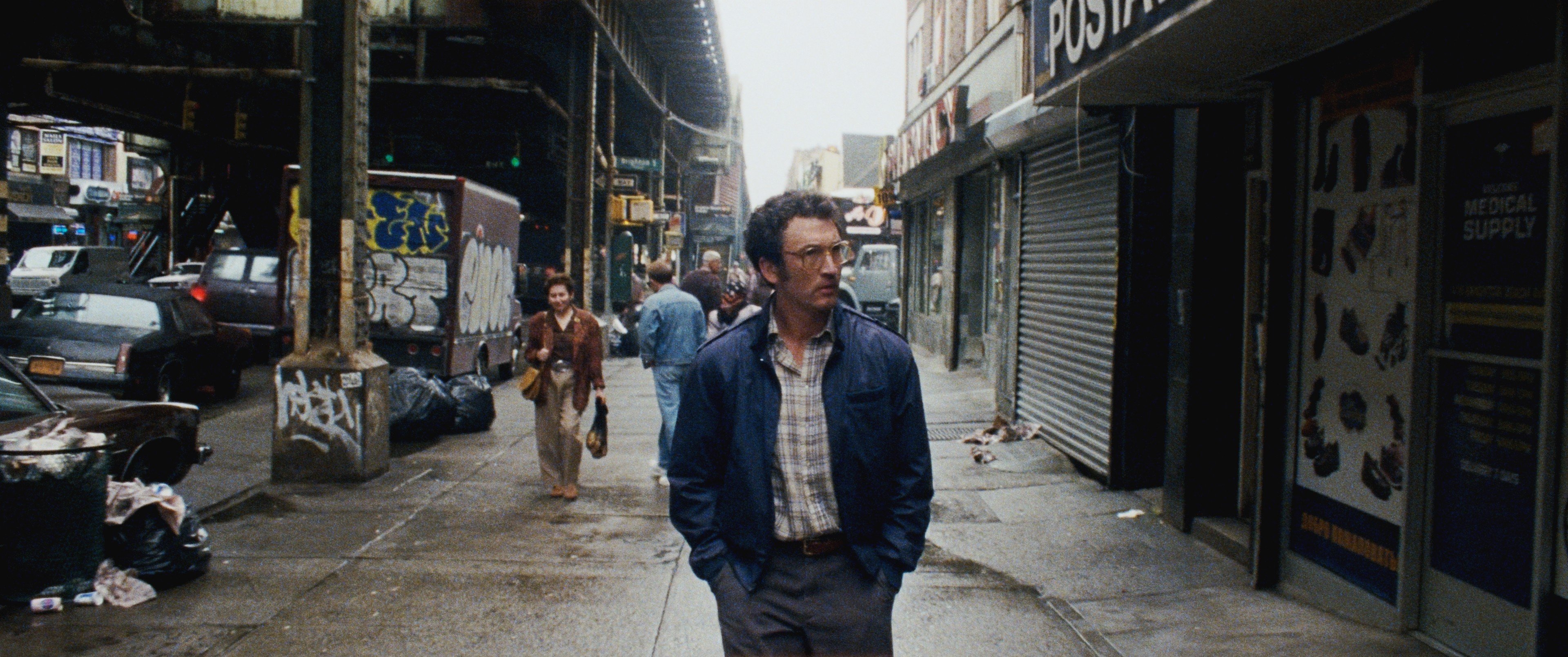

Miles Teller in "Paper Tiger."
Neon
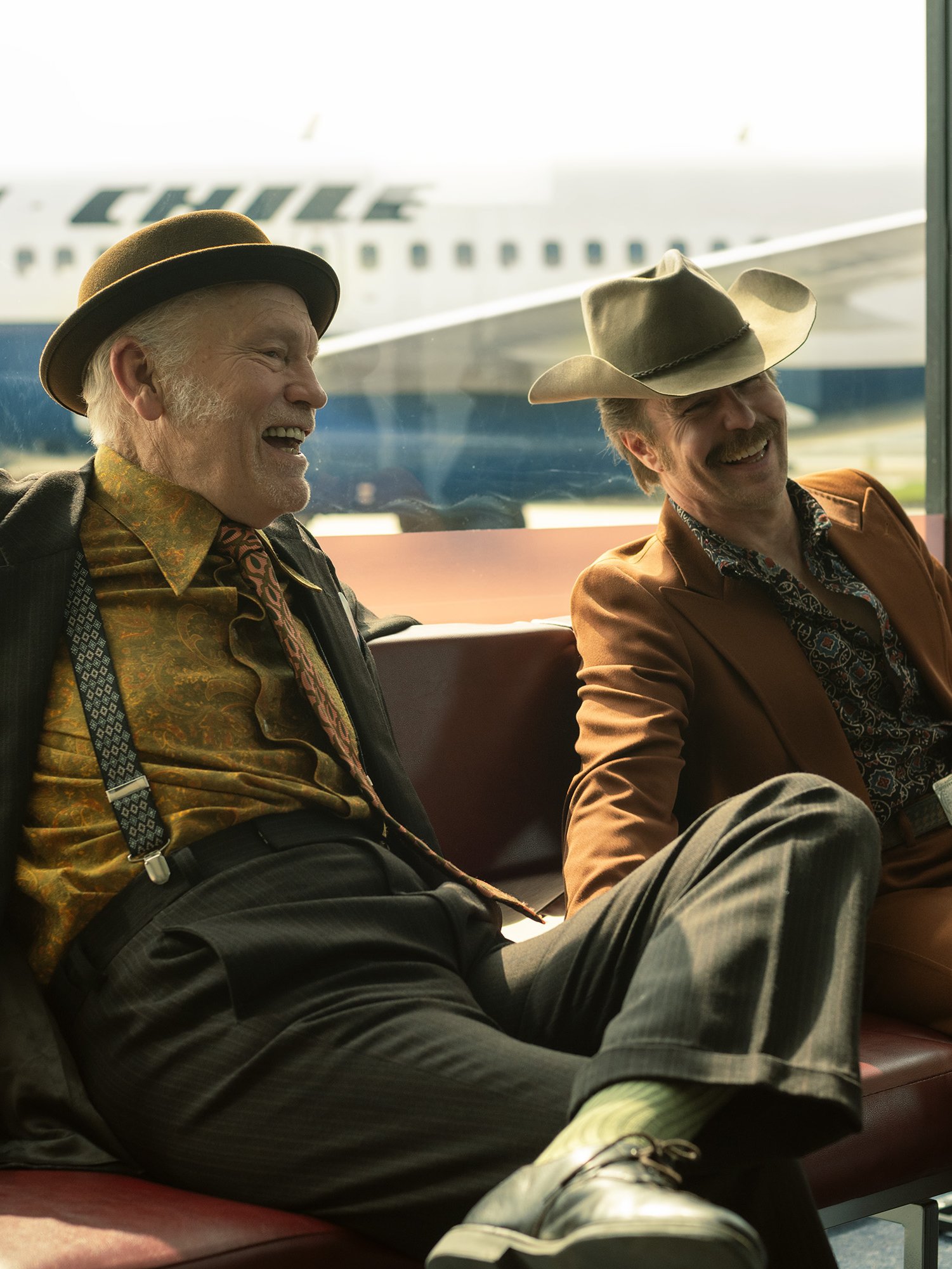
For networking and hitting the Manhattan singles scene, Gary wears another seminal suit aesthetic of the era. “In late-’80s New York City, the Armani suit was the one that got you into the club,” says Roth. “I had these vintage Armani suits—some unworn, which was unbelievable—and in Adam's size.”
Popularized by Richard Gere’s high-end escort Julian Kaye in the 1980 drama, “American Gigolo,” the Armani suit epitomized the era for its louche silhouette—the broad-shouldered, but confidently relaxed jacket, wide lapels, and billowy trousers. The dynamic cut of the suit represents “the psychology of the character,” says Roth, who also custom-made Gary’s luxurious silk shirts. “It’s a new beginning. There's a freedom, like ‘I can move now. I'm not constricted by a marriage or the police force. Nobody's telling me what to do.’ The suit's a gateway into a modern, new life.”
Gary, in his tan Armani, rakishly styled with a monochrome brown silk shirt-and-tie combo, brings a date to a family dinner in a Queens Chinese restaurant. Irwin’s teen sons, Scott (Gavin Goudey) and Ben (Roman Engel) gush over their uncle’s Mercedes and ask their father why they “buy crappy stuff and live crappy.” Gary’s gleaming gold status-symbol accessories express the opposite sentiment: a precisely placed tie-bar, a two-tone Rolex Day-Date, and not one, but two pinky rings, opens in new tab—one with a diamond at the center.
“He wore a gold chain under all of that, too,” says Roth. “The idea is you're making a little money now, and what do you do as a man? What do you do to accessorize yourself? You buy a Ferragamo loafer, you buy yourself a ring. But you're not married anymore, so put it on the pinky.”
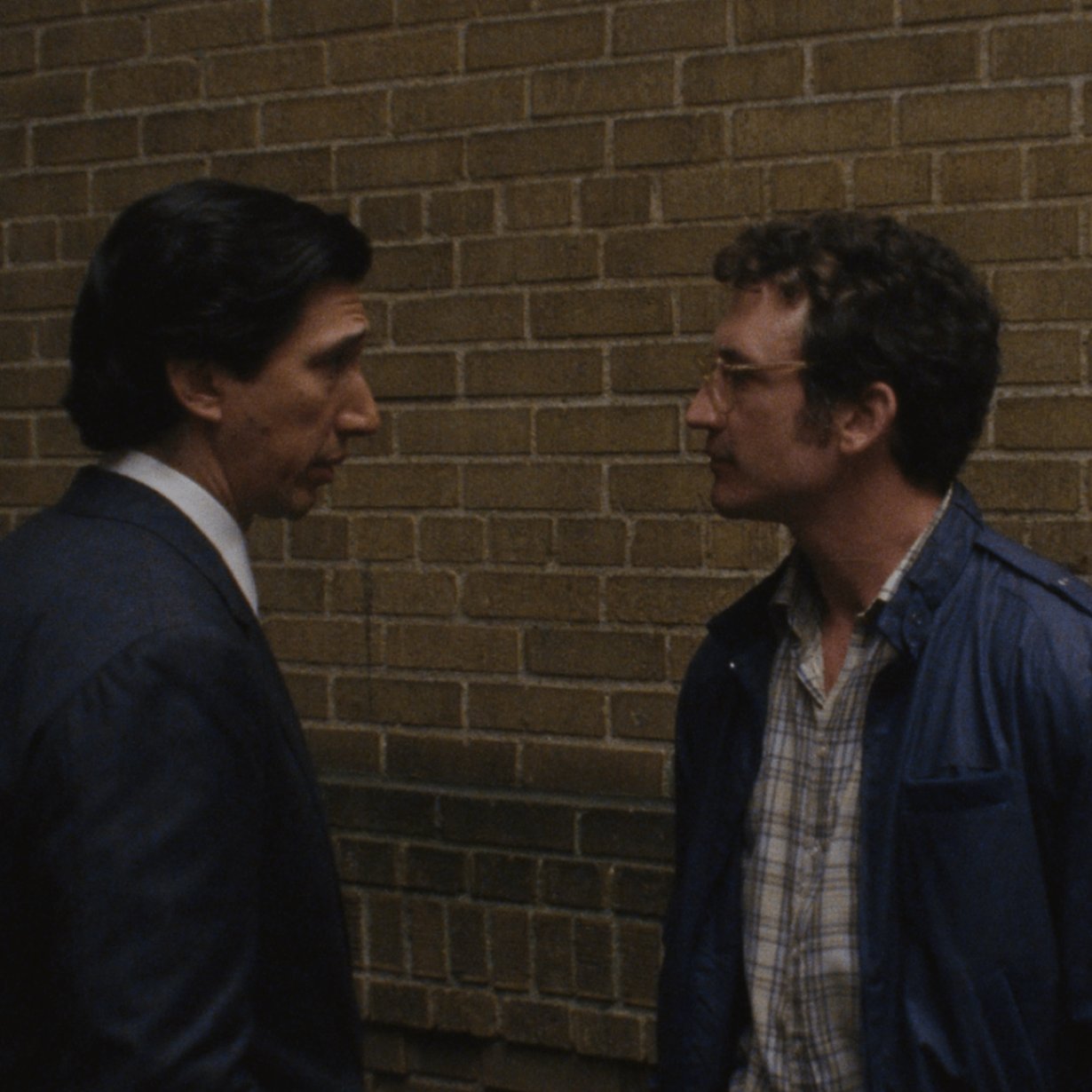
Over in Queens, Irwin’s version of success looks very different. He takes pride in his middle-class life—raising two sons with his wife Hester (Scarlett Johansson), who keeps the books of his engineering business. When his mother-in-law tries to convince the couple to move to Great Neck, Long Island, Irwin bristles—dismissing the affluent community as “born with silver spoons in their mouths.” Fittingly, his wardrobe consists of everyman cotton plaid and striped shirts, khakis, and a lone pair of dark-wash Levi’s.
Irwin’s plaid button-ups also resonated with Teller to connect with his character. “Miles was really attracted to those shirts. Miles is the type that comes into the fitting room and takes things off the rack and start putting it on,” says Roth, who rolled up the too-short sleeves of the vintage shirts to fit the six-foot-one actor. “He's very interactive with you in a fitting, which I love. He doesn't stand there waiting for you to say, ‘Okay, dress me.’ He actually fancies himself a costume designer.”
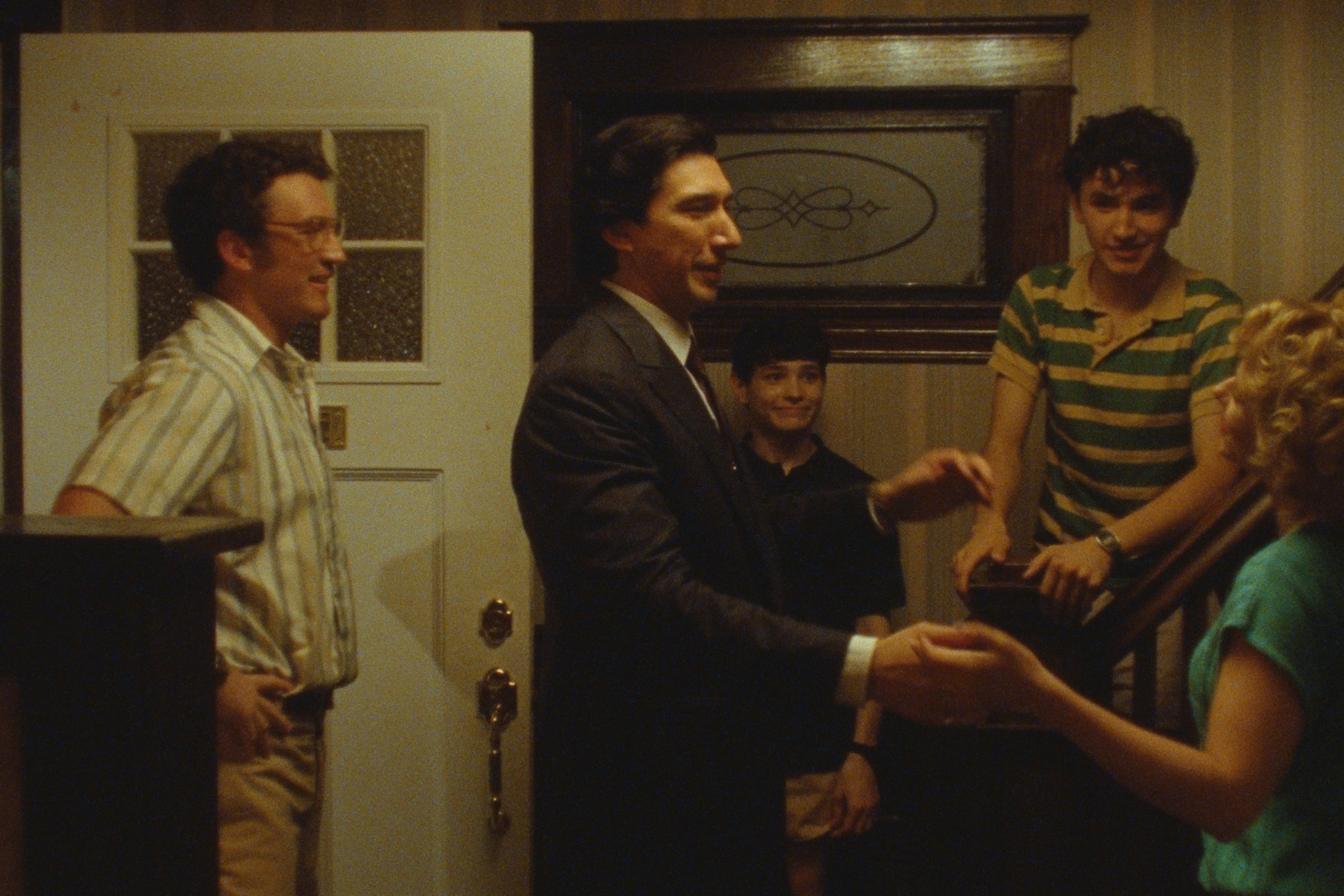

Adam Driver in "Paper Tiger."
Neon
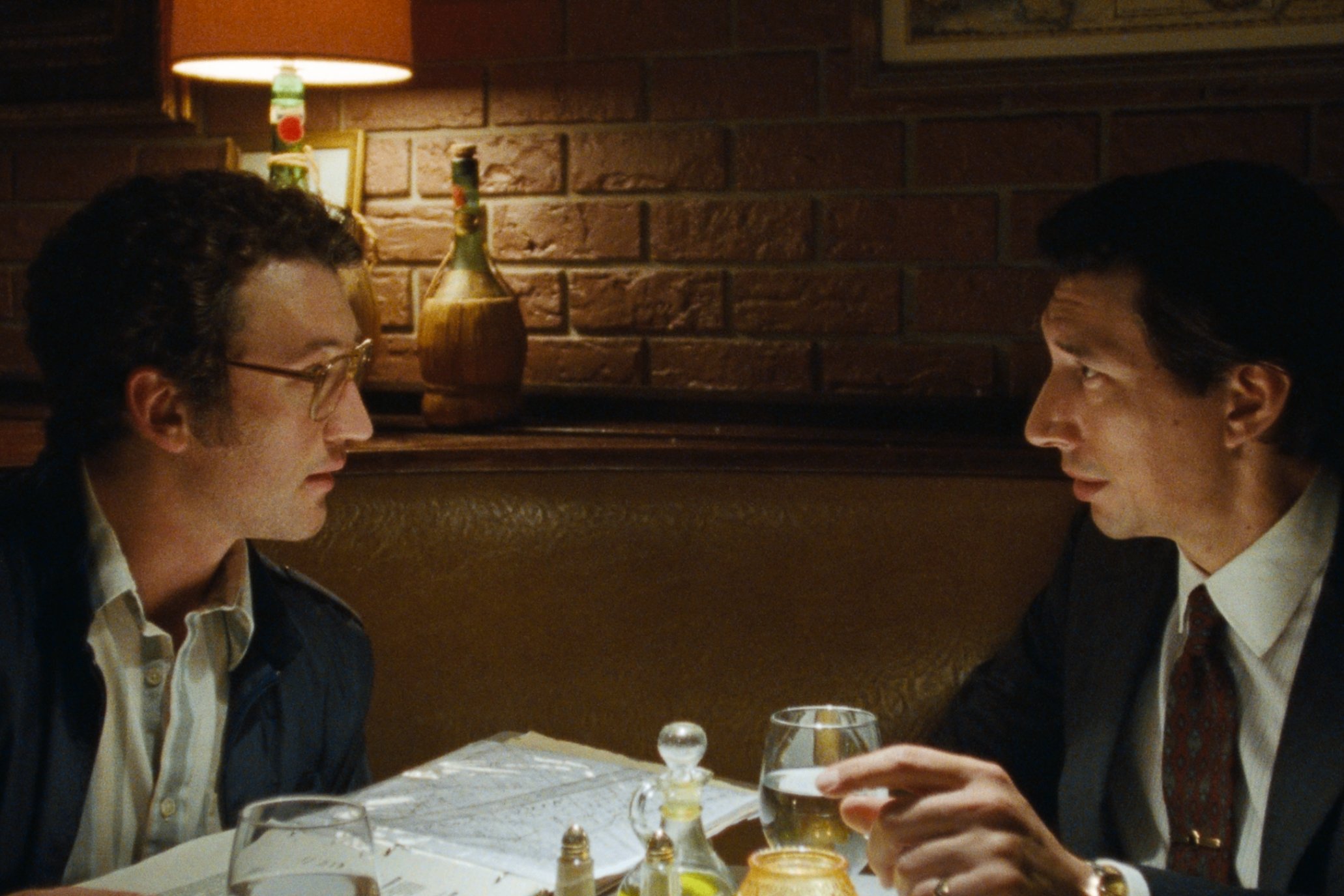

Miles Teller and Adam Driver in "Paper Tiger."
Neon
Adam Driver in "Paper Tiger."
Neon
Miles Teller and Adam Driver in "Paper Tiger."
Neon
Irwin’s simple wardrobe also speaks to the practicalities of fatherhood and constant upkeep on the family home. “[Parents] sacrifice for their kids, even if it doesn't even feel like a sacrifice. They're not thinking about themselves,” says Roth. “There’s a vanity about what Gary’s projecting to the world, but I don't think Irwin gives a crap. He's got a job to do. He's got to crawl under his sink and fix it or whatever he has to do.”
Hester, however, dresses more aspirationally—even within the family’s budget constraints—in light-toned boxy blazers with shoulder pads, openwork sweaters, and silky puff-sleeve blouses. “She's wanting those things, and doing the best she can with what she's got,” says Roth. “I gave her a lot of gold jewelry that her mother would have given her, like ‘I don't wear this anymore’ or ‘I found you a coat.’ A mother who tries her best not to interfere in her marriage, but also adds to it a little bit.”
After Gary pulls an unwitting Irwin into a scheme involving the Russian mafia—putting his younger brother’s family in danger—the duo wear their signatures for a tense confrontation that unleashes lingering resentments. Like the close brothers’ diverging ambitions and convictions, Irwin’s weathered blue plaid shirt contrasts with Gary’s gray-green Armani suit, a crimson silk shirt, and tonal paisley tie. But their brotherly bonds can’t be broken and Gary will always look out for his little brother—requiring the proper suit to make a critical decision. “The familiarity of the [bespoke] Savile Row suit for Adam—the actor and his character— worked,” says Roth. “It felt safe and good, and it gave him authority.”