Costuming Original Sin In Queer Horror ‘Leviticus’
Fashion

Fashion
For Neon’s latest horror, costume designer Zohie Castellano used wardrobe to track two teenage boys' blossoming romance, while also weaving in religious symbolism.
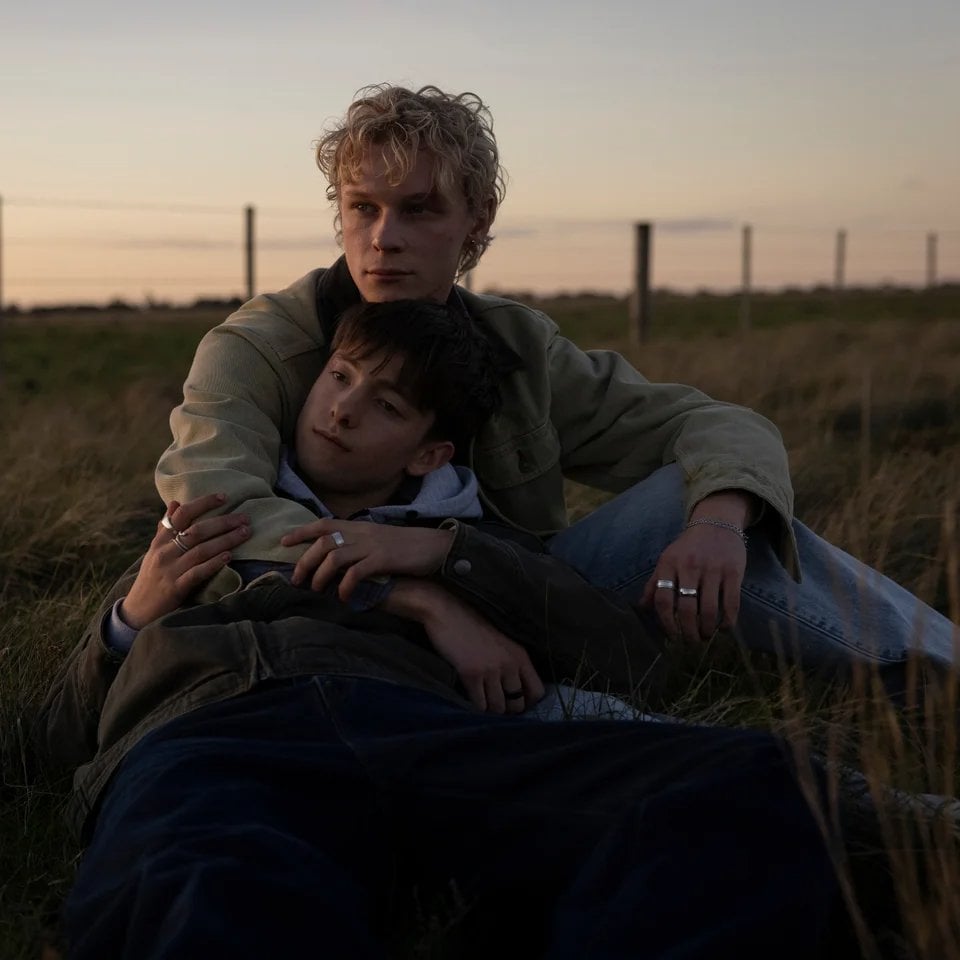
In “Leviticus,” the monster doesn't just haunt its victim, it seduces him as well. Such a premise allowed for costume designer Zohie Castellano to adopt a social realism aesthetic approach to the film’s costuming, taking visual cues from the bleak, cinematic universe of Roy Anderson; but the result is something entirely its own. The film follows Naim (Joe Bird) and Ryan (Stacy Clausen) as they explore their sexuality on the outskirts of a repressed, Christian town in rural Australia. The boys’ dynamic is one of playfulness and puppy love until their sexuality is outed and a ‘deliverance healer’ is hired to purge the boys of their homosexual desires.
We first meet Ryan when he invites the new-in-town shy kid Naim to explore an abandoned mill. For this outing, he wears a fitted orange and blue sleeveless jersey, which Castellano says was intentionally chosen to position him as a love interest. “We called it the ‘image of desire,’” Castellano says of the introductory look, adding that she hoped to imbue a sense of levity before the film turns darker. With this look in mind, it is unsurprising that Heath Ledger’s character in “Brokeback Mountain” made it onto the character’s moodboard. Castellano also wanted this first wardrobe choice to reinforce the film’s religious films, and explains, “Ryan wears his singlet that has banding on it, and Naim wears a similar style in a different colorway. The banding is a simple nod to a collar or halo.”
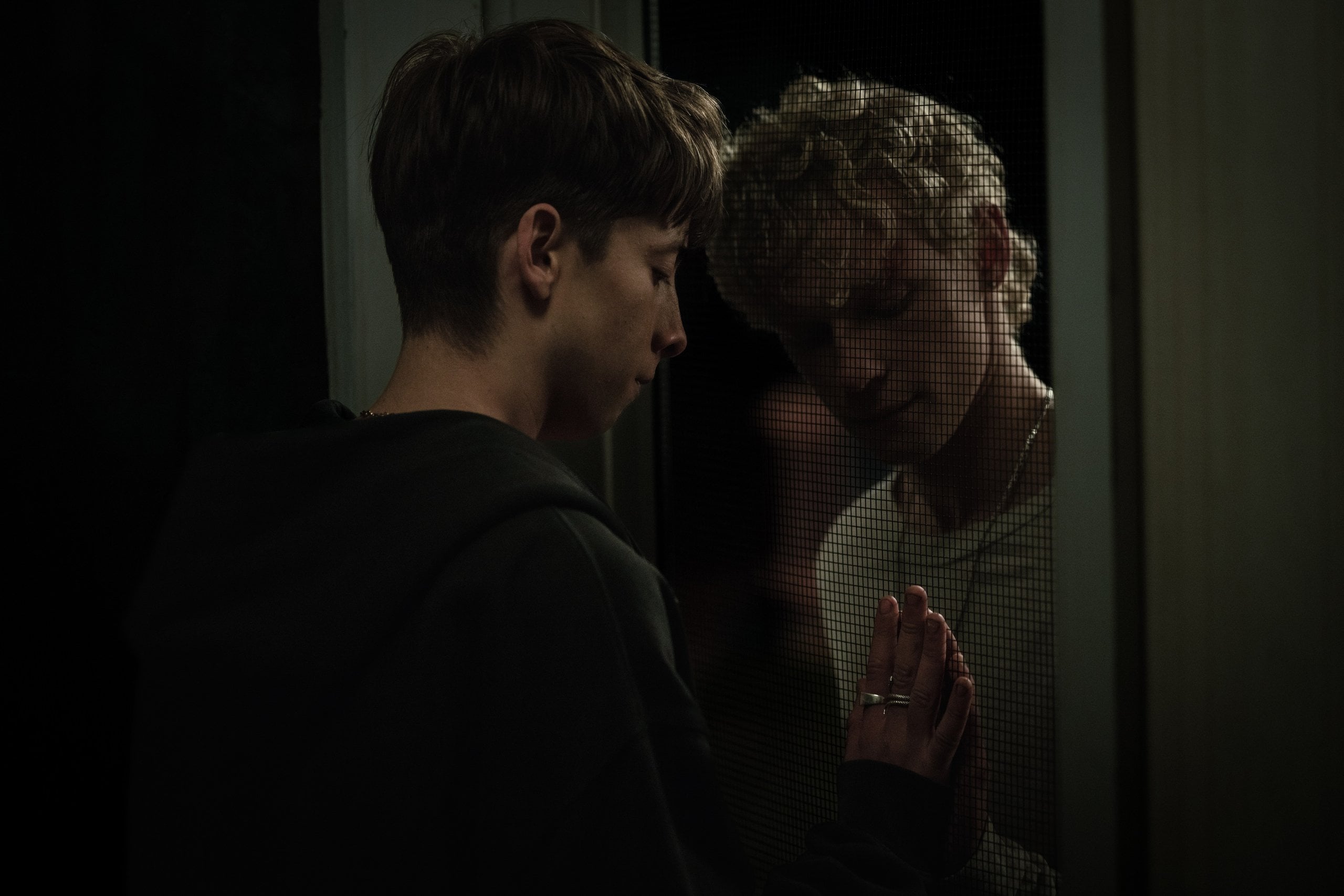

Joe Bird and Stacy Clausen in "Leviticus."
Neon


Stacy Clausen and Joe Bird in "Leviticus."
Neon
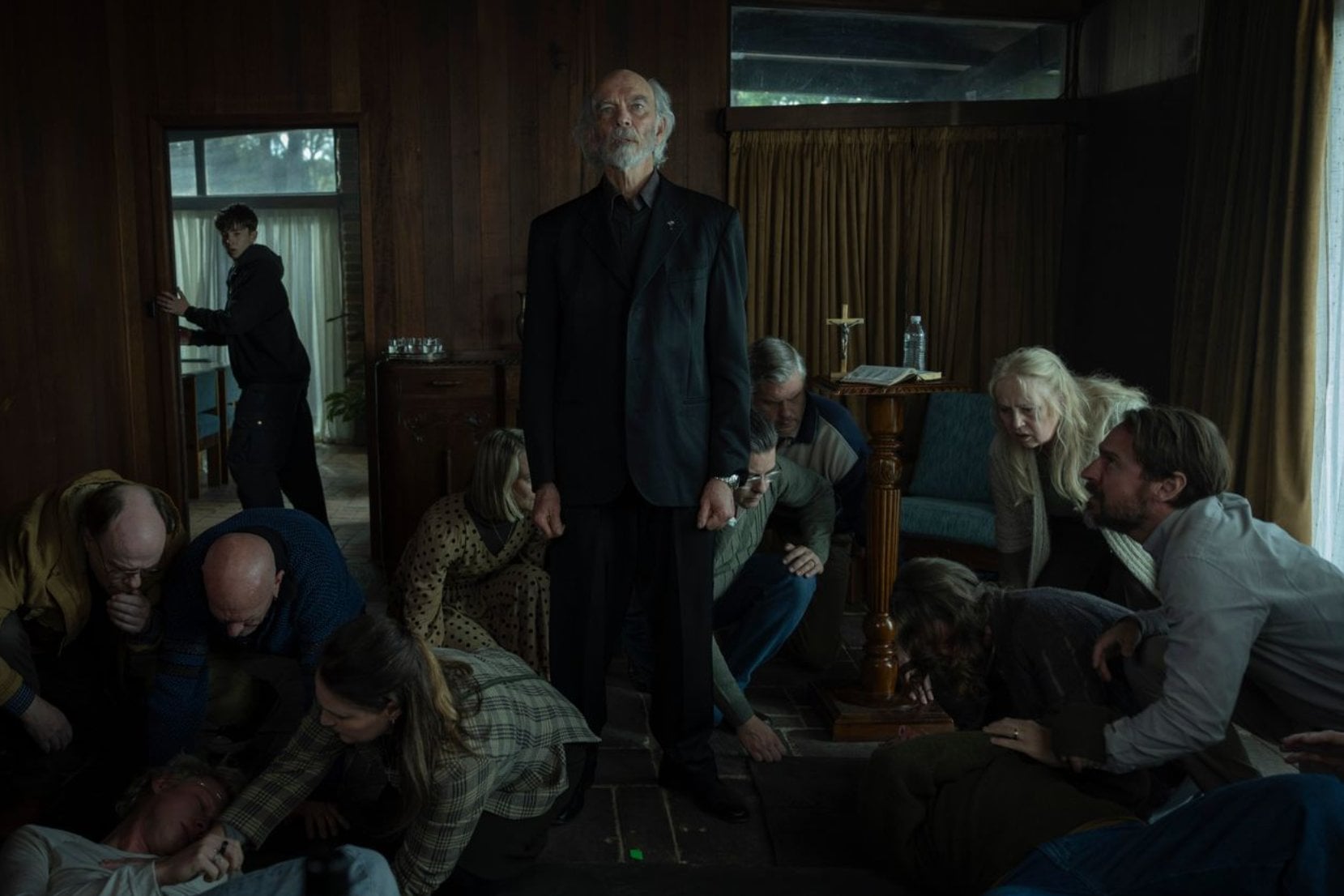

The deliverance healer (Nicholas Hope) among the congregation in "Leviticus."
Neon
Throughout the design process, Castellano conceptualized “Leviticus” as a love story first and a horror second. She strived to create costumes that reflected each character’s emotional status. Before Naim realizes he is gay, he hides underneath an oversized hoodie and blends into the rural landscape around him in neutral tones. “[Naim is] wearing dark clothes a lot. He's dealing with an internal struggle and is a black sheep of the community because other boys pick on him at school. The only place he really belongs is with Ryan,” Castellano says. She wanted to strike a careful balance of reflecting each character’s self-expression while still adapting to an environment that they are actively trying to hide from by choosing colors that have a “melting quality” made to feel “surreal in a subtle way.” As Naim embarks on his relationship with Ryan, his clothing loose their baggy quality and begins to align more with Ryan’s silhouette. “His clothes become more fitted as the story unfolds [and] he embodies more of his authentic self,” Castellano says.
While the boys have very distinct styles—with Ryan opting for bolder and more colorful pieces—both have an enviable selection of signature jewelry. Naim is always seen with a gold chain necklace with a silver ring threaded through it, and Ryan wears silver rings and a chain himself. Castellano styled Naim in an outdated gold necklace she imagined to have come from his deceased father, while Ryan has a bit more edge with a silver snake ring, black ring, and chain.
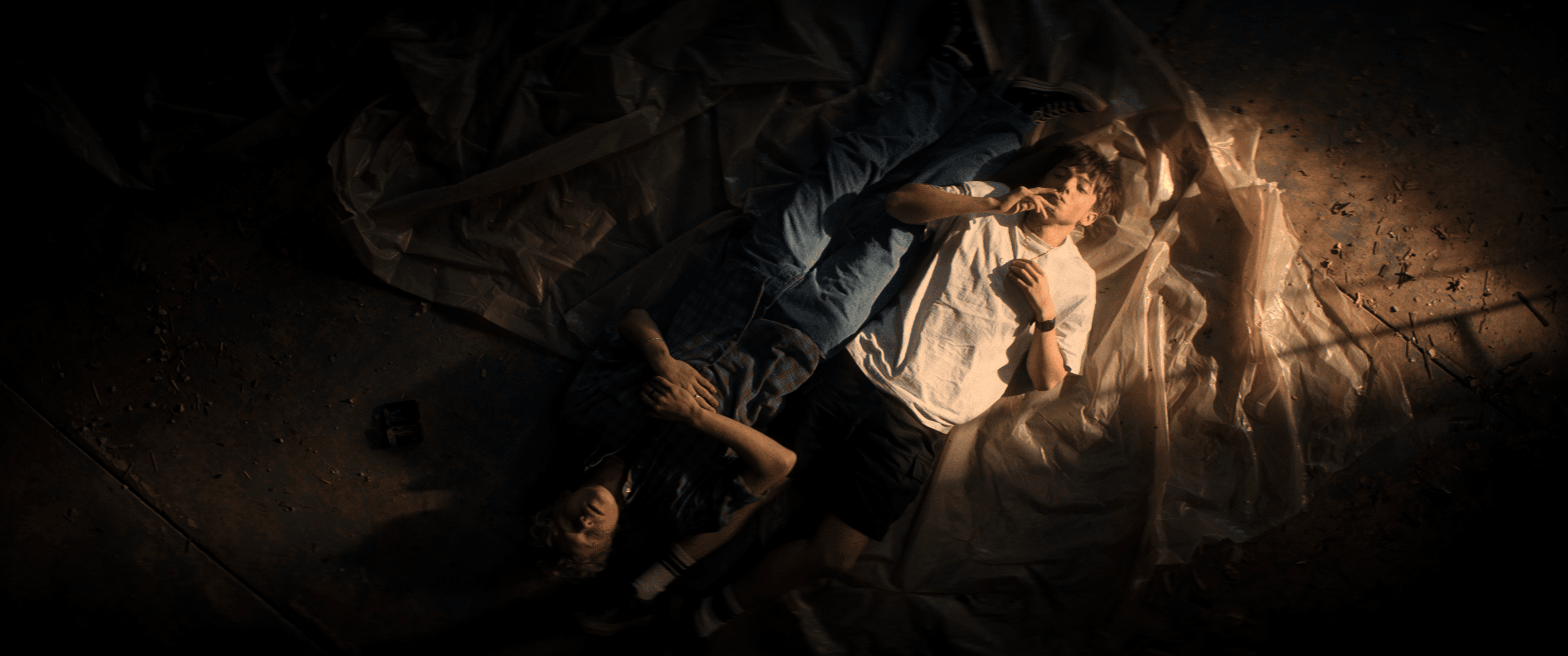

Stacy Clausen and Joe Bird in "Leviticus."
Neon
Following their respective visits from the exorcist, both boys find themselves under a strange curse: they are stalked by a supernatural entity who takes the form of the person they most desire that no one else can see, resulting in Naim being followed by a violent doppelgänger who looks—and dresses—exactly like Ryan. During the film’s final confrontation between Naim and the Ryan lookalike, Castellano dressed the latter in a white hand-sewn shirt that carries a ghost-like quality. “The choice to have Ryan in that almost sheer, translucent long-sleeve top and pale jeans was [made] to present an image more ethereal rather than demonic,” Castellano says. “It's kind of flipping the idea that it's a monster, per se.”
The most informative moment in the script for Castellano may not have made it into the final cut, but certainly made it into the costumes. In it, the pastor delivers the Leviticus sermon, asking “Why let desire take over your body like a disease?” Taken from the Bible, his line became “an anchor point” for how Castellano approached the textile narrative. “I was looking for textures that reflect a disease quality,” she says. “That's why in the ritual, [Arlene, Naim's mother played by Mia Wasikowska] is wearing this dress with black polka dots all over it. It was trying to reflect a disease starting to take over her body.” Throughout the film’s church sequences, Castellano juxtaposed different fabrics, textures, and knits, like lace and leather, to underscore the sense that indeed some sort of plague—whether that's desire or the zealotry punishing it—has infected the community.