
In ‘Cape Fear,’ Ominous Clues Hide In Plain Sight In The Wallpaper
Interiors
From tropical prints to a foreboding custom forest mural, production designer Jamie Walker McCall explains how the Apple TV remake's Savannah home quietly telegraphs the psychological thriller's darkest turns.
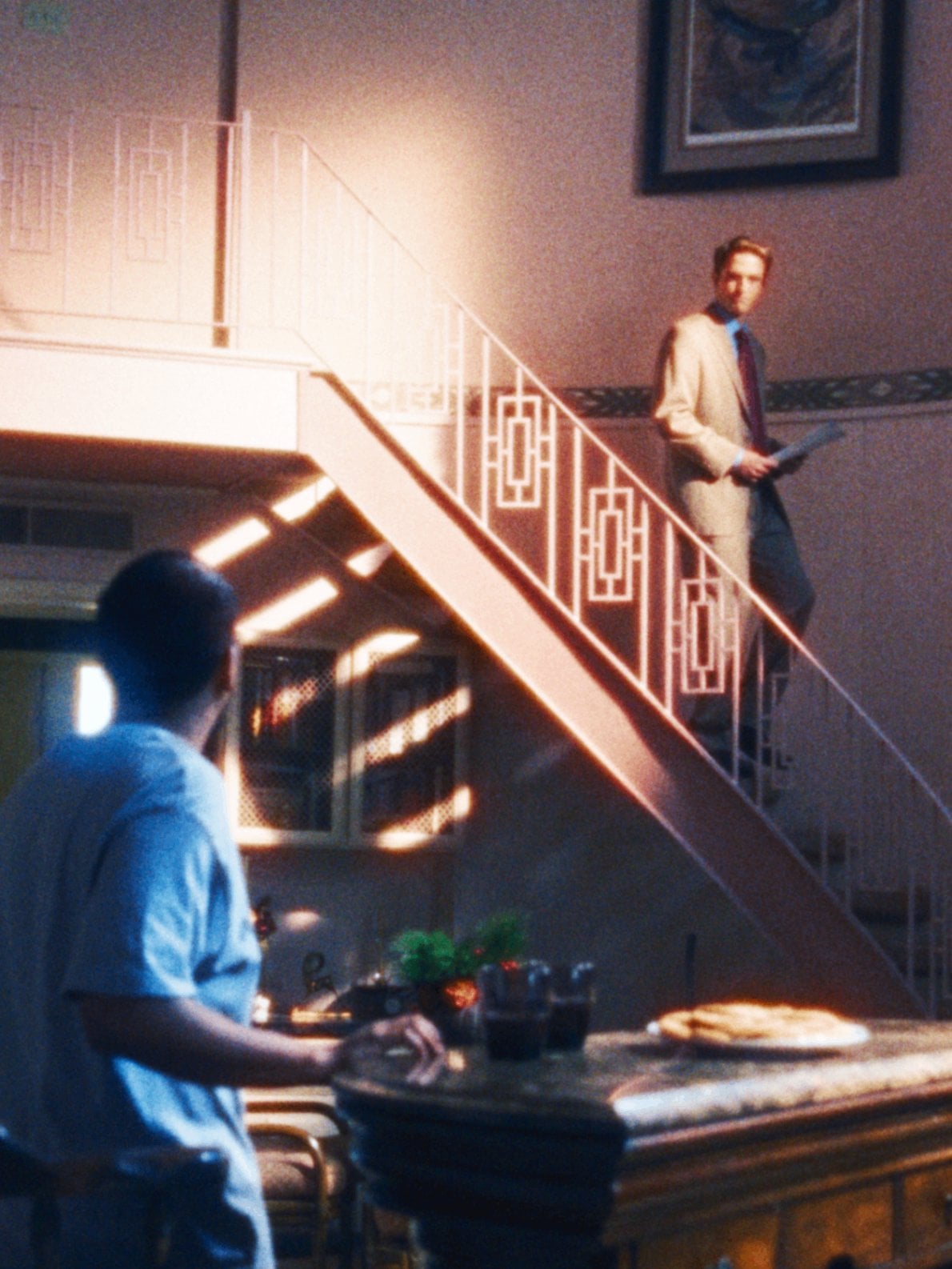
In “Cape Fear,” Apple TV's reimagining of the 1991 psychological thriller, the setting shifts from a fictional North Carolina hamlet to the verdant, impeccably manicured enclaves of Savannah, Georgia—where secrets and betrayals simmer beneath the surface and history runs deep. Naturally, the stately, art-filled home of the Bowden family provides the picturesque backdrop for a magazine profile of Anna (Amy Adams), an attorney specializing in wrongful conviction cases. Her husband, Tom (Patrick Wilson), a prominent lawyer for Savannah’s wealthy set, joins for a shot in their sundrenched kitchen.
Tropical-inspired wallpaper, curated contemporary artwork, and carefully placed family photographs quietly telegraph the couple's success, community standing, and seemingly idyllic life with their teenage children, Natalie (Lily Collias) and Zach (Joe Anders). "Anna did have a designer come in and help her navigate [the interior decor]. She's a full-time lawyer. She's busy," says production designer Jamie Walker McCall, who also kept Adams' signature red hair in mind while designing the Bowden home. "Anna did pick the wallpapers and paint colors—everything that was going to look great with her skin tone and her hair color," she jokes. "That's why I wasn't too scared to go too dark, because Amy's gorgeous hair would pop off all these colors."
.png&w=3840&q=85)

Patrick Wilson and Amy Adams in "Cape Fear."
Apple TV
Evocative, nature-inspired wallpaper fills much of the expansive Bowden house, reflecting the Georgia city’s signature Southern Gothic aesthetic, Anna's elevated taste, and McCall's own design sensibilities. “I'm a big fan of wallpaper,” says the two-time Emmy-nominee. “I really wanted to bring that Southern traditional feel to the Bowden home with a modern-day spin.” An Atlanta home stands in for the exterior of the Bowden home, while McCall built the interior of the sprawling, multilevel house on a soundstage, including sky-high ceilings, winding corridors, and arched entrances. “I really wanted it to be able to go from the front door all the way around, like 360,” she says. “Because I knew there would be some cat-and-mouse things happening in the house.”
Updating the original story, in this version of “Cape Fear,” antagonist Max Cady (Javier Bardem) was prosecuted and convicted 17 years ago for the murder of his wife and unborn child by Tom, while Anna worked on his defense team. Following his exoneration and release from prison, he delights in showing up unexpectedly and uninvited at the Bowden home. Clues to Max's intentions—and omens of his growing hold over the increasingly helpless family—hide in plain sight in the wallpaper throughout the home.
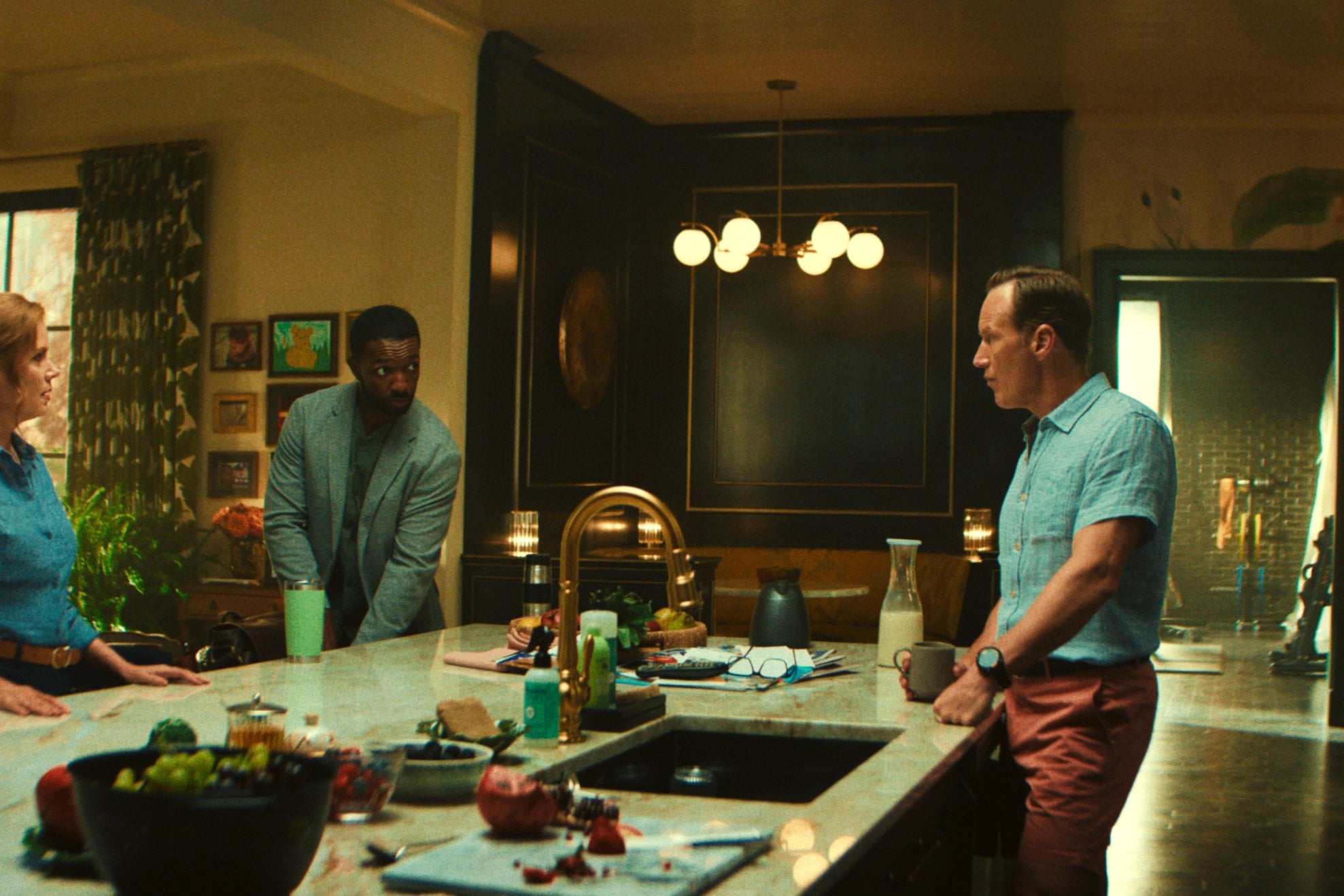

A tropical-themed wallpaper can be seen in the kitchen.
Apple TV
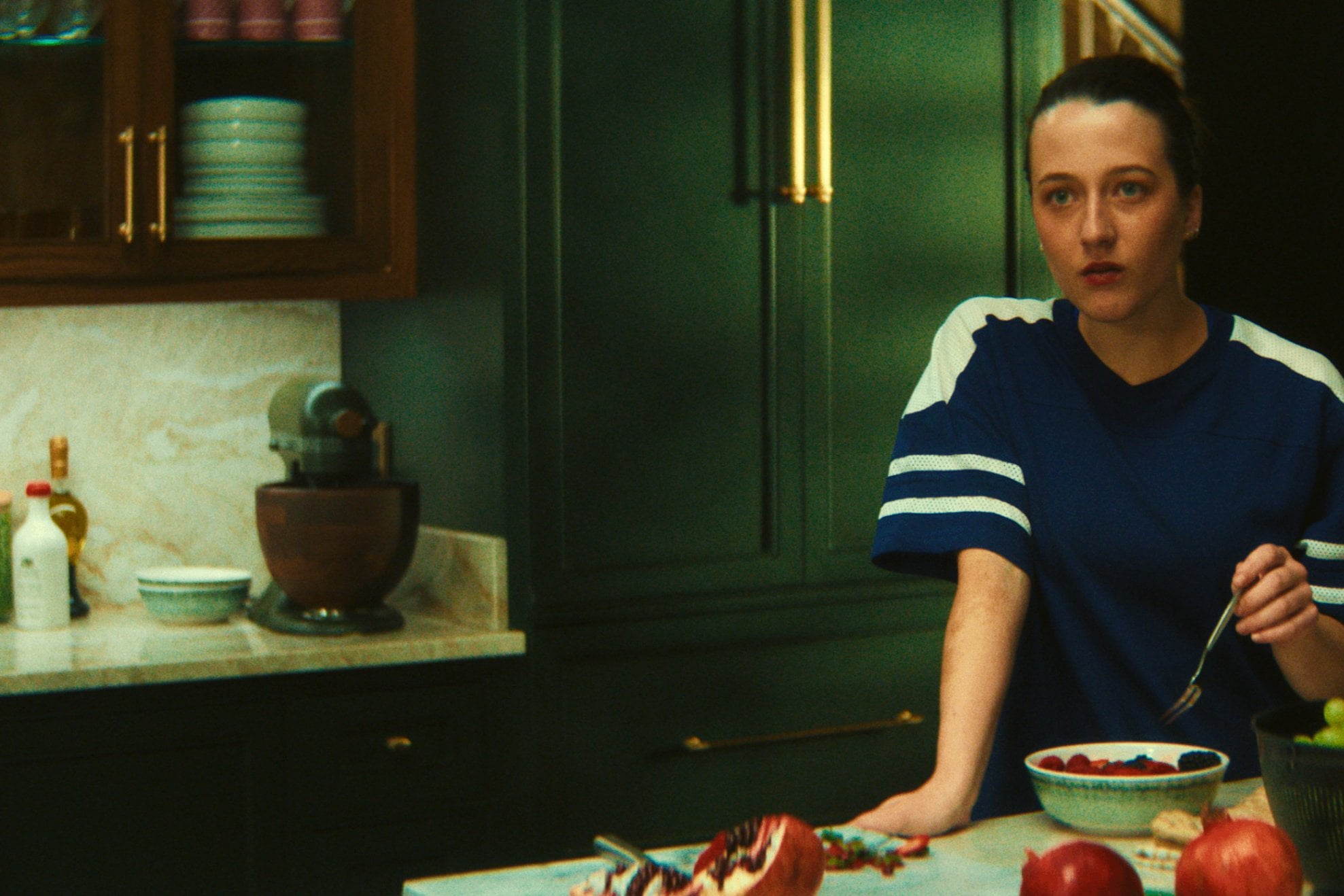

The kitchen also features moss-green cabinetry with golden fixtures and a sizable marble island.
Apple TV
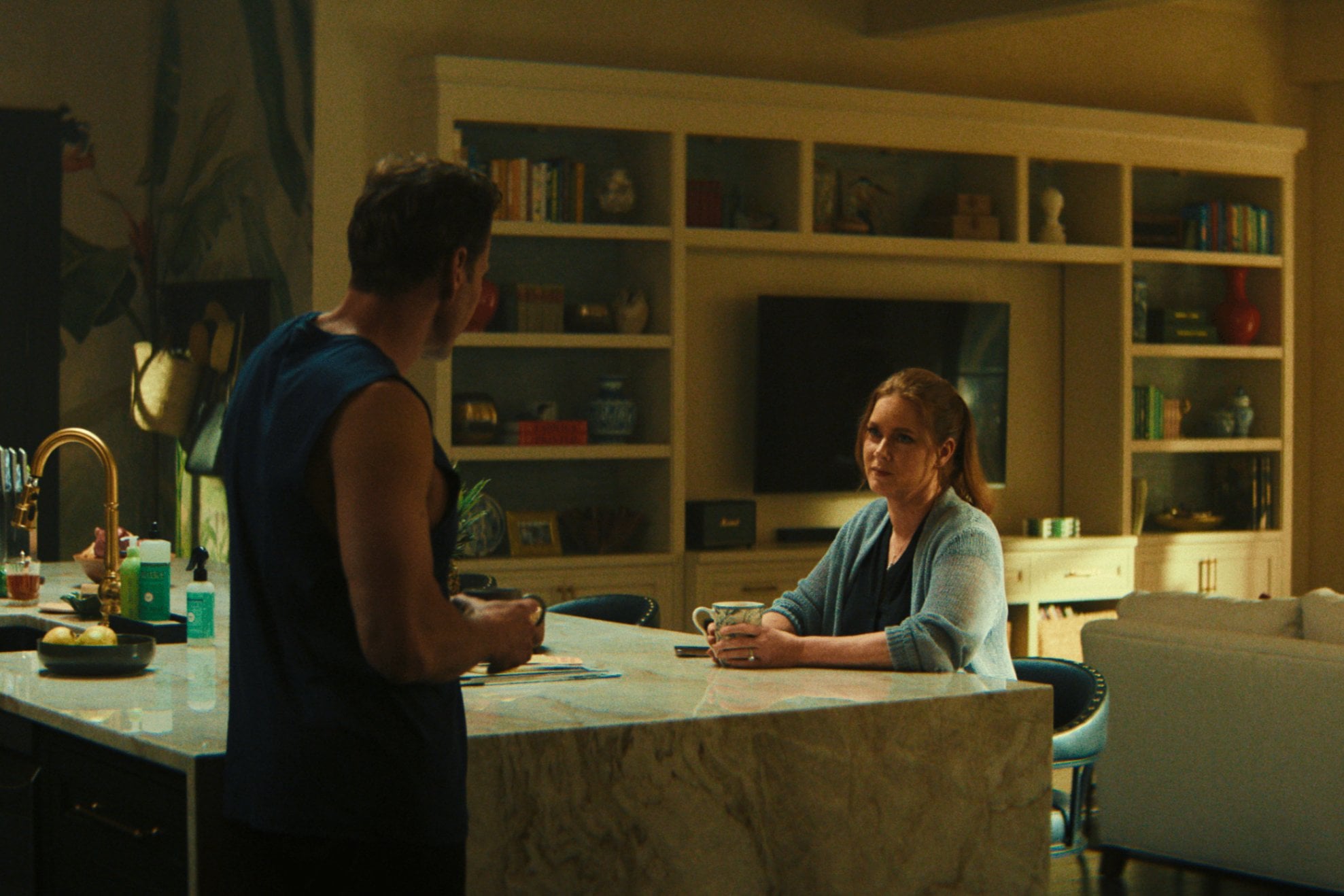

"I wanted to keep it dark and moody, and pair it with something a little bit uplifting, bright, and airy,” McCall says of the kitchen.
Apple TV
A tropical-themed design from Rebel Walls, with birds flocking to a palm grove, further illuminates the kitchen, featuring lush, moss-green cabinetry with golden fixtures and a sizable marble island, where Max surprises Anna one morning, chopping sandwich fixings with an increasingly withdrawn Zach. “I wanted to keep it dark and moody, and pair it with something a little bit uplifting, bright, and airy,” says McCall, who also built an unexpectedly cozy-chic black-and-gold breakfast nook. McCall credits set decorator Laura Harper for more omen-filled décor, including a “beautiful vintage” bird cage, in the dining room, that continues showrunner Nick Antosca’s bird leitmotif. “Like the family is stuck in this cage when Max appears,” she says.
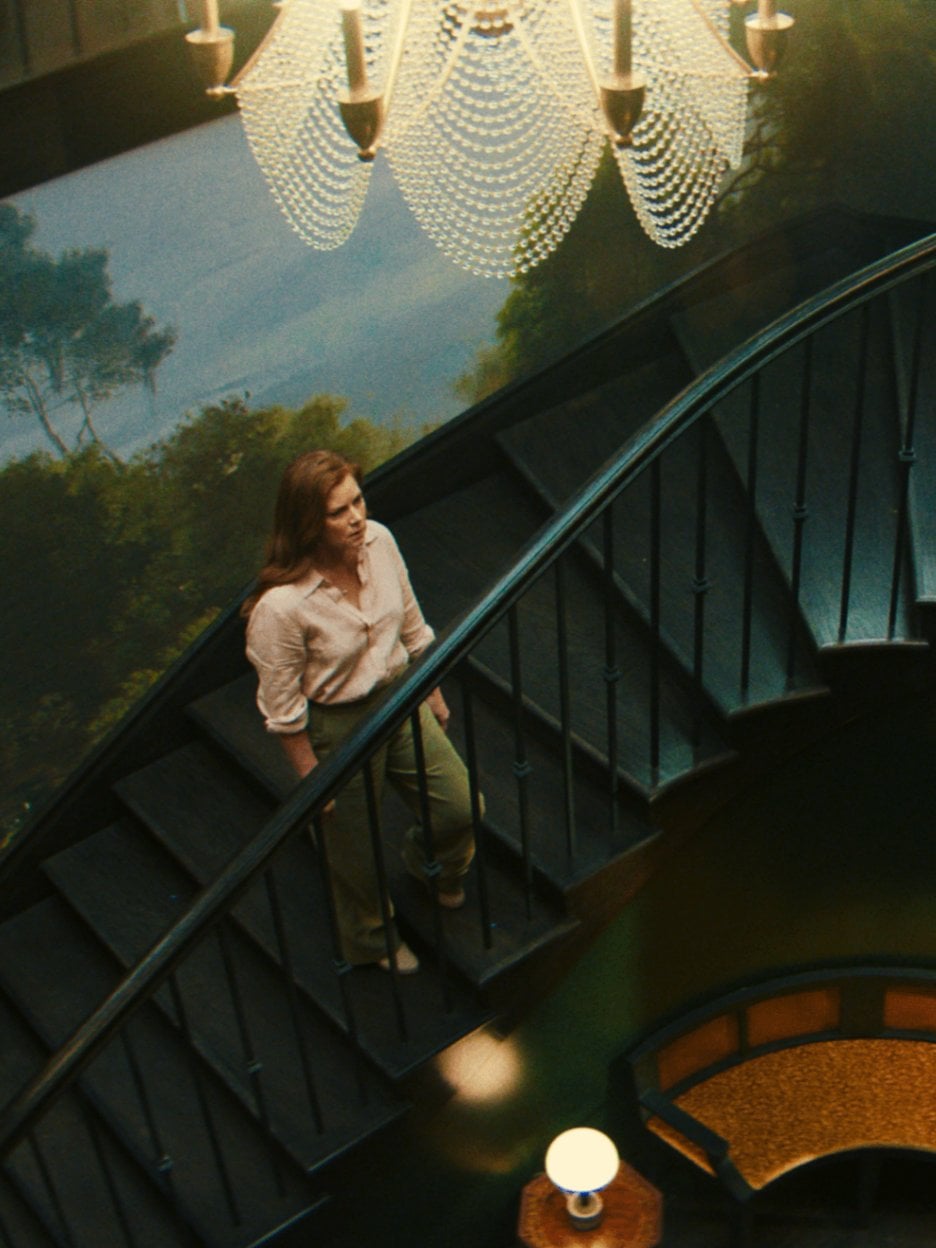
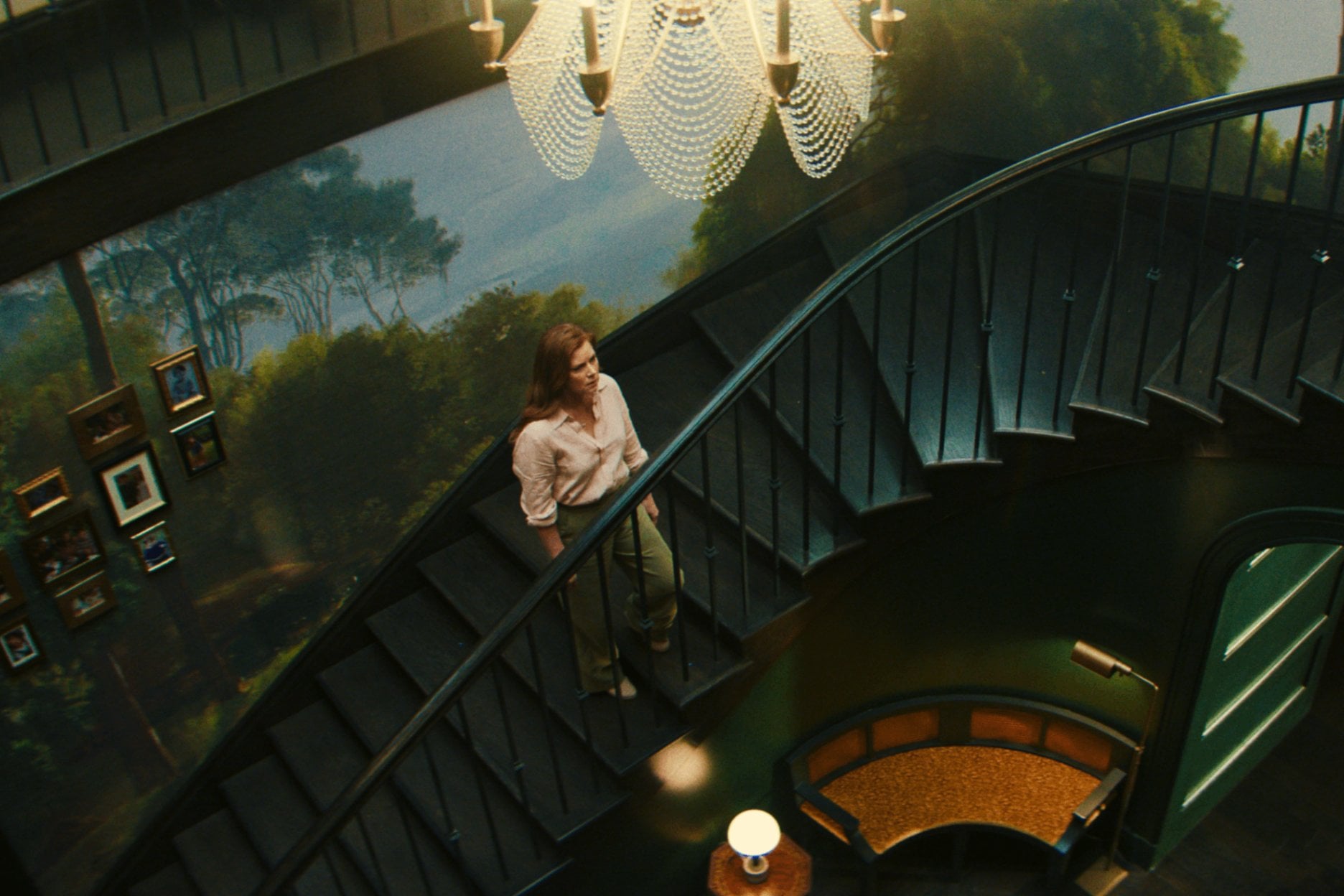
Turning the corner, the botanical wallpaper gives way to a foreboding, custom-painted mural: a rich, earth-toned stormy forest enveloping the winding staircase and open foyer, where several pivotal, suspenseful moments unfold. "Again, foreshadowing a little bit. I wanted to bring the haunting outside in," says McCall, initially taking inspiration from a photograph and then incorporating Southern Spanish moss. "Also I wanted it to kind of be a callout to where Max's wife's body was found—to just bring all of that hauntingness together, especially for later moments in the season."
.png&w=3840&q=85)

The wallpaper in Anna and Tom’s bedroom has a Victorian Damask pattern.
Apple TV
Upstairs in Anna and Tom’s bedroom, a Drew and Jonathan Scott Victorian Damask pattern, in a golden yellow with laurel leaves, lines the walls. At closer look, two panthers face off against each other above the elegant crests. “There's the panther in the first episode,” says McCall, referring back to a wild feline startling the family in the backyard. “Also, Max is technically like a cat, a predator hunting them, so I thought this was a nice little Easter egg. This wallpaper represents Max on their wall, constantly watching them.”
Natalie retreats to her wallpaper-lined bedroom as her parents' once-solid bond begins to fracture under Max's growing influence over the family. A peaceful forest of trees, on a customized blue mural from Photowall, provides a sense of refuge. “It’s bringing the outside in, but with a more subtle Anthropologie vibe for Natalie, the ‘perfect’ child,” says McCall. “She has the softer tones because she's not edgy—yet.” By contrast, Zach retreats to his gaming and illicit communication with Nevaeh (Malia Pyles)—a volatile young woman with a mysterious connection to Max— in his wallpaper-free room, minimally adorned with posters and art on exposed brick.
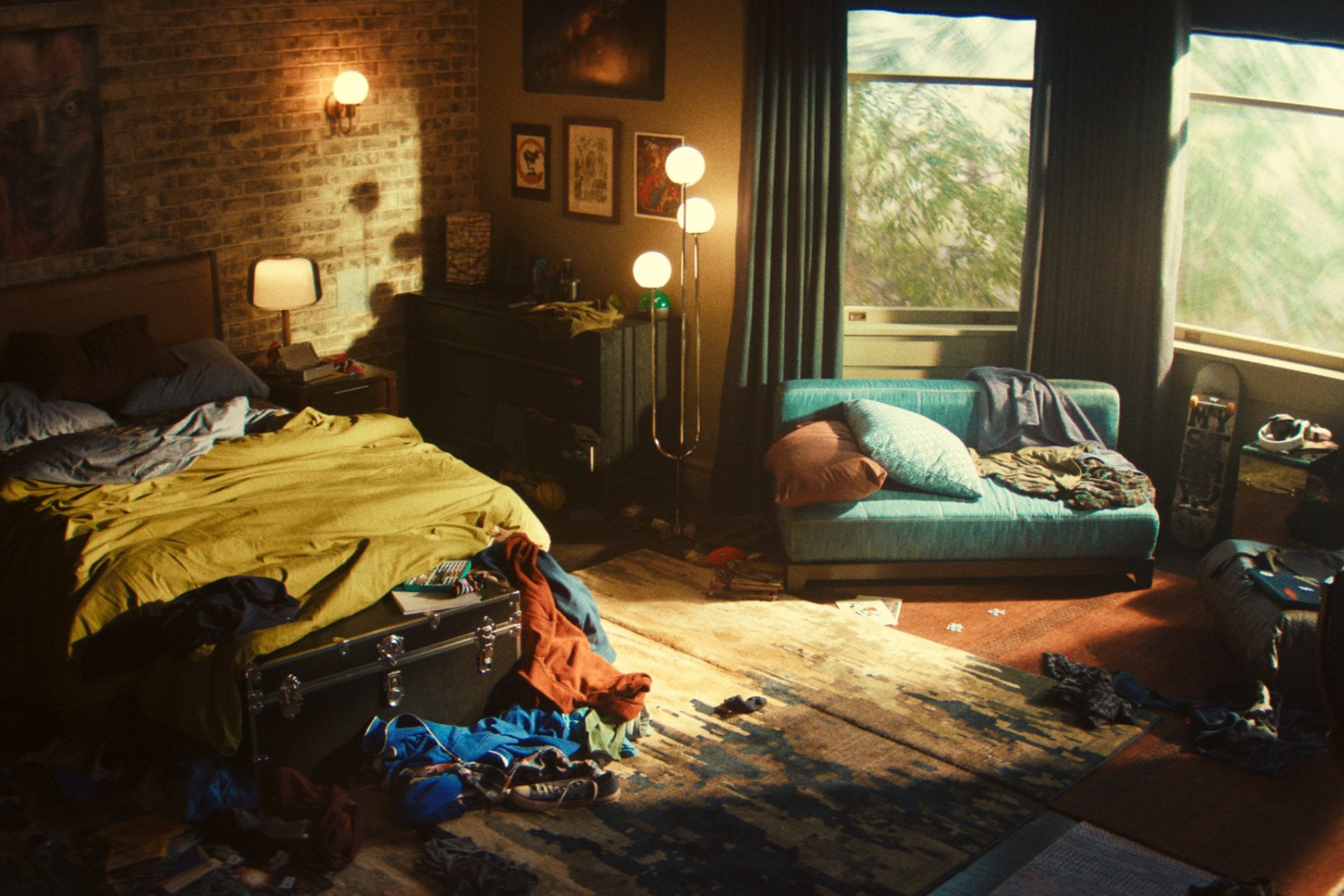

Zack's room is adorned with posters and art on exposed brick.
Apple TV
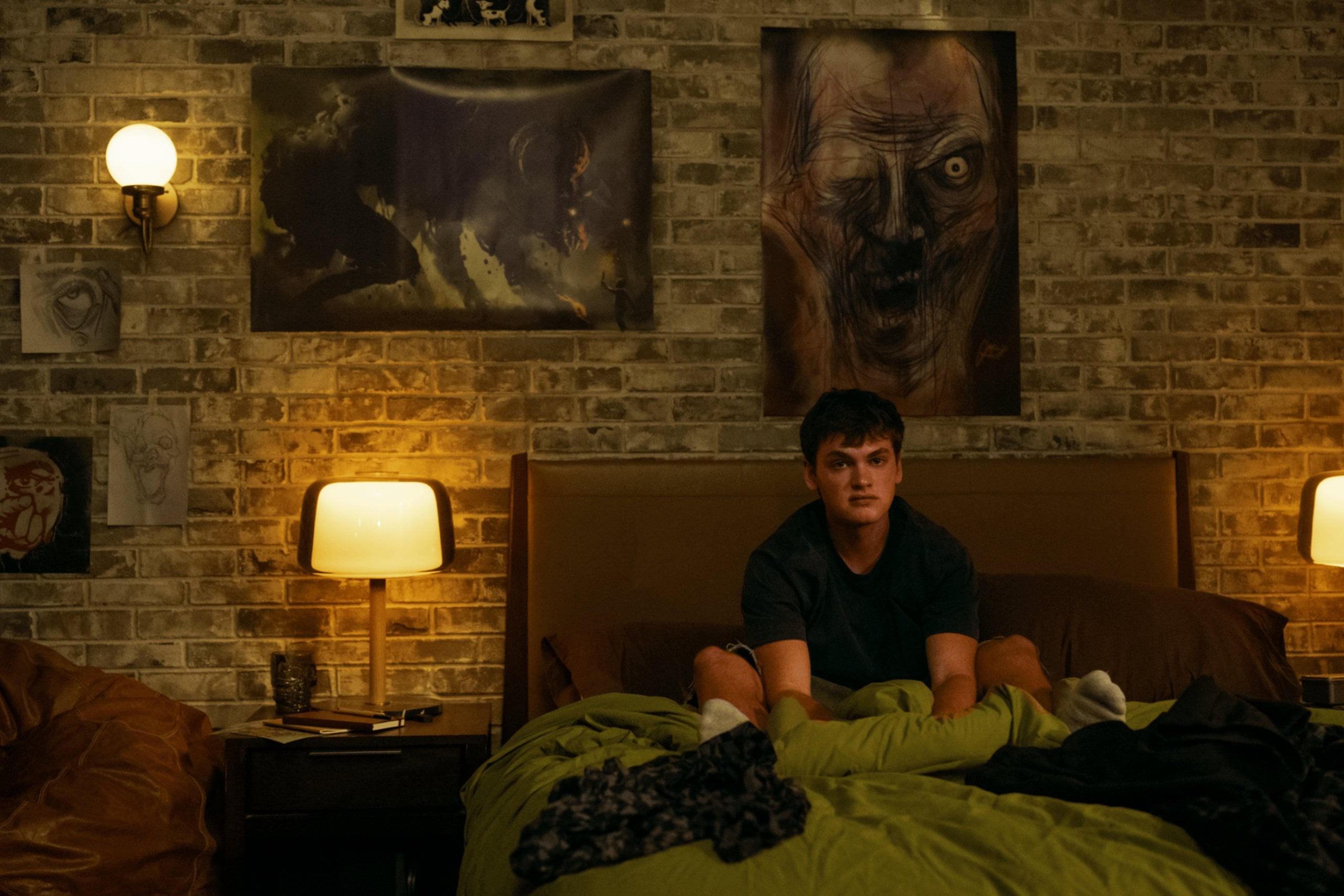

The room is notably wallpaper-free.
Apple TV
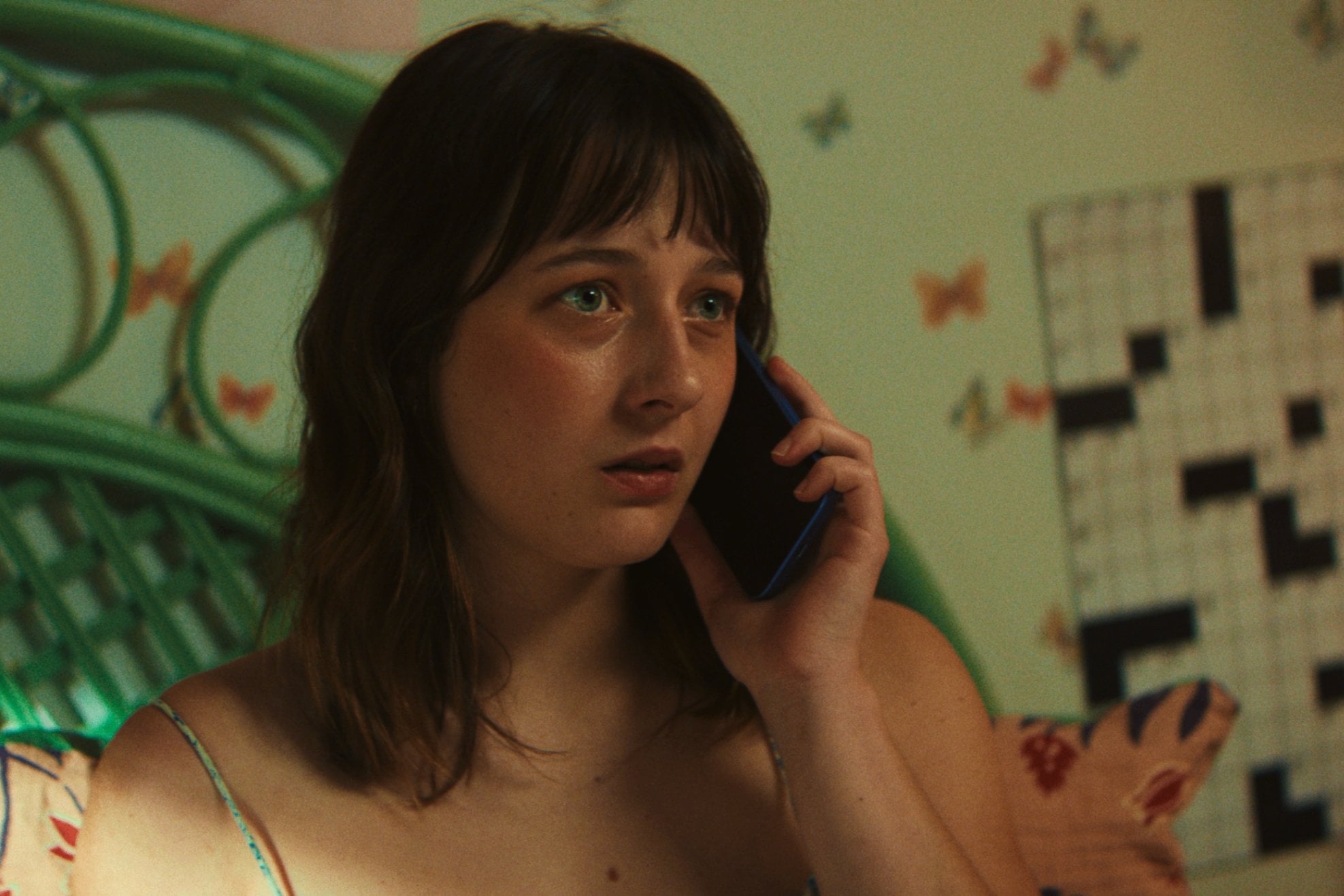

Audiences see Natalie retreat to her own wallpaper-lined bedroom during times of friction in the household.
Apple TV
When Anna visits the modest bungalow Nevaeh shares with her pious mother, Faith (Martha Millan), the living room's peeling wallpaper continues the flora-and-fauna thread, with birds and butterflies. “It’s a beautiful, calming wallpaper, but yet it's pretty and sweet, like [Faith] is. Then there's a lot of chaos. The wallpaper is a lot busier,” says McCall, about bringing the “outside in,” again, in the quiet calm before the brutal storm.
McCall often builds her mood boards around a vibrant wallpaper pattern, which also serves as a jumping-off point for her team to source the set pieces, furnishings, and décor that bring each world to life. “I find the wallpaper very inspiring and sometimes it really shifts my view on the rest of the set,” says McCall, who also counts Astek, Spoonflower, Etsy, and Anthropologie at the top of her resource list. Viewers of the “Cape Fear” reimagining may walk away with a lingering chill from its jump scares and underlying terror—and a newfound inspiration to redecorate and express themselves through inventive wallpaper. “Wallpaper is such a great way to tell a backstory or a behind-the-scenes story,” says McCall. “Or foreshadow in a great, fun way.”