The Costumes In ‘Hamnet’ Are Just as Beautifully Heartbreaking as the Movie
Fashion
TSS Creative
Malgosia Turzanska

Fashion
TSS Creative
Malgosia Turzanska
Costume designer Malgosia Turzanska breaks down Paul Mescal and Jessie Buckley’s symbolic color palettes and textures.
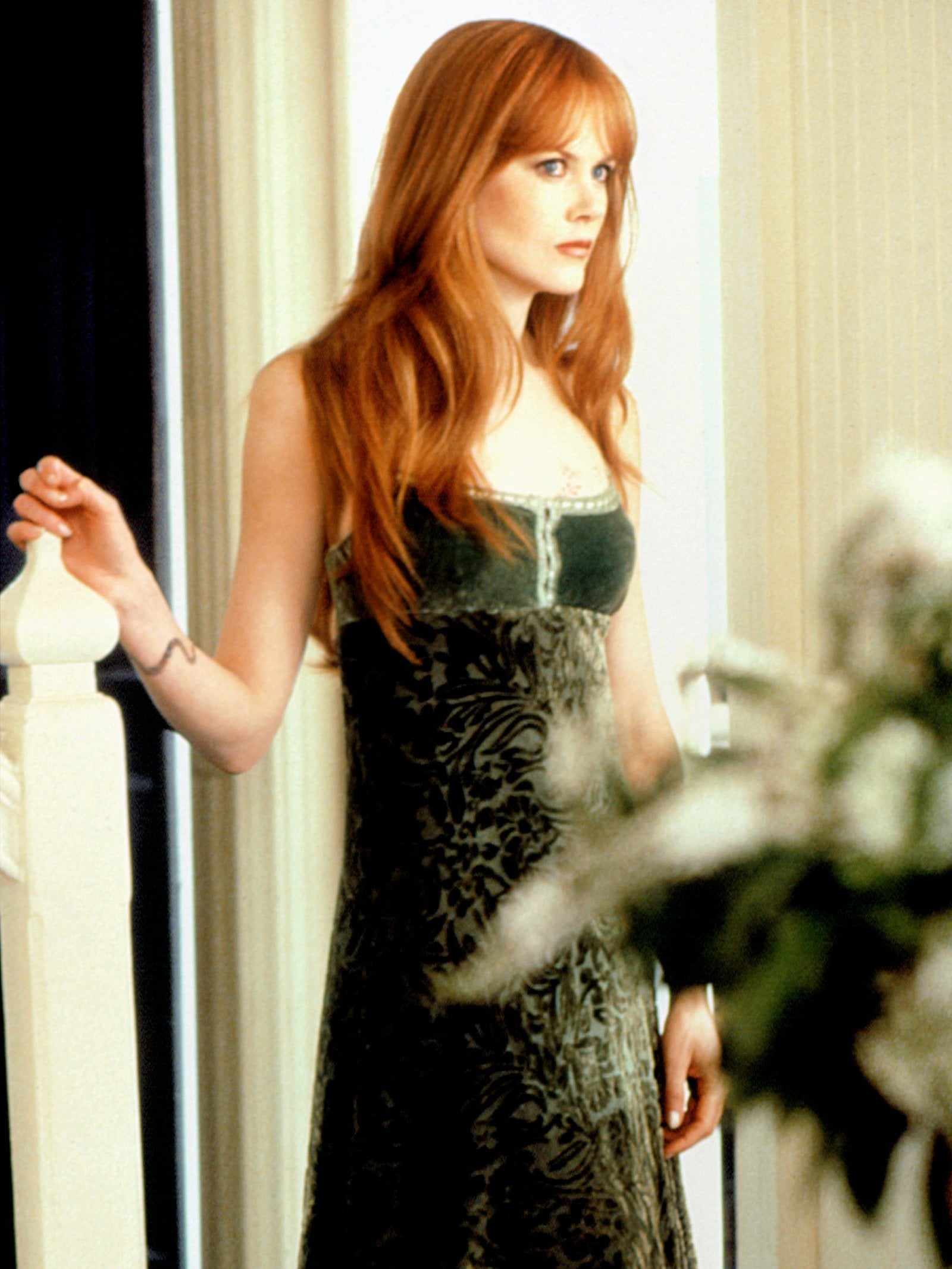
Early on in "Hamnet," Chloé Zhao’s meditation on love, grief, and the healing power of art, aspiring playwright Will Shakespeare (Paul Mescal) looks out the upstairs window of a farmhouse where he’s tutoring inattentive young boys. He’s immediately taken by the sight of their eldest sister, Agnes (Jessie Buckley). Striding across the verdant yard, she’s a vision in vibrant, saturated reds and the organic, tactile textures of her dynamic Elizabethan layers.
“Because she is such a volcano of feminine energy and power, [the red] was like fresh pumping blood—and the heart muscle, the throbbing muscle of life,” says costume designer Malgosia Turzanska. “She has to pulsate when he sees her for the first time. She just pops out and stays in his eyes almost—like she is in his retinas.”
Agnes’ evocative, striking palette conveys her close connection with nature—inherited from her late mother, who the townspeople of Stratford-Upon-Avon called the “forest witch.” “Agnes was the product of the forest, like a fruit,” says Turzanska. “Maybe a poisonous berry. You need to know how to handle her, like she could poison you or she could heal you.”
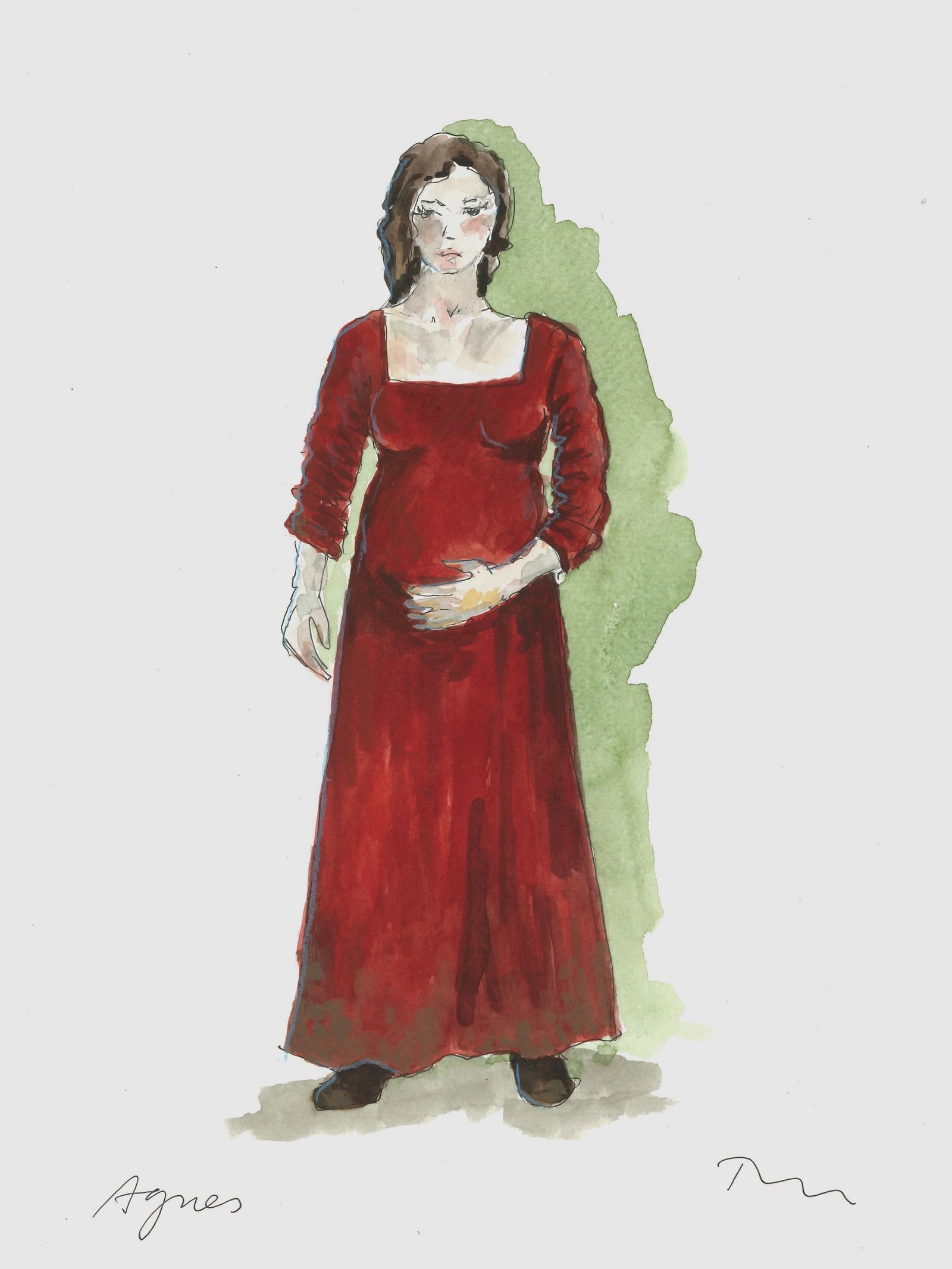

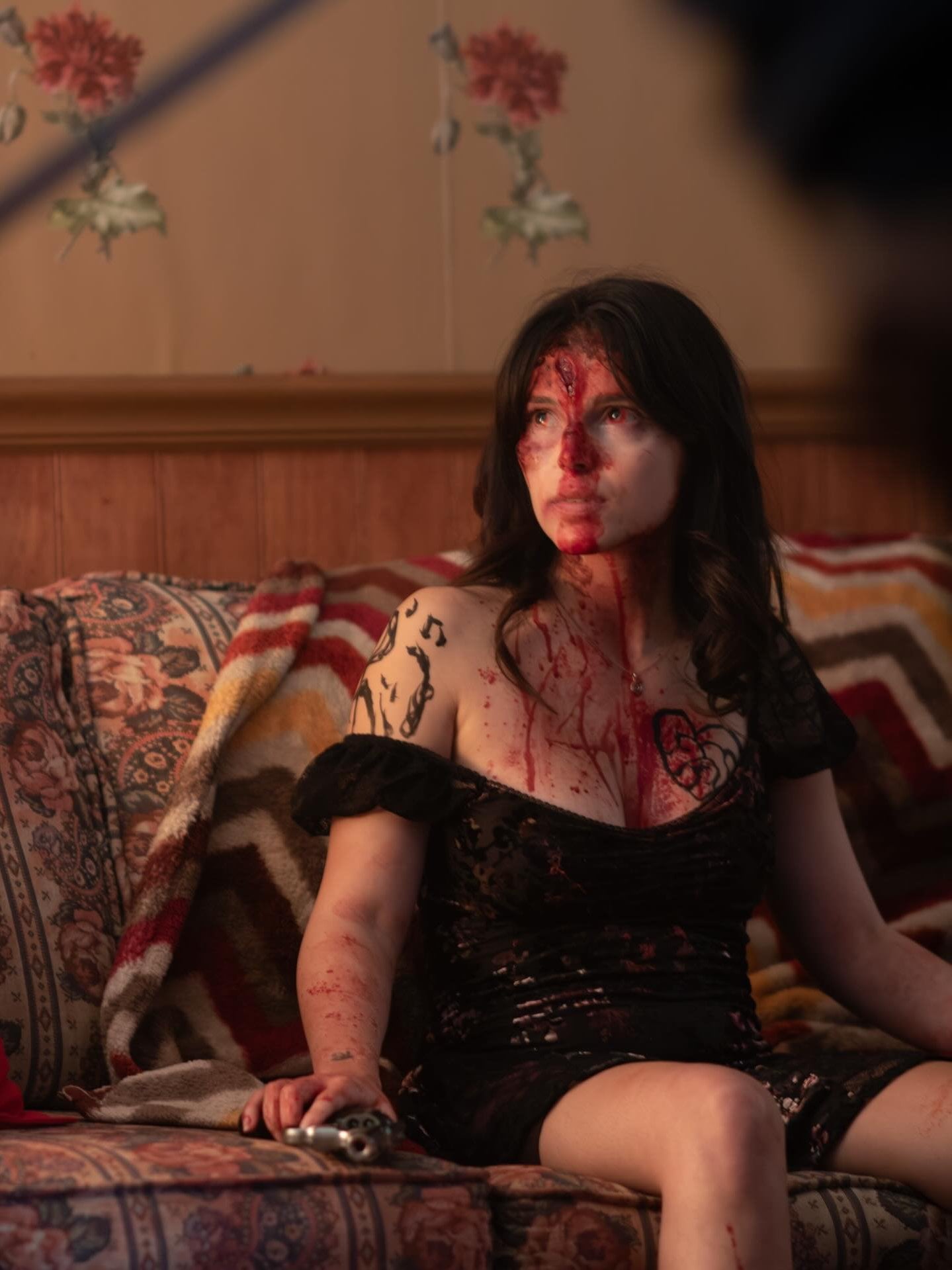
A sketch of Agnes in her red dress while pregnant with Susanna. Photo courtesy of Malgosia Turzanska/ Focus Features.
Malgosia Turzanska


Jessie Buckley as Agnes Shakespeare in "Hamnet." Photo: Agata Grzybowska / Focus Features.
Agata Grzybowska / Focus Features
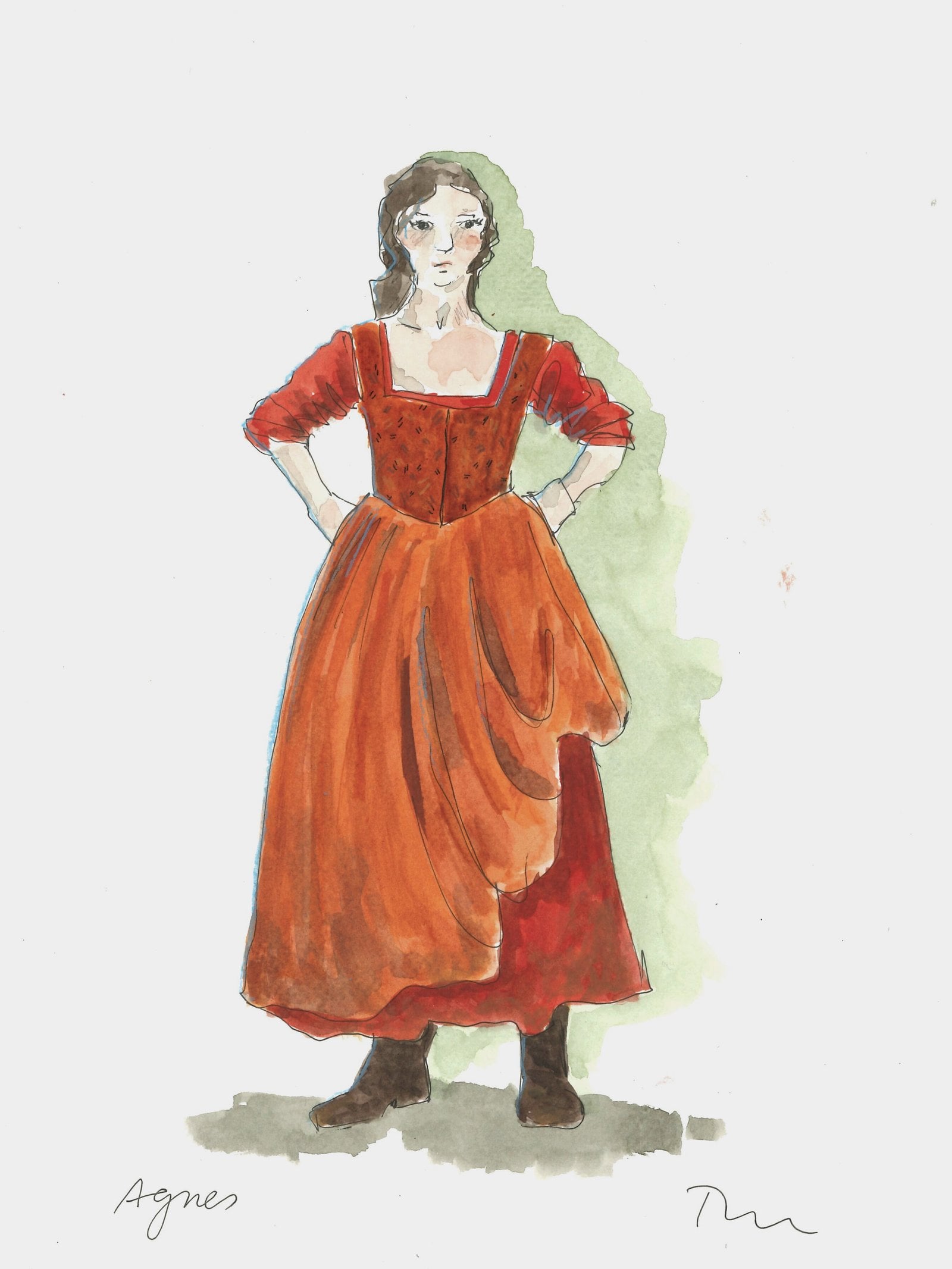

A sketch of Agnes in her red dress after giving birth to Susanna. Photo courtesy of Malgosia Turzanska/ Focus Features.
Malgosia Turzanska
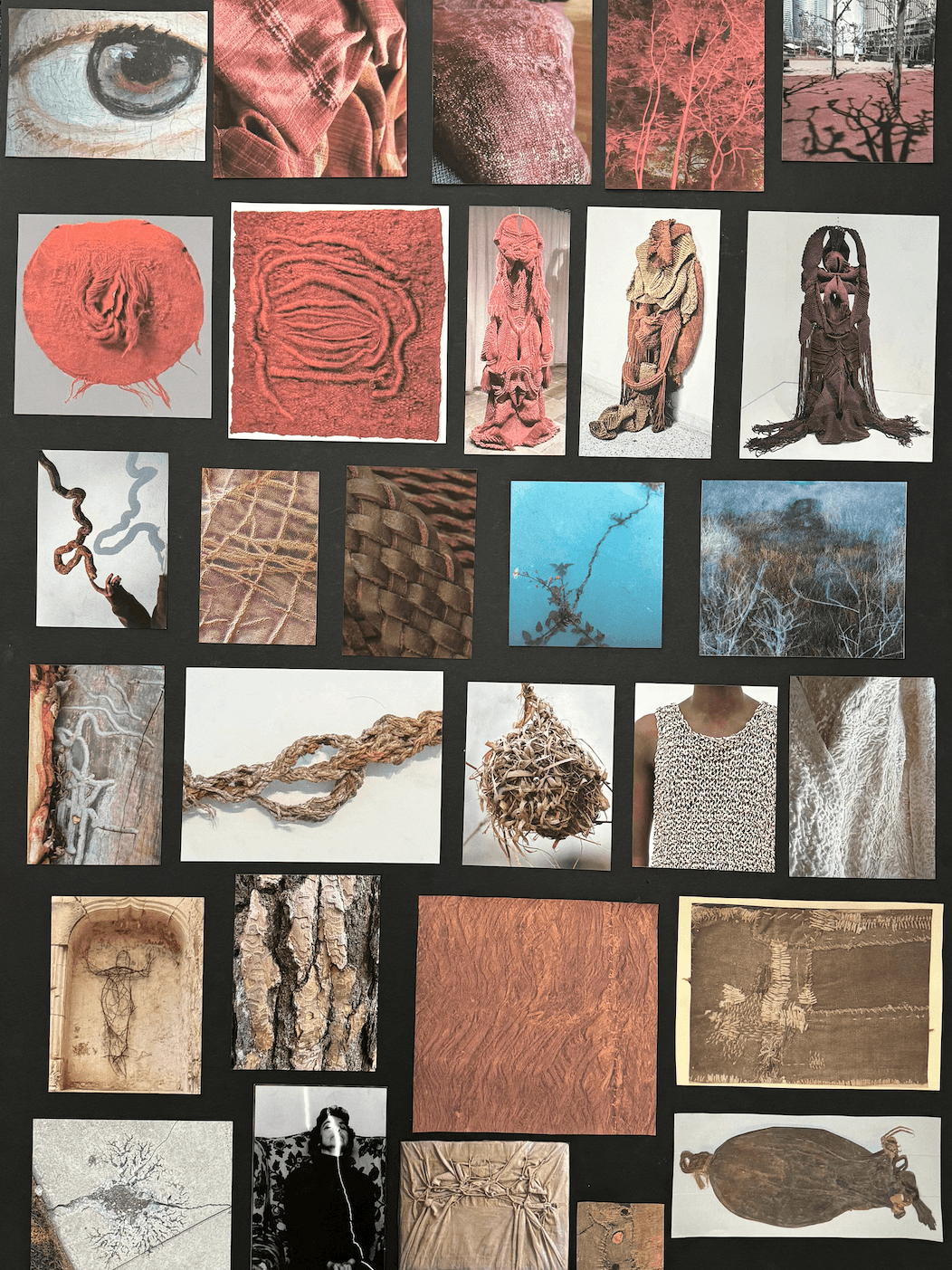

A board of fabrics for Agnes's costumes. Photo courtesy of Malgosia Turzanska/ Focus Features.
Malgosia Turzanska
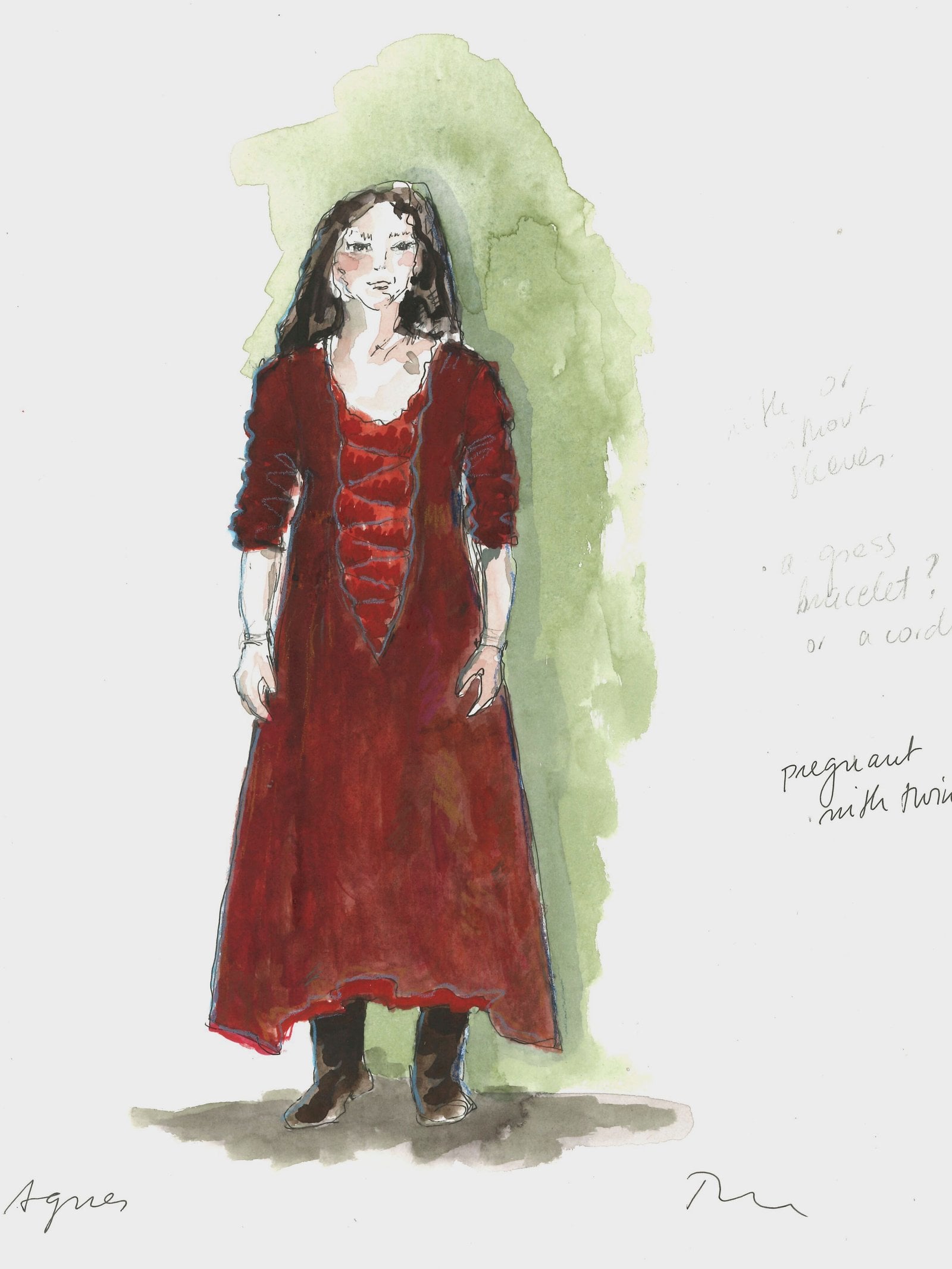

A sketch of Agnes in her red dress while pregnant with twins Hamnet and Judith. Photo courtesy of Malgosia Turzanska/ Focus Features.
Malgosia Turzanska
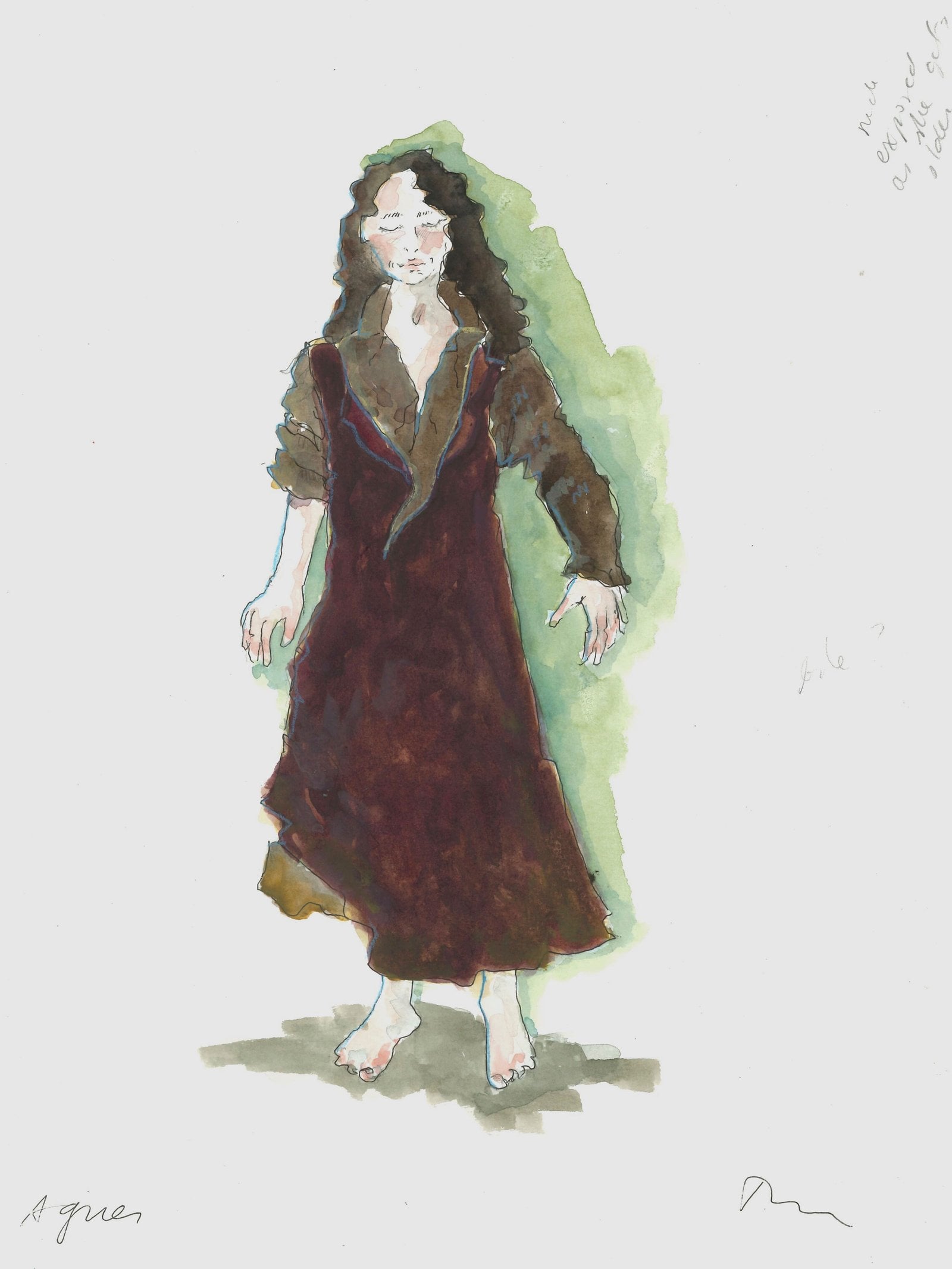

A sketch of Agnes in her red dress following Hamnet's death. Photo courtesy of Malgosia Turzanska/ Focus Features.
Malgosia Turzanska
Turzanska also illustrated Agnes’ preternatural kinship with flora and fauna through the natural materials authentic to Elizabethan times, like linen for her dress layers and bark cloth for her corset-bodices (bodies). “So you literally see the fibers on her,” says Turzanska, who also replicated the saturated hues of natural dyes of the period.
The modularity of Elizabethan wardrobe also helps communicate Agnes’ bold spirit, fearlessness, and ingenuity that captivates Will. “She could tie on or hook on her sleeves and then switch them out,” says Turzanska, referring to her detachable orange sleeve with a moto jacket-esque quilting patch on the elbow that’s actually historically accurate to the 1500s.
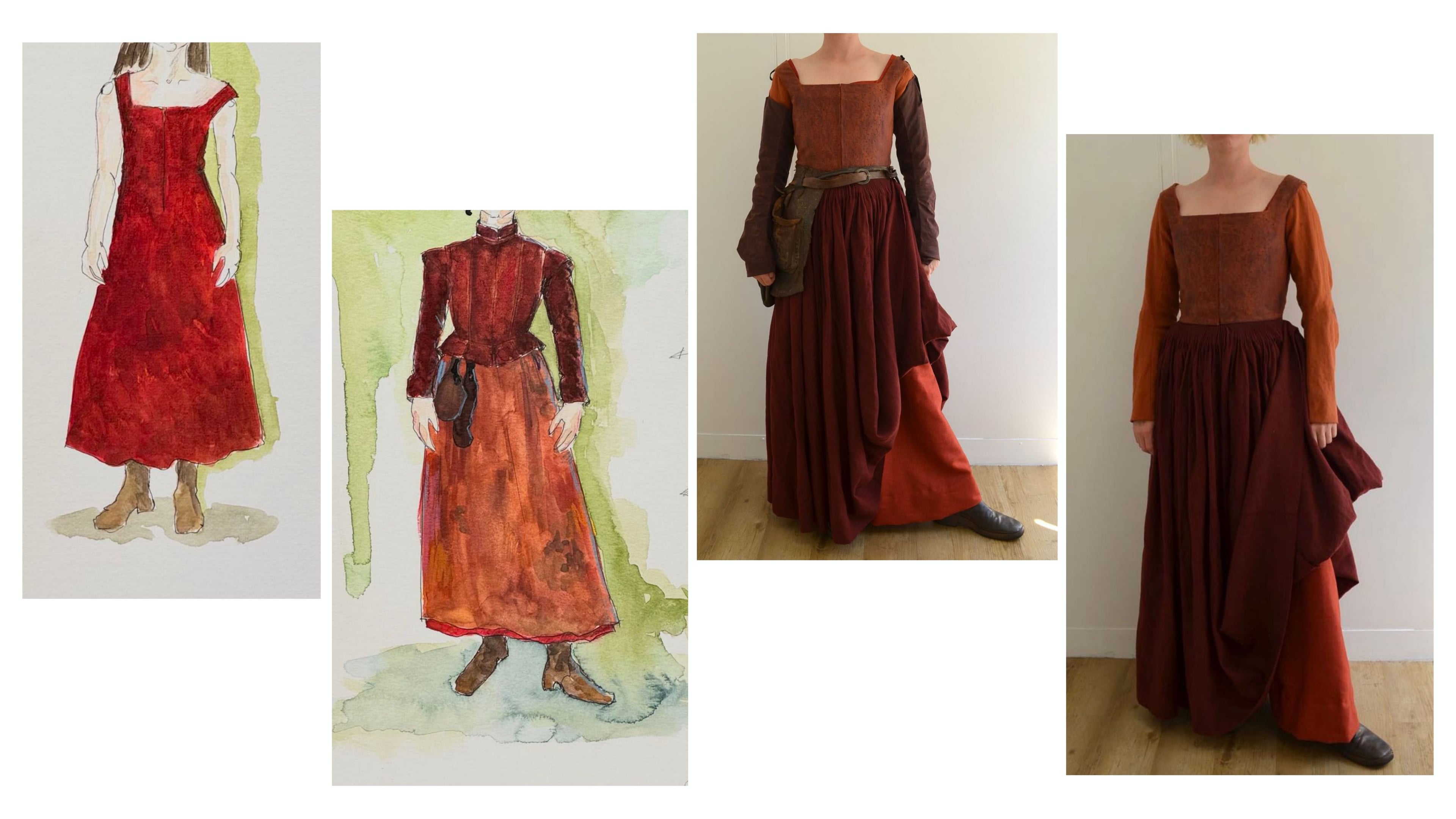

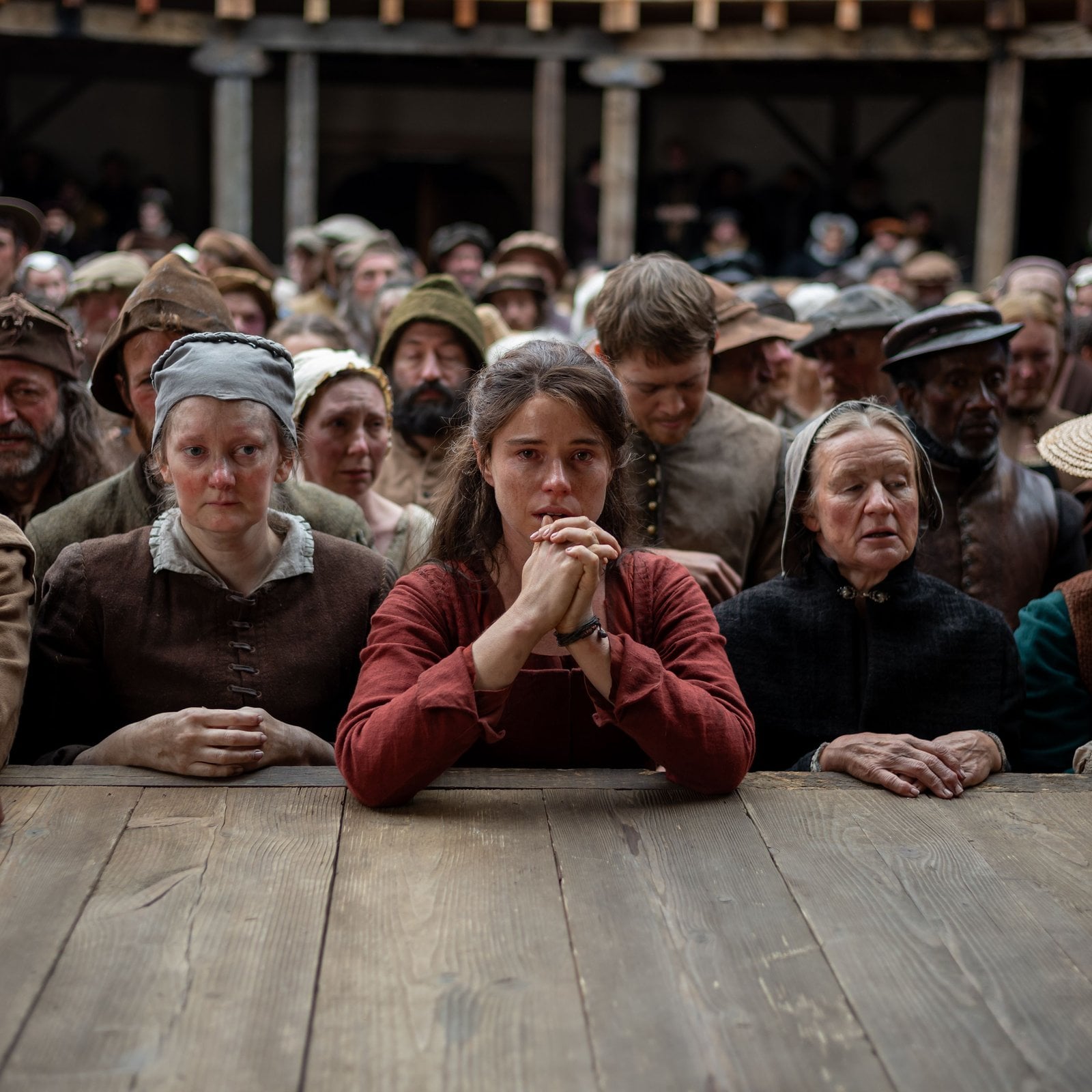
Agnes's red dress in "Hamnet." Photo courtesy of Malgosia Turzanska/ Focus Features.
Malgosia Turzanska
“We took it from research, which is so thrilling to find bits that were cool, edgy, and punk,” says Turzanska. She studied Flemish Baroque painter Sebastiaen Vrancx’s canvases of frenzied and sometimes violent depictions of village life to accurately depict the copious layers worn by the working and rural class—as opposed to the elite echelons usually portrayed on the big screen.
Agnes wears her period-correct blouse, corset, smock, and dress layers in renegade, progressive ways, like hiking her skirt up on one side to nimbly navigate the elements in rugged men's boots. After marrying Will, she dons the same red dress deep into her second pregnancy with twins. So the bodice expands into a low-plunge lace-up flourish. “She's just going on about her life, she's not gonna stop,” says Turzanska.
The scholarly son of a glove-maker, Will follows his family’s controlled gray and black monochromes. But, he incorporates ashen blues and greens that signify his connection to water, like the forest river where he meets Agnes in their courtship stage. Striving as a playwright in London, and grieving the tragic death of their young son Hamnet (Jacobi Jupe), Will grapples with his suppressed emotions on the edge of the Thames.
“Also, the liquid nature of ink,” adds Turzanska. “He is not expressing his feelings the way Agnes is. He’s letting them flow out through his pen.” At closer look, Will’s clothes—like his fingers—are stained with iron gall ink, the same type of oak tree-derived ink that the real Shakespeare used.
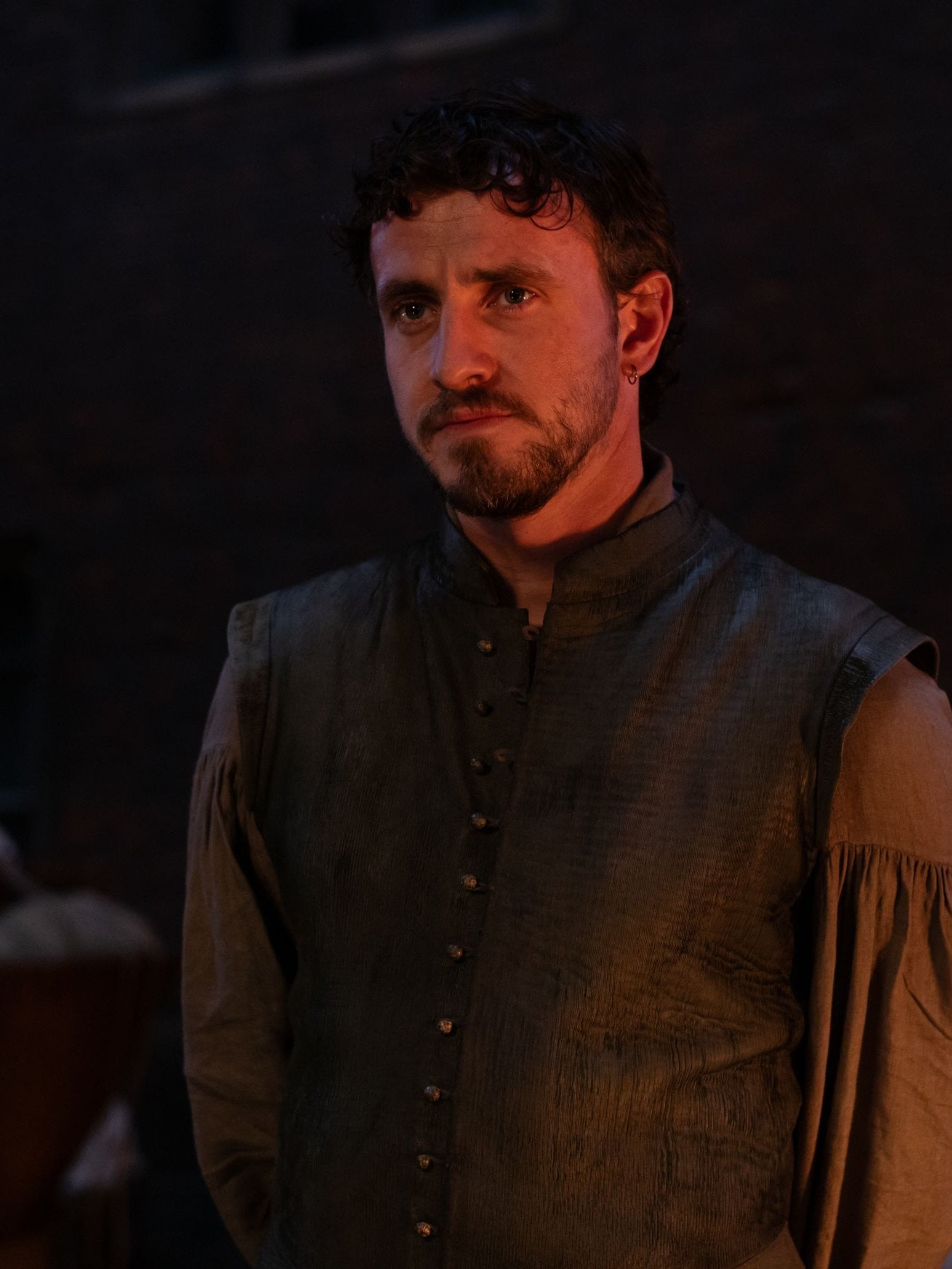

Paul Mescal as William Shakespeare in "Hamnet." Photo courtesy of Agata Grzybowska / Focus Features.
Agata Grzybowska / Focus Features
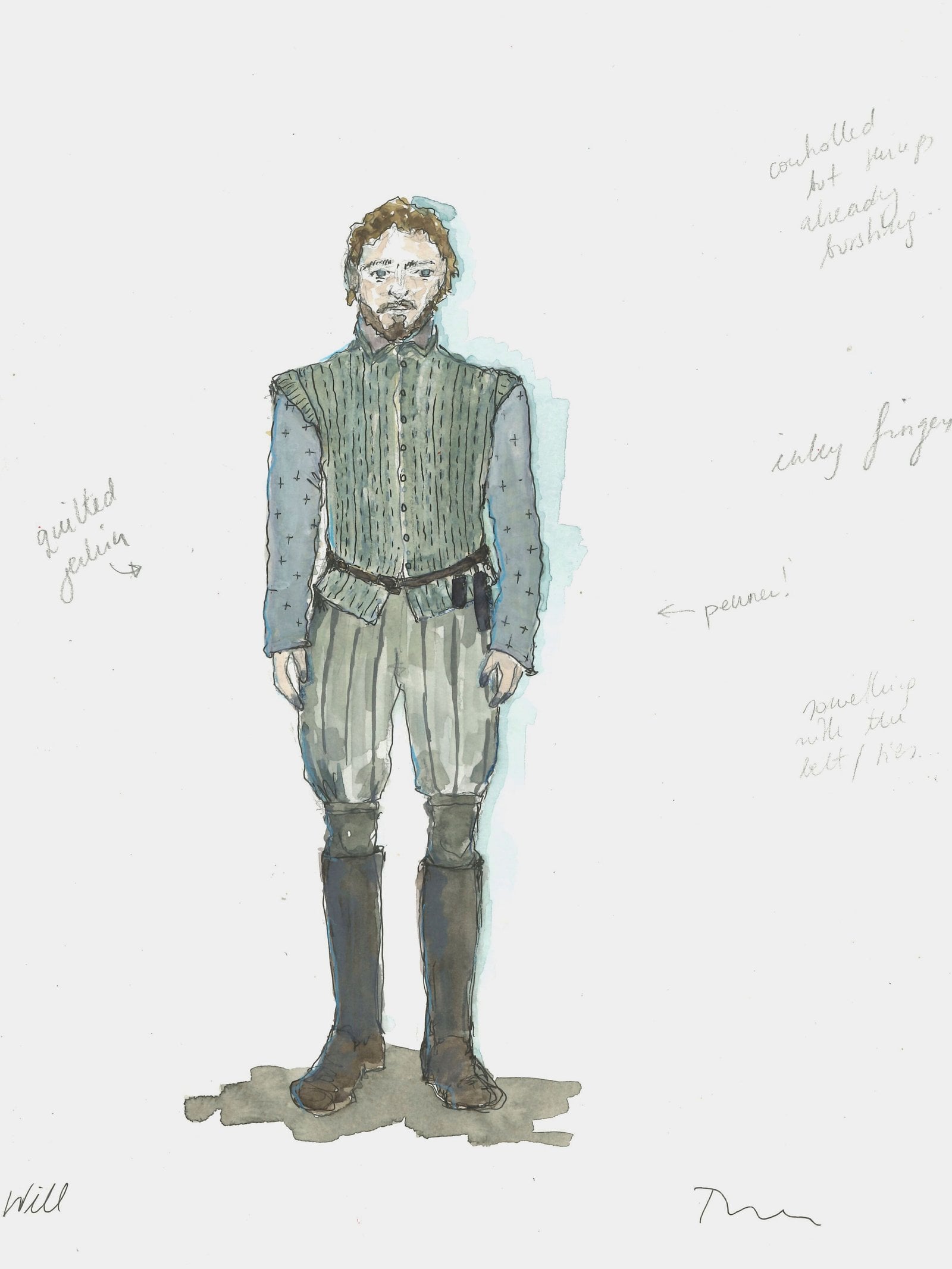

A sketch of Will's costume for his wedding to Agnes. Photo courtesy of Malgosia Turzanska/ Focus Features.
Malgosia Turzanska
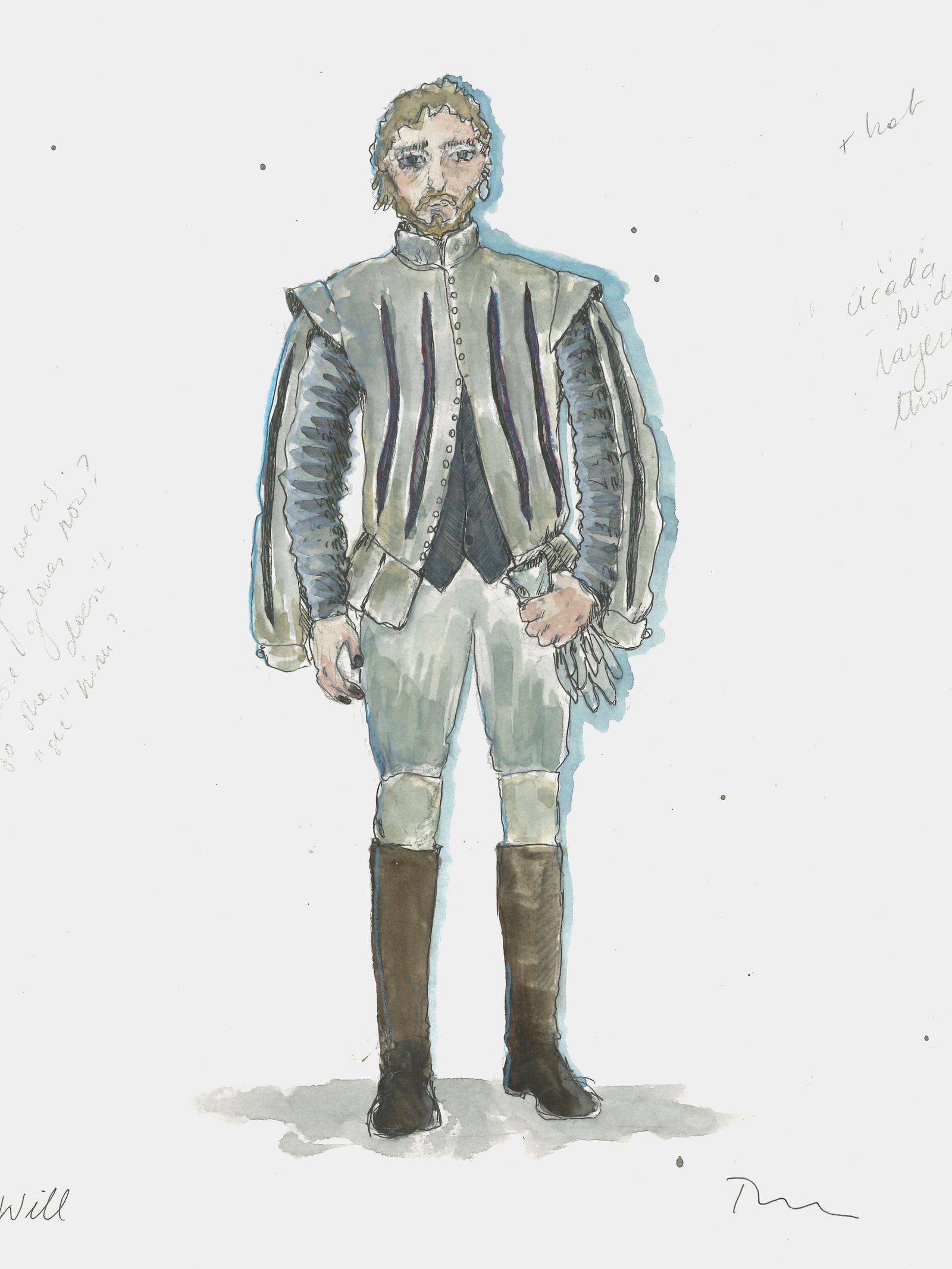

A sketch of Will's costume for London. Photo courtesy of Malgosia Turzanska/ Focus Features.
Malgosia Turzanska
Will, in his rolled-up linen shirt sleeves, and unbuttoned vests (jerkins) and jackets (doublets), also feels revolutionary and modern—much like Shakespeare’s plays, which remain timeless. In the forest with Agnes, Will’s gray jerkin, with corded lines that evoke the organic flow of nature, brings a quilted-down vest to mind. The period-correct “padding,” as also seen on Will’s mother, Mary (Emily Watson), and his younger siblings, telegraphs quiet protection from their abusive father, John (David Wilmot). “I actually looked at vintage sportswear,” says Turzanska.
She also designed John’s Elizabethan toothpick chatelaine, worn around his neck, as a symbol of his sharp cruelty toward his family—its consequences reflected in the steadily deepening and widening slashes on Will’s leather jerkins and doublets. The gash-like “pinking” technique feels contemporary-cool, but is actually Tudor and Elizabethan-era sartorial decoration.
A drunk Will, facing a crisis of confidence and creativity, loses his temper at Agnes, who then arranges for him to go to London. He says goodbye to his pregnant wife in a gray leather jerkin with tiny pinking cuts. “He's afraid he's going to be as violent as his father, and then he does it himself. He doesn't need his father to hurt him anymore; he is hurting himself,” says Turzanska. “Then, obviously, with Hamnet dying, [the slashes are] the giant ones.”
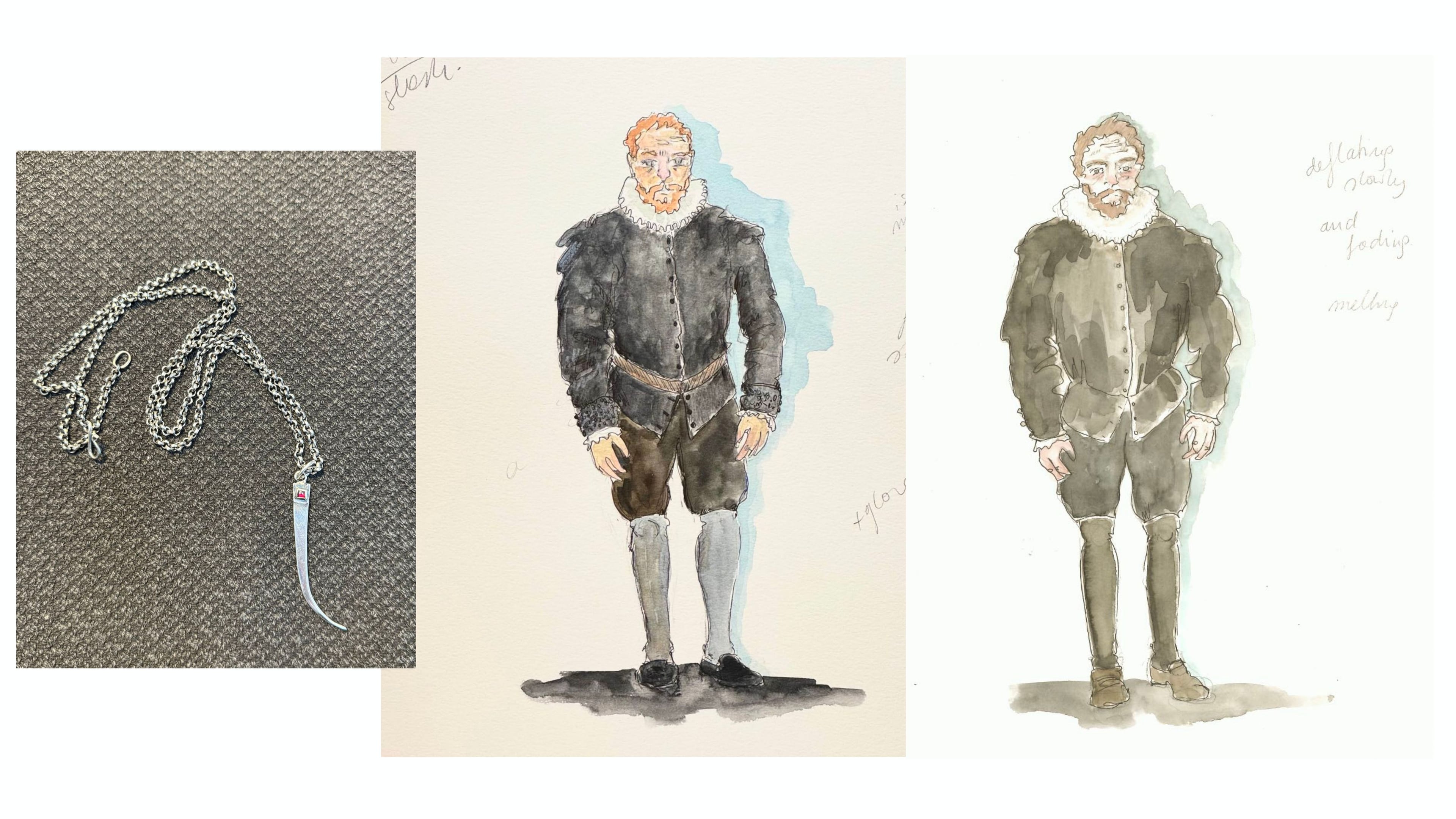

Will's father John's costumes in "Hamnet." Photo courtesy of Malgosia Turzanska/ Focus Features.
Malgosia Turzanska
Understandably, Will and Agnes’s larger-than-life creativity, affinity for nature, and emotionally expressive style influence their children. Firstborn Susanna (Bodhi Rae Breathnach) wears a sea of blues, like an inky-gray and indigo linen dress with an adorable, polka-dotted capelet. “I love that she was this sulking teenager,” says Turzanska, who referenced images of today’s teens and tweens in drawstring hoodies for vibes. “So Susanna’s bonnet has strings. I just wanted to make sure that she was a teenage creature of her own making. She just had a lot of personality.”
Susanna remains unaffected, if unimpressed, while Agnes and Will play along when mischievous 11-year-olds, Hamnet and Judith (Olivia Lynes), try to trick their family. The twins swap their mini-me outfits of Will’s gray jerkin and Agnes’ orange sleeves — echoing the start of the movie. “On the little jerkins that they wear, Judith’s lines go horizontal, and Hamnet’s go vertical. Together, they create one whole with their outfits,” says Turzanska. “Of course, the colors are a little bit from Agnes and a little bit from Will.”