
'Bridgerton' Production Designer on How To Bring The Maximalist Opulence Of The Show Into Your Own Home
Interiors
The perennially popular Netflix show has returned to screens for season four—and has brought with it plenty of interiors inspiration courtesy of production designer Alison Gartshore.
When asked about the “Bridgerton” aesthetic seeping into real life, Alison Gartshore, the show’s longtime production designer, gives a gleeful little smile. She guesses that the popularity comes not just from the sizzling Shondaland plots, but also because “the Regency period look might be the antidote to the sort of modern minimalist.” If anything, she’s seen a trend swinging in the opposite direction of the Japandi aesthetic (that’s Japanese-Scandi, aka minimalism and functionality). “It's fascinating to watch,” she says of the spreading of “Bridgerton” blues and opulent interiors from screen to people’s homes.
“You are finding a lot more patterns, more pastel colors, and a lot more florals,” she says. “You know, the gilt mirrors are coming back!” So, for the style-savvy or steadfast readers of Lady Whistledown, here’s some insight from Gartshore’s four seasons with the show on how to create a fantastic space worthy of even the hard-to-please Queen Charlotte would approve of.
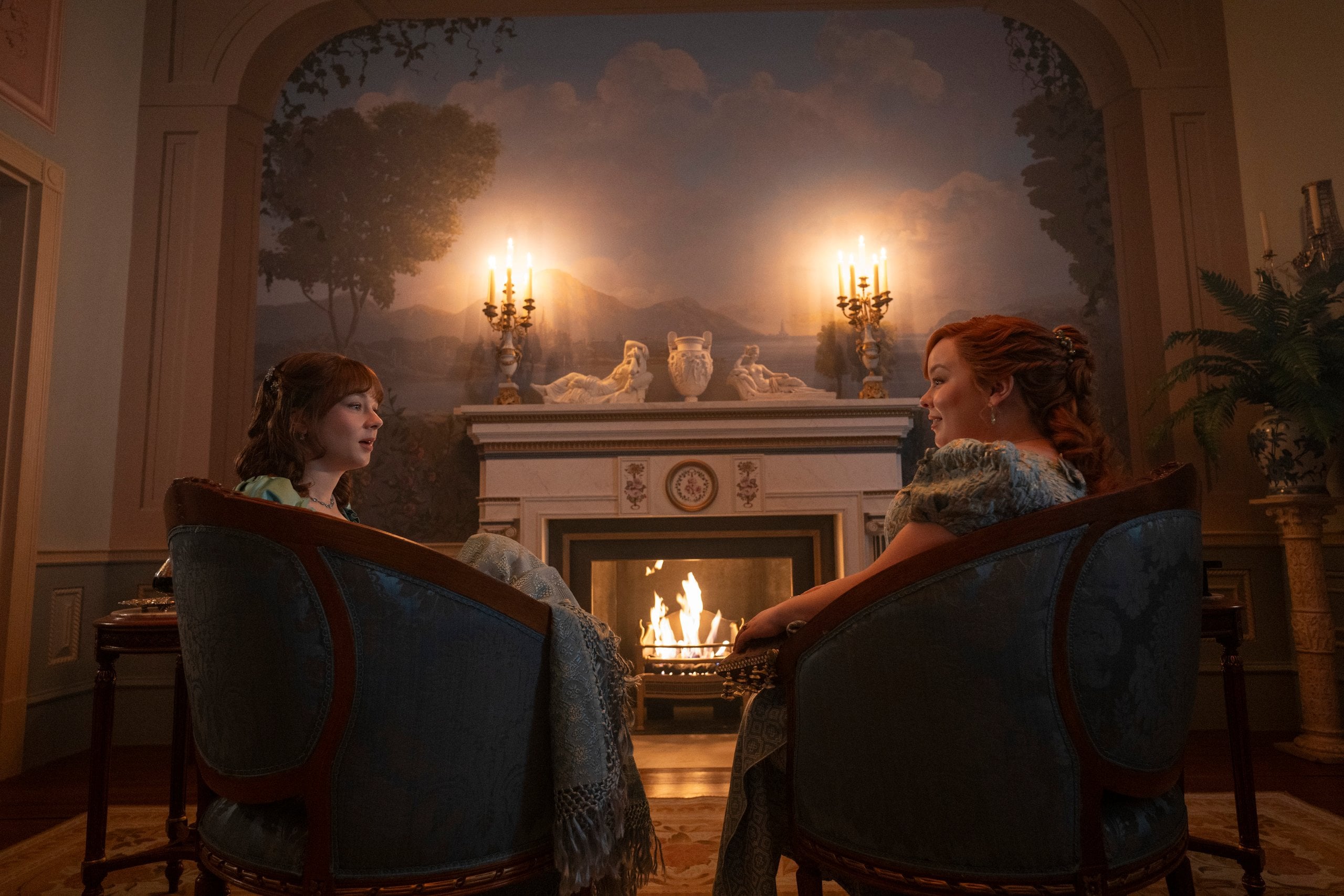

Claudia Jessie and Nicola Coughlan in "Bridgerton" season four.
Netflix
Details, Details, Details
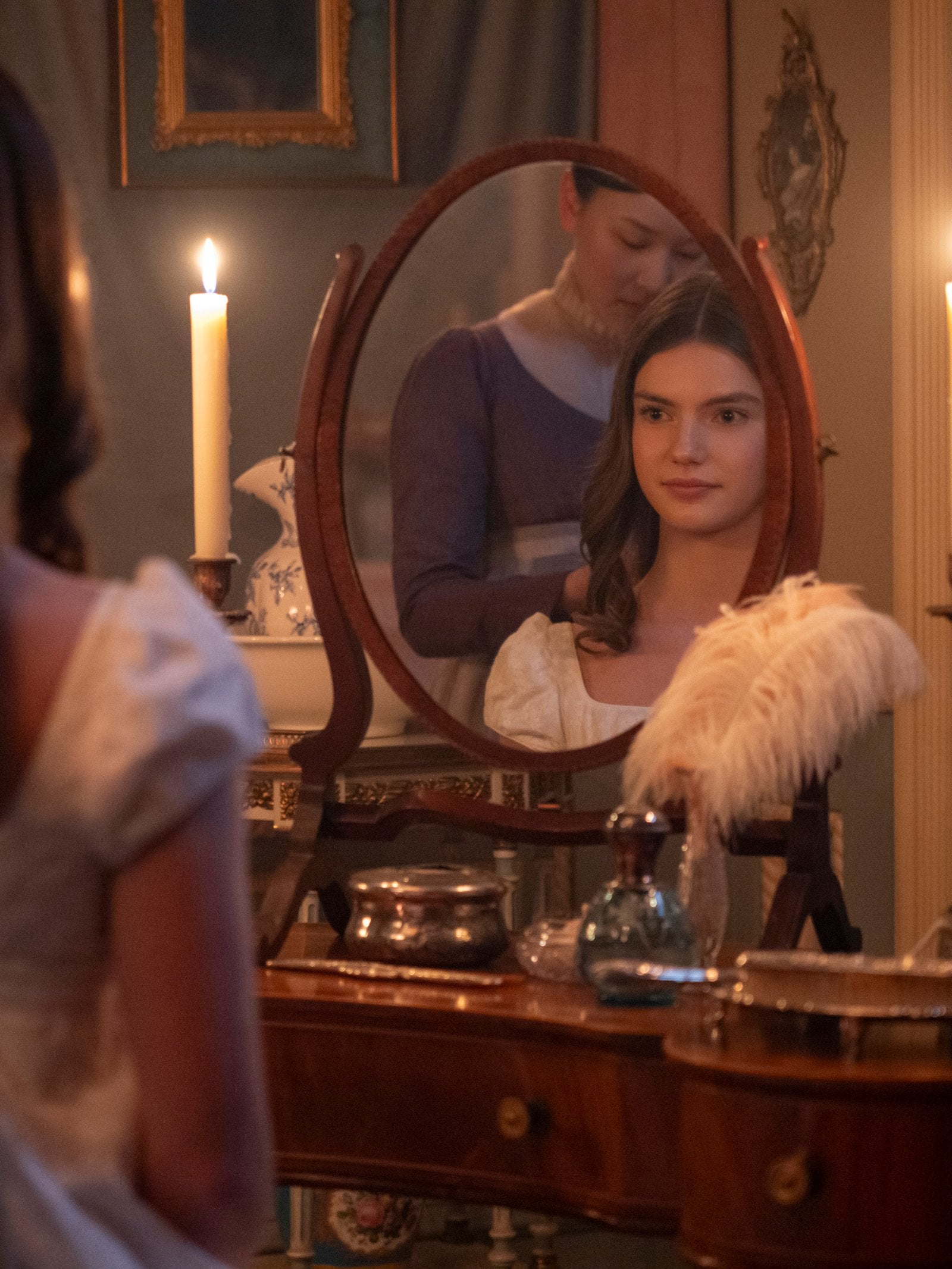
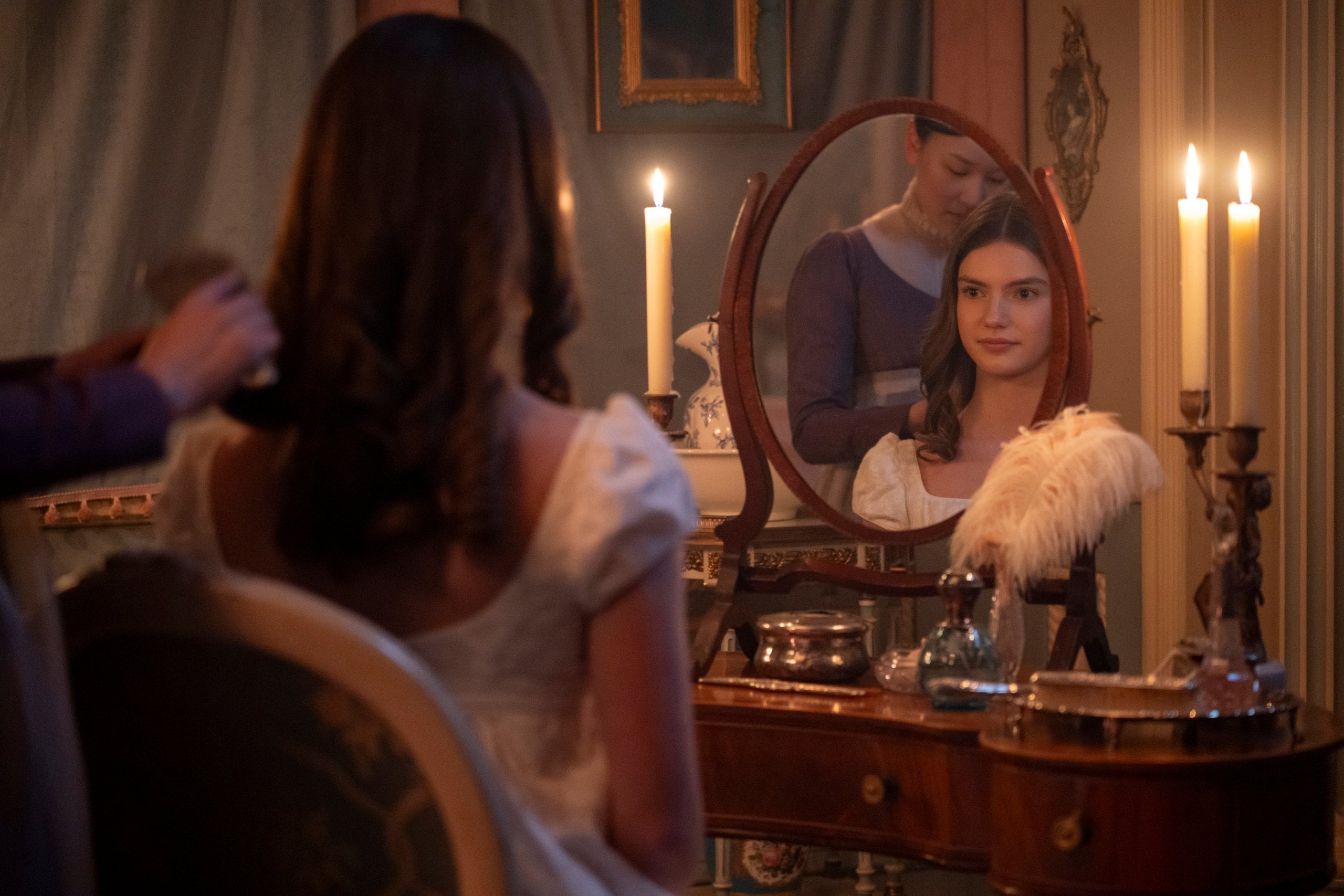
To create the sprawling homes of the ton, Gartshore toured historic estates across England, filling her camera roll with finishes, moldings, textiles—the small details that often go unnoticed. “It's the smallest things that can give you the inspiration for a whole set.” She has, she says, “thousands and thousands of photographs” of windows, doors, colors, and fabrics, as anything could become “the starting point for something.”
Though the internet is a very good tool for research, Gartshore says she prefers going analogue.“Your brain is triggered in a different way when you're actually looking at a book… and you're looking at the colors in real life.” So if you’re building your own “Bridgerton” moodboard, step away from the algorithm. Visit a historic home. Flip through design books at the library. Print images. Notice the curve of a chair leg, the particular blue of a drawing room wall, the way floral wallpaper wraps around a doorway. Regency drama lives in the details.


Luke Thompson in "Bridgerton" season four.
Netflix
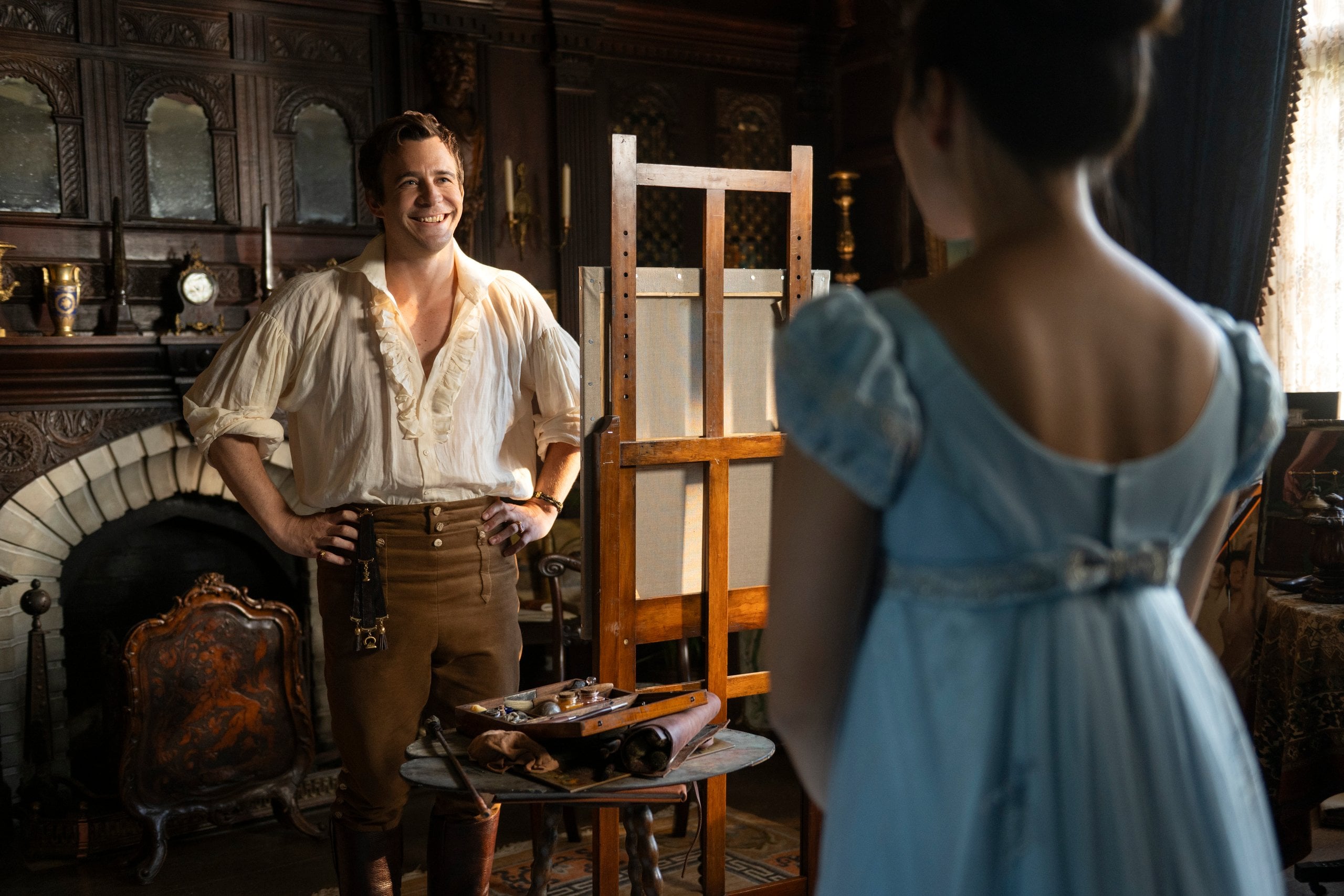

Luke Thompson in "Bridgerton" season four.
Netflix
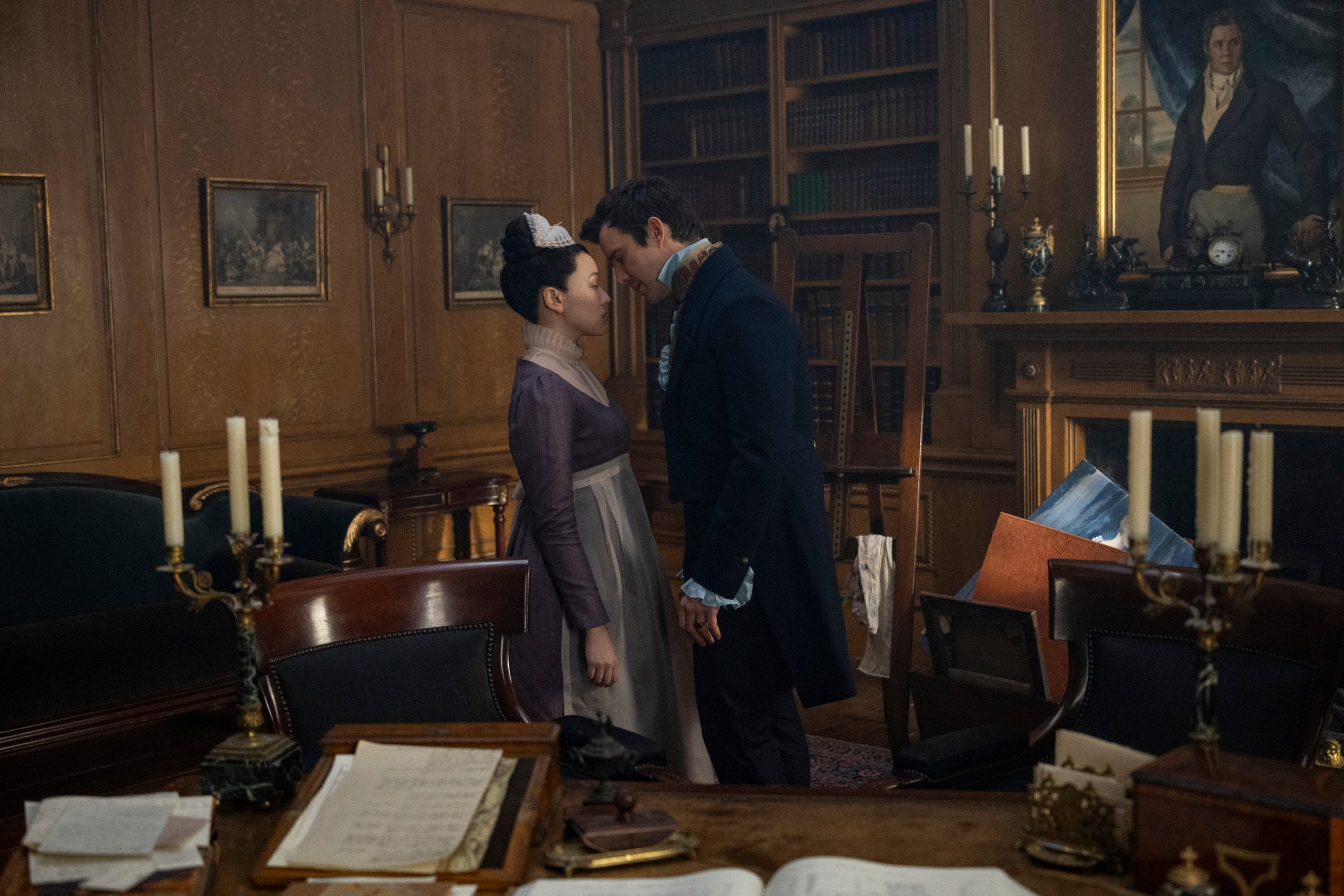

Yerin Ha and Luke Thompson in "Bridgerton" season four.
Netflix
Get To Know the Characters' World
In “Bridgerton” season four, our heroine Sophie Baek (Yerin Ha) finds herself challenged by both her conniving stepmother, Araminta Penwood, and her love interest, Benedict Bridgerton—and for both of them, their interiors tell you exactly who they are before they speak.
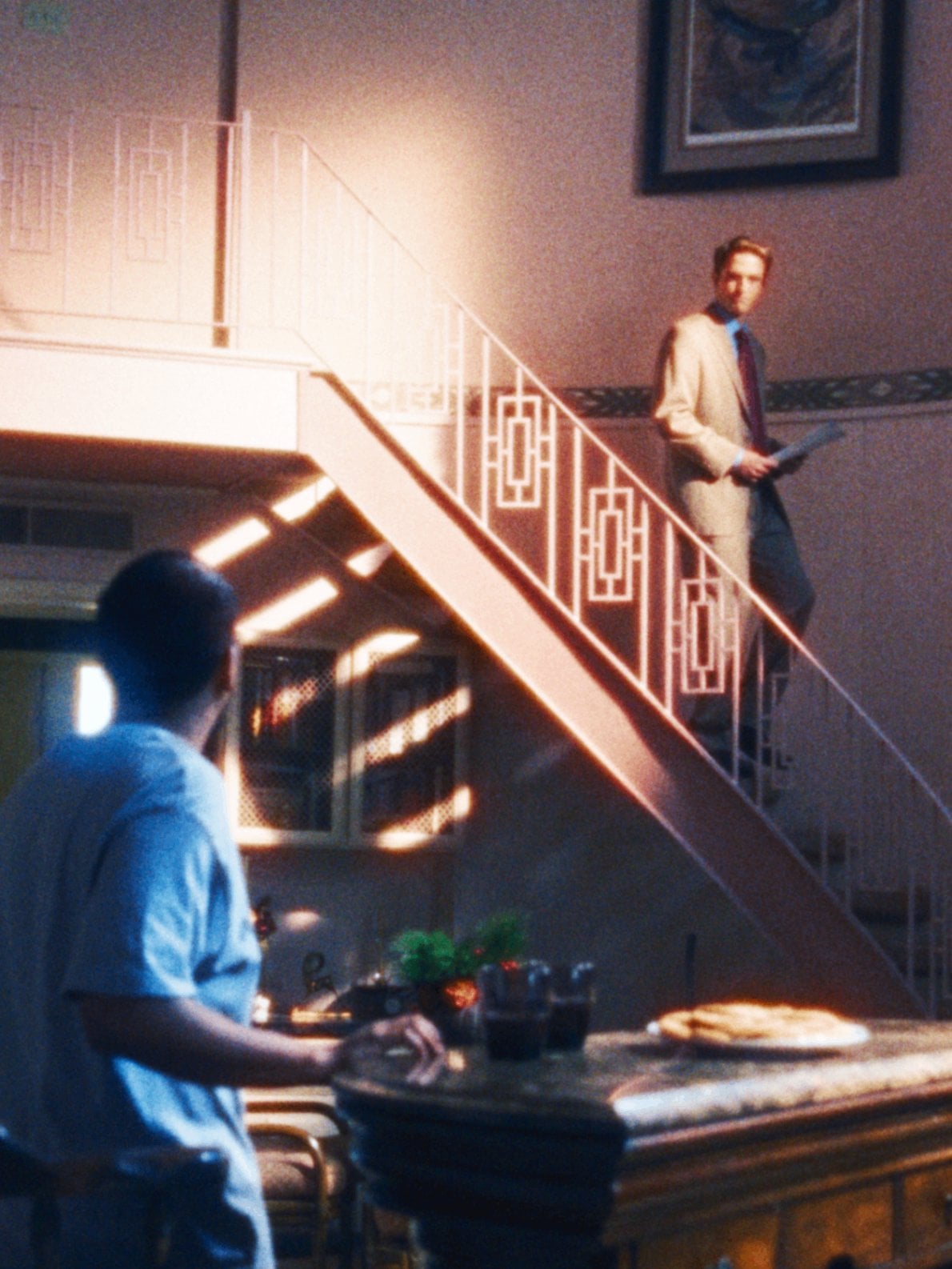
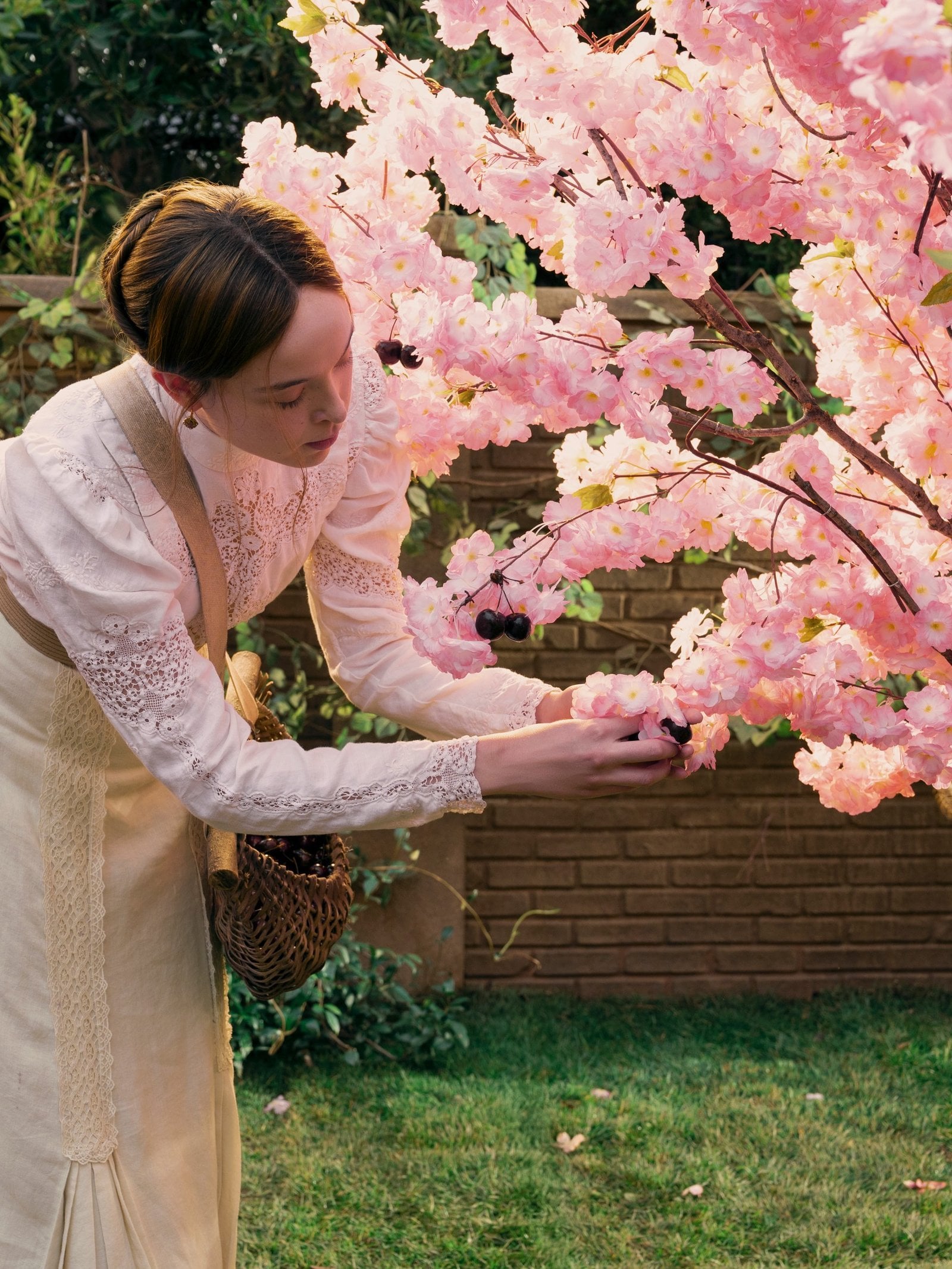
“Araminta is, for all intents and purposes, the wicked stepmother,” says Gartshore. To portray that, they leaned into “a certain terror within the idea of perfectionism.” Her rooms are cream (a color that Gartshore says is not exactly period accurate; in Georgian times, cream would have been “an absolute nightmare to try and keep clean”), reinforcing standards so high that the servants were terrified of the smallest speck of dust anywhere.” Benedict’s bachelor apartment, meanwhile, is another story entirely. “He’s a frustrated artist,” Gartshore notes. “He’s never settled to one particular thing; he's not actually found himself yet.” The result is a “wilder, more Byron-esque” sort of space filled with evocative still lifes, brooding palettes, linens tossed to the ground.
So when creating your own Regency-inspired room, ask: who lives here? If you want to evoke serenity, focus on symmetry and restraint. But if you want to portray the image of a tortured romantic lead, take a leaf out of Benedict’s book. Stack books unevenly. Let velvet wrinkle. Layer darker hues. A “Bridgerton”-style space isn’t about perfection, it’s about an interior with a juicy story to tell.
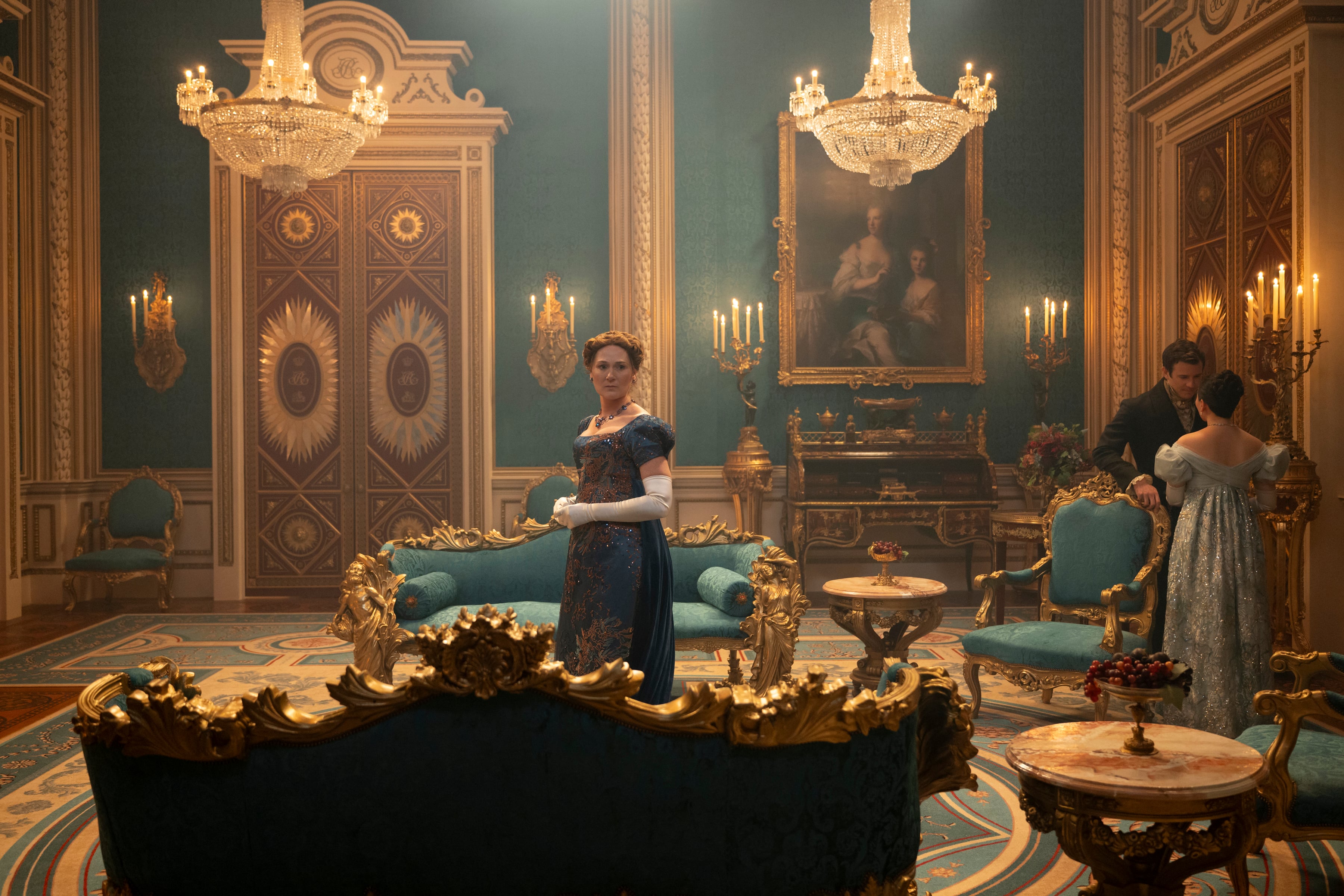

Ruth Gemmell in "Bridgerton" season four.
Netflix
The Perfect Piece Can Come From Anywhere
A “Bridgerton”-worthy room does not require a massive dowry. Although, as Gartshore notes, real Georgian furniture is extremely expensive, the show sourced from antique centers, auction houses, and reproduction makers—as well as built things from scratch. Skilled prop painters transformed plain furniture into pieces that could sit comfortably in Violet’s salon.
In “Bridgerton,” much of the grandeur is illusion. Trompe l’oeil techniques mimic carved details, and faux wood finishes create tables of grandeur. It’s practical, of course, but also thematic. The brief for the show’s fourth season was “fantasy versus reality and daring to dream and not quite knowing what's real and what isn't,” Gartshore says. In your own home, focus on silhouette over pedigree. Look for curved legs, delicate inlays, and symmetry. Add molding to plain walls. And if you can’t find the exact piece you were inspired by, don’t be afraid to pull out a brush and paint. Or even some gold. “Lots of gilding!” Gartshore exclaims when asked to recommend one “Bridgerton” technique that we can take into our own homes. “It's fun to do yourself, and you can buy kits.” A mirror frame, picture molding, or even a side table edge can take on a Midas touch.
Perhaps that’s the true lesson from the ton. Regency style, as interpreted by Gartshore, isn’t about historical purity. It’s about fantasy grounded in feeling. You don’t need an estate to live like a member of the Ton—just a willingness to embrace color, pattern, history, and a little bit of skill with gold leaf sheets. After all, dearest gentle reader, what is a home if not a stage for romance?