In His Modern-Day ‘Hamlet,’ Riz Ahmed Embarks on a Harrowing Journey Through Verse and Wardrobe
Fashion


Fashion
Costume designer Nirage Mirage spent 10 days in India sourcing the costumes of the film to craft an evocative journey through dazzling, immersive color.
In Aneil Karia's reimagining of “Hamlet,” set in the elite South Asian community of modern-day London, the titular scion of a real estate tycoon embarks on a wrenching exploration of grief, corruption, and marginalization. The costumes trace a similarly evocative color arc, honoring Shakespearean verse and tragedy, while anchoring the reimagining in a contemporary, culturally grounded world.
The film is a passion project for Ahmed, who has wanted to adapt Hamlet since he was a student. After collaborating with the filmmaker on the Oscar-winning live-action short “The Long Goodbye” in 2020, the duo finally brought the project to life. “[Ahmed is] incredible to work with and really be involved in building this Hamlet together,” says costume designer Nirage Mirage. “Even in fittings, when you’re exploring the character—the nuances, how things sit, how they feel—he’s fully engaged. He’s really present in understanding his character and how the costumes reflect that.”
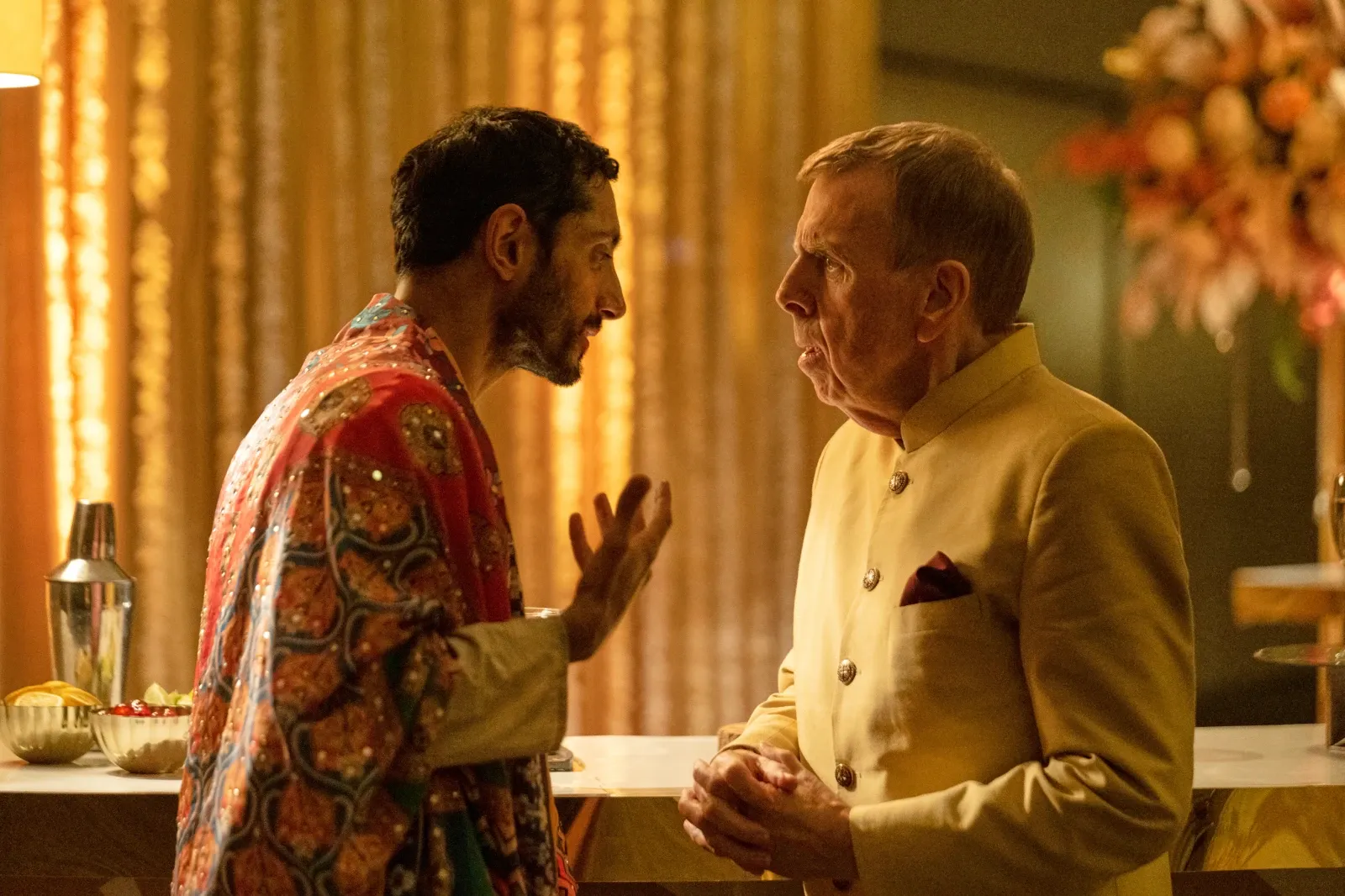

Riz Ahmed and Timothy Spall in "Hamlet".
Vertical Entertainment
The film’s “controlled color palette” begins with Hamlet at his father’s funeral, dressed in a cotton kurta in traditional funereal white. “It represents so much,” says Mirage, who spent a whirlwind 10 days in New Delhi, India, sourcing and commissioning custom designs—and in multiples—for the movie. He points to the cultural and historic significance of cotton in the region, from artisanal weaving traditions to textile production, as well as the unparalleled access to craftsmanship that made the sumptuous and climactic wedding sequence possible. “You have everything at arm’s length with these incredible craftsmen and highly skilled artisans. While I was there, the designs just went on steroids—I could say, ‘I can do that,’ and have five versions in five days. Everything was amped up: glass beads instead of plastic, and every detail had a level of quality I could access immediately.”
After the revelation that his uncle Claudius (Art Malik) murdered his father to control the family empire and plans to marry his widowed mother Gertrude (Sheeba Chadha), Hamlet seeks revenge. Rapidly unraveling, he attends their opulent wedding in an embroidered sandy-gold sherwani, a South Asian formal long jacket, layered over the same kurta—now rumpled and yellowed. As Hamlet’s plans for vengeance go violently awry, bloodstains cover his once-white kurta. “[The kurta] has his history and retains the memory of the journey that he's going through,” says Mirage, who had upwards of nine duplicates made in India.
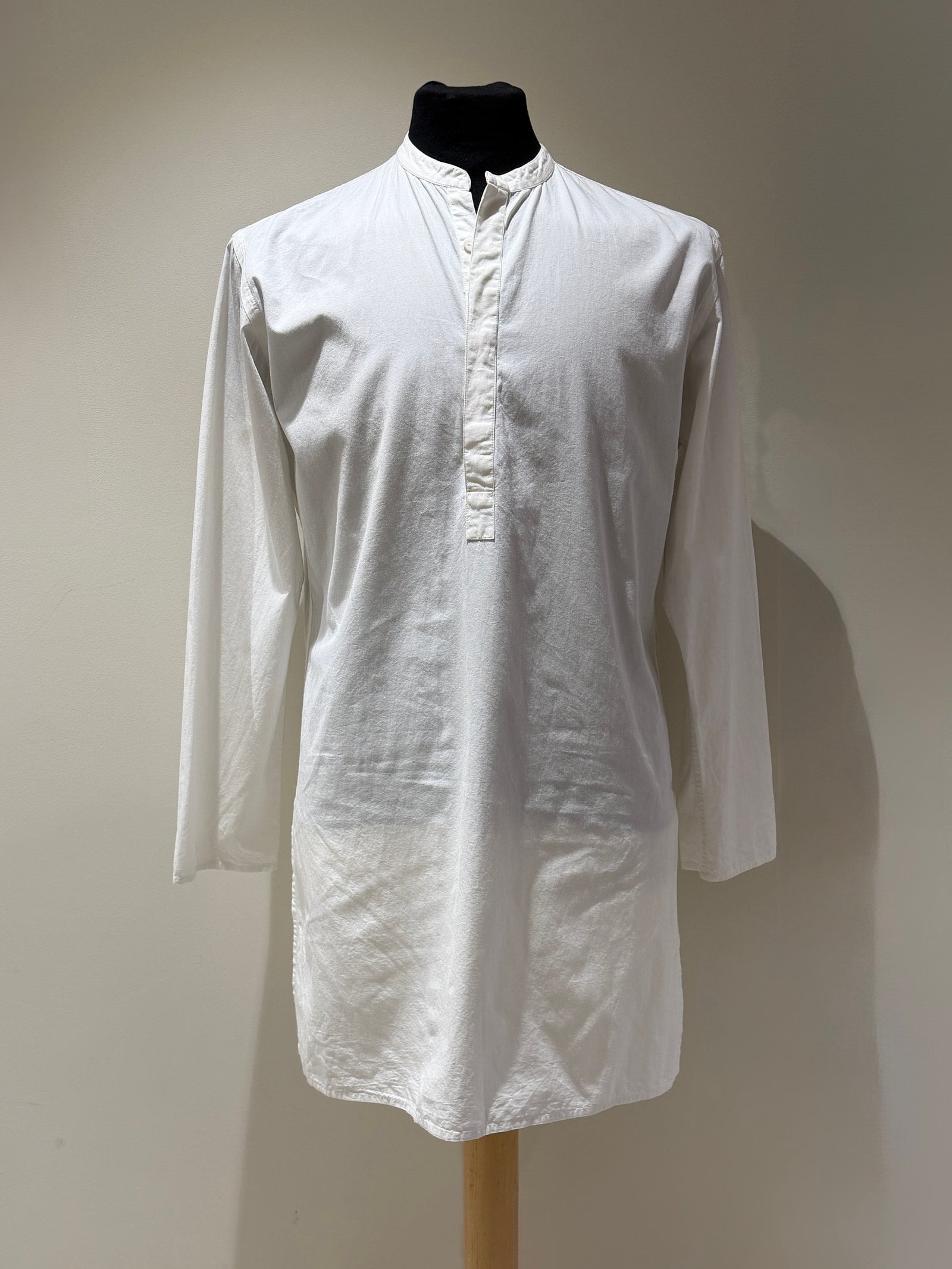

Hamlet's kurta begins bright white.
Nirage Mirage
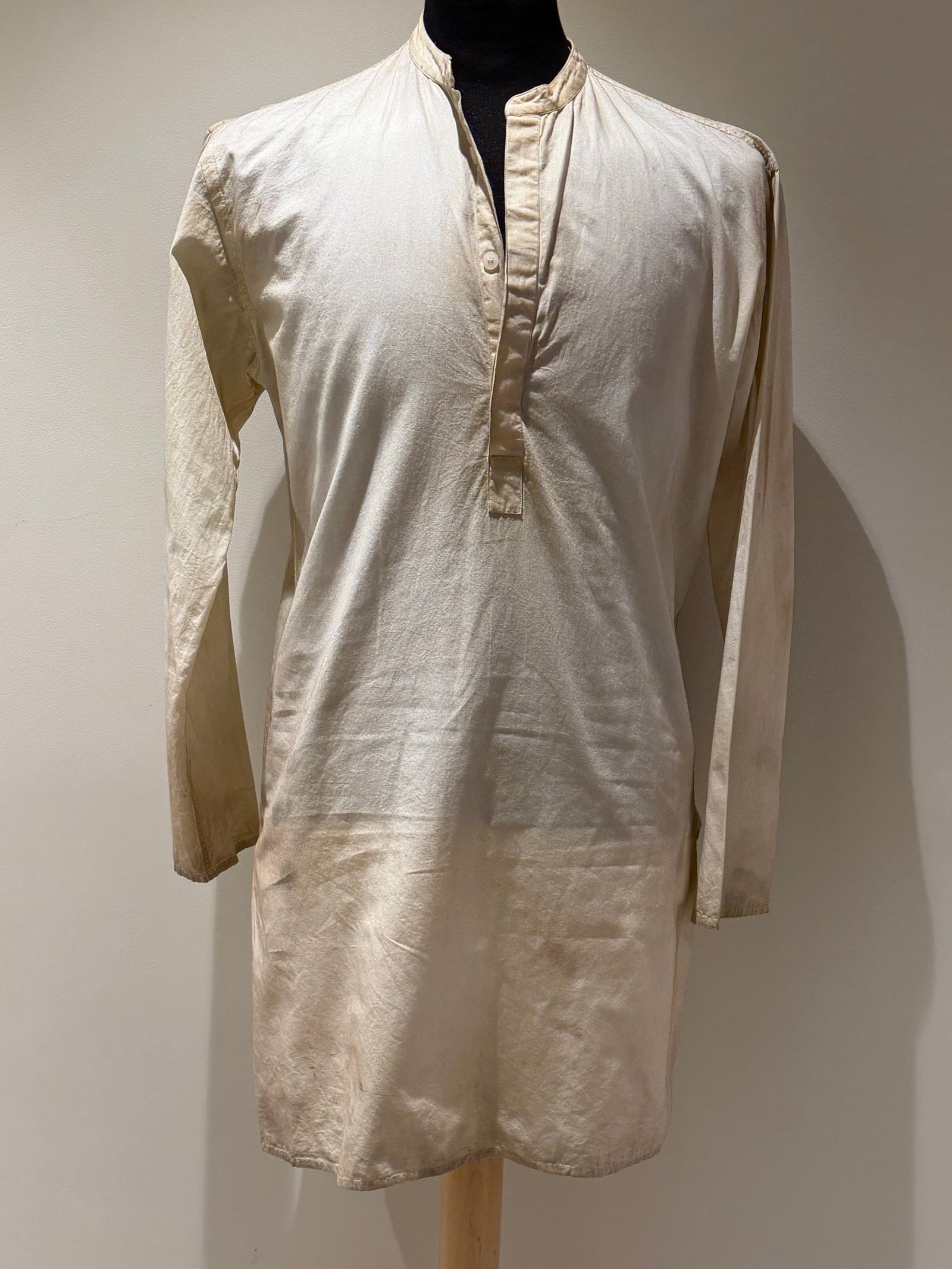

As the film goes on, it becomes rumpled and yellowed.
Nirage Mirage
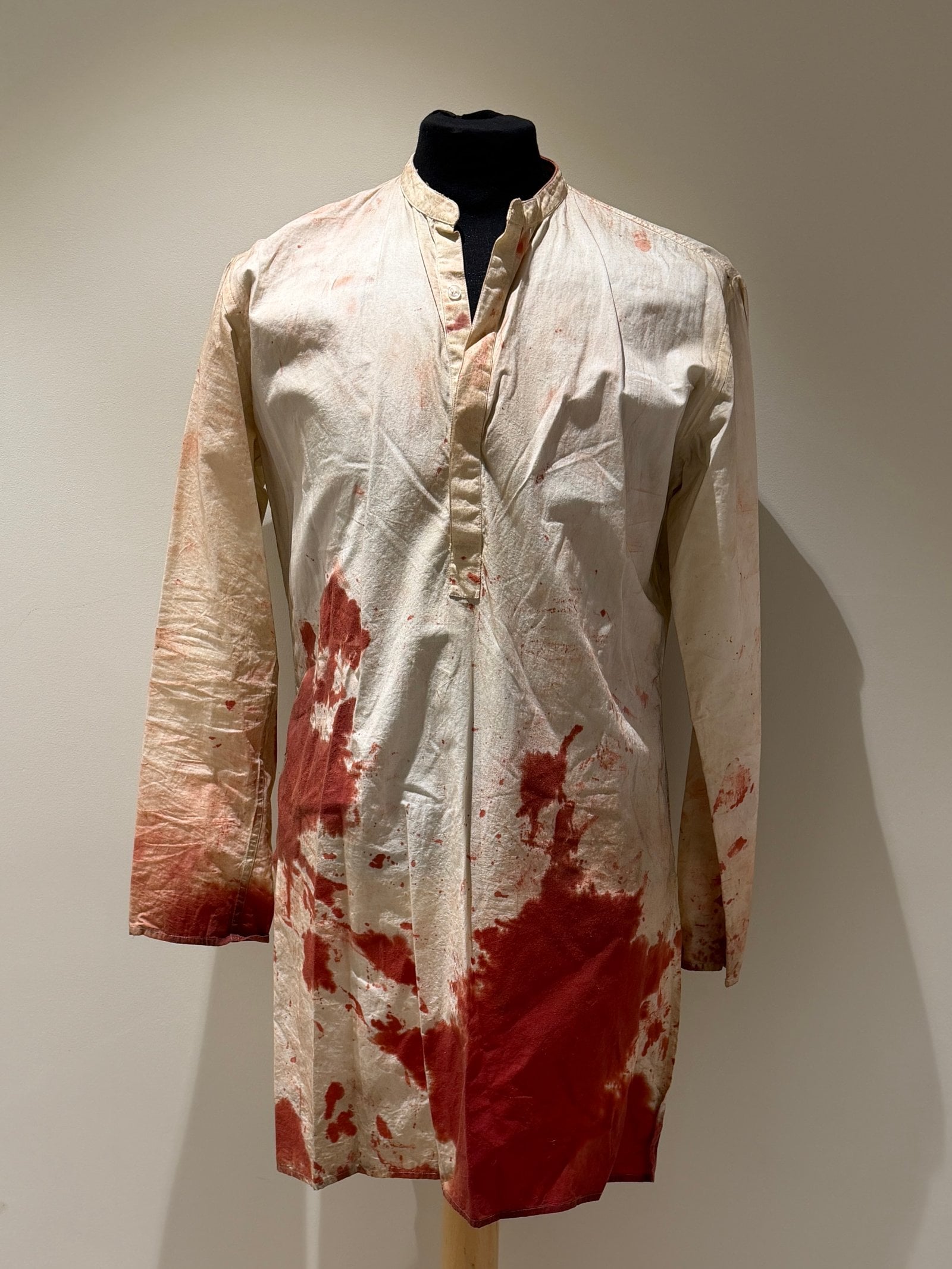

Bloodstains begin to cover it.
Nirage Mirage
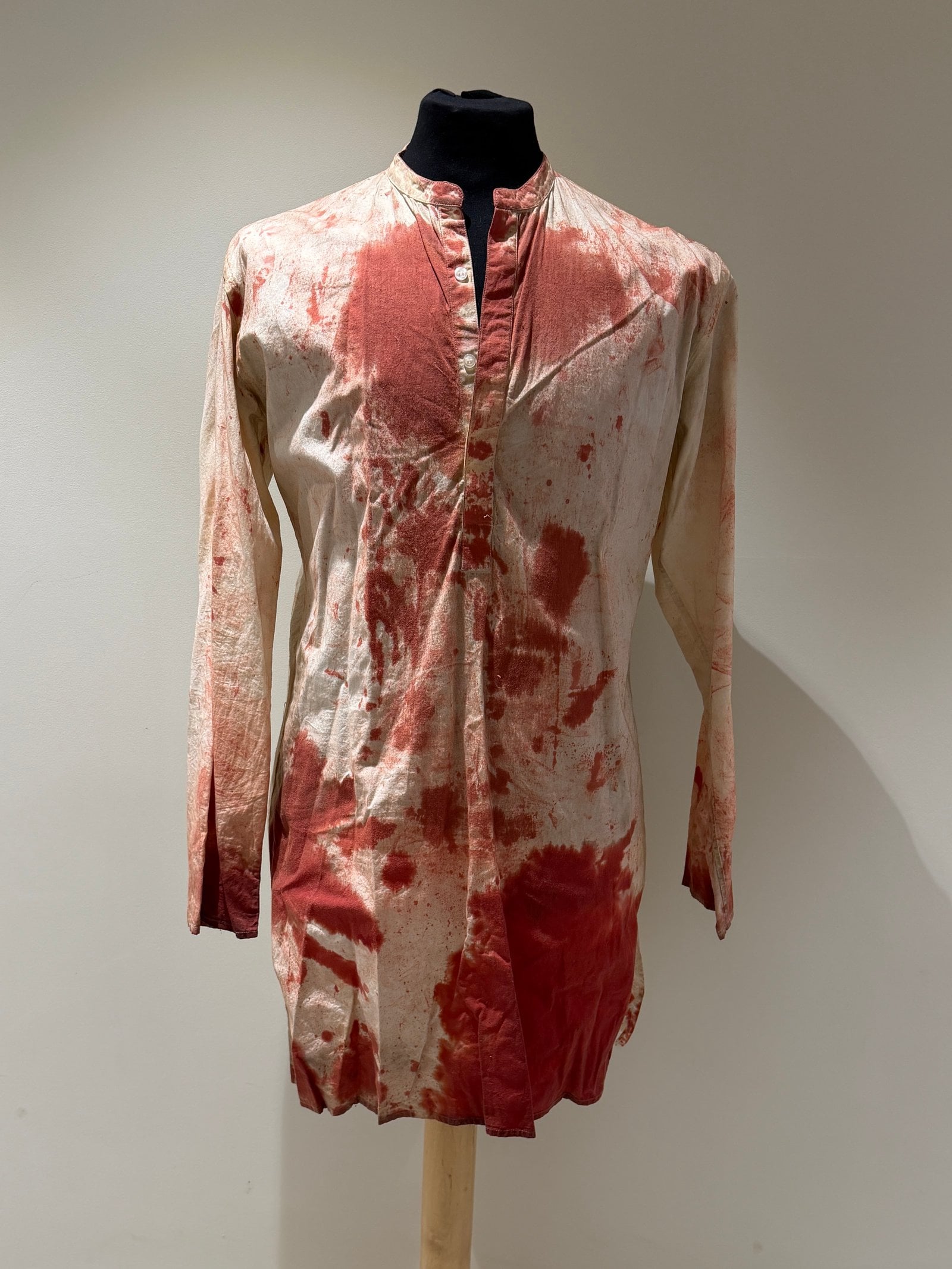

Bloodstains begin to cover it.
Nirage Mirage
In the climactic third act, the champagne color story escalates with Claudius in an ornate sherwani, embellished with ruby-red beading, folded-fabric motifs, and refined embroidery. “It really looks like he's got these disembodied circles on his sherwani, just representing the sands of time,” says Mirage, who took inspiration from India’s temples—the reliefs, sandstone, and statues—for the family’s color theme. “So there's this language that happens with the sand and the bloodlines.”
Gertrude’s luminous sari, made with rare Banarasi silk, glimmers with Zari, metallic threads intricately woven into brocade. “I searched all over Delhi for the right sari,” says Mirage, who was finally referred to a by-appointment-only dealer. “The pure silk saris were so light—they were just liquid gold.” The matriarch’s iridescent sand represents the weight of family and duty, as Hamlet grapples with conflicting feelings of disillusionment and loyalty to his elders. “The way [the sari] catches and reflects the light was just so elegant and beautiful,’ says Mirage. “Gertrude brings all the elements of these people together in that sense.”
Hamlet schemes to expose Claudius’ ultimate betrayal through a classical Kathak dance performance, telling a compelling story through Akram Khan’s choreography of mudras (graceful hand gestures), precise, rhythmic footwork, dazzling spins, and expressive facial movements. The dancers increasingly taunt Claudius, as the music and movements intensify, while their saturated, jewel-toned ensembles mesmerize with radiant gold and silver detailing. “That was really the shift in the palette. You don’t really see those colors anywhere else,” says Mirage, who adjusted the elaborate design to allow for the kinetic dance movements. “ We weren't able to use any mirror work on the lehenga skirts because of the safety issues.”
So the artisans in India emulated gleaming glass and delicate beading by meticulously hand-weaving lurex thread around reflective, mirror-like elements and creating a shimmering sequin alternative. “Having that kind of access in India and being able to create in a boundless way was amazing,” says Mirage. “For me, earth and blood were the elements that fed into these bloodlines, family histories, and roots. Everything felt organic. Inspirations you pick up throughout your life often appear unexpectedly, but they always come out at the right moment.”
In the penultimate act four, a duplicitous Claudius changes a traumatized Hamlet out of his bloodied kurta and into a dark blue button-down shirt, and sends him away from the grand estate. Hamlet finds refuge in a subterranean community of residents displaced by his family’s real estate ambitions and forgotten by the city—a stark antithesis to the privileged, sheltered life he’s known. “[The shirt] was almost a straightjacket—starting in his world, culturally, and then emerging in conservative, fully Western attire,” says Mirage. “It was a journey overall.”