
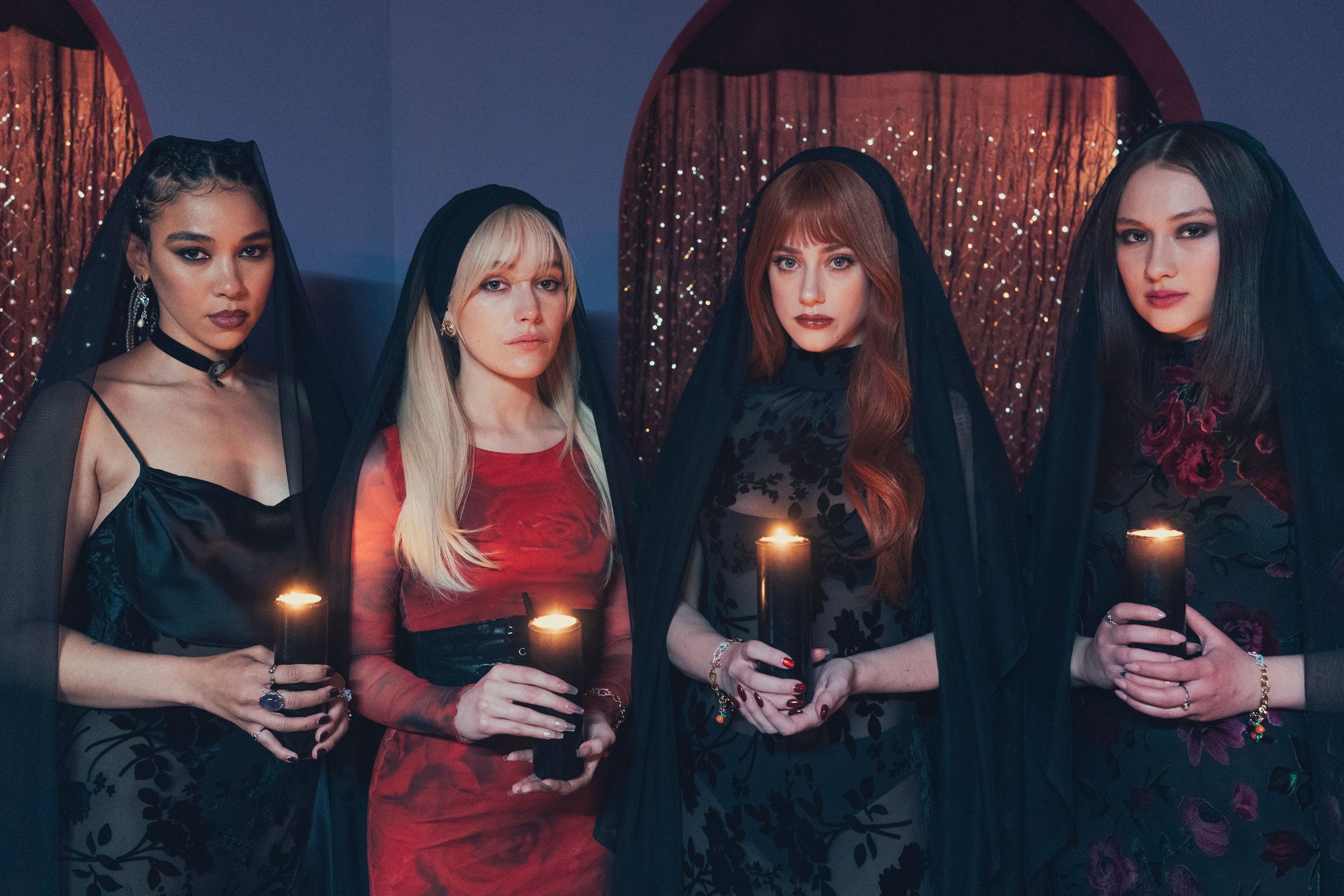
The Costumes Of ‘Forbidden Fruits’ Are A Full-Blown Fashion Fever Dream
Fashion
TSS Creative
Sarah Millman
Costume designer Sarah Millman sourced contemporary mall brands and Y2K vintage finds to bring to life the witchy-meets-mallcore looks of the film.
Teeming with snarky one-liners, Y2K mall brands, kitschy slasher effects, and that sticky pink lip gloss that oozes out the tube, “Forbidden Fruits” delivers a girlish cinematic experience previously thought to be extinct. When costume designer Sarah Millman read the script, she saw it for the rare, pending cult classic that it was: a genre-bending meditation on girlhood written by women and for women. The film, produced by Diablo Cody of “Jennifer’s Body” fame and adapted from an off-Broadway play written by Lily Houghton, follows a trio of mall-girls—think The Plastics if they were fluent in Gen-Z brainrot—as they recruit a fourth to join their coven. The budget was modest, but the premise was grand: set in Millman’s favorite real-life mall, the satirical horror comedy provided plenty of creative possibilities for its gorgeous, all-girl ensemble cast. “It was the dream job,” Millman laughs, likening the feeling of being on set to having “finally arrived to the slumber party.”
Taking place in the fluorescent haze of a Dallas shopping mall, the indie film exists outside traditional notions of time and space, predominantly unfolding within the operational hours of a clothing boutique called Free Eden, a thinly-veiled spin on Free People. Ironically, the store’s squad of sales employees are not decked in the brand’s signature boho aesthetic. Rather, they dress to convey a more individualistic sense of style, untethered to any one specific brand or aesthetic.
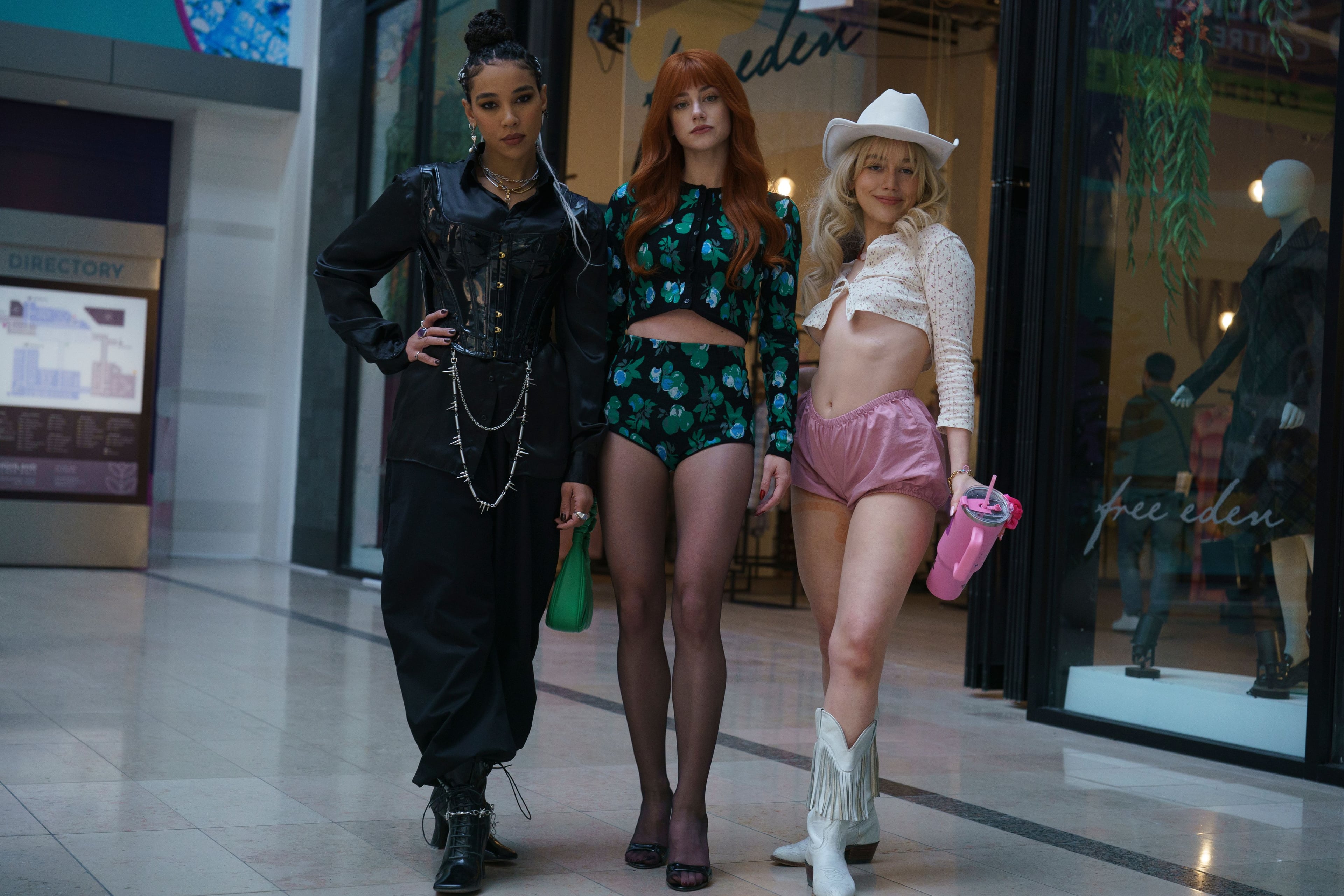

Alexandra Shipp, Lili Reinhart, and Victoria Pedretti in "Forbidden Fruits."
IFC
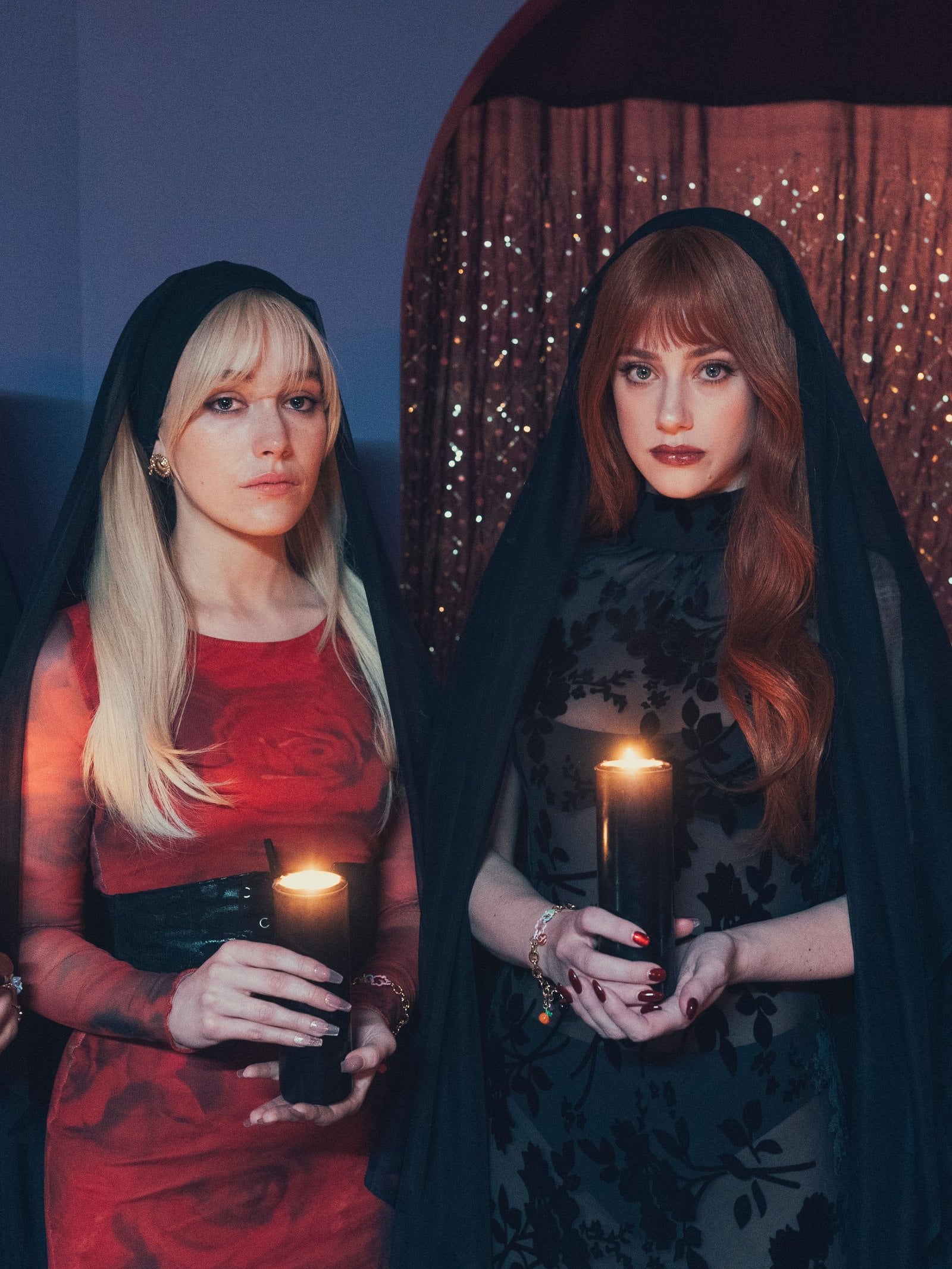
“The characters demanded more separation,” Millman says, explaining how the girls cope with the tediousness of their day job by conducting their witchy rituals out of the mall’s backrooms and basements. Fittingly, the girls' eclectic outfits function as a form of escapism from the mundanity of the mall.
For as theatrical as the outfits are—think bedazzled blue negligees, hot pink tights, and pendant-heart chokers—the thought process behind them was surprisingly grounded. Millman wanted the clothing to feel believable within the context of the characters’ minimum-wage salaries. This realism carries over even in the characters’ after-hours coven, known as Paradise, which functions as an ultimate form of escapism and portal into the supernatural. Here, the wardrobe is elevated but familiar, drawing on designer pieces a high-schooler might scavenge for on resale sites. Millman imagines the girls “trolling The RealReal to find that perfect thing for Paradise, because Paradise is heightened in the movie—it's a space that's sacred and special.”
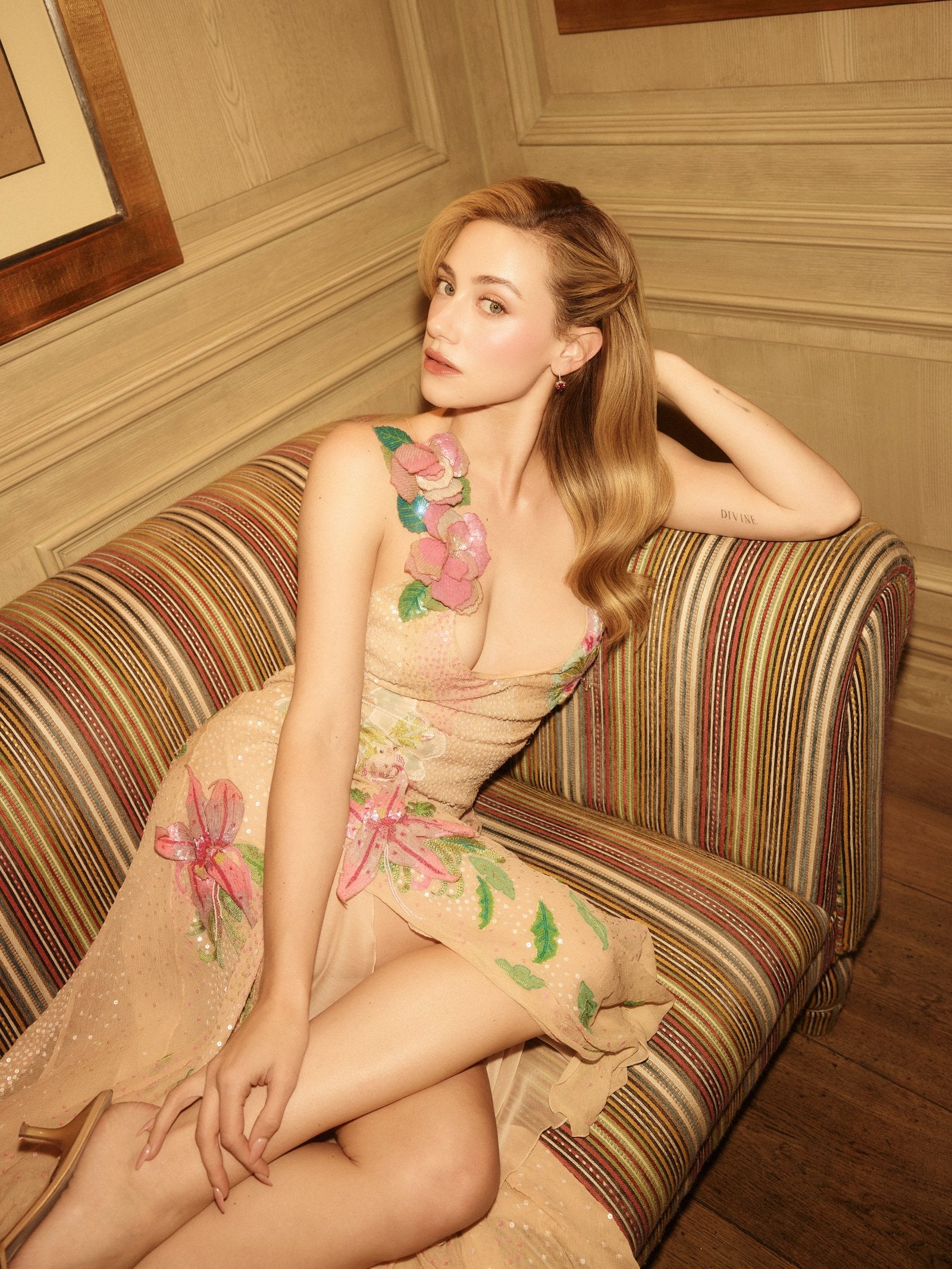
In this alternate reality of Paradise, clothing becomes aspirational—Millman turned to higher-tier brands like Rodarte and Fleur de Mal—while remaining anchored to teenage adolescence. “It's slightly elevated from where they are in their everyday, in terms of an accessible price point to them.”
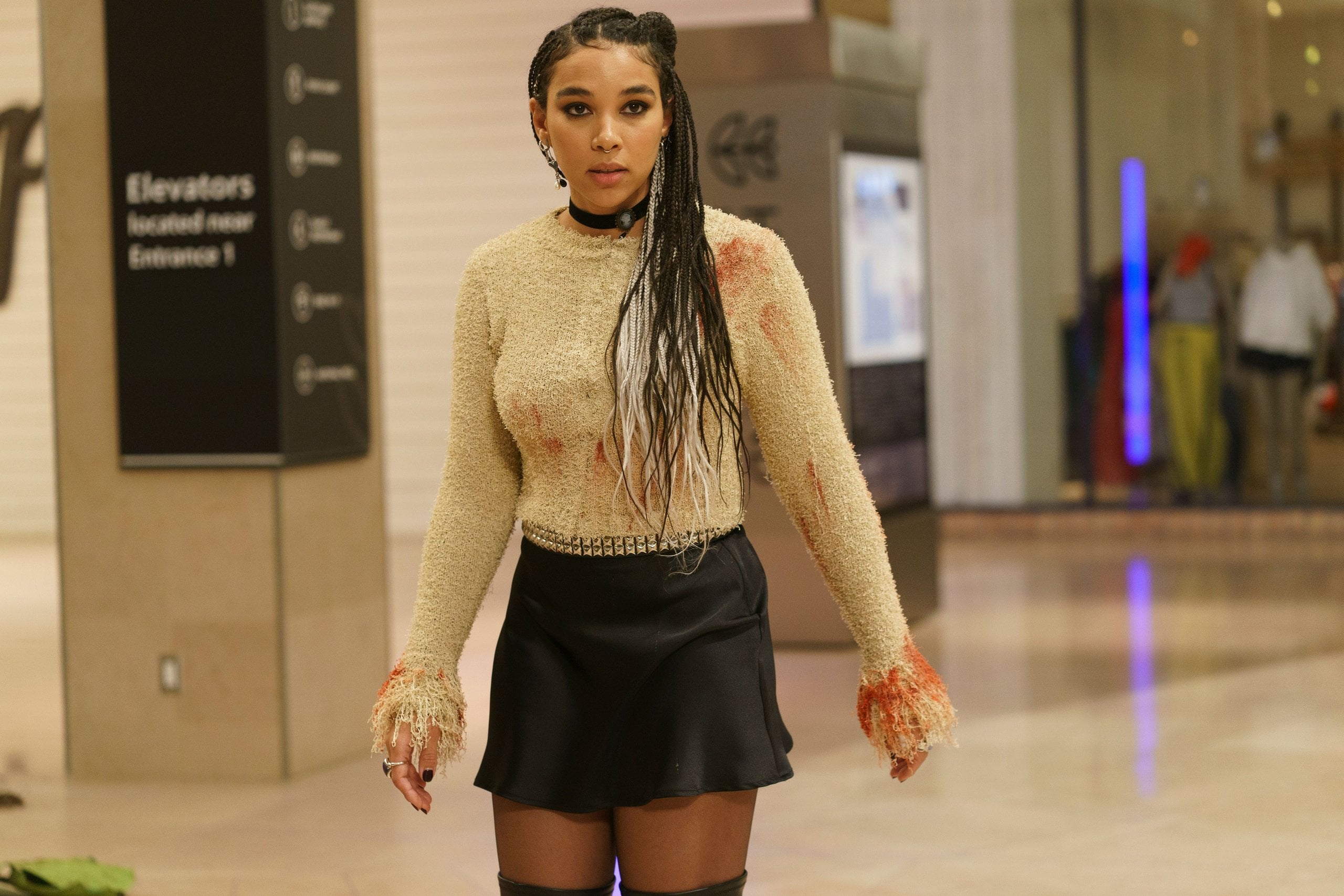

Alexandra Shipp's Fig mall goth look in "Forbidden Fruits."
IFC
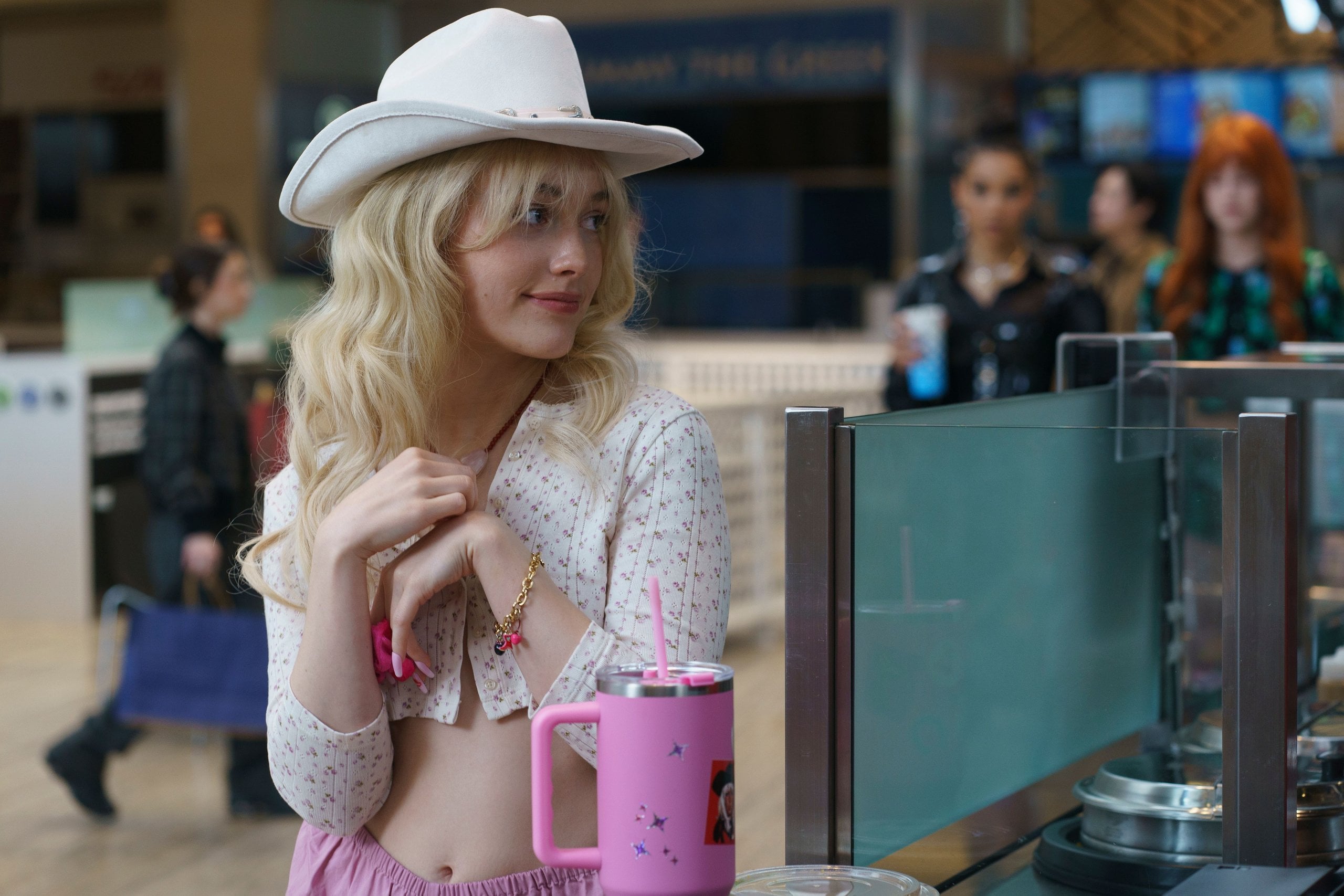

Victoria Pedretti's Cherry opts for an eclectic vintage wardrobe in "Forbidden Fruits."
IFC
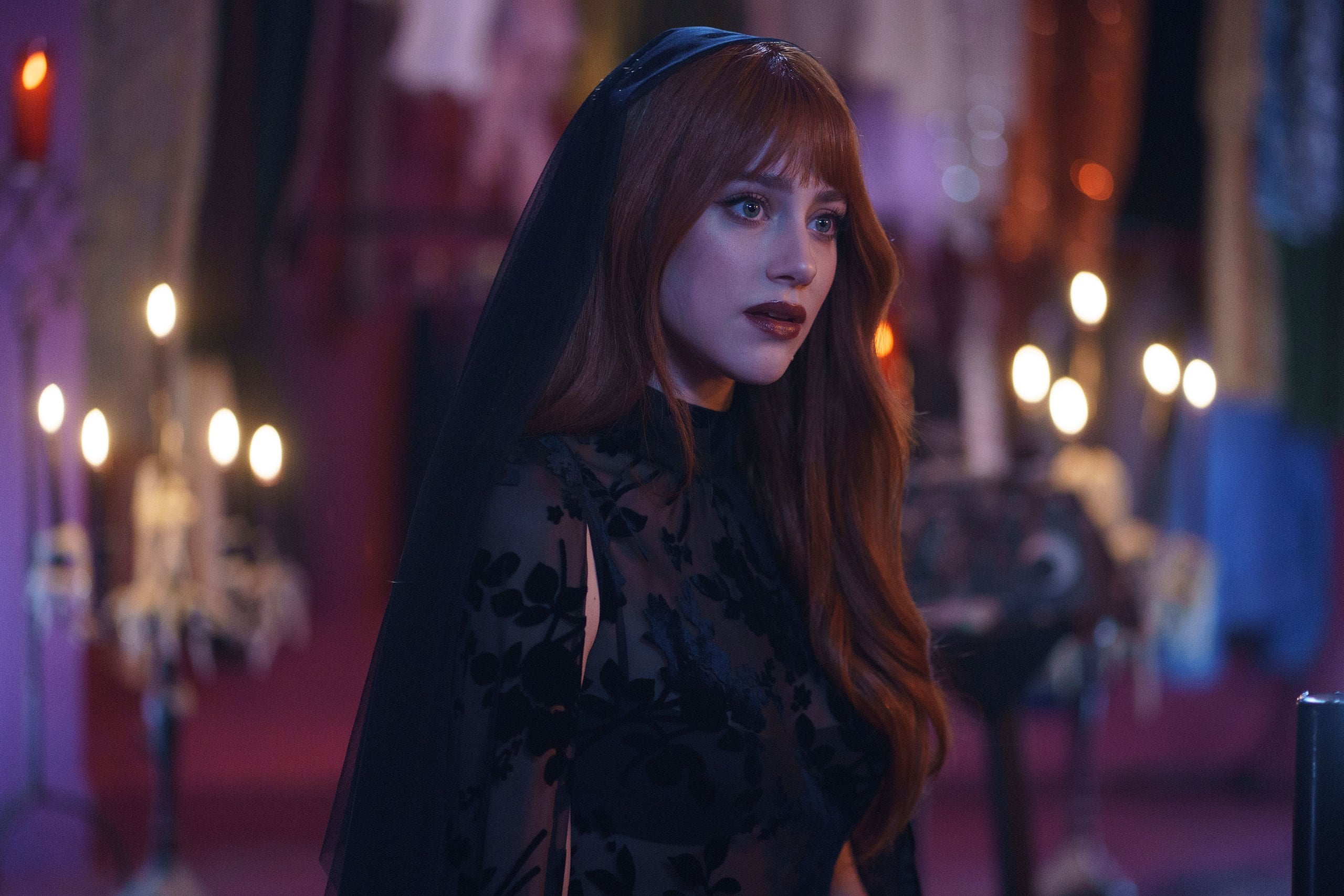

Lili Reinhart plays the polished and poised Apple in "Forbidden Fruits."
IFC
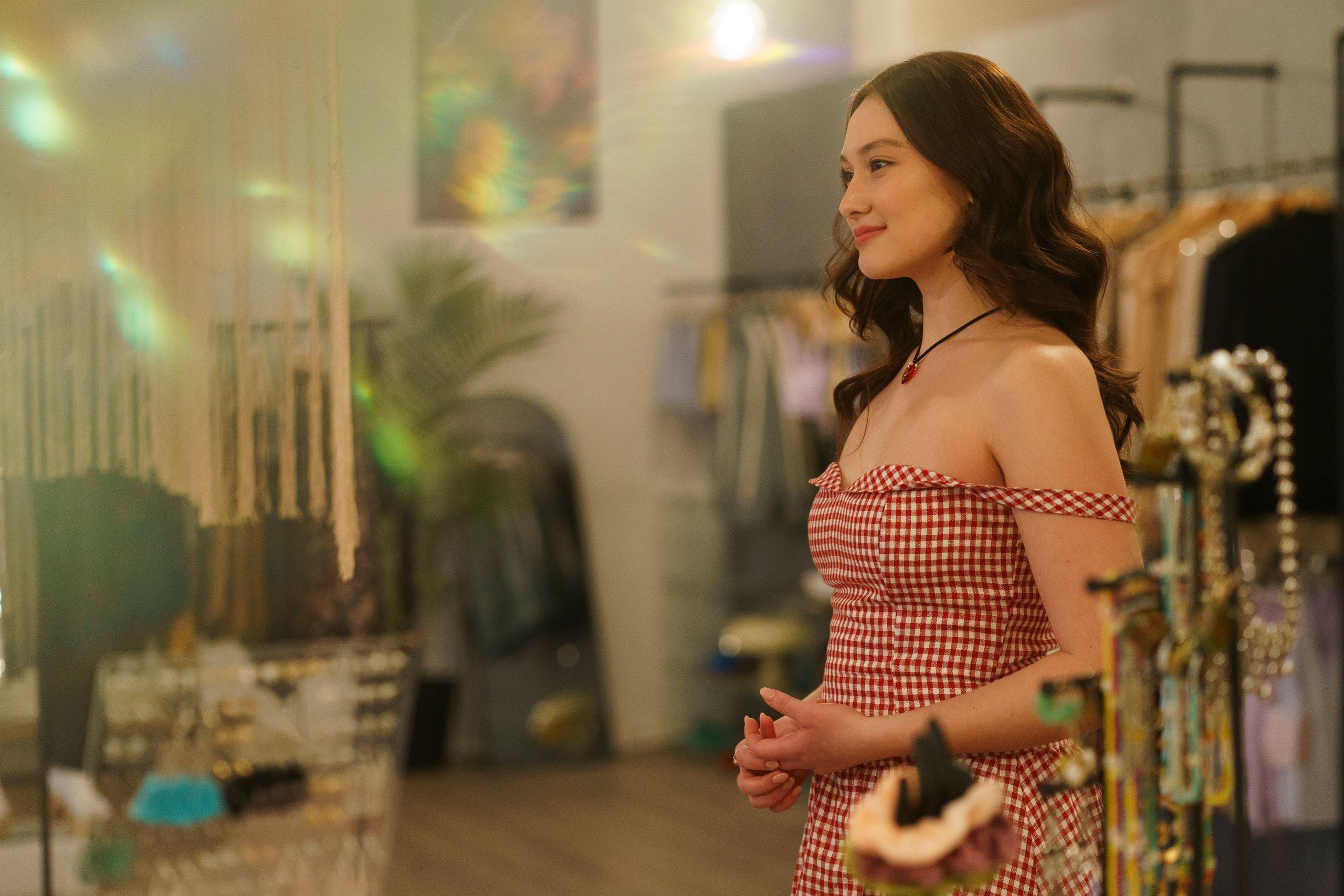

Lola Tung plays Pumpkin, the newest inductee of the mall coven at the center of "Forbidden Fruits."
IFC
When it came to the fittings, Millman says she brought a “let's just play” mentality. She and each of the five stars—Lili Reinhart who plays Apple, Victoria Pedretti who plays Cherry, Lola Tung who plays Pumpkin, Alexandra Shipp who plays Fig, and Emma Chamberlain who plays Pickle—spent hours sifting through racks of clothing to find what appealed. While each core character bears their own unique style, with Fig sporting head-to-toe mall-goth and Apple exuding a hot-girl vixen, across them all Millman collapses “the hyper contemporary” with Y2K and ‘90s mall nostalgia. “We knew that it wasn't a vintage film, it's a period piece,” Millman says, aiming to create “a ride on the broomstick through all the eras” while leaving room for “elements of modernity.”
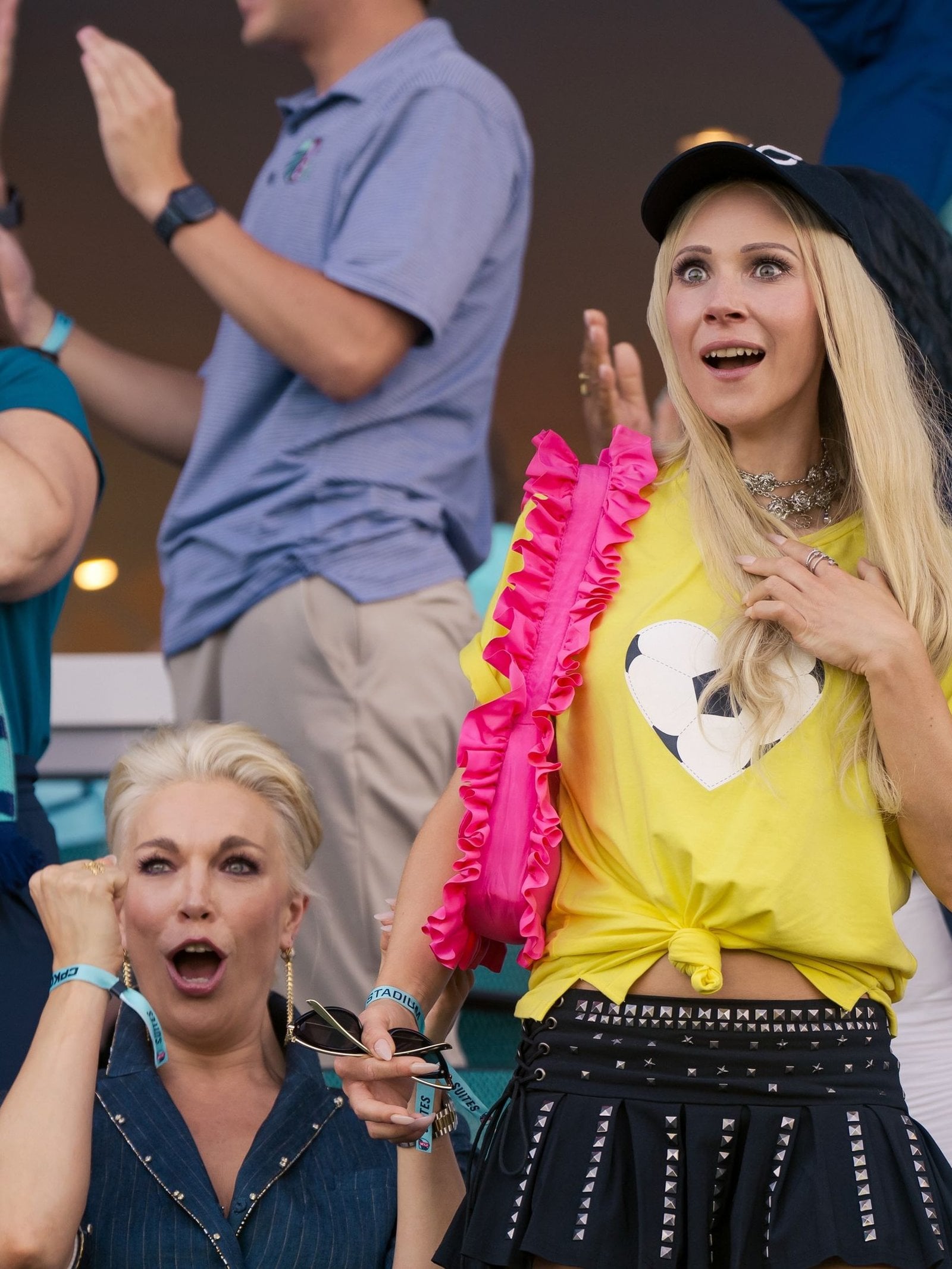
Among a swarm of noughties Easter Eggs, “Forbidden Fruits” brims with icons of contemporary girlhood, from Gen Z slang and Stanley cups to TikTok-viral dresses. In Pumpkin’s makeover scene—marking her initiation into the cult—she struts down the staff stairs of Free Eden in the same gingham Reformation dress Tyler Swift famously wore to the 2024 US Open. Later in the film, the viewer may recognize Cherry in another nod to recent fashion history: the viral Lirika Matoshi strawberry dress that took social media by storm during COVID-19.
.jpg&w=3840&q=85)

Lili Reinhart, Victoria Pedretti, and Alexandra Shipp in "Forbidden Fruits."
IFC
Millman rounded out the hyper-contemporary elements of each character's style with her fair share of Value Village finds. In one scene, Fig sports a long burgundy velvet ankle duster dating back to the 1940s, sourced by her assistant costume designer. This piece, alongside other memorable secondhand inclusions, was a result of last-minute runs to the thrift store. “It really forced us to rely on our creativity—what's available and how can we put it together?” Millman says. She encourages fans to mix high and low, throwing out “hot topic with Rodarte” as an example from the film.
Throughout filming, Millman also encouraged each actress to “push the limits of comfort” in the costume closet, pairing leopard tights with leopard boots and layering dresses over pants. Her approach to costuming is one of trial and error, closer to dress-up than rocket science. “Sometimes it just takes playing or trying to recreate a look with what you have,” Millman says. “When you try to make a cover song, you'll never make it sound exactly like the original, but it's cooler the way that it comes out of you.”