
‘Elsinore’ Recreates the Effortless Elegance of the ’80s With Curated Vintage
Fashion
Costume designer Mel Page describes how she transformed Andrew Scott into Ian Charleson through charity shop scores and the National Theatre costume archive.
Most biopics center around subjects with an abundance of archive photography at the disposal of the costume department. That was not the case for“Elsinore,”which tells the heart-wrenching story of Ian Charleson’s (Andrew Scott) final theater performance, which came just weeks before he died of AIDS. “There's quite a lot of photos of Ian in a professional context but less so in an everyday kind of context,” costume designer Mel Page tells The Set Set. Her job was to research and recreate the actor’s less-documented everyday wear, in addition to the theatrical play-within-a-play costumes of “Hamlet,” with maximum period and character accuracy on a shoestring budget.
Page began her process by studying anecdotes and photographs in the book “Ian Charleson: A Tribute” and his portraits in the National Portrait Gallery. For a more generalized inspiration, Nan Goldin's street wear photography series, “The Ballad of Sexual Dependency,” informed the costumes’ color palette and period details, which epitomize a cool-toned, understated sex appeal. During her research, Page discovered that the photographer of Charleson’s portraits, Johnnie Rosa, was a close friend of the actor and used his tribute Instagram posts as inspiration. “[Charleson] was very, very casual,” Page says. “Everybody would sort of say that he really loved denim.” Charleson’s preference for classic silhouettes allowed Page to source most of his personal wardrobe secondhand.
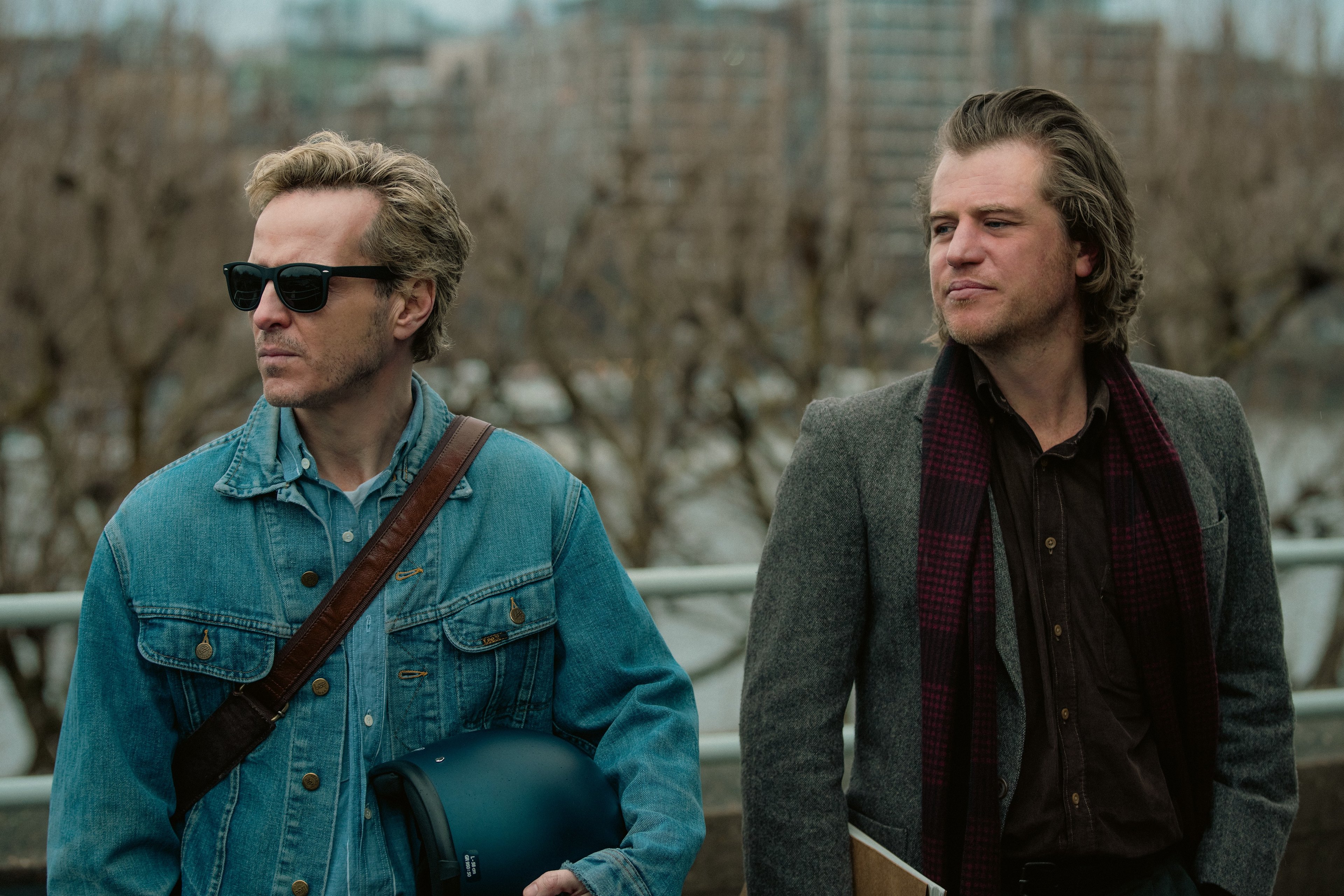

Andrew Scott and Johnny Flynn in "Elsinore."
Focus Features
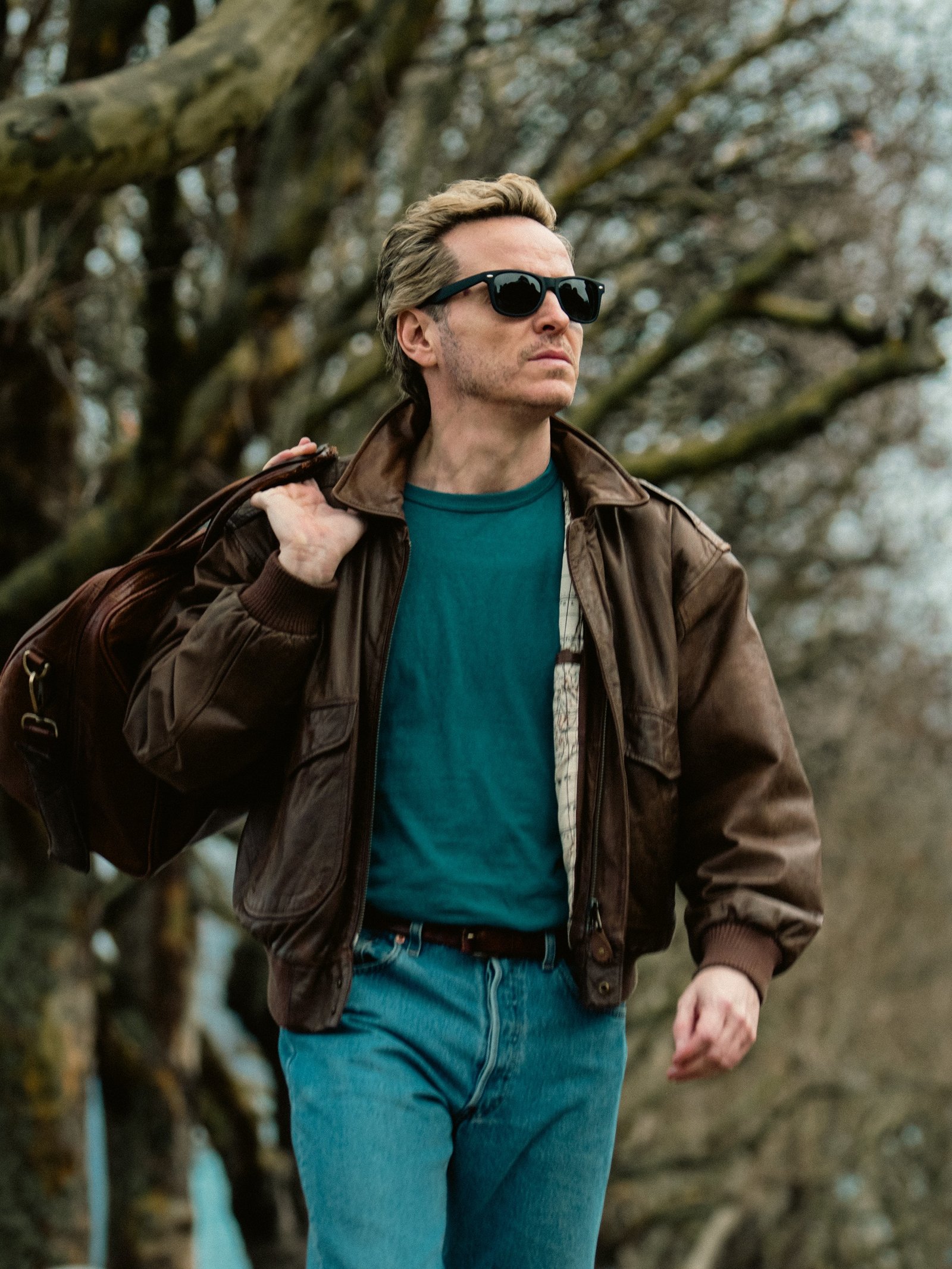
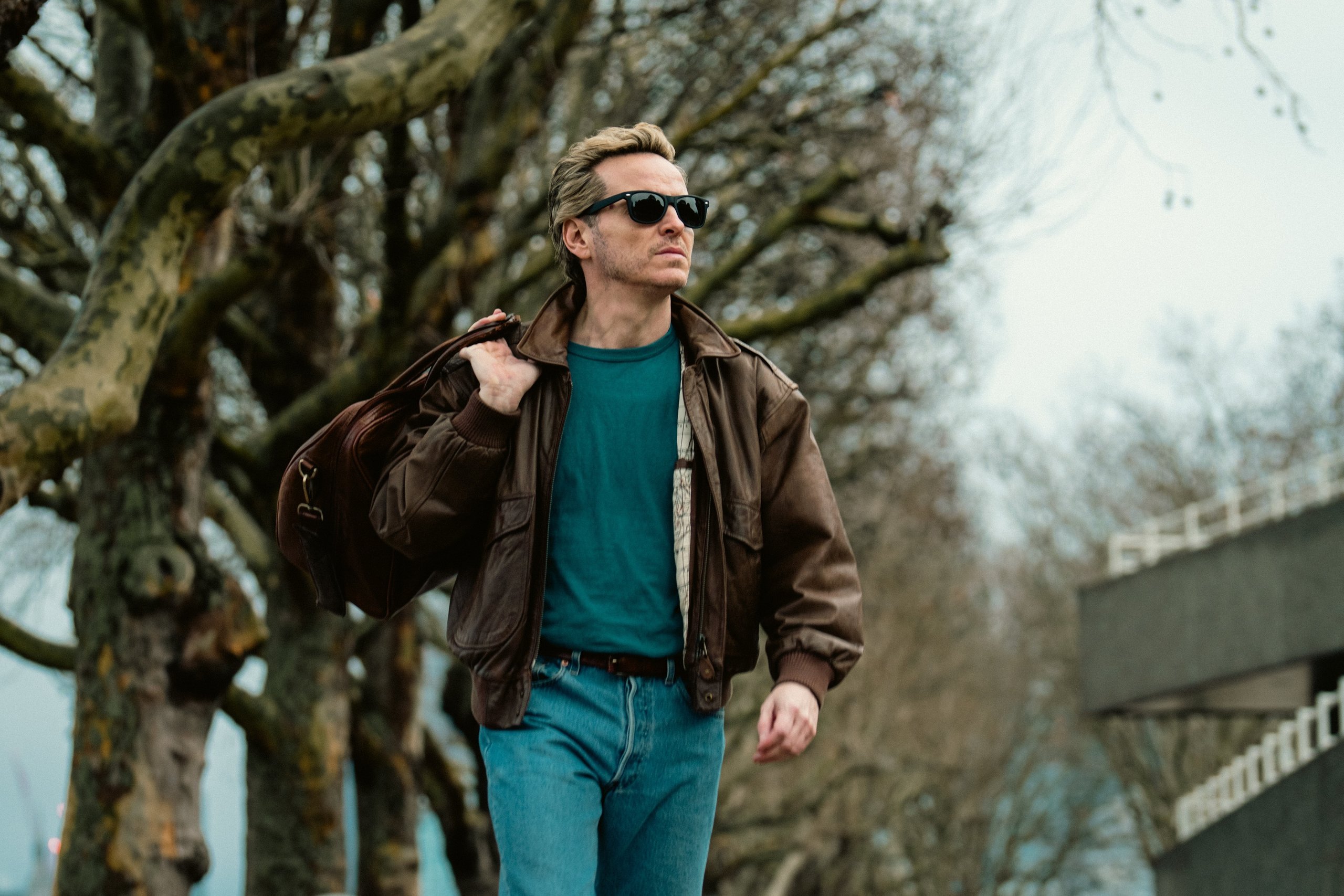
Page sought to recreate Charleson’s “effortless elegance” on screen by leaning on casualwear, an estimated 95 percent of which was sourced vintage from boutiques and charity shops around South East London. “We often have a cliché idea about the ’80s, and the very extreme outfits [of the decade], but there's so much beautiful tailoring and [I think] 1988 and 1989 [silhouettes] should be coming back now,” Page says. Throughout the film, Charleson leans on the more everyday trends of the era, wearing light-wash Levi’s and a staple brown leather jacket. “I'd found this amazing interview that he'd done in a paper where he talked about his love of leather jackets and how he's always searching for the perfect brown one, so when we found this brown leather jacket, we were like, we have to pop this in the film to honour his dream,” Page explains.
In a stroke of luck, Page sourced costumes from the original 1989 production of “Hamlet” from the National Theatre Costume Store. For Charleson’s regal hero costume, Page consulted their original performance’s costume designer Liz da Costa and recreated it from the preserved original in the V&A museum. “It was so tiny and it gave a really strong sense of how ill Ian was when he was performing Hamlet and what a huge task that must have been,” Page says, admiring De Costa’s hand-dyed velvets and luscious textures. The recreated costume was thus designed larger than needed to swallow Scott’s frame and underscore the intensity of his character’s illness.
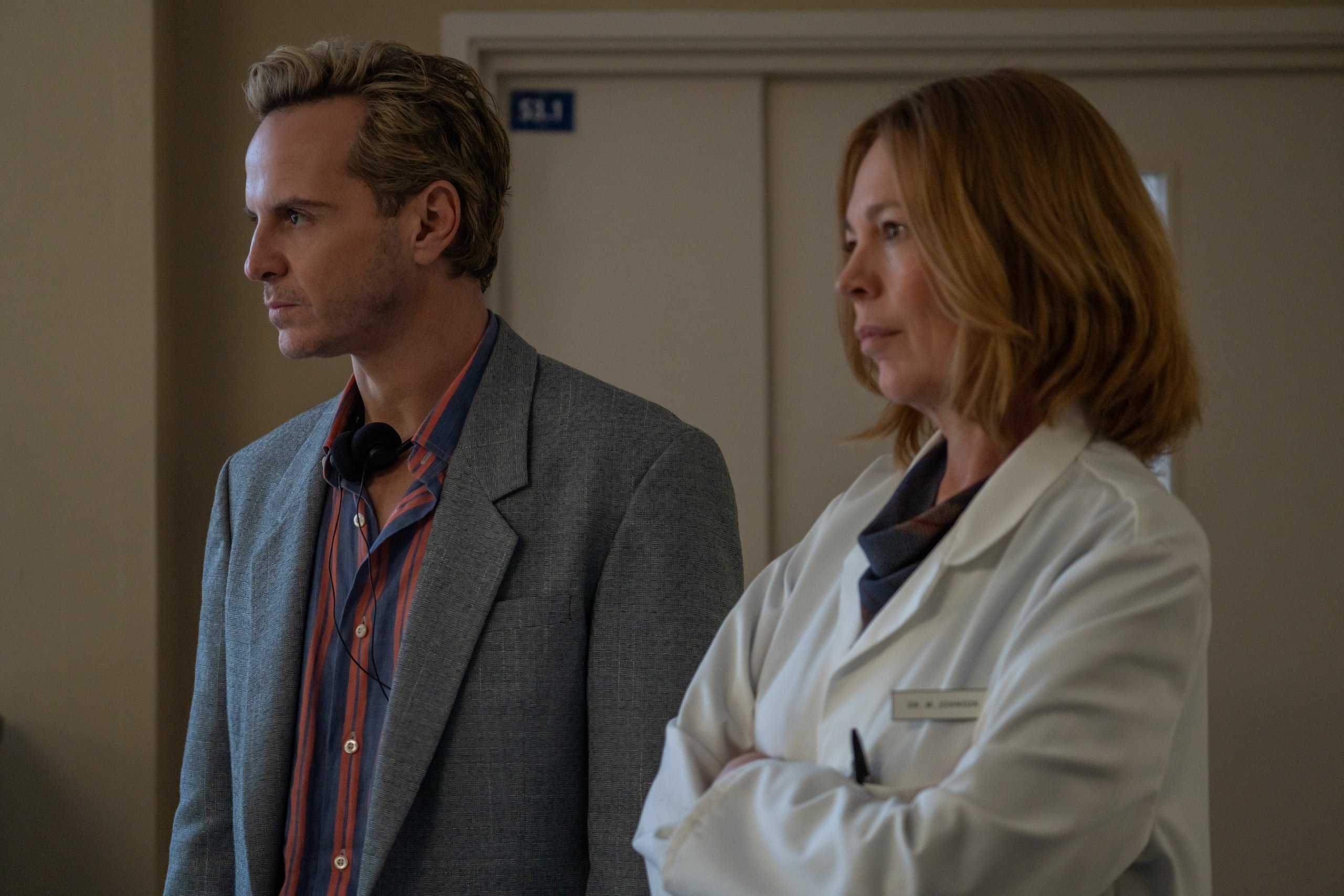

Andrew Scott and Olivia Colman in "Elsinore."
Focus Features
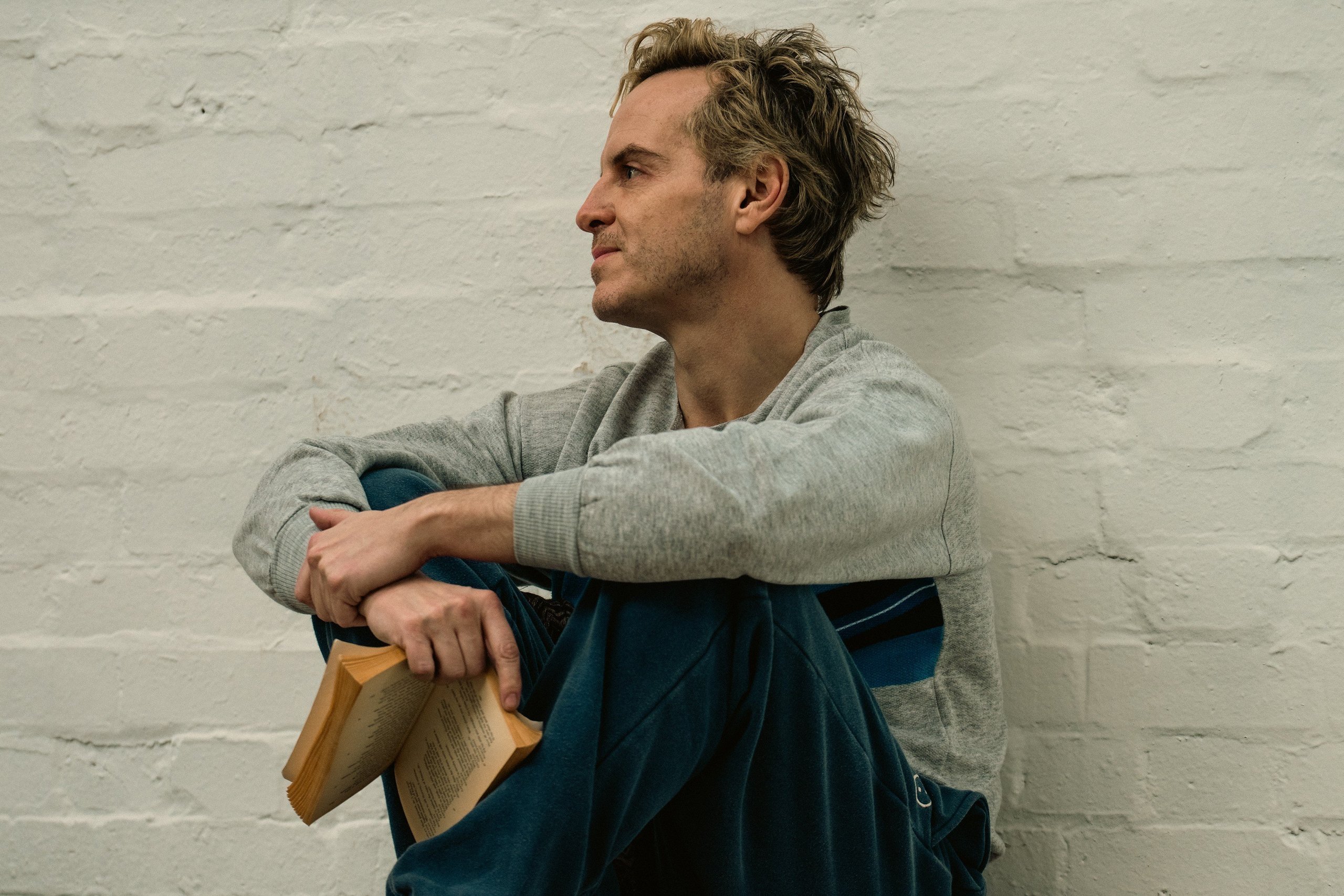

Andrew Scott in "Elsinore."
Focus Features
Andrew Scott and Olivia Colman in "Elsinore."
Focus Features
Andrew Scott in "Elsinore."
Focus Features
Charleson makes a strong effort to present himself as able-bodied and up for the task in spite of his diagnosis throughout his grueling rehearsal schedule. “There's this great quality that [Scott] brings where he puts on something and he really thinks about not only how it looks, but how it feels to be inside [his] items of clothing and what that means for the character,” Page says. All of Charleson’s costumes functioned as a projection of the character, who lived in a constant state of denial for both his illness and his sexuality. “Not only was [Charleson] attempting to go, ‘I'm okay, I'm still myself,’ [while he developed AIDs] but he also was a gay actor who wasn't out,” Page says. “So [masking through clothing] had been something he had probably been doing anyway, but in a slightly different context.”
As the character continues attending rehearsal as his illness progresses, his costumes grow increasingly pragmatic. Across exhausting rehearsals and unrelenting doctor’s appointments, jeans and trousers are swapped for comfortable tracksuit pants. Still, he retains certain stylish pieces, like the aforementioned leather jacket. “We're sort of kind of bringing those two things together; he's still holding on to himself in a way,” Page says.