
'Bridgerton’ Floral Designer Phillip Corps Is Setting Spring’s Biggest Flower Trends
Interiors
Returning for his third season arranging the floral backdrops of “Bridgerton,” Phillip Corps talks through the blooms of Cressida's bubblegum pink-drenched party, the sculptural florals of the fateful masquerade ball, and the draped ornamental garlands of Hyacinth's recital scene.
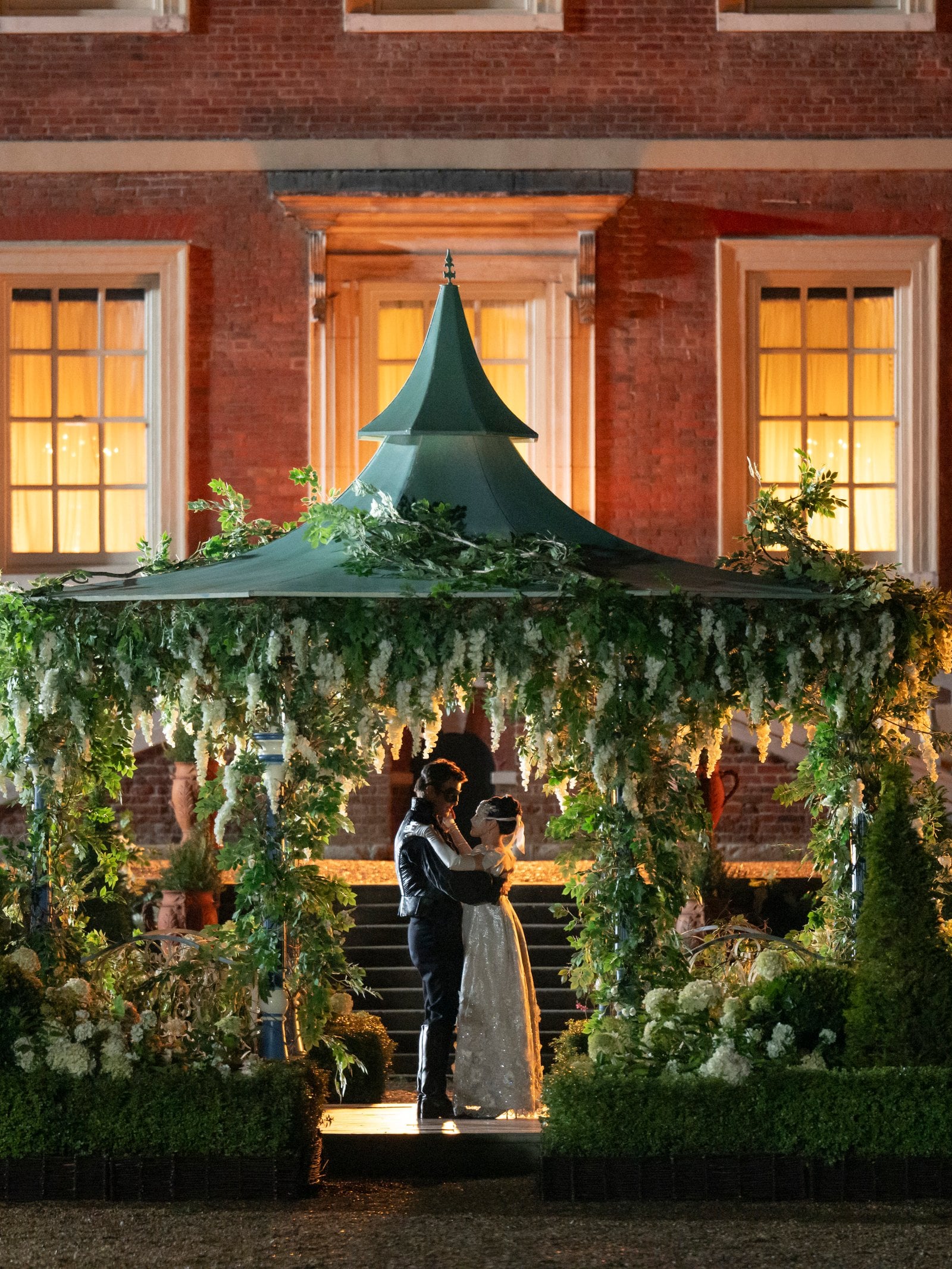
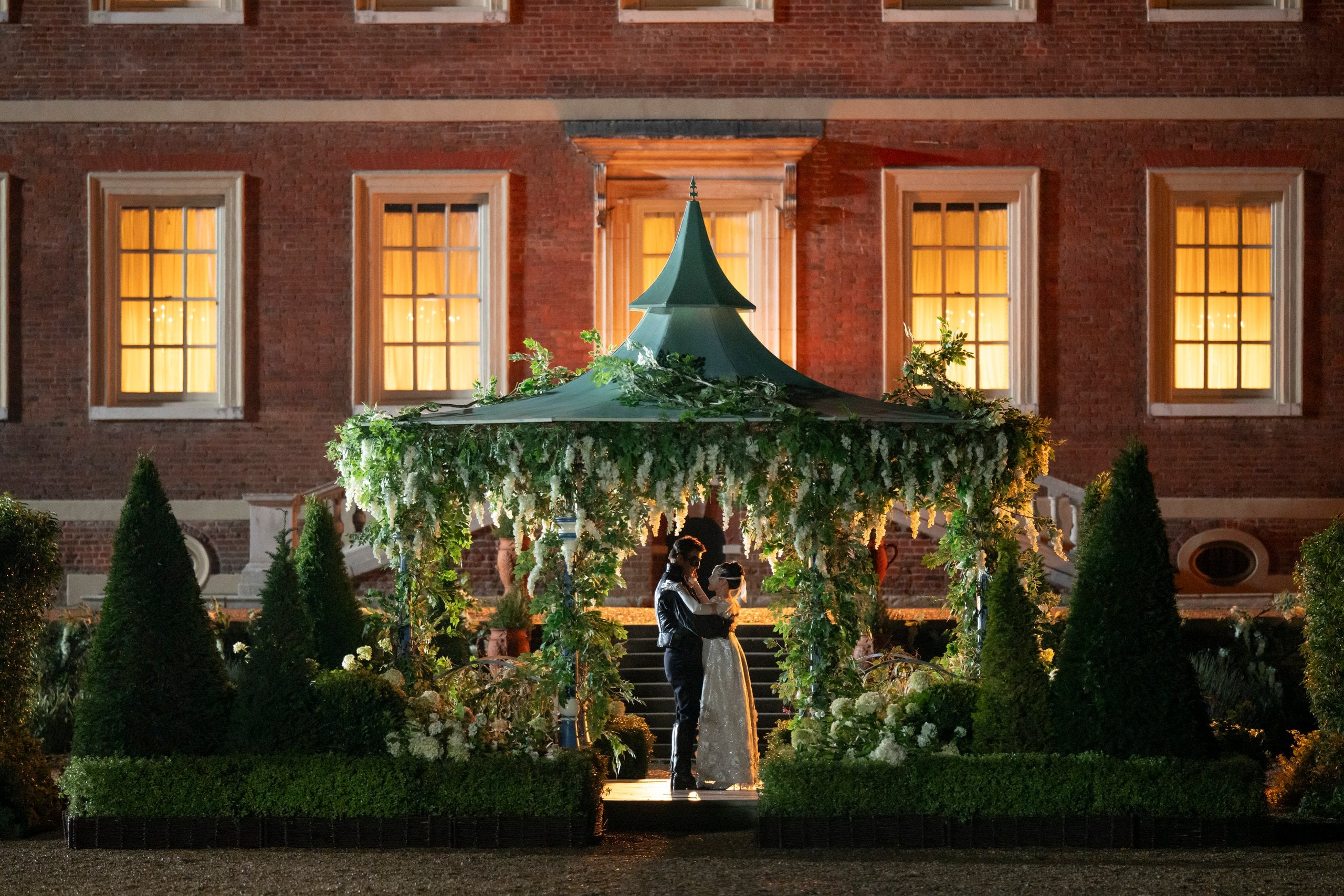
In “Bridgerton” season four, the camera lingers on a quieter corner of the ton: a wisteria-adorned gazebo on the outskirts of the Bridgerton Estate on the night of the fateful masquerade ball. Sophie Baek—the season’s heroine—threads her way through a tapestry of autumnal blooms and unruly foliage, exploring the overgrown edges of the Bridgertons family's otherwise manicured lawn. The scene marks a shift for the series, which has widened its lens beyond the aristocratic drawing room to the workers who quietly assemble it. Fittingly, the show’s lead florist, Phillip Corps, approached each floral arrangement much like a costume designer: beginning with a character profile and letting the aesthetic bloom from there.
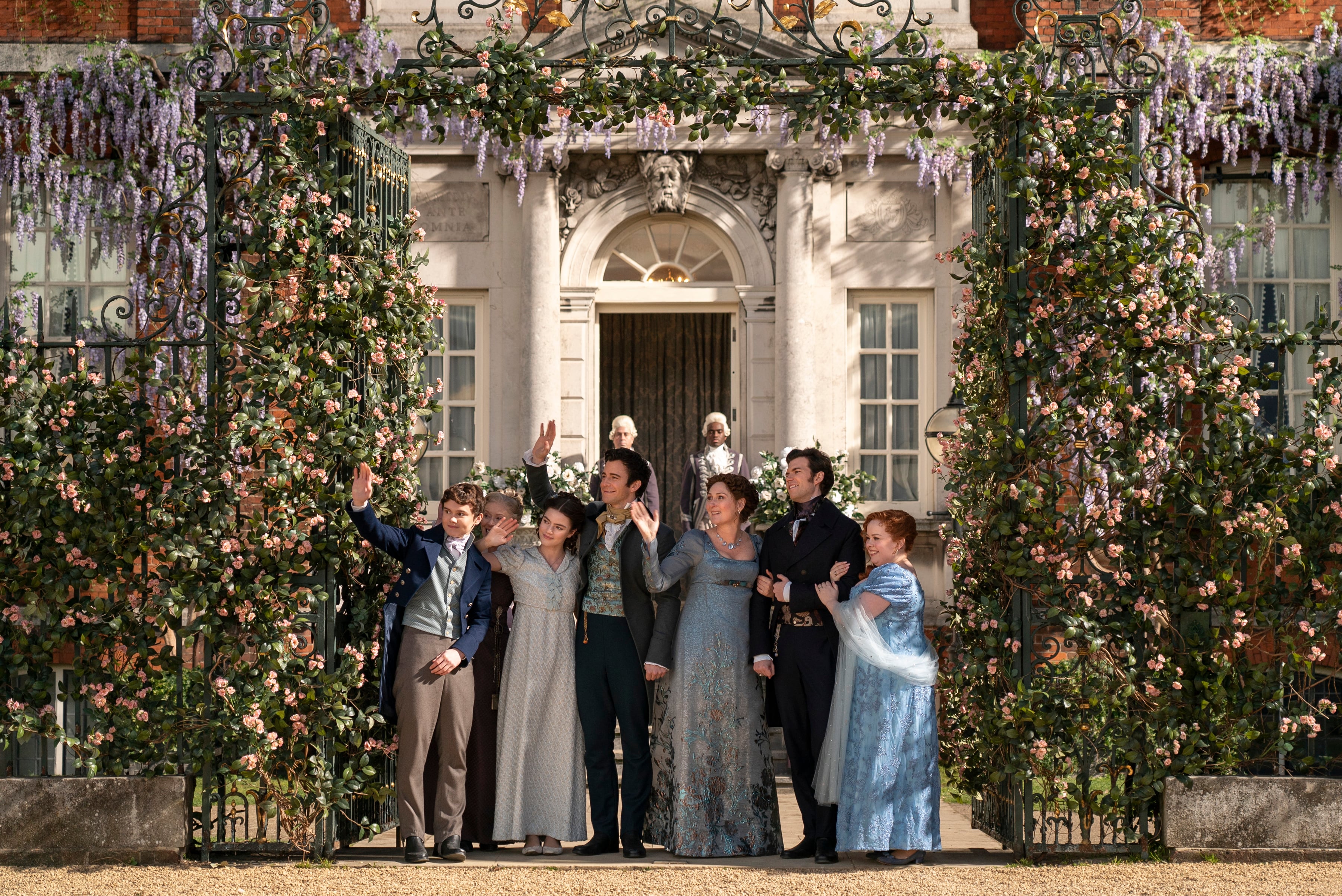

The Bridgerton family outside their signature wisteria-covered home.
Netflix
For Corps, centering this season’s florals around the theme of servitude did not mean foregoing opulence; rather, it required sourcing seasonally-appropriate blooms, which the servants themselves could have realistically foraged or purchased, and crafting understated color schemes. “All the characters have a color palette,” Corps explains. “For example, the Bridgertons are sort of soft and blue is their main color, the Featheringtons are quite acidic and yellow, and then Cressida Cowper, she's very pink.” Cressida’s ball, marking her return to the ton as a married woman of stature, looked like the inside of a LoveShackFancy boutique, with cloying pink floral arrangements bursting out of every corner and trays of brightly-colored macaroons. Corps relied on dried flowers, dyed feathers, and decorative corn stalks to supplement the character’s arrangements, allowing them to be both pink and autumnal.
The spectacle of the ball—pink, feathery, and unabashedly “garish,” as Lady Araminta Gun describes it—stands in stark contrast to the soft pastels of the Bridgerton botanical palette. Alternatively, Corps opted for delicate, naturalistic floral arrangements for the Bridgerton masquerade ball. This meant white wisteria, to complement the pearlescent silver of Baek’s scene-stealing masquerade ball gown. “The flowers were very gardeny, like the servants had picked them from the grounds,” Corps says.
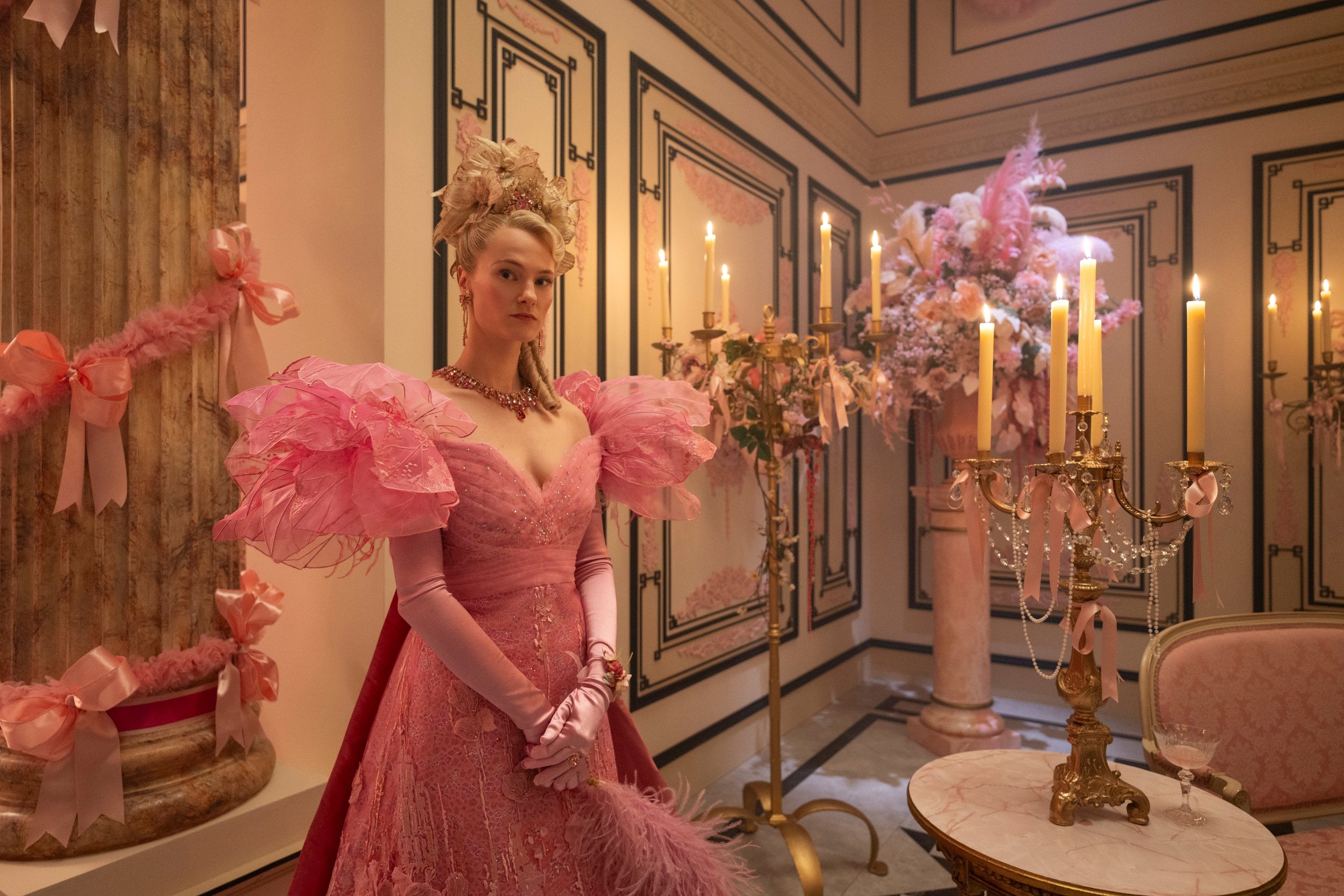

Jessica Madsen as Cressida in "Bridgerton" season four.
Netflix
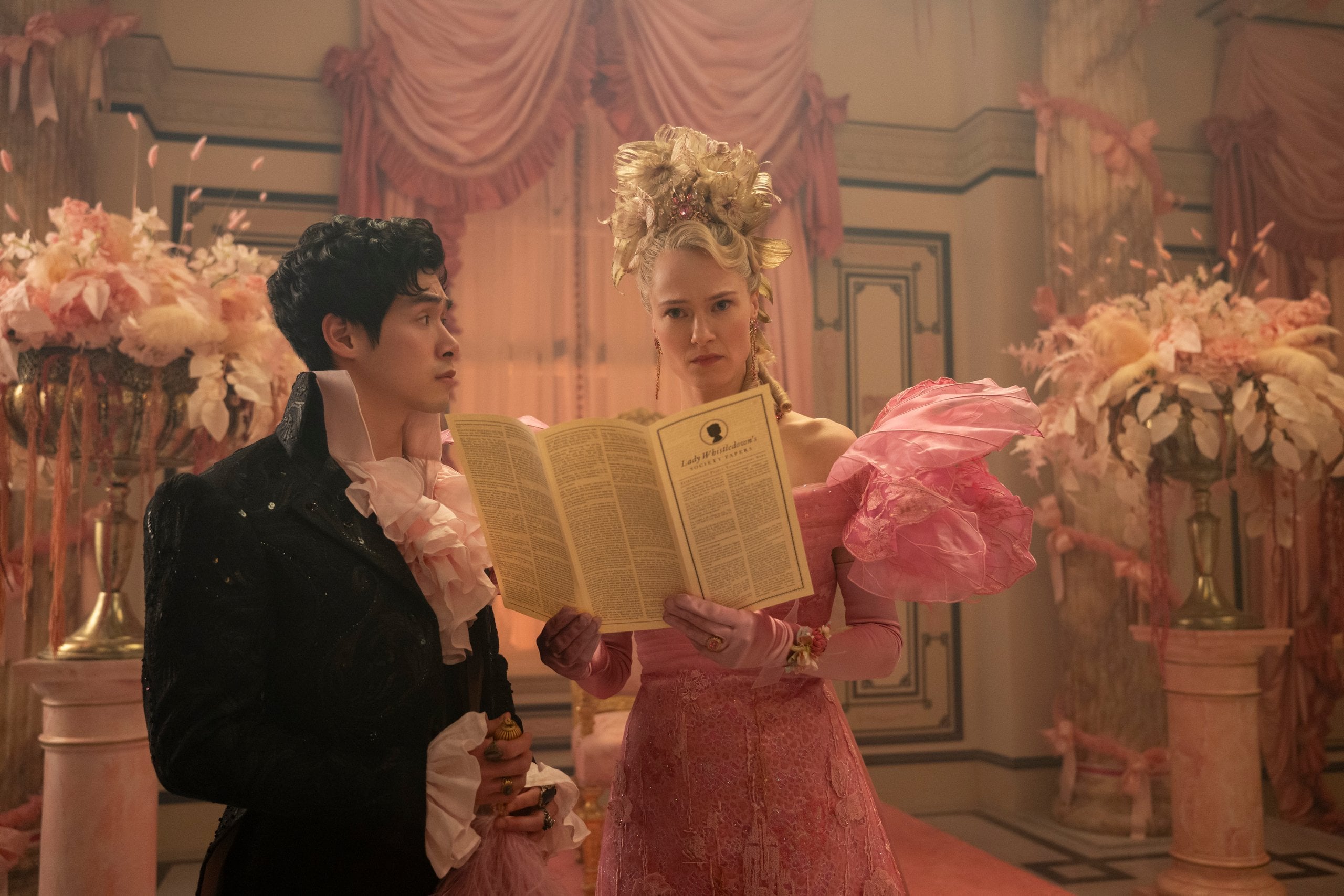

"She's very pink," Phillip Corps says of Cressida's floral color palette.
Netflix
Jessica Madsen as Cressida in "Bridgerton" season four.
Netflix
"She's very pink," Phillip Corps says of Cressida's floral color palette.
Netflix
Corps incorporated the emerging trend of “sculptural florals” on set, using oil paintings and Old Master paintings from the Regency era to guide his artistic vision.“Opulence is the key on ‘Bridgerton,’” Corps puts plainly. “But, you know, you can achieve opulence by foraging the greenery.” This season, Corps assembled a series of towering fruit sculptures that featured seasonal produce alongside flowers.
Corps worked alongside a team of eight to ten specialists to transport and install the masquerade ball floral installation. Preparing the arrangements required three weeks and a meticulous process for scenes that would be filmed across three separate sets: a stage set transformed into the ballroom, the exterior of the Bridgerton residence, and a distinct interior set replicating the home’s rooms.
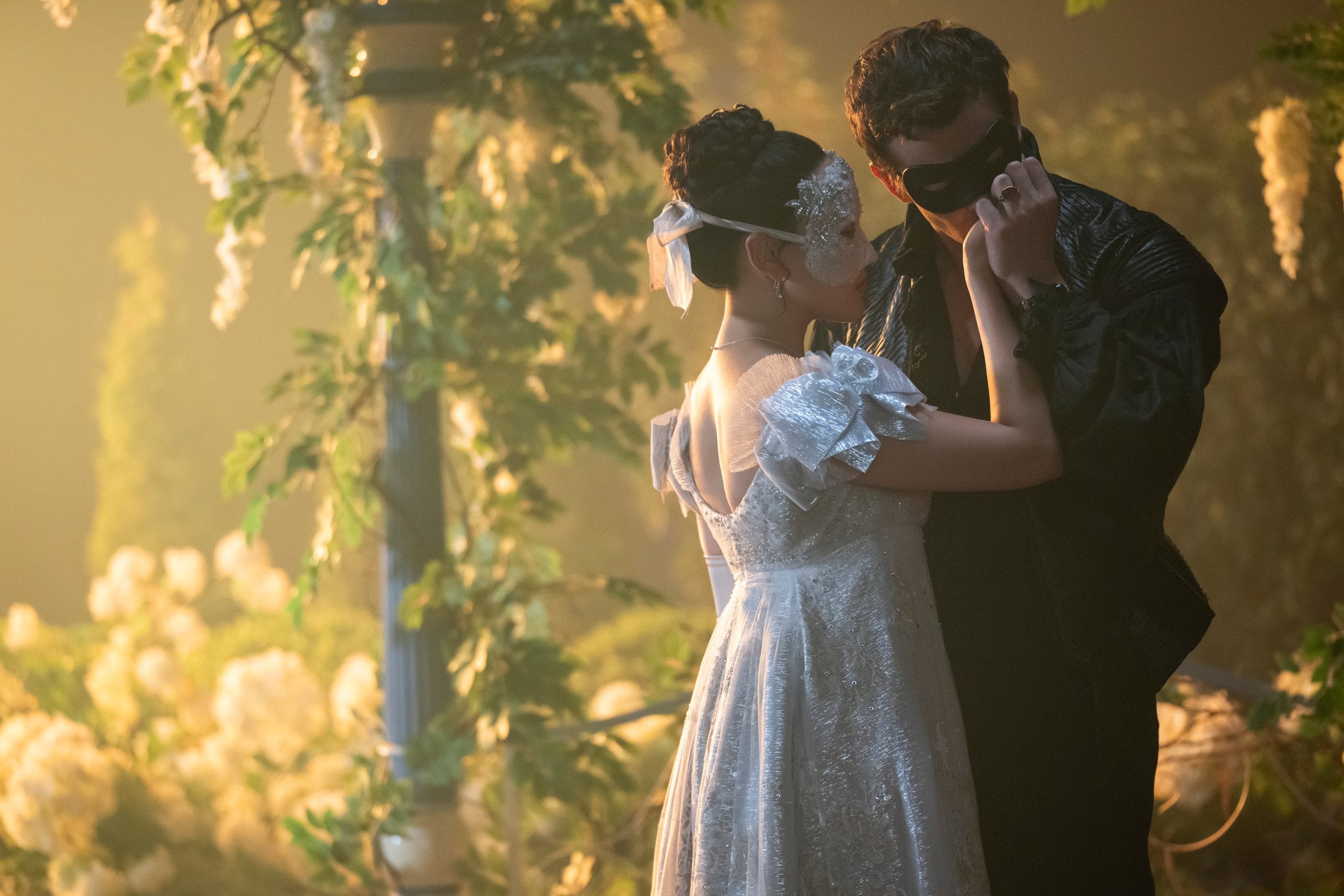

Luke Thompson and Yerin Ha in "Bridgerton" season four's Masquerade Ball episode.
Netflix
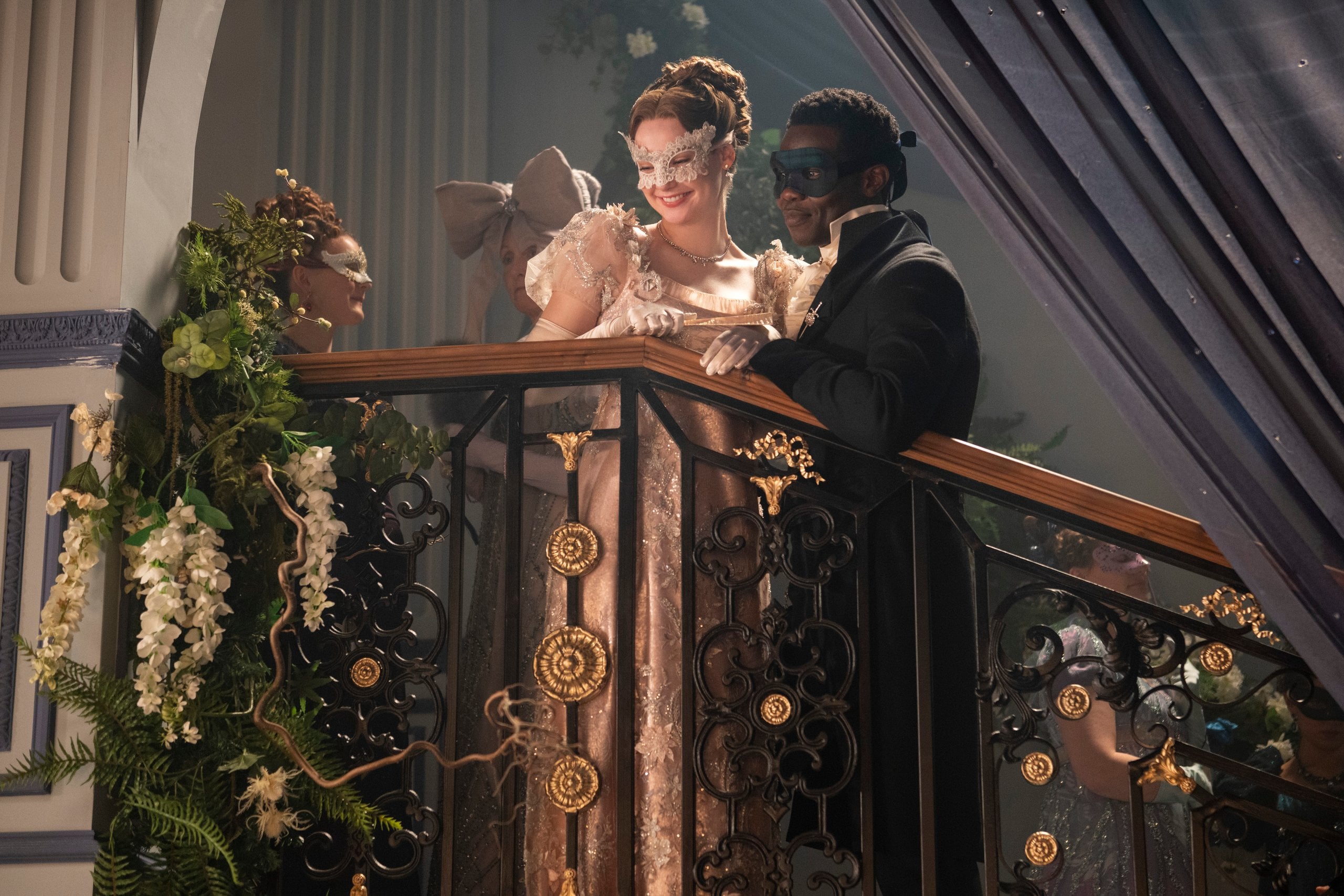

Hannah Dodd and Victor Alli in "Bridgerton" season four's Masquerade Ball episode.
Netflix
Luke Thompson and Yerin Ha in "Bridgerton" season four's Masquerade Ball episode.
Netflix
Hannah Dodd and Victor Alli in "Bridgerton" season four's Masquerade Ball episode.
Netflix
Coordinating floral transportation became an operation in itself, with the production team shuttling delicate arrangements across the country to preserve their consistency on camera, or remaking them if the schedule allotted for it. “There were a lot of delicate details in the masquerade ball. We used a lot of contorted willow and catkins to give it a more natural touch because it was placed about the servants,” Corps says.
Preparing the Bridgerton house for Hyacinth’s Dance required the most work of all this season’s installations. The ribbon garlands alone took about six weeks to make and hang, with each flower hand-glued onto the garland, and their stems recycled for later use as coal for the Queen’s Walk. “We were repurposing stuff all the time,” Corps says. “‘Bridgerton’ has a really big store of stuff that we keep above the studios, so the flowers get recycled and moved around so they look very different on screen.”
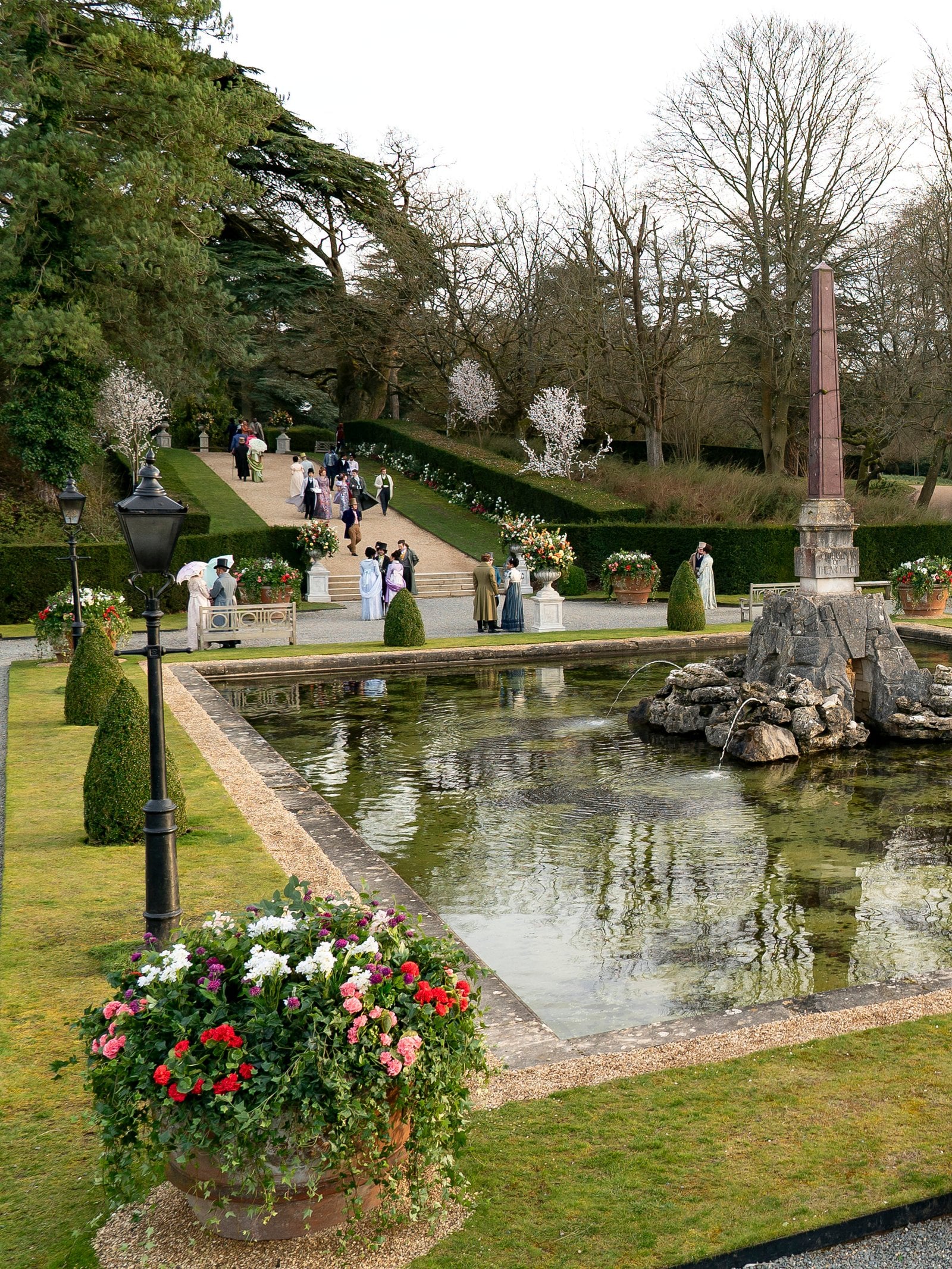

Phillip Corps' work on the show sees him repurposing floral arrangements for multiple scenes.
Netflix
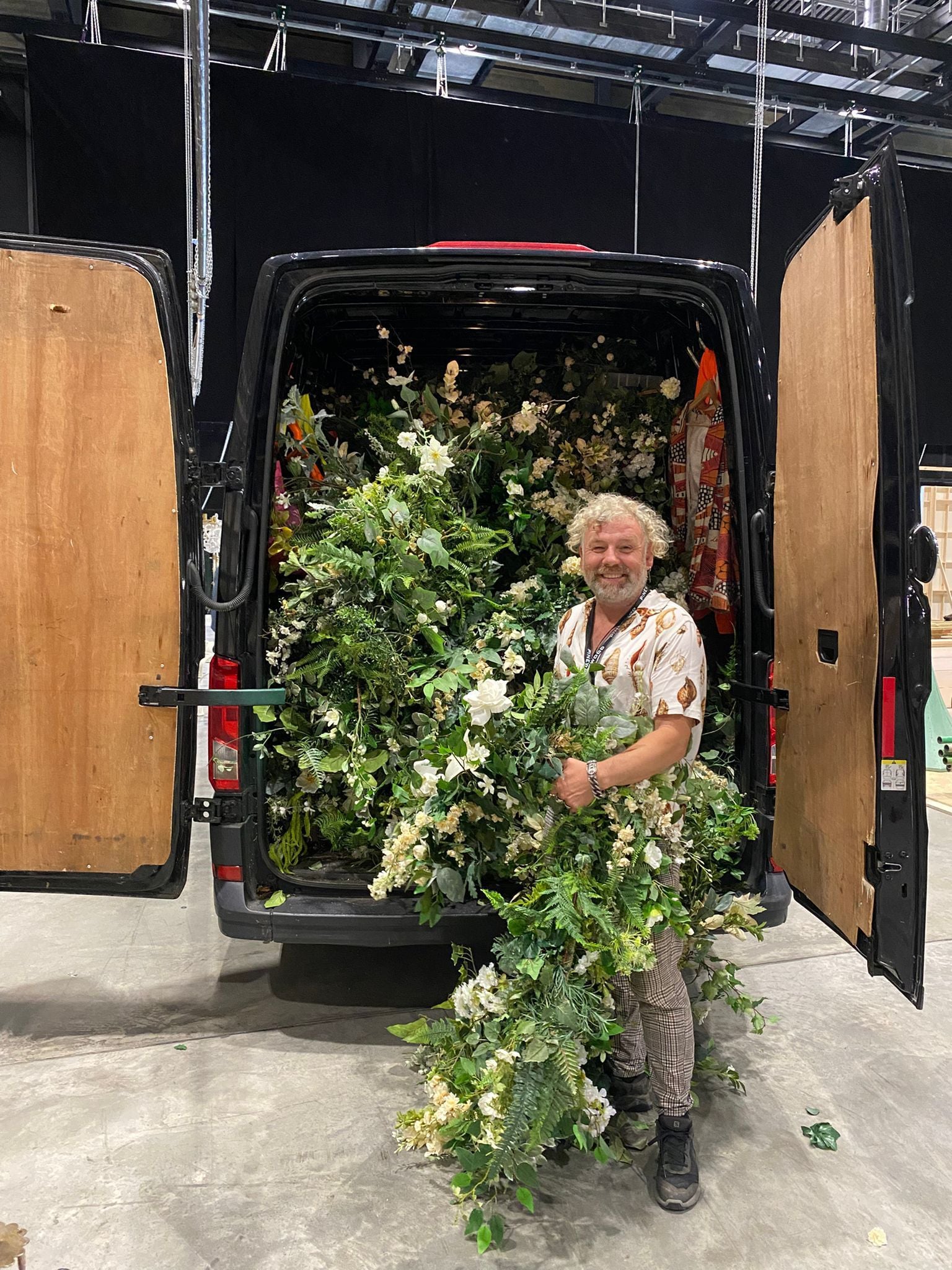

Phillip Corps is the man behind the opulent floral arrangements in "Bridgerton".
Netflix
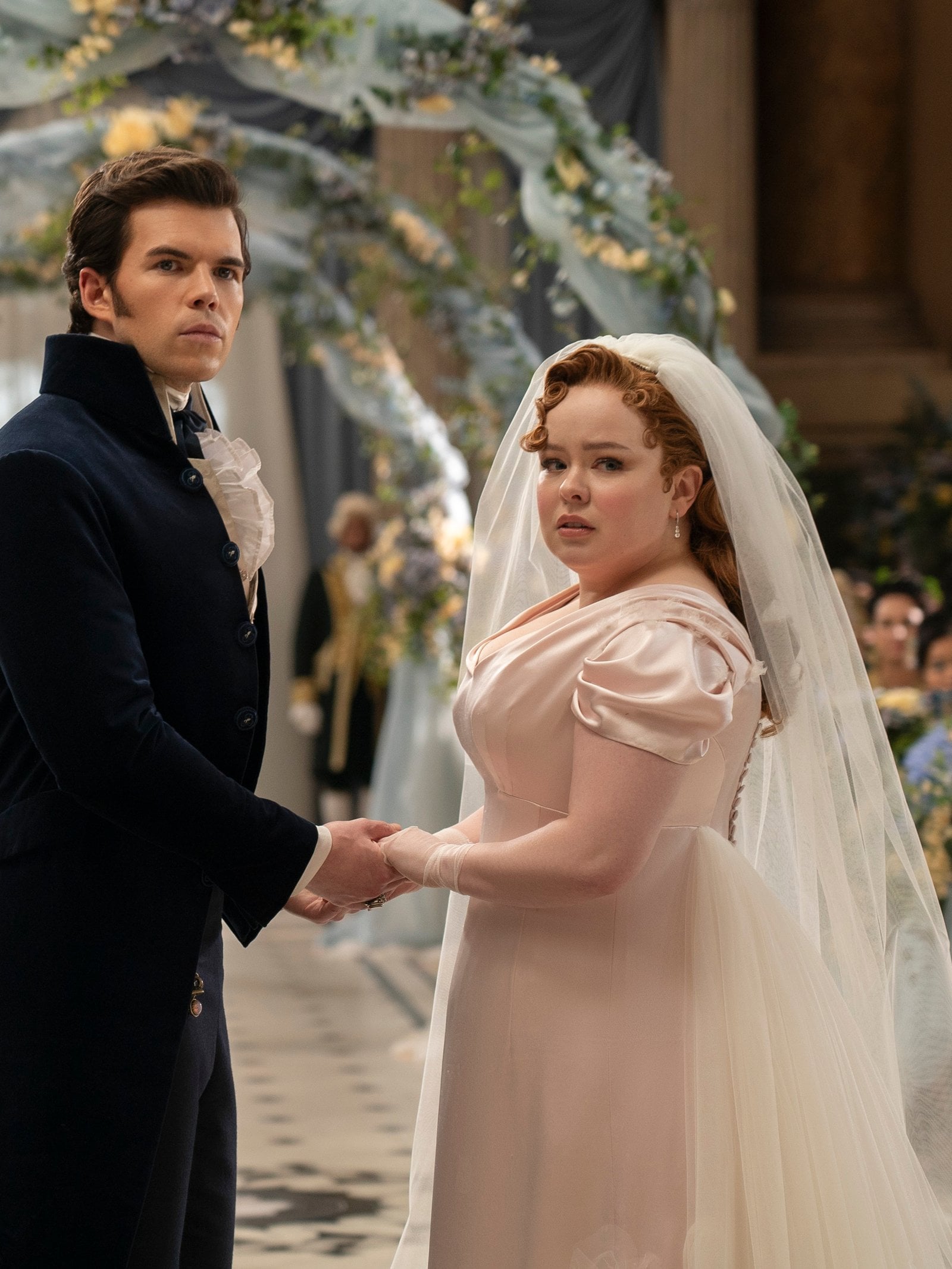

Colin and Penelope's wedding in "Bridgerton" season three.
Netflix
Phillip Corps' work on the show sees him repurposing floral arrangements for multiple scenes.
Netflix
Phillip Corps is the man behind the opulent floral arrangements in "Bridgerton".
Netflix
Colin and Penelope's wedding in "Bridgerton" season three.
Netflix
For the draped garlands, Corps opted for “magical, very Cinderella vibes,” reserving the historical references for what he calls the “standalone flower arrangements” that often frame entrances and dress tables. “The standalone flower arrangements are very much based on some of the old flower paintings in the 1600s and 1700s. All we really have to go on [for accurate Regency era representation] is old paintings and etchings and things like that, so that's my inspiration.”
Outside of "Bridgerton," Corps is booked and busy facilitating other arrangements for film and television. And while his availability for weddings has significantly decreased in recent years, he says he is “always open to a ‘Bridgerton’ wedding. It would be fab.”