
In ‘The Drama,’ Mid-Century Furniture and Original Art Capture a Relationship on the Brink
Interiors
Production designer Zosia MacKenzie breaks down how she used asymmetry in the film's interiors to reflect the disconnect between Zendaya and Robert Pattinson’s characters.
In A24’s “The Drama,” Boston, Emma (Zendaya) and Charlie (Robert Pattinson) attempt to hold onto their relationship after a disturbing reveal. Behind the scenes of the film, shot entirely on location, production designer Zosia MacKenzie faced challenges of her own, starting with finding the perfect apartment to anchor the couple’s story.
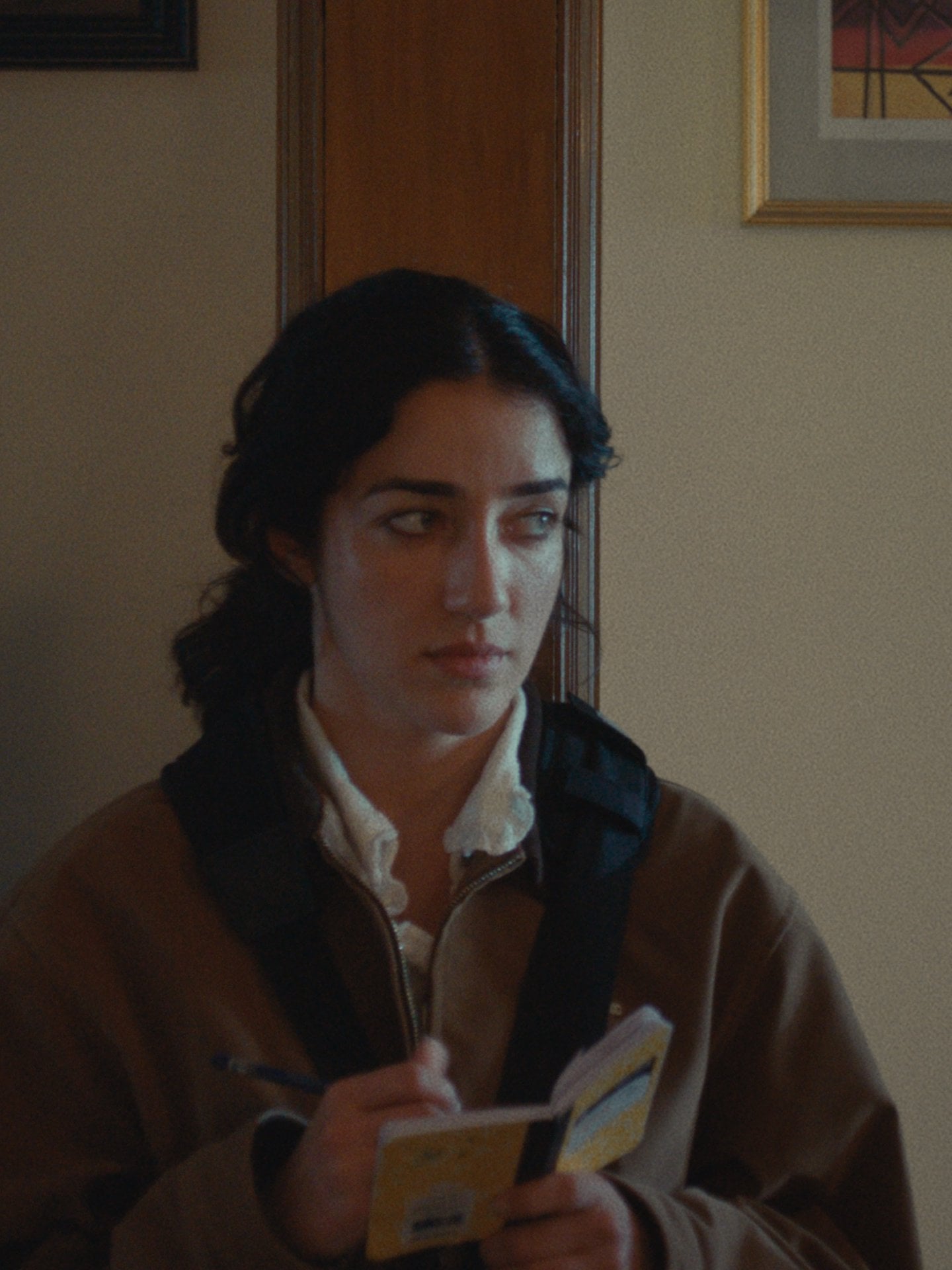
“We looked at a lot of places in Boston,” says MacKenzie, over Zoom and on-theme in a cap from the fictional Cambridge Art Museum, where Charlie works. On the hunt for a “traditional Boston” abode with character—bay windows, an airy feel, and sun-drenched natural light— she scoured lists and toured countless locations before landing on an ideal South End apartment. “I was like, ‘Wow, this is it’—with that spiral staircase. It has such a vibe already. It’s amazing to start with a really strong foundation,” says McKenzie. “Then it was just a matter of convincing the homeowner to let us film there.”
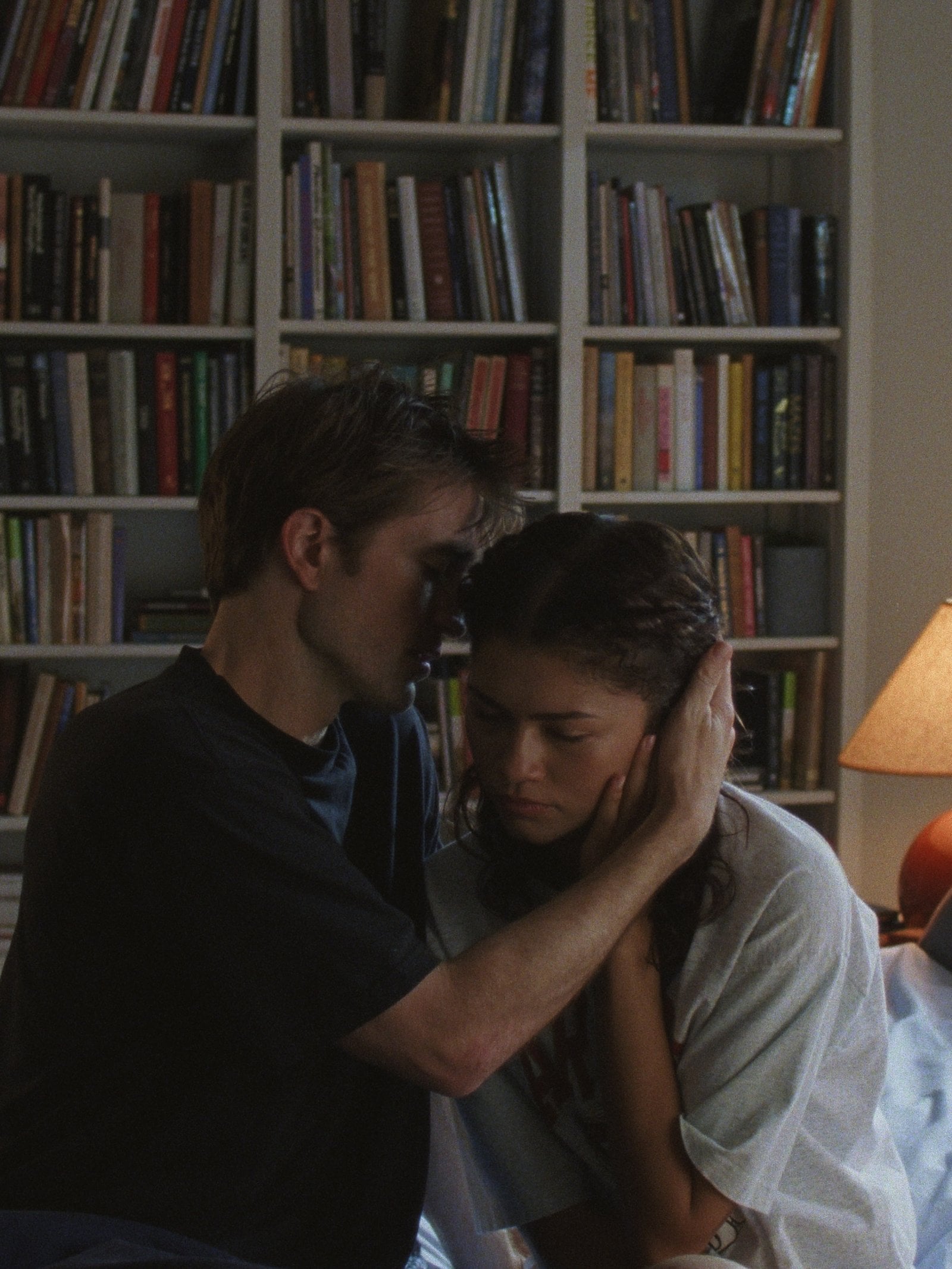
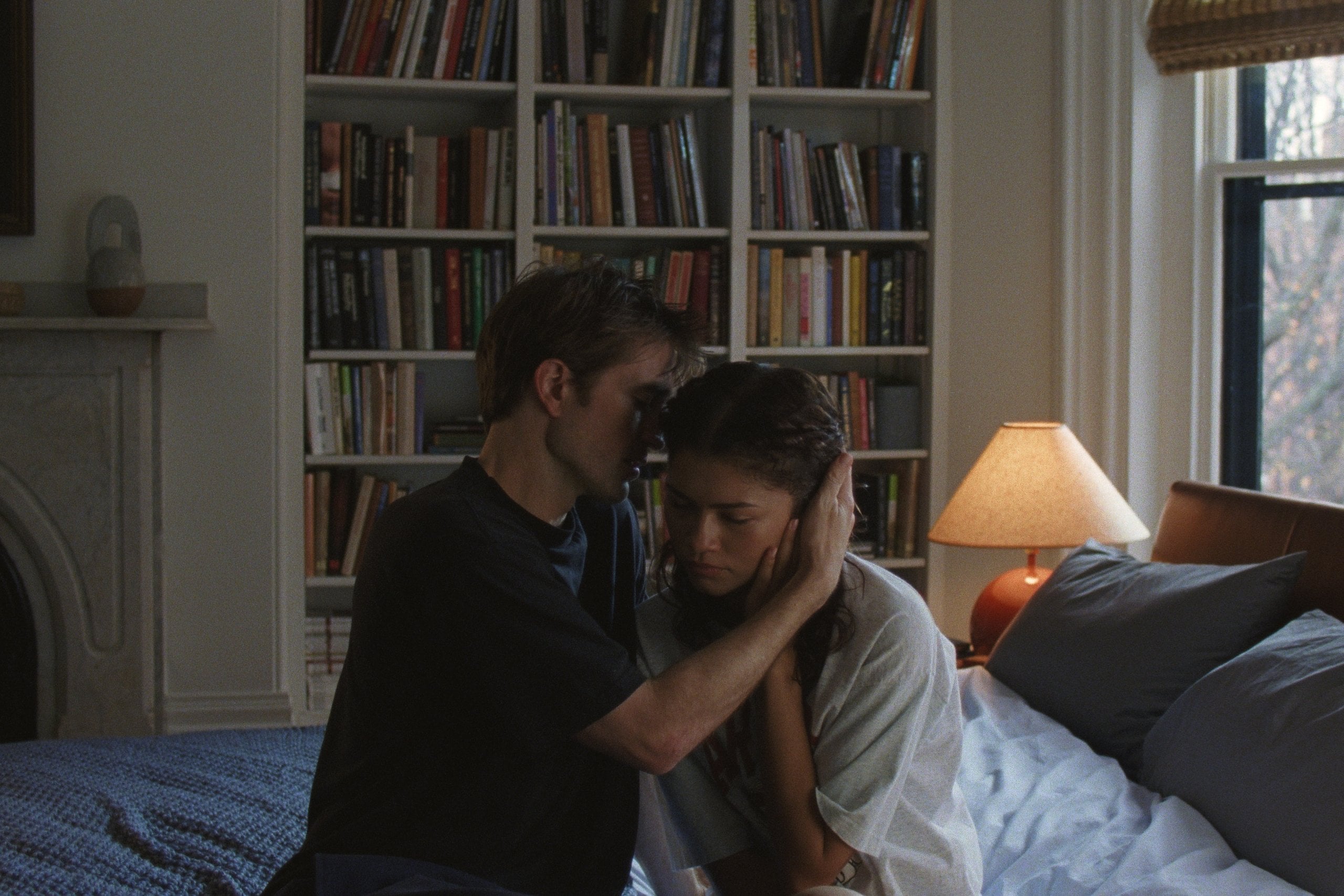
After some successful sweet-talking, she and her team had just three weeks to fully outfit the apartment as if it belonged to an intellectually creative couple at the start of their careers—and their life together. Thoughtful, expressive Easter eggs abound in Emma and Charlie’s packed bookshelves and decorated walls. “We wanted to bring in a lot of books, of course, for Emma, since she works in publishing,” says MacKenzie, who even made the extra effort to create fake jacket covers from Emma’s employer, Mission Publishing. “A lot that went into that.”

Zendaya and Robert Pattinson in "The Drama."
A24
Alongside paintings, photographs, and other artwork, a poster from Charlie’s workplace hangs on the wall, nodding to his profession and the location of the couple’s second date, which was actually filmed at the Addison Gallery of American Art in Andover. “We just wanted all real art. We didn't want to go with any prop art,” says MacKenzie. “Everything had to be real and grounded because of his character. He'd be putting together his own collection from local artists.”
Behind the scenes, MacKenzie did the same—seeking out Boston-based artists, as well as visiting galleries in New York City. Adding more meaning to Charlie’s collection, McKenzie sought out friends of the film’s director, Kristoffer Borgli. “He's got a lot of very talented friends from Norway,” adds McKenzie, who previously worked with Borgli on his Nicholas Cage-starring film, “Dream Scenario.” “We were like, ‘Send us your artworks.’ Then we framed everything ourselves with our very amazing, but small construction team.”
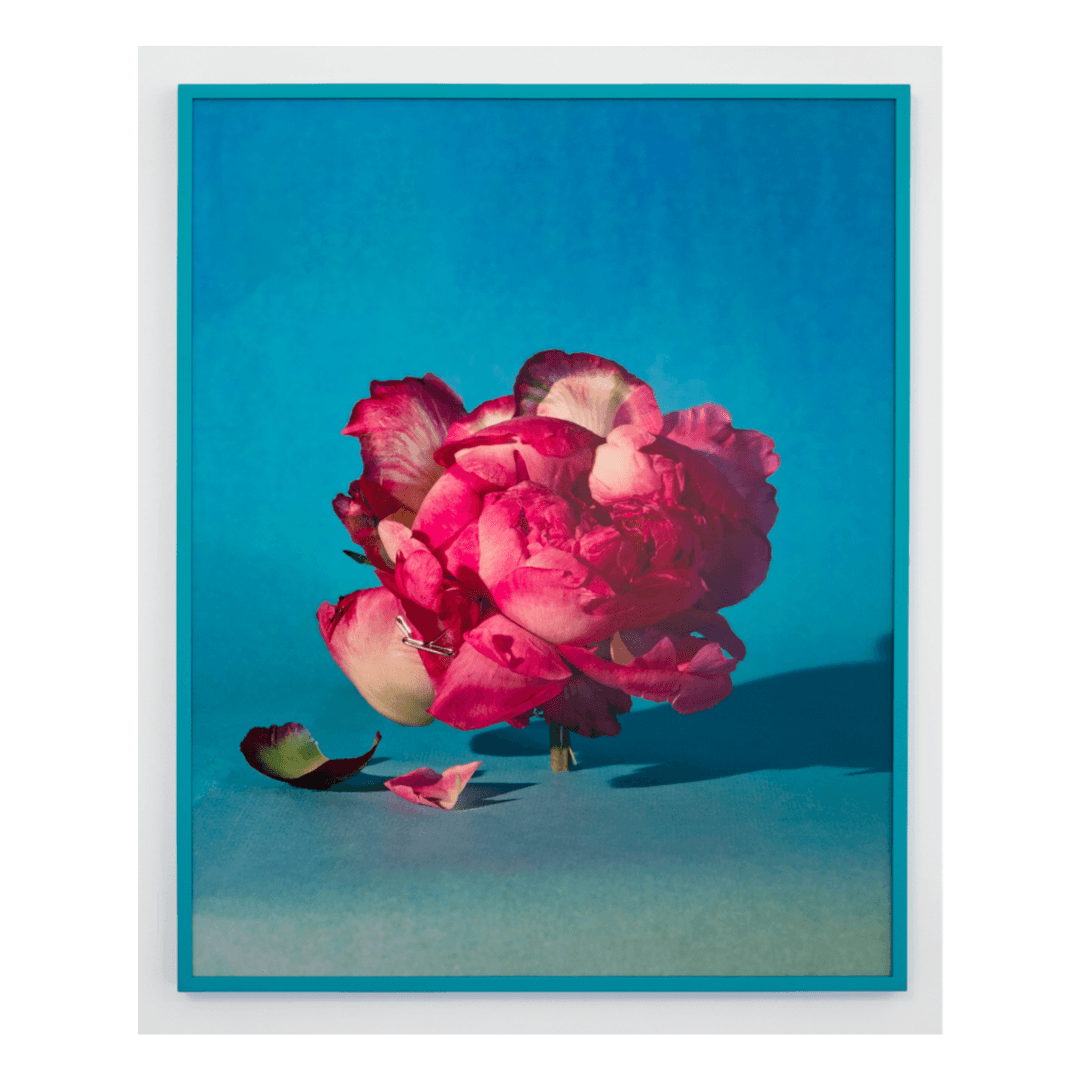
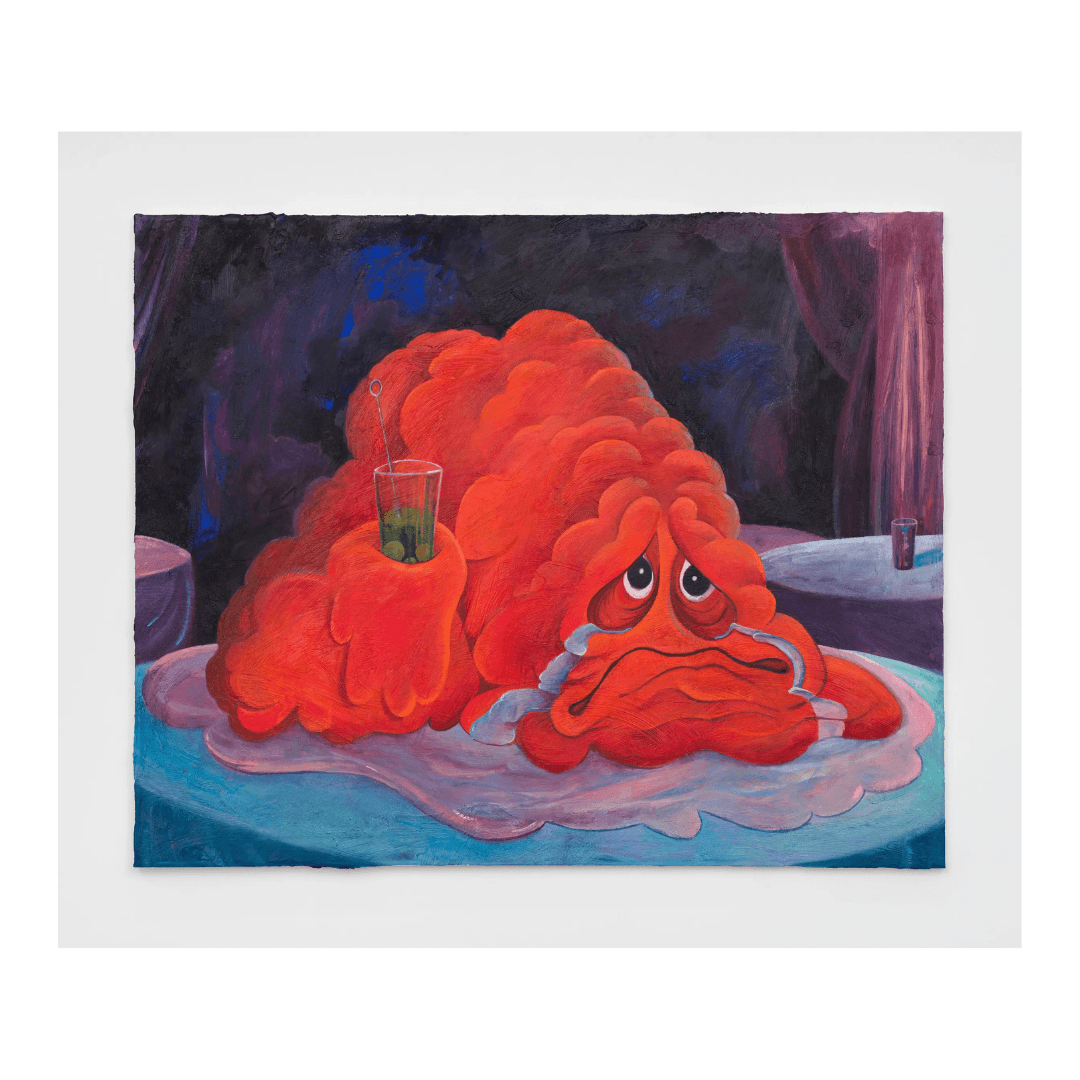
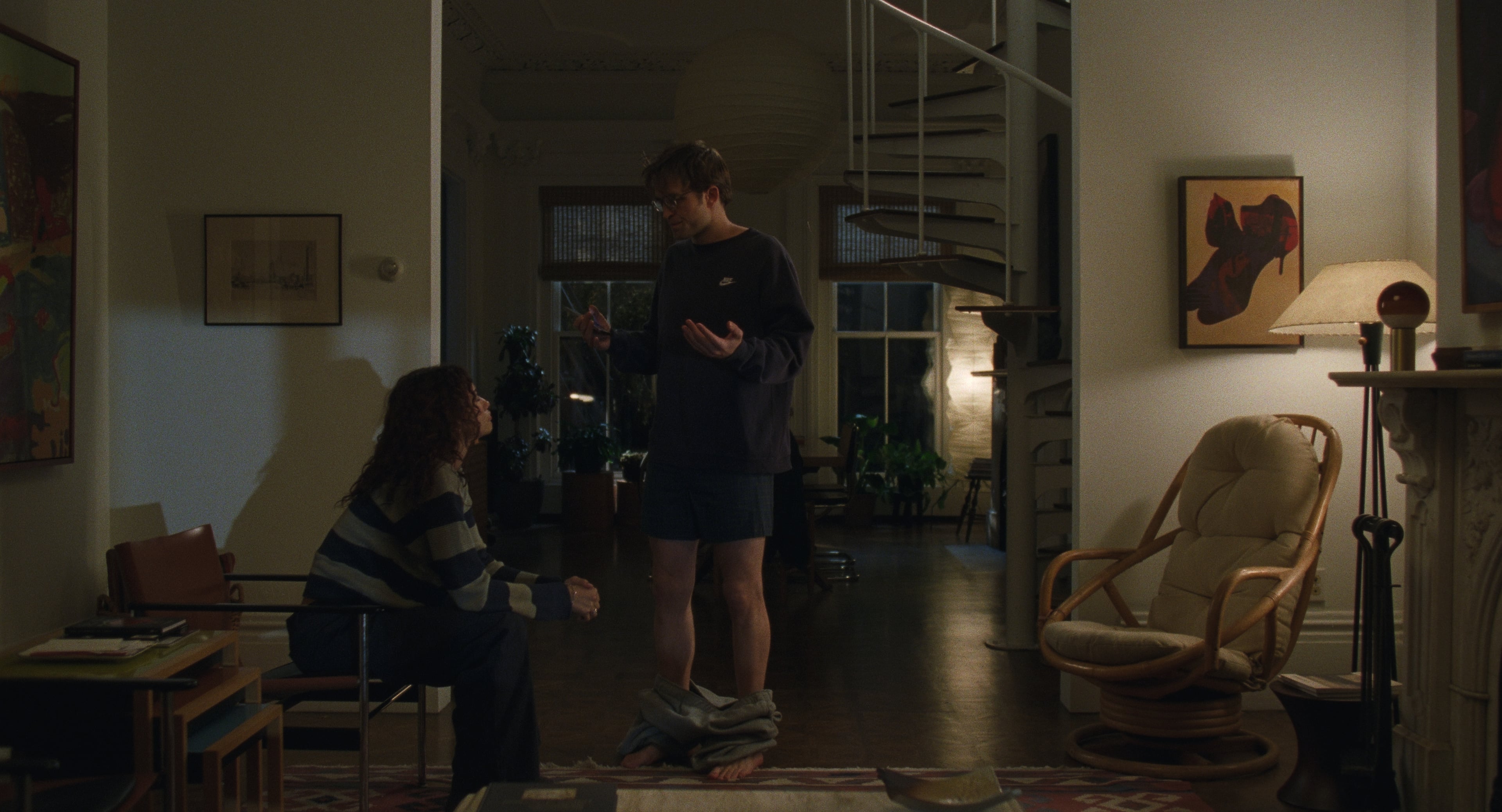
The vibrant “Peony II” print by Sara Cwynar adorns the living room, along with the largest photo in the apartment, “Shell” by Los Angeles-based Bjarne Bare. Additional artists include John Gall, Max Siedentopf, Danielle Orchard, Jerry Hsu, Seth Fluker, and Hans Hartung. Tristan Unrau’s colorfully foreboding “Shambolic Figure” hangs above the fireplace—providing a backdrop for the lengthy discussion Charlie and Emma have about her confession during the previous evening’s wine-drenched “what’s the worst thing you’ve ever done” game. “It looks like a melting blob,” says MacKenzie. “Which is really incredible when Charlie’s going through it, and having feelings, and that's just behind him.”
As the couple moves throughout the living room, the abstract shapes and saturated hues in the paintings amp up the tension and the visceral sense of Emma feeling trapped. Grounding the space and the couple’s emotional arc, MacKenzie furnished the living room with “classic furniture,” such as a plush brown Knoll sofa, Charles Pollock armchairs, and Josef Albers nesting tables. Four thrifted cane-back Cesca chairs surround the minimalist wood Cross Extension Dining Table by Matthew Hilton—where Charlie workshops his vows with best friend Mike (Mamoudou Athie)—from NYC-based vintage purveyors Abbi and Marie. “Two different chairs at the ends of the table nod to mixing and matching,” says MacKenzie, emphasizing the couple’s starter status and their complementary dynamic. “Maybe they don't have a set of six. Not everything is totally perfect."
A theme of asymmetry subliminally telegraphs the simmering dissonance between Emma and Charlie—and the push and pull between emotion and reason—while highlighting Borgli’s controversial and darkly comedic storytelling. “Kris’ films are grounded in reality, of course, but there’s always something a little offbeat, a little off-kilter,” says MacKenzie. “We wanted to bring that into the production and costume design [by Katina Danabassis, opens in new tab] as well.”
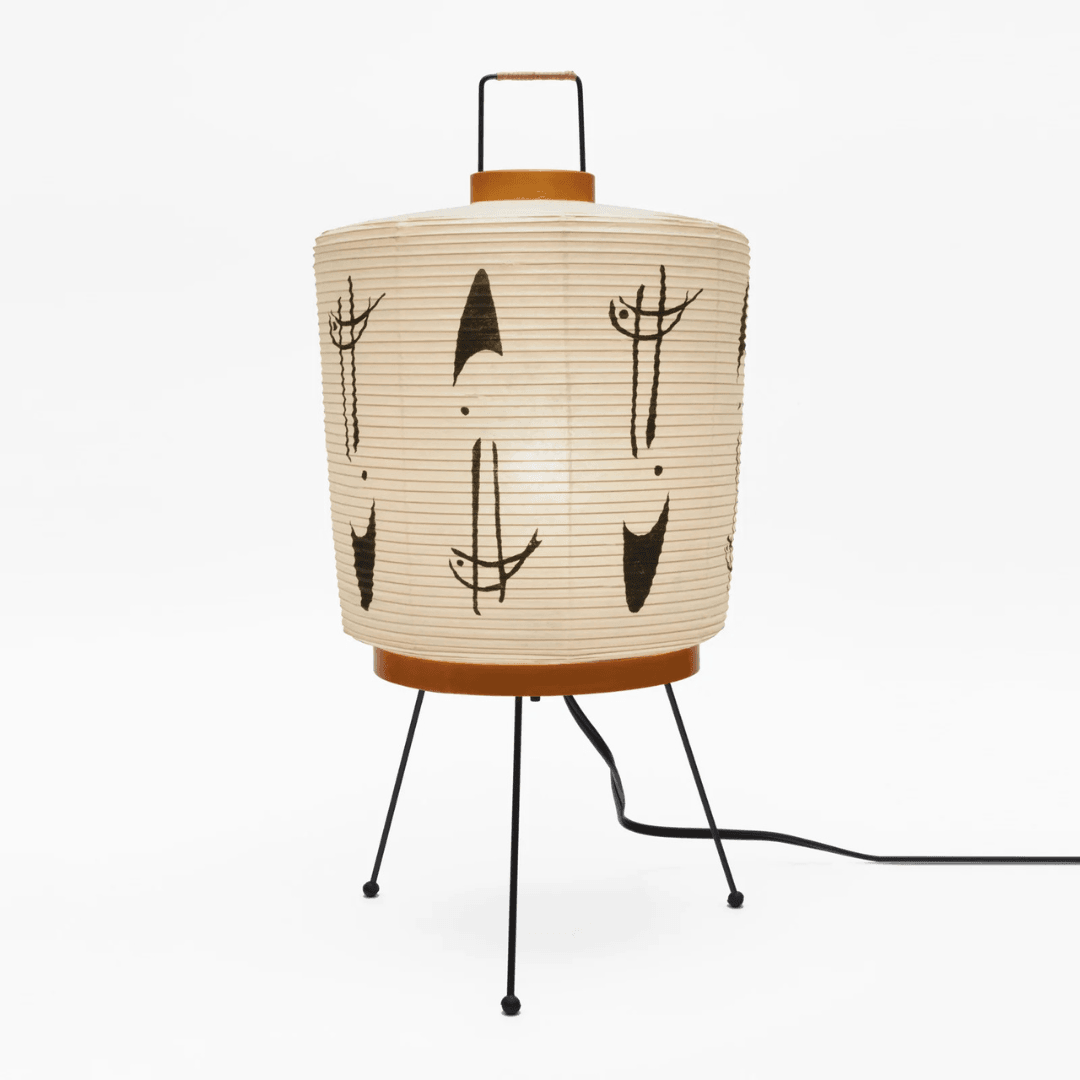
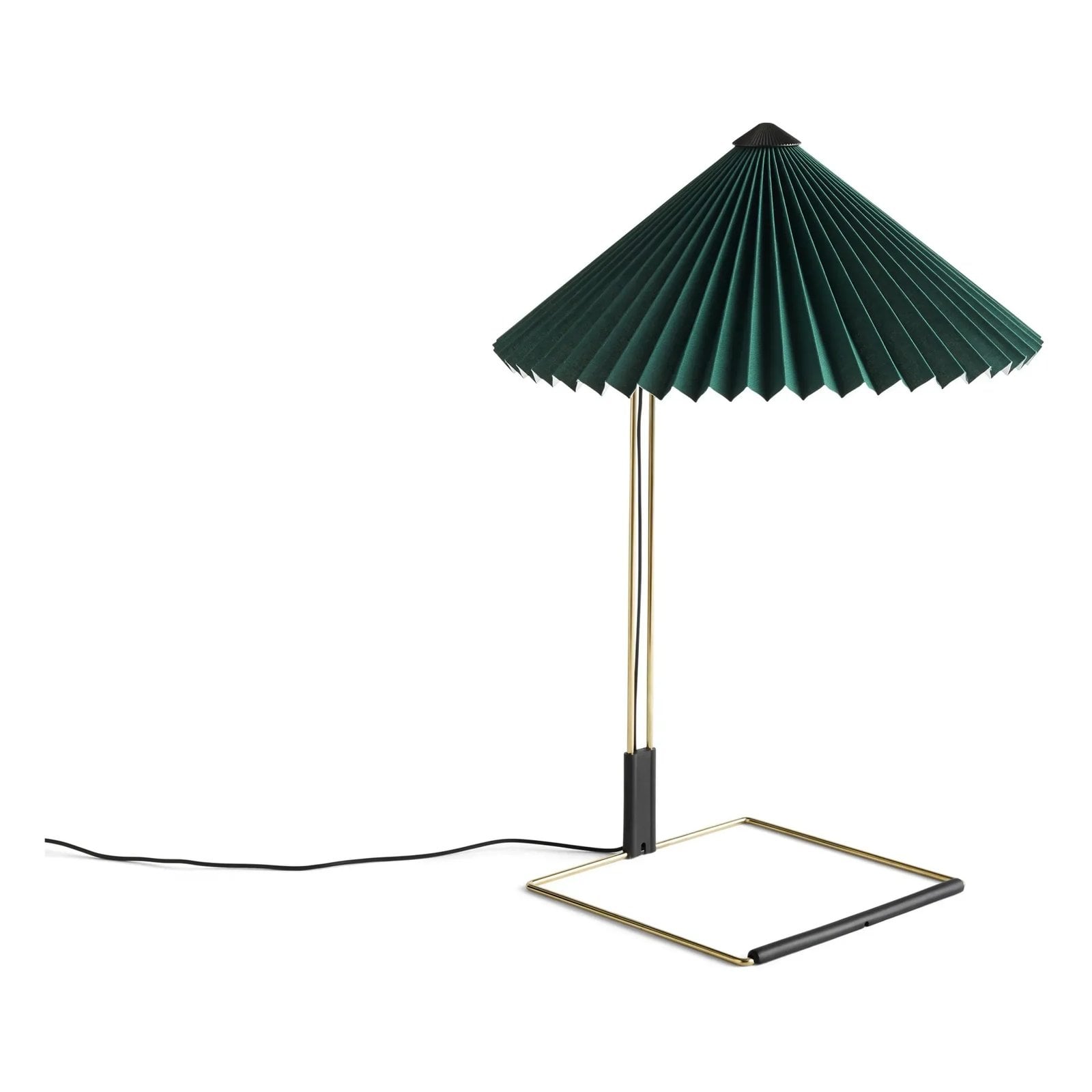
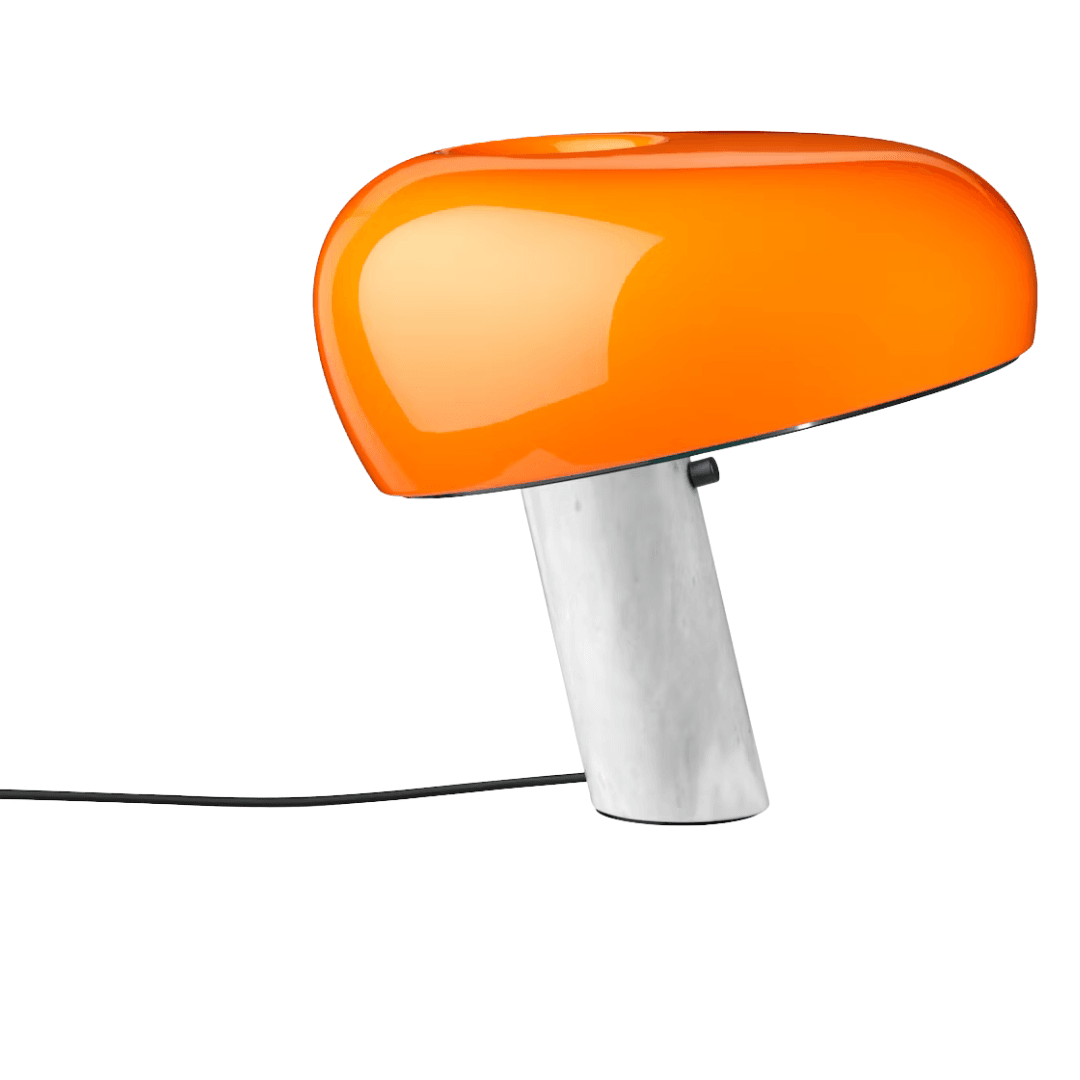
Turning in for the night in the bedroom loft, Charlie wonders if he’s making the right choice, while Emma grapples with the fallout from her drunken disclosure. Their mismatched lamps seem to underscore their disconnect and the awkwardness. Fittingly, an Akari Light Sculptures by Isamu Noguchi, with arty-minimalist sketched figures on handmade washi paper, sits on Charlie’s nightstand. A contemporary, sharply-pleated Hay Matin table lamp, in Emma’s signature blue palette, casts a soft light for her nighttime reading. “It does definitely say something about them,” says MacKenzie, pointing out other lighting choices throughout the apartment, including a mid-century style Flos Snoopy Table Lamp on the living room credenza.
As a final takeaway, Borgli invites viewers of “The Drama” to consider how much we really want to know about the people closest to us—and how much we can handle. Off-screen, MacKenzie, the filmmaker, and the crew left with mementos from Emma and Charlie’s apartment. “When you have nice pieces, you want them to go to good homes,” says MacKenzie, who snagged a lamp, while many walked off with Emma’s books. “It’s nice that people can have a little bit of the film—and of its history.”