
'Pluribus' Production Designer On Building Carol's Hive Mind Hideout
Interiors
For the Apple TV series, production designer Denise Pizzini built an entire Albuquerque neighborhood and packed the interior of Carol's home with plot-driving Easter eggs.
In “Pluribus,” an extraterrestrial virus overtakes the world's population and melds them into a compliant, relentlessly pleasant hive mind—all except for 13 people, including bestselling author Carol Sturka (Rhea Seehorn). The cynical, inherently unhappy skeptic hunkers down in her resort-style home at the end of a cul-de-sac overlooking Albuquerque, stubbornly refusing to join the masses and scheming to reverse the Joining. Despite the spaciousness of her multilevel stucco house, Carol seems overwhelmed by it as she wanders the empty rooms and hallways.
“Creator Vince Gilligan always said, ‘After the Joining happens, she shuts all the windows and doors and closes all the blinds,’” says veteran production designer Denise Pizzini, who built the exterior and interior of the house from scratch, along with the entire cul-de-sac. “I designed this atrium around the whole first and second floor, so we would be able to get natural light since she is isolating.”


Denise Pizzini's concept art for Carol's Albuquerque home.
Denise Pizzini
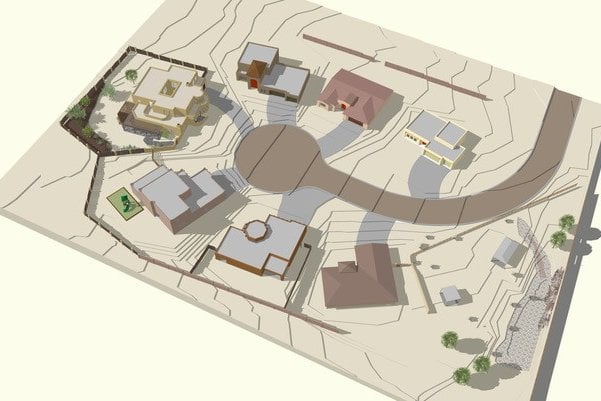

Denise Pizzini's concept art for Carol's Albuquerque cul-de-sac neighborhood.
Denise Pizzini
Denise Pizzini's concept art for Carol's Albuquerque home.
Denise Pizzini
Denise Pizzini's concept art for Carol's Albuquerque cul-de-sac neighborhood.
Denise Pizzini
The arches throughout the thoughtfully decorated home—presumably done by Carol’s wife, manager, and grounding force (Miriam Shor), who died in her arms at the onset of the Joining—reinforce the overpowering sense of enclosure. “It’s a little bit of a maze,” Pizzini continues. “So when she’s running up and down the stairs and hallways and through the kitchen, it gives her space to move around. There’s always a little way around or out, because she is in the house—just surviving.”
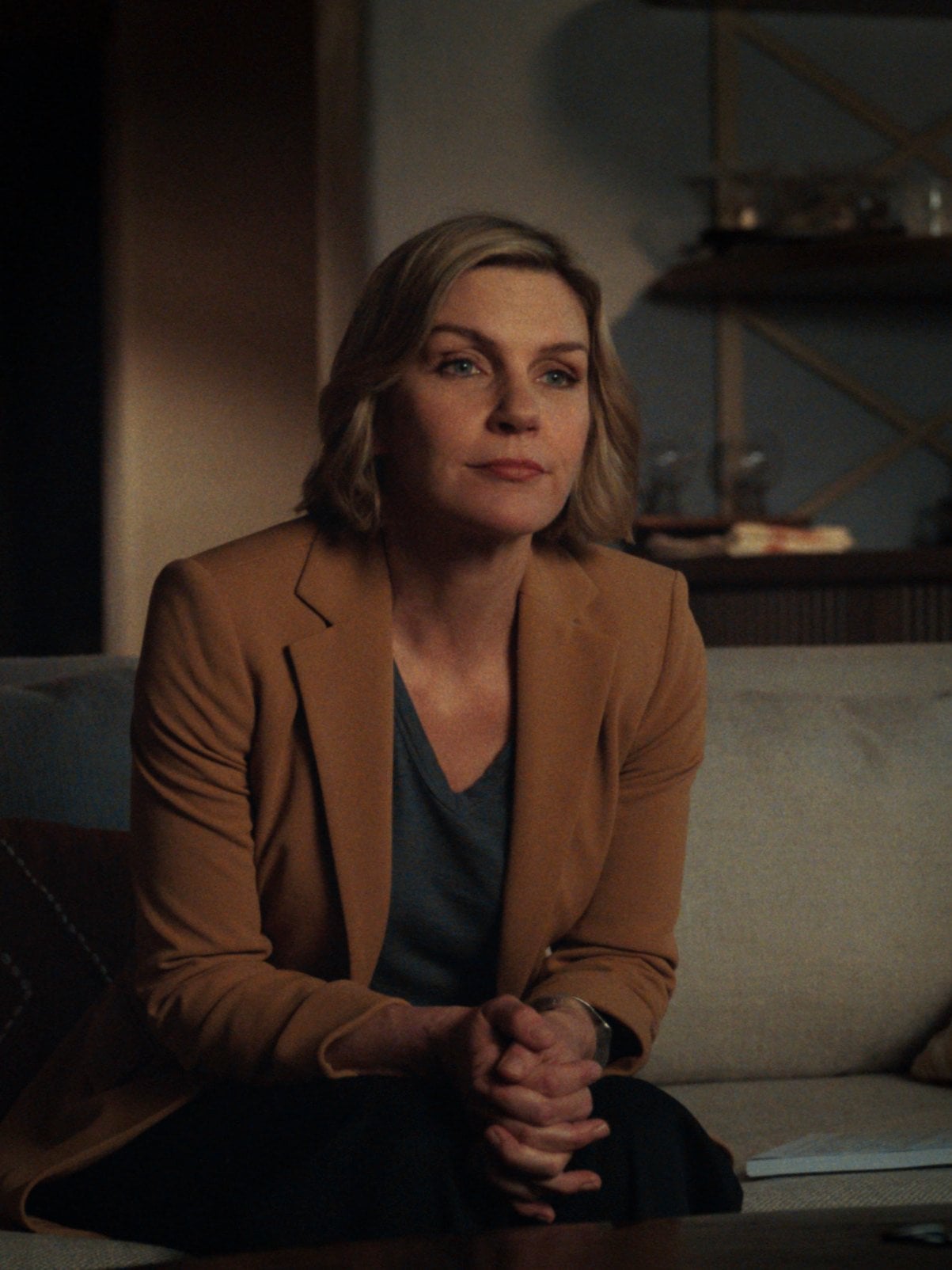
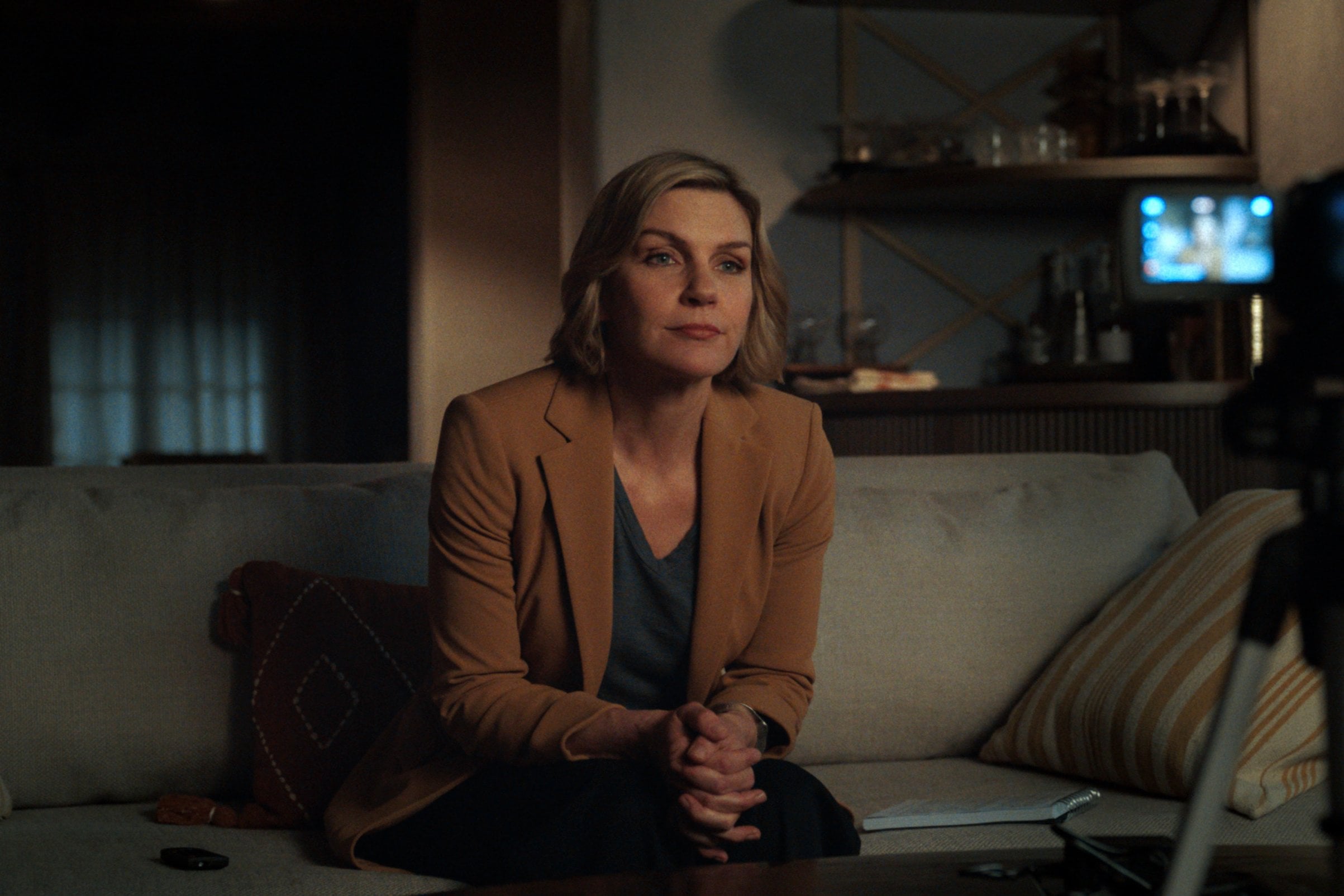
Carol also spends quite a bit of time on her plush couch in front of a flat-screen TV—first soothing herself with “Golden Girls” reruns while swaddled in a thick blanket, then recording video messages urging the other 12 unaffected humans scattered across the globe to join forces. Even in the comfort of her own home, Carol looks engulfed by her surroundings and profoundly alone. “The TV is on a higher shelf,” explains Pizzini. “She's sitting on the couch. She's just alone. It’s just her, so there's not a lot of clutter, just a blanket, but it feels a little austere that she's just there interacting with the television.”
Now, without Helen's breathalyzer tests, Carol regularly raids the wooden bar, custom-built against the wall, behind the couch. Pizzini designed the curved-top cabinet not only to underscore Carol's self-imposed seclusion and mounting anxiety, but also to offer additional camera angles. “We're always making sure that whatever we put [in] can be removed to do a shot from,” she says. Carol’s grief for Helen and her single-minded pursuit of undoing the Joining ultimately show in her home as she rapidly unravels. “Things get messier as she goes along. She’s not making the bed. She doesn't care what she looks like or what she's wearing,” says Pizzini. “In the atrium, suddenly, the plants are either overgrown or dying because they're just not tended to.”
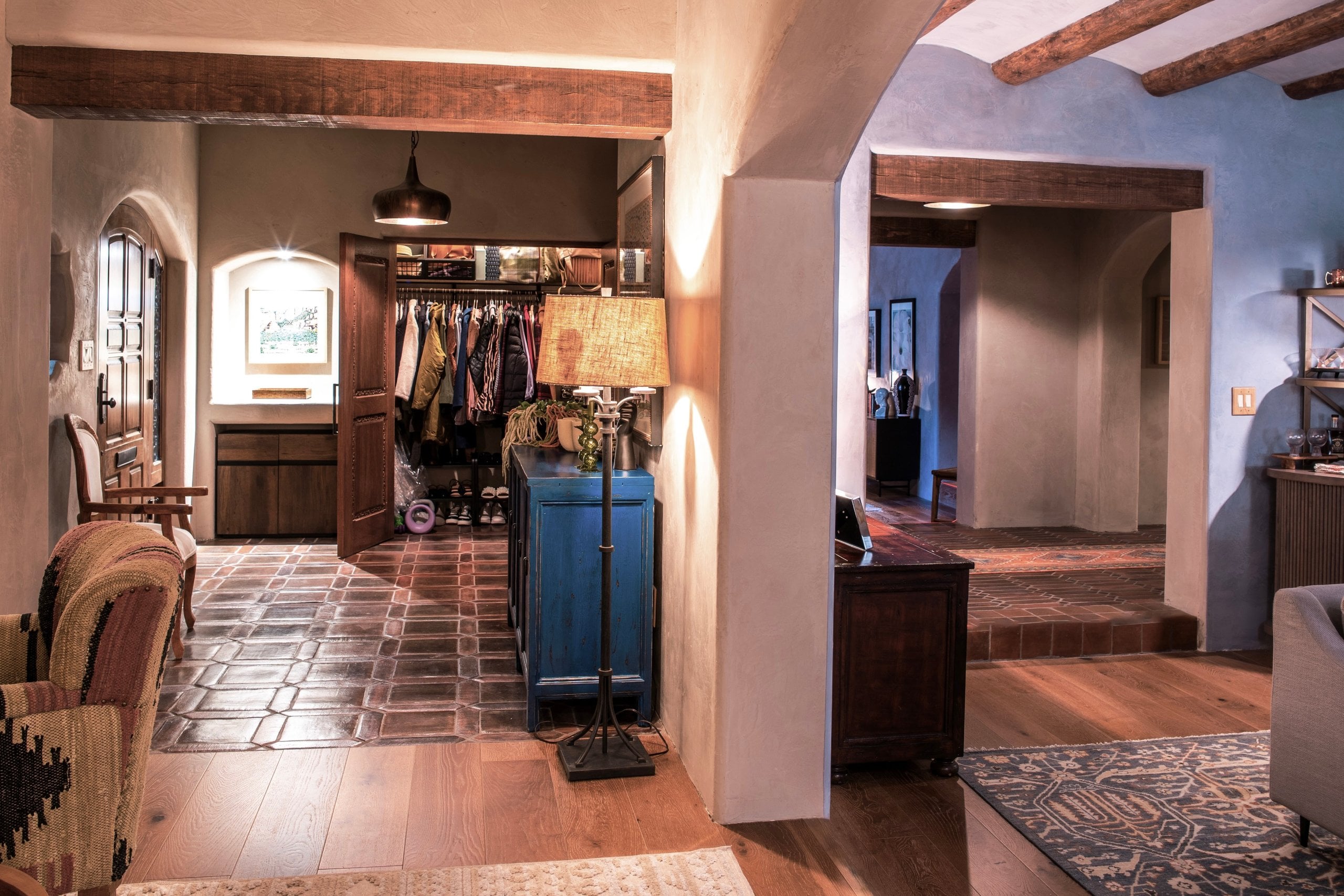

The interior of Carol's home was built from scratch.
Denise Pizzini
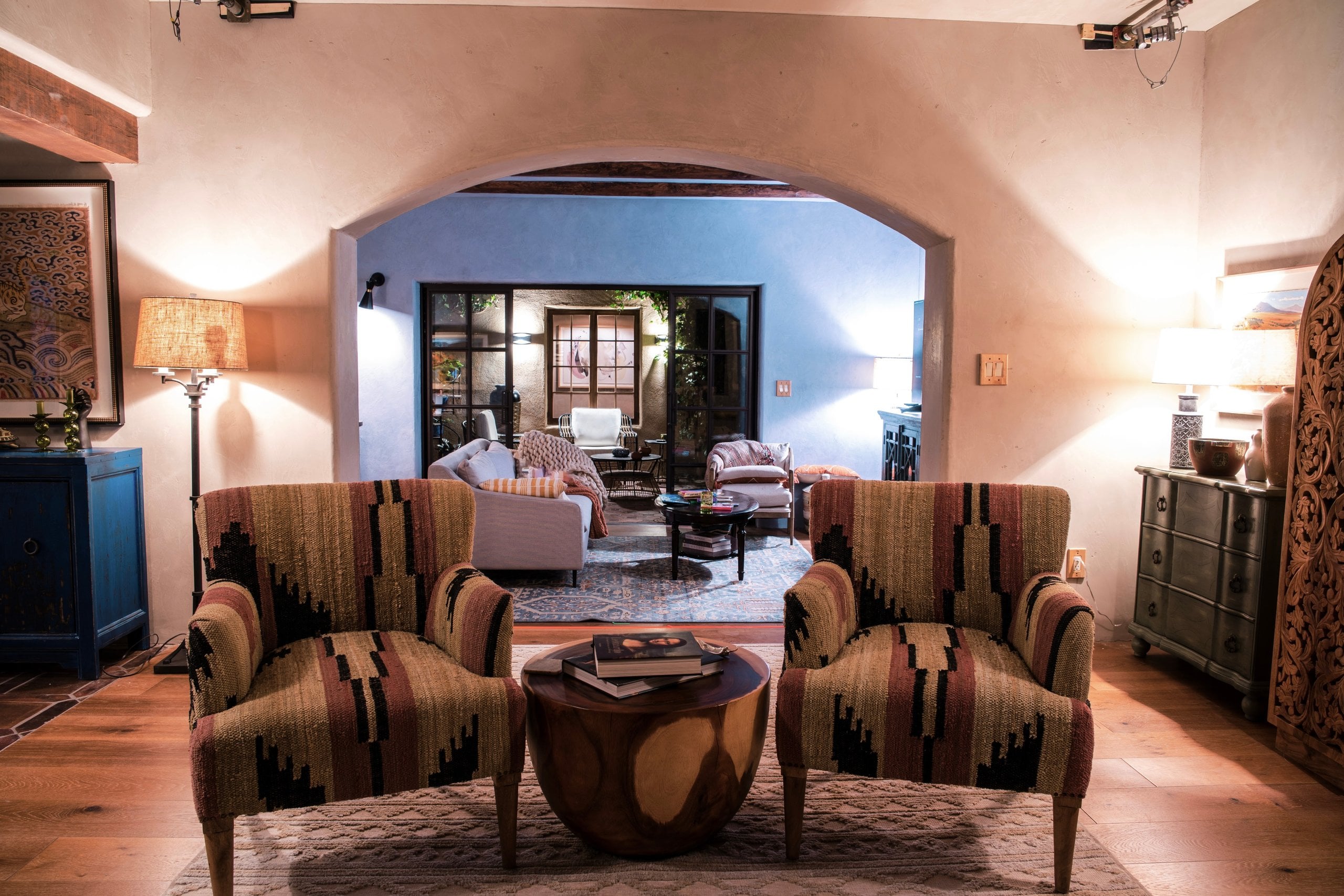

The living room set of "Pluribus."
Denise Pizzini
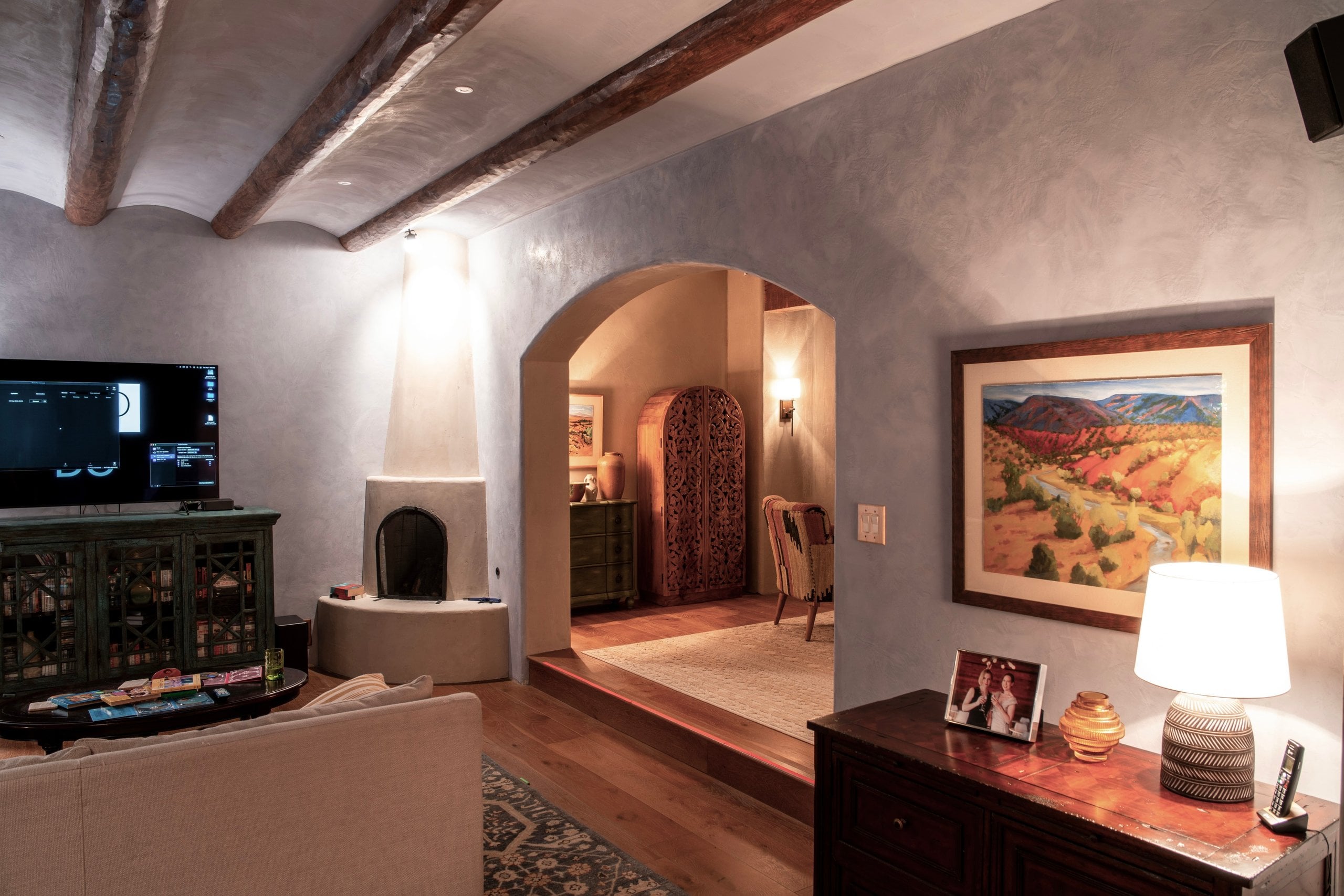

The interior of Carol's home in "Pluribus."
Denise Pizzini
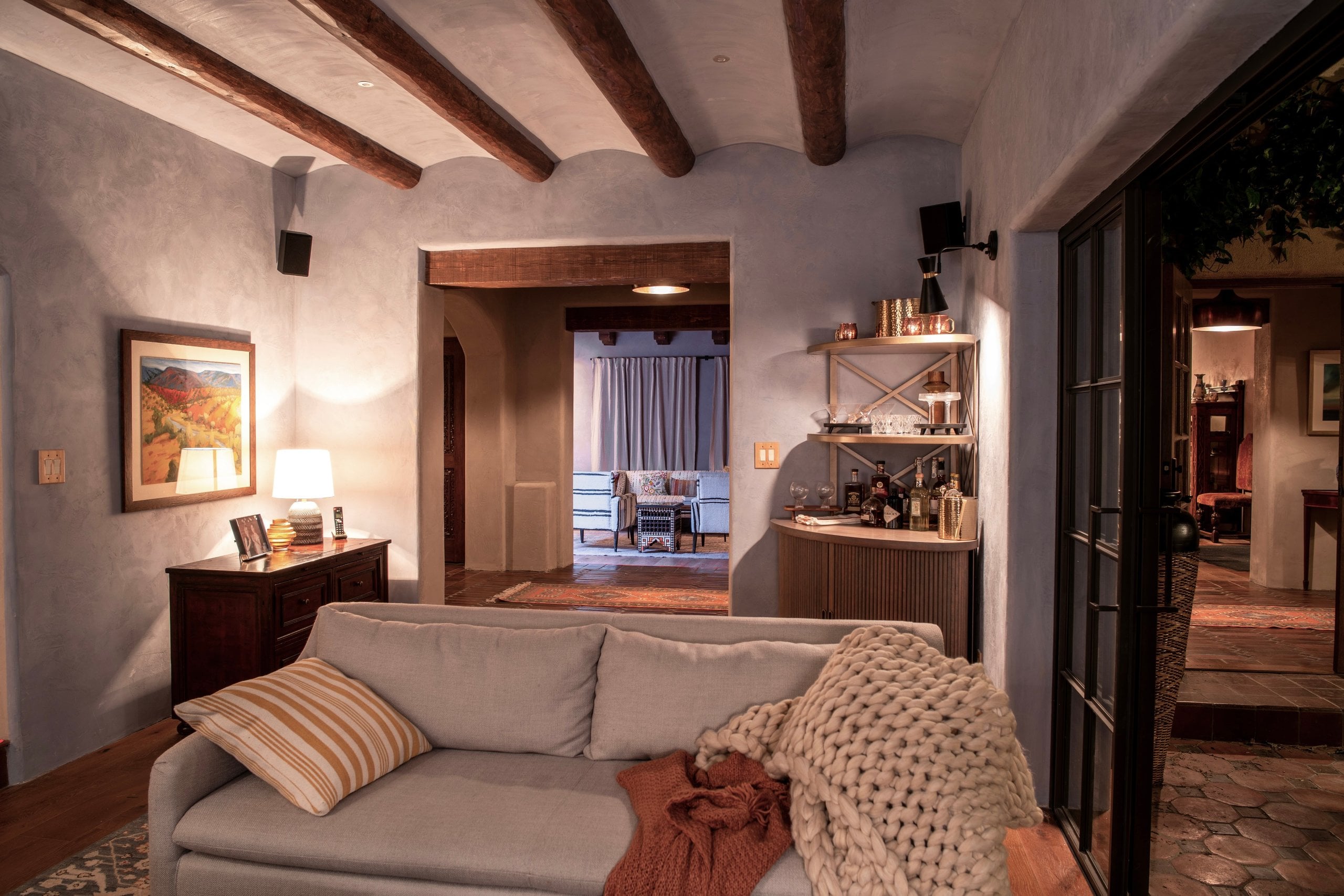

The interior of Carol's home in "Pluribus."
Denise Pizzini
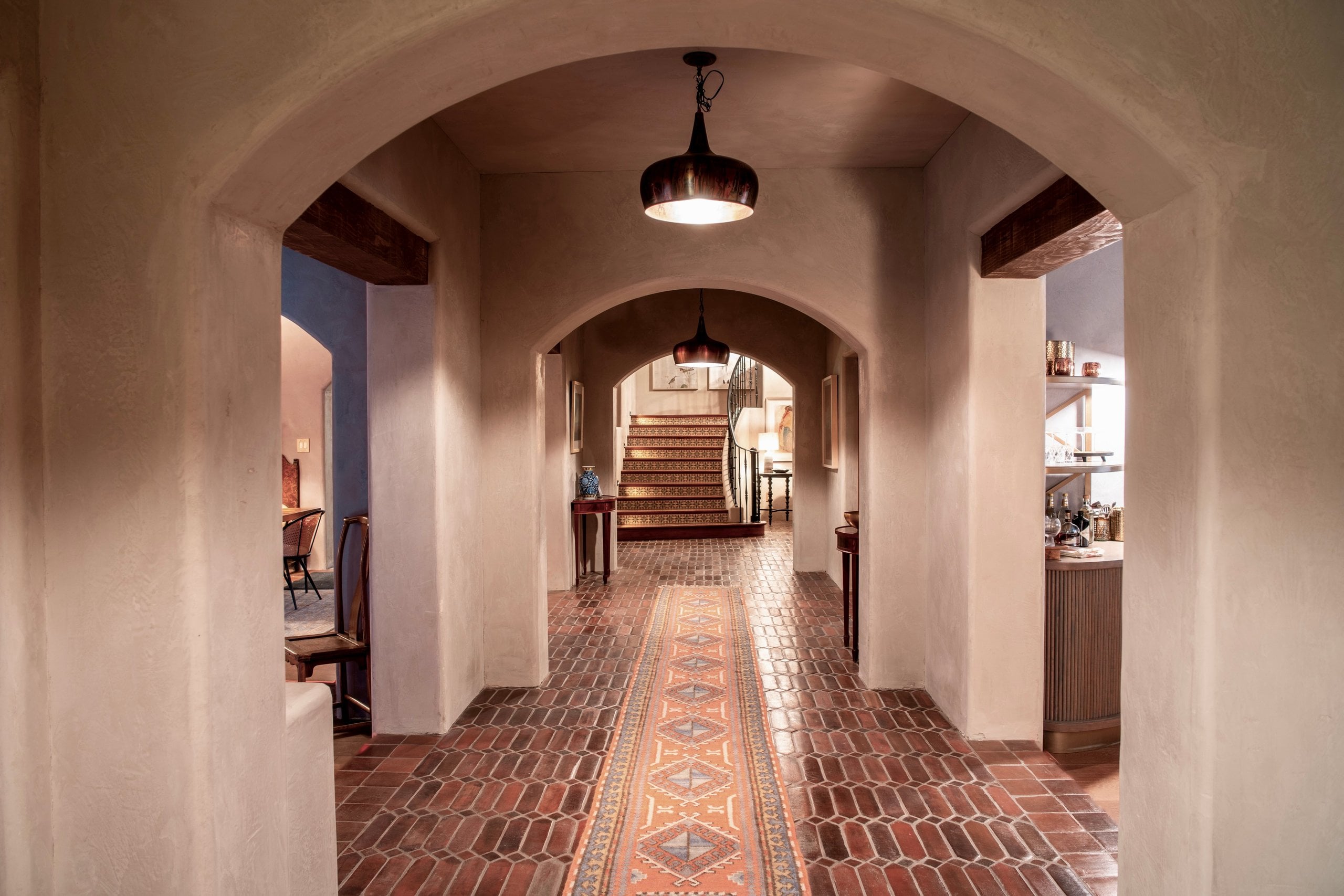

The interior of Carol's home in "Pluribus."
Denise Pizzini
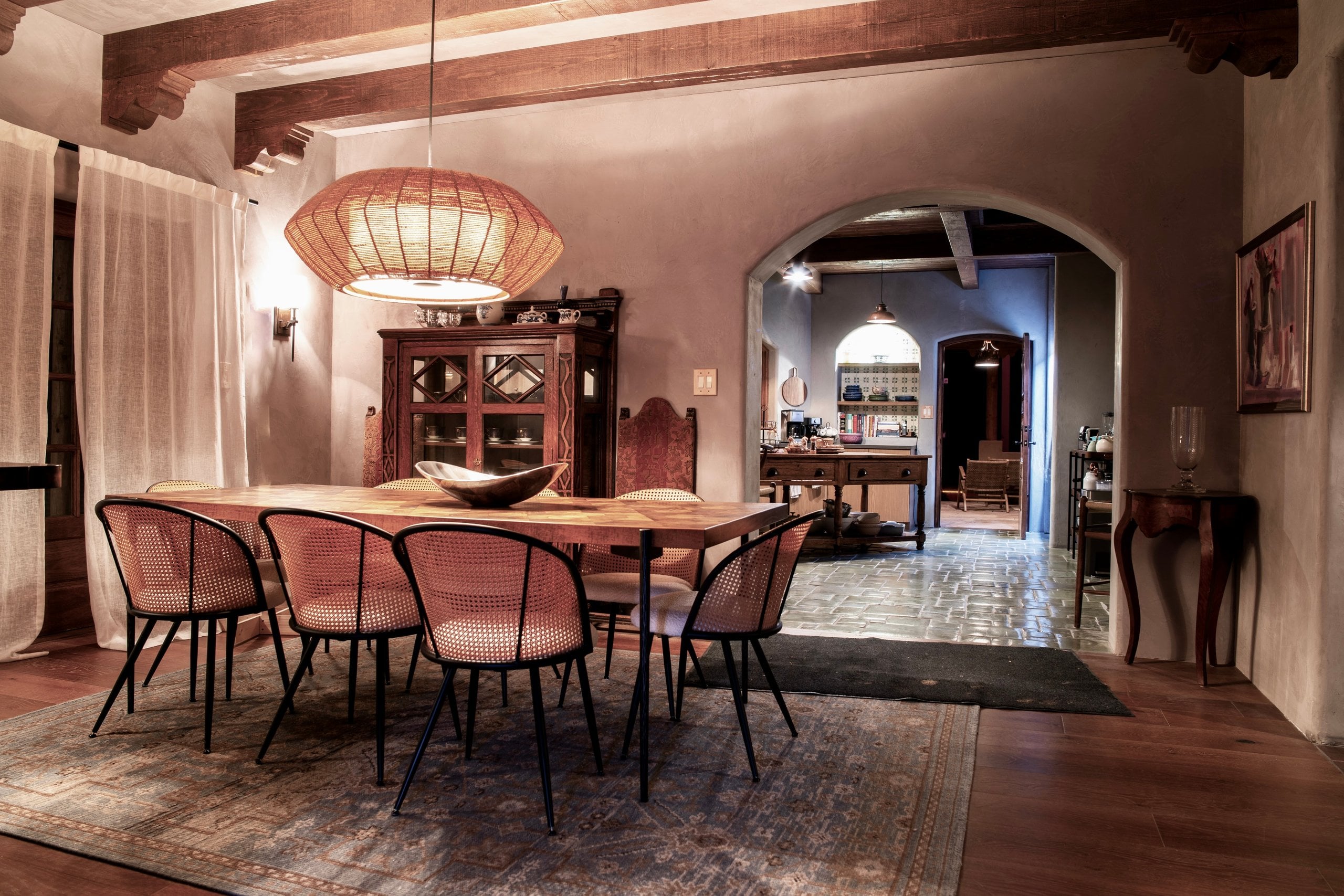

The interior of Carol's home in "Pluribus."
Denise Pizzini
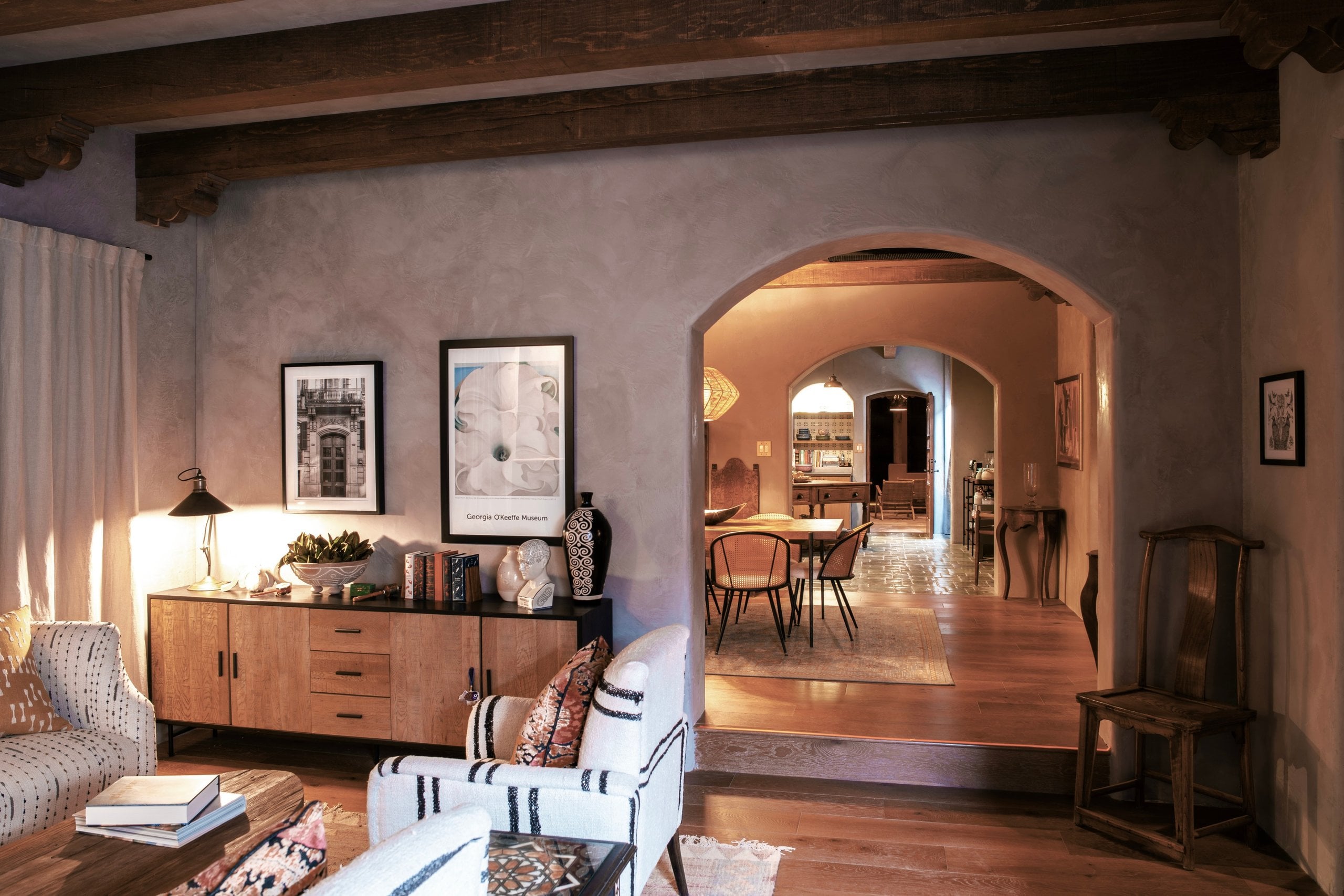

The interior of Carol's home in "Pluribus."
Denise Pizzini
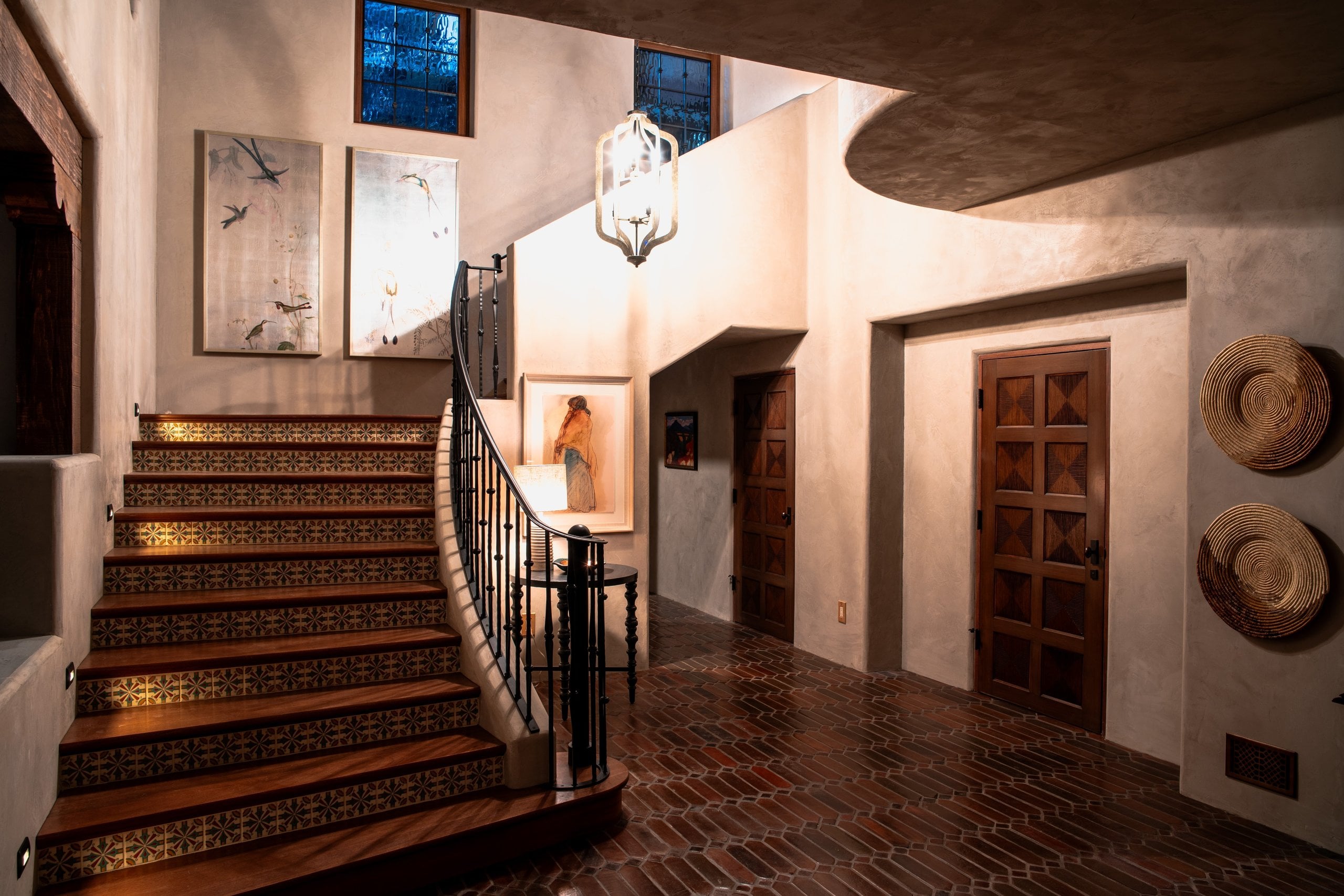

The interior of Carol's home in "Pluribus."
Denise Pizzini
After her neighbors—and the entire Albuquerque population, who “need a little space”—flee Carol, the high-end houses and once-green lawns in the cul-de-sac also reveal neglect. “We let the weeds start growing through the rock,” says Pizzini. “All the other houses are just abandoned and empty.” Carol takes refuge in her upstairs office, the one space in the house that is entirely her own. “That is all 100% Carol,” says Pizzini. “So the art in there is more eclectic, and she has her books, her notepads, and her whiteboard.”
After succumbing to her loneliness—and to the hive mind's carefully curated attention, channeled through Joined ambassador/temptress Zosia (Karolina Wydra)—an invigorated Carol begins brainstorming a new Wycaro novel, her bestselling franchise she had previously dismissed. She excitedly dashes off her creative musings—Killer sand flea-man?! Shakespeare reference!—on her expansive whiteboard, hidden beneath a refined Deco-style sunburst-veneer cabinet with French doors. But on a second layer beneath her book notes, Carol records her intel and theories about the Joined. (Sample: “They. Eat. People.”)
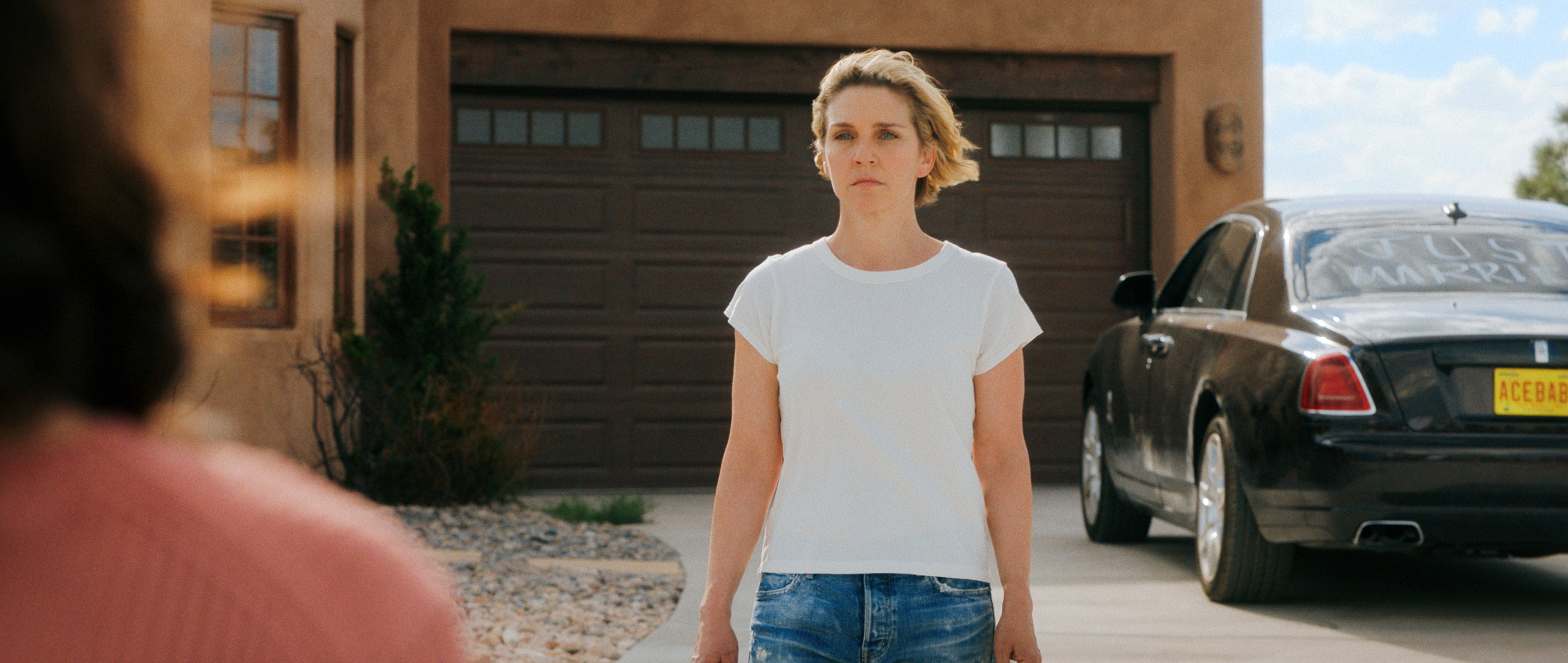

Rhea Seehorn plays Carol in "Pluribus".
Apple TV
“There were many meetings about that whiteboard,” says Pizzini, explaining that Carol’s bathroom was built directly behind it on the upstairs set. So, the board could be removed to film an energized Carol excitedly scribbling head-on. “Then the weight of it… We had a little help from special effects to create a weight pulley system,” adds Pizzini, of amplifying Carol’s fervour to exercise her creativity—and stop the Joined. “It was a little more complicated than it looks.”
Pizzini and her team thought of every detail in Carol’s safe space—even ones the camera may not have picked up. She points to the moment when a defiant Carol replaces her framed Georgia O’Keeffe poster with an original painting by the artist, pilfered from the empty museum. “There’s a bookshelf back in the corner, and it has the whole series of Wacaro books in—I can’t even remember how many—different languages,” says Pizzini. “Every single piece we put our hands on and put in that set has some thought behind it. Even if it’s just a certain type of candy dish—or type of candy—it’s all really well thought out to advance the story somehow.”