Kazu Hiro Always Tests His Oscar-Winning Prosthetics on Himself First
Beauty

Beauty
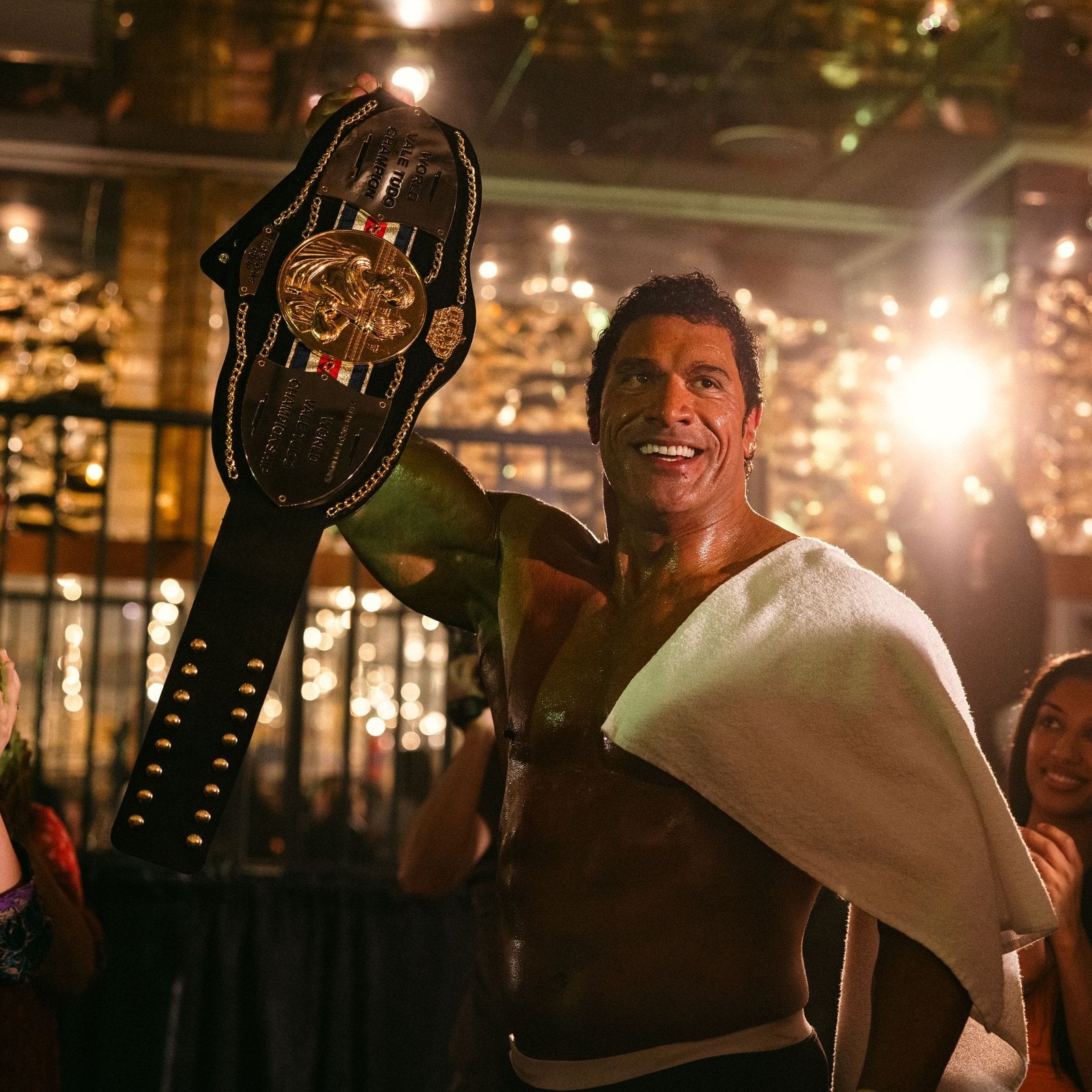
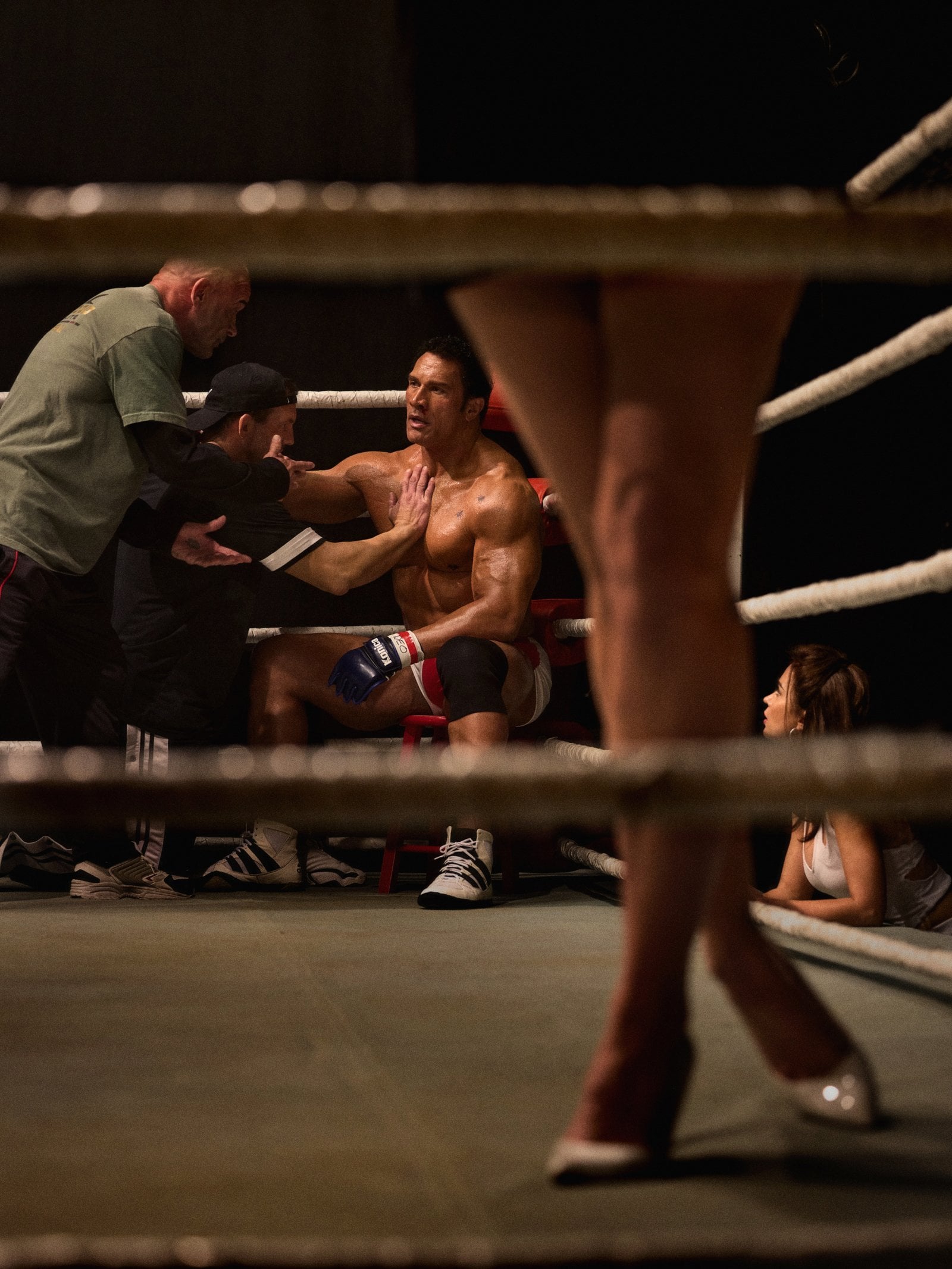
In "The Smashing Machine," the prosthetics designer created 22 prosthetic pieces to transform Dwayne Johnson into MMA fighter Mark Kerr.

Hollywood’s most sought-after prosthetic designer Kazu Hiro has dramatically transformed Gary Oldman’s profile into Winston Churchill’s for “Darkest Hour” and subtly altered Charlize Theron’s features into Megyn Kelly’s in “Bombshell”—winning two Oscars in the process.
For "The Smashing Machine," Dwayne “The Rock” Johnson’s emotionally charged, action-intense portrayal of ’80s mixed martial arts champion Mark Kerr, Hiro took a character-first approach. He designed 22 prosthetic appliances and a custom hairpiece, including a prominent browbone, MMA-authentic asymmetrical cauliflower ears, and a special eyelid chamber that allowed the actor to blink naturally. And all of it engineered to withstand the film’s sweat-soaked fight sequences.
Hiro, who is also a surrealist sculptor, tests all of his components and ingenious builds on himself before applying them to another Oscar contender. “It’s essential for the makeup artist to feel how the actor would feel,” he says.
For a visceral scene in which an unyielding, pain-addled Mark injects himself with opioids, Hiro designed a forearm prosthetic rigged with a silicone vein filled with fake blood for Johnson to plunge a syringe into it. “It’s always tricky to work with fluid,” he explains. It sounds like a complicated, trial-and-error process—but not for Hiro, who matter-of-factly says, “I tested it twice.”
Hiro’s singular methodology went far beyond expertly engineered surface appliances. After discussions with director Benny Safdie, he opted for a subtler, more nuanced approach, suggesting Mark Kerr’s signature traits through Johnson’s already recognizable and expressive features. Hiro meticulously studied images, videos, interviews, and films—not only to understand both men’s defining facial features and movements, but also the psychology behind them. “I studied their mannerisms: what they talk about, how they talk about it, and what's going on in their mind by looking at the expressions,” says Hiro. “Just really to get into their psyche and understand both of them. It's almost going into a relationship in a way.”
Dwayne Johnson in "The Smashing Machine." Photo: A24.
A24
The sculpting process, after Johnson’s 3D scan and live cast, continued Hiro’s exercise in deepening the character portrayal. “When I’m sculpting, I’m always repeating or analyzing even more—to understand both of them and try to merge them together, because I can’t just pile up stuff on his face. That doesn't work.”
Johnson’s prosthetics also needed to depict Mark’s gnarly MMA injuries and a realistic timeline of swelling and healing. To do that, Hiro studied Kerr’s post-fight facial evolution in the 2002 “The Smashing Machine” documentary and cross-referenced it with the shooting schedule. “Maybe they had to shoot the progress of the eyes swelling in one day,” explains Hiro. So he developed an incremental approach, layering prosthetic components and makeup to mimic an eye bruising and swelling over time—even though the sequence was filmed in a single day.
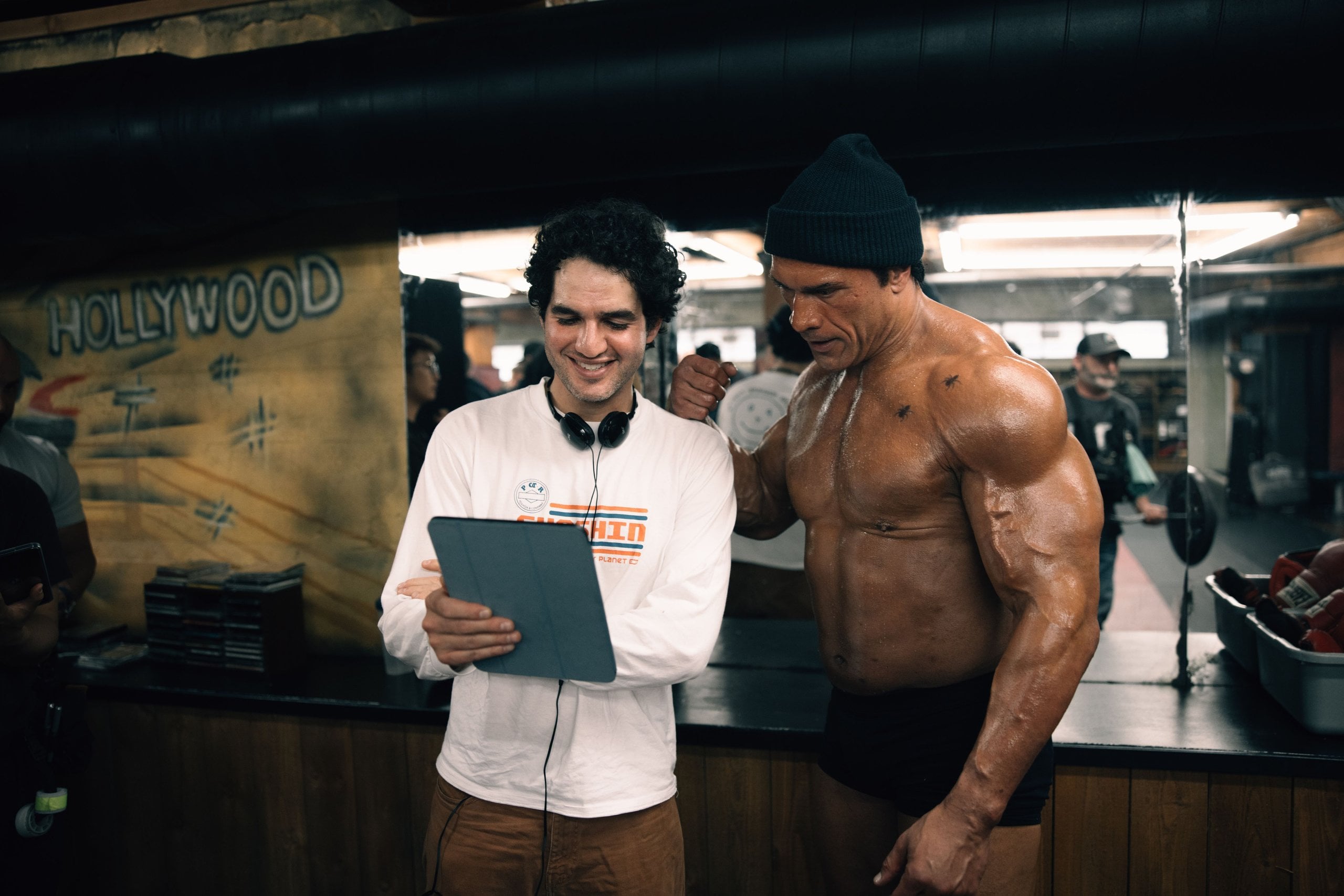

Benny Safdie and Dwayne Johnson in "The Smashing Machine." Photo: A24.
A24


The cast of "The Smashing Machine." Photo: A24.
A24
Benny Safdie and Dwayne Johnson in "The Smashing Machine." Photo: A24.
A24
The cast of "The Smashing Machine." Photo: A24.
A24
During the final fight sequence, Safdie wanted Johnson to take an actual hit from Kazuyuki Fujita—a real MMA veteran—who initially refused out of respect for the actor. “The good thing was that [his cheekbone] didn't have a prosthetic [attached to it],” says Hiro, more concerned that Johnson’s immediate face-swelling would loosen the surrounding prosthetic pieces, as opposed to damaging his own work. “But either way, whatever happens, happens. We just have to touch up, no matter what.”
Chronicling a two-time UFC Heavyweight Tournament Champion’s journey also involves no-holds-barred fight scenes and actors sweating profusely. The copious perspiration posed a unique challenge for the staying power of such intricate, precisely glued-on prosthetics. So Hiro dove into more customized analysis. “[Johnson] sweat a lot from his head, but, of course, pretty much all over his body,” he says — hence more testing and strategic trial and error.
“After a few days of filming, we started to know where he was sweating—and what kind of sweat,” says Hiro. Depending on the person and what they’ve consumed earlier, the chemistry in the perspiration is unique with oil, salt, and even alcohol, which impacts the efficacy of the glue. “We had to figure out what glue works the best …probably knew by the end of the first week.”
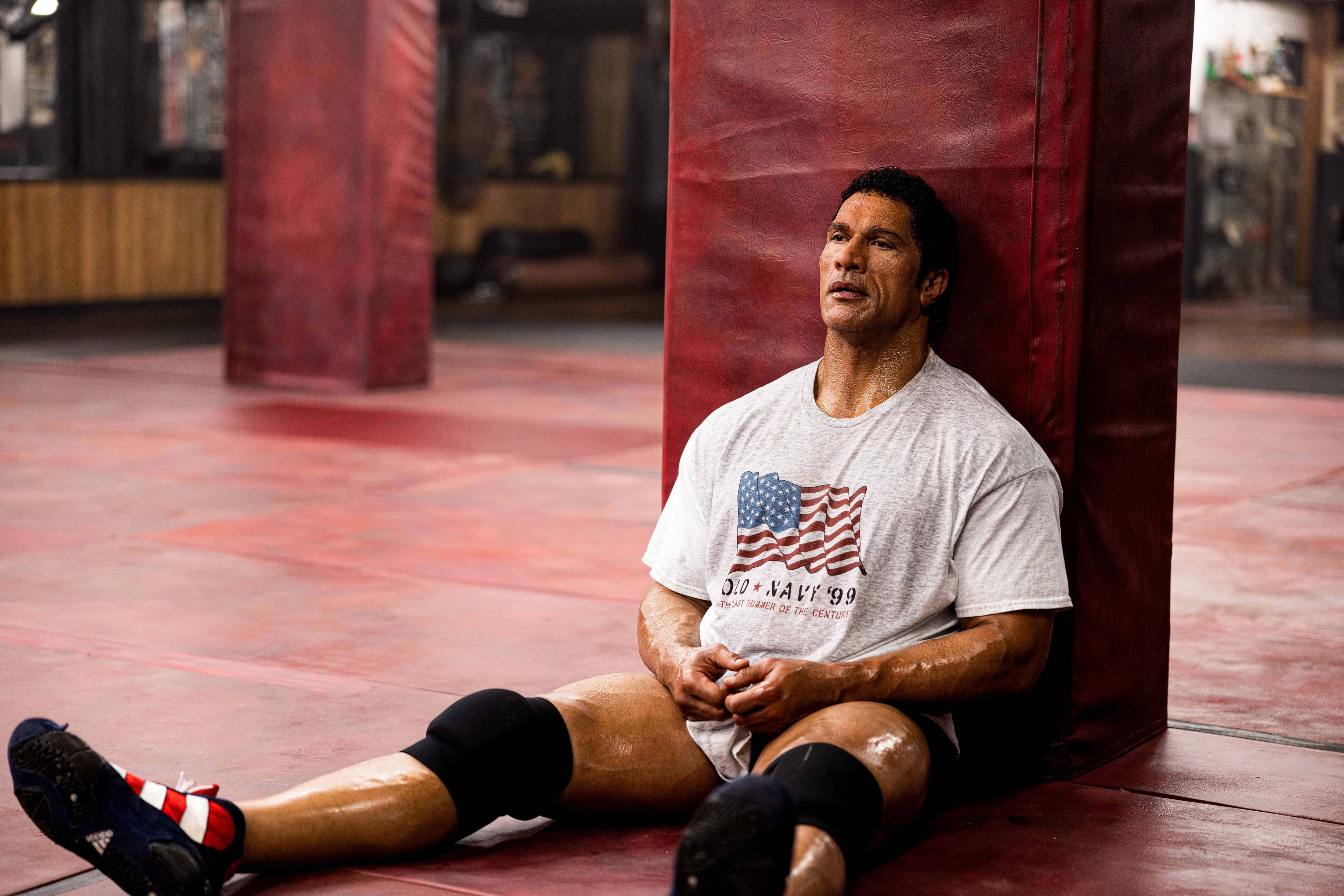

Dwayne Johnson in "The Smashing Machine." Photo: A24.
A24
Although, during one particularly sweat-soaked fight scene, the tip of Johnson’s nose prosthetic kept loosening and falling off, requiring continuous patches. “It’s scary, but really more frustrating,” says Hiro. A perfectionist who prefers to work “in silence,” he over-considers all the worst-case scenarios during filming and hauls an overstuffed repair kit to set. “I always have a certain amount of anxiety,” says Hiro. “People always laugh at me because I carry so much stuff. But we cannot be the obstacle or someone dragging everybody's feet [during filming.] So our job is to be prepared.”
There’s a reason, beyond his unparalleled skill and talent, why David Fincher has referred to Hiro as “the best” and “everyone’s first choice.” As the legendary director said in a 2023 New Yorker piece, Hiro “moves at the same speed” as the rest of the crew on a fast-paced and demanding production. The profile also highlighted Hiro’s work transforming Bradley Cooper’s face—and, famously, his nose—into composer Leonard Bernstein in “Maestro.” Three decades earlier, Hiro watched a Bernstein documentary and decided then that he wanted to “make [Bernstein’s] face one day,” as he told the New Yorker. That’s one bucket list moment completed. But is there an actor he’d love to work with?
“I like people with interesting faces. Cillian Murphy has a very interesting face,” says Hiro, considering the Irish actor’s piercing ice-blue eyes — and yet another professional challenge. “It’s very tricky to change eyes.”