Jane Marshall Whittaker On Costuming The Neon-Drenched & Operatic ‘Her Private Hell’
Fashion

Fashion
The costume designer breaks down the vintage finds, designer pieces, and retro-futurist spacesuits that make up the wardrobe of Nicolas Winding Refn's fever-dream tale.
There is a particular kind of trust that only forms over decades, and Jane Marshall Whittaker knows that well, having spent a great deal of time in the strange, incandescent world of Nicolas Winding Refn. Their history stretches back to a chance introduction on the set of the second film in Refn’s “Pusher” trilogy in the mid-aughts, followed by a string of collaborations, which built a strong working relationship and creative bond so that when Refn's long-gestating passion project “Her Private Hell” finally found its feet, Whittaker didn't hesitate. "I know what I'm getting myself into," she says of working with Refn for the fifth time. "I know the kind of ride I'm going to be going on, and it is a very particular ride."
That ride, this time, meant dressing a film that Refn himself has described as an attempt to make many movies inside one movie, one that combines elements of science fiction, fantasy, and operatic melodrama all bound together by a literal, labyrinthine mist that hangs over the film's futuristic metropolis. It follows a young starlet named Elle (Sophie Thatcher) whose complicated relationship with her father sees her cross paths with a GI on his own mission to save his daughter. The sheer scale of the story would naturally make anyone feel slightly daunted. "My first thought on reading the script was how on earth to align these different timeframes, different cultures," she recalls, "Mixing in the retro sci-fi aspects with Japanese environments." However, for Whittaker that feeling didn’t last long. "It disappeared quite quickly once I got stuck in."
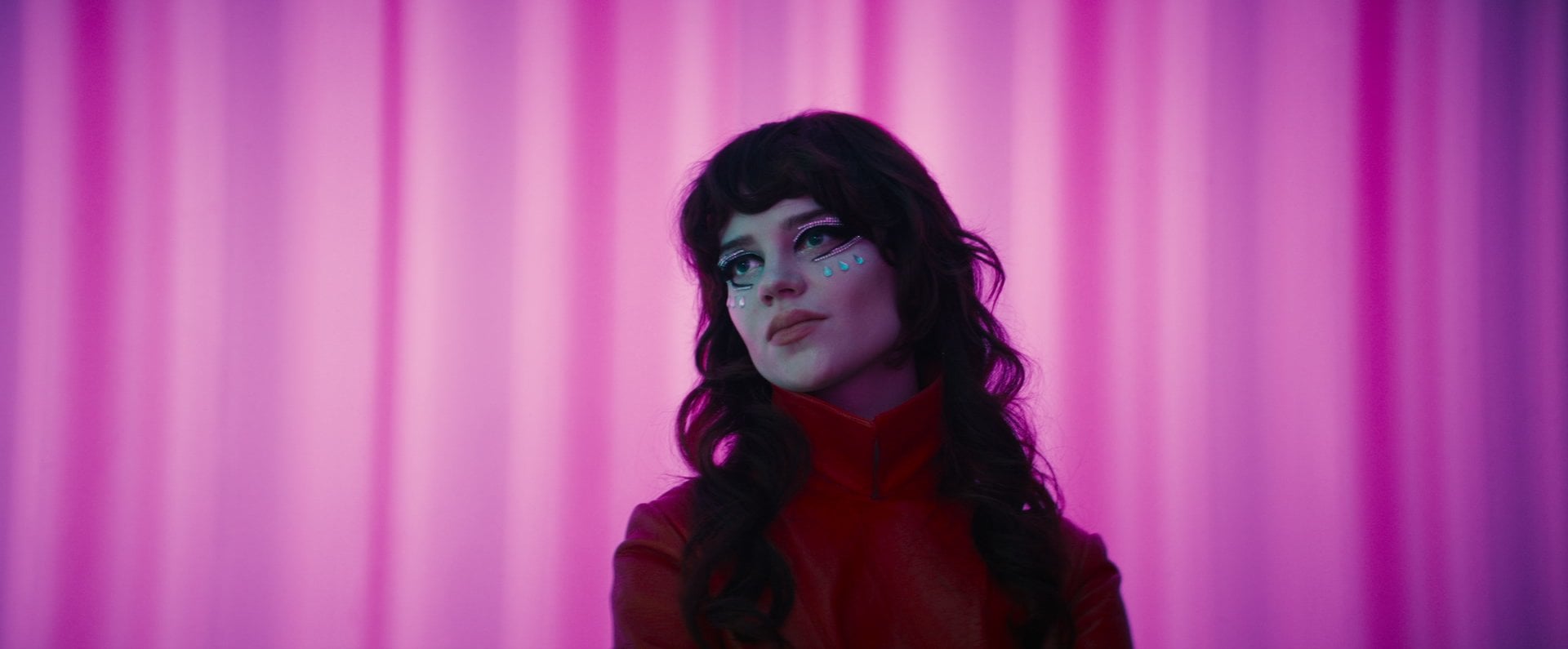

Sophie Thatcher in "Her Private Hell".
Neon
Whittaker developed the costumes of the film through fittings and conversations with the actors and Refn himself. For Thatcher’s character, that meant leaning into the actress’s love of vintage. In the very first scene, in which Elle finds the naive Hunter (Kristine Froseth) in the lobby of her high-rise apartment building and takes her under her wing, Whittaker dressed her in a bold red leather trench coat originally from the 1960s that she sourced by chance from a Danish thrift store. "The detailing on it was fantastic," she says, adding that it was so texturally alive that she found herself slightly concerned it would make too much noise as Thatcher moved about in it. "That coat, it just came alive. It had the most amazing sound, and Nic was very excited about that,” she says. "I apologize to the sound team, saying, ‘I'm really sorry, because the costume comes with its own soundscape. There's nothing I can do.’"
It remains, she says, her favorite piece in the film, rivaled only by a chainmail-trimmed leather jacket worn by Private K (Charles Melton) specifically chosen for its evocative nature. “It just conjures up a lot of things, very universal kind of image from James Dean and Marlon Brando, to ‘Mad Max,’ and ‘The Terminator,’” she says. Like Elle’s coat, Private K’s outerwear was old, and that vintage pedigree is precisely what drew Whittaker to it. "I've always had this strange feeling," she says of working with vintage. "I love using old pieces of costume because they've been worn by various actors, various people. They're imbued with some kind of history, they're almost haunted."
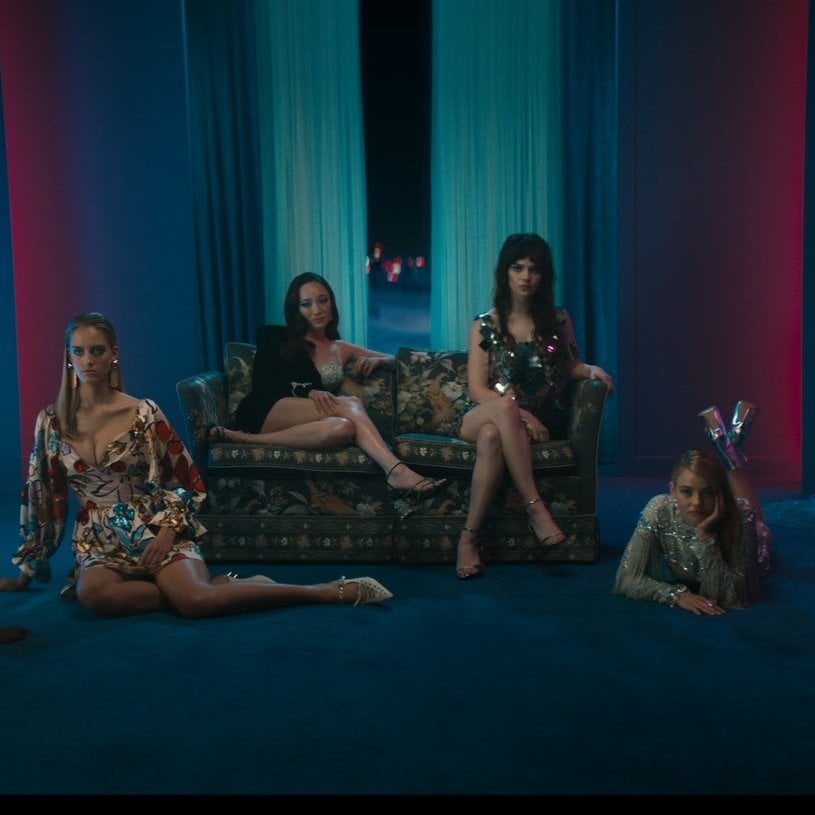
Dominique (Havana Rose Liu), Elle's onetime best friend turned stepmother, required a different approach. "Havana was clear that the character of Dominique should be more sophisticated, more elegant, more refined," Whittaker says of shaping the character almost as a foil to Elle. "So we went for more elegant, low-key silhouettes." Where Elle's wardrobe carries the variety of someone who appreciates one-of-a-kind pieces, Dominique's was built to project control meant to set her apart. Meanwhile, Hunter, an outsider still auditioning for entry into this rarefied world, does graduate from her original look of travel-creased jeans and a crop top, but ultimately her outfits don’t quite come together. Again, that contrast with Elle, Whittaker says, was the whole point. "There's an artifice and deliberate choices being made that you could say sort of missed the mark a little bit, but worked well to express who this character is."
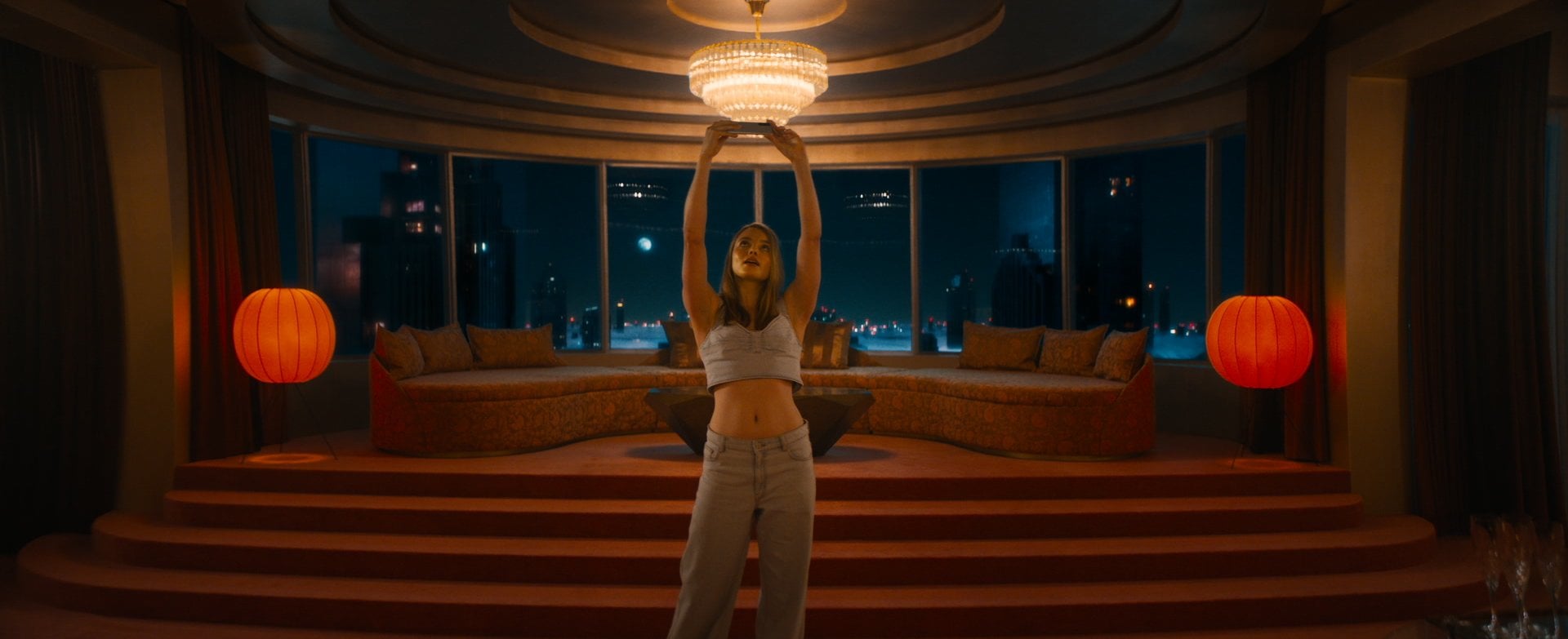

Kristine Froseth in "Her Private Hell."
Neon
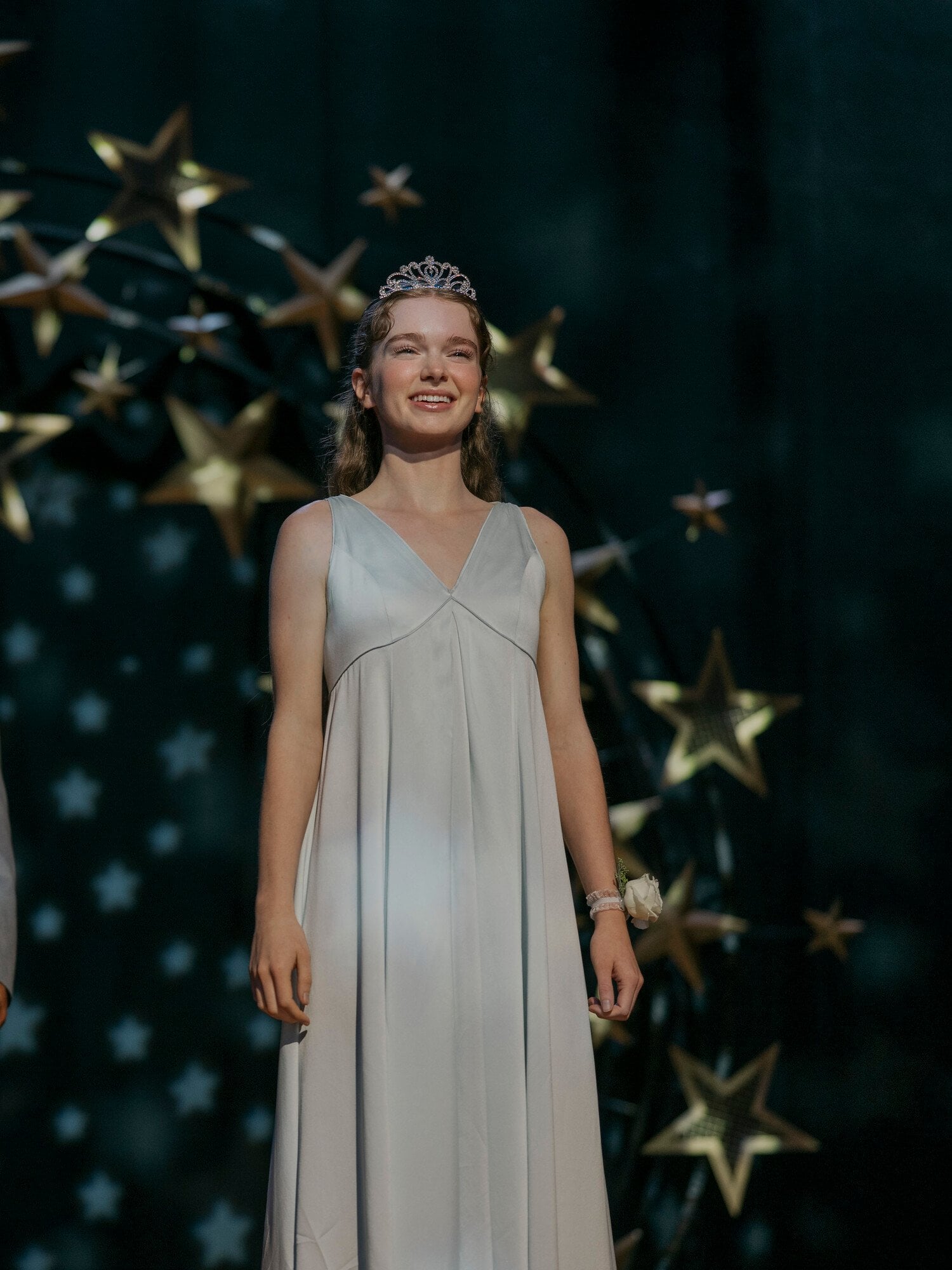
The film's most visually audacious sequence, a fever-dream set piece where Elle, Hunter, and Dominique perform in a futuristic film where they play space explorers, was also its hardest for Whittaker to pull off as costume designer. The pastel-colored “candy floss” spacesuits the women are dressed in, she says, were built from an unforgiving, stretchless plastic material that was "like car upholstery," intentionally designed to look impractical—white boots and gloves and all — in homage to not only "Barbarella" but the gloriously illogical retro sci-fi of the 1976 film “Logan's Run.” As Whittaker says, “I grew up with ‘Logan's Run,’ and it took my breath away when I was a child,” adding that the costume worn by Jenny Agutter lodged itself in her memory. “I thought she was the most beautiful thing ever, running around in that tiny little piece of fabric with a little tiny little buckle.”
Continuing this futuristic thread, elsewhere in “Her Private Hell,” we see Elle in a silver Paco Rabanne mini dress. As it sits half-constructed on her body, a seamstress intentionally drives a needle into Elle’s skin before serenely telling her “a prick of the needle is a sign of success.” The dress, with its metallic, futuristic sheen, was, Whittaker says, a “given for me because it's quintessential retro science fiction fashion.” It's a piece that informed her decision to costume Hunter in a silver sequinned dress later on in the film. "When I think of the Paco Rabanne on Elle and then the silver sequined dress on Hunter, you couldn't get more of a different expression,” she says. While the two dresses may have lots in common—shiny, metallic, retro-inflected—they land in almost opposite emotional registers. One reads as effortless; the other, as try-hard.