Chanel's Viral Superman Sweater Isn't Really About 'Superman'
Fashion
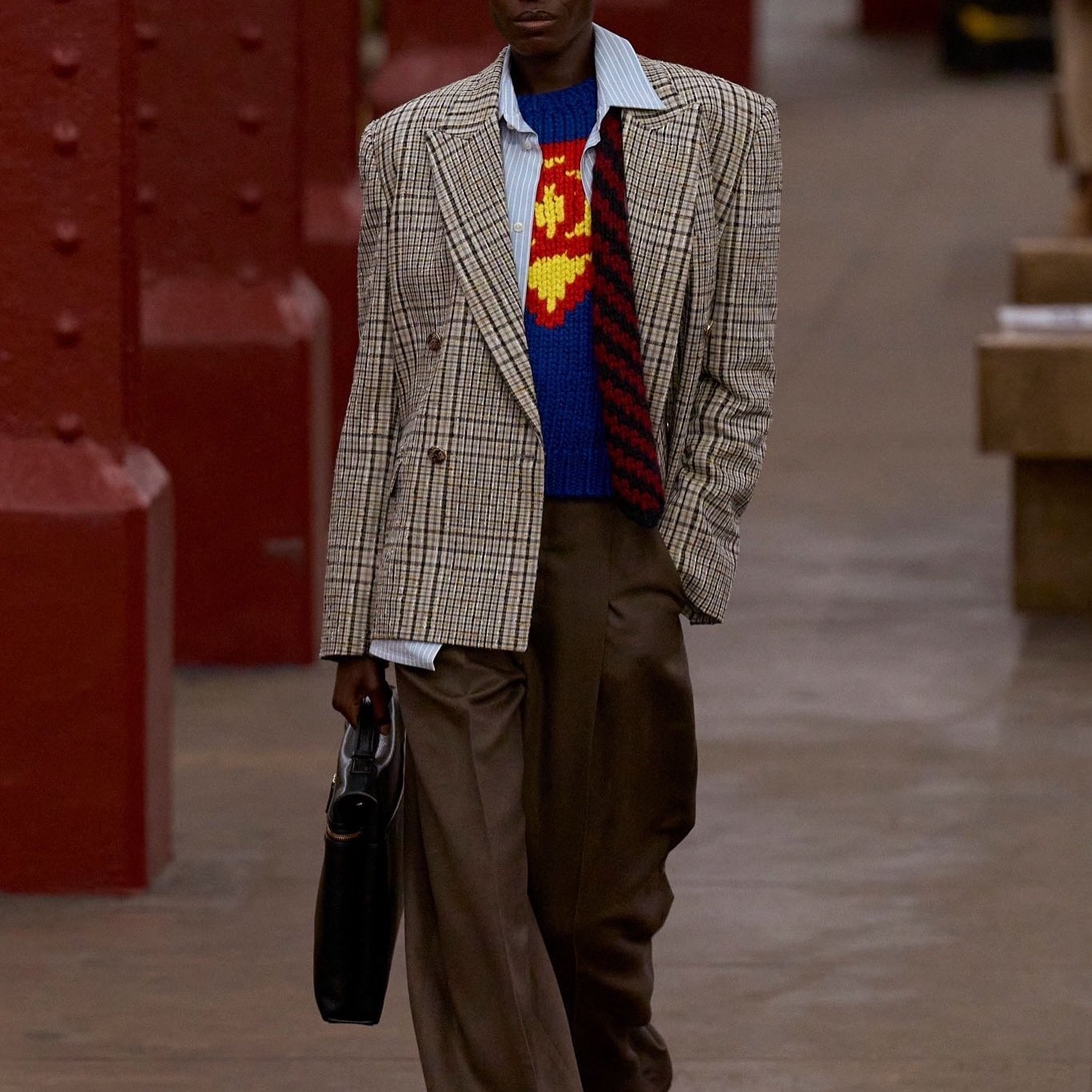

Fashion
The reason why Chanel's viral Superman sweater resonated with fans of the fashion house has less to do with licensing and more to do with what fashion has always borrowed from film.
When the most logo-protective house in luxury puts a comic-book emblem beside its own, everyone starts paying attention. But the best fashion shows don't sell clothes so much as cast a character in a story we want to belong to, which is why Chanel's Superman sweater from Matthieu Blazy's first Métiers d'art collection is worth tracing, not for going viral but for how cleanly it shows fashion borrowing film's real product: personas.
Blazy staged the collection underground, on a disused platform at New York's Bowery station, a setting that swapped the brand's usual elaborate sets for something rawer and more anonymous. A subway platform is pure transience, a place where everyone is briefly no one in particular: the opposite of the single, Chanel woman the house spent a century idealizing. Chanel called it a meeting point between reality and fiction, populated by "eclectic personalities," which is to say there was no one Chanel woman down there. There were dozens of them, characters and commuters and alter-egos, equalized by the morning rush.
The piece that crystallized all this was also the collection's biggest surprise. In 116 years, Chanel had never licensed an outside emblem, and when it finally did, it chose Superman's, a striking turn. It came as a thick cobalt crewneck, the red-and-yellow shield reworked so the interlocking Cs sit where the S should be. It wasn't a one-off, either. The design was repeated on a vanity case in the same blue, red, and yellow. The swap is shrewder than a logo mash-up. Superman is, firstly, a story about a hidden second self: the mild-mannered reporter who is also the hero. That doubling is exactly what the collection is chasing, the idea that you might contain several selves and wear them at once. Like any good costume designer, Blazy found the defining character of his subject and let a single look carry it.


Milly Alcock wearing the Chanel cashmere sweatshirt.
Getty Images
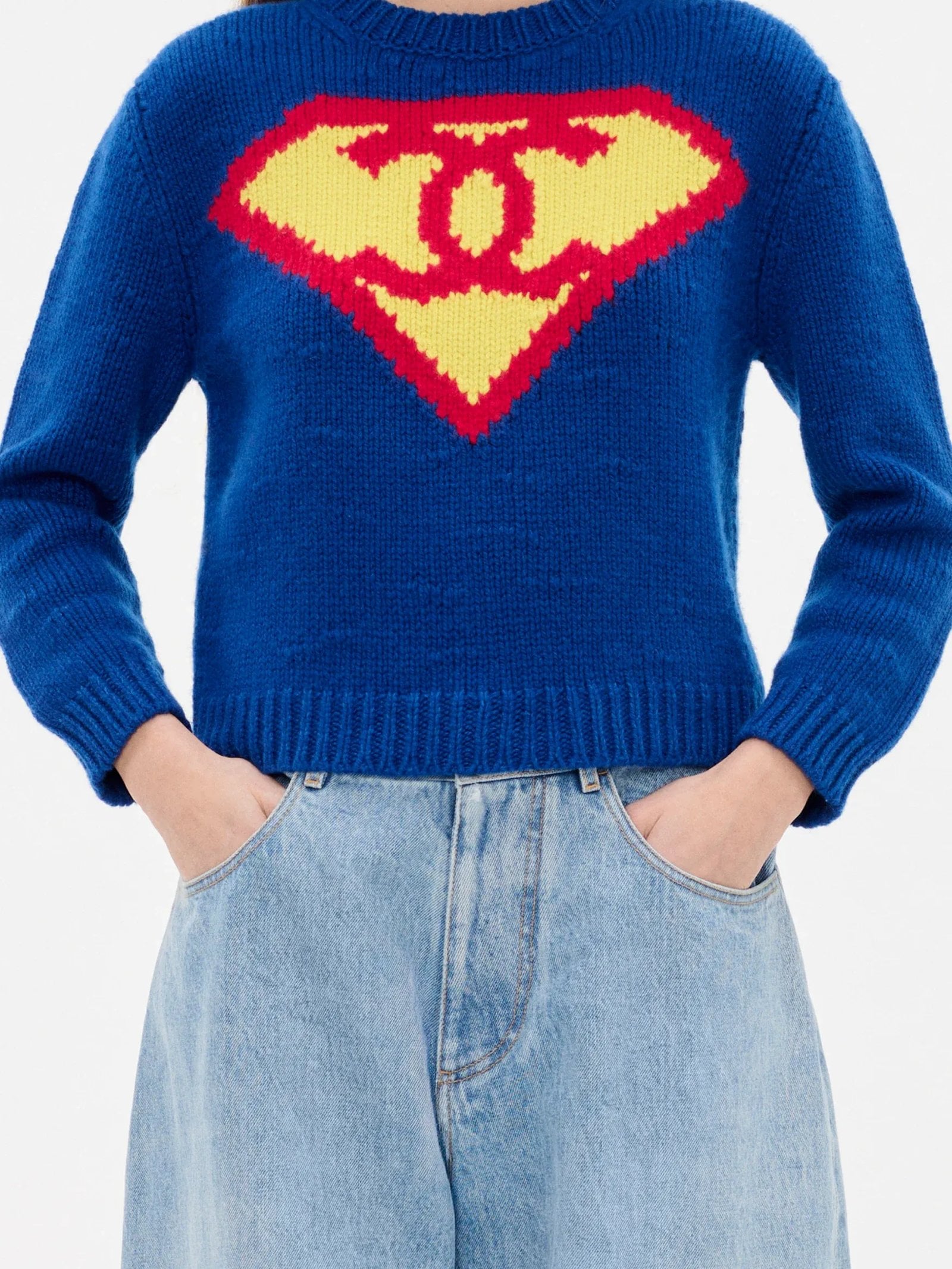

Chanel only retailed the sweater for $3,950.
Chanel
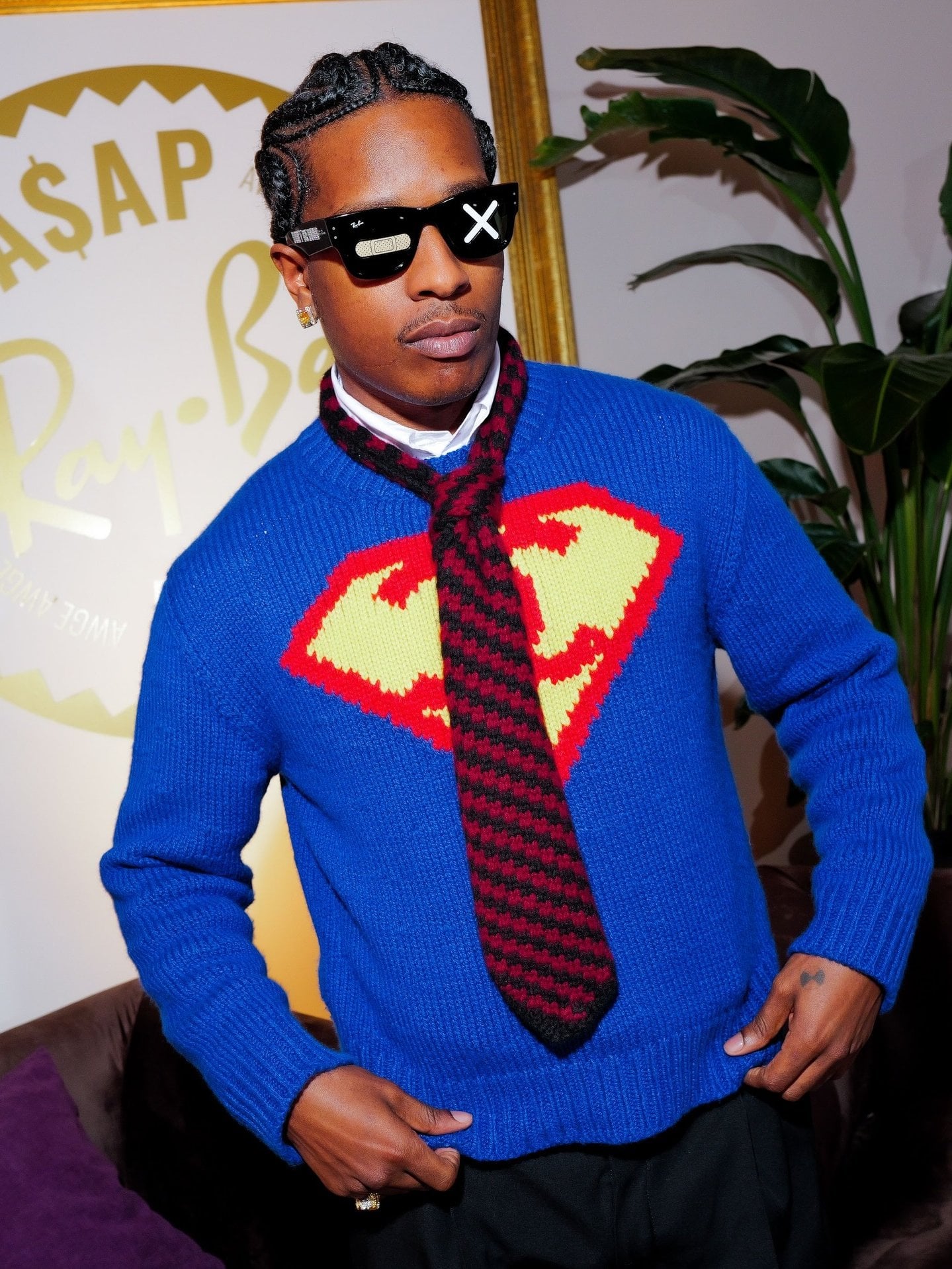

A$AP Rocky in the sweater.
Shutterstock
Milly Alcock wearing the Chanel cashmere sweatshirt.
Getty Images
Chanel only retailed the sweater for $3,950.
Chanel
A$AP Rocky in the sweater.
Shutterstock
Fashion has always borrowed from cinema for the people. Audiences forget a plot within a week but remember the woman in a tutu for years. We don't leave a film wanting a specific handbag so much as wanting to feel like the person who carried it, whether that’s more glamorous, more powerful, or harder to overlook, which is why the references that last are personas, not products. That’s why the sweater worked. It didn't resonate because it name-checked a franchise; the sale racks are full of collabs that did exactly that and died there. It resonated because it arrived attached to an idea: just as a new generation meets “Supergirl” on screen this month (its star, Milly Alcock, wore the sweater to promote the film), Chanel offered an updated proposal for what female strength looks like. In a market where collaboration is its own genre of noise, that's the line worth drawing.
It helps that Chanel is already surging. As Blazy's first collections hit stores, queues formed outside the Paris and New York boutiques. Desire is hard to quantify until it shows up as a line down Madison Avenue, and the sweater was a big part of the buzz: worn by celebrities including Penelope Cruz, A$AP Rocky, and Dua Lipa and, widely reposted, part collectible, part conversation piece, part resale bet. It was less about owning a Chanel knit than joining a story unfolding across runways, trailers, and the algorithm at once.
Luxury has sold aspiration for a century. What's shifted is the source. The personas we want to inhabit are increasingly ones we first met on a screen, who not only entertain us but draft the blueprints we hold ourselves against. That's the hidden machinery beneath Chanel's Superman sweater. Strip away the logo, the licensing deal, and the hype, and what remains is something older and more durable. In an age of a thousand aesthetics competing for our attention, a single coherent character still cuts through—and the costume designers and filmmakers who build them are already shaping what the rest of us will want next.